Opens in a new tab
Geoscopy
Geology, explained.
Generic selectors
Exact matches only
Search in title
Search in content
Post Type Selectors

Rocks

An atlas of rocks and minerals: each one a record of the conditions that made it.

Glossary

Filter - Radio

Sort by

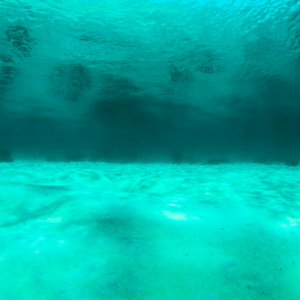
Sunlit sandy seafloor beneath clear turquoise water (Abyssal Plain)

AAbyssal Plain 

Abyssal plains are large, flat, and nearly featureless regions of the deep ocean floor, located at depths between 3,000 to 6,000 meters. These plains are formed through the slow accumulation of fine sediments, including clay and microscopic organisms, that descend from the ocean surface. The creation of abyssal plains is also influenced by the spreading of oceanic plates, which produces new seafloor. These regions are critical to understanding deep-sea sedimentation processes and the geological history of the ocean basins.

Reference: Craig R. Smith; Fabio C. De Leo; Angelo F. Bernardino; Andrew K. Sweetman; Pedro Martinez Arbizu (2008). “Abyssal food limitation, ecosystem structure and climate change” 

Share 

Open entry →

join.me

Geology made clear, in your inbox.

Get clear, visual explainers on rocks, minerals, deep time, and the most fascinating parts of Earth science from Geoscopy.
Fiery meteor entering Earth's atmosphere (catastrophism)

CArchives: Glossary

Catastrophism is the geological doctrine that Earth’s history has been shaped primarily by sudden, short-lived, and violent events, such as volcanic eruptions, earthquakes, and floods. This contrasts with the principle of uniformitarianism, which emphasizes gradual processes. While modern geology recognizes the importance of both catastrophic events and gradual processes, catastrophism was historically significant in debates about Earth’s history and the development of geological theories. 

Reference: Oreskes, N. (1999). The Rejection of Continental Drift: Theory and Method in American Earth Science. Oxford University Press.

Share 

Open entry →