

















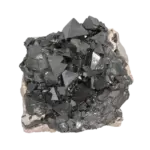



























Carbon sequestration refers to the process of capturing and storing atmospheric carbon dioxide in order to mitigate climate change. This can occur naturally, through processes like photosynthesis and the formation of carbonate minerals, or artificially, through techniques like carbon capture and storage (CCS). Carbon sequestration is significant in efforts to reduce greenhouse gas concentrations and combat global warming.
Reference: Lal, R. (2008). “Carbon Sequestration.” Philosophical Transactions of the Royal Society B: Biological Sciences, 363(1492), 815-830.