Columnar jointing is a geological structure that forms when a thick lava flow or shallow intrusive body cools and contracts, creating a pattern of polygonal columns, typically with a hexagonal cross-section. These columns are often vertical and can be seen in basaltic formations, such as the Giant’s Causeway in Northern Ireland. Columnar jointing is important in understanding the cooling and solidification processes of volcanic rocks.
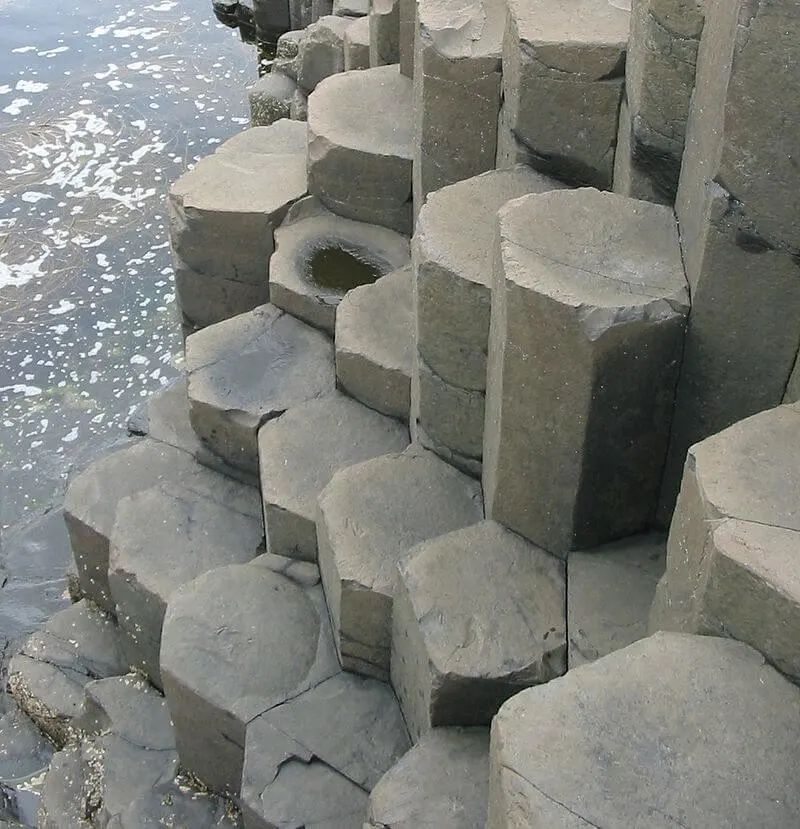
Source De Graff, J. M., & Aydin, A. (1987). “Surface Morphology of Columnar Joints and Its Significance to Mechanism of Jointing.” Geological Society of America Bulletin, 99(5), 605-617.