In karst geomorphology, an uvala is a large closed depression, classically explained as several adjacent dolines (sinkholes) that have grown and merged into one. Its outline is irregular and its floor uneven, often with more than one low point; it is larger than a single doline but smaller than a polje and lacks a polje’s flat floor. The term comes from a Serbo-Croatian word for a hollow and was brought into the scientific literature by the Serbian geographer Jovan Cvijić. Uvalas are significant in the study of karst landscapes for understanding how the chemical dissolution of limestone enlarges and joins depressions as a karst surface develops.
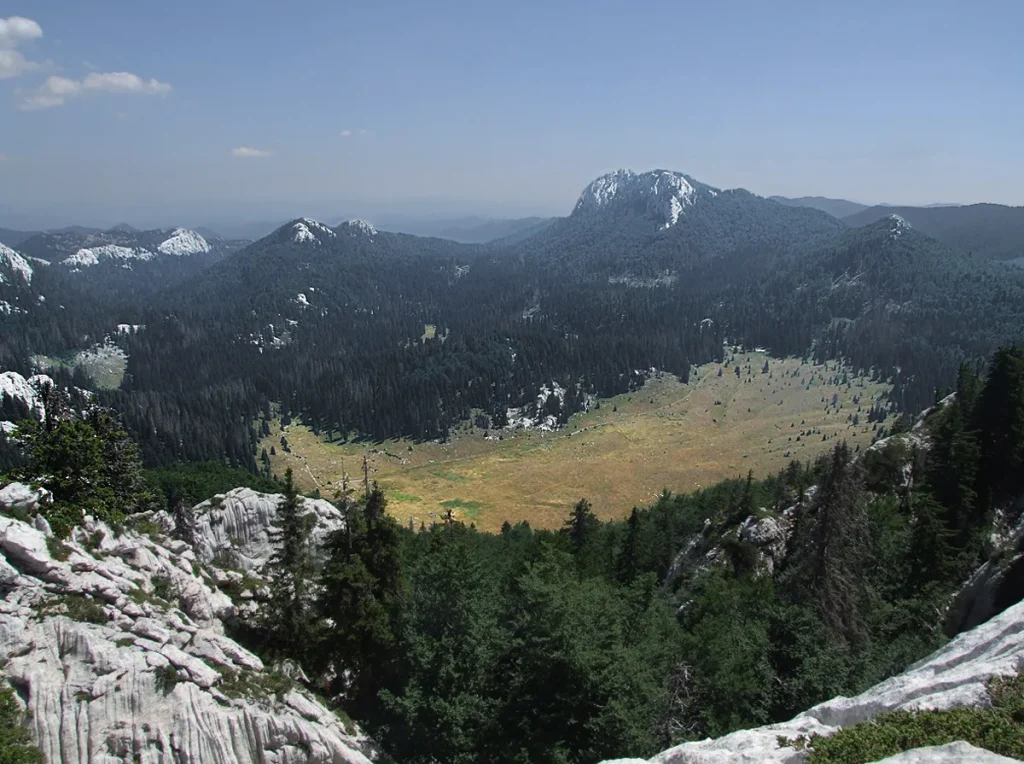
Source Ford, D. C., & Williams, P. W. (2007). “Karst Hydrogeology and Geomorphology.” John Wiley & Sons.