
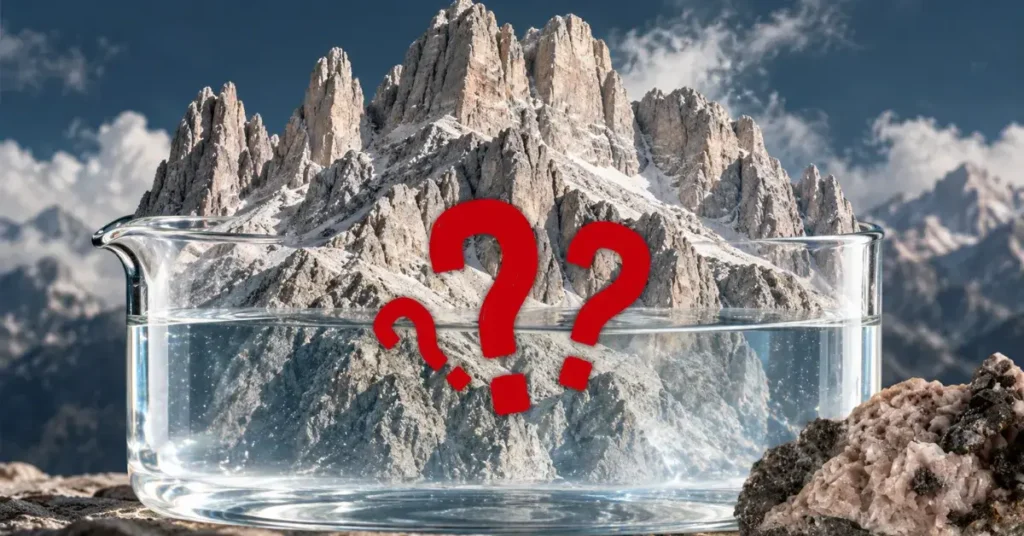
A clear bottle that would not obey
In a laboratory that outlasted three decades of graduate students, Lynton S. Land kept a bottle. Inside was a dilute solution of calcium, magnesium and carbonate in water, mixed to sit more than a thousand times past the concentration at which the mineral dolomite ought to crystallise on its own. Every equilibrium equation in a mineralogy textbook says crystals should have appeared within days. Land sealed the bottle and waited. He waited through the Apollo landings and past the fall of the Berlin Wall. Thirty-two years later the solution was still clear. Ordered dolomite had not grown.
In 1998 he wrote the result up for the journal Aquatic Geochemistry, and the finding is a single sentence. Dolomite, he reported, “failed to precipitate despite more than 1000-fold oversaturation … at 25 °C after 32 years.” One sentence. That was the whole paper’s abstract. The mineral will not grow even when the chemistry begs it to.
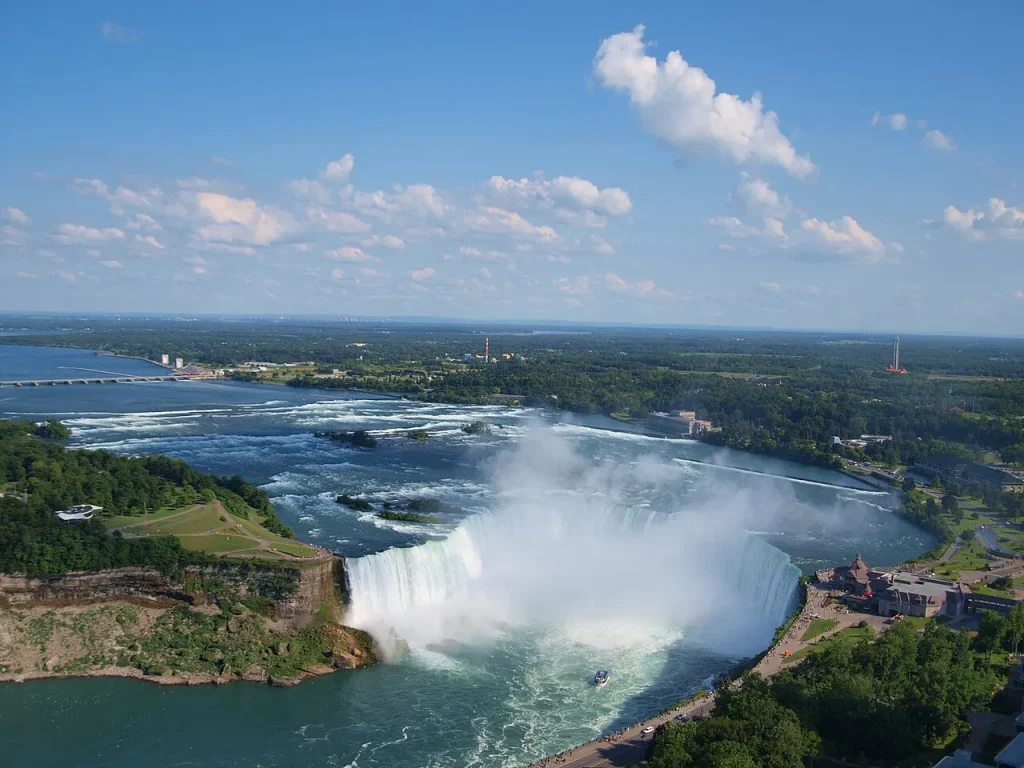
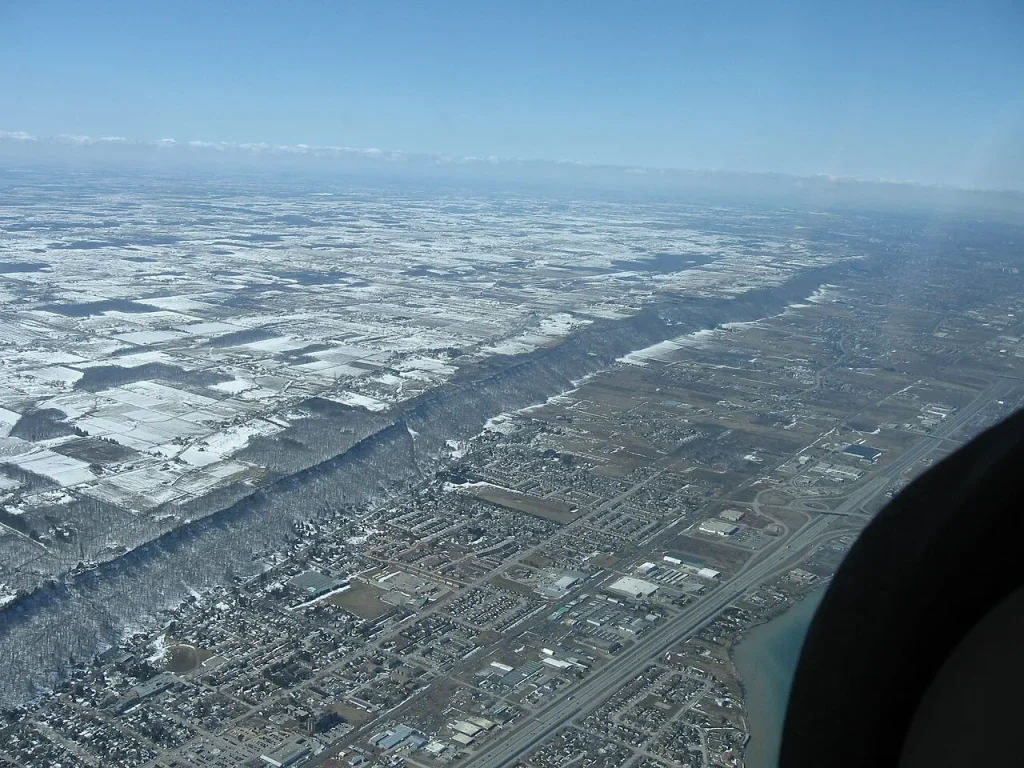
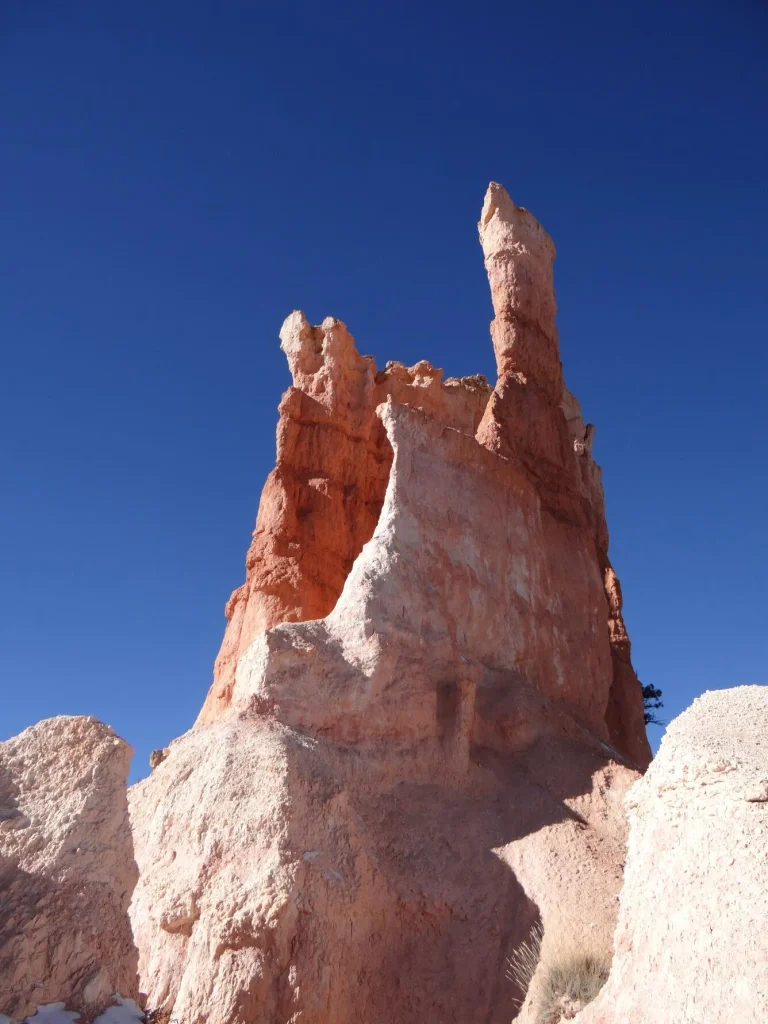
Now take the same fact outdoors. Drive the switchbacks up from Misurina to the Rifugio Auronzo, get out, and look up. The Tre Cime di Lavaredo stand there, three pale towers each rising past 2,850 metres, among the most photographed rocks on Earth. They are made of dolomite. So is the Sella, the flat-topped block at the centre of the range, and so is the Sciliar, the Middle Triassic reef that gave its name to the Sciliar Dolomite. The Marmolada, the highest massif of all, is the exception that proves the rule: its south wall is Marmolada Limestone, a reef carbonate that was never thoroughly dolomitised, which is why the Queen of the Dolomites is not, strictly speaking, dolomite. So is the caprock that holds up Niagara Falls, and so are the caps on many of Utah’s hoodoos, and so are hundreds of metres of marine strata across North America, Iberia, southern Africa and China. The mineral that would not appear in a bottle after three decades built entire mountain ranges. That contradiction is the dolomite problem, and it has stood, in one form or another, for more than two hundred years.
In November 2023 a team led by Wenhao Sun at the University of Michigan published a paper in Science that the press treated as the end of the story. Headlines announced the mystery solved. The reality is more interesting than a headline. There are two dolomite problems here, not one, and the paper speaks to only one of them. Why dolomite refuses to nucleate and grow in the lab may have been cracked. The other, why the ancient rock record is stuffed with dolostone that has no modern equivalent, is still open.
What is dolomite, and why does it matter?
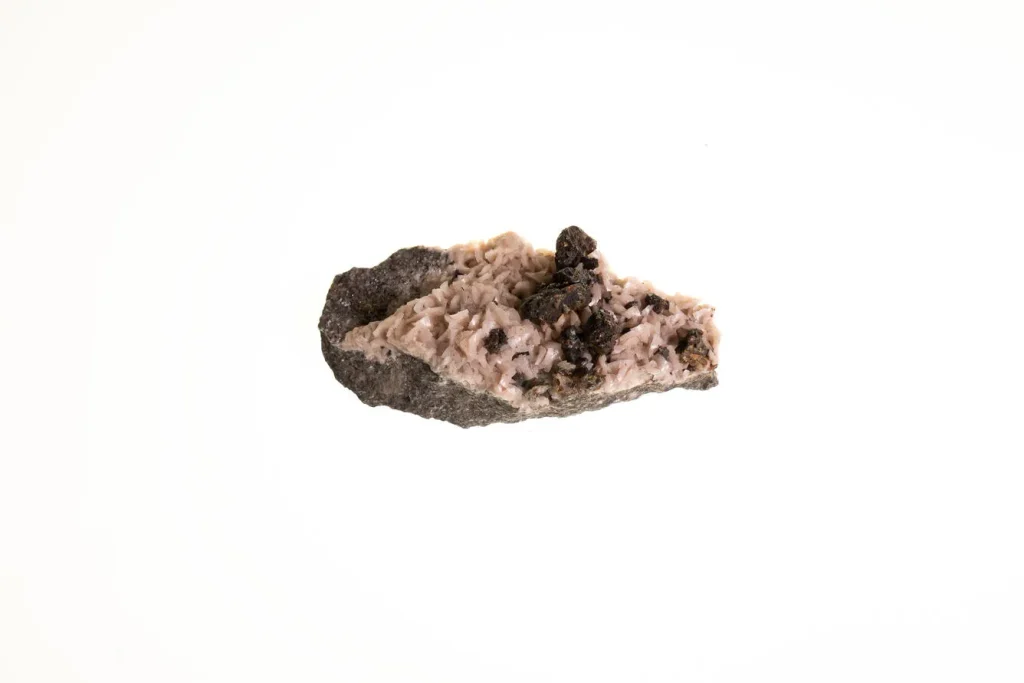
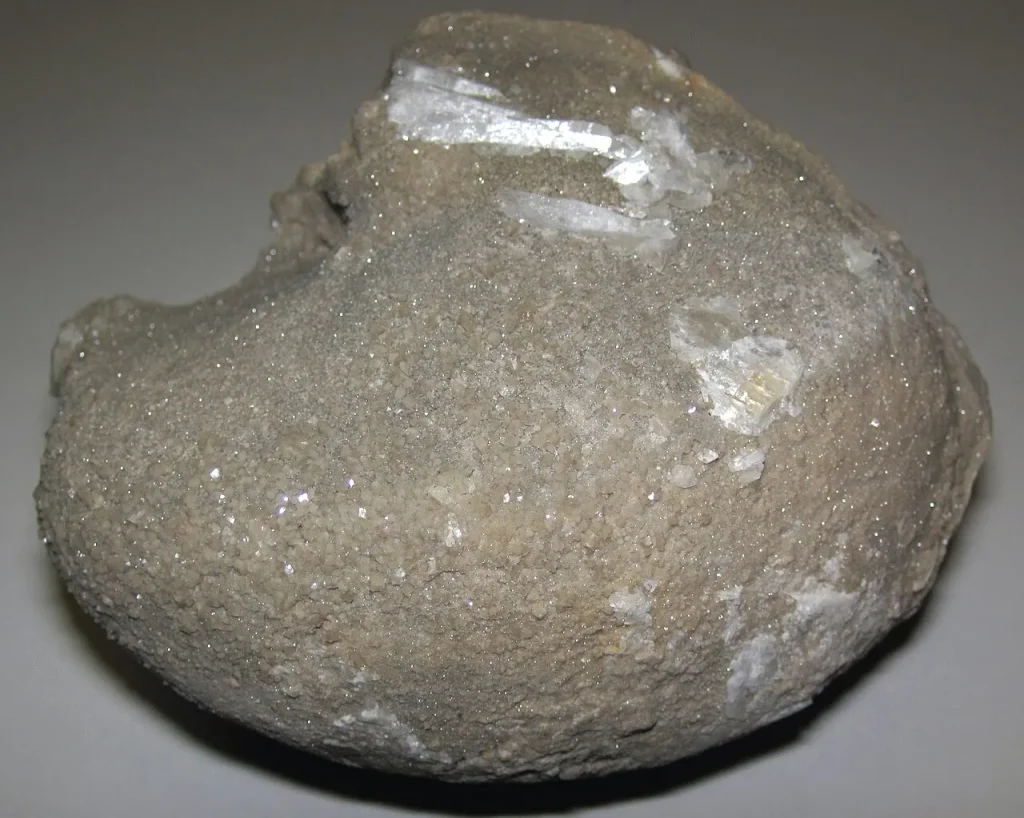
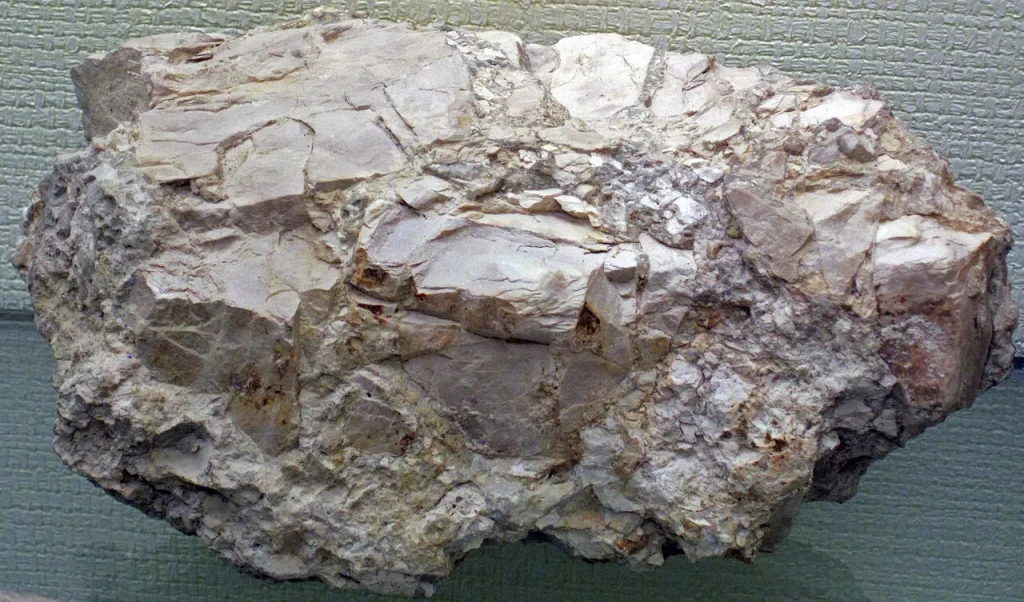
Dolomite is a carbonate mineral with the formula CaMg(CO₃)₂. Structurally it is calcite with discipline. Calcite, CaCO₃, stacks sheets of calcium ions between sheets of carbonate groups. Dolomite takes that architecture and swaps every second cation layer for magnesium, so the crystal alternates strictly. A plane of calcium, a plane of carbonate, a plane of magnesium, a plane of carbonate, and on upward through billions of repetitions. That regimented alternation is called cation ordering, and it is what makes a true, ordered dolomite different from a magnesium-rich calcite that merely shares the same bulk chemistry. When geologists say dolomite is hard to make, they mean the ordering is hard to make.
The word does double duty, which causes endless confusion. Dolomite is the mineral. Dolomite is also the rock made mostly of that mineral, though many geologists call the rock dolostone, a term proposed by Robert R. Shrock in 1948, to keep the two apart. The American Geological Institute’s Glossary of Geology still frowns on the newer word on the grounds that the rock got the name first. This article uses dolomite for the mineral and dolostone for the rock wherever the distinction matters.
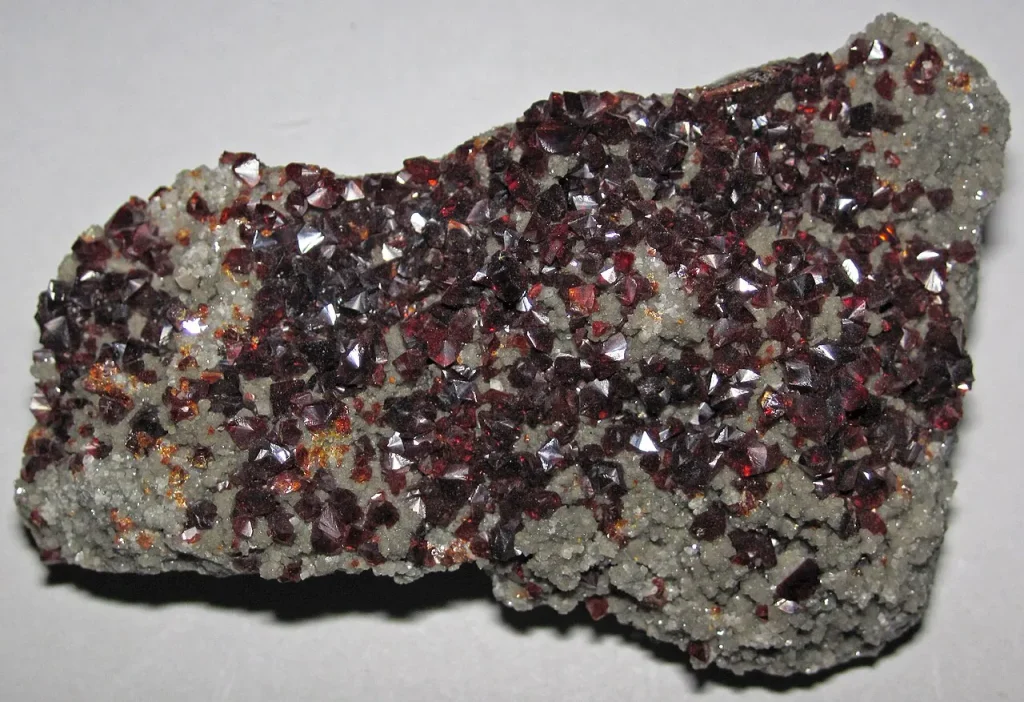
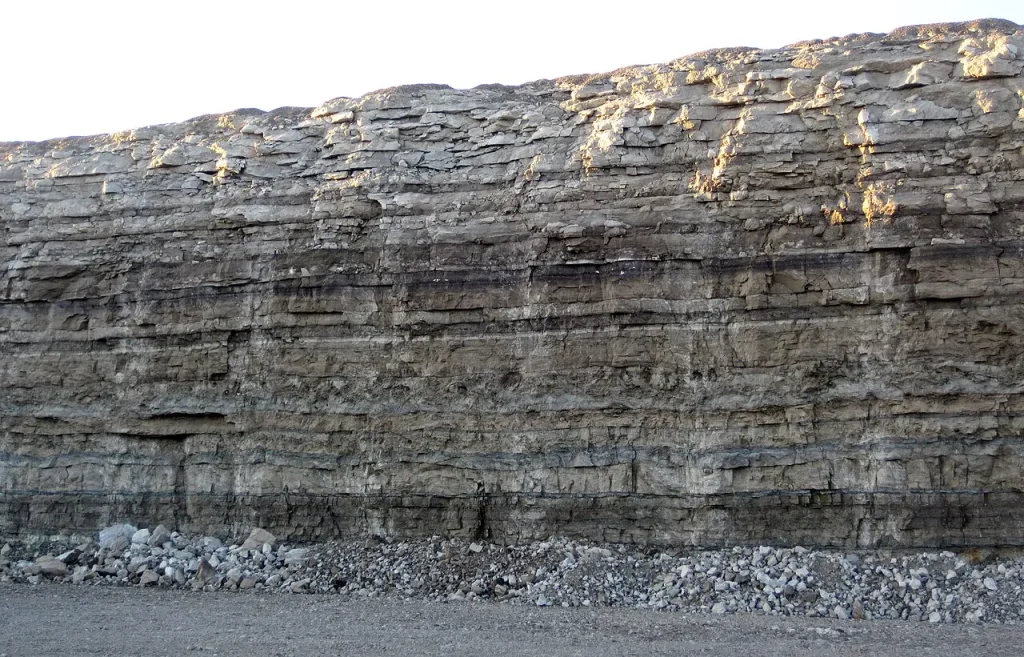
Why care beyond the aesthetics of an alpine skyline? Because dolostone is one of the great host rocks of the planet’s economy. Dolomite reservoirs hold a disproportionate share of the world’s carbonate-hosted oil and gas. A compilation by Zenger and colleagues in 1980, carried into John Warren’s 2000 review in Earth-Science Reviews, put roughly 80 per cent of North American carbonate-hosted oil and gas reservoirs in the dolomitised column, and around half of the world’s carbonate reservoirs. The rock’s vuggy, intercrystalline porosity, a consequence of how it forms, makes it a sponge for fluids. Dolostone is also the host for Mississippi Valley–type ore deposits of lead and zinc, a flux in blast furnaces, the feedstock for magnesia and magnesium metal, a soil conditioner that sweetens acidic ground, and a source of dimension stone and crushed aggregate for roads and railbeds. The mineral nobody could grow is quietly holding up the built world.
Then there is deep time. Dolostones are a climate archive. They record the chemistry of ancient seawater and the isotopic fingerprints of microbial life going back into the Precambrian. If we do not understand how dolomite forms, we cannot fully read what it is telling us.
How old are the Dolomite mountains? 250 million years of shallow sea, stood on end
To feel the scale of the problem, it helps to know what you are looking at when you look at the Dolomites. The range was inscribed as a UNESCO World Heritage Site on 26 June 2009, at the World Heritage Committee’s session in Seville, as a serial natural property of nine component areas. The citation praised its monumental, vertical, pale-walled scenery. What it describes, geologically, is an ancient tropical seafloor turned on its edge and lifted into the sky.
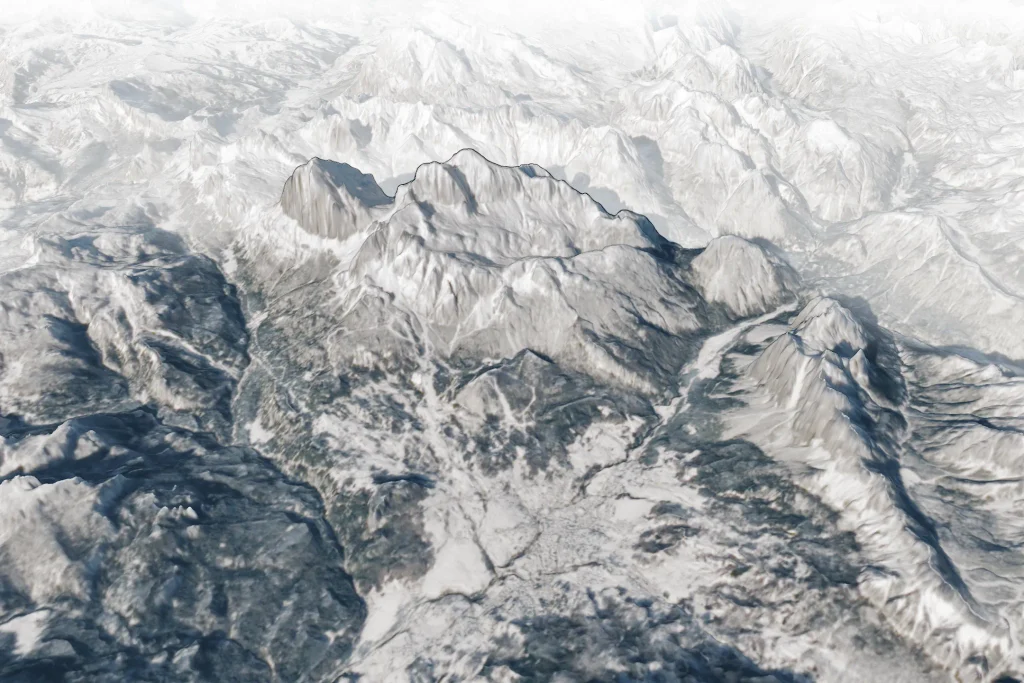
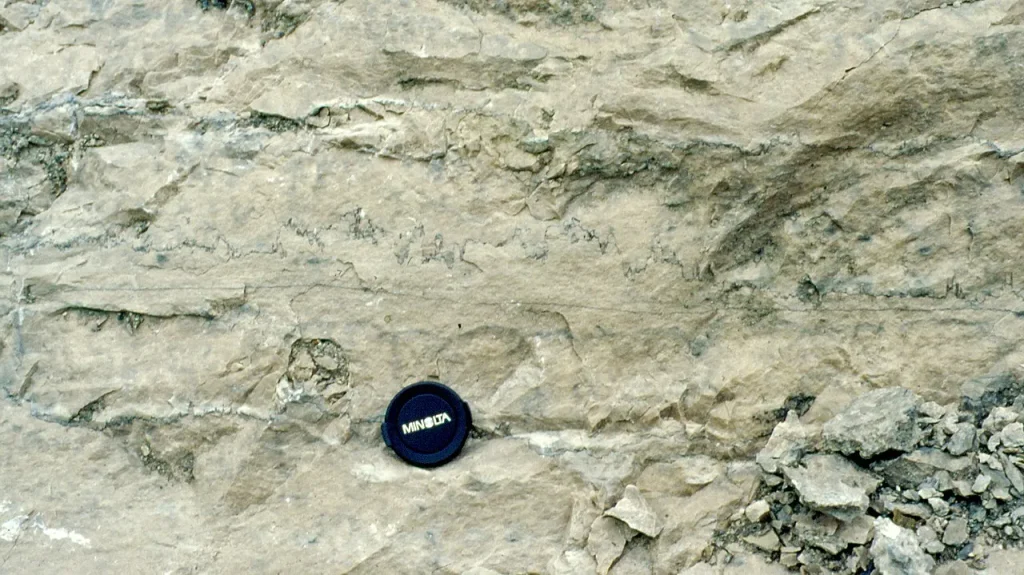
Through the Triassic period, beginning more than 250 million years ago, this corner of what is now northeastern Italy sat under a warm, shallow sea. Reefs and lagoons on broad carbonate platforms accumulated thick piles of calcium-magnesium carbonate. The Tre Cime and their neighbours are carved largely from the Dolomia Principale, the Main Dolomite or Hauptdolomit, a Carnian-to-Rhaetian formation that in places runs to many hundreds of metres of thickness. Later tectonic collision, as Africa drove into Europe, crumpled and raised the whole pile. Glaciers and frost sculpted the towers. When a climber tops out on the Cima Grande, at 2,999 metres, the hand on the summit rock rests on a mineral that, by the standards of laboratory chemistry, has no business existing at the temperature of that summit.
The kinetic side, the reason the bottle stays clear, is where the chemistry gets strange. First, though, the history, because the puzzle is older than the word geology.
Who discovered dolomite? Dolomieu, 1791
The story starts with a duel. Déodat Gratet de Dolomieu, born in the Dauphiné in 1750, was enrolled in the Knights of Malta as a child and at eighteen killed a fellow knight in a duel, which set the tone for a turbulent life. Late in that life he sailed with Napoleon’s expedition to Egypt, fell ill, and on the voyage home was shipwrecked and handed over to his old enemies. He spent the better part of two years in a prison in Messina and died within months of his release in 1801.

Between the scandals he did science, and did it well. Travelling through the Tyrolean Alps in the late 1780s, and studying old building stone in Rome, Dolomieu kept meeting a pale calcareous rock that behaved wrongly. Ordinary limestone fizzes briskly when you drip weak hydrochloric acid on it, giving off carbon dioxide. This rock barely reacted unless it was powdered. He published the observation in 1791 in the Journal de Physique. The Swiss chemist Nicolas-Théodore de Saussure analysed samples, found a large proportion of magnesium alongside the calcium, and in March 1792 named the mineral dolomie in Dolomieu’s honour. The Irish chemist Richard Kirwan anglicised it to dolomite two years later. Saussure himself noted that Linnaeus had probably described the same substance in 1768 without recognising what it was. The mountain range took the name only in the nineteenth century, after two English travellers published a book called The Dolomite Mountains in 1864.
Almost immediately, geologists noticed the thing that would haunt the field for two centuries. The rock was everywhere in the ancient record and almost nowhere in the making. You could stand on kilometres of Triassic dolostone and find no place on the modern Earth where the same rock was visibly forming in comparable bulk.
Two centuries of the dolomite problem: what dolomitization explains
By the early twentieth century the puzzle had a literature of its own. Francis Van Tuyl published a paper in Science in 1916 titled ‘The Present Status of the Dolomite Problem’; the phrase was in a journal title little more than a century after Dolomieu’s death, alongside a book-length treatment of dolomite’s origin the same year. Rhodes Fairbridge, writing in a 1957 SEPM symposium volume, preferred ‘the dolomite question.’ When J. N. Weber published a long trace-element study in Geochimica et Cosmochimica Acta in 1964, its title ended with the phrase “the dolomite problem,” and by then the phrase was already old furniture in the discipline.
The century’s working answer was dolomitization. Most dolostone, the argument ran, did not precipitate directly from the sea. It began as ordinary calcium carbonate mud or limestone and was later converted, grain by grain, by magnesium-rich fluids passing through it. That explained why fossils of animals that build calcite shells turn up preserved in dolostone. It did not explain why the process should have worked so much better in the Palaeozoic and Precambrian than it does today, and it said nothing about why the conversion is so sluggish in a beaker.
The abundance pattern is now quantified rather than merely felt. A 2021 compilation by Mingtao Li and colleagues in Geology found dolomite abundance among marine carbonates peaking at 0.41 in the earliest Cambrian, collapsing to 0.05 by the Middle Ordovician, rebounding to 0.28 in the early Silurian, and oscillating thereafter around a Phanerozoic mean of 0.13. The pattern inside the decline is the more interesting result. Dolomite abundance runs inversely to marine genus diversity, and its four big peaks fall inside mass-extinction intervals associated with ocean anoxia. The compilation did not go unchallenged, it drew a published Comment and Reply in Geology later the same year. A 2023 study by Jon Husson and Laurence Coogan in Geochemical Perspectives Letters came at the same question from the rivers: the magnesium-to-calcium ratio of water draining carbonate terrains records how much dolostone is exposed to weathering, and it implies a large decrease in dolomite abundance across the Phanerozoic. Their record does not agree with Li’s in detail. It shows no systematic fluctuations and a much higher early Phanerozoic abundance, which the authors say raises questions about the ocean-redox control Li’s group proposed. Even the shape of the curve is contested. Whatever made Precambrian and early Palaeozoic oceans so good at manufacturing dolomite, the modern ocean has largely lost it.
Why can’t dolomite be grown in a lab? The three kinetic barriers
Dolomite is not an unstable mineral. Under the temperature and pressure conditions at Earth’s surface, dolomite is thermodynamically favoured over calcite sitting in magnesium-rich seawater. Today’s seawater is supersaturated with respect to dolomite by a wide margin, and has been for millions of years. Thermodynamics says the mineral should form. It does not. The obstruction is kinetic, a matter of how fast atoms can find their correct seats rather than whether they want to. Three barriers do most of the work.
Magnesium’s grip on water
A magnesium ion in solution is small and carries a double positive charge packed into a tight radius. That gives it a fierce electric field, and it wraps itself in a well-organised shell of water molecules, its hydration shell, far more tightly than calcium does. To build a magnesium ion into a growing crystal, that shell has to be stripped off, and the energy cost of dehydrating Mg²⁺ is the classic explanation for why magnesian carbonates are sluggish to crystallise. Calcium sheds its water easily and slots into calcite all day long. Magnesium clings to its jacket, and the crystal edge waits.
Too little carbonate, chemically speaking
Dolomite growth also depends on the activity of the carbonate ion, CO₃²⁻, in solution. At the near-neutral pH of ordinary seawater most dissolved inorganic carbon sits as bicarbonate, HCO₃⁻, and the concentration that feeds the crystal is low. Push the pH up, making the water more alkaline, and the balance shifts toward carbonate and toward dolomite. This is why so many places where dolomite does form today are alkaline, evaporative or microbially active settings. Each of them raises carbonate-ion activity locally.
The ordering trap
This is the deepest barrier, and the one the 2023 paper attacks head-on. Dolomite’s defining feature is its strict alternation of calcium and magnesium layers. But when ions attach to a growing dolomite surface from solution, calcium and magnesium are chemically similar enough that they land more or less at random. A calcium ion drops into a spot that should hold magnesium. A magnesium lands where calcium belongs. Each misplacement is a defect, and defects on a growth edge poison further growth. The surface becomes a strained, disordered mess that cannot cleanly template the next ordered layer, and the crystal stalls almost as soon as it starts. What you get instead is protodolomite or a very high-magnesium calcite, the right bulk recipe with the wrong internal order.
The Michigan group put a number on how bad the trap is. Using atomistic simulations, they calculated that if a dolomite crystal had to grow under constant supersaturation, waiting for a perfectly ordered layer to assemble by chance, forming a single ordered layer could take on the order of ten million years. Ten million years per atomic layer does not build a Marmolada.
The 32-year experiment: why dolomite synthesis kept failing
Land’s experiment is famous because it is so brutally clean. No exotic conditions and no confounding minerals, just a dilute solution held past a thousandfold oversaturation for a human generation. The negative result is worth more than a shelf of ambiguous positives. Land himself drew the inference that the failure was probably not simple slow kinetics but the absence of some unknown enabling condition, a hint that turned out to be prophetic, because fluctuation would eventually become the missing ingredient.
He was not alone. The twentieth-century literature is a graveyard of dolomite syntheses. Researchers could make dolomite readily enough in sealed hydrothermal vessels; heat the system past roughly 100 °C and the kinetic barrier melts, atoms rearrange, and order appears. That is cheating with respect to the natural puzzle, because vast dolostones formed at low temperatures in sedimentary settings, not in pressure cookers.
There was one low-temperature line of attack that worked. In 1967 Otto Liebermann published a paper in Nature titled simply “Synthesis of Dolomite,” reporting magnesium-rich carbonates grown at low temperature by cycling a solution through repeated steps of dissolution and reprecipitation. Kim and Sun cite Liebermann as their reference number one, and open by noting that researchers have been trying to crystallise dolomite by inducing dissolution ever since. Jan Deelman extended the method through the 1990s. The 2023 paper is less a break with the past than the first atomic-scale account of why a 1967 idea works. At ambient temperature, from ordinary supersaturated solutions, the bench kept producing calcite, aragonite, magnesite and disordered high-magnesium phases. As the Michigan authors summarised the state of play, nearly two centuries of sustained effort had failed to precipitate ordered dolomite in the laboratory near ambient conditions.
By the 1990s the field had largely concluded that if inorganic chemistry alone could not do it, chemistry needed help. That help came from an unlikely quarter, a stinking, salty lagoon east of Rio de Janeiro.
Do bacteria make dolomite? Lagoa Vermelha and the microbial model
Lagoa Vermelha is a shallow, hypersaline coastal lagoon in the state of Rio de Janeiro, Brazil. Its sediments are anoxic and rich in microbial mats, and it is one of the rare modern places on Earth where dolomite is demonstrably forming right now, at Earth-surface temperature. In 1995 Crisógono Vasconcelos, Judith McKenzie, Stefano Bernasconi, Djordje Grujic and Albert Tien published a paper in Nature that reframed the whole problem. Its title carried the new idea, “Microbial mediation as a possible mechanism for natural dolomite formation at low temperatures,” and its opening lines stated the paradox plainly: dolomite is far more abundant in ancient rocks than in modern environments, and, in the authors’ words, “why this is so remains a mystery.”
Their proposal was that sulfate-reducing bacteria living in the anoxic lagoon sediments could break the kinetic logjam, and the same paper reported the experiment, not just the idea. They precipitated a ferroan dolomite with a fairly high degree of cation ordering in the presence of sulfate reducers from the Desulfovibrio group, and argued that direct microbial mediation can overcome the kinetic barrier to dolomite nucleation. These microbes do two useful things at once. They consume sulfate, which had long been suspected of inhibiting dolomite growth, and their metabolism raises alkalinity and pH in the microenvironment around the cell, boosting carbonate-ion activity exactly where it is needed. Their sticky extracellular polymers, studded with carboxyl groups, may also grab magnesium ions and help strip off that stubborn hydration shell, offering a template for nucleation.
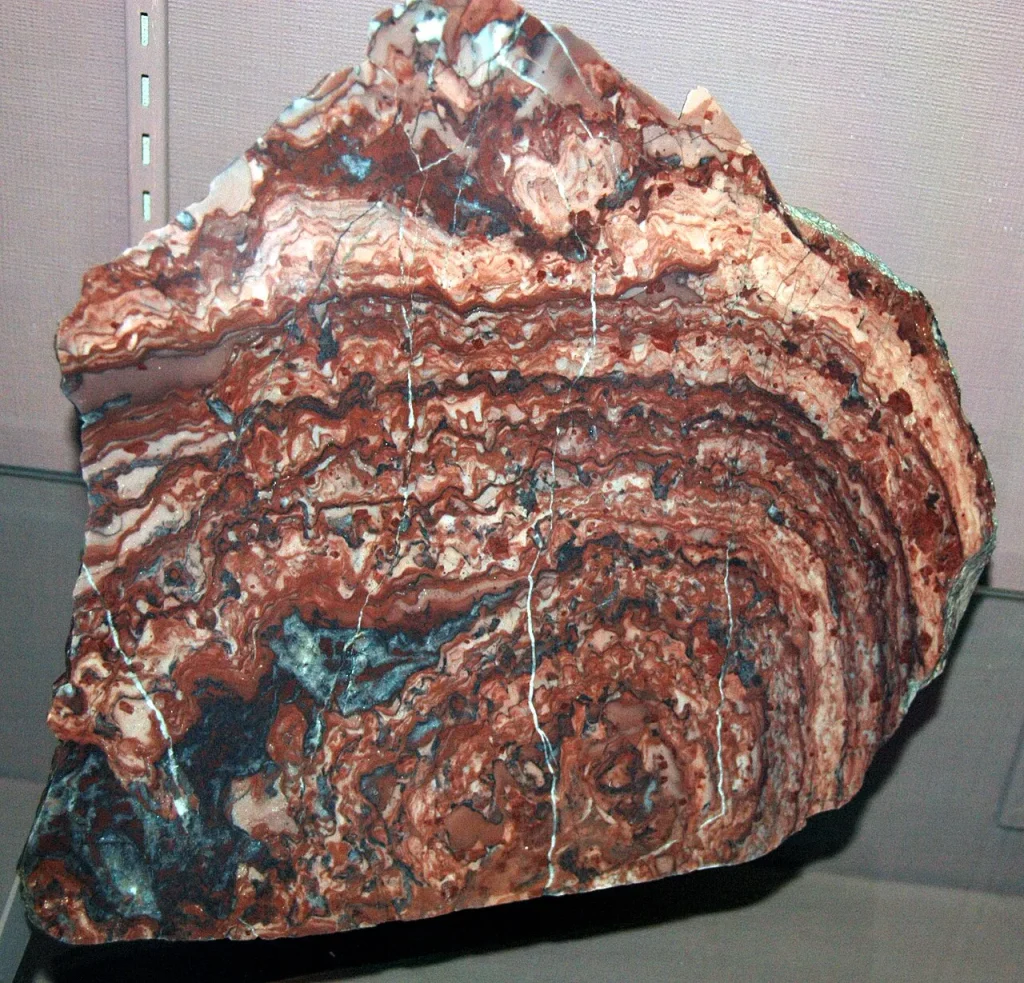
The follow-up work pinned down the organism and the conditions. In 1997 Vasconcelos and McKenzie published a detailed study in the Journal of Sedimentary Research on modern dolomite precipitation and diagenesis under anoxic conditions at Lagoa Vermelha. In 2000 Rolf Warthmann, Yvonne van Lith, Vasconcelos, McKenzie and Anne-Marie Karpoff reported in Geology that they had isolated a strain of sulfate-reducing bacteria, LVform6, from the lagoon sediment and grown nonstoichiometric dolomite in anoxic culture over thirty days at 30 °C. The bacteria produced carbonate that looked like the natural lagoon precipitate. Sulfate reducers of the same group from the same lagoon were later described as a new species, Desulfovibrio brasiliensis. Here at last was dolomite forming at low temperature on a human timescale. The catch was stoichiometry rather than order. The Geology paper describes the product as nonstoichiometric dolomite, and the degree of ordering claimed for microbial dolomite has been argued over ever since, with several later workers reading the same diffraction signatures as very high-magnesium calcite. The other catch was the obvious one: it needed living cells.
The microbial model matured over the following two decades into what is sometimes called the organogenic model. In 2017 Daniel Petrash, Or Bialik, Tomaso Bontognali, Vasconcelos, Jennifer Roberts, McKenzie and Kurt Konhauser published a sweeping review in Earth-Science Reviews, “Microbially catalyzed dolomite formation: from near-surface to burial,” pulling together the direct and indirect ways microbes help nucleate dolomite and how those early, disordered phases can stabilise into better-ordered dolomite during shallow burial. Comparable modern dolomite has since been documented in the Coorong lakes of South Australia and in the coastal sabkhas of Abu Dhabi and Qatar.
The microbial model has one enormous virtue and one enormous limitation. It explains how dolomite can form at all at low temperature today, and it is grounded in reproducible experiments. What it never escaped is the inventory question. A 2021 study by Zach DiLoreto, Sanchit Garg, Bontognali and Maria Dittrich in Scientific Reports, working on a hypersaline sabkha in Qatar, put it bluntly even while confirming a microbial mechanism: “factors controlling ancient abundances of dolomite can still not be explained.” Microbes can nucleate dolomite in a lagoon. Hundreds of metres of clean Triassic dolostone stacked across a continent is a different order of problem. The abundance problem stayed open.
2022: a matter of time
Just before the Michigan work appeared, another group set the intellectual table. In 2022 Carlos M. Pina, Carlos Pimentel and Ángel Crespo published a short, sharp paper in ACS Earth and Space Chemistry titled “The Dolomite Problem: A Matter of Time.” Their argument was that both the formation and the calcium–magnesium ordering of dolomite are best understood as the outcome of progressive dissolution and recrystallisation reactions extended over very long geological periods. Order is annealed slowly, cycle after cycle, as the crystal is partly dissolved and partly regrown across time. This framing, that fluctuation and dissolution rather than a single growth event hold the key, was in the air. What was missing was an atomic-scale mechanism and a direct experimental sighting. That is what Kim and Sun delivered.
How does dolomite form? The 2023 dissolution mechanism
The paper is Joonsoo Kim, Yuki Kimura, Brian Puchala, Tomoya Yamazaki, Udo Becker and Wenhao Sun, “Dissolution enables dolomite crystal growth near ambient conditions,” Science 382(6673):915–920 (2023), DOI 10.1126/science.adi3690. The accompanying Perspective, by Juan Manuel García-Ruiz, is “A fluctuating solution to the dolomite problem,” Science 382(6673):883–884 (2023), DOI 10.1126/science.adl1734.
The work has two halves, theory and experiment, and it is important to see exactly what each one shows.
The theory
The Michigan side built a computational model of a dolomite growth surface at the atomic scale. First they used density functional theory to check whether the problem was even about growth. They compared the nucleation barrier for dolomite against calcite and aragonite and found it similar in magnitude, which means dolomite is not held back at the birth of a crystal. It is held back afterwards, during growth. That reframing matters, because it moves the bottleneck from the seed to the growth edge.
Then they modelled what happens as calcium and magnesium attach to that edge. As expected, the ions land partly at random, building a cation-disordered surface where mismatched atoms create high local strain that inhibits further growth. The insight is what to do about it. Because the misplaced atoms sit in higher-energy positions than correctly ordered ones, they are the first to dissolve if the surrounding solution is nudged even slightly below saturation. Dip the water into mild undersaturation and it preferentially eats away the defects while leaving the well-ordered regions intact. Return to supersaturation and the freshly cleaned surface regrows, now more ordered than before. Each cycle of mild dissolution and reprecipitation ratchets the crystal toward order.
The simulations predicted that cycling a solution between supersaturation and undersaturation could accelerate dolomite growth by up to seven orders of magnitude compared with holding it at constant supersaturation. The physical prediction is clean and testable. Dolomite should grow best where the chemistry fluctuates: on coasts with tides, in settings that alternate between rain and evaporation, in waters whose pH or salinity swings. That is exactly where natural dolomite tends to occur.
The experiment
To test it, Sun brought in Yuki Kimura and Tomoya Yamazaki at Hokkaido University, specialists in watching crystals grow inside a transmission electron microscope. They placed a seed of crystalline dolomite in a liquid cell filled with a supersaturated calcium-magnesium carbonate solution. Then they exploited a normally unwanted side effect of electron microscopy. As Kimura put it in the University of Michigan’s news release, quoted here only as the source of his words: “the beam can also split water, which makes acid that can cause crystals to dissolve. Usually this is bad for imaging, but in this case, dissolution is exactly what we wanted.” They pulsed the electron beam about 4,000 times over two hours, each pulse briefly acidifying the solution and dissolving away freshly formed defects before the crystal regrew.
The liquid cell was held at 80 °C. The paper states it plainly, and it is a long way from the ambient conditions of the title. Cameron Manche, a sedimentologist at Texas A&M who was not part of the work, made the point to Chemical & Engineering News: the team used novel approaches, but they did not form dolomite at Earth’s surface conditions. The theory concerns ambient temperature. The experiment was not run there.
The result was record-breaking. The dolomite overgrowth reached about 100 nanometres, corresponding to roughly 300 atomic layers of dolomite. That does not sound like a mountain, and it is not one. Context is everything, though. No previous laboratory attempt had ever grown more than about five ordered layers, and the team described its sample as about 60 times larger than any earlier attempt to make dolomite in a laboratory. From five layers to three hundred is the difference between a rumour and a photograph.
García-Ruiz’s Perspective endorsed the logic. Dolomite, he argued, forms under alkaline and saline conditions where the fluid hovers near saturation with a metastable magnesian phase, and it needs only small fluctuations to undersaturate that phase and drive the replacement toward order. The mechanism sits comfortably on top of a very old idea in crystal chemistry, Ostwald’s step rule, under which systems reach the stable phase by passing through less stable intermediates. The editor’s summary restated the figure in plainer words, cycling speeds growth up to ten million times, which is simply what seven orders of magnitude means, but added that such cycling may be imperative for making large volumes of dolomite, which is a stronger claim than the authors make in their own text.
What was demonstrated, and what was not
The gap between what the experiment showed and what the headlines claimed is wide enough to matter.
What the 2023 work demonstrated, if the results hold up, is a plausible, atomically detailed, experimentally supported mechanism by which dolomite can grow at near-ambient temperature. Repeated cycles of mild dissolution preferentially remove defects, and regrowth follows. That is a real contribution to crystal-growth science, and it reaches beyond dolomite. The same principle suggests you could grow defect-free semiconductors or battery materials faster by periodically dissolving away flaws rather than growing slowly and hoping. As an answer to the kinetic problem, why the bottle will not grow a crystal, it is elegant and, in my reading of the evidence, probably right in its essentials.
What the work did not demonstrate is just as important.
- It did not grow a mountain, or a grain of sand, or anything visible. It grew about 100 nanometres of overgrowth on a pre-existing dolomite seed. The seed matters. This is templated overgrowth on an existing ordered crystal, which is a different feat from nucleating new dolomite from scratch.
- It did not use a natural driver. The dissolution pulses came from an electron beam splitting water inside a microscope, an artificial stand-in for the tides and rains and pH swings the authors invoke for nature. It is a reasonable analogy, and still only an analogy.
- It did not resolve the abundance problem. Explaining how a crystal can grow ordered at ambient temperature is a different task from explaining why the Phanerozoic rock record holds so much more dolostone than the modern Earth is making. The mechanism says dolomite can grow. It is silent on why continents’ worth of it grew in the Triassic and so little grows now.
- It was not run at ambient temperature. The liquid cell sat at 80 °C, far below hydrothermal synthesis, far above a Triassic lagoon, and not something the title concedes.
Sun himself was admirably clear-eyed about this in the press. Speaking to Chemistry World, cited here only as the source of his direct words, he said: “What we have provided in our work is a mechanism, and a first experimental attempt to validate the mechanism. It is certainly not the final and definitive experiment.” He added that the theory is “not necessarily the only mechanism by which dolomite forms but is a viable and sensible pathway.” That is the voice of a scientist who knows the difference between a mechanism and a verdict. The headlines lost the distinction he had been careful to keep.
Is the 2023 dolomite paper disputed?
Three separate debates are tangled together in most coverage. They are worth separating.
Contest 1: is the kinetic mechanism correct as reported?
This is the sharpest technical fight, and it turns on a single figure in the 2023 paper. Fred W. C. Hobbs and Huifang Xu, of the University of Wisconsin–Madison, argue that the selected-area electron diffraction pattern the Michigan team used to prove they had grown ordered dolomite was mis-indexed. Their reading is sharper than “mis-indexed.” The reflections the authors leaned on are systematically absent for both the ordered and the disordered dolomite structure under the rhombohedral space group in hexagonal setting, which means the pattern cannot distinguish dolomite from high-magnesium calcite at all, and no other evidence for the new phase’s identity is offered. Given the solution chemistry Kim et al. used, they argue, the likely precipitate is a magnesium-bearing calcite. Their argument has a nasty twist. Magnesium-bearing calcite is less stable under a high-energy electron beam than ordered dolomite and is readily damaged into an amorphous phase, and they contend that the diffuse scattering in the published pattern is consistent with beam-damaged magnesian calcite rather than with dolomite. If they are right, the experiment may have documented the growth of a disordered magnesian calcite that the beam then partly wrecked. That would leave the theory standing but knock away its experimental validation.
A second critique came from Carlos M. Pina and his co-authors on the 2022 “matter of time” paper, Carlos Pimentel and Ángel Crespo, who posted a comment stating flatly, “In this letter we refute the results obtained by Kim et al.” Their objection is partly the 80 °C problem and partly crystallographic: the published diffraction pattern is tilted off-axis, which makes its indexation unreliable, and one of the indexed reflections violates the reflection condition for dolomite’s R-3 space group, so it should not appear in a dolomite pattern at all. They further argue that a dissolution-precipitation process of the kind described does not yield ordered dolomite in the laboratory and cannot explain dolomite’s abundance and variation through geological history.
One point about status, which most coverage gets wrong. None of these critiques exists as a peer-reviewed, printed Technical Comment in Science. The Hobbs and Xu critique and the Pina critique were posted as eLetters on the Science article page in February and March 2024. Science‘s own boilerplate describes eLetters as a forum for ongoing peer review that are screened but not edited, proofread or indexed. They are online comments, in other words, and they carry no independent DOI. Pimentel’s own website lists the comment as a journal article published in Science, but the only artefact it links to is the eLetter; that characterisation overstates the comment’s formal status, and readers should treat it as what it is.
A companion reply, “Revisiting ordered dolomite formation: bridging computational insights with rock-hard geological realities” was assembled by a multi-institution group with Adrian Immenhauser as editor. What is actually archived at Zenodo is the reply’s supporting document, “Additional points and references,” first posted on 1 December 2023 and revised to version 3 on 4 December (DOI 10.5281/zenodo.10257626). The current version lists Or Bialik, Daniel Petrash, Andre Baldermann, Tomaso Bontognali, Crisógono Vasconcelos, Patricia Roeser, Maria Dittrich, Michael Böttcher and Martin Dietzel; Peter Swart appears on the first version only. Zenodo classifies it as a technical note. As of this writing it has not been published in a peer-reviewed journal.
And the other shoe has not dropped. As of late August 2026, Kim, Sun and colleagues have published no formal, point-by-point rebuttal that resolves either diffraction charge. There is no printed Technical Comment from the critics and no printed Response from the authors. The most consequential technical objection to the paper’s central experimental figure is, at the moment, unadjudicated in the peer-reviewed literature. Anyone who tells you the diffraction dispute has been settled is telling you something the record does not support. Equally, anyone who tells you the paper has been debunked is overreading a set of screened online comments and an unpublished reply. The honest status is: open.
My own reading, weighing it all, is that the mechanism of defect-selective dissolution driving order is physically sound and consistent with independent lines of thinking, including the Complutense group’s own 2022 argument. Their objection is not that dissolution and regrowth are the wrong idea, it is that a two-hour beam-driven run does not demonstrate it, and that what came out, on their reading, was not dolomite. The specific experimental claim of dolomite growth rests on a diffraction interpretation that competent, motivated crystallographers dispute and that the original authors have not yet defended in print. No peer-reviewed study has yet replicated the liquid-cell microscope experiment. Prudence says to treat the mechanism as strong and the single-experiment validation as provisional until it is either replicated or defended in a peer-reviewed exchange.
Contest 2: kinetic mechanism versus microbial model
These are often presented as rivals. They need not be. The microbial model and the fluctuation model attack the same kinetic barriers by different routes. Microbes raise alkalinity and carbonate-ion activity, consume inhibitory sulfate, and offer carboxyl-rich templates that help strip magnesium’s hydration shell, chemistry that, in a microenvironment, produces the near-saturation, defect-annealing conditions the Kim–Sun mechanism needs. One can read the microbial contribution as a natural way of generating exactly the fluctuating, marginally saturated chemistry that dissolution-reprecipitation exploits. The living lagoon and the pulsed electron beam may be two ways of doing the same physical job. Where the schools diverge is emphasis. The microbial school says biology is often the enabling condition in nature. The Michigan school says the underlying physics is abiotic and general, with microbes as one possible driver among several. The evidence does not force a choice, and forcing one would be a mistake.
Contest 3: the abundance problem, which nobody claims to have solved
This is the contest that is not really contested, in the sense that all serious parties agree it is open. Even granting the kinetic mechanism completely, you still have to explain the secular pattern: dolostone is far more abundant in older rocks than in younger ones, as the Li and Husson–Coogan datasets quantify. Something about ancient oceans, atmospheres or biology favoured massive dolomite formation in ways the modern Earth does not, and there is no consensus on what. Candidate explanations range from changes in the magnesium-to-calcium ratio of seawater, to sulfate concentration, to ocean alkalinity and pH, to the rise of skeletal calcifiers that changed where carbonate ends up. The dissolution mechanism is silent on all of this.
Dolomite research since 2023: time, temperature and burial
The field did not go quiet after the Science paper. If anything it leaned toward an old and rather unglamorous idea, time and temperature. Several peer-reviewed studies in 2025 and 2026 revived the case that most ancient dolostone formed by burial dolomitization, with precursor carbonate converting to dolomite over long periods as temperatures crept up to a few tens of degrees or more during burial.
- A 2025 study in Scientific Reports led by Xin Li used magnesium isotopes to constrain formation temperatures for Ediacaran-to-Ordovician dolomites in the Tarim Basin, and resolved three populations rather than one: micro-fine crystalline dolomite from near-surface settings at 45–65 °C, shallow-burial dolomite at 53–74 °C, and coarse crystalline burial or hydrothermal dolomite at either 142–174 °C or 156–189 °C, depending on which fractionation equation is applied. The numbers track the fluid-inclusion and clumped-isotope estimates already published for the same formations. None of them is anywhere near ambient.
- A 2026 study in Geophysical Research Letters by Yael Levenson, John Eiler, Eyal Wurgaft, Nadya Neagu, Yael Ebert and Uri Ryb applied carbonate clumped-isotope thermometry to Early Cretaceous platform dolomites from Mount Carmel in northern Israel. The choice of rock matters: field relationships tie these dolomites to the brine-reflux model, the shallow, near-surface mechanism that most sharply embodies the dolomite problem, since it is credited with vast Phanerozoic volumes and has no obvious modern analogue. The isotopes did not support a single shallow step. They supported a two-stage history: early protodolomite, then thermally driven recrystallisation into dolomite. And the authors go further than most, offering an answer to the abundance question, dolomite is scarce in Cenozoic strata, they argue, because those rocks have not spent enough time at elevated burial temperatures.
- A companion commentary in the same journal by Ian Winkelstern asked, pointedly, whether time and temperature are simply the answer to the dolomite problem, while noting that low-temperature and shallow-burial routes still deserve continued consideration.
- The organogenic school kept extending its reach. A 2026 paper in Geochimica et Cosmochimica Acta led by Daniel Petrash described a low-temperature route to disordered dolomite driven by manganese redox cycling and carboxyl functionalisation, demonstrated in an electrochemical reactor rather than a microscope.
The through-line of this recent work is telling. It converges on the same principle the Kim–Sun mechanism captured at the atomic scale, that ordering emerges from repeated dissolution and recrystallisation over many cycles, while locating the action in the slow oven of burial and geological time rather than in a two-hour microscope experiment. Pina, Pimentel and Crespo’s “matter of time” framing, from a year before the Science paper, looks increasingly like the field’s centre of gravity. The kinetic mechanism and the burial model are complementary. Fluctuation-driven annealing is how burial dolomitization would order a crystal, and burial is where nature gets the millions of years and the mild dissolution cycles for free.
So, is the dolomite problem solved?
Split it in two, and the answer is defensible on both halves.
The kinetic problem, why ordered dolomite will not grow in the lab at ambient temperature, is arguably solved, with an asterisk. The Kim–Sun dissolution-reprecipitation mechanism is a coherent, well-argued, physically sound explanation, and it made a correct prediction about where natural dolomite occurs. It deserves the attention it got. The asterisk is that its single experimental validation rests on a diffraction interpretation that credible crystallographers dispute in screened eLetters and an unpublished reply, that the original authors have not yet defended in a peer-reviewed exchange, and that no one has replicated. The mechanism looks strong; the single experiment offered as proof does not yet stand up on its own.
The abundance problem, why the ancient record holds vastly more dolostone than the modern world makes, is unresolved, though it is no longer true that nobody has a candidate answer. The time-and-temperature camp has one: younger carbonates have simply not sat deep and warm for long enough. Whether that accounts for the whole secular pattern, and in particular for the Precambrian, is exactly what is still being argued. The people who did the 2023 work say so themselves. The most that can be said is that time-and-temperature burial models, now bolstered by isotope thermometry, are the leading framework, and that the atomic mechanism plausibly operates within them. Why the Precambrian and early Palaeozoic were so much better at making dolomite than the Holocene remains a live question tied to the deep chemistry of ancient oceans.
There are two questions here, not one. Why ordered dolomite refuses to nucleate and grow in the lab may have been cracked. Why the ancient rock record is stuffed with dolostone that has no modern equivalent is still wide open. Almost everything written about the 2023 paper collapses the two. We now have a decent account of how the mineral can grow, and no account of why the Triassic made so much of it. That is a real advance. It is not a closed case.
Frequently asked questions
Is the dolomite problem solved?
Partly. The kinetic side, why ordered dolomite will not grow in the lab at ordinary temperatures, was given a strong, experimentally supported mechanism by Kim, Sun and colleagues in Science in 2023: cycles of mild dissolution that remove defects and let the crystal regrow in order. The abundance side, why ancient rocks hold so much more dolostone than the modern Earth is making, is still unresolved. The 2023 experiment’s central diffraction evidence is also disputed in non-peer-reviewed commentary that the authors have not yet formally answered.
Why can’t you make dolomite in a lab?
At ambient temperature, calcium and magnesium attach to a growing dolomite surface almost at random, creating defects that stall growth. Magnesium also clings tightly to a shell of water molecules that must be stripped off before it can join the crystal, and near-neutral water holds little of the carbonate ion the mineral needs. Under constant conditions, forming a single ordered layer could take on the order of ten million years. Dolomite can be grown readily above about 100 °C, but that does not match the low-temperature settings where most natural dolostone formed.
How does dolomite form?
Most large dolostone bodies are thought to form by dolomitization, in which magnesium-rich fluids convert pre-existing calcium carbonate mud or limestone into dolomite, often over long periods and during burial as temperatures rise. At the surface today, dolomite forms in restricted alkaline, hypersaline and microbially active settings such as coastal sabkhas and lagoons. The 2023 work adds an atomic-scale mechanism: fluctuating chemistry that repeatedly dissolves defects lets the crystal order itself far faster than steady conditions would.
What is dolomite used for?
Dolostone is a major reservoir rock for oil and gas, a host for lead and zinc ore deposits, a source of magnesia and magnesium metal, a flux in iron and steel making, an agricultural soil conditioner, a dimension stone for building, and a crushed aggregate for roads, concrete and railbeds.
Is dolomite the same as limestone?
No. Limestone is made chiefly of calcite, which is calcium carbonate, CaCO₃. Dolostone is made of the mineral dolomite, a calcium-magnesium carbonate, CaMg(CO₃)₂. A quick field test separates them: limestone fizzes briskly in cold dilute hydrochloric acid, while dolomite reacts only weakly unless it is powdered or the acid is warmed. That difference is exactly what caught Dolomieu’s attention in 1791.
How old are the Dolomite mountains?
The rock formed mostly in the Triassic period, beginning more than 250 million years ago, when the region lay under a shallow tropical sea. The peaks themselves were raised much later by the tectonic collision that built the Alps, then sculpted by glaciers. The Dolomites were inscribed as a UNESCO World Heritage Site on 26 June 2009.
Do bacteria make dolomite?
They help. Sulfate-reducing bacteria and other microbes in anoxic, hypersaline settings such as Lagoa Vermelha in Brazil can nucleate dolomite at low temperature by raising alkalinity, consuming inhibitory sulfate, and providing carboxyl-rich surfaces that grab magnesium. Culture experiments showed this in 1995 and 2000. The dolomite microbes make is usually disordered, though, and microbial activity alone does not explain the enormous volumes of dolostone in the ancient record.
What is the difference between dolomite and marble?
Marble is a metamorphic rock, a limestone or dolostone recrystallised under heat and pressure. Dolomitic marble is the metamorphosed equivalent of dolostone. Ordinary dolostone is sedimentary and unmetamorphosed.
.jpg)


_1_(14968486774).jpg)
_(8363769094).jpg)
_(26733882729).jpg)
_2_(40975889854).jpg)

_3_(48888468143).jpg)