
Introduction
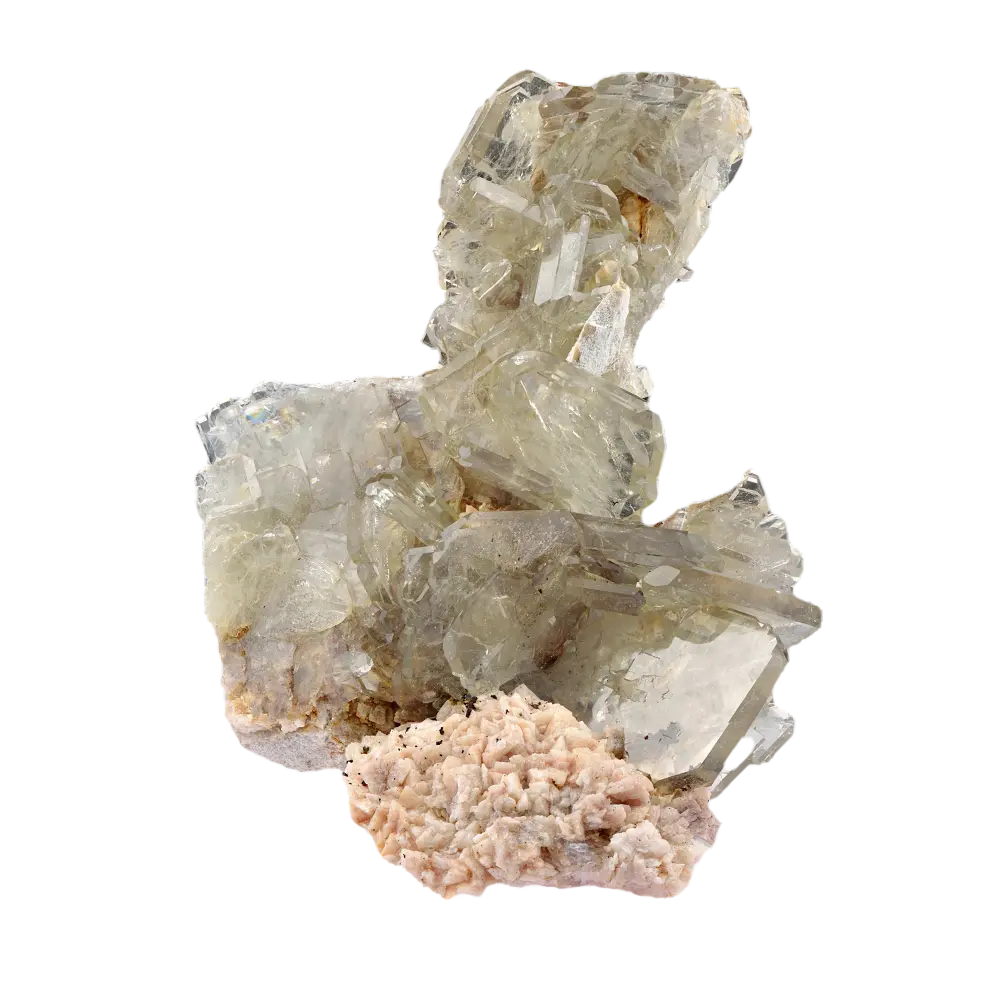
You hear it before you see it. A faint crystalline chime, almost musical, leaking through a wall of dark stone. You dig toward it, break through a shell of smooth black basalt, then a band of pale, almost chalky white, and the chime swells into a chorus. The chamber on the other side is lined with violet crystals that catch your torchlight and throw it back in fractured purple. You have cracked open an amethyst geode, one of the prettiest things in Minecraft, and one of the few in-game structures that a working mineralogist would recognize on sight.
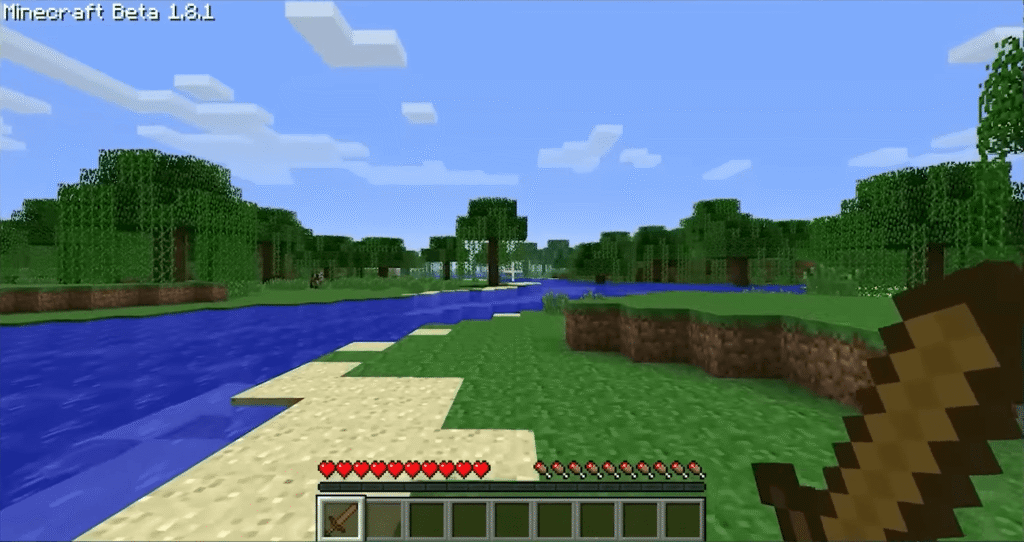
That moment is the reason this article exists. Minecraft is a blocky cartoon, but its underground is not random nonsense. Mojang’s developers borrowed real names, real layering, and in a few cases real chemistry, then stretched and simplified them, and in a few places mangled them outright, to fit a game made of meter-wide cubes. The result is a strange teaching tool. Play long enough and you absorb a rough mental model of how a planet is put together. Some of that model is correct. Some of it would make a sedimentologist wince. This is a feature-by-feature look at the geology of Minecraft, sorting the genuine science from the convenient fiction, with citations to the peer-reviewed literature and to the game’s own documentation where the two need to be told apart.
A note on sourcing before we go underground. Claims about the real world here rest on peer-reviewed papers and institutional sources, with DOIs given so you can check them. Claims about how the game behaves come from the community-maintained Minecraft Wiki, which is documentation of a software product, not a scientific reference. The two are kept separate on purpose.
The layered crust: stone, deepslate, bedrock, and what “deepslate” really is
Dig a straight shaft from the grass down to the bottom of a Minecraft world and you pass through a tidy stack. Dirt and its biome variants near the top. Then a thick zone of ordinary gray stone. Somewhere around the zero mark on the vertical coordinate the stone darkens and hardens into deepslate. At the very bottom, an unbreakable floor of bedrock.
The numbers changed dramatically in late 2021. The Caves and Cliffs Part II update, version 1.18, dropped the floor of the world to Y = −64 and raised the ceiling to Y = 320, making the playable column 384 blocks tall. According to the Minecraft Wiki, below Y = 0 all stone is replaced by deepslate, with a blending zone of mixed stone and deepslate between roughly Y = 0 and Y = 8. Bedrock forms the lowest few layers, around Y = −64 to −59, generating as a ragged rather than flat boundary. The wiki even records that worlds created before the update had their old bedrock between Y = 0 and Y = 4 retroactively replaced with deepslate when loaded into 1.18, a nice illustration of how the game’s stratigraphy is editable in a way that the real one is not.
So what is deepslate supposed to be? The name was a deliberate choice. The block was originally code-named “grimstone,” and Mojang developer Brandon Pearce explained on social media that the team renamed it because “grim” carried the wrong connotations, settling on “deepslate” partly to more accurately represent that it is a type of slate. That tells us the developers wanted players to read the deep, dark, banded block as slate.
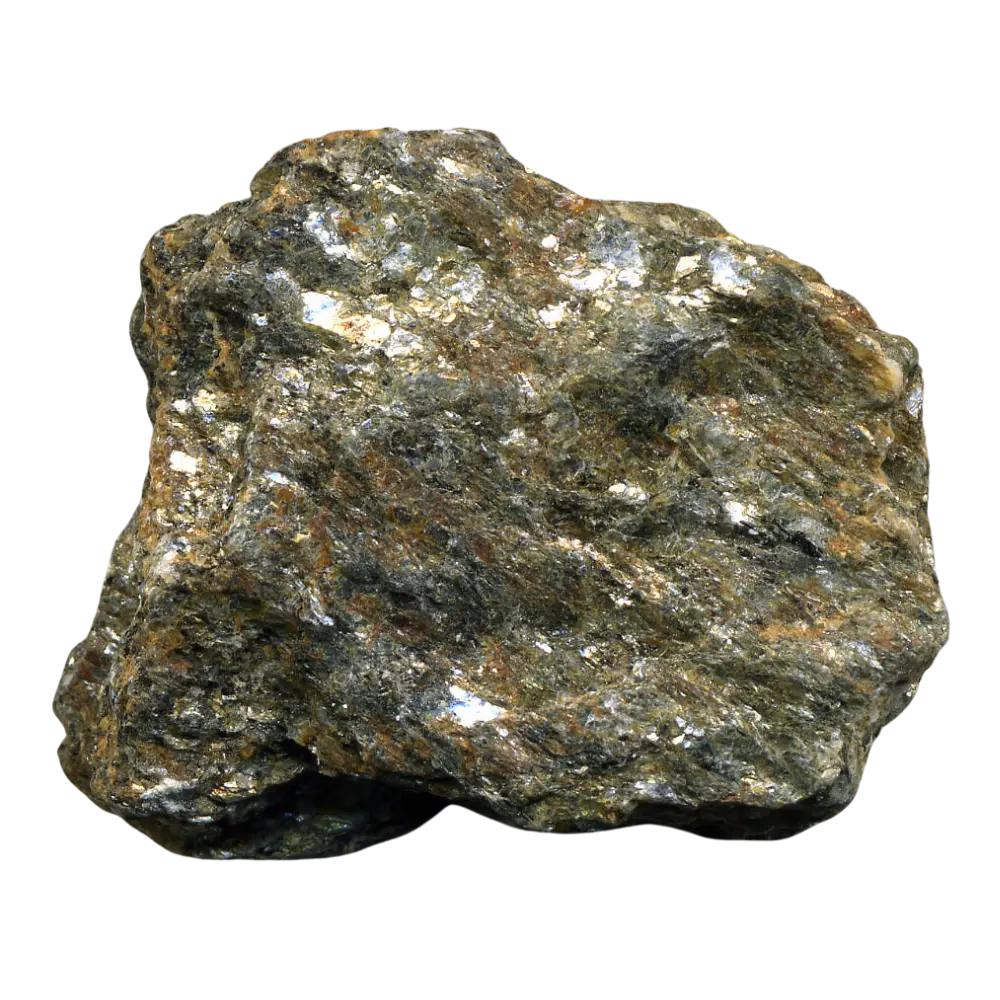
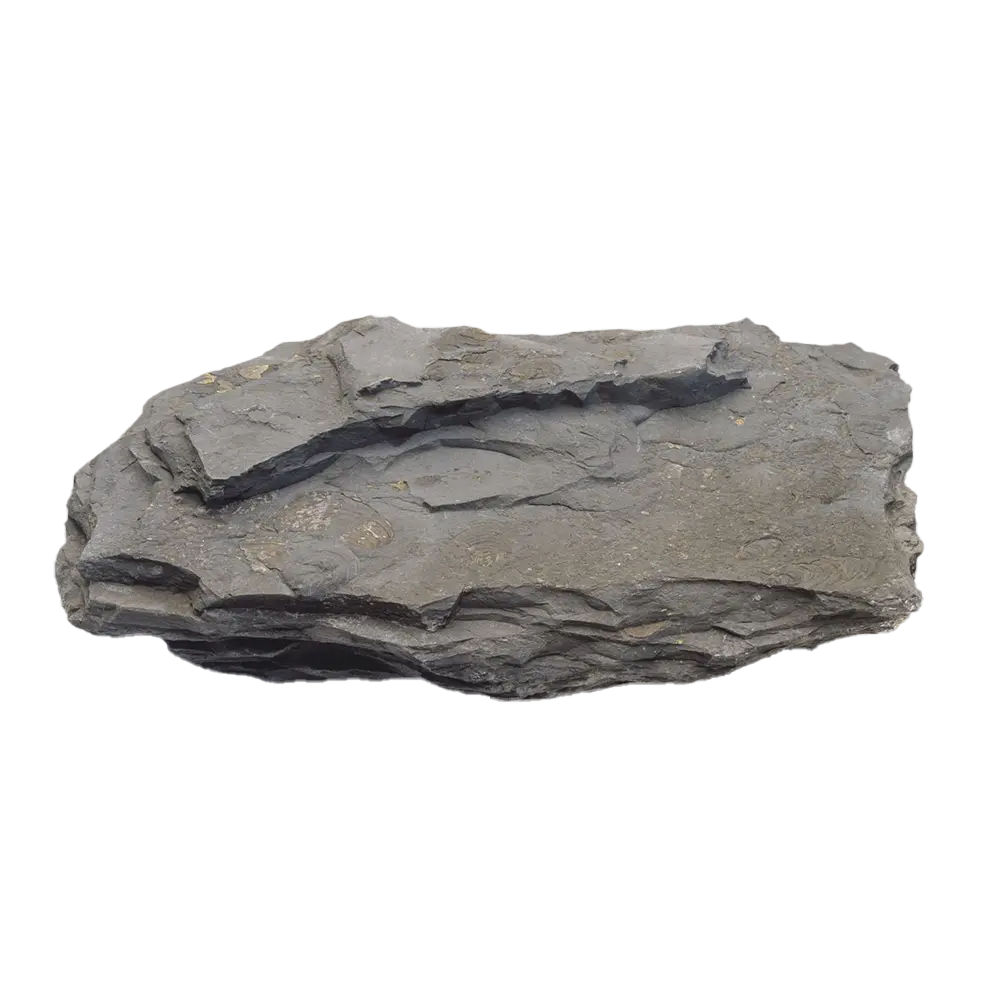
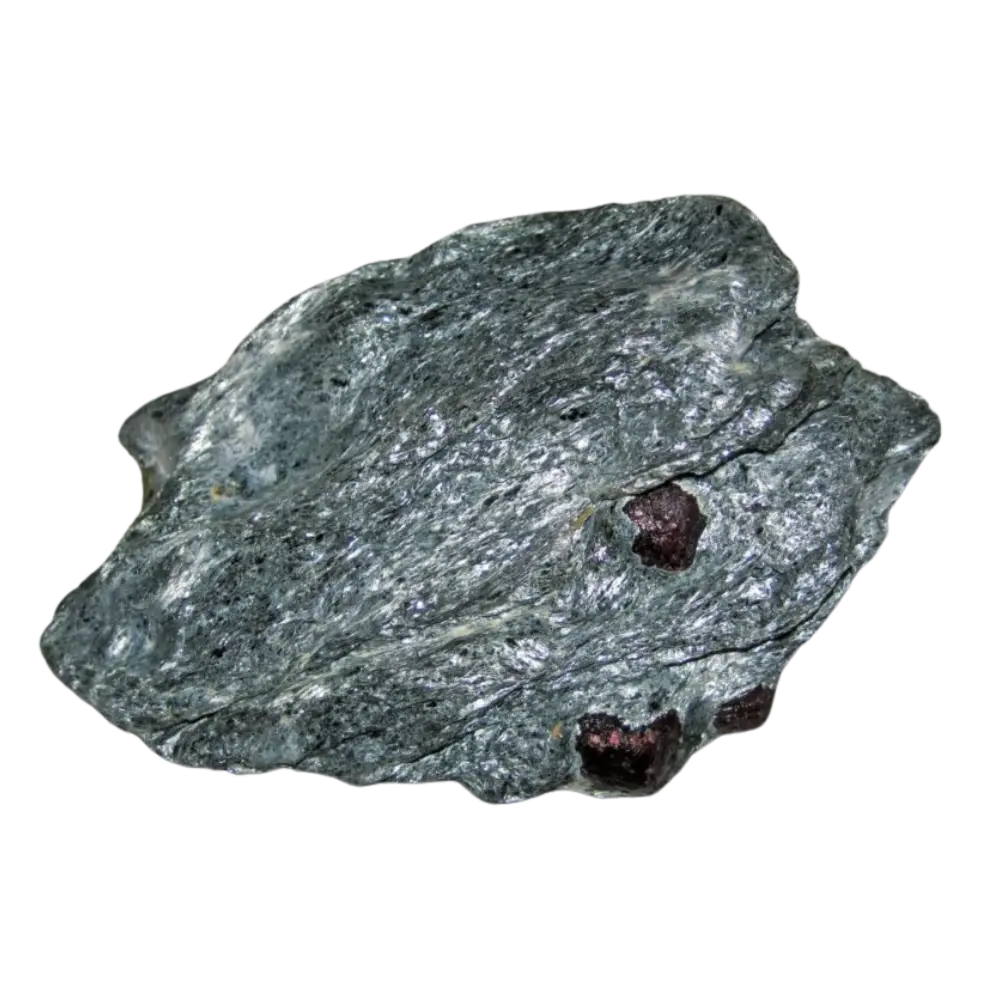
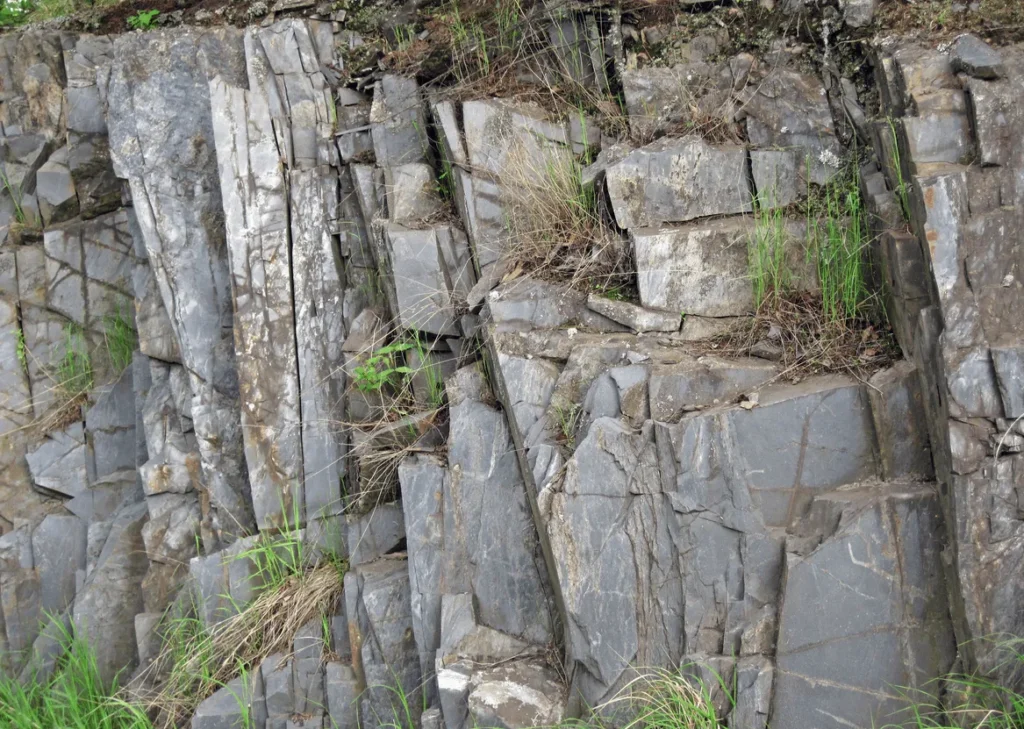
Real slate is a specific and well-understood rock, and this is one of the places the game gets the spirit right while bungling the geology. Slate is a fine-grained, foliated metamorphic rock formed by low-grade regional metamorphism of shale or mudstone, as summarized by standard petrology references including the Geosciences LibreTexts and the geology.com mineral descriptions. The story goes like this: clay-rich mud settles in a basin and lithifies into shale. Then the basin gets caught in a mountain-building collision. Under directed pressure and modest heat, the clay minerals recrystallize into tiny micas that all line up perpendicular to the squeezing direction. That alignment is what gives slate its defining property, slaty cleavage, the ability to split into flat sheets, the same property that put slate on roofs and old schoolroom chalkboards.
Two problems with Minecraft’s version. First, real slate forms from sideways compression in mountain belts, not simply from being deep. Depth alone gives you pressure but the foliation in slate records sideways tectonic squeezing, which Minecraft has no concept of. In the game, deepslate appears purely as a function of altitude, a horizontal layer switch at Y = 0, which is closer to how rock might change with burial depth in a sedimentary basin than how slate actually forms. Second, slate is not especially hard. It splits easily; that is the whole point of it. Minecraft’s deepslate is tougher than stone and takes longer to mine, which suits the gameplay goal of making the deep dangerous and slow but inverts the real rock’s signature weakness. The texture, a dark gray with faint banding, is at least evocative of the real thing.
The honest verdict on the layered crust is that Minecraft reproduces the appearance of stratification, rock changing with depth, without any of the mechanisms that produce it in nature. There is no unconformity, and no tilted bed or intrusion cutting across older layers. The layers are scenery. But the basic intuition a player develops, that the planet is layered and that deeper means older and more altered, holds up. The game just delivers it without any of the machinery that produces it in nature.
Ore distribution versus real ore deposits
Mining in Minecraft is governed by one of the most quietly sophisticated systems in the game, and it is the part that maps least badly onto reality, at least at the level of pattern.
Before 1.18, ores spawned in flat bands. Diamonds, for instance, were scattered uniformly between Y = 1 and Y = 15, and veteran players learned to dig long tunnels at Y = 11. The Caves and Cliffs update threw that out and replaced it with what the community calls triangular and trapezoidal distributions. As multiple guides drawing on the official charts explain, most ores now have a peak depth where they generate most densely, with frequency tapering off above and below that peak in a triangle shape. Mining at the right altitude can roughly double or triple your yield compared with digging at random.
The current numbers, stable from 1.18 through the latest versions, look like this. Diamond ore generates from Y = 16 down to the very floor, with a triangular distribution that peaks at Y = −59, just above bedrock; the deeper you go, the better. Redstone shares almost the same profile, peaking near Y = −59. Iron is unusual in having two peaks: a lower one near Y = 16 and a high mountain distribution peaking around Y = 232, which is why exposed iron shows up in mountain crags. Copper peaks around Y = 48. Coal climbs high, peaking near Y = 96 and reaching the surface. Gold concentrates in the lower negatives with a bonus supply in badlands. Emerald is mountain-exclusive, peaking high in the peaks biomes. Lapis lazuli concentrates near the old sea-floor levels close to Y = 0.
Now, does the real Earth band its ores by depth like this? Not in this clean, globally consistent way, and this is where the comparison needs care. Real ore deposits form by many different processes, and depth is only sometimes the controlling variable. Many of the world’s great copper and gold deposits form in the upper few kilometers of the crust where hot, metal-bearing fluids cool and dump their cargo into fractures and porous rock. Iron formations were laid down on ancient sea floors. Lithium and tin concentrate in the late, watery dregs of granite magmas. The depth at which you find an ore today often has more to do with how much rock has eroded off the top since it formed than with the depth it formed at.
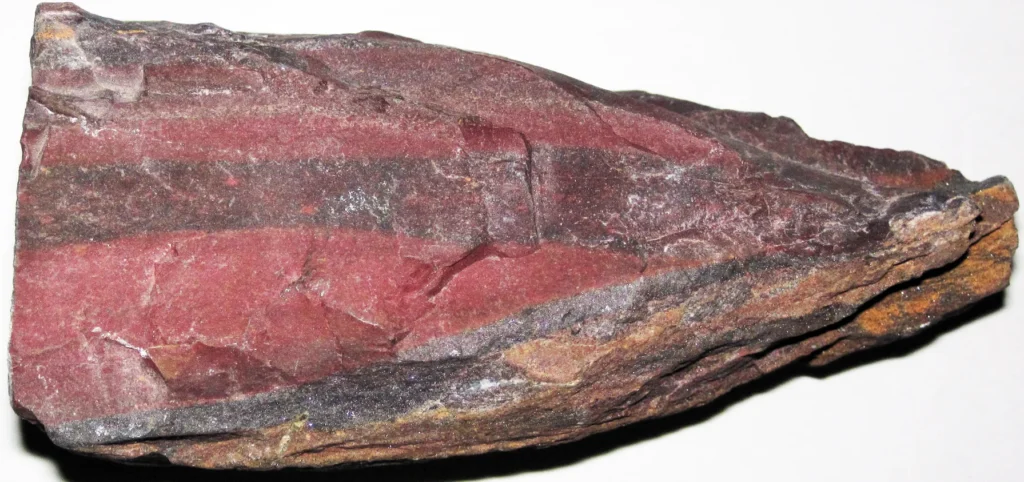
Underneath the false precision, the game still preserves a real idea: ore is not evenly distributed, and different metals concentrate under different conditions in different places. The in-game detail that iron, copper, and coal sit shallow while diamond and gold sit deep loosely tracks the fact that some commodities are crustal and near-surface while the most prized one in the game is associated with the greatest depths. The triangular curve, with its single favored horizon, even faintly mimics the way a specific deposit type concentrates in a preferred zone. A player who internalizes “know your target’s favored depth before you dig” has absorbed a real exploration principle, even if the specific depths are invented.
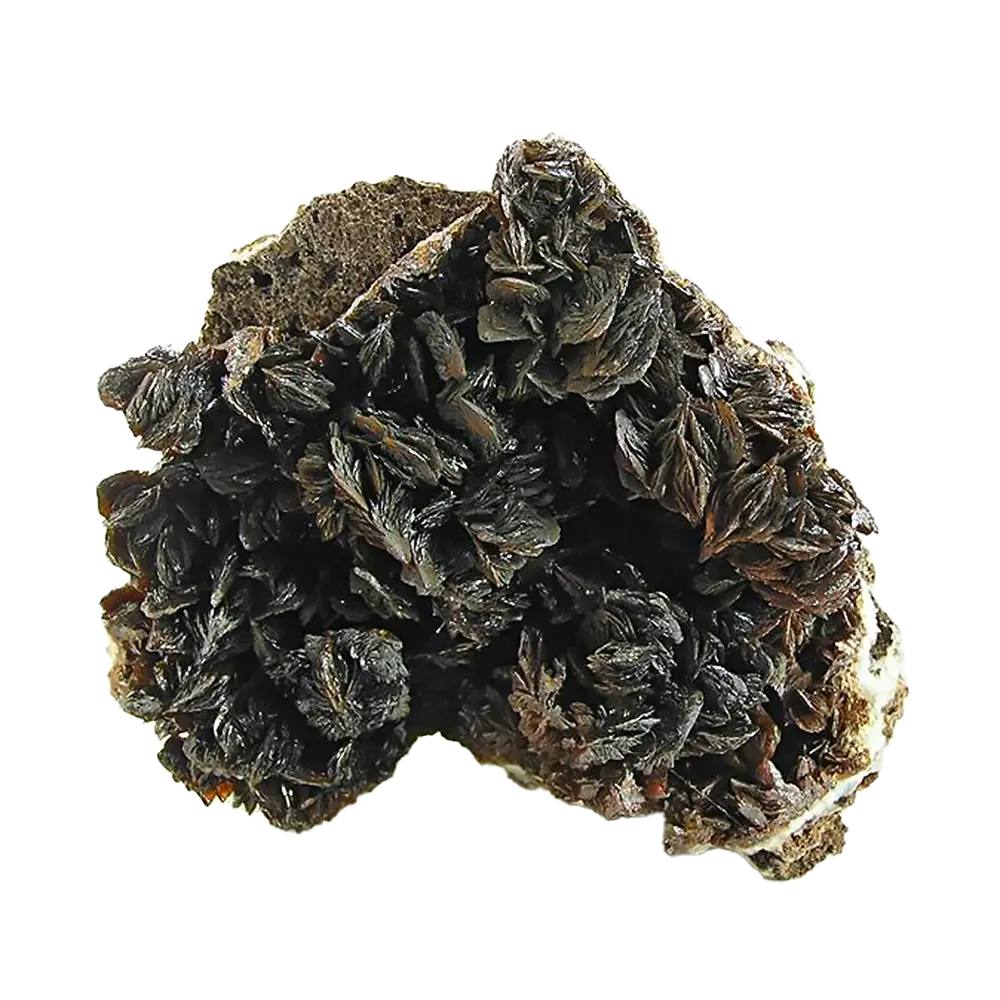
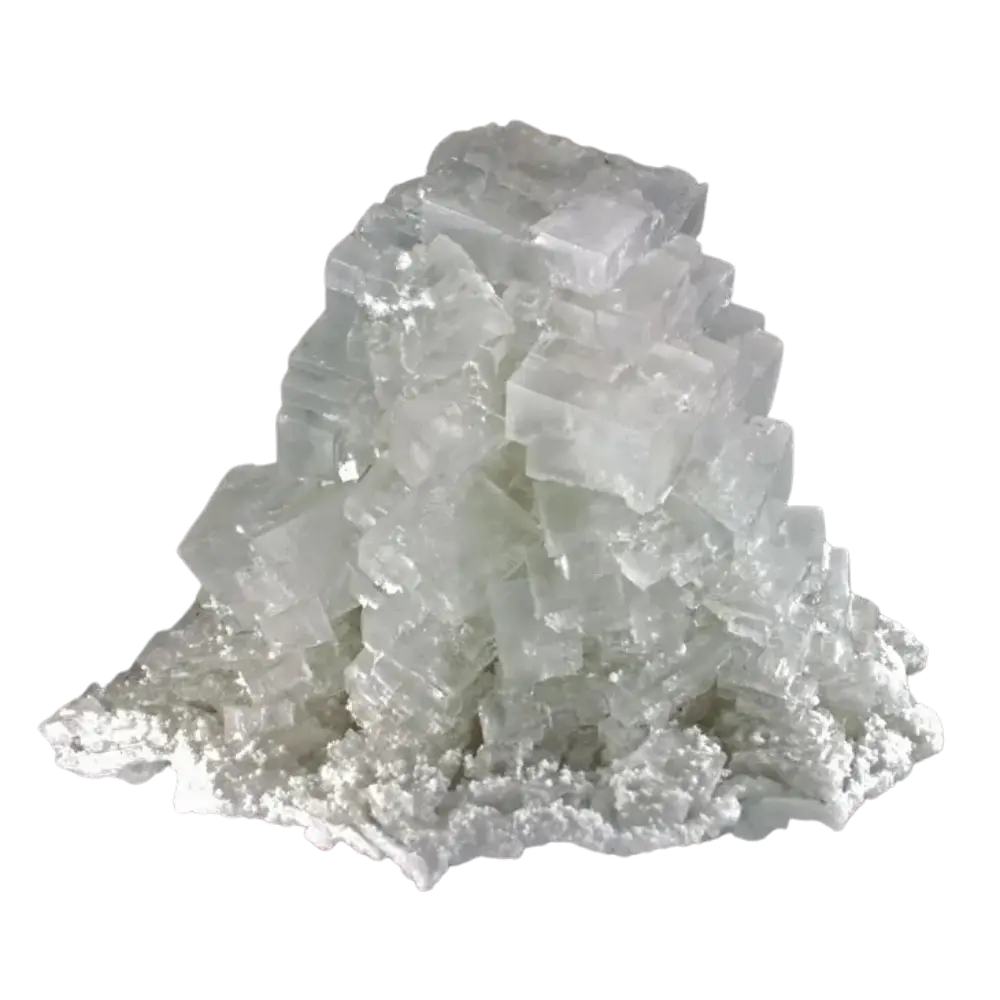
One more touch the game gets quietly right. Below Y = 0, iron can generate as large ore veins tangled together with tuff, and copper forms its biggest veins in dripstone cave biomes. Concentrating particular ores in particular rock settings, rather than sprinkling them everywhere, is genuinely how nature behaves. Particular ores really do favor particular host rocks. See also copper and halite.
Diamonds and the coal myth
Ask a hundred people where diamonds come from and a good fraction will tell you, confidently, that diamonds are coal squeezed hard enough for long enough. It is one of the most durable misconceptions in all of geology, it has been repeated in cartoons and classrooms for decades, and Minecraft is in on the joke.
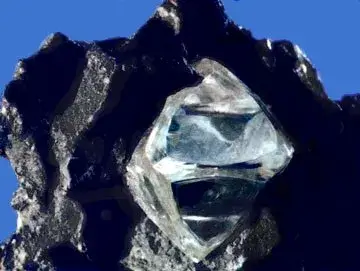
Here is the remarkable part. The game’s own documentation knows the myth is a myth and built it in as an Easter egg. When a fossil structure generates deep underground in Minecraft, some of its bone blocks are replaced by ore. Above Y = 0 the replacement is coal; below Y = −8 it is diamond. The Minecraft Wiki spells out the wink directly, noting that diamond ore replacing coal ore in fossils that generate in deepslate layers is in accordance with the common misconception in real life that diamonds form from highly compressed coal, when in fact diamonds form from carbon already deep in the mantle and are completely unrelated to coal, which forms from dead plants. A game studio deliberately encoded a scientific misconception and then flagged it as one in the manual.
So where do diamonds actually come from? The authoritative modern review is Shirey and colleagues, “Diamonds and the Geology of Mantle Carbon,” published in Reviews in Mineralogy and Geochemistry (vol. 75, no. 1, pp. 355–421, 2013; DOI 10.2138/rmg.2013.75.12). The picture it lays out is humbling. Diamond can crystallize throughout the mantle below about 150 km and can occur metastably in the crust. Most gem diamonds are lithospheric, forming at depths on the order of 150 to 250 km beneath the most stable, ancient hearts of continents, the Archean cratons, at temperatures around 1,000 to 1,200 degrees Celsius and pressures above 4 gigapascals. The carbon in them is ancient. Many diamonds have been dated to between roughly 1 and 3.5 billion years old, far older than the much younger volcanic eruptions that delivered them to the surface.
That delivery is its own drama. Diamonds do not crawl up. They are carried up fast, in rare and violent eruptions of a magma called kimberlite that rips upward from mantle depths quickly enough that the diamonds survive the trip without reverting to graphite. The Shirey review stresses how rare diamond is even in its host, occurring at the part-per-billion level even within the most diamond-bearing volcanic host rock. The carbon itself, the same paper and related work argue, is sourced substantially from carbonate and from organic carbon dragged down into the mantle by subduction, the recycling of old sea floor, not from coal seams.
Set that against Minecraft and the contrasts line up cleanly. The game puts diamond at the very bottom of the world, just above bedrock, peaking at Y = −59. The game’s link between depth and diamond is real; only the scale is wrong, by orders of magnitude. Minecraft’s whole world is only 384 blocks, a few hundred meters, tall, whereas real diamonds form a hundred and fifty kilometers down. The mismatch is so large that if the game’s distribution chart extended to the depths real diamonds form at, they would spawn far below the bedrock you stand on. The game also has you find diamonds in deepslate and in fossils, which gets the association with depth right and the association with coal deliberately, knowingly wrong.
Amethyst geodes: the feature Minecraft gets right
Of everything in the game, the amethyst geode is the one a geologist is most likely to point at and say, yes, that is real, that is roughly how it works.
Start with what the game builds. The Minecraft Wiki describes the geode as a three-layer structure: an outer layer of smooth basalt, a middle layer of calcite, and a hollow layer of primarily amethyst blocks, with about 8.3% replaced by budding amethyst blocks. Amethyst crystals grow outward from those budding blocks, and the geode has a 95 percent chance of generating with a crack that exposes the hollow interior. They occur underground between roughly Y = −58 and Y = 30, with about a one-in-24 chance per chunk. Break in and you pass through the dark basalt shell, then the pale calcite band, then into the crystal-lined cavity. That is the sequence that makes the chime.
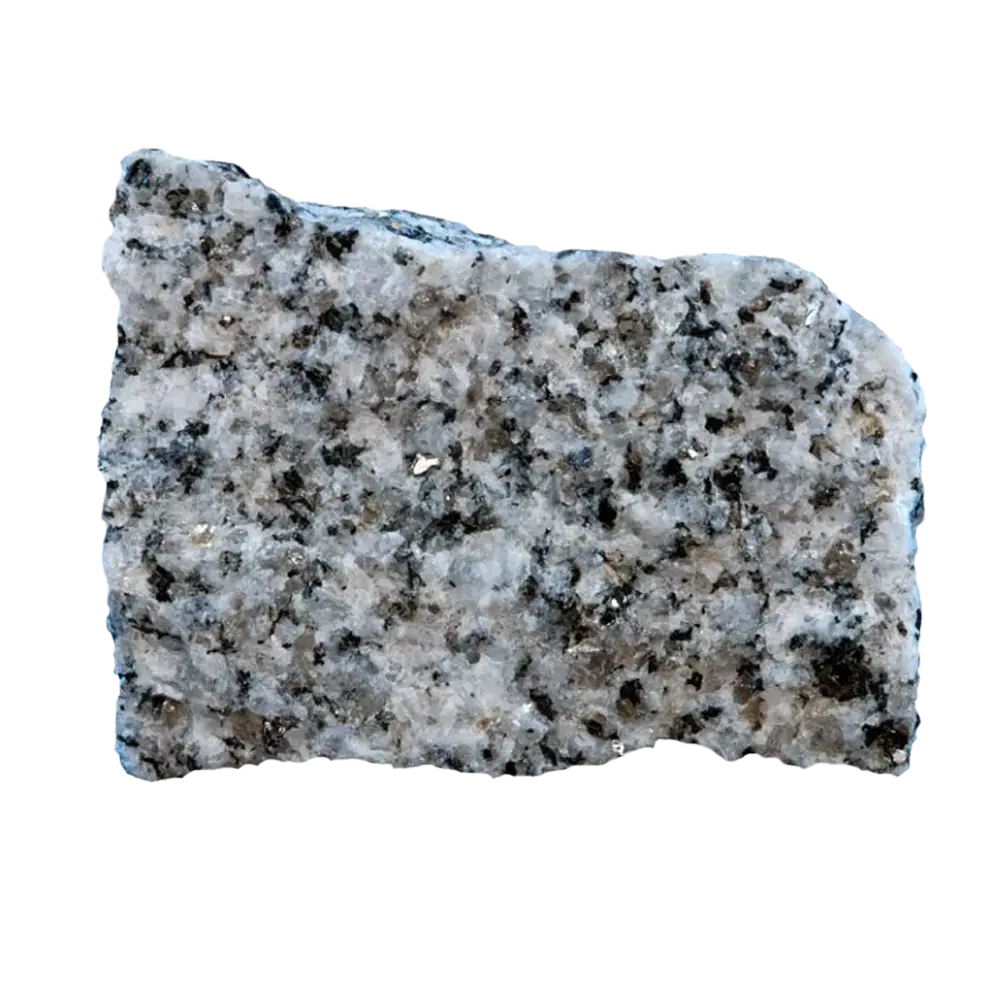
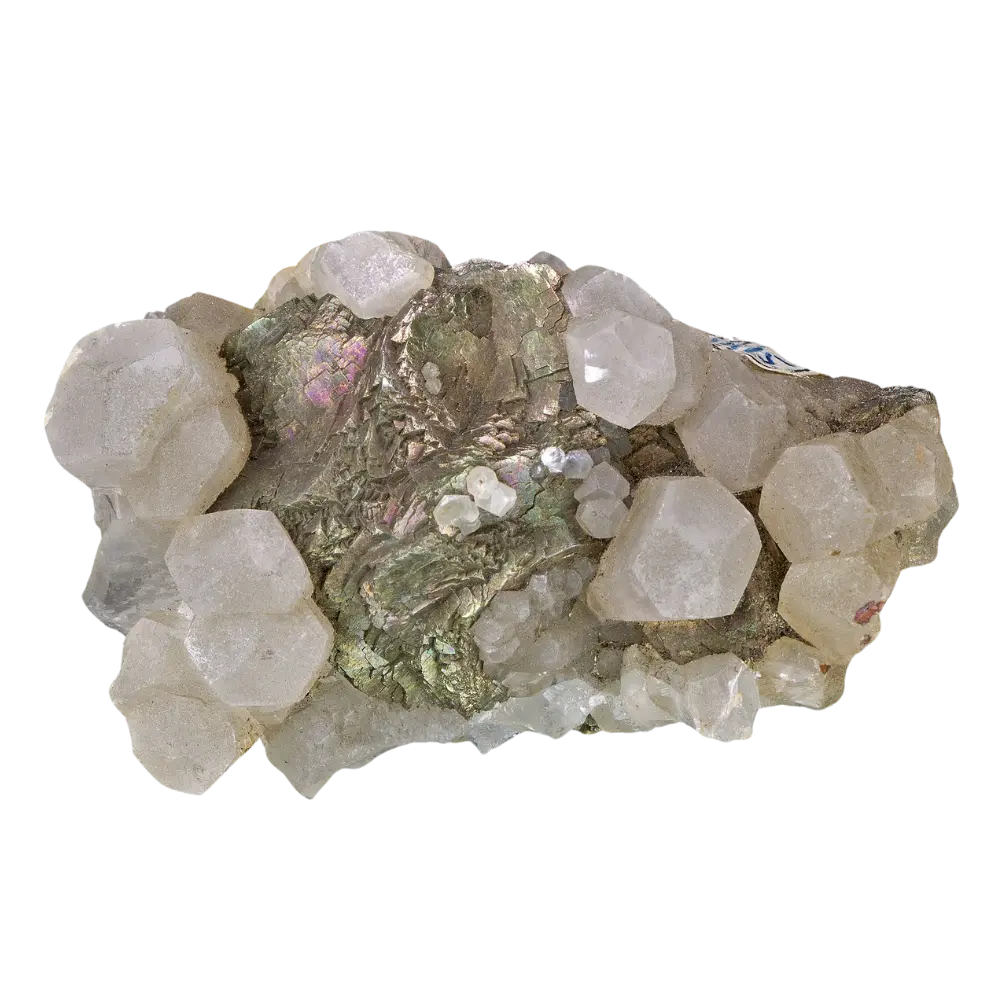
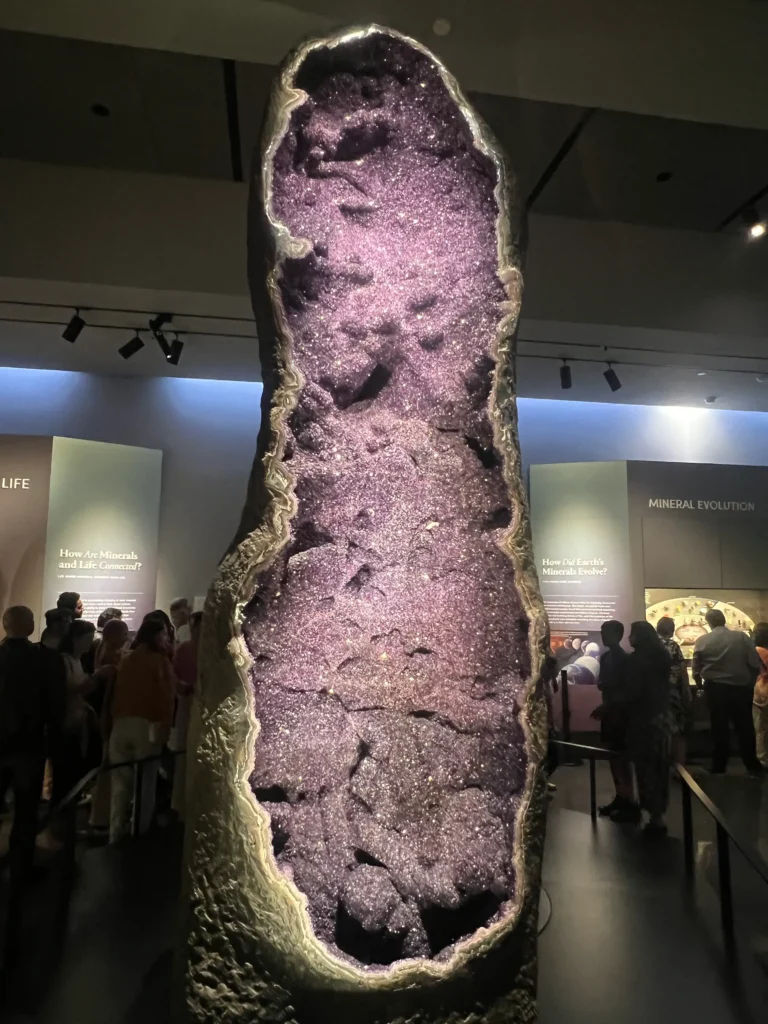
Now compare the real thing, and the match is close. The classic study is Gilg and colleagues, “Genesis of amethyst geodes in basaltic rocks of the Serra Geral Formation,” in Mineralium Deposita (vol. 38, pp. 1009–1025, 2003; DOI 10.1007/s00126-002-0310-7). The setting is southern Brazil, the Ametista do Sul district, where the geodes are hosted by a 40- to 50-metre-thick subhorizontal high-Ti basaltic lava flow of the Lower Cretaceous Paraná Continental Flood Basalt Province. The internal sequence the paper documents runs from an outer rim of celadonite, followed inward by agate and colorless and finally amethystine quartz, with calcite forming throughout and often as late crystals in the central cavity.
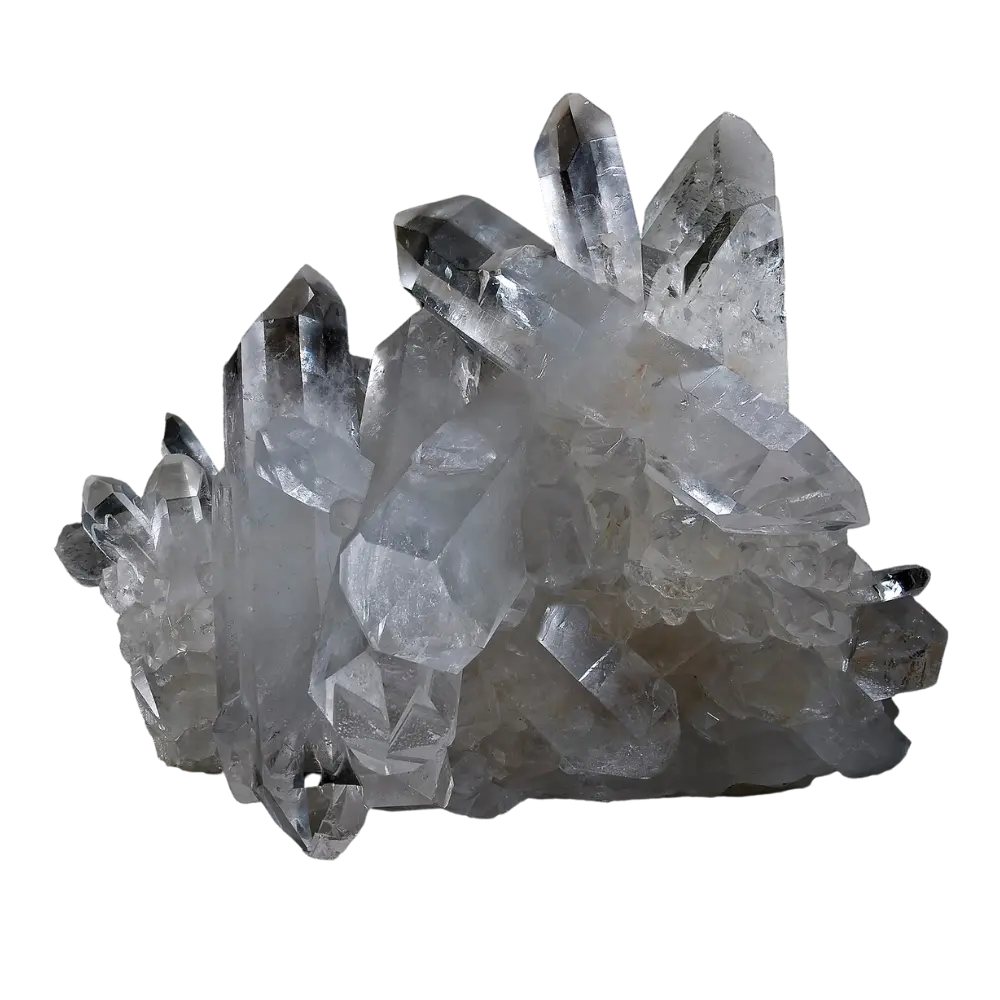
Line the two up. Minecraft’s outer shell is smooth basalt; the real geode sits inside a basalt lava flow. Minecraft’s middle layer is calcite; real geodes contain calcite as a major phase, often as a distinct band and as late crystals lining the void. Minecraft’s core is amethyst, purple quartz; the real cavity fills inward with chalcedony and quartz that finishes as amethyst. The game compressed celadonite, agate, and several quartz generations into one tidy purple core, but the architecture, dark mafic rock outside, carbonate in the middle, purple silica crystals in the hollow heart, is right.
The geology behind the real geodes is strange. These crystals grew inside one of the largest volcanic events in Earth’s history. The Paraná-Etendeka large igneous province erupted in the Early Cretaceous as Gondwana was tearing apart to open the South Atlantic. A 2021 Earth-Science Reviews geochronology synthesis of the province found that volcanic activity peaked at 134.4 ± 0.1 million years ago, with major events lasting until about 133.2 million years ago and eruptions possibly ceasing around 132.0 million years ago. The province buried more than a million square kilometers under lava, with an original volume most commonly estimated at around 800,000 cubic kilometers and some reconstructions running higher still. The Brazilian lavas carry the formal name Serra Geral Formation.
But the amethyst did not crystallize from the hot magma. Gilg’s team used fluid inclusions, tiny trapped droplets of the original mineralizing fluid, to show the crystals grew at low temperatures, with quartz homogenization temperatures between about 95 and 98 degrees Celsius from low-salinity waters; later work by the same group refined the crystallization temperature to roughly 80 to 90 degrees Celsius. Their interpretation, reinforced by later work, is that colorless quartz and amethyst precipitated not from cooling lava but from upwelling, oxidised meteoric waters derived from the meteoric-fed aquifer system beneath the basalts, percolating through the rock long after it had cooled. In other words: rainwater, soaking down into ancient lava and slowly building gemstones in its cavities over geological time.
There is even a live scientific debate about how the cavities opened in the first place, and it bears directly on the game. One camp holds the voids are gas bubbles from the original lava. The other, argued by Hartmann and colleagues in “Numerical simulations of amethyst geode cavity formation by ballooning of altered Paraná volcanic rocks,” in Geofluids (vol. 12, no. 2, pp. 133–141, 2012; DOI 10.1111/j.1468-8123.2011.00346.x), proposes that the cavities grew by “ballooning,” a process in which water and its vapor, trapped under a cover of altered, clay-rich basalt, inflated bubbles in the soft rock. Their finite-element models found that giant geodes could open under a water-vapor pressure of about 0.5 megapascals beneath 5 to 20 meters of altered basalt, but only where the rock was soft enough, with a Young’s modulus in the range of 1 to 2 gigapascals, to deform like a balloon rather than fracture. The largest real geodes from this province are commonly one to four meters across. The giants from the equivalent district in Uruguay are larger still: the “Empress of Uruguay,” the world’s largest displayed amethyst geode, stands about 3.27 meters tall and weighs roughly 2.5 tons, and even bigger specimens have surfaced.
So Minecraft’s geode is scaled up to room size, which is actually conservative next to the real Uruguayan monsters, and its internal chemistry is collapsed into three clean blocks. But the essential truth, that purple quartz crystals grow inside carbonate-lined cavities within flood-basalt lava, is accurate. The one detail the game invents wholesale is the budding amethyst that regrows crystals over time. Real geodes are not renewable; once the fluids stop flowing, growth stops for good.
Dripstone caves and lush caves
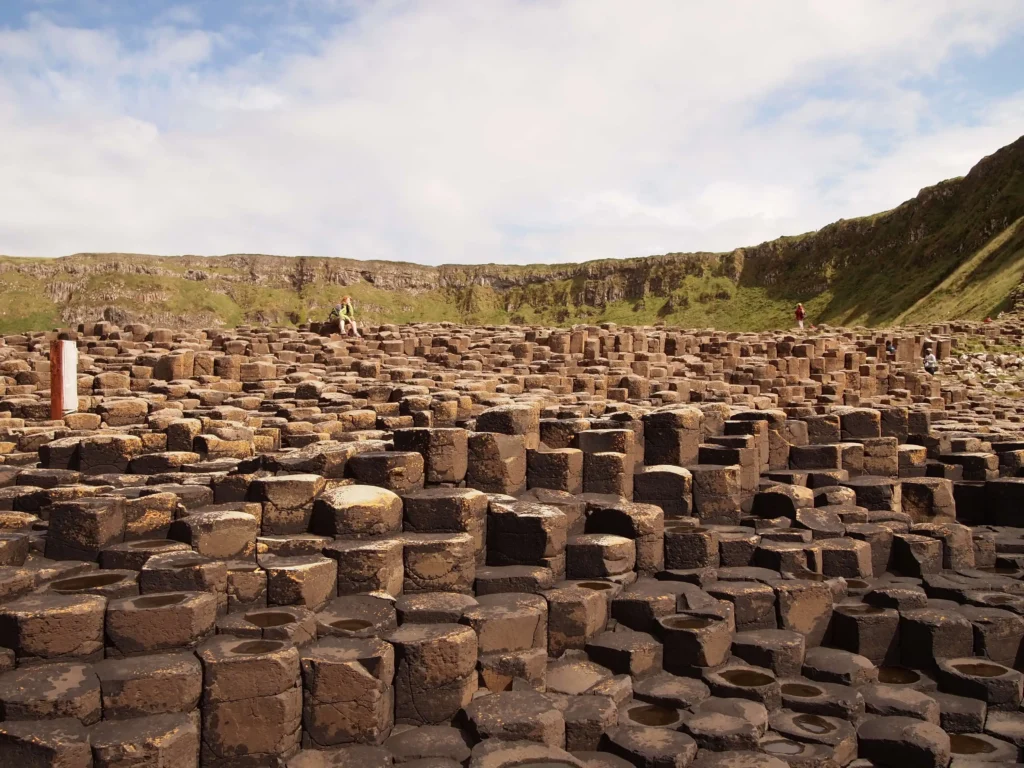
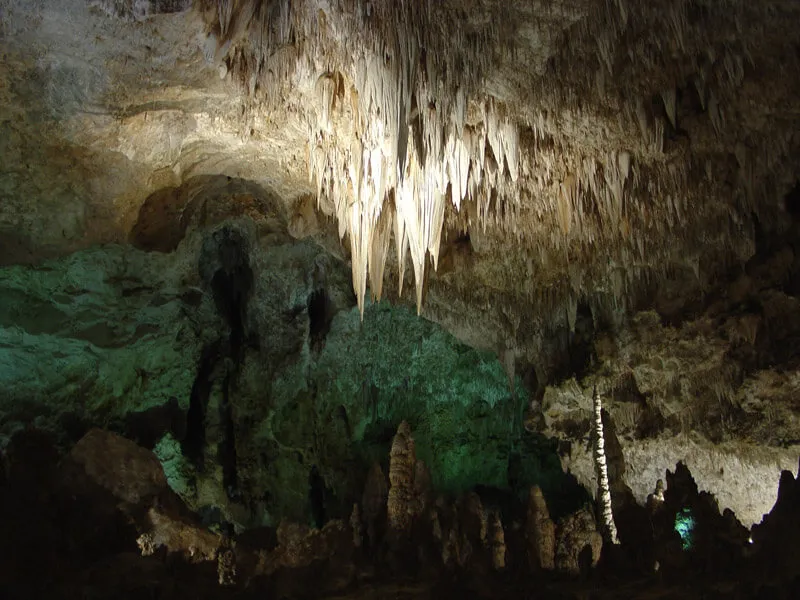
The Caves and Cliffs update added dedicated cave biomes, and the dripstone caves are the ones that wear their real-world inspiration openly. Mojang gameplay designer Henrik Kniberg said as much directly on social media in February 2021, naming Hang Son Doong in Vietnam, with its 80-metre formations, as one of the sources of inspiration for the new caves and the large dripstone. Hang Son Doong is the largest cave passage on Earth.
The signature blocks are pointed dripstone, which form stalactites hanging from the ceiling and stalagmites rising from the floor, plus the dripstone block that lets them grow. The growth mechanic is specific. Per the Minecraft Wiki, a stalactite grows only when it hangs beneath a dripstone block with a water source above it, and a matching stalagmite will grow on a solid surface less than eleven blocks below. Each time the block receives a random tick there is a 1.138 percent chance of growing one block, which works out to an average of about five in-game days per growth step. They stop at seven blocks long. Water dripping from a stalactite into a cauldron can slowly fill it, and dripstone above mud can convert it to clay.
Real speleothems, the umbrella term for stalactites, stalagmites, and their kin, are built by carbonate chemistry that is quietly elegant, and the controlling reference is Dreybrodt, “Chemical kinetics, speleothem growth and climate,” in Boreas (vol. 28, no. 3, pp. 347–356, 1999; DOI 10.1111/j.1502-3885.1999.tb00224.x). The process is a play in three acts of chemistry. Rainwater picks up carbon dioxide from the air and especially from CO2-rich soil, forming a weak carbonic acid. That acidic water seeps through limestone and dissolves calcium carbonate, becoming charged with dissolved calcium and bicarbonate. When it emerges into the open air of a cave and hangs as a droplet, it degasses: CO2 escapes from the drop into the cave air, the water becomes supersaturated with respect to calcite, and a microscopic film of calcite precipitates out. Drop after drop, over enormous spans of time, that residue builds the spike. Dreybrodt’s paper models how the growth rate depends on drip interval, the supersaturation of the solution, temperature, and the cave’s CO2 level, which is exactly why speleothems are prized archives of past climate.
The headline number nobody should skip is the rate. Measured growth rates are slow: published cave studies generally fall well under a millimeter per year, with rates of a fraction of a millimeter per year typical. At those rates a meter-long stalactite can represent tens of thousands of years of patient dripping. Minecraft’s average of five in-game days per block, roughly an hour and a half of real play, is faster than nature by something like a factor of millions. Mojang knows it: the official “Block of the Week: Dripstone” post notes that when a stalactite and stalagmite finally join into a column you could wait in a cave for it to happen, but it does not recommend doing so, because it takes tens of thousands of years. The speed-up is unavoidable, a game cannot run for ten thousand years, but it is the single largest distortion in the dripstone system.
The game also fudges the chemistry’s setting. Real dripstone needs limestone, a carbonate host rock, because the calcium has to come from somewhere. Minecraft’s dripstone caves are carved from ordinary stone and deepslate with no limestone in sight, and the dripstone block itself is a unique material rather than precipitated calcite. The Minecraft Wiki even flags one frank departure from physics: in the game, dripstone columns stop where they join, unlike in real life, whereas real stalactites and stalagmites that meet keep thickening into a single pillar. And the renewable-lava trick, dripping lava through a stalactite to fill a cauldron forever, is pure gameplay invention with no natural analog.
Still, the bones are right. Water drips, minerals accumulate at the drip point, spikes grow down from the ceiling and up from the floor and occasionally meet in the middle. A child who builds a dripstone farm has, without being told, rehearsed the basic logic of how a cave decorates itself. The neighboring lush caves, draped in moss and trailing vines around clay pools, are more a fantasy of a wet cave ecosystem than a literal one, but they capture something true about caves as habitats fed by water from above.
Tuff, calcite, and copper oxidation
Three smaller blocks deserve their own section because each connects to a real material, and one of them is the best piece of process geology in the entire game.
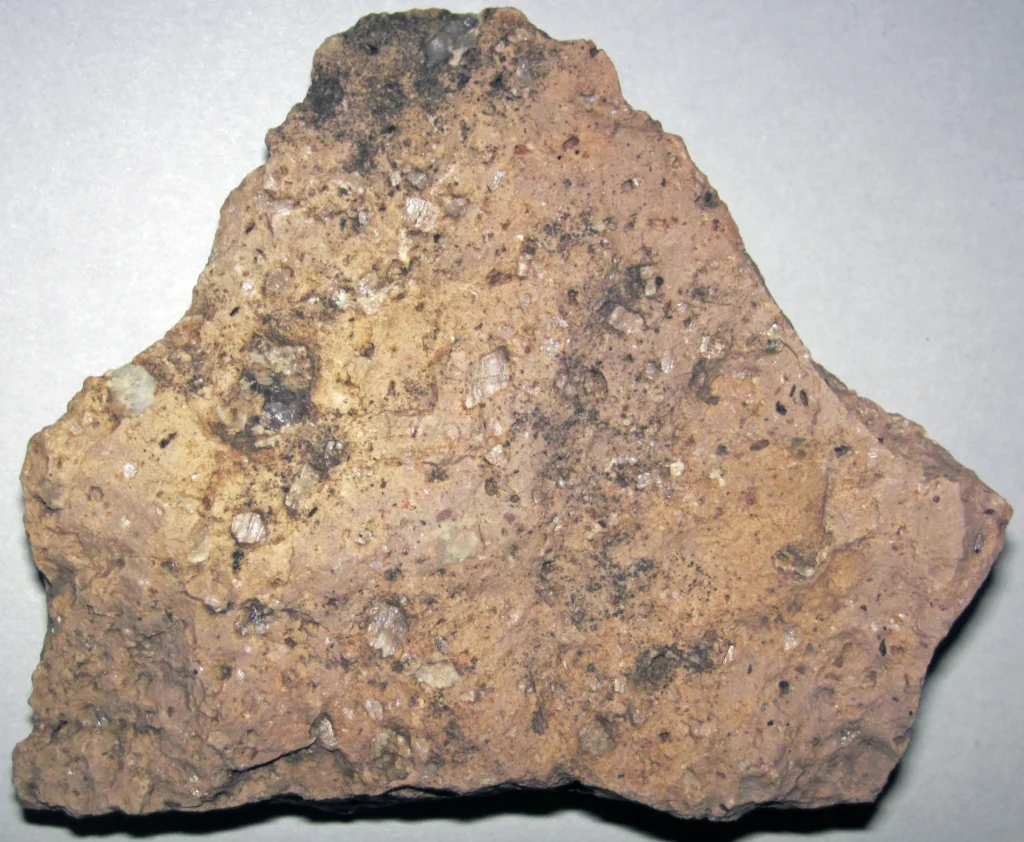
Start with tuff. In Minecraft, tuff is a dark, mottled rock that generates in blobs down in the deepslate zone and shows up tangled in with the large iron veins below Y = 0. Real tuff is consolidated volcanic ash, the fine fragmental debris blown out of an explosive eruption and later cemented into rock. The game’s tuff is a reasonable visual stand-in for a dark volcaniclastic rock, but its placement, deep underground in association with iron veins, has nothing to do with how ash deposits actually form, which is by falling out of an eruption column onto the surface. The name matches the appearance but not the way the rock actually forms.
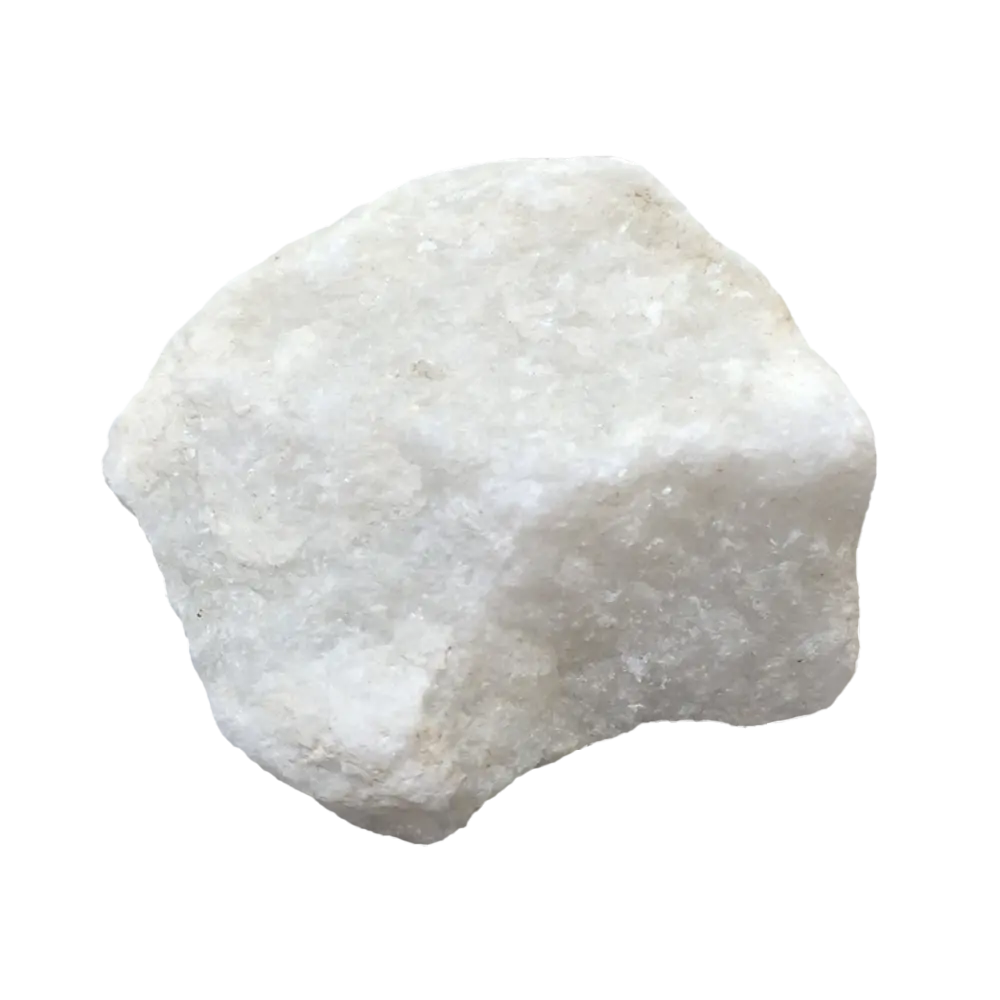
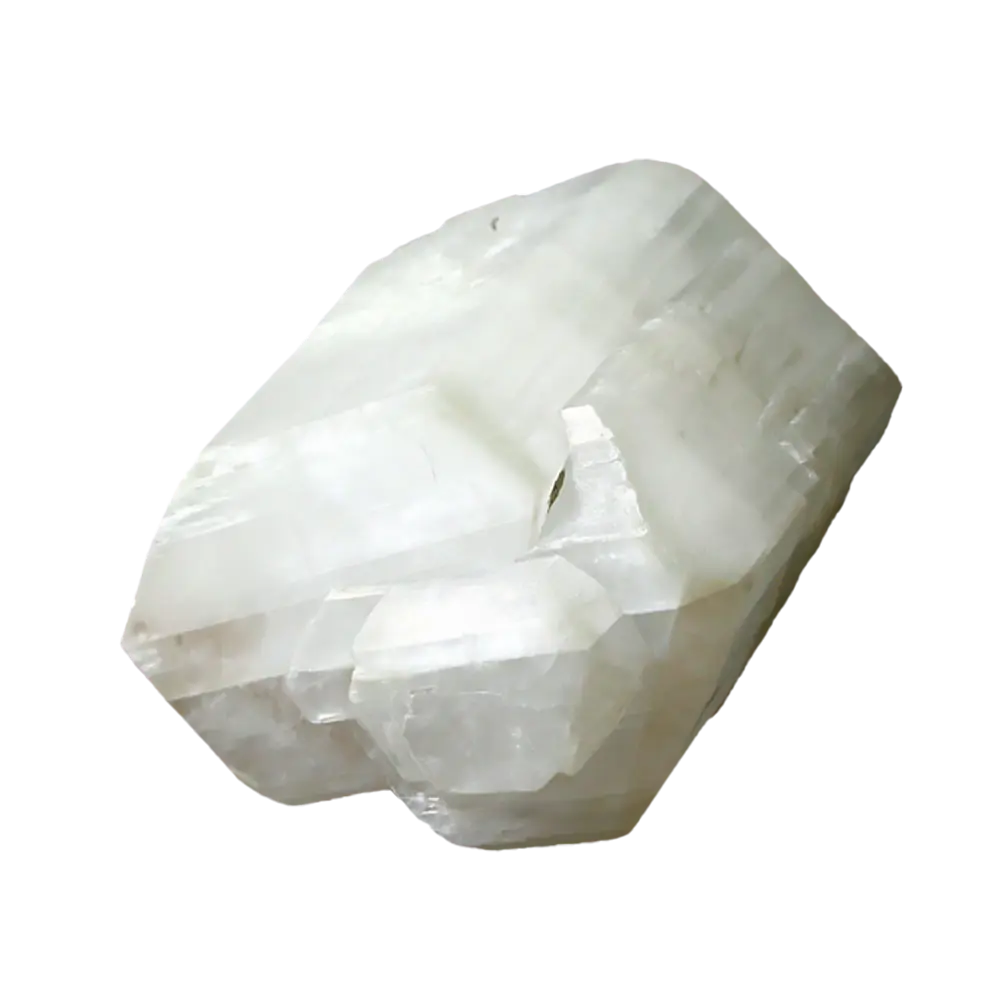
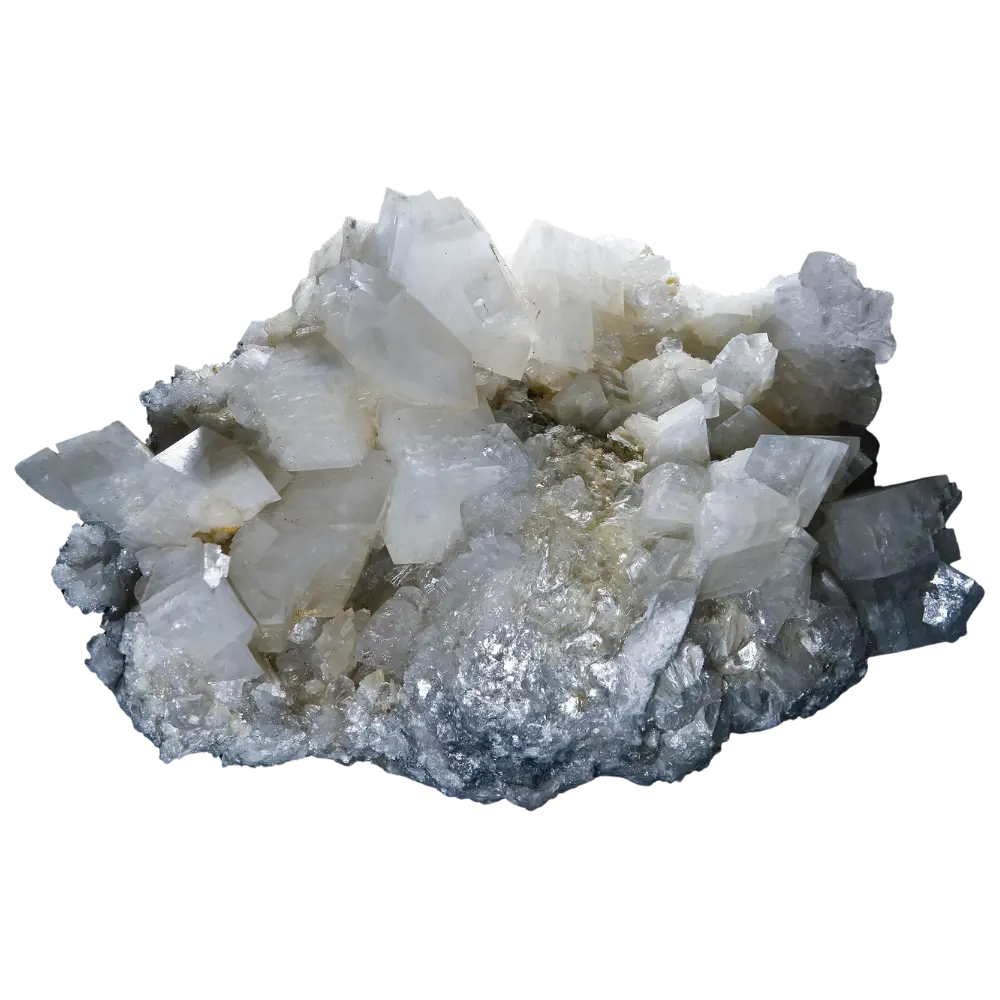
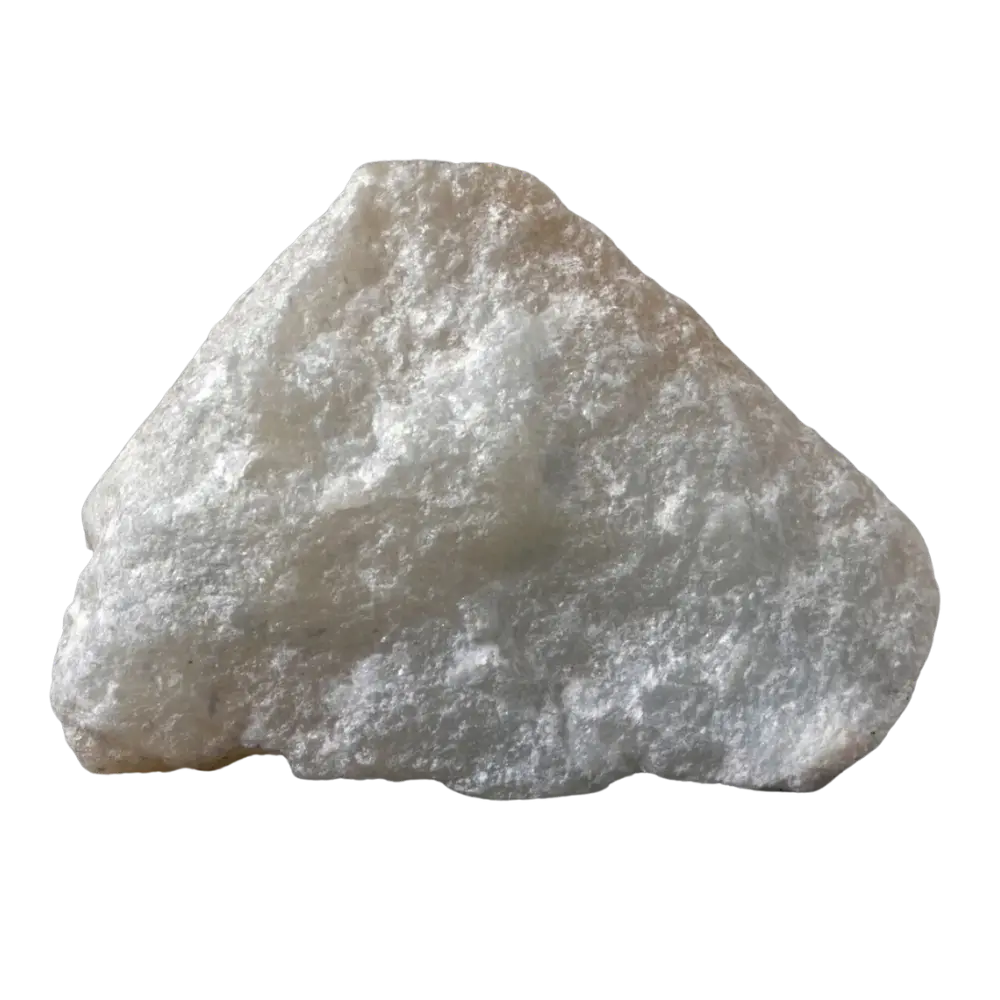
Calcite is on firmer ground. In the game it appears almost exclusively as the pale middle layer of amethyst geodes, and as we have seen, that is precisely where calcite belongs: real geodes carry calcite as a major phase between the basalt and the crystal-lined void. Calcite is calcium carbonate, the same mineral that builds limestone and speleothems, so the game’s instinct to cluster calcite with carbonate-cavity environments is sound. The bright white block is even a fair likeness of massive calcite.
Then there is copper, and copper is where Minecraft does something properly educational. Place a block of copper and leave it. Over time it shifts through four stages the game names normal, exposed, weathered, and oxidized, marching from bright metallic orange through patchy green to a full teal-green skin. The Minecraft Wiki describes the progression exactly: as it oxidizes green spots begin to appear, then it turns a green color with brown spots, and finally teal with several green spots. You can halt the process by waxing a block with honeycomb, scrape it back a stage with an axe, or strip it entirely with a lightning strike.
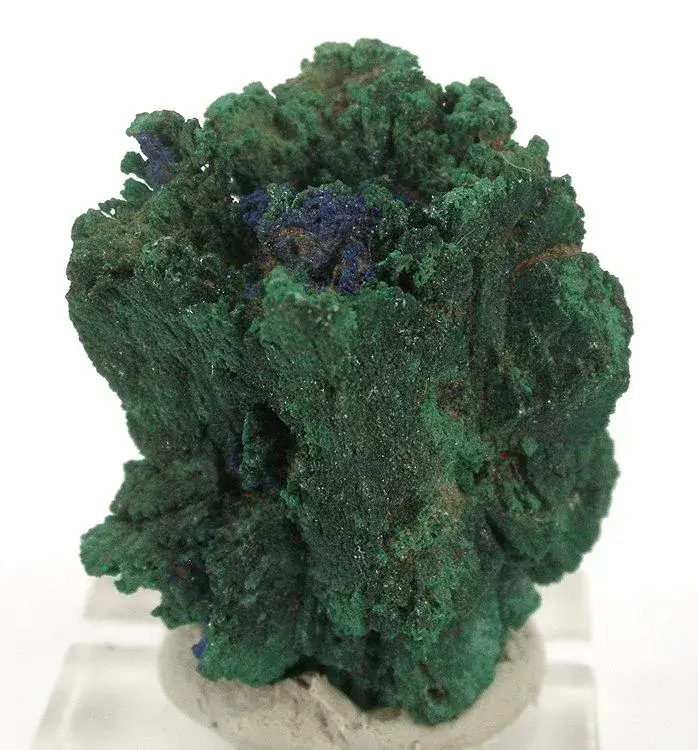
This is real chemistry, and unusually well observed. Exposed copper reacts with oxygen, water, and carbon dioxide to grow a surface layer, beginning with a reddish copper oxide and developing into the familiar green patina, a mixture dominated by basic copper carbonate and related compounds. That green coating is chemically the same family as the mineral malachite, basic copper carbonate, Cu2CO3(OH)2, which forms naturally in the weathered, oxidized zone above copper ore bodies. It is the green of the Statue of Liberty’s skin and of old church roofs, and the protective patina is, as Mojang’s own blog cheerfully warns, mildly poisonous. The progression from shiny metal to green crust over years is one of the most visible weathering reactions in everyday life, and the game reproduces its stages faithfully.
There is one telling error, and the wiki names it. In Minecraft, oxidation relies only on random ticks, and rain or water does not accelerate it, nor does covering copper blocks with other blocks prevent it. In reality moisture is the accelerant; a copper roof in a wet, salty coastal city greens far faster than one in a dry desert, and sealing copper from air and water slows the reaction. The game decoupled patina from moisture for simplicity, which is a real chemical inaccuracy sitting right next to an otherwise excellent depiction. Overall, copper oxidation is the closest Minecraft comes to teaching an actual reaction mechanism, and it does it well enough that the four named stages would not look out of place in a corrosion textbook.
Biomes, erosion, and weathering at the surface
Above ground, Minecraft’s geology gets thinner, because the surface is where the game most prioritizes playability over process. Biomes are assigned by a set of noise-driven parameters, temperature, humidity, and so on, that decide whether a region becomes desert, forest, or snowy peak. That parameter-space approach is loosely analogous to how climate scientists classify real biomes by temperature and precipitation, and it produces believable broad zonation: deserts in warm dry parameter regions, ice in cold ones.
What is almost entirely missing is erosion as a process operating through time. A real desert dune field is a dynamic thing, sand picked up, bounced, and piled into migrating ridges by wind, the surface in constant slow motion. Minecraft’s deserts are static sand that never moves, never forms a real dune, never gets carved into a yardang. Rivers in the game are noise-drawn channels, not features cut by flowing water, and they do not erode their banks or build deltas. Mountains rise because the noise says so, not because anything pushed them up, and they do not wear down. The game has weathering in exactly one place, the copper patina discussed above, and erosion essentially nowhere. Gravel and sand do at least obey gravity, falling when unsupported, a tiny nod to mass wasting, and water and lava flow downhill, but there is no sediment transport, no abrasion, nothing resembling landscape evolution. The terrain you generate is frozen the instant it appears.
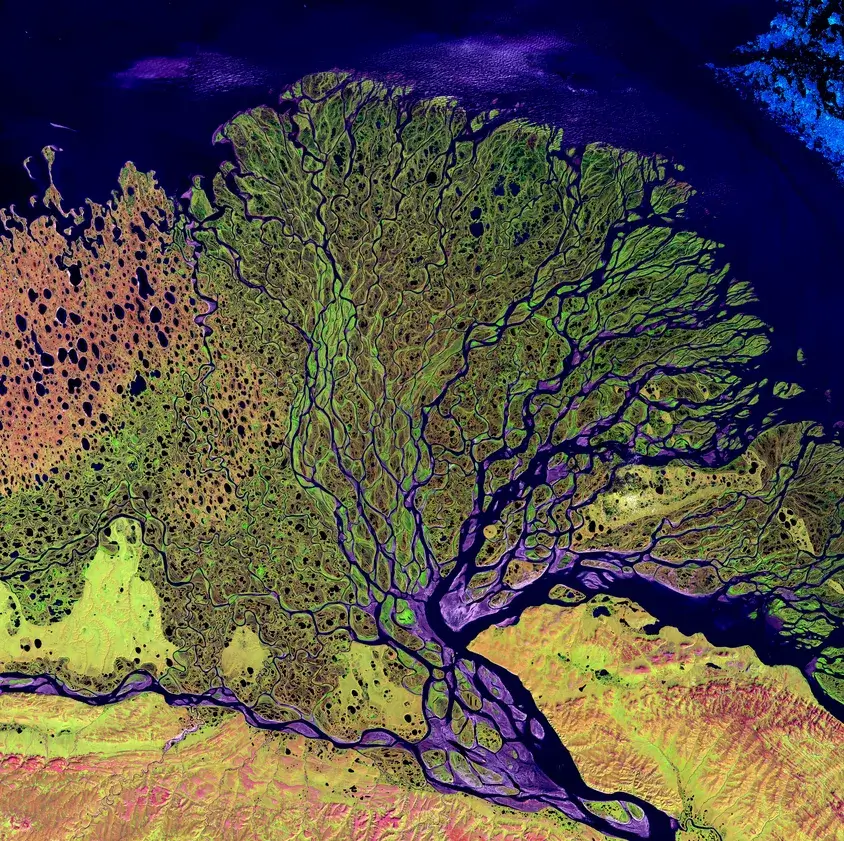
This is the deepest surface-level gap, and it is the flip side of the noise machinery from the opening section. Perlin noise can paint a landscape that looks eroded, complete with valleys and ridges, without any erosion ever having happened. Real landscapes are shaped over millions of years by water, wind, and ice. Minecraft reproduces the look without that history. That is efficient for a game and misleading as earth science. A player could reasonably come away thinking mountains and canyons simply exist rather than understanding them as the temporary outcome of a tug-of-war between uplift and erosion.
What Minecraft gets wrong, and the few things it quietly gets right
The errors are real and worth naming plainly. There is no plate tectonics, so nothing in the world has a cause; rock is placed, not formed. Stratigraphy is altitude-keyed set dressing with no unconformities, folds, or cross-cutting relationships, the bread-and-butter evidence real geologists use to read a planet’s history. Deepslate borrows the name of slate but inverts its defining softness and ignores the sideways tectonic squeezing that produces real slate. Ore depths are invented and far too tidy. Diamonds sit a few hundred blocks down rather than a hundred and fifty kilometers, and the world is too shallow by a factor of hundreds to host them honestly. Dripstone grows millions of times too fast and in the wrong host rock. Tuff is tuff in name only. Copper oxidizes without needing moisture. Surface erosion barely exists. Geodes regrow crystals they should not.
The list of things the game gets right, though, is longer than a cynic would guess, and it clusters around the Caves and Cliffs era, when Mojang clearly brought more earth-science literacy to the table. The amethyst geode is structurally accurate from the basalt shell through the calcite band to the quartz core, matching the published anatomy of real Brazilian and Uruguayan geodes. Copper’s four-stage patina is real corrosion chemistry, kin to malachite. The fossil-to-diamond Easter egg deliberately encodes and then debunks the diamonds-from-coal myth in the game’s own documentation. Ore is concentrated by setting, iron with tuff, copper in dripstone caves, rather than sprinkled at random, which honors the real principle that deposits favor particular rocks. The world is layered, deeper is older and more altered, and gradient noise is a defensible cartoon of the multi-scale signals that shape real terrain.
There is also an institutional footnote that proves Minecraft can carry real geology when someone bothers to load it in. The British Geological Survey built playable Minecraft worlds of actual British geology, using its Soil Parent Material dataset and coloured glass blocks to represent genuine geological units, with 3D models of sites including Glasgow, West Thurrock, York, and Ingleborough. Their resource page explains they chose blocks to match real survey colours within the game’s limited palette, and in their whole-of-Britain world the basalt-rich Isle of Skye is rendered in obsidian. It is a reminder that the engine is a perfectly good container for accurate subsurface data; the base game just isn’t trying to be one. (British Geological Survey, “3D geological models in Minecraft,” bgs.ac.uk.)
Verdict: a geological accuracy scorecard
Feature by feature, here is how the geology of Minecraft holds up against the real Earth.
- World generation by gradient noise: B. The math is real and the multi-scale logic echoes how landscapes combine signals at many scales, but noise produces shape without cause, and there is no tectonics behind the terrain.
- Stone, deepslate, and bedrock layering: C+. Convincing stratification and a smart nod to slate in the naming, undercut by the lack of any real mechanism, the inverted hardness of “slate,” and the absence of folds, faults, or unconformities.
- Ore distribution: B−. The depths are invented and far too uniform globally, but the core ideas, uneven distribution, favored horizons, ore tied to specific host rocks, are sound, and concentrating iron with tuff and copper in dripstone caves is a nice touch.
- Diamonds and the coal myth: where Minecraft diamonds really come from: A− for science literacy. The depth scaling is wildly off, but deliberately encoding the diamonds-from-coal misconception and then debunking it in the manual, with the carbon-from-carbonate explanation, is a sharp piece of communication.
- Amethyst geodes: A. The standout. Basalt shell, calcite band, quartz core, matching the published anatomy of real flood-basalt geodes, scaled up but faithful, with only the renewable budding amethyst as pure invention.
- Dripstone caves: B. The right chemistry concept and the right up-and-down growth, badly let down by a growth rate millions of times too fast and the missing limestone host.
- Tuff and calcite: calcite earns a B for sitting correctly with carbonate-cavity environments; tuff earns a D: the name is right, but the block is placed nothing like real volcanic ash.
- Copper oxidation: A−. Real, well-staged corrosion chemistry kin to malachite, marred only by the decoupling of oxidation from moisture.
- Surface erosion and weathering: D. Almost entirely absent. Static dunes, non-eroding rivers, eternal mountains, and weathering confined to copper.
Overall, treat Minecraft as a gateway, not a textbook. It will teach a curious player that the planet is layered, that crystals grow in cavities in lava, that copper turns green, and that diamonds live deep and do not come from coal. Then it will quietly mislead them on most of the rates, depths, and mechanisms involved. The right move is to let the game raise the question and send you to the literature, or to a real rock in your hand, for the answer.
Frequently asked questions
Is Minecraft geology accurate?
Partly. Minecraft gets several concepts right: amethyst geodes have a realistic basalt-calcite-quartz structure, copper oxidizes through real patina chemistry, and the world is convincingly layered. But it has no plate tectonics, invents its ore depths, grows dripstone millions of times too fast, and lacks surface erosion. Treat it as inspiration, not a reference.
Are Minecraft amethyst geodes real?
Yes, remarkably so. Real amethyst geodes in the Paraná flood basalts of Brazil and Uruguay have an outer basalt shell, a calcite layer, and a hollow core lined with purple quartz, the same architecture Minecraft uses. Research by Gilg and colleagues (2003) shows the crystals grew from low-temperature groundwater inside Cretaceous lava, not from the hot magma itself.
Is Minecraft deepslate a real rock?
Sort of. Real slate is a metamorphic rock formed by low-grade regional metamorphism of shale under sideways tectonic pressure, and it splits into thin sheets. Minecraft’s deepslate borrows the name and dark banded look but forms simply by depth, and it is harder than stone, the opposite of slate’s easy-splitting nature.
Why do diamonds spawn at the bottom in Minecraft?
Because depth is really linked to diamonds, just at a vastly different scale. Real diamonds form 150 to 250 km deep in the mantle over billions of years and are carried up by kimberlite eruptions. The game’s “deeper means diamonds” instinct is right; its few-hundred-block world is hundreds of times too shallow to be literal.
Do diamonds really form from coal?
No, and Minecraft knows it. The game’s own wiki notes that diamond replacing coal in deep fossils reflects the common misconception that diamonds form from compressed coal. In reality, as Shirey and colleagues (2013) document, the carbon in diamond comes from fluids in the deep mantle carrying both subducted carbonate and recycled organic carbon, and has nothing to do with coal, which forms from dead plants near the surface.
What are tuff and calcite in Minecraft?
Calcite is the pale band in amethyst geodes, and that placement is accurate, real geodes contain calcite, which is calcium carbonate, between the basalt and the crystals. Tuff is a dark block found deep near iron veins; real tuff is consolidated volcanic ash that falls on the surface during eruptions, so Minecraft borrows the name but not the geology.
What is the best Y level to find diamonds in Minecraft?
Y = −59 is the single best level, where diamond ore generates most densely just above bedrock; mining anywhere from about Y = −53 down to −59 puts you in the richest zone. This has been stable since the 1.18 Caves and Cliffs update and still holds in current versions. The same deep levels are also best for redstone and gold, while iron, copper, and coal sit higher up.