Introduction
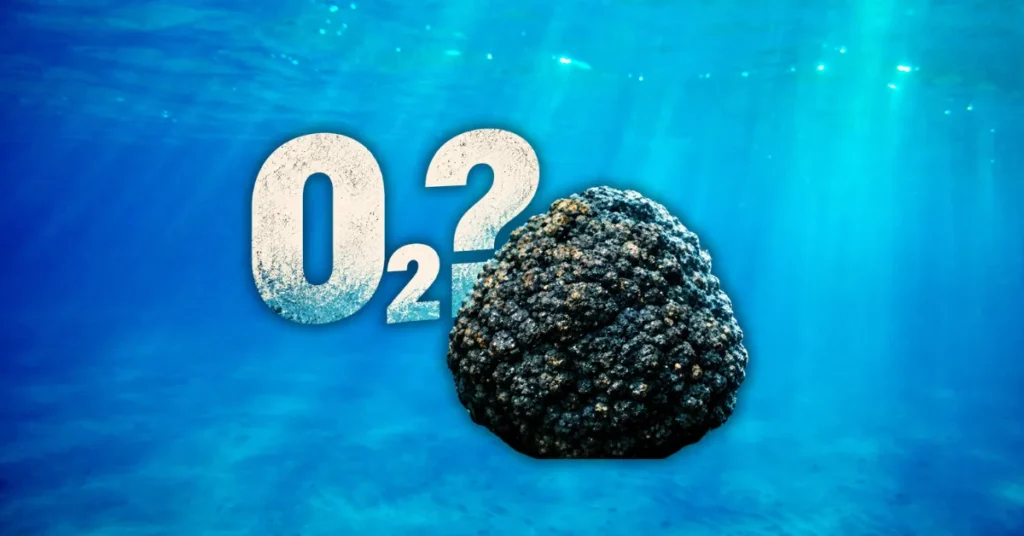
In 2013, a benthic chamber about the size of a shoebox sat in the mud four kilometers below the surface of the Pacific, and its oxygen sensor was reading the wrong way. Andrew Sweetman, a seafloor ecologist then building a career measuring how the abyss consumes oxygen, watched the numbers climb when every rule he had been taught said they should fall. He assumed the instrument was broken. He sent it back to be recalibrated. He told his students to bin the sensors. For roughly a decade the same impossible reading kept surfacing. Sweetman has said the sensors went back to the manufacturer four or five times across about five years, and that the anomalous readings kept appearing for ten, and in July 2024 it became one of the most argued-over results in ocean science: oxygen, apparently being made on the pitch-black seafloor, with no sunlight and no plants anywhere near it. The team called it ‘dark oxygen,’ borrowing a term already in use for light-independent oxygen production by microbes.
Two years on, the paper carries an editor’s note. Its authors have since broadened and softened parts of their original interpretation: the link is no longer framed as being limited to intact nodules, while the proposed electrolysis mechanism remains unconfirmed. The mining company that helped fund the cruises has spent the period since publication vigorously challenging the findings, and so have several scientists with no stake in mining at all. The expedition built to test the claim was initially planned for spring 2026, but its public timetable slipped. As of 18 August 2026, no DORI field results or official completion announcement were publicly available; the latest official material located for this update, published on 17 May, still described the lander deployment as forthcoming.
How dark oxygen was discovered by accident
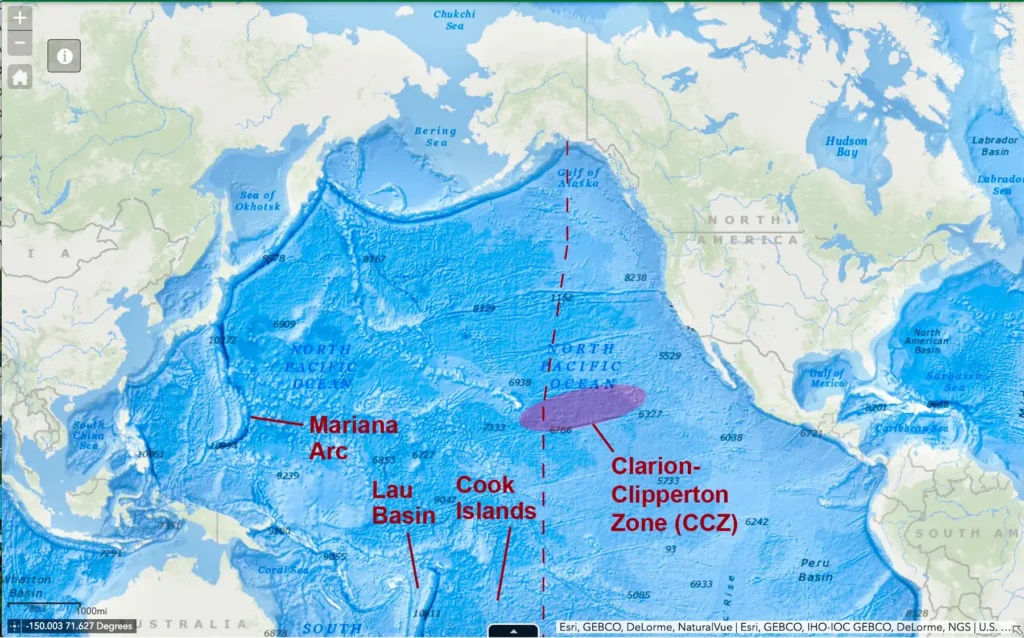
The story begins in a stretch of ocean floor that almost no one has seen. The Clarion-Clipperton Zone (CCZ) is an abyssal plain in the equatorial Pacific between Hawaii and Mexico. According to The Pew Charitable Trusts, “The Clarion-Clipperton Zone (CCZ) spans 4.5 million square kilometers (1.7 million square miles) between Hawaii and Mexico, an abyssal plain as wide as the continental United States.” Its seabed lies roughly four to five and a half kilometers down. The water there is close to freezing, around 1.6 degrees Celsius, and utterly dark.
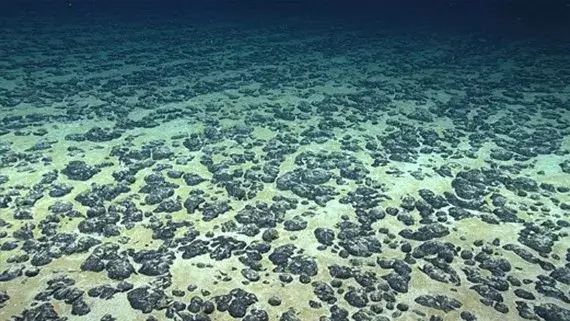
Scattered across that plain, in numbers that run into the trillions, are polymetallic nodules: lumps of metal oxide ranging from gravel-sized grains to objects about the size of a potato. They grow with almost unimaginable slowness, accreting minerals out of seawater at a rate of a few millimeters every million years, building up concentric layers of manganese and iron oxide around a tiny nucleus of shell or rock. Inside those layers sit the metals that have made the CCZ a target for industry: manganese, nickel, cobalt and copper; metals used in batteries, electrical systems and other technologies.
Sweetman, based at the Scottish Association for Marine Science (SAMS) in Oban, went to the CCZ to do a fairly standard job. Benthic chamber landers are a workhorse of deep-sea biogeochemistry. A lander is lowered to the seabed, chambers push down into the sediment to seal off a small microcosm of the seafloor, and oxygen sensors track how the enclosed water changes over a day or two. Because animals, microbes and chemical reactions in the sediment all consume oxygen, the concentration inside the chamber is supposed to drop. That decline, called sediment community oxygen consumption, is how researchers estimate how much life the seafloor supports and how fast carbon cycles through it.
Instead of dropping, the oxygen in several of Sweetman’s chambers went up. His first, entirely reasonable conclusion was that the optode sensors had failed at depth. As he later told Allison Parshall of Scientific American, “I literally told my students, ‘Throw the sensors in the bin. They just do not work.'” The sensors went back to the manufacturer four or five times over five years. Each time they came back apparently fine, and each time the anomaly reappeared.
The turning point came in 2021. Sweetman returned to the CCZ on an environmental survey expedition sponsored by a deep-sea mining firm, The Metals Company (TMC), and this time his team brought a completely different measurement method. Rather than rely only on the optodes, they used a technique based on the classic Winkler titration, a wet-chemistry method for measuring dissolved oxygen that works on a different physical principle entirely. Both methods agreed: oxygen was accumulating. As Sweetman put it in the SAMS announcement, “When both methods came back with the same result, we knew we were onto something ground-breaking and unthought-of.”
What the 2024 paper actually reported
The results appeared on 22 July 2024 in Nature Geoscience, as a Brief Communication titled “Evidence of dark oxygen production at the abyssal seafloor” (volume 17, pages 737–739). The author list ran to sixteen names across institutions in the UK, Germany, and the United States, with Sweetman as lead and corresponding author and Boston University geobiologist Jeffrey Marlow listed last.
The abstract states the core finding plainly: in benthic chamber experiments on the nodule-covered abyssal seafloor, “oxygen increased over two days to more than three times the background concentration, which from ex situ incubations we attribute to the polymetallic nodules.” It then advances the mechanism that would dominate the headlines: “Given high voltage potentials (up to 0.95 V) on nodule surfaces, we hypothesize that seawater electrolysis may contribute to this dark oxygen production.”
The numbers behind those sentences matter, because the whole controversy turns on them. The measurements came from the Nauru Ocean Resources Inc. (NORI)-D license area of the CCZ, across three research cruises in 2021 and 2022. Not everything was strange. Two chambers showed the textbook linear decline, and in situ microprofiling put sediment community oxygen consumption at 0.7 millimoles of oxygen per square meter per day, ordinary for the abyss, and the paper’s own demonstration that normal consumption does happen at the site. But across 25 benthic chamber incubations, oxygen concentrations started at about 185 micromoles per liter and climbed to maxima between 201 and 819 micromoles per liter over 47 hours. That corresponds to net oxygen production rates of 1.7 to 18 millimoles per square meter per day. The nodule density estimated from chamber counts was 1,170 ± 97 nodules per square meter.
The team went through a checklist of mundane explanations and, in the paper, argued each one away. Trapped air bubbles were unlikely, they wrote, because the chambers use one-way valves to purge air as the lander sinks, and any bubble that survived would dissolve into the water in under a second at 4,000 meters. Oxygen leaking out of the plastic chamber walls could not account for the size of the signal. Oxygen seeping up from oxygen-rich water in the underlying crust was ruled out by microprofiling, which showed the sediment was a net oxygen sink. Crucially, they reported that oxygen production continued in sealed laboratory incubations even after the sediment was dosed with mercuric chloride, a poison that kills the microbes known to be capable of making oxygen in the dark. Because the effect persisted in nodule-only incubations and tracked with the surface area of the nodules present, the authors concluded the nodules themselves were responsible.
The geobattery hypothesis: can nodules split seawater?
An abiotic source of oxygen needs energy, and the paper’s proposed source was electrical. In the summer of 2023 Sweetman contacted Franz Geiger, a chemist at Northwestern University who had earlier shown that rust combined with saltwater can generate a usable electric current. If ordinary rust and brine could push electrons around, Sweetman wondered, might a lump of mixed metal oxides sitting in seawater do the same, and do it strongly enough to split water molecules?
Splitting seawater into hydrogen and oxygen through electrolysis has a firm thermodynamic price. The oxygen evolution reaction requires an input of 1.23 volts, plus an overpotential of roughly 0.37 volts to actually get it moving at the CCZ seafloor’s mean pH of 7.41. That comes to about 1.6 volts, marginally more than a single AA battery. Northwestern’s announcement gave the threshold as 1.5 volts flat, the AA comparison, and the memorable line. The gap is small but it runs the convenient way, and it is worth noting that the critics use 1.5 volts too, as the practical figure with a good electrocatalyst. The question was whether a nodule could supply anything near that.
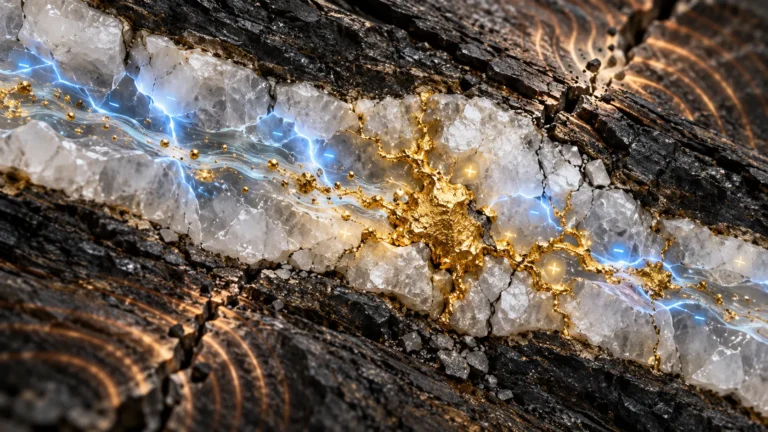
Sweetman shipped several pounds of nodules to Geiger’s lab and spent a week there in December 2023. Using platinum electrodes and a sensitive multimeter, they measured the voltage between points on nodule surfaces at 153 different sites across 12 nodules drawn from three separate license areas. The potentials were highly variable, but some readings reached as high as 0.95 volts on a single nodule. Northwestern’s accompanying explanation suggested that potentials from multiple nodules might become larger when nodules are clustered, by analogy with batteries connected in series. The Nature paper itself treated electrolysis as a hypothesis rather than demonstrating a self-sustaining electrical circuit on the seafloor. “It appears that we discovered a natural ‘geobattery,'” Geiger said in the Northwestern announcement, describing the nodules as the basis for a possible explanation of the ocean’s dark oxygen production.
The paper was careful, at least in its own language, to hedge. It described electrolysis as a hypothesis that “may contribute” to the effect, listed a string of open questions about the energy source and the catalytic chemistry, and warned readers against scaling the results up in space or time. The nodules contain manganese oxides laced with nickel and other transition metals, and manganese oxides are known in the electrochemistry literature as catalysts for the oxygen evolution reaction. Taken together, those observations gave the authors a testable electrochemical hypothesis. Whether that electrolysis hypothesis is compatible with the measurements is now a central point of dispute.
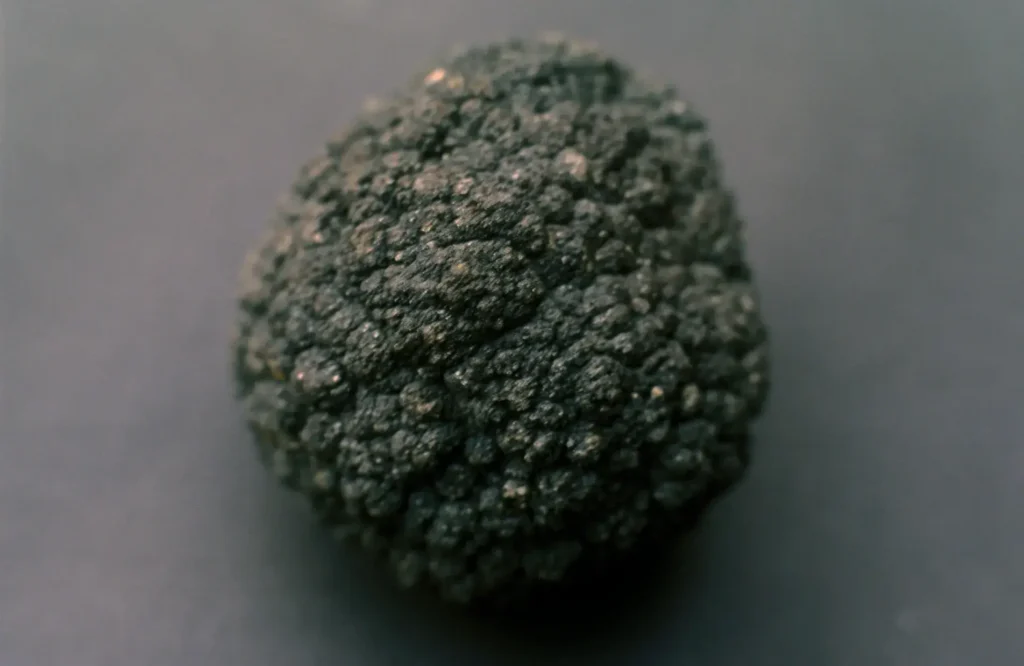
Why the claim mattered so much
The claim mattered for three distinct reasons: Earth’s oxygen history, the limits of aerobic life and the politics of deep-sea mining. The first is the textbook account of where oxygen comes from.
Almost all the free oxygen on Earth traces back to photosynthesis: cyanobacteria, algae and plants using sunlight to split water and release oxygen as a byproduct. That process transformed the planet during the Great Oxidation Event, conventionally placed between about 2.4 and 2.1 billion years ago, which took the atmosphere from effectively oxygen-free to persistently oxygenated though at a small fraction of today’s 21 per cent, with the rise to modern levels still more than a billion years away. The geological record of that transition is written into the banded iron formations, the layered rusty sediments that captured early oxygen as it reacted with iron dissolved in ancient seawater. A confirmed abiotic source would add another local oxygen-producing pathway to Earth’s biogeochemistry. But nodule-associated dark oxygen could not straightforwardly explain the planet’s first oxygen: critics point out that oxidized manganese minerals and polymetallic nodules themselves require oxidizing conditions to form.
The second issue is what the finding would mean for aerobic life. Sweetman framed the implication directly in the SAMS release: “For aerobic life to begin on the planet, there had to be oxygen, and our understanding has been that Earth’s oxygen supply began with photosynthetic organisms. But we now know that there is oxygen produced in the deep sea, where there is no light. I think we, therefore, need to revisit questions like: Where could aerobic life have begun?” If the effect is real and ecologically significant, it would show that some deep-seafloor habitats can receive a local oxygen input independent of contemporaneous photosynthesis in the overlying ocean. It would not, by itself, establish where aerobic life originated.
The most immediate policy consequence concerns deep-sea mining. The metals inside the nodules are the same ones sought for electric-vehicle batteries and grid storage. If the objects being targeted for mining are also, in some way, sustaining the ecosystem around them, the calculus of whether and how to mine the deep sea changes. Geiger said as much: “We need to rethink how to mine these materials, so that we do not deplete the oxygen source for deep-sea life.”
The deep-sea mining stakes
The CCZ is the epicenter of a slow-motion fight over the last unclaimed frontier of resource extraction. Mining in international waters is governed by the International Seabed Authority (ISA), a body established under the United Nations Convention on the Law of the Sea. The ISA has granted around thirty exploration contracts covering more than 1.5 million square kilometers of seabed, an area four times the size of Germany, with roughly eighteen of them in the Clarion-Clipperton Zone. Exploration is not the same as mining; no commercial extraction has yet been licensed, and the ISA is still negotiating the “Mining Code” of rules that would govern it.
The politics are fraught. As of June 2026, more than forty states, among them France, Germany, the United Kingdom, Canada, New Zealand and a bloc of Pacific island nations, back a moratorium, precautionary pause or ban, according to the US Congressional Research Service. On the other side of the argument, industry has pushed to keep the process moving. When the dark oxygen paper appeared and was read as an argument for slowing mining down, it became a rallying point, cited across the moratorium campaign and taken up by the Deep Sea Conservation Coalition and its member organisations. The Metals Company, through its subsidiary NORI, has pressed in the other direction, positioning nodules as a low-impact source of critical metals; TMC has marketed nodules using the “battery in a rock” analogy. As Scientific American recounts, Sweetman heard it in 2022 while watching a video about deep-sea mining, and the marketing line was the spark for the whole hypothesis: “That bit of marketing was only a metaphor, but it led him to wonder whether the nodules could somehow be acting as natural geobatteries.”
The Metals Company partly funded the very cruises that produced the dark oxygen data, through NORI, which holds the NORI-D contract and is sponsored by the government of Nauru. When the paper appeared, TMC publicly rejected the findings from research it had helped fund. That funding relationship belongs in the conflict-of-interest context: TMC helped fund the work and later became one of its strongest critics. The relationship does not, by itself, validate or invalidate either side’s scientific arguments.
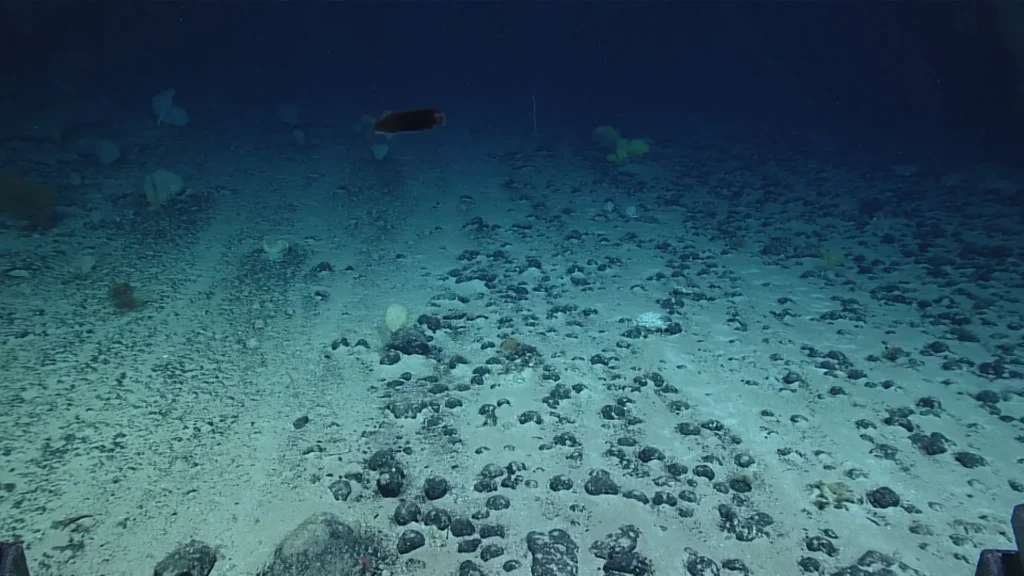
Why scientists doubt the dark oxygen claim
Skepticism arrived within weeks, from several directions at once. Within weeks of publication, critical commentaries and preprints started to appear, and within a year several formal critiques had been submitted for review.
The Metals Company’s methodological objections
The most aggressive critique came from The Metals Company itself, posted as a preprint and summarized in Science. Michael Clarke, a marine biologist and environmental manager at the company, did not mince words: “None of the lines of evidence [Sweetman] presents stands up to scrutiny.” The company argued that the rising oxygen could be explained by prosaic experimental artifacts, such as small pockets of trapped air introduced when the chambers close, or stray electrical currents within the apparatus, rather than any novel seafloor chemistry.
The company’s most damaging specific claim concerned the control experiments. In its rebuttal, TMC pointed out that during one set of deployments, oxygen rose in chambers that, on closer inspection, contained no nodules at all. If oxygen can climb in a chamber with no nodules in it, then the nodules cannot be a necessary cause of the effect, and the paper’s central attribution wobbles. The company also noted that some data appeared to reuse measurements from an earlier study without clear citation, and that previous oxygen-flux measurements in CCZ nodule fields had all shown consumption, not production.
Sweetman conceded the specific point about the empty chambers. In Science, he acknowledged that one figure claiming oxygen production in another nodule region did not disclose that no nodules were actually in the chamber at the time. His fallback was that manganese-oxide granules in the sediment could have an effect similar to the nodules. He has since put it more vividly, in a European Marine Board webinar in May 2026 he described sediment blackened with manganese-oxide particles, looking, he said, like coffee granules on the seafloor. That is a meaningful retreat: it shifts the claim from “the nodules do it” toward “some manganese-bearing material does it,” which is a weaker and vaguer statement.
The voltage objection
A separate critique from the Norwegian mining firm Adepth, led by its chief sustainability and operations officer Lars-Kristian Trellevik, went after the electrochemistry. The 0.95-volt figure that anchored the electrolysis hypothesis, they argued, was essentially a single high blip measured on one nodule. None of the readings from the other 11 nodules came anywhere close to the voltage needed to split water. If the headline voltage is an outlier rather than a representative value, the geobattery mechanism loses its quantitative footing before it even reaches the question of whether clustered nodules could add their potentials together.
The thermodynamic objection
A more fundamental objection concerns thermodynamics. In an EarthArXiv preprint posted in March 2025, “Is abyssal dark oxygen production even possible at all?”, the electrochemist Angel Cuesta of the University of Aberdeen and the Spanish research council, together with Aberdeen’s Marcel Jaspars, examined the electrolysis idea against basic physical chemistry and concluded that, as proposed, it violates the first and second laws of thermodynamics. The argument, roughly, is that a passive lump of metal oxide sitting in seawater has no sustained energy source to keep pushing an uphill reaction, and that the internal potential differences invoked in the paper cannot do continuous electrolytic work without something to recharge them. If that critique holds, the geobattery is not merely unproven; it is a perpetual-motion machine.
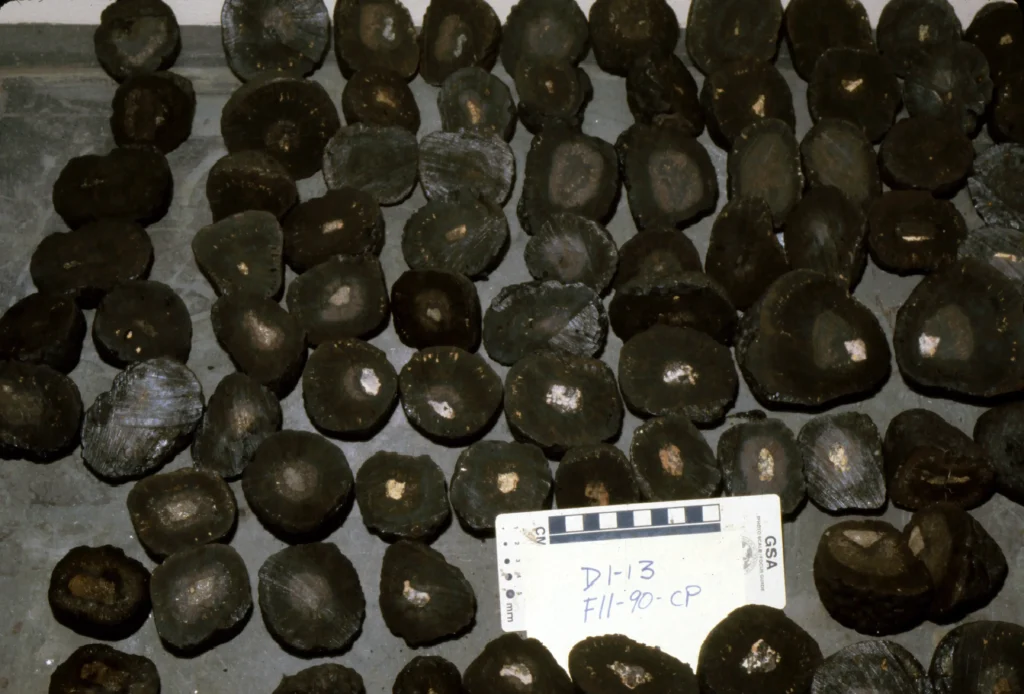
The peer-reviewed critique: “extraordinary claims”
The scattered objections eventually consolidated. On 19 December 2025, a coordinated critique appeared in Frontiers in Marine Science as a peer-reviewed Opinion article, led by Patrick Downes with co-authors drawn from The Metals Company, the Spanish research council’s Blas Cabrera institute, the University of Aberdeen, the Norwegian firm Adepth Minerals, the instrument maker Aanderaa-Xylem, and the University of Gothenburg. Its title borrowed Carl Sagan’s dictum: “Extraordinary claims require extraordinary evidence: evaluating nodule-associated dark oxygen production.”
The paper made the scale of the claim vivid. The reported dark oxygen production rates of 1.7 to 18 millimoles of oxygen per square meter per day are, as the critique notes, “substantial, equivalent to 0.5–180% of gross community production measured in the Equatorial Pacific,” a region that is among the most photosynthetically productive in the open ocean. In other words, the paper was asking readers to believe that a dark, cold, energy-poor seafloor was, at times, generating oxygen at rates comparable to a sunlit, plankton-rich surface ocean. The authors argued the likelier explanation was inadequate chamber ventilation, the chambers sealing without fully exchanging their volume for ambient bottom water. Their evidence is the starting numbers. Sweetman’s chambers began anywhere between 161 and 246 micromoles per litre, a spread of 85. Bottom water measured at the same sites over the same years sat in a band of 14, between 145 and 159. Chambers that do not start at ambient concentration, they argue, were never properly ventilated, and the trapped air then bleeds in slowly: bubbles collapsing under pressure leave supersaturated pockets in valves and tubing, which diffuse into the chamber over hours and produce exactly the curve shape Sweetman reports.
One of the co-authors, Anders Tengberg of Aanderaa-Xylem and the University of Gothenburg, told Live Science that the team had gone back to the original data to check: “We downloaded the data and replotted everything.” His verdict was blunt: “Everything just speaks against this being correct.” The retraction call in that coverage came from his co-author Per Hall, professor emeritus of marine science at Gothenburg, who said plainly that he hoped Nature Geoscience would withdraw the paper. The formal demand is older: Tengberg, Hall and Mikhail Kononets made it in an EarthArXiv rebuttal in October 2024, having concluded that only two of thirty-two chamber deployments may have yielded reliable data.
The 2026 reanalysis
In May 2026, another reanalysis appeared. Alexander P. Webber, with Patrick Downes, Joaquim Bento, Leigh Marsh, Felipe Sales de Freitas and Michael Clarke, all six employees of The Metals Company, published a reanalysis in F1000Research (15:729) titled “Anomalous oxygen concentration increases in benthic experiments from the Clarion Clipperton Zone are not related to polymetallic nodules.” The reanalysis targeted the single strongest statistical link in the original paper: the correlation between nodule surface area and oxygen production, which was the main quantitative reason to attribute the oxygen to the nodules at all.
Webber’s team reported that three chambers appear to have been left out of the surface-area analysis, even though their oxygen data and photographs were available. When those three chambers are added back in, the reanalysis found, the correlation between nodule surface area and oxygen production disappears. The authors also found no relationship between nodule weight and oxygen production. Their conclusion was that the oxygen increases are not related to the nodules, and that some chambers without nodules had shown the same rising-oxygen behavior as far back as 2018. Because the paper is in a post-publication-review venue and its authors have a clear commercial interest, its conclusions should be read as a serious challenge rather than a final word, but it strikes directly at the evidentiary core of the original claim.
Sweetman’s defense, and a partial retreat
Sweetman has not conceded the central observation. His consistent position is that the rising-oxygen signal is real and was hard-won, precisely because he spent years trying to make it go away. As he told reporters, “We were the worst critics of this paper for a long time. For eight years I discarded the data showing oxygen production, thinking my sensors were faulty.” On the bubble-artifact criticism specifically, he pointed to two decades of using the same instruments: “We’ve used these instruments over the last 20 years and every time we’ve deployed them, we’ve never had bubbles.” The team has said it stands behind findings that passed a stringent peer-review process, and when the TMC critique first appeared Sweetman said simply, “We don’t have anything to hide.”
At the same time, the authors have quietly softened both of their most striking claims. The admission that some key chambers contained no nodules, only manganese-oxide granules, moves the claim away from nodules specifically. And on the mechanism, the team has stepped back from electrolysis as the explanation. Reporting around a late-2025 conference abstract and a February 2026 interview indicates that the authors now describe the mechanism as unknown rather than electrolytic. It is an honest concession, and a large one. The geobattery that gave the story its hook is no longer being offered as the answer. What remains, in the authors’ current framing, is a persistent and unexplained observation of rising oxygen, stripped of the confident mechanism that made the 2024 paper so arresting.
The editor’s note
On 8 April 2026, the dispute reached the journal itself when Nature Geoscience attached an Editor’s Note. It reads, in full: “Readers are alerted that aspects of this article are subject to concerns that are being considered by the Editors. A further editorial response will follow the resolution of these issues.”
An Editor’s Note is a preliminary alert, weaker than a formal Expression of Concern and far weaker than a correction or retraction. It signals that the editors are examining specific concerns, not that they have reached a verdict. As of August 2026, the promised “further editorial response” has not appeared: there has been no correction, no retraction, and no formal Expression of Concern beyond the April note. The paper remains published, open-access, and heavily cited, with its central claim flagged but not withdrawn. The journal is treating the question as open. So should we.
That note almost certainly has a specific occasion. In March 2026, Sweetman told Live Science that his team had submitted further evidence to Nature Geoscience and that the journal was reviewing it, and that he could not respond substantively to the Frontiers critique until that process concluded. The Metals Company, for its part, had submitted its own rebuttal to the journal as far back as late 2024. So the Editor’s Note sits on top of at least two contested submissions moving through the same editorial pipeline, and the “further editorial response” the journal promises is presumably waiting on them. Nothing in the public record says which way it will go.
Origin of life and the astrobiology angle
The broader idea the paper dramatised, that oxygen might be produced in the dark by inorganic chemistry, has independent scientific roots, and independent consequences. Twenty-three years before Sweetman’s paper, Christopher Chyba and Kevin Hand published a piece in Science titled “Life Without Photosynthesis,” arguing that ecosystems need not depend on sunlight if other energy sources are available. Dark oxygen production, in the general sense of light-independent oxygen generation, is already known to occur through several routes: certain microbes can make oxygen in the dark, radiolysis can split water using natural radioactivity, and various chemical dismutation reactions can liberate it.
If oxygen can accumulate on a lightless seafloor, the places we consider potentially habitable expand. Marlow put the astrobiological stakes in plain terms: “If photosynthesis isn’t required to make oxygen, then other planets with oceans and metal-rich rocks like these nodules could sustain a more evolved biosphere than we’ve thought possible in the past.” The natural candidates are the icy ocean moons of the outer solar system, Jupiter’s Europa and Saturn’s Enceladus, both of which are thought to hide liquid-water oceans beneath thick ice shells, sealed away from sunlight.

The connection is easy to overstate. Even if nodules generate dark oxygen in the CCZ, no one has any evidence that Europa or Enceladus host polymetallic nodules; we do not even have direct images of their seafloors. The relevance is more general and more careful: the discovery would establish that abiotic, light-independent oxygen production is possible at all in a cold, dark, watery setting, which is enough to justify taking the idea seriously for icy moons where radiolysis and water-rock chemistry are already candidate oxygen sources. A dedicated 2024 analysis in the astrobiology literature explored exactly this, estimating oxygen fluxes and outlining how such settings might even support the emergence of “electrotrophic” life that feeds on electrons directly. The astrobiological payoff is real, but it rides on the same unresolved chemistry as everything else in this story.
For exoplanet biosignatures, however, the implication is more limited. If non-biological processes can produce oxygen on other worlds, then detecting oxygen in an exoplanet’s atmosphere is a weaker signal of life than astronomers once hoped. Oxygen has long been treated as a premier biosignature. A robust abiotic oxygen source complicates that interpretation and forces more caution into the search for life.
Readers interested in the geochemistry of light-independent, rock-driven water splitting will find a close cousin at the Lost City hydrothermal field, where the reaction of seawater with mantle rock floods the vents with hydrogen and has made the site a leading candidate for where life on Earth began.
The DORI expedition: can dark oxygen be replicated?
Reanalysis of a 2021 dataset can go on indefinitely. In January 2025 the Nippon Foundation announced funding for the Dark Oxygen Research Initiative (DORI), a three-year program running from 1 February 2025 to 31 January 2028, carried out in cooperation with Northwestern University, Boston University and SAMS. Sweetman leads it, with Geiger and Marlow as principal collaborators, and IOC-UNESCO has endorsed it as a UN Ocean Decade activity.
The funding is reported in several forms that look contradictory and mostly are not. The Nippon Foundation’s January 2025 announcement committed roughly £2 million over three years, a sum that surfaced in English-language coverage as £2.2 million, $2.4 million and $2.7 million depending on the exchange rate used. Northwestern and Boston University formally joined in October 2025, and the number grew: Chemistry World reported $5.2 million, or £3.7 million, in February 2026; SAMS now lists the project value at £4 million. One grant, one expansion, six published figures. The pressure ratings for the new instruments diverge similarly: SAMS’s own release, the operator’s, not a wire service’s, gives 1,200 times the pressure at Earth’s surface, and AFP followed it. The Nippon Foundation’s announcement of the same launch says 1,400. The builder’s figure is the lower one, and the discrepancy has never been reconciled publicly.
The centerpiece of DORI is a pair of custom-built landers named Alisa and Kaia, after Sweetman’s daughters. Rated to roughly 11 kilometers, more than twice the CCZ’s four-to-five-kilometer floor, they were designed to resemble spacecraft more than oceanographic gear. Their job is to distinguish between the competing explanations for the anomaly: whether nodules spontaneously generate electricity in contact with seawater, whether a biological process is at work, or whether some other factor is responsible. They will be deployed alongside an Aquatic Eddy Covariance lander, which measures oxygen flux over the seabed without enclosing it in a chamber at all, a design specifically chosen to sidestep the chamber-artifact criticisms that have dogged the original work. The landers will collect water samples, take measurements directly from the nodules, release chemical tracers, and log oxygen, hydrogen, turbidity, conductivity and pressure. Most pointedly, they will look for the protons released when water is oxidised, SAMS calls this the key discriminator between electrolysis and any other route to oxygen.
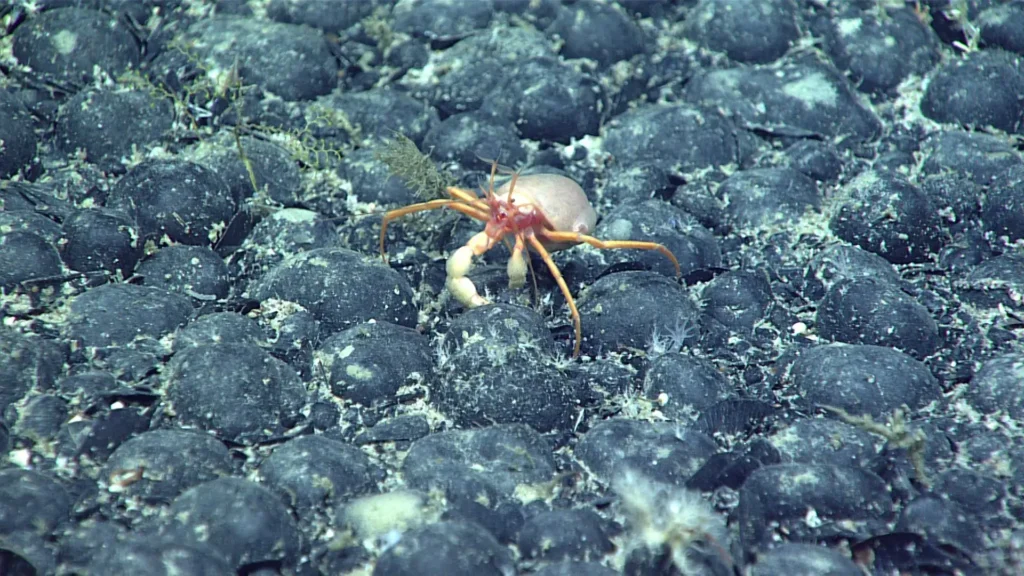
The schedule shifted. A January 2025 New Scientist report had the first cruise leaving San Diego in January 2026. At the 20 January 2026 launch event, the team said it planned a month of CCZ fieldwork in the spring, with the vessel expected to return in June. Sweetman set a clear expectation for how quickly the core question could be answered: “We’ll be able to confirm dark oxygen production within 24 to 48 hours after the landers come up,” he told reporters, adding that the wider world would probably not know the results until the ship returned, and that follow-up experiments on land could take months.
As of 18 August 2026, no DORI field results had been publicly announced. More importantly, the public record does not establish that the planned spring deployment was completed: official material published on 17 May still described the lander launch in future tense. The safest conclusion is therefore that the expedition’s public timetable slipped, not that an unannounced cruise definitely occurred. Anyone claiming today that dark oxygen has been confirmed, or debunked, by the new expedition is getting ahead of the evidence. Adding a further check, the GEOMAR biogeochemist Matthias Haeckel, whose own work, he told AFP, does “not show any hint towards oxygen production” from nodules, indicated that Sweetman would join a GEOMAR cruise later in the year to compare methods directly, which is exactly the kind of head-to-head test the dispute needs.
Is dark oxygen real? Weighing the evidence in 2026
The measurement and its interpretation have to be separated. Both optodes and Winkler analyses recorded rising oxygen in some chamber experiments, which argues against a simple optode malfunction. But that does not make the phenomenon independent of the experimental setup: both methods could still record oxygen introduced by the same chamber artifact. The unresolved question is therefore whether the increase reflects genuine oxygen production on the seafloor or oxygen entering the chamber through the apparatus, and, if production is real, whether manganese-rich material causes it and by what mechanism.
On the current balance of evidence, the specific claims of the 2024 paper are shaky. The electrolysis mechanism faces a serious thermodynamic objection and has been effectively set aside by the authors themselves. The voltage evidence rests heavily on an outlier reading. The attribution to nodules has been undercut by the admission that some chambers contained no nodules and by a reanalysis showing the key surface-area correlation vanishes when omitted chambers are restored. The journal has flagged the paper. Several independent teams, not only the mining-affiliated ones, report that comparable experiments show oxygen consumption rather than production. Those are not trivial concerns, and they point in the same direction.
None of that amounts to proof that dark oxygen is nothing. An anomaly recorded by two analytical methods within the same experimental system still deserves redesigned and independent testing rather than dismissal, and the field is right to be running one. The most defensible position in the summer of 2026 is that the extraordinary claim has not yet met the extraordinary evidentiary bar, that its original mechanism looks unlikely, and that the DORI expedition and the GEOMAR comparison are the events that will actually move the needle. The mining debate, meanwhile, does not hinge on this single result; the precautionary case for understanding CCZ ecosystems before strip-mining them rests on much more than one contested oxygen signal.
A nodule the size of a potato took millions to tens of millions of years to assemble itself out of seawater. The regulatory clocks now running are measured in months. Whatever the landers find, that gap will still be there when the answer arrives.
For related deep-Earth mysteries in the Geoscopy archive, see our accounts of the Kola Superdeep Borehole, the deepest hole ever drilled into the Earth’s crust, and of white hydrogen, another case of rocks and water quietly generating a gas that industry suddenly wants.
Frequently Asked Questions
What is dark oxygen?
Dark oxygen is oxygen produced without sunlight or photosynthesis. The term was popularized by a 2024 Nature Geoscience study led by Andrew Sweetman, which reported that oxygen concentrations rose inside sealed chambers on the pitch-black abyssal seafloor of the Pacific’s Clarion-Clipperton Zone, about 4,000 meters down. Because no light reaches that depth, the oxygen could not have come from photosynthesis. More broadly, “dark oxygen production” also covers other light-independent routes to oxygen, including certain microbes, radiolysis of water by natural radioactivity, and various chemical reactions.
How do polymetallic nodules make oxygen?
The proposed mechanism is seawater electrolysis. The nodules are lumps of manganese and iron oxide containing metals such as nickel, cobalt and copper. Sweetman and chemist Franz Geiger measured voltages up to 0.95 volts on nodule surfaces and suggested the nodules act like natural “geobatteries,” generating enough electrical potential, especially when clustered, to split seawater into hydrogen and oxygen. Splitting water requires roughly 1.5 volts in these conditions. This mechanism is disputed: critics argue the 0.95-volt reading was an outlier, that clustered nodules cannot sustainably supply the needed energy, and that the idea conflicts with thermodynamics. The original authors have since stepped back from electrolysis as the explanation, describing the mechanism as currently unknown.
Is dark oxygen real, or has it been debunked?
It is unresolved as of 2026. The raw observation, oxygen rising in the experimental chambers, was recorded by two independent methods and is not seriously disputed. What is disputed is whether that reflects genuine seafloor oxygen production or an artifact of the equipment, and whether nodules are responsible. A peer-reviewed critique in Frontiers in Marine Science (December 2025) and a 2026 reanalysis in F1000Research argue the effect is an artifact and not linked to nodules, and Nature Geoscience attached an Editor’s Note to the paper on 8 April 2026 flagging concerns. The paper has not been retracted. A dedicated follow-up expedition was planned for spring 2026, but as of 18 August no confirming or disconfirming DORI field results had been publicly announced, and no official completion announcement for the planned CCZ deployment was available in the public record reviewed for this update.
What does dark oxygen mean for deep-sea mining?
If nodules help sustain deep-sea ecosystems by producing oxygen, removing them by mining could do more ecological harm than assumed, strengthening the case for a pause. Many environmental groups and a large group of countries have used the claim to argue for a moratorium at the International Seabed Authority. The politics are tangled because The Metals Company, which is pursuing mining in the CCZ, partly funded the original research and then rejected its conclusions. Even setting dark oxygen aside, the precautionary argument for studying these ecosystems before mining rests on wider evidence of slow, possibly irreversible damage.
Could dark oxygen change theories about the origin of life?
Potentially, though carefully. If oxygen can accumulate in cold, dark, deep water through inorganic chemistry, then oxygen-using life would not necessarily need to begin near sunlight, which reframes where aerobic life could have started on Earth. It also bears on the search for life on icy ocean moons such as Europa and Enceladus, whose oceans are sealed under ice and receive no light. The caveat is that there is no evidence those moons host nodules, and the broader relevance depends on whether abiotic dark oxygen production turns out to be real at all.