


Introduction
Sometime between 2010 and 2012, the British photographer Nick Brandt walked the eastern shore of Lake Natron in northern Tanzania and found the dead arranged like a museum that no one had built. A fish eagle lay stiff on the salt. Swallows, doves, a bat, finches in their dozens had washed up along the crust, their feathers intact, their bodies hard as plaster. Brandt paid local people to bring him the best-preserved specimens. He propped them on branches and rocks, posed them as though they were still perched and breathing, and photographed them in the flat light he favored. When the pictures appeared in his 2013 book Across the Ravaged Land, they traveled around the world under a single, irresistible idea: a lake in Africa turns animals to stone.
Does Lake Natron really turn animals to stone?
No. That is the myth, and it is worth saying plainly before going further. Lake Natron does not petrify living creatures on contact, the way the gaze of Medusa was said to freeze men in mid-step. That framing makes for a great headline, and it spread fast across blogs and social feeds after Brandt’s photographs went viral. The images are real. The interpretation glued onto them is wrong.
Brandt himself never claimed the lake turned living animals to stone. He found carcasses that had already died and dried, and he was candid about what he did next. “There was never any possibility of bending a wing or turning a head to make a better pose,” he told The Huffington Post. “They were like rock, so we took them and placed them on branches and rocks just as we found them, always with a view to imagining it as a portrait in death.” In the book itself he wrote that he had taken the creatures as he found them on the shoreline “and then placed them in ‘living’ positions, bringing them back to ‘life,’ as it were. Re-animated, alive again in death.”
So the eerie statues are arranged. The preservation, though, is genuine, and it is stranger and more interesting than the stone-on-contact story it replaced. Lake Natron is a hyperalkaline soda lake whose chemistry slowly encrusts and mummifies the dead. That same lethal chemistry has made its shoreline the single most important breeding ground on Earth for one of Africa’s most recognizable birds.
How the animals die in the first place is a separate question, and a more uncertain one. Brandt offered a guess. “No one knows for certain exactly how they die,” he wrote, “but it appears that the extreme reflective nature of the lake’s surface confuses them, and like birds crashing into plate glass windows, they crash into the lake.” That is a hypothesis, not an established fact, and Brandt was careful to flag it as such. A still, mirror-bright soda surface under hard equatorial sun could plausibly fool a flying bird into reading open sky where there is water. Crashes do happen. In 2007, by widely repeated accounts, a helicopter carrying wildlife filmmakers went down in the lake, and the crew came out with burns to skin and eyes. But the precise cause of the bird deaths has not been pinned down, and it would be a mistake to present the reflection idea as proven.
How does Lake Natron preserve dead animals?
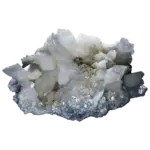
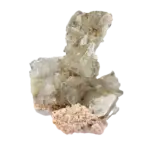
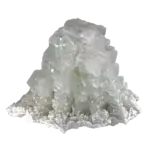
The answer is chemistry that the ancient Egyptians would have recognized. The lake’s name comes from natron, a naturally occurring mix dominated by sodium carbonate decahydrate, with sodium bicarbonate and a little salt. Embalmers along the Nile packed bodies in exactly this material to dry them out and arrest decay. They were making mummies. Lake Natron does the same thing to any carcass that ends up on its caustic margins, without anyone lifting a hand.
The mechanism is desiccation plus encrustation. When an animal dies on the lake edge, the strongly alkaline, salt-saturated water and the surrounding soda crust pull moisture out of the tissue and shut down the bacteria that would normally drive rot. Sodium carbonate and trona crystallize onto and into the body as the water around it evaporates. What is left is a hardened, salt-jacketed husk that can sit on the shore looking like a cast for a very long time. David Harper, a freshwater ecologist at the University of Leicester who studied the East African soda lakes for decades and visited Lake Natron four times, put the contrast in plain terms to NBC News: “If a body falls anywhere else it decomposes very quickly, but on the edge of the lake, it just gets encrusted in salt and stays forever.”
“Calcified” is the word that attached itself to Brandt’s photographs, he wrote that “the soda and salt causes the creatures to calcify, perfectly preserved, as they dry” and it is close enough to be useful even if a chemist might quibble. The crust is built largely of sodium carbonate and bicarbonate rather than the calcium carbonate that the word “calcified” strictly implies. The point that matters for the myth is the timing. Animals are not flash-frozen into rock the instant they touch the water. They die, then they dry, then over days and weeks the soda hardens around them. The result only looks like instant petrification because the preservation is so complete.
Why is Lake Natron so caustic? The geology behind the chemistry
Lake Natron sits in the Gregory Rift, the eastern branch of the East African Rift, where the continent is slowly pulling itself apart. It is an endorheic lake, meaning water flows in but never flows out to any river or sea. The only exit is the sky. The lake is shallow, less than three meters deep, and it sprawls and shrinks with the seasons, reaching as much as 57 kilometers long and 22 kilometers wide. Its main supply is the Southern Ewaso Ng’iro River, which rises in central Kenya, supplemented by mineral-rich hot springs that bubble up through the rift faults.
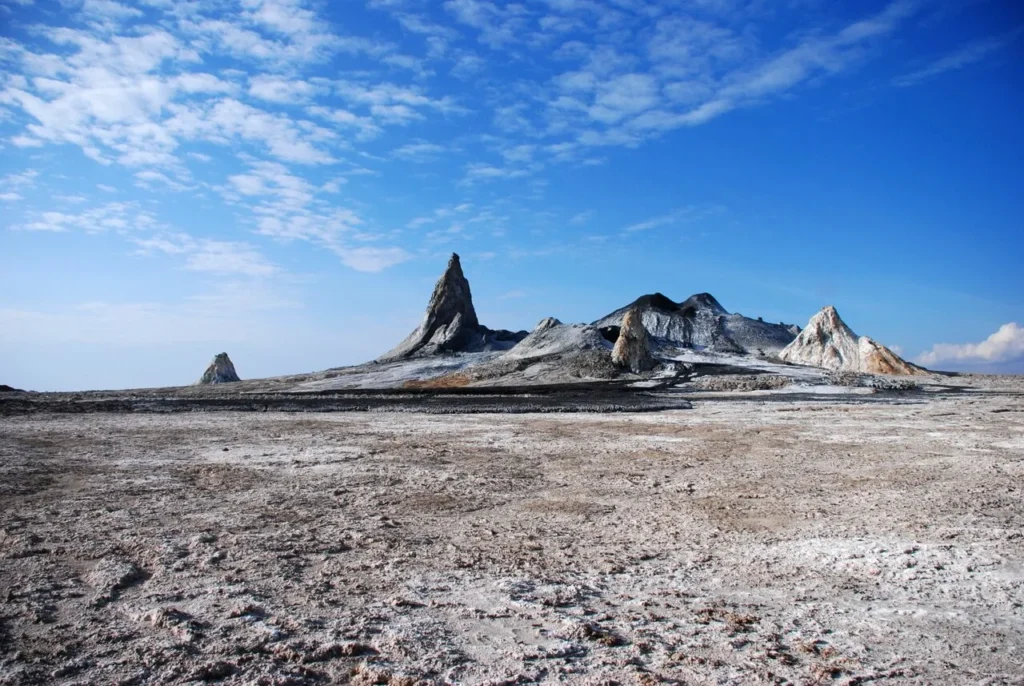
The reason this particular basin turns lethal rather than merely salty is the volcano on its southern horizon. Ol Doinyo Lengai, the “Mountain of God” to the Maasai, is the only volcano on Earth known to have erupted carbonatite lava in recorded history, according to the Smithsonian Institution’s Global Volcanism Program. Its lava is a natrocarbonatite, built around the rare sodium-rich carbonate minerals nyerereite and gregoryite, with almost no silica. That composition makes the lava behave unlike anything else on the planet. It erupts at roughly 500 to 600 degrees Celsius, hundreds of degrees cooler than ordinary basalt. When Jörg Keller and Maurice Krafft measured active flows and lava lakes during effusive activity in June 1988, reporting in Science, they found that “temperatures ranged from 491° to 519°C,” and that “the highest temperature, measured from a carbonatitic lava lake, was 544°C.” The melt is so cool and so fluid that in daylight it looks like runny black oil rather than glowing rock, and within hours of meeting moist air it weathers to a chalky white powder.
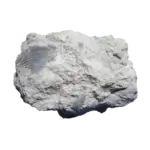
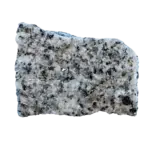
That powder, and the bedrock laid down by older eruptions, is the source of the lake’s chemistry. The surrounding rocks are sodium-dominated lavas rich in carbonate but poor in calcium and magnesium. Rainwater and hot springs carry the dissolved sodium carbonate down into the closed basin. With no outflow and brutal evaporation under temperatures that frequently top 40 degrees Celsius, the water concentrates relentlessly, leaving behind natron and trona and driving the salinity and alkalinity ever higher. (For more on the rock itself, see our companion piece on Ol Doinyo Lengai.)
What is the pH of Lake Natron, and how hot does it get?
Here the sources genuinely disagree, and the honest answer is a range rather than a single figure. NASA’s Earth Observatory states that, depending on recent rainfall, the lake’s alkalinity can reach a pH of 9 to 10.5, almost as alkaline as straight ammonia, and Live Science likewise reports a pH that “can reach 10.5, which is almost as caustic as ammonia solution.” Other accounts, including Wikipedia and several volcanology-leaning sources, state the alkalinity “can reach a pH of greater than 12,” which would put it near caustic lye, though these higher figures are harder to trace to a single measured source than NASA’s range. The likely truth is that the number is not fixed. A shallow, evaporating, closed-basin lake swings with the seasons. It dilutes when the rains and the river arrive and concentrates toward its caustic extreme as the dry season bakes it down. The safe summary: Lake Natron is reliably one of the most alkaline bodies of open water on Earth, somewhere in the pH 9 to 12 band depending on where and when you measure.
Temperature carries the same caveat. Water temperatures in places have been reported as high as 60 degrees Celsius, which is the 140 degrees Fahrenheit figure repeated in much of the coverage of Brandt’s photographs. Ambient air temperatures at the lake frequently exceed 40 degrees Celsius. Between the heat and the alkalinity, the water can burn the skin and eyes of an animal not adapted to it. That is not folklore. It is what sent the 2007 helicopter crew scrambling for shore.
Why is Lake Natron red?
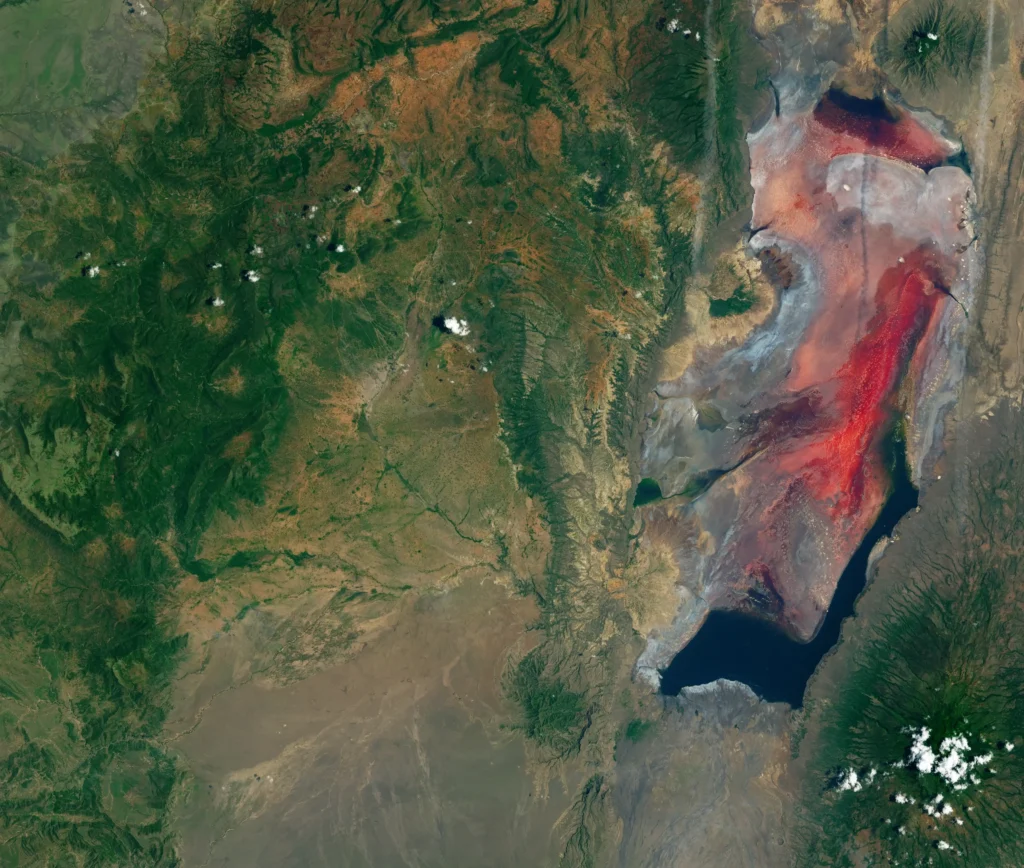
From an airplane window or a satellite, the lake looks wounded. Its open water glows deep red, its shallows shade to orange, and its salt crust often flushes pink. The color is biology, not mineral. The same hostile brine that kills most life is paradise for a narrow guild of salt-loving microorganisms. As the dry season concentrates the water, populations of haloarchaea and certain pigmented cyanobacteria explode, and the red accessory pigments in their cells stain the lake. NASA’s Earth Observatory has documented the effect repeatedly, most strikingly in a Landsat 8 image from March 2017 in which the lake looks like a wound in the rift floor. The deeper the dry season, the more concentrated the brine and the more intense the color.
Astronauts aboard the International Space Station have photographed Lake Natron many times, and no two images look quite the same. The pattern of open lagoons, salt rafts, and red and orange zones shifts as the water level rises and falls, so the lake effectively repaints itself between visits. Faint north-south lines visible from orbit trace the fault scarps of the rift, the geological signature of the same crustal stretching that gave the lake its volcano and its chemistry.
Can anything live in Lake Natron?
Most things cannot. A few have made the impossible their home, and they are some of the most remarkable extremophiles in vertebrate biology. The lake supports endemic alkaline tilapia of the genus Alcolapia, small cichlids once placed in the genus Oreochromis. They live around the cooler, slightly less caustic margins where hot springs and freshwater streams feed in, and in the lagoons that open and close as the lake rises and falls. Lake Natron is home to Alcolapia latilabris and Alcolapia ndalalani, both endemic, along with the more widespread Alcolapia alcalica.
What makes these fish extraordinary is how they handle their own waste. Most fish dump nitrogen across their gills as ammonia, which is cheap to produce but turns toxic fast in highly alkaline water, where it cannot diffuse away. The soda-lake tilapia of the Natron-Magadi basin evolved around the problem. They convert their nitrogenous waste to urea and excrete that instead, a far rarer strategy among fish. The closely studied relative from neighboring Lake Magadi, Alcolapia grahami, is, in the words of Chris Wood and colleagues writing in the Journal of Experimental Biology, “the only 100% ureotelic teleost; it normally excretes no ammonia,” a discovery first made on a 1980s field expedition. These animals also carry adaptations for living in warm, oxygen-poor, intensely alkaline water that would kill an ordinary teleost within minutes.
At the base of the food web sits a cyanobacterium with a famous name. Arthrospira fusiformis, long known to the health-food aisle as spirulina and recently reclassified by some authors as Limnospira fusiformis, blooms in these alkaline waters in vast quantities. It is the engine that makes the soda lakes among the most biologically productive ecosystems on the planet, and it is the reason the flamingos come.
Why do flamingos breed at Lake Natron?
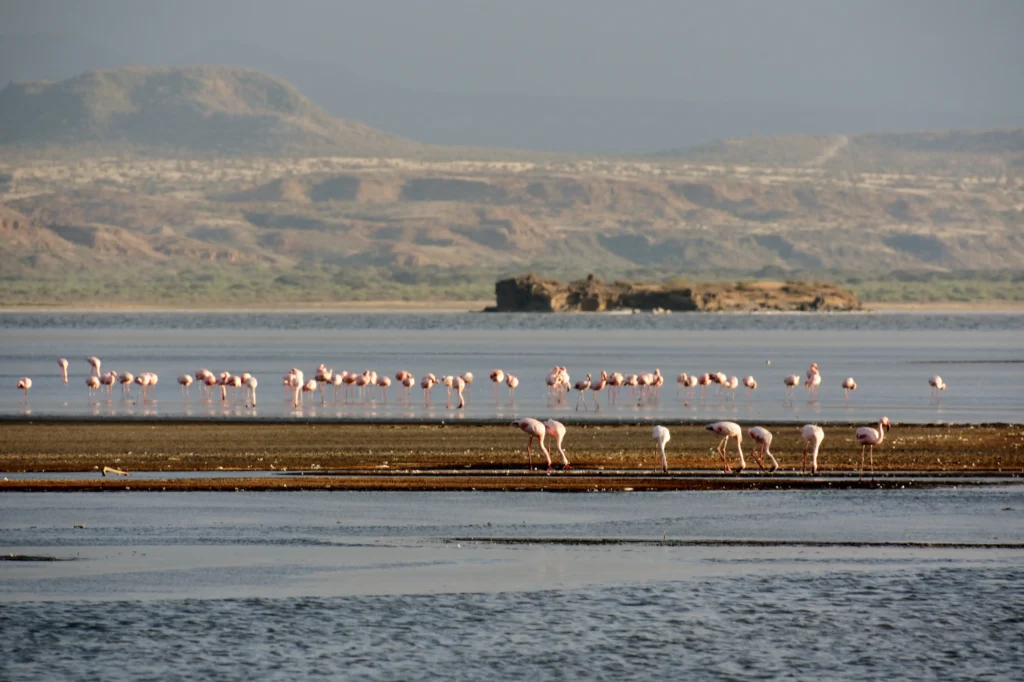
This is the paradox at the heart of Lake Natron. The deadliest lake in East Africa is also a nursery. Lesser flamingos (Phoeniconaias minor) gather here in immense numbers, and Lake Natron is the only regular breeding site for the species in the entire region. According to BirdLife International, writing in August 2025, the lake is “East Africa’s only regular breeding site for the species, sustaining nearly 1.5–2.5 million flamingos, representing 75% of the species global population.” Live Science, citing the Tanzania Wildlife Management Authority, gives the same 1.5 to 2.5 million East African figure, “which represent around 75% of the global population of the species,” set against a worldwide population that CNN has put at around 3.2 million.
The caustic water is exactly the point. When the lake level is right, evaporation exposes temporary islands of soda and mud ringed by water too corrosive for a jackal, a hyena, or a monitor lizard to wade across. The flamingos build little mud cones on these islands and raise their single chicks behind a moat of liquid fire. The same chemistry that mummifies the unlucky shields the nests of the adapted. The birds feed largely on Arthrospira, filtering it from the water with bills lined by thousands of microscopic plates, and the carotenoid pigments in that diet are what tint their feathers pink.
Their success is precarious. Lesser flamingos do not breed every year, often skipping seasons entirely when conditions are wrong, which makes each successful breeding event at Natron disproportionately important. The IUCN classifies the species as Near Threatened with a declining population, and a major reason for that listing is the bird’s near-total dependence on this one site. Tanzania recognized the lake’s importance early, naming the Lake Natron Basin to the Ramsar List of Wetlands of International Importance on July 4, 2001. Concentrate three-quarters of a species into a single, fragile, shallow lake and you create a spectacular wildlife event and a single point of failure at the same time.
The fight over the lake: soda ash, flamingos, and a 2025 reprieve
The chemistry that built the lake also made it a target. Sodium carbonate, sold as soda ash, is a workhorse industrial chemical used in glass, detergents, paper, and chemical manufacturing, and Lake Natron holds a great deal of it. Since around 2006, the Tanzanian government has periodically pursued a soda-ash extraction plant on or near the lake, originally in partnership with Tata Chemicals of Mumbai through the state-owned National Development Corporation. Early plans envisioned a plant drawing brine through a network of pipes, housing for more than a thousand workers, and a coal-fired power station to run it all.
Conservationists reacted with alarm. A coalition that grew to dozens of East African and international organizations, coordinated through BirdLife International and the Lake Natron Consultative Group, mounted a sustained campaign. Their core argument was blunt. Chris Magin of the RSPB warned that disturbing the breeding colony would be catastrophic: “The chance of the lesser flamingoes continuing to breed in the face of such mayhem are next to zero. This development will leave lesser flamingoes in East Africa facing extinction.” The fear was that pumping, pipe networks, freshwater diversion, and the human footprint of a factory would alter the lake’s delicate hydrology and salinity, collapse the Arthrospira blooms, and wreck the nesting islands.
Tata Chemicals withdrew. In a letter dated June 27, 2012 and reported by BirdLife International, the company’s managing director stated that “as an outcome of a detailed business review Tata Chemicals formally exited the Lake Natron development project on 29th January 2009. Tata Chemicals has not been involved with the Lake Natron project since that time.” But the project did not die with Tata’s exit. The proposal resurfaced in various forms over the following decade, sometimes relocated to the Engaruka basin upstream, sometimes revived under new names. In early 2025 a fresh and larger plan appeared. Ngaresero Valley Company Ltd proposed extracting up to one million tonnes of soda ash a year, starting with 660,000 tonnes of refined product, on land and water that Maasai communities said they could not spare.
This time the resistance came from the lakeshore itself. From May to July 2025, nine Maasai villages organized under the banner “Our Lake, Our Life,” holding village meetings convened with help from the conservation group Nature Tanzania. Then, in August 2025, the Tanzanian government halted the large-scale project. The Deputy Minister for Minerals, Stephen Kiruswa, stated that no licence for industrial mining inside Lake Natron had been or would be issued. “Only traditional surface collection of naturally occurring soda ash along the lake’s edge is permitted,” he said, as reported by BirdLife International. “No large-scale extraction will be authorised.” Kiruswa framed the decision as a long-term calculation, telling Down To Earth that the profits from soda ash would be short-lived, “while losing flamingos, tourism revenue, and cultural heritage would be permanent.”
Conservationists welcomed the decision and immediately called it provisional. Ken Mwathe of BirdLife International commended the government but added that “more must be done to ensure the soda ash proposal does not re-appear in future.” The history justifies the caution. The plan has been declared dead before, in 2008 and 2009, and has returned each time. The 2025 halt is a reprieve, not a guarantee.
What the calcified bird really shows
Go back to that image of the calcified bird, perched and intact, looking for all the world like a creature that was turned to stone in a single instant. You can now read it correctly. The bird is not proof of a lake that petrifies the living. It is a small monument to a specific, ancient chemistry: a closed basin in a tearing continent, fed by the only volcano on Earth that erupts sodium-carbonate lava, baked down by the sun into a brine that mummifies the dead the way Egyptian embalmers once did by hand. The same brine that hardened that bird also guards the nurseries where three-quarters of the world’s lesser flamingos are born. The lake does not kill on contact and grant nothing in return. It is far more interesting than the myth. It keeps a ledger of death and life on the same caustic water, and for now, after 2025, the living side has been protected.
Frequently asked questions about Lake Natron
Is Lake Natron real?
Yes. Lake Natron is a real soda lake in northern Tanzania, in the Gregory Rift of the East African Rift, straddling the border with Kenya at its northern tip. It is a Ramsar Wetland of International Importance and the most important breeding site on Earth for the lesser flamingo. The viral photographs of preserved animals are also real, though the dead specimens were posed by photographer Nick Brandt.
Does Lake Natron turn animals to stone instantly?
No. Animals that die on the lake’s edge are slowly dried out and encrusted in sodium carbonate and trona over days and weeks, the same family of salts used in ancient Egyptian mummification. The preservation is so complete that the carcasses look like statues, but there is no instant petrification on contact.
Why is Lake Natron red?
The red is biological, not mineral. Haloarchaea and pigmented cyanobacteria thrive in the concentrated brine, and the carotenoid and accessory pigments packed into their cells tint the water. The effect strengthens through the dry season: less water, denser microbial populations, deeper color.
What is the pH of Lake Natron?
Sources vary. NASA and Live Science cite a pH around 10.5 or a range of 9 to 10.5, comparable to ammonia, while others report values exceeding 12, near caustic lye. The figure shifts with the seasons as rainfall dilutes the lake and evaporation concentrates it. Lake Natron is reliably among the most alkaline open waters on Earth, in roughly the pH 9 to 12 band.
Why do flamingos breed at Lake Natron if it is so deadly?
The hostility is the whole point. Evaporation strands islands of soda and mud inside a moat of water too caustic for a hyena or monitor lizard to wade through, so nesting flamingos raise their chicks almost free of predators. They nest on those islands and filter Arthrospira from the water for food, the reason roughly 75% of the world’s lesser flamingos hatch at this one lake.