




Natural Hydrogen: What the Geology Actually Shows
Natural hydrogen, the kind generated underground by water reacting with iron-rich rocks, has gone from a Malian curiosity to a multi-billion-dollar exploration category in a decade. The geology, the discoveries in Mali, Albania, Kansas and Lorraine, and where the skeptics are right.
How Natural Hydrogen Was Discovered: A Cigarette and a Column of Flame in Mali
In 1987, near the village of Bourakébougou, about 50 kilometres north of Bamako, a crew of Malian drillers gave up on a water well at 112 metres. The borehole had begun blowing a strong, dry, odourless wind that spooked the crew. According to the account later relayed by Denis Brière and reported by Eric Hand in Science, a driller eventually bent over the hole with a lit cigarette, and the well exploded into a pale blue column of flame that burned until it was smothered with mud and clay. The well was plugged and forgotten for more than two decades. Only when the Canadian-Malian company Petroma, later Hydroma, reopened it in 2011 did anyone measure what had been coming out: roughly 98% H₂ by volume, about 1% methane and 1% nitrogen, with none of the carbon dioxide or hydrogen sulphide that would normally accompany anything from a petroleum system.
Until the late 2000s, the consensus among petroleum geologists was that economic free-hydrogen accumulations were unlikely. Hydrogen finds had been published in AAPG Bulletin as early as 1983, and Russian geologists had been writing about subsurface H₂ for decades. The field treated them as curiosities. Hydrogen is the smallest molecule in nature, leaking through steel and diffusing through rock. Conventional wisdom held that any H₂ produced inside the crust would leak out or be consumed by microbes long before it could pool into anything drillable.
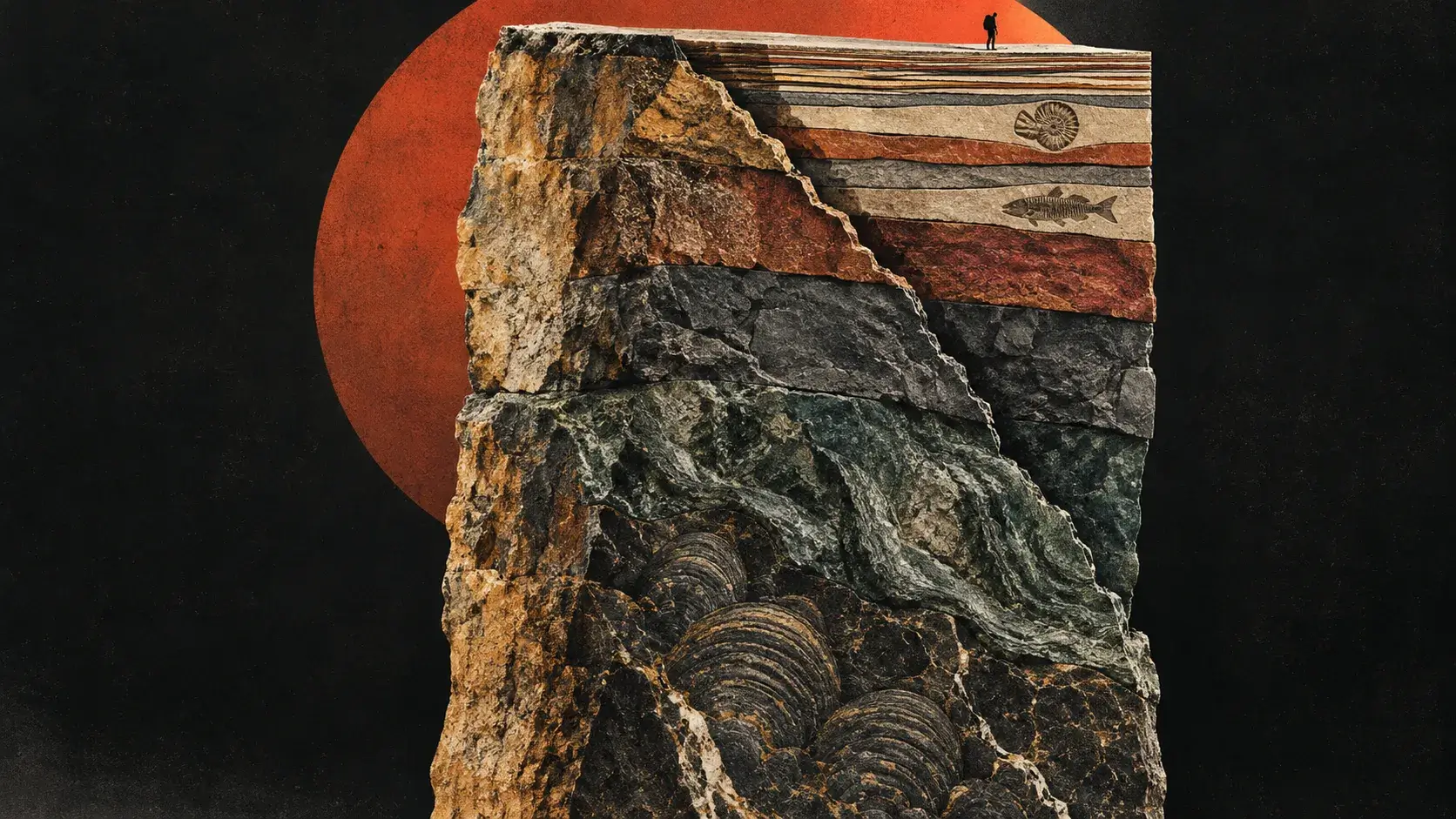
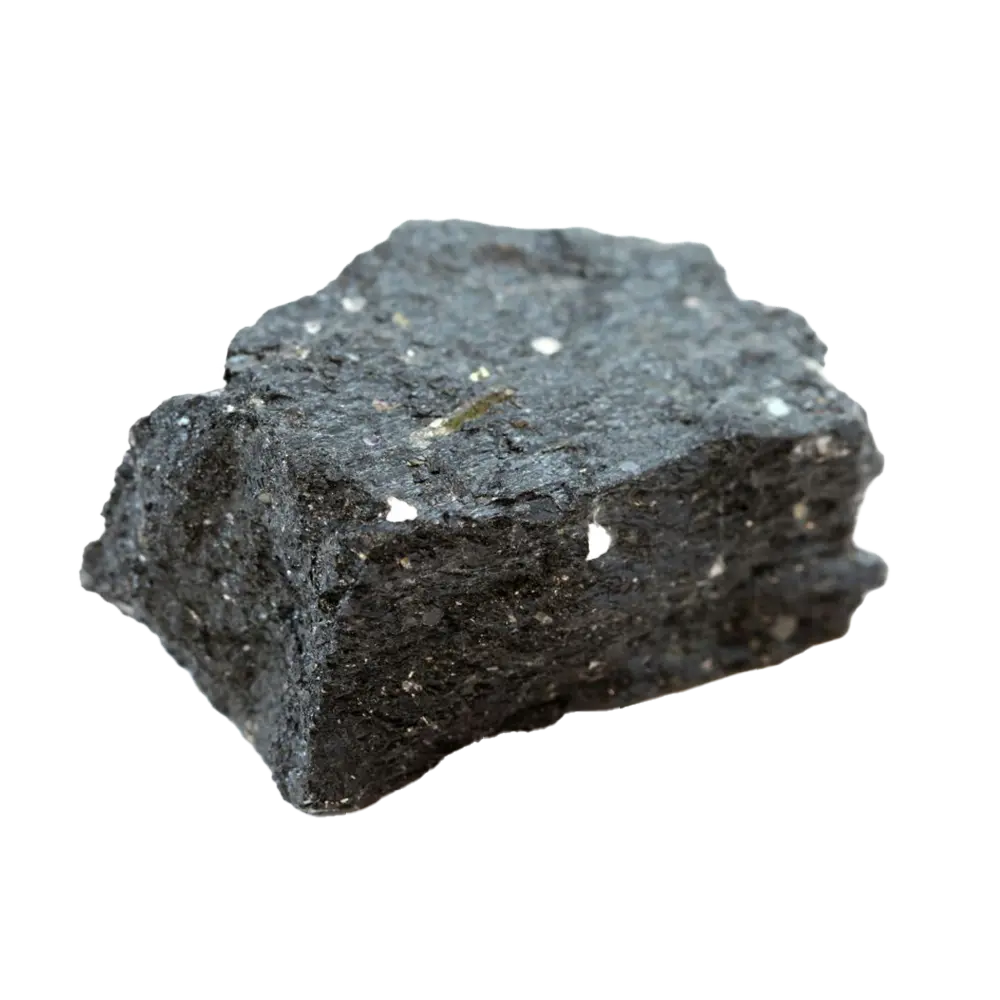
The paper by Alain Prinzhofer and colleagues in 2018, characterising the well’s gas composition, reservoir geometry, and the dolerite-sill seals trapping the gas, broke that assumption. Since 2012 it has fed a small Ford engine and generator that electrify the village at roughly 1,500 cubic metres (about 50,000 cubic feet) of gas a day. Twenty-four follow-up wells, described in 2023 by Omar Maiga and co-authors in Scientific Reports, confirmed multiple stacked reservoirs in Neoproterozoic dolomitic cap carbonates, each sealed by dark dolerite sills. Hydroma now holds the world’s first natural-hydrogen exploitation permit.
In February 2024, Laurent Truche of ISTerre in Grenoble and his colleagues published measurements in Science from the Bulqizë chromite mine in northeastern Albania, after years of work characterising what was happening nearly a kilometre below the surface. The headline finding was a 30-square-metre pool of water in a deep mine gallery, bubbling continuously with gas that was 84% hydrogen by volume. That same month, USGS geologist Geoffrey Ellis testified before the U.S. Senate Committee on Energy and Natural Resources, presenting preliminary results from a stochastic model that put a number on Earth’s underground hydrogen for the first time.
Bourakébougou: How a Failed Water Well Became the World’s First Natural Hydrogen Site
The reservoirs around Bourakébougou sit between roughly 100 and 1,800 metres deep. Each one is a thin, fractured horizon of dolomite topped by an impermeable dolerite sill. Hydrogen migrates up from below, gets trapped under the sill, and ages there. Maiga’s 2023 well tests showed that pressure builds back up after production stops, which suggests the field is being recharged from a deeper source rather than emptied like a conventional gas pocket. Prinzhofer, formerly of IFP Énergies Nouvelles, has argued for years that what is happening at Bourakébougou is not exotic, just the first place anyone bothered to look properly. The flow rate is modest and the turbine is village-scale. Hydrogen can accumulate underground in producible quantities, and Maiga’s 2023 pressure-recovery data suggests the system is being recharged on production-relevant timescales. The trap geometries look familiar to any petroleum geologist.
What Natural Hydrogen Is and How It Differs from Green and Blue Hydrogen
Natural hydrogen, also called white, gold, geologic, or native hydrogen, is molecular H₂ produced underground by the Earth itself, with no human input. It is chemically identical to the hydrogen made industrially; the difference is the production pathway. Grey hydrogen is made by steam-reforming methane and emits roughly 10 kg of CO₂ per kg of H₂. Blue hydrogen is the same process with carbon capture attached. Green hydrogen is made by splitting water with renewable electricity. Natural hydrogen is the kind that comes pre-made out of the ground, and the only kind that requires no energy input to produce.
Serpentinization Explained: How Water and Iron-Rich Rock Produce Natural Hydrogen
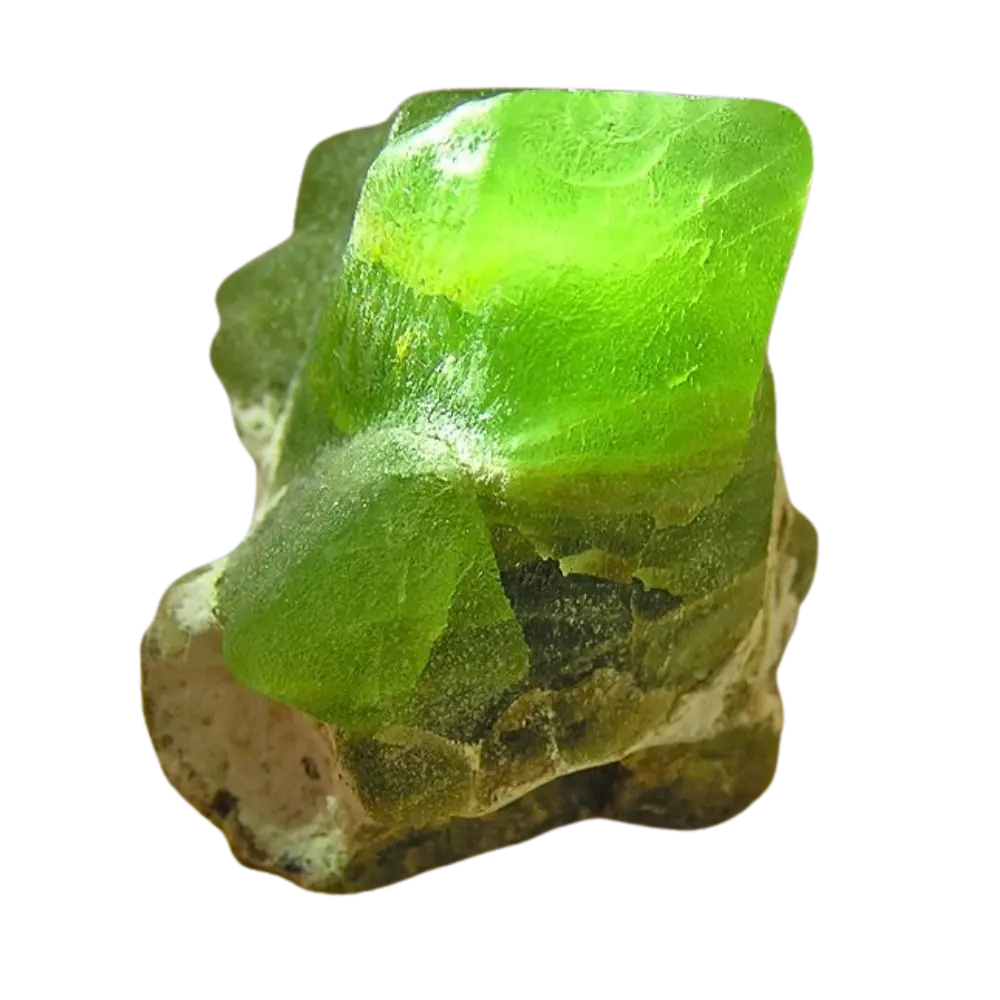
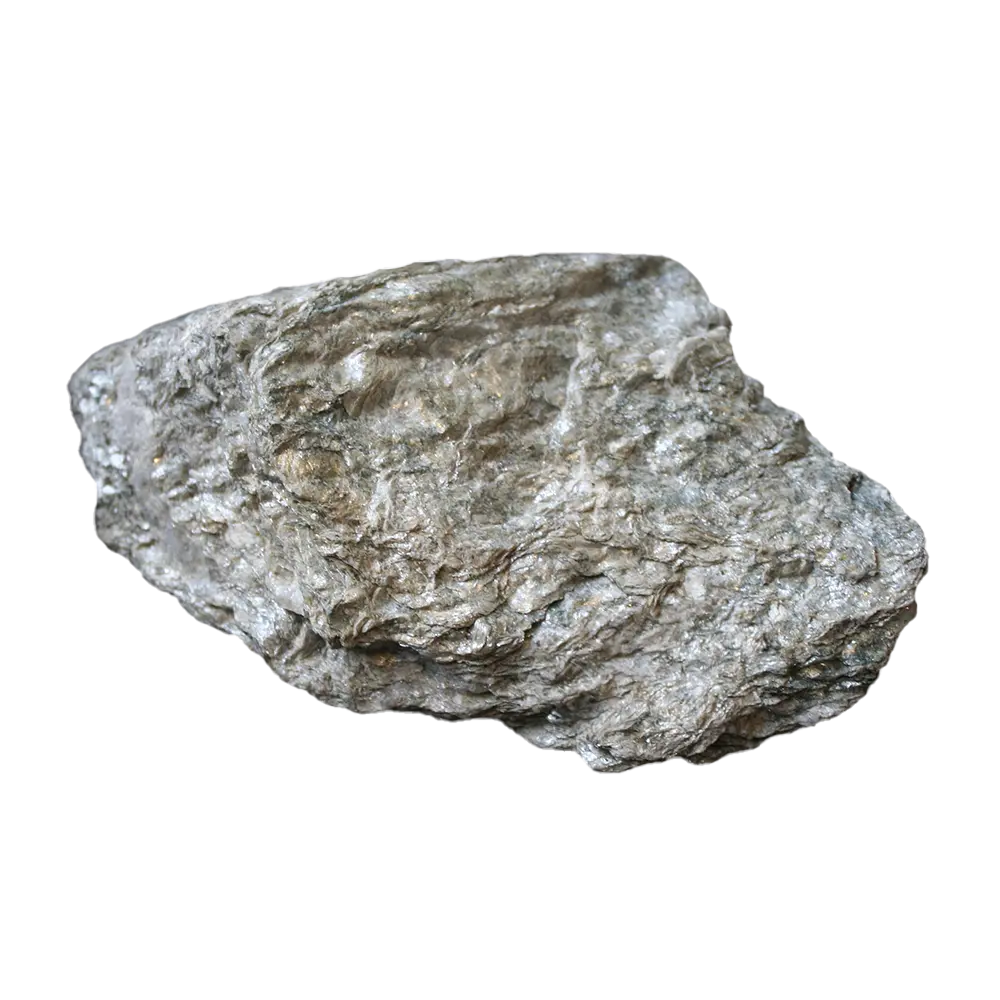
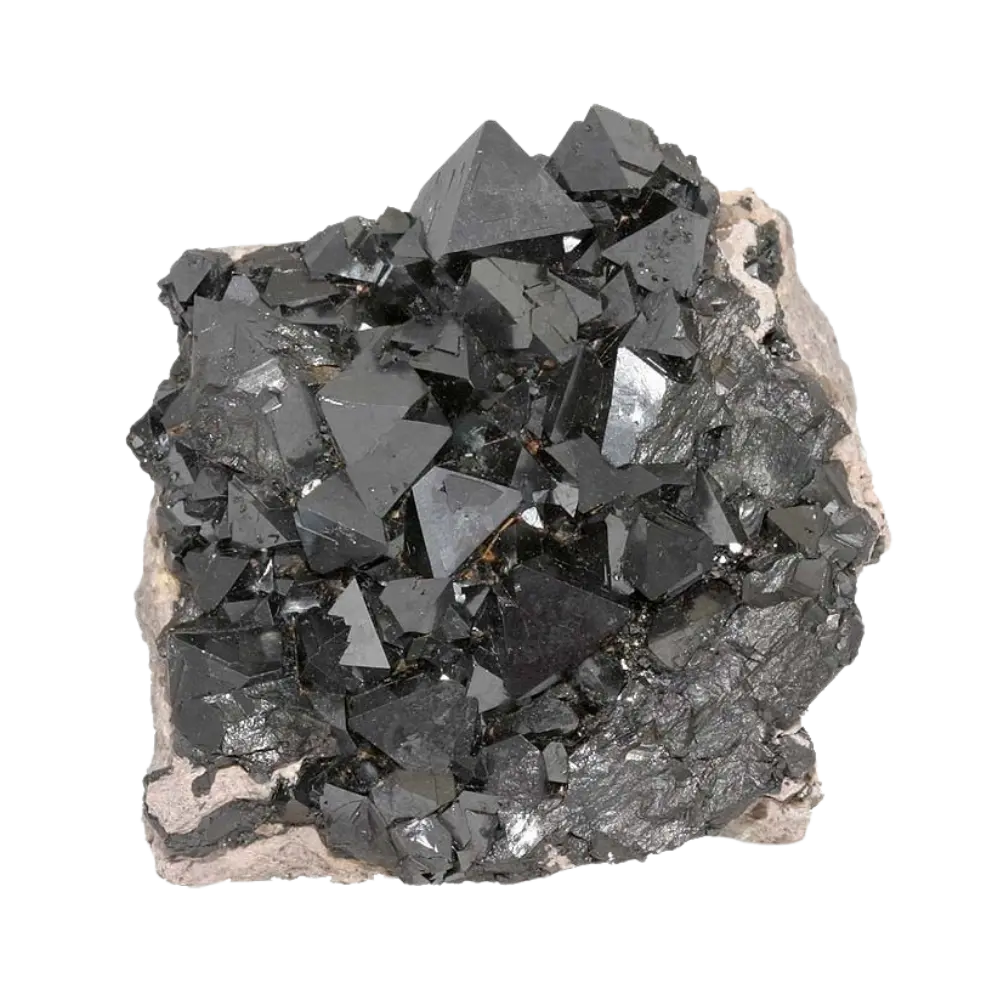
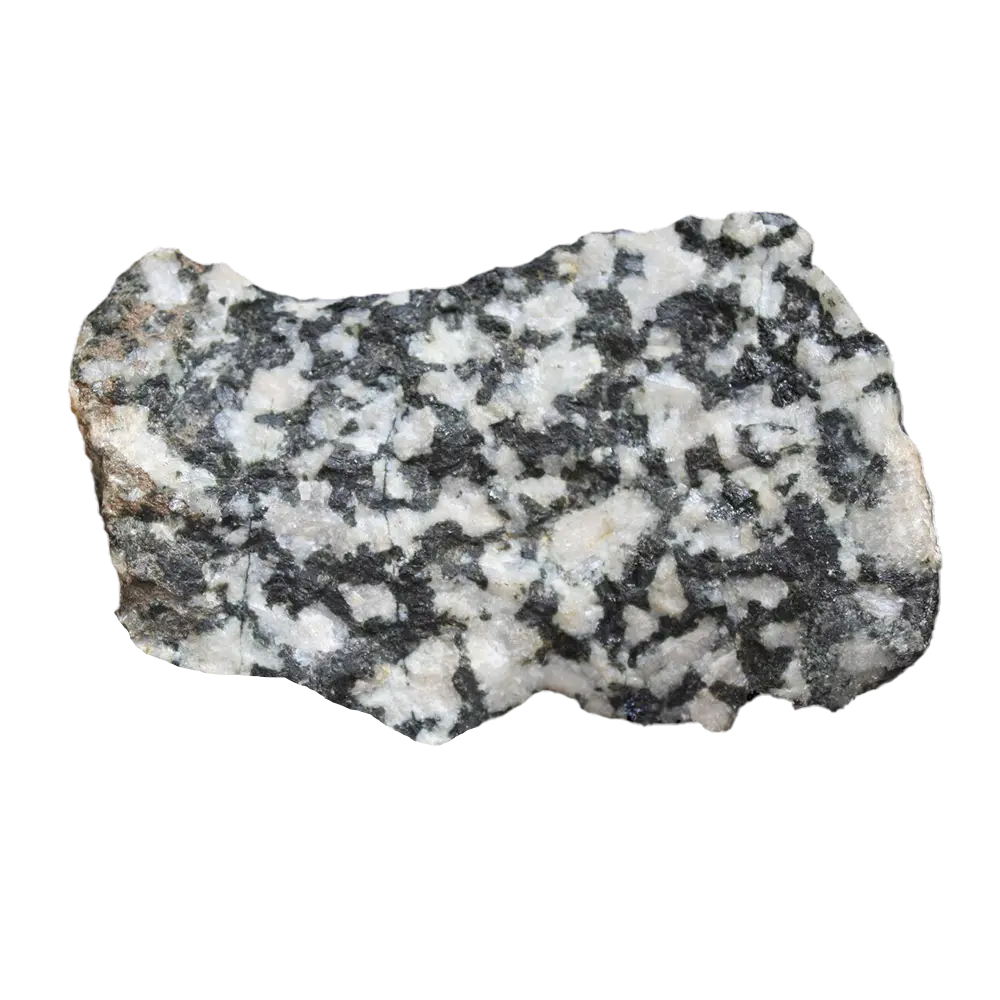
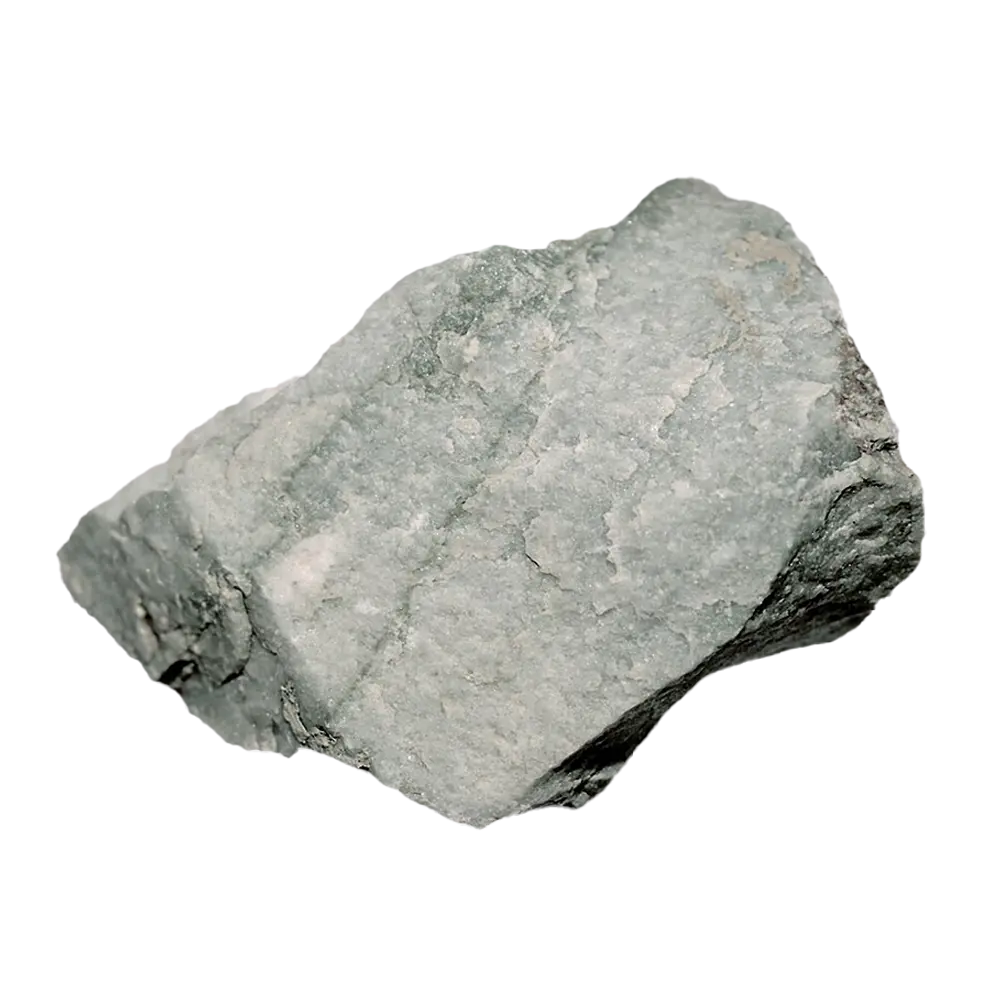
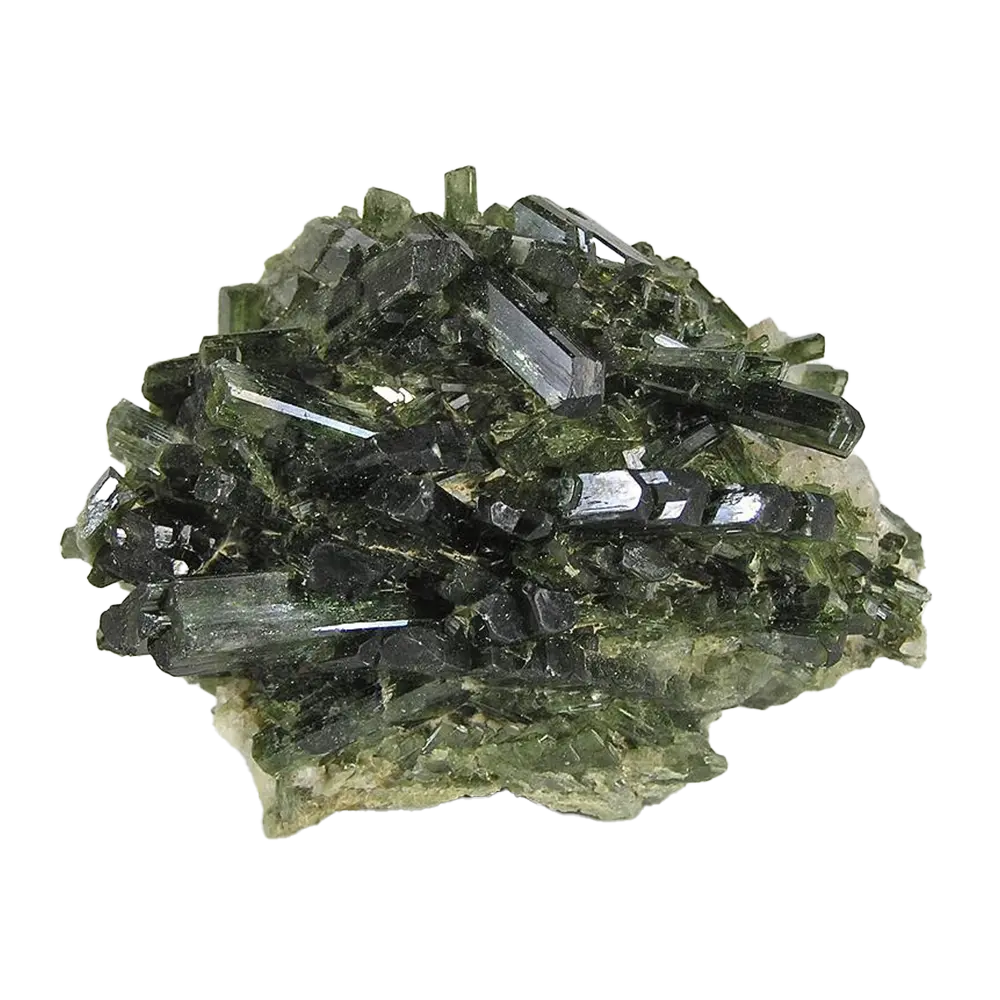
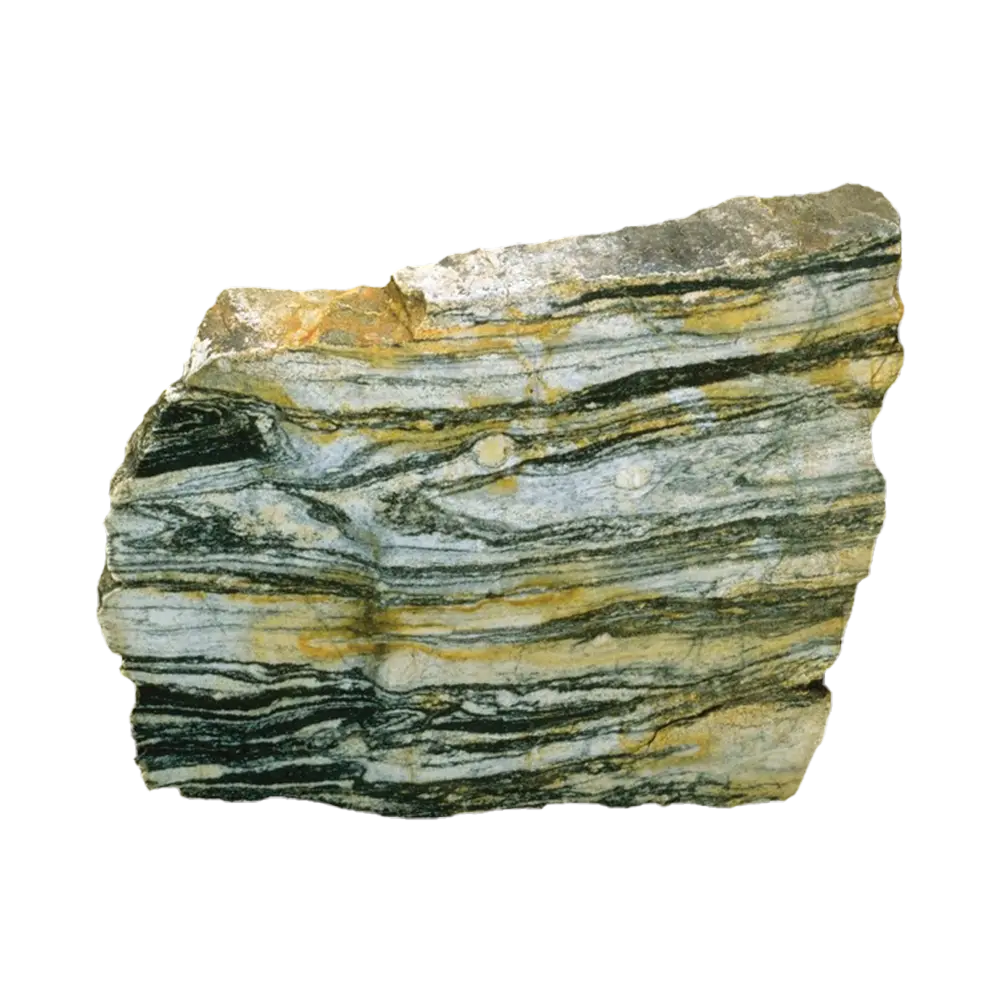
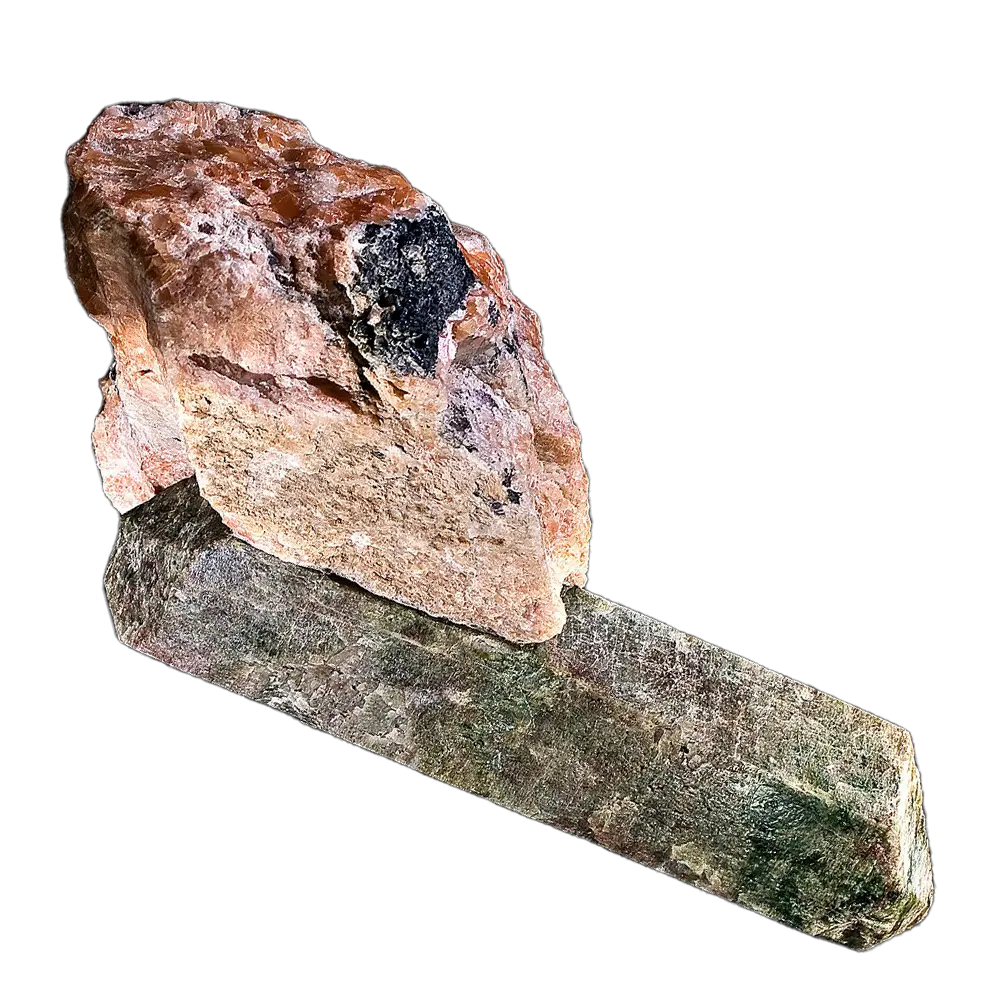
The dominant recipe is a water–rock reaction called serpentinization. Take an ultramafic rock, a peridotite, dunite, or harzburgite, the dark green stuff that makes up most of Earth’s upper mantle and gets shoved into the crust along ophiolite belts. Such rocks are rich in iron-bearing minerals, mainly olivine and pyroxene. Now run hot water through them at temperatures of roughly 200–350 °C. The iron in the olivine, present as ferrous Fe²⁺, wants to oxidise to ferric Fe³⁺. Water obliges by giving up its oxygen. Hydrogen is released as H₂ gas. The rock, meanwhile, swells into a slippery green metamorphic mineral called serpentine, with magnetite as a by-product. That swelling is why serpentinite outcrops have the snake-skin texture that gave the rock its name and gave ophiolites theirs.
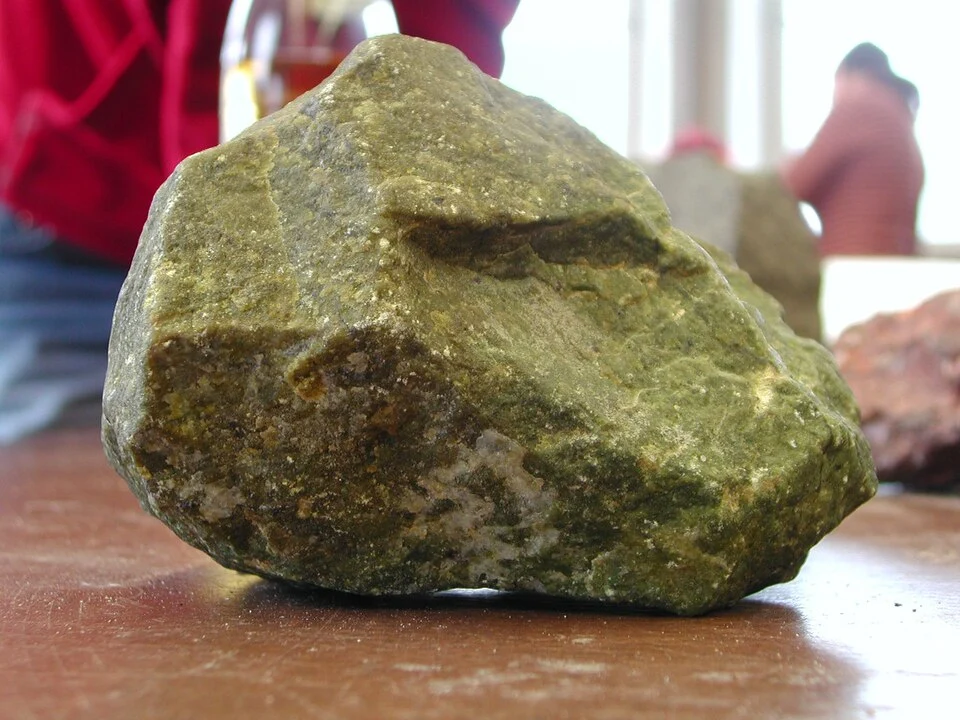
The textbook stoichiometry, roughly: olivine + water → serpentine + magnetite + H₂. The reaction is exothermic. It is self-sustaining as long as fresh rock keeps meeting fresh water. The microbes around mid-ocean hydrothermal vents like Lost City run on it, and so do the deep-biosphere organisms living kilometres below the surface at sites like the Kidd Creek mine in Ontario. Frieder Klein at Woods Hole Oceanographic Institution has spent a career working out exactly which mineral assemblages produce the most H₂ under which conditions, and the answer is that you want fractured, partially serpentinised peridotite, fed by water, at depths where the rock is hot but not too hot.
Radiolysis: How Natural Hydrogen Forms in Ancient Cratons
There is a second, slower mechanism. Radioactive decay of uranium, thorium, and potassium in deep crystalline basement rocks emits alpha and beta particles that can split water molecules directly, a process called radiolysis. The yields per cubic metre are tiny, but cratons are huge and old. Over a billion years, the Canadian Shield and the Russian Platform have generated geologically meaningful quantities of H₂ this way. Barbara Sherwood Lollar’s team at the University of Toronto has been measuring the noble-gas signatures of these systems for decades and finds that some of the deep brines they sample have been isolated from the surface for more than a billion years, hydrogen and all.
A landmark 2025 review in Nature Reviews Earth & Environment by Chris Ballentine, Rūta Karolytė, Anran Cheng, Barbara Sherwood Lollar, Jon Gluyas and Michael Daly pulled both mechanisms into a single framework. Their bottom line: continental crust over the last billion years has produced enough H₂ to power humanity for at least 170,000 years at current energy demand. Most of that gas has been lost, consumed by microbes, or is locked too far down to reach. A useful fraction may still be there where the source rock, migration pathway, porous reservoir, and impermeable seal line up, the same four ingredients petroleum geologists have spent a century hunting for, applied to a different gas.
Why Geologists Long Said Natural Hydrogen Couldn’t Exist
The mantle is not the answer. At the pressures and temperatures of the upper mantle, hydrogen is thermodynamically more stable inside water and hydrous minerals than as free H₂. Deep mantle “hydrogen” is mostly bound as hydroxyl. Almost all of the natural hydrogen that has actually been drilled, in Mali, in Kansas, in Albania, in Lorraine, is made in the upper few tens of kilometres of continental crust, by one of the two mechanisms above. Ballentine’s group made the point bluntly: any economic claim built on direct mantle-sourced hydrogen carries the burden of demonstrating a viable transport mechanism, and none has. Most of the serious exploration companies have accepted this. They target shallow, fractured, iron-rich basement, not the deep Earth.
The petroleum-system analogy turns out to be useful. Ballentine and co-authors distinguish two endmember plays: an accumulation system, where hydrogen has built up in a trap over geological time and can be produced like a conventional gas field, and a self-replenishing system, where the rate at which hydrogen flows into a trap roughly matches the rate at which a well can pull it out. Bourakébougou looks like a hybrid of both. Lorraine, on current data, looks more like accumulation. Bulqizë sits at the other end of the spectrum: very high flow, very small trap.
Bulqizë: the highest hydrogen flow rate ever measured
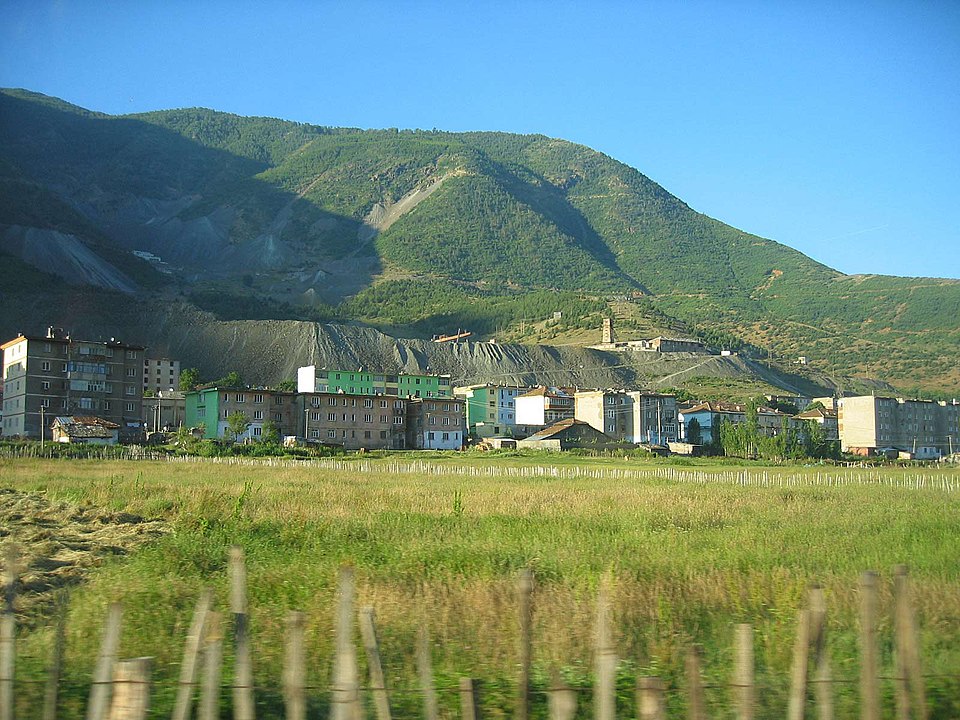
The Bulqizë chromite mine sits inside the Mirdita ophiolite, a Jurassic-age slab of ancient oceanic mantle thrust onto the Albanian continent. Miners there had been complaining about gas explosions for decades, including fatal incidents, and assumed the gas was methane. Isotopic and chemical analyses eventually showed it was hydrogen.
In 2024, Truche, Frédéric-Victor Donzé, Edmond Goskolli and colleagues published the measurements in Science. About 1,000 metres below the surface, in a mine gallery, they found that pool: 30 m², frothing constantly, drained from a fractured serpentinised chromitite below. They calibrated the flow and measured at least 200 tonnes of H₂ per year venting from the mine as a whole. That makes Bulqizë the largest natural-hydrogen flux ever measured anywhere on Earth, five orders of magnitude above what most seeps deliver. Truche described the seep in interviews as “a jacuzzi,” which is exactly what the videos look like.
The catch is the size of the trap. Truche’s team estimated the reservoir behind the seep at somewhere between 5,000 and 50,000 tonnes of recoverable H₂. That is real money, but it is well below the roughly 10 million-tonne (10 Mt) threshold that the U.S. Department of Energy’s ARPA-E programme uses as a rough cut-off for a “commercial” geologic-hydrogen field. Bulqizë therefore poses the question the whole sector has to answer in miniature: a very high flow rate from a modest trap. A genuinely self-replenishing system can sustain production regardless of trap size. An accumulation system this small empties in a few years. Donzé and Truche have published on both possibilities without claiming to have resolved them.
Kansas and the Mid-Continent Rift: Natural Hydrogen’s Forgotten Wells
Kansas is older than Mali, in this story. The 1980s drilling program around Junction City, in the heart of the Mid-Continent Rift, produced a series of wells whose gas chemistry was bizarre. The most-cited of these, the CFA Scott #1 in Morris County (about 23 km south of Junction City), was reported at around 50% hydrogen in its original 1983 AAPG Bulletin note by Goebel, Coveney, Angino and Zeller, and at 29–37 mol% on average across the Scott #1 and the nearby Heins #1 in Coveney’s follow-up 1987 paper. The balance was mostly nitrogen, with only traces of hydrocarbons. Coveney, Goebel, Zeller and colleagues described it in AAPG Bulletin in 1987, and explicitly invoked serpentinization of buried mafic and ultramafic basement as the source. Almost no one paid attention; the Kansas finds sat as a curiosity for nearly thirty years.
Julien Guélard, Isabelle Moretti and colleagues went back and resampled the same area in 2017 for Geochemistry, Geophysics, Geosystems. Their isotopic work pointed to a mixed source: some of the H₂ was almost certainly produced by serpentinization of mafic basement at depth, some by shallower processes. The Mid-Continent Rift, a 1.1-billion-year-old failed rift system running from Kansas up through Iowa, Minnesota, and Lake Superior, has all the right rocks: gabbros, basalts, and intrusive ultramafics laced with iron. Cretaceous kimberlites poke through the section in places like Riley County, suggesting old pipes that could provide migration pathways.
Today the Kansas play has a name: HyTerra, an Australian-listed start-up, is drilling its Nemaha Project across the same trend. Historic data from the Sue-Duroche-2 well, drilled around 2008–2009 and now within HyTerra’s lease, reported 92% H₂ and 3% helium. The company’s 2025 Sue-Duroche-3 step-out returned up to 96% H₂ and 5% helium, while the McCoy 1 step-out, about nine kilometres from Sue Duroche-3 within the same fault block, returned up to 83% H₂, indicating the system extends beyond a single site. Helium is now more valuable than the hydrogen itself, kilogram for kilogram, and the co-production economics could matter as much as the H₂. The USGS released the first continental-scale geologic-hydrogen prospectivity map for the contiguous United States in January 2025, and the mid-continent, Kansas, Iowa, Minnesota, Michigan, lit up alongside the Four Corners and parts of the East Coast.
Lorraine: France’s Bet on Natural Hydrogen
The French story is younger and stranger. Announced in May 2023, scientists from the GeoRessources lab at the Université de Lorraine and the CNRS, working with the gas company La Française de l’Énergie (FDE) under a programme called REGALOR, had been measuring residual methane in the abandoned coal seams of the Folschviller 1A borehole in Moselle. The trend pointed downward.
The source rock is still being worked out. Pironon and de Donato have proposed an unconventional mechanism, redox reactions between deep groundwater and iron carbonate minerals (siderite FeCO₃ and ankerite-group phases) in the Carboniferous basement, rather than classical olivine serpentinization. Deeper mafic basement as a source has not been excluded, and PTH-2 was designed in part to test which mechanism is actually operating.
The signal was strong enough that Jacques Pironon and Philippe de Donato, the two CNRS geoscientists running the work, extrapolated to concentrations of more than 90% (FDE’s own modelling suggests up to ~98%) at around 3,000 metres (9,840 feet). The CNRS Regalor team’s initial 2023 estimate placed the basin-wide resource at around 34 million tonnes. Later reporting raised that figure to as high as 46 million tonnes, often cited for the Folschviller block. Following the PTH-2 results in March 2026, basin-wide estimates from FDE and CNRS sit back at roughly 34 million tonnes, with the reservoir potentially extending across the Lorraine–Moselle basin and into Luxembourg, Belgium and Germany. All figures depend on extrapolation from a small number of measurement points.
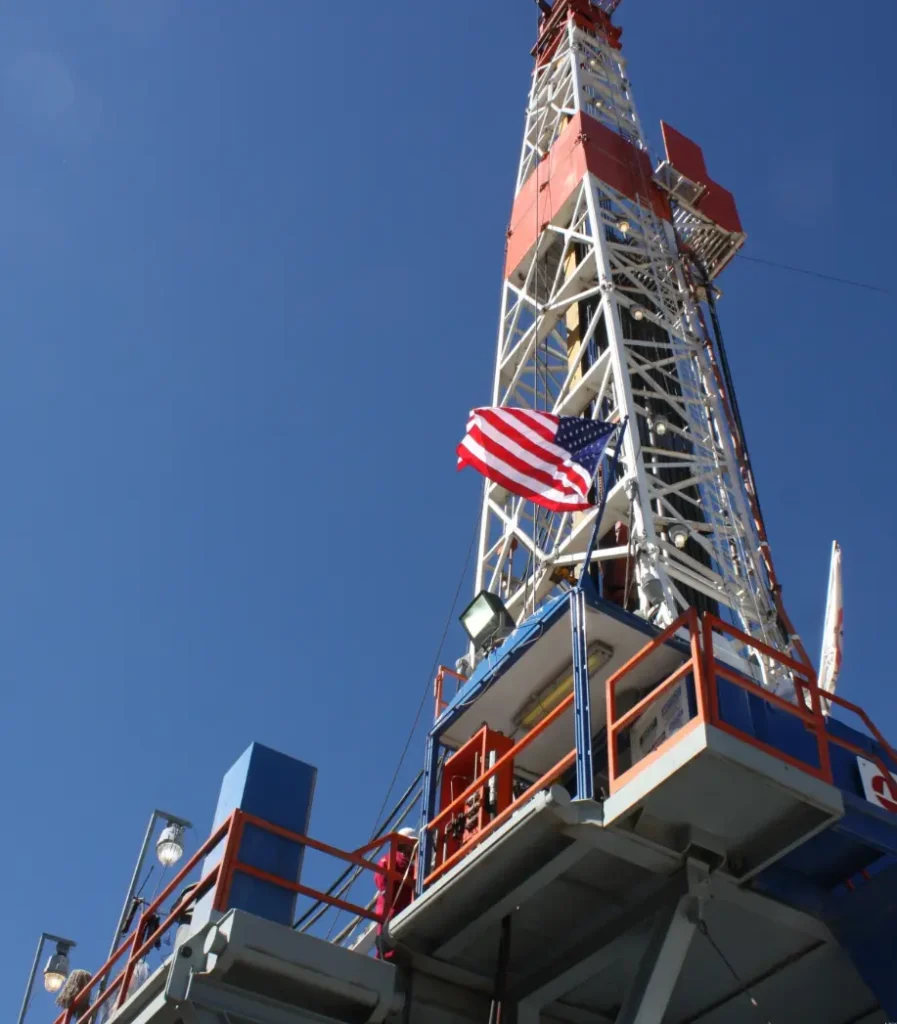
Those numbers come with healthy uncertainty. They are estimates from a single borehole and a generation model. In late 2025 and early 2026, FDE drilled a deeper test. Drilling began in October 2025 in Pontpierre, a village of about 800 people roughly six kilometres from Folschviller, using a rig from RED Drilling. SLB, Baker Hughes, and Weatherford were named as the technical service partners on the FDE press release. On 23 March 2026 FDE announced that the PTH-2 well had reached 3,655 metres (11,991 feet), currently the deepest well anywhere drilled specifically for natural hydrogen. Fifty-eight surface gas samples were collected during drilling, confirming H₂ in numerous intervals. The REGALOR II programme, funded with €8.8 million in EU and Grand Est regional support and led with the University of Lorraine, CNRS, BRGM, and Solexperts, will spend the next two years measuring concentrations in situ, mapping the source rock, and deciding whether the basin-wide estimates are realistic or wishful.
Lorraine’s economics depend on its address as much as its resource. The Moselle basin sits at the western end of the planned mosaHYc pipeline, which is meant to connect Saarland, Lorraine and Luxembourg into a cross-border hydrogen network for ArcelorMittal’s steel decarbonisation and Saarland’s chemicals industry. If a producible H₂ field exists under Folschviller, the offtake is already being plumbed in. Few exploration plays line up with their potential offtake infrastructure at this stage of the discovery cycle.
The USGS Estimate: 5.6 Trillion Tonnes of Underground Hydrogen
The headline figure made every news outlet on Earth: a most-probable in-place geologic-hydrogen resource of about 5.6 × 10⁶ Mt — 5.6 trillion metric tonnes, almost none of it reachable. The crust generates an estimated 15–31 Mt of new H₂ each year. If even 2% of the in-place stock, roughly 10⁵ Mt or 100 billion tonnes, could be recovered, it would supply the hydrogen demand of a net-zero energy economy for about 200 years. The energy content is roughly 1.7 times that of all proven natural-gas reserves on Earth (≈1.4 × 10¹⁶ MJ versus ≈8.4 × 10¹⁵ MJ).
Ellis had presented preliminary versions of these figures to the U.S. Senate Committee on Energy and Natural Resources in February 2024, ahead of the December 2024 Science Advances publication. Those numbers, trillions of tonnes, twice all natural gas reserves, two centuries of net-zero supply, ran in nearly every major outlet, often without the qualifications Ellis himself kept attaching to them.
What “In Place” Actually Means
The stochastic model gives a range, not a point. The lower 5th percentile is around 10³ Mt; the upper 95th percentile is around 10¹⁰ Mt. That is seven orders of magnitude. The 5.6-trillion-tonne figure is the most likely value within a probability distribution that is so wide it spans from “barely a resource” to “more energy than humanity has ever used.”
More importantly, in-place volumes are not recoverable volumes. Ellis’s own testimony and the paper itself are explicit: most of the implied hydrogen is too deep, too dispersed, too far offshore, or too contaminated with other gases to ever be produced economically. The 2% recoverable fraction is a hypothetical, not a forecast. Ellis has said in interviews that he wishes the headlines included the uncertainty band, because the model’s value is not in the central number but in showing that the resource base is large enough to be worth looking for. The USGS itself, on its geologic hydrogen page, states plainly that the model does not predict where the hydrogen is, and that most of it is likely unreachable.
So the right way to read 5.6 trillion tonnes is this: Earth has been making hydrogen for billions of years, and a lot of it is still down there in some form. Whether any of it is concentrated in places we can drill, at flow rates we can sustain, is a separate question.
Why the Skeptics Are Probably Half Right
The Hydrogen Science Coalition is a volunteer group of academics and engineers, Paul Martin, Tom Baxter, Johanne Whitmore among them, that has spent the last few years arguing, with data, that hydrogen is being oversold across the energy transition. On geologic hydrogen specifically, their position paper makes a pointed observation: with the exception of Mali, no geologic-hydrogen finding to date has been demonstrated by an actual flow test. Everywhere else, the evidence is seeps (where H₂ leaks out of the ground) and shows (where H₂ traces appear during drilling). Neither is producible hydrogen. Global natural-hydrogen production today supplies less daily energy than a single onshore wind turbine at average capacity factor.
How Much Natural Hydrogen Is Actually Produced Today?
Stuart Haszeldine, professor of carbon capture and storage at the University of Edinburgh, has been one of the most prominent voices saying the geologic-hydrogen sector is “running before walking.” Ana María Jaller-Makarewicz, energy analyst at the Institute for Energy Economics and Financial Analysis (IEEFA), has made similar arguments. Their critique is that scaling from a Malian village turbine to a continental energy source requires evidence that does not yet exist, and that capital committed to white hydrogen now is capital not flowing to electrolysers and direct electrification: both of which already work.
A second concern: even where the H₂ is real, it usually arrives mixed with other gases. A reservoir that produces 75% H₂ and 22.5% methane is not free of carbon emissions. The Hydrogen Science Coalition has calculated that such a mix can deliver around 1.5 kg CO₂-equivalent per kg H₂ once you factor in venting and processing, comparable to the Coalition’s own clean-hydrogen threshold being missed by 50%. The assumption that geologic hydrogen is automatically low-carbon needs verifying on a per-reservoir basis.
The 10-Million-Tonne Threshold
The most rigorous recent critique came in January 2026. Dieter Franke, Peter Klitzke and colleagues at Germany’s Federal Institute for Geosciences and Natural Resources (BGR) published in Scientific Reports a global synthesis of observed natural-hydrogen flow rates, fluxes, and concentrations across seeps, springs, mines and wells. Their conclusion is sobering. Large observed natural H₂ flow rates fall between 10⁵ and 10⁷ cubic metres per year. Commercially viable flow rates, the kind that would allow a project to compete with conventional gas, need to be at least an order of magnitude higher than most of those, and the well must sustain ≥90% purity for 20–30 years. Self-replenishing systems, in their assessment, are unlikely to deliver economically recoverable hydrogen at scale. Accumulation systems, petroleum-style traps, are a better bet, but the proven examples are vanishingly rare. Mali is the only field with a flow test. Everywhere else is still in the show or seep stage.
Viacheslav Zgonnik, an independent geochemist whose 2020 Earth-Science Reviews paper remains the most comprehensive open-literature catalogue of natural-hydrogen occurrences, has been more optimistic in his published work than the skeptics but agrees on one point. The fact that hydrogen seeps are common, including the strange circular “fairy circles” on the São Francisco Basin in Brazil and parts of Russia, which appear to be surface expressions of slow degassing, does not mean economic accumulations are common too.
The open question is whether the recoverable fraction is large enough to register at the scale of the global energy system. The data needed to answer that question does not yet exist.
Natural Hydrogen Companies in 2026: Koloma, HyTerra, and the Investment Wave
Investment capital has moved well ahead of the geology.
Koloma, founded in Denver in 2021 by Tom Darrah of Ohio State University, CEO Pete Johnson, and Paul Harraka, has raised roughly US$400 million across multiple rounds. Its investors include Breakthrough Energy Ventures (Bill Gates), Khosla Ventures, the Amazon Climate Pledge Fund, and the United Airlines Sustainable Flight Fund. The company runs proprietary AI models over seismic and geochemical data to pick targets. In 2025, operating as Cascade Exploration in Idaho, it secured a permit from the Idaho Department of Lands to drill its Twin Peaks 1W stratigraphic test well near Notus, Canyon County, targeting Miocene flood-basalt and intrusive mafic horizons. The well is for data, not production. Koloma is also drilling in Iowa around the Vincent dome in Webster County, and in Kansas.
HyTerra, ASX-listed, is the most public player on the U.S. mid-continent, drilling the Nemaha Project in Kansas with subsurface H₂ concentrations reported up to 96%. Mantle8 is a French start-up focused on ophiolite-related plays. Helios Aragón is drilling in northern Spain on a deep Pyrenean target. Gold Hydrogen in South Australia has reported high-purity hydrogen and helium shows in its Ramsay-1 and Ramsay-2 wells on the Yorke Peninsula. Natural Hydrogen Energy LLC drilled the first U.S. exploration well in Nebraska back in 2019, before the current wave.
Public money is following the private money. The U.S. DOE’s ARPA-E launched a dedicated geologic-hydrogen programme. The 2021 Bipartisan Infrastructure Law put US$9 billion into clean hydrogen. The Inflation Reduction Act’s Section 45V production tax credit offers up to US$3 per kg of clean hydrogen produced, and geologic hydrogen, if low-emission, can qualify. The combination has done what the Mali well alone could never do: it has turned a thirty-year-old footnote into a venture-capital category.
Whether the current boom produces a small number of durable operators or quietly fades, as the 1980s and 1990s oil-shale ventures did, will depend on results from wells like Twin Peaks 1W and PTH-2 over the next three years.
What to Watch in Natural Hydrogen Exploration: 2026–2028
The next three years will deliver most of the data the sector currently lacks. PTH-2 in Pontpierre should produce, over 2026 and 2027, the first deep concentration measurements anywhere targeted specifically at a putative continental natural-hydrogen system; if Pironon and de Donato confirm concentrations above 90% at 3,000-plus metres, the basin-wide Lorraine estimates gain credibility, and if they don’t, the French story shrinks back to a localised oddity. Twin Peaks 1W in Idaho and the ongoing Nemaha wells in Kansas will test whether Koloma’s and HyTerra’s AI-driven targeting actually works on continental rift basement — and whether the USGS prospectivity map published in January 2025 means anything in practice. Behind all of this sits the empirical bar set by Franke and colleagues at BGR: to matter at climate scale, a play needs sustained flow rates at least an order of magnitude above what seeps deliver, sustained over decades, at high purity. Mali is the only field that comes close, and Mali is small. The gold-rush companies need to show either that what they’ve found is materially better than what’s already known, or that the self-replenishing model holds well enough to produce at scale.
Meanwhile, the mosaHYc pipeline inches forward, the Inflation Reduction Act enters its scheduled review, and in Bourakébougou the same modest gas engine that has been running for over a decade continues to power the village, on hydrogen that began as water reacting with rock somewhere underneath West Africa.
Earth makes hydrogen, and a great deal of it. Most of what it makes leaks out or is consumed by microbes before it ever reaches a trap. Whether the recoverable fraction is large enough to matter at the scale of the global energy transition is what the next decade of drilling has to settle. Until it does, Bourakébougou remains the only proven case.
Frequently Asked Questions About Natural Hydrogen
What is natural hydrogen? Molecular H₂ the Earth makes by itself, mainly through water reacting with iron-rich rocks (serpentinization) or radioactive decay splitting water in old crystalline basement (radiolysis). Also called white, gold, geologic, or native hydrogen. Unlike grey, blue, or green hydrogen, no human energy input is required.
How is white hydrogen produced underground? Two mechanisms. Serpentinization: water at 200–350 °C reacts with iron in olivine and pyroxene in ultramafic rocks like peridotite, oxidising the iron from Fe²⁺ to Fe³⁺ and releasing H₂. Radiolysis: alpha and beta particles from uranium, thorium and potassium decay in old cratons split water molecules directly. Yields are low per cubic metre but cratons are huge and old.
Where has natural hydrogen been found? A producible accumulation is confirmed only at Bourakébougou, Mali. Significant flows or concentrations have been measured at Bulqizë (Albania), across the Mid-Continent Rift in Kansas and Nebraska, and in the Lorraine basin in France. The USGS released the first continental-scale prospectivity map for the contiguous United States in January 2025.
Is natural hydrogen commercially viable? Not yet, outside the village-scale generator at Bourakébougou. Franke et al. (2026) set the bar at flow rates an order of magnitude above what most natural seeps deliver, sustained at ≥90% purity for 20–30 years. PTH-2 in France, Twin Peaks 1W in Idaho and the Nemaha wells in Kansas should produce the first hard data over 2026–2028. Until then, the global natural-hydrogen industry produces less daily energy than a single onshore wind turbine.