Magnetite: The Magnetic Iron Ore That Records Earth’s Magnetic Field
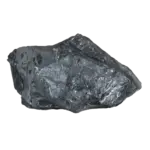
At Magnet Cove, in Hot Spring County, Arkansas, black stones weather out of the soil above a mid-Cretaceous ring complex. Hold a steel nail near one of them and nothing happens. Hold it near the next and the nail jumps the gap and hangs there. Both stones are magnetite. The second is a lodestone, a piece of the same mineral that nature has turned into a permanent magnet, and until steel magnets made without any lodestone arrived in the mid-eighteenth century, nearly every compass needle at sea had been magnetised, directly or at one remove, by a stone like it.
Magnetite is an iron oxide, Fe3O4, and iron makes up 72.4 per cent of its weight. It is the most strongly magnetic of the common minerals and, with hematite, one of the two principal ores of iron. It is also the grain inside basalt that holds a record of Earth’s magnetic field, which is how geologists learned that the sea floor spreads.
The mineral turns up in places that have little to do with mining. Bacteria grow chains of it and use them to orient in mud. Chitons cap their teeth with it. NASA’s Curiosity rover found it in the lake mudstones of Gale crater on Mars, and rounded particles of it, shed by combustion and friction, have been recovered from human brain tissue.
What is magnetite?
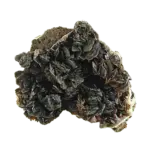
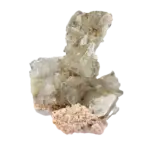
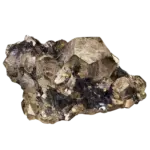
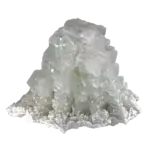
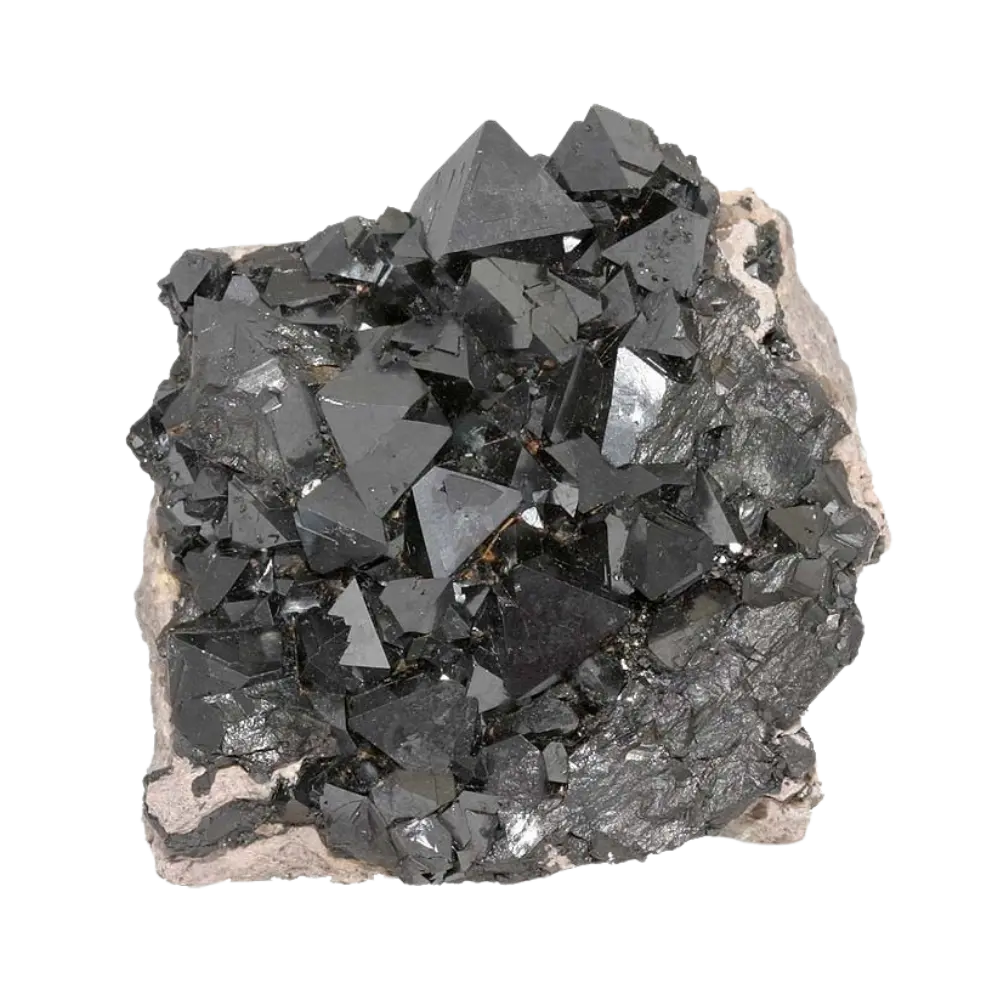
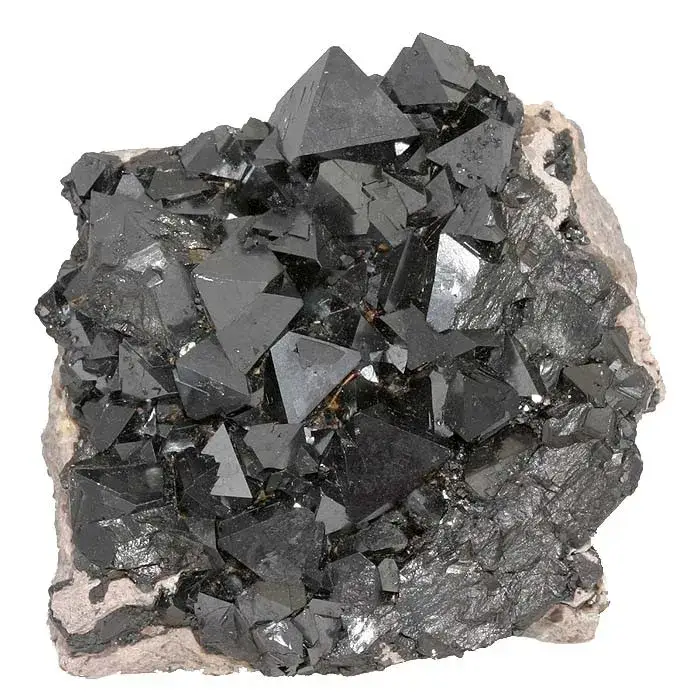
Magnetite is a black, metallic iron oxide mineral with the formula Fe3O4, holding both ferrous and ferric iron. It belongs to the spinel group and crystallises in the cubic system, usually as octahedra. No other mineral common in rocks is as strongly magnetic, and only hematite rivals it as an ore of iron.
Formally, the International Mineralogical Association lists magnetite as a valid species with “grandfathered” status, meaning it was described long before the Association began vetting names in 1959, and its approved symbol is Mag (Warr, 2021). The end-member formula is written Fe2+Fe3+2O4 to show that one iron atom in three is ferrous. In the nomenclature that Ferdinando Bosi of Sapienza University of Rome and two colleagues from Pisa published for the IMA in 2019, magnetite sits in the spinel subgroup of the oxyspinel group, inside a spinel supergroup of 56 species. Thirty-three of those species are oxides. Its Strunz class is 4.BB.05, with the other oxides whose metal-to-oxygen ratio is 3:4.
The name is older than the science. Mindat credits the modern spelling to the Austrian mineralogist Wilhelm Karl von Haidinger in 1845 and records that the material was called lodestone in English as early as 1548. The Handbook of Mineralogy is more cautious and calls magnetite “an ancient term, possibly an allusion to the locality, Magnesia, Greece”. More than one place carried that name in antiquity, among them a district of Thessaly and the Lydian city of Magnesia ad Sipylum, now Manisa in western Turkey, and the mineralogical references do not settle which one the stone was named for. Pliny’s story of a shepherd called Magnes, whose iron-shod staff stuck to the ground, is a legend and should be read as one.
Magnetite is a mineral, and it appears in Geoscopy’s rock atlas for convenience. A rock made almost wholly of magnetite does exist, in layers within large mafic intrusions, and petrologists call it magnetitite.
Magnetite chemistry and crystal structure
Picture oxygen atoms stacked as tightly as oranges in a crate, layer on layer, in the pattern crystallographers call cubic close packing. The stack leaves two kinds of gaps. Small gaps sit between four oxygens at the corners of a tetrahedron, and larger ones sit between six oxygens at the corners of an octahedron. Iron atoms occupy a fixed fraction of each. One unit cell of magnetite, a cube 0.84 nanometres on a side, contains 32 oxygens and 24 irons, with 8 of the irons in tetrahedral gaps and 16 in octahedral ones. That arrangement is the spinel structure, and it explains most of what magnetite does.
In technical terms magnetite is cubic, space group Fd3̅m, with a cell edge of 8.3970(1) Å and eight formula units per cell. Bosi and his co-authors describe the spinel type as a slightly distorted cubic close-packed anion array in which cations fill one eighth of the tetrahedral (T) sites and one half of the octahedral (M) sites. William Henry Bragg and Shoji Nishikawa worked out this structure independently in 1915, which makes it one of the first mineral structures solved by X-ray diffraction. A “normal” spinel such as MgAl2O4 puts its divalent cation on T and its trivalent cations on M. Magnetite is an “inverse” spinel: the T sites hold Fe3+, and the M sites hold equal numbers of Fe2+ and Fe3+, giving the structural formula T(Fe3+)M(Fe2+Fe3+)O4 and an inversion parameter of 1. X-ray magnetic circular dichroism has since confirmed these site occupancies directly in natural ferrite spinels (Pearce and colleagues, 2006).
The bonding is largely ionic with a covalent share, and the octahedral sites give magnetite its oddest chemical property. Ferrous and ferric iron sit side by side on identical sites, and at room temperature an electron hops between them so quickly that the two cannot be told apart. The hopping electrons carry current, so magnetite conducts electricity far better than hematite or most other oxides. They also absorb light across the whole visible range, which is why the mineral is opaque and black instead of red like hematite.
Cool magnetite below about 125 K (−148 °C) and the hopping stops. The Dutch chemist Evert Verwey reported in Nature in 1939 that the resistance jumps sharply at this point, and he proposed that the octahedral Fe2+ and Fe3+ freeze into an ordered pattern. Testing that idea took 73 years, because the crystal twins into microscopic domains as it distorts. In 2012 Mark Senn and Paul Attfield at the University of Edinburgh, working with Jon Wright at the European Synchrotron Radiation Facility in Grenoble, solved the low-temperature structure from a single 40-micrometre grain that was almost free of twinning. They described the distortion as a superposition of 168 frozen atomic displacement waves, each with an amplitude below 0.24 Å. Verwey’s charge order turned out to be correct to a first approximation. The surprise was that each localised electron is smeared over a line of three iron atoms, a unit the authors named a trimeron. A 2025 paper in Acta Crystallographica B by Michael Carpenter and Richard Harrison of the University of Cambridge, with Senn among their co-authors, is still refining how the structural and electronic changes couple, so the Verwey transition cannot be called a closed subject.
Because the spinel framework tolerates cations of many sizes and charges, pure Fe3O4 is uncommon in nature. The Handbook of Mineralogy records series toward jacobsite (MnFe2O4) and magnesioferrite (MgFe2O4), and Mindat adds a series toward chromite (FeCr2O4). The substitution that matters most to petrologists runs toward ulvöspinel, TiFe2O4, and produces the titanomagnetite of basalts and gabbros. Bosi and colleagues place the species boundary at the composition Ti0.5Fe3+1.0Fe2+1.5O4: if trivalent cations sum to more than one atom per formula unit, the grain is magnetite. Vanadium, chromium, aluminium, magnesium, manganese, nickel and zinc enter in smaller amounts, and their proportions differ enough between geological settings that Jaayke Knipping and co-workers, writing in Geochimica et Cosmochimica Acta in 2015, could use trace elements in magnetite to separate igneous from hydrothermal growth stages in Chilean iron ores. The fullest modern compilation of magnetite analyses is the 2011 oxides volume of Rock-Forming Minerals, the successor to the original Deer–Howie–Zussman series.
Holding iron in two oxidation states also makes magnetite a gauge of how oxidising its surroundings were. Add oxygen and it converts to hematite. Remove oxygen in the presence of quartz and it reacts to the iron olivine fayalite. Hugh O’Neill’s 1987 calibration of that second equilibrium, the quartz–fayalite–magnetite (QFM) buffer, is one of the fixed points of experimental petrology, and Ian Carmichael and Mark Ghiorso showed in 1986 that glassy basalts from the Pacific sea floor record oxygen fugacities between it and the slightly more oxidising nickel–nickel oxide buffer. At very high pressure the spinel framework itself gives way, and Camilla Haavik and colleagues (2000) measured the equation of state of both magnetite and its denser high-pressure modification.
Physical properties of magnetite
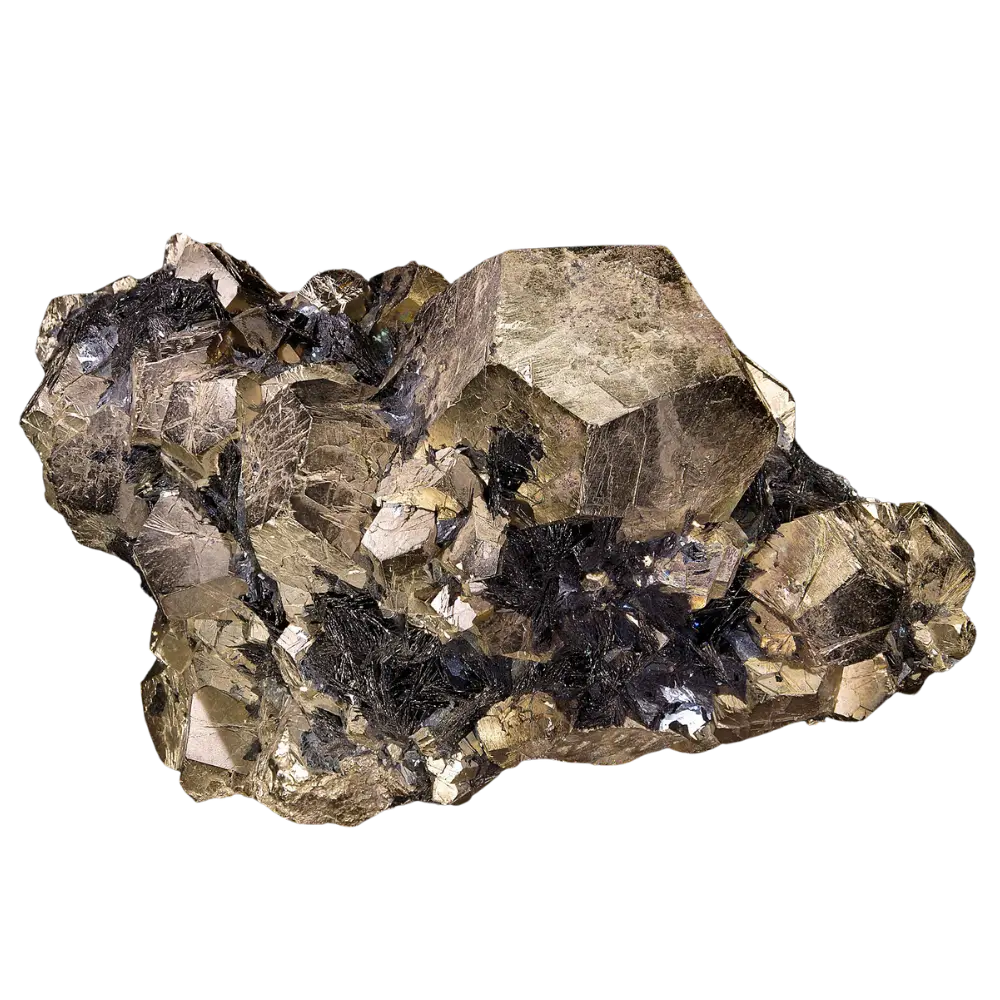
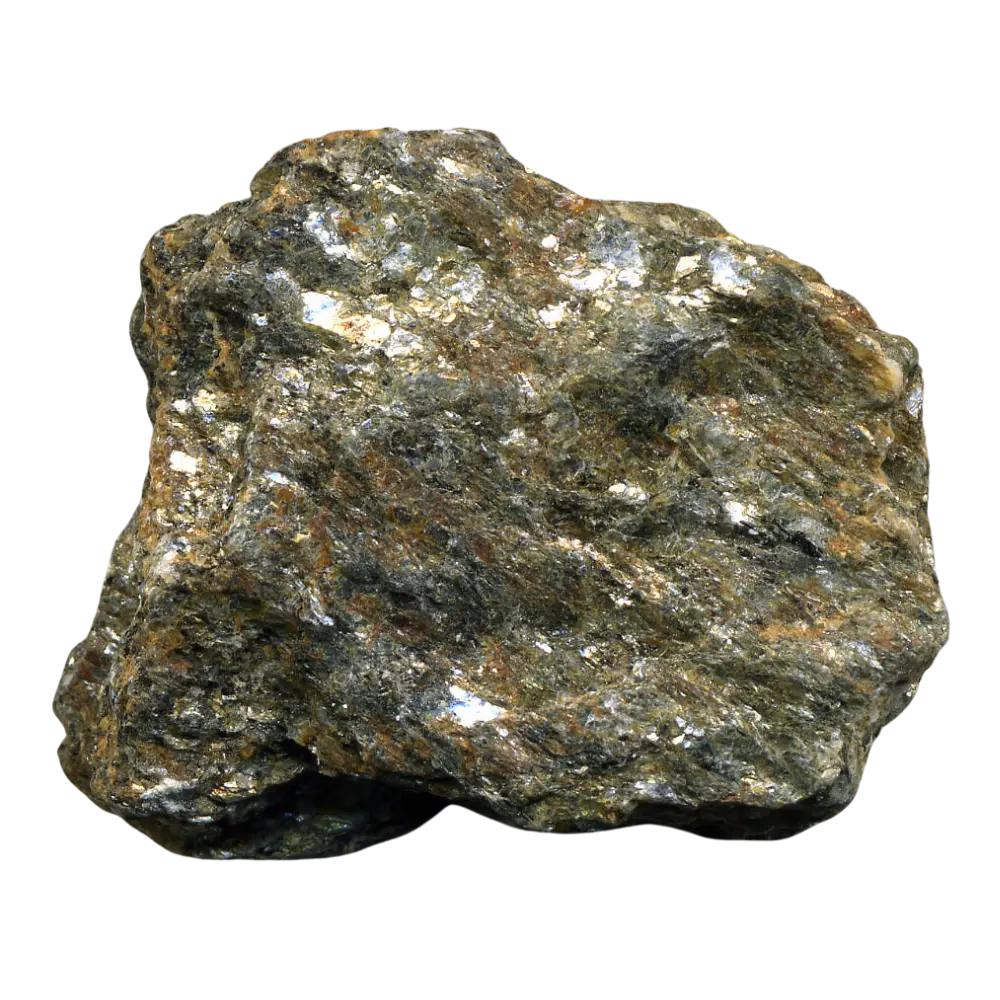
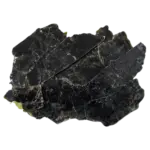
Magnetite is iron-black to greyish black, with a lustre that ranges from bright metallic on fresh crystal faces to dull on weathered massive ore. The streak is black. That single test separates it from hematite, which can look identical in a hand specimen and leaves a red-brown line on the same unglazed tile. The mineral is opaque in any thickness a geologist will normally meet; it is translucent only through very thin edges, with a refractive index of 2.42. In polished section under reflected light magnetite is isotropic and grey with a faint brownish tint. It reflects about 20 per cent of incident light across the visible spectrum.
Hardness is 5.5 to 6.5 on the Mohs scale, and the Vickers microhardness measured with a 100 g load is 681 to 792 kg/mm². A steel knife blade will barely mark it. The measured specific gravity is 5.175 and the density calculated from the unit cell is 5.20 g/cm³, so a fist-sized lump feels about twice as heavy as the same volume of granite. There is no true cleavage. Many crystals do break along flat octahedral surfaces, a very good parting on {111} that follows twin lamellae or thin exsolved plates. Where parting is absent the fracture is uneven, and the mineral is brittle.
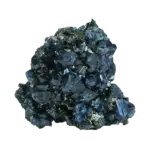
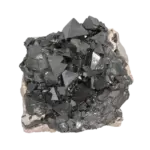
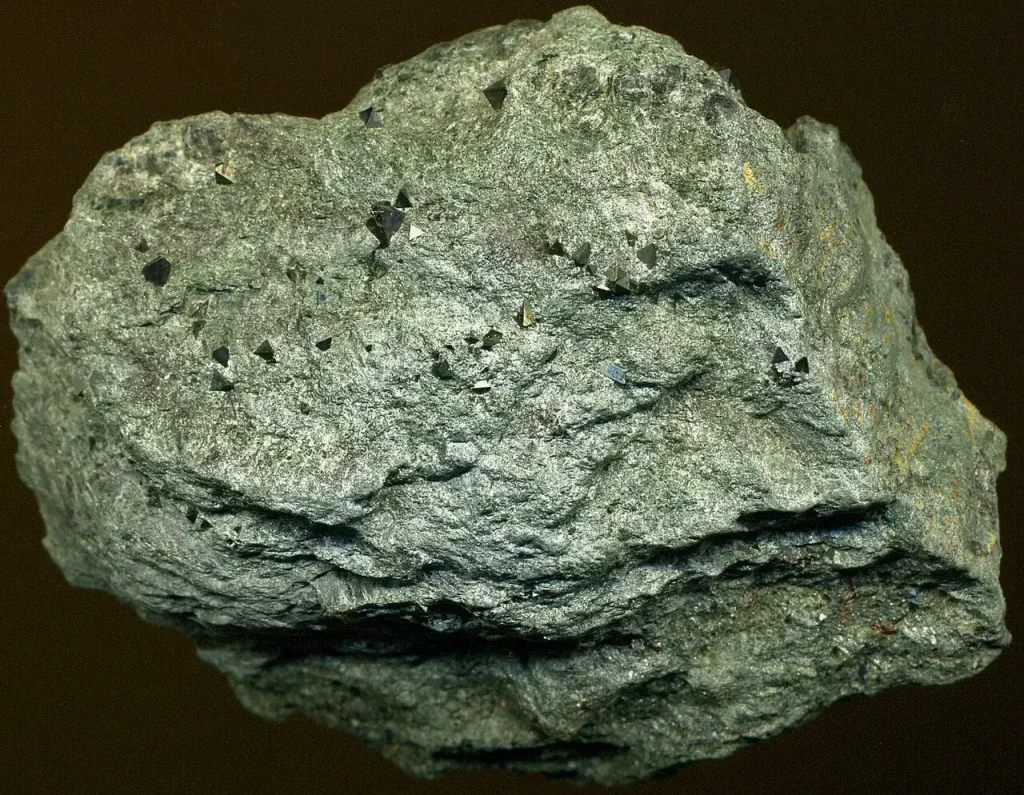
The typical crystal is an octahedron. Rhombic dodecahedra are less common and often carry striations parallel to their long diagonal. Cubes are very rare, and the classic locality for them is Balmat in St. Lawrence County, New York. Twinning on {111}, the spinel law, produces flattened contact twins. Crystals reach 25 cm across, although most magnetite occurs as grains a fraction of a millimetre wide scattered through igneous and metamorphic rocks, or as granular masses in ore.
Two temperatures bracket its magnetism. The Curie temperature is 580 °C, above which the mineral loses its spontaneous magnetisation. The Verwey transition near 125 K marks the low-temperature change from conductor to insulator, and rock-magnetism laboratories use the accompanying loss of remanence as a fingerprint for magnetite in a sample. Between those temperatures any piece of magnetite is pulled strongly toward a hand magnet, though very few pieces are magnets themselves.
| Property | Magnetite |
|---|---|
| Formula | Fe2+Fe3+2O4 (Fe3O4); 72.4 wt% Fe |
| IMA status and symbol | Valid, grandfathered; Mag |
| Classification | Spinel supergroup, oxyspinel group, spinel subgroup; Strunz 4.BB.05 |
| Crystal system and space group | Cubic (isometric), Fd3̅m; a = 8.397 Å; Z = 8 |
| Structure type | Inverse spinel |
| Mohs hardness | 5.5–6.5 (VHN100 681–792 kg/mm²) |
| Density | 5.175 g/cm³ measured; 5.20 g/cm³ calculated |
| Cleavage and fracture | No cleavage; very good parting on {111}; uneven fracture; brittle |
| Colour and streak | Black to greyish black; streak black |
| Lustre and transparency | Metallic to submetallic, may be dull; opaque |
| Optics | Isotropic; n = 2.42; reflectance about 20% |
| Habit and twinning | Octahedra, less often dodecahedra; granular or massive; spinel-law twins on {111} |
| Magnetism | Ferrimagnetic; Curie temperature 580 °C; Verwey transition about 125 K |
Why is magnetite magnetic?
Every iron atom in magnetite carries a magnetic moment, because its outer electron shell is only partly filled. Whether the crystal as a whole is magnetic depends on how neighbouring moments line up. In 1948 the French physicist Louis Néel showed that spinels like magnetite contain two interpenetrating magnetic sublattices that point in opposite directions. All the iron on tetrahedral sites points one way and all the iron on octahedral sites points the other. The ferric iron on the T sites exactly cancels the ferric iron on the M sites. The ferrous iron on the M sites has no partner to cancel it, and its moment, four Bohr magnetons per formula unit, is what remains. Néel called the arrangement ferrimagnetism, and he shared the 1970 Nobel Prize in Physics partly for the idea.
The result is a saturation magnetisation of roughly 90 A·m² per kilogram, about two hundred times that of hematite, as David Dunlop and Özden Özdemir set out in their textbook Rock Magnetism (1997). Heat the mineral and thermal agitation progressively scrambles the alignment until, at the Curie temperature of 580 °C, the net moment vanishes. Cool it again in a magnetic field and the moment returns, aligned with that field. This reversibility is the basis of every palaeomagnetic record held in igneous rock.
Grain size decides how well a crystal keeps its magnetisation. In a grain smaller than roughly a tenth of a micrometre all the moments point the same way, forming a single magnetic domain that is very hard to reset. Larger grains divide into many domains whose walls shift easily, so a coarse crystal responds strongly to an applied field and then relaxes when the field is removed. This is why a magnetite octahedron from a mineral dealer sticks to a magnet and will not pick up a paper clip.
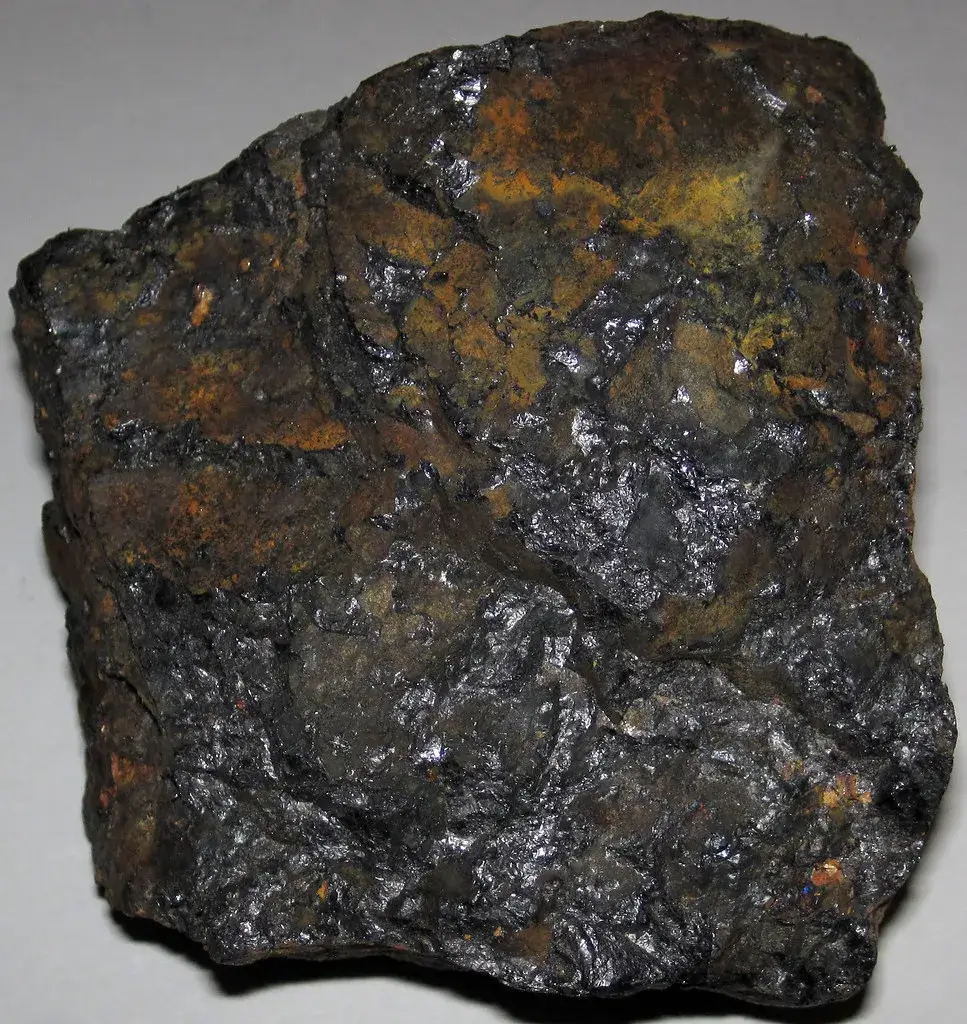
A lodestone will. Peter Wasilewski of NASA’s Goddard Space Flight Center spent years working out the difference, and his 1999 paper with Günther Kletetschka in Geophysical Research Letters gave two answers. The first concerns microstructure. Every lodestone they examined contained maghemite, the fully oxidised relative of magnetite, intergrown with the host at a scale of micrometres or less. The intergrowth pins domain walls and raises the coercivity to between 10 and 30 millitesla, enough for a massive piece of ore to behave like an assembly of fine grains. The second concerns the charging field. Earth’s field is far too weak to saturate such a rock. Ordinary magnetite ores carry less than 5 per cent of the remanence they could hold, while samples known to have been struck by lightning carry 45 to 92 per cent. In an earlier NASA report (1976) Wasilewski had shown that a “proto-lodestone” could be made permanent by a field above 1,000 oersted (0.1 tesla), and he pointed to old field accounts from antiquity and the Middle Ages that lodestones occur as localised patches within massive orebodies. Lightning, which drives tens of thousands of amperes through the ground for a fraction of a second, fits both observations.
How does magnetite form?
The Handbook of Mineralogy summarises the occurrence of magnetite in two dense sentences: a common accessory in igneous and metamorphic rocks, concentrated into ore by magmatic segregation or contact metamorphism, abundant in sedimentary banded iron formations, produced by organisms, and gathered into detrital deposits. Few minerals grow across such a span of conditions, from a gas vent at 850 °C to the inside of a living cell at the temperature of pond water. The common thread is chemical. Magnetite needs iron in both oxidation states, so it grows where conditions are neither strongly oxidising, which favours hematite, nor strongly reducing, which favours iron silicates or sulphides.
In magmas and layered intrusions
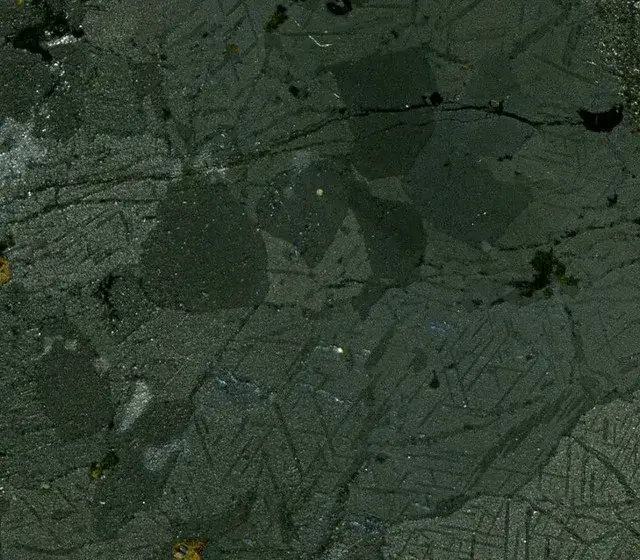
Most igneous rocks contain between a fraction of a per cent and a few per cent magnetite as small grains that crystallised from the melt. In basalt and gabbro the phase that grows is titanomagnetite, a solid solution with ulvöspinel, and it rarely survives cooling unchanged. As the rock cools and oxidises a little, the titanium-rich component comes out as thin plates of ilmenite along the octahedral planes of the host, giving the trellis pattern that ore microscopists know well. Arthur Buddington and Donald Lindsley showed in a 1964 paper in the Journal of Petrology that the compositions of coexisting magnetite and ilmenite solid solutions fix both the temperature and the oxygen fugacity at which they last equilibrated. Their thermometer and oxygen barometer, recalibrated several times since, is still a routine tool for volcanic rocks.
Granites divide on the same chemistry. Shunso Ishihara of the Geological Survey of Japan proposed in 1977 that granitic rocks fall into a magnetite series and an ilmenite series, the first crystallised from relatively oxidised magma and carrying accessory magnetite, the second from reduced magma and nearly free of it. The distinction can be mapped with a hand-held susceptibility meter, and it tracks which metals a granite belt is likely to host.
Where a large body of mafic magma cools slowly, dense oxide crystals can settle or be swept into layers. The Upper Zone of the Bushveld Complex in South Africa contains more than twenty layers of magnetitite, and Grant Cawthorn and Terence McCarthy (1980) used the rapid upward fall of chromium within single layers as evidence for a chemically uneven magma stirred by convection currents. These layers are rich in vanadium. The US Geological Survey’s 2017 review of vanadium resources, led by Karen Kelley, calls vanadiferous titanomagnetite deposits the principal source of the metal worldwide and gives their typical grade as 0.2 to 1 weight per cent V2O5. Related oxide-rich rocks occur around massif anorthosites. At Tahawus on Sanford Lake in the Adirondack Mountains of New York, coarse magnetite–ilmenite ore formed with the Whiteface Anorthosite about 1,155 million years ago. Where apatite joins the two oxides the rock is called nelsonite, and at Iron Mine Hill in Rhode Island a titaniferous magnetite-olivine rock named cumberlandite was dug as iron ore in the eighteenth century.
Kiruna-type iron oxide–apatite deposits
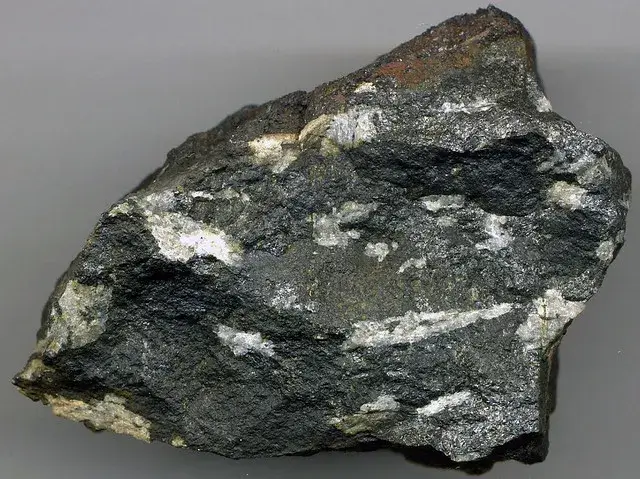
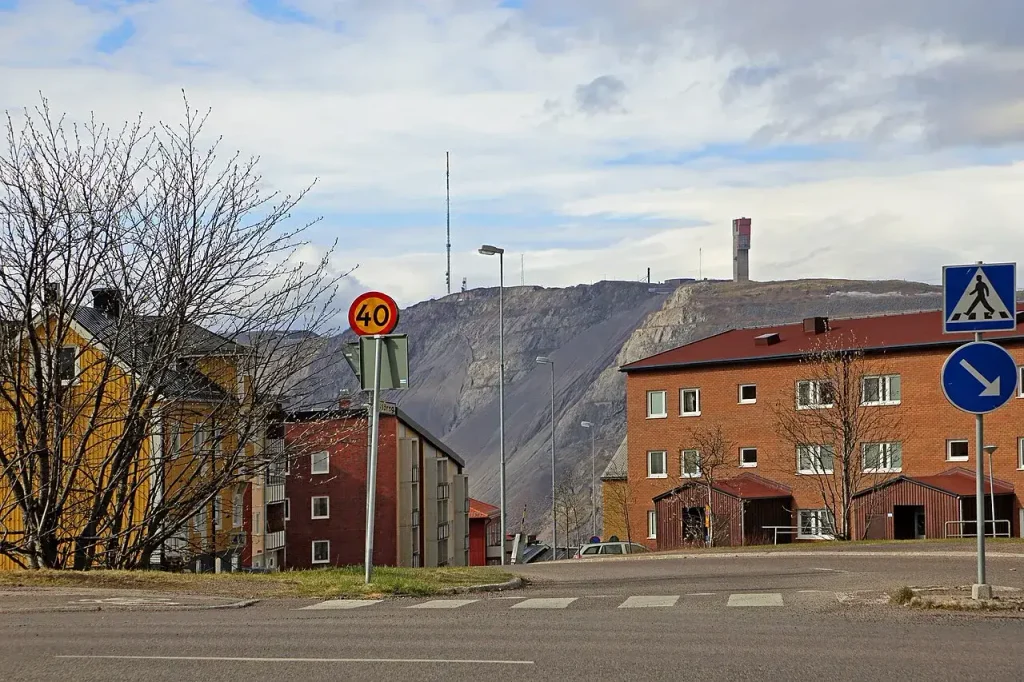
The largest bodies of nearly pure magnetite are also the most argued over. At Kiirunavaara in Norrbotten County, northern Sweden, a tabular mass of magnetite with apatite dips steeply between Palaeoproterozoic volcanic rocks. The operator, the state-owned company LKAB, describes an orebody more than 4 km long and 80 to 120 m thick, with a depth extent that drilling has yet to pin down. Deposits of the same kind occur in the Chilean Iron Belt, at El Laco high in the Chilean Andes, in the Bafq district of Iran, in the Adirondacks, and at Iron Springs in Utah. They are grouped as iron oxide–apatite (IOA) or Kiruna-type deposits.
For a century geologists have disagreed about whether the magnetite crystallised from an iron-rich melt or was deposited by hot water. Recent work has narrowed the argument without ending it. Valentin Troll of Uppsala University and colleagues (2019) measured iron and oxygen isotopes in magnetite from Kiruna-type ores in Sweden and Chile, with further samples from Iran, and found that about 80 per cent of their samples matched volcanic and plutonic reference magnetite formed above 800 °C. The remaining fifth, mostly from veins and disseminations, matched hydrothermal magnetite formed at or below 400 °C. Four years earlier, in Geology, Knipping and co-authors had proposed a mechanism that uses both: magnetite microlites crystallise in a magma and fluid bubbles nucleate on them, so that the buoyant suspension rises and collects. Experiments point to a third route: a hydrous, oxidised magma at 100 MPa and 1,000 to 1,040 °C can split off an immiscible iron–calcium–phosphorus liquid with less than 5 per cent silica, which is close to the bulk composition of the ores. Wyatt Bain and Matthew Steele-MacInnis of the University of Alberta took a different line. They found inclusions of iron-rich carbonate–sulphate melt in ore-stage minerals from Buena Vista in Nevada and Iron Springs in Utah (2020), then reported iron-rich sulphate melt at El Laco (2021), and they argue that magma assimilating limestone or evaporite is the step all these systems share. A 2022 review led by Martin Reich of the Universidad de Chile in Nature Reviews Earth & Environment treats the deposits as products of a continuum from magmatic to hydrothermal conditions.
Skarns, veins, carbonatites and volcanic gas
Hot, iron-bearing fluids released by an intrusion react with limestone or dolomite to make skarn, and magnetite is often the main oxide in it, accompanied by andradite garnet and epidote. The old iron mines at Cornwall in Pennsylvania and the Kara scheelite–magnetite mine in Tasmania both worked deposits of this contact type. Magnetite is also the dominant oxide in many carbonatites, igneous rocks made chiefly of carbonate minerals. It is abundant at Palabora in South Africa and at Oka in Quebec. The mineral can even condense from vapour. Mindat cites an experiment by Fabrizio Africano and colleagues (2002) on gases from Satsuma-Iwojima volcano in Japan, in which magnetite was the main solid to precipitate as the gas cooled from about 850 to 650 °C.
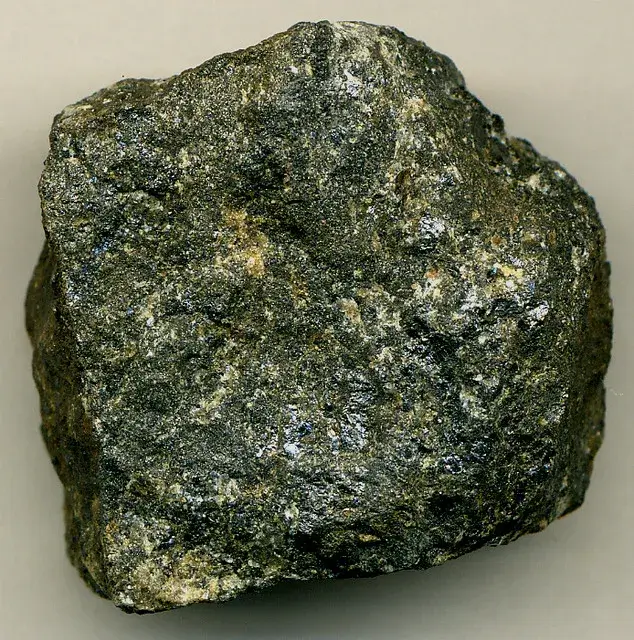
Banded iron formations and metamorphic rocks
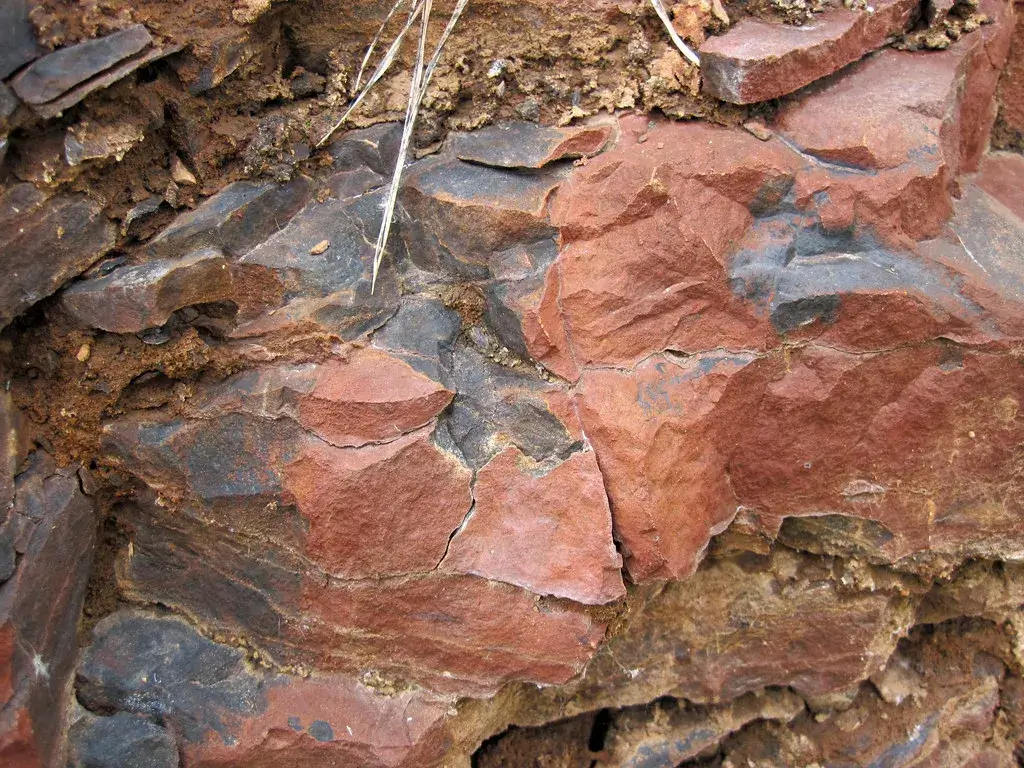
By tonnage, most of the world’s magnetite ore lies in banded iron formations (BIFs), the layered iron-and-silica sediments laid down mainly between about 3.8 and 1.8 billion years ago. Cornelis Klein’s 2005 survey in American Mineralogist describes magnetite, hematite, chert and iron carbonates or silicates as the recurring assemblage, with magnetite dominant in many of the least altered examples. The Biwabik Iron Formation of Minnesota’s Mesabi Range, about 1.88 billion years old, is a well-studied case. Its magnetite-bearing chert, called taconite, runs at roughly 25 to 35 per cent iron.
Whether that magnetite settled out of Precambrian seawater is doubtful. Birger Rasmussen and Janet Muhling, working in Western Australia, examined the Hamersley formations at high magnification and concluded in 2018 that much of the magnetite there grew late, by thermal decomposition of the iron carbonate siderite during burial and low-grade metamorphism. If they are right, the magnetite bands record the rock’s heating history more than the chemistry of the ancient ocean. With stronger metamorphism the grains coarsen. In Archaean iron formations of Western Australia metamorphosed at high grade, magnetite coexists with pyroxenes and fayalite (Gole and Klein, 1981).
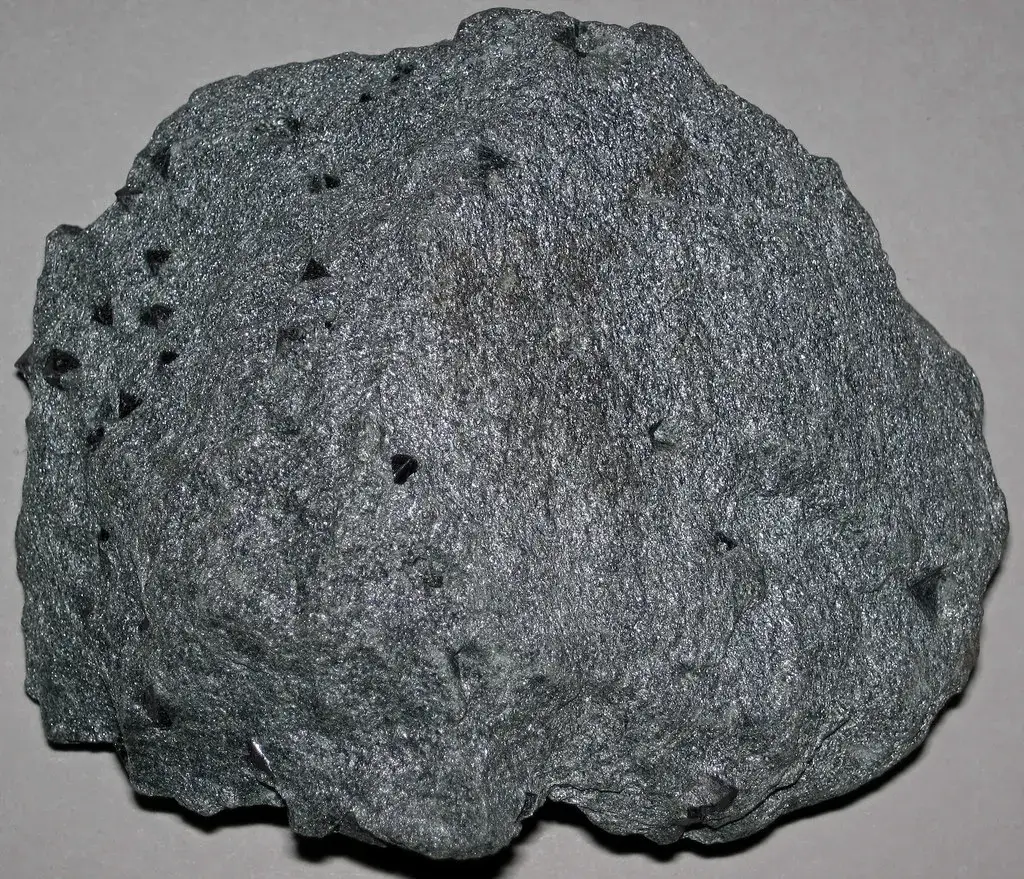
Magnetite is equally at home in ordinary metamorphic rocks. In chlorite schists of the Alps and the Appalachians it forms sharp, isolated octahedra up to a centimetre or more across, grown in the solid state at greenschist-facies temperatures. The crystals from the Zillertal in Tyrol and from Vermont are textbook examples, and they are often the first magnetite crystals a collector owns.
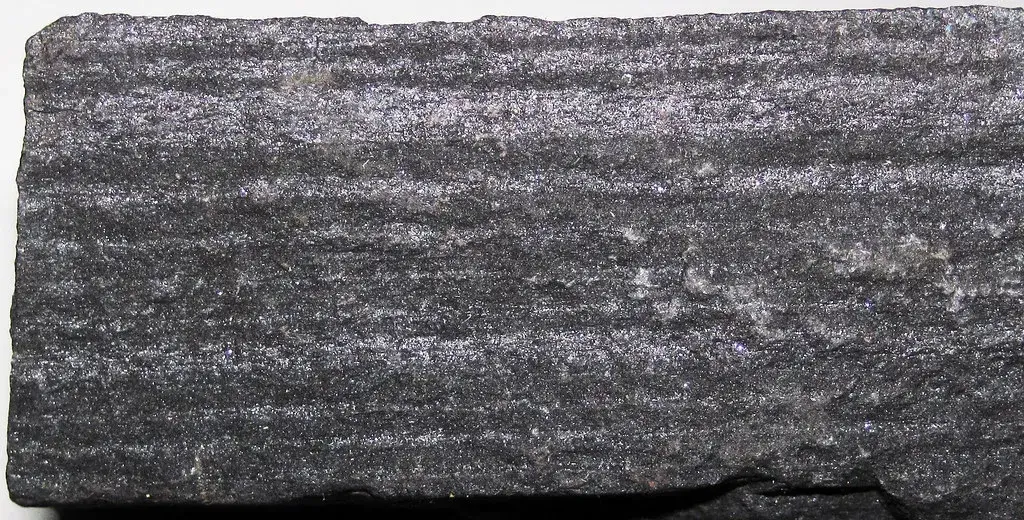
Serpentinites
When seawater reacts with mantle peridotite, the iron in olivine has to go somewhere. Part of it is oxidised to form magnetite, and the oxygen for that comes from water, which leaves hydrogen gas behind. Frieder Klein of the Woods Hole Oceanographic Institution and colleagues (2014) measured magnetite in serpentinised peridotite drilled from the ocean floor and found a range from under 0.04 to 6.15 weight per cent. Temperature controlled the amount. Rocks altered at 200 to 300 °C were rich in magnetite, while rocks altered below about 200 °C held their ferric iron in serpentine and their ferrous iron in brucite. Both kinds had generated hydrogen. The practical consequence is that the strong magnetic anomalies over some serpentinite bodies, and their absence over others, say something about the temperature at which the mantle rock was hydrated.
Sediments and black sands
Magnetite resists chemical weathering better than most iron-bearing minerals and is dense enough to lag behind quartz in moving water. Rivers and waves therefore sort it into dark streaks and, in a few places, into deposits worth mining. The ironsands of the west coast of New Zealand’s North Island, eroded from the andesite volcanoes of Taranaki, are titanomagnetite placers of this kind and feed a steelworks. Fine magnetite also grows in place. Barbara Maher and Reginald Taylor reported in Nature in 1988 that ultrafine magnetite forms in soils, which helps explain why topsoil is often more magnetic than the rock beneath it. A year earlier Derek Lovley and colleagues had shown that a sediment bacterium which respires ferric iron leaves magnetite as a by-product outside its cell wall.
Made by life
In 1975 Richard Blakemore, then a graduate student working with sediment from near Woods Hole in Massachusetts, noticed under the microscope that certain bacteria always swam to the same side of a water drop. Moving a magnet changed their direction. His paper in Science named them magnetotactic bacteria, and electron micrographs showed why they behaved that way: each cell held a chain of iron-rich crystals. Once Blakemore and colleagues could grow a freshwater magnetic spirillum in pure culture, Richard Frankel of MIT ran Mössbauer spectroscopy on whole cells and identified the crystals as magnetite (1979). The Italian physician Salvatore Bellini had described similar behaviour in 1963 in reports that went unnoticed for decades. Each crystal sits in its own membrane sac, the pair forming a magnetosome, and measures a few tens of nanometres, the size range in which magnetite is a stable single domain, and the chain acts as one compass needle that turns the whole cell parallel to the geomagnetic field. The bacteria then swim along the inclined field lines to reach the low-oxygen layer of mud or water they prefer.
Larger organisms use the mineral mechanically. Heinz Lowenstam of the California Institute of Technology found in the early 1960s that the teeth on the rasping tongue of chitons, marine molluscs that scrape algae off rock, are capped with magnetite, and his 1967 paper in Science added lepidocrocite and an apatite mineral to the list of their components. It was the first demonstration that an animal can precipitate magnetite, and the caps let the teeth survive constant abrasion against rock.
Dead magnetotactic bacteria leave their crystals in the sediment, where they can survive as magnetofossils. Shih-Bin Robin Chang and Joseph Kirschvink reviewed the record in 1989 and traced it well back into the Precambrian. The best-known assemblage comes from a borehole at Ancora in New Jersey, in clay deposited about 56 million years ago during the Palaeocene–Eocene Thermal Maximum. Dirk Schumann and colleagues (2008) found ordinary bacterial magnetofossils there together with spearhead-shaped and spindle-shaped magnetite crystals up to 4 micrometres long. They interpreted these as biogenic, grown by unknown organisms, possibly eukaryotes, that flourished in an iron-rich, oxygen-poor sea floor during the warming. Later finds show the giants were not confined to that event: they occur in sediments from about 97 million years old to the last 50,000 years, and nobody has identified the organism that makes them.
Beyond Earth
Magnetite is a routine find in planetary materials. It is common in the aqueously altered carbonaceous chondrites, and the CheMin X-ray diffractometer on NASA’s Curiosity rover detected it in the first mudstones drilled at Yellowknife Bay in Gale crater. Nicholas Tosca of the University of Oxford and colleagues (2018) reproduced that mudstone chemistry in the laboratory and showed that a rise in pH within anoxic, basalt-derived water sets off a chain of mineral transformations that ends in magnetite and dissolved hydrogen. They suggested that hydrogen released this way could have warmed early Mars enough, for short periods, to keep lake water liquid beneath a carbon dioxide atmosphere.
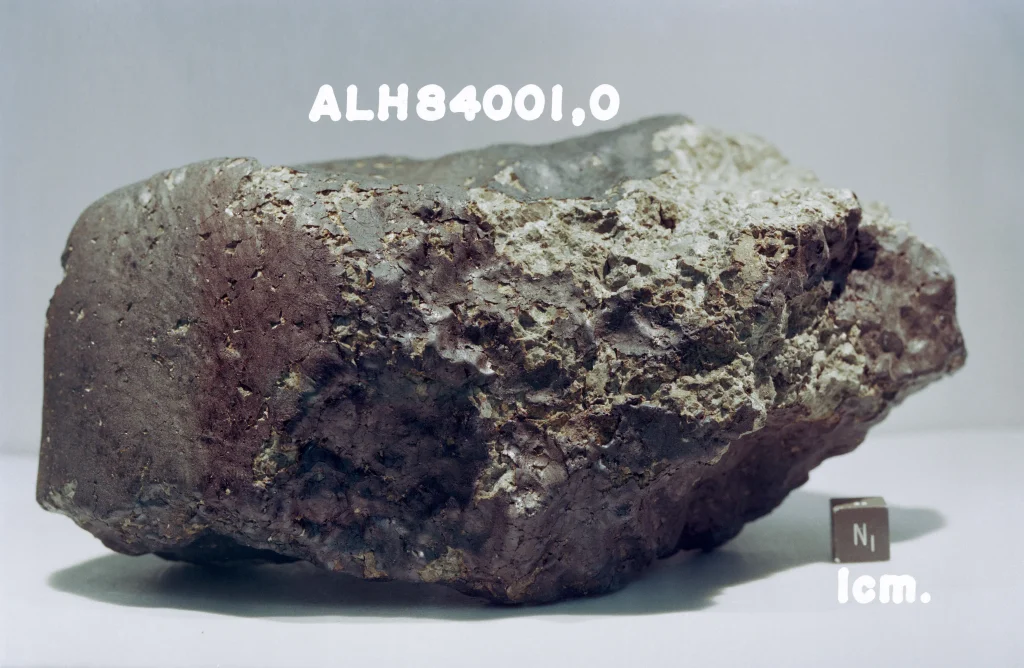
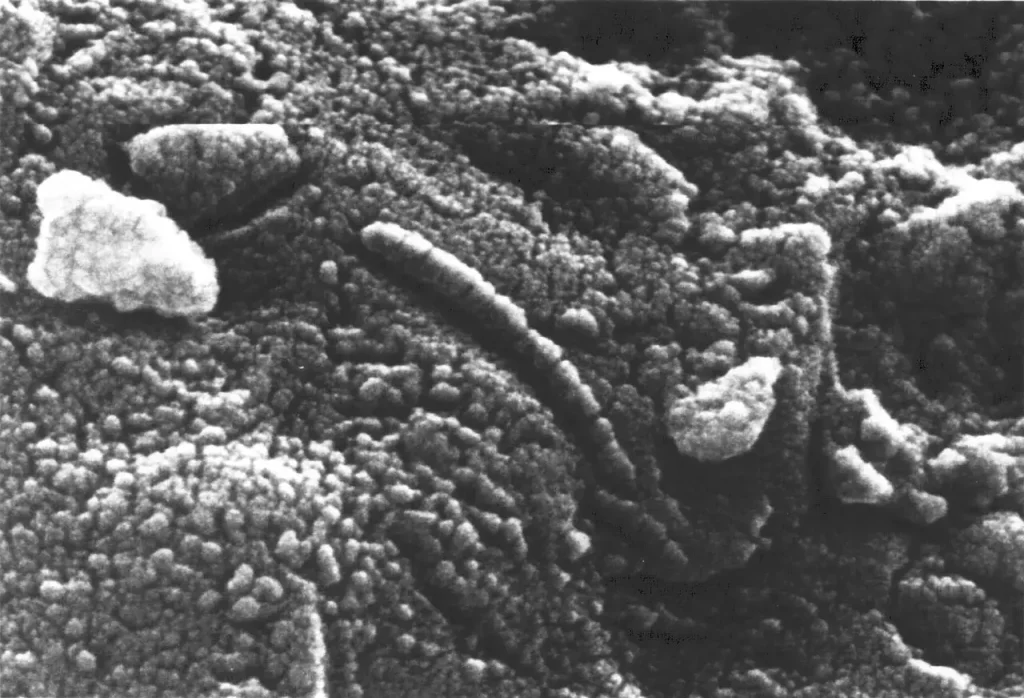
The best-known Martian magnetite is on Earth. The meteorite Allan Hills 84001, a 1.93 kg orthopyroxenite collected in Antarctica on 27 December 1984, contains carbonate globules rimmed with magnetite grains tens of nanometres long. In 1996 David McKay and colleagues at NASA’s Johnson Space Center argued in Science that some of those grains resembled bacterial magnetosomes closely enough to count as possible evidence of ancient life. Most of that case has since been explained without biology, and the magnetite is the part still argued over.
Where is magnetite found? Notable localities
Magnetite has no designated type locality, because the name predates modern description. It is one of the most widely reported minerals on Earth. Mindat listed 21,247 localities for it in September 2026 and flags fewer than twenty as significant, so any short list is a selection. The Handbook of Mineralogy’s choice is a fair guide to the best crystals.
For crystals, the Alps set the standard. Sharp, lustrous octahedra come from clefts and schists in the Binntal and at Rimpfischwäng near Zermatt, both in Valais, Switzerland, and from chlorite schist in the Zillertal of Tyrol, Austria. The skarn mines of Traversella in Piedmont, Italy, produced dodecahedral crystals. Sweden supplied museum specimens from Falun and Västanfors, and Norway from Arendal. In Russia the Handbook names Zlatoust and Magnitogorsk in the Urals, where Magnitnaya Mountain gave a steel city its name. Outside Europe, the Gardiner complex near Kangerlussuaq Fjord in East Greenland and the marbles of Bancroft, Ontario, are well known.
The most sought-after modern specimens come from Cerro Huañaquino in Potosí Department, Bolivia, where razor-edged octahedra up to about 2 cm sit on pale feldspar. In the United States the classic sources are the Tilly Foster mine at Brewster, Putnam County, New York, and the Sanford Lake district of Essex County in the same state. The zinc mines at Balmat, also in New York, yielded the rare cubes. Magnet Cove in Arkansas and the Iron Springs district of Iron County, Utah, both supply lodestone. Cerro de Mercado at Durango in Mexico is better known to collectors for the yellow apatite that grows with its magnetite. Itabira in Minas Gerais, Brazil, closes the Handbook’s list; Balmat and Cerro Huañaquino are not on it.
For ore, scale matters more than crystal form. Kiirunavaara and Malmberget in Swedish Lapland rank among the largest underground iron mines anywhere, and Sweden produced an estimated 26 million tonnes of iron ore in 2025 according to the US Geological Survey. In the United States, eight open pits in Minnesota, Michigan and Utah supplied the steel industry in 2025. Magnetite-bearing iron formations are mined on a far larger scale in northern China and in the Kursk and Kryvyi Rih basins of Russia and Ukraine, and the oxide layers of the Bushveld Complex in South Africa and the Panzhihua intrusion in Sichuan, China, are worked for their vanadium and titanium too. In Mauritania the iron-ore trains run from the magnetite and hematite quartzites of the Kediet ej Jill massif near Zouérat. The great mines of Western Australia’s Pilbara and of Carajás in Brazil are sometimes listed as magnetite localities, although their output is mainly hematite and goethite ore.
Varieties of magnetite and related species
Lodestone
Lodestone is the only variety with a name in common use, and strictly it is a rock more than a mineral variety. Mindat defines it as magnetite that is a natural magnet. Wasilewski’s work shows that the magnetism resides in a fine intergrowth of magnetite with maghemite, sometimes with titanium-bearing phases, and that the material must also have been exposed to a strong transient field. The English name combines the old word lode, meaning way or course, with stone, so a lodestone is a stone that shows the way.
Titanomagnetite and the ulvöspinel series
Titanomagnetite is the everyday magnetite of mafic igneous rocks and of the black beach sands eroded from them. Mindat lists titaniferous magnetite and a magnesium-rich variant as varieties. The titanium content lowers the Curie temperature well below 580 °C, which is why ocean-floor basalts, carrying titanium-rich grains, acquire and lose their magnetisation at lower temperatures than a granite does. On slow cooling the solid solution unmixes into magnetite and ilmenite or ulvöspinel lamellae, and Richard Harrison and colleagues (2002) imaged the magnetic interactions between such nanometre-scale blocks directly by electron holography. They concluded that these fine intergrowths can carry very stable remanence.
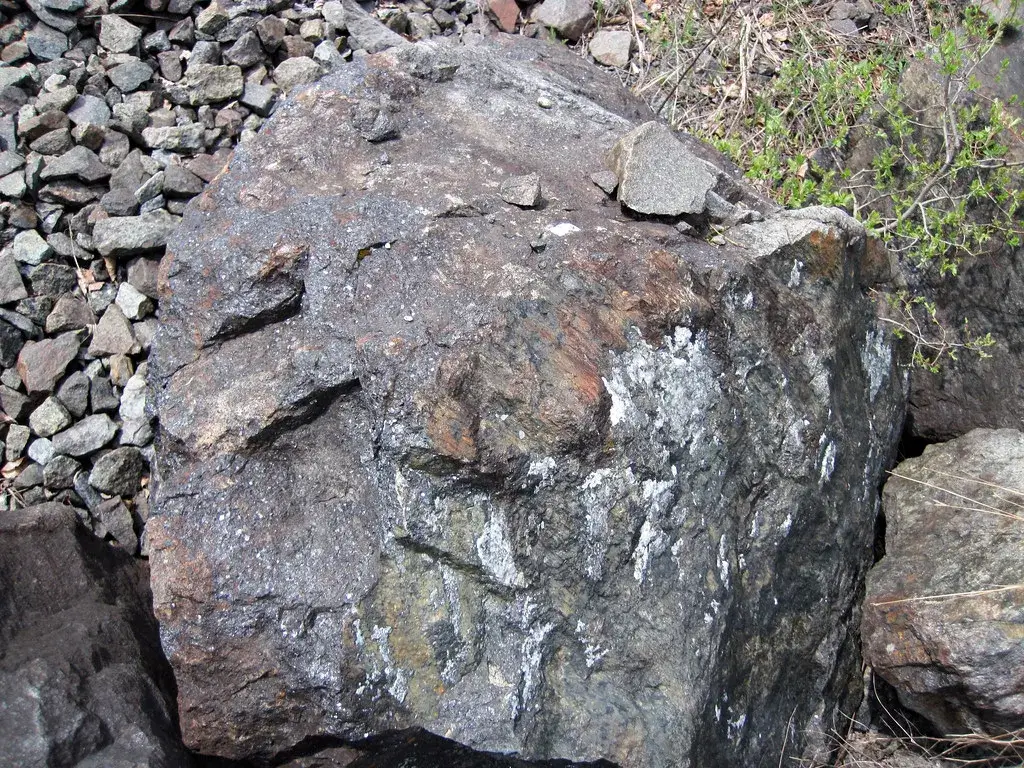
Chemical varieties
Mindat recognises several varieties defined by a substituting element. Chrommagnetite holds 0.5 to 1 atom of Cr3+ per formula unit and ishkulite holds 0.1 to 0.5, both on the way to chromite. Vanado-magnetite, reported with up to 4.84 per cent vanadium from India, grades toward the rare end-member coulsonite, FeV2O4. Manganmagnetite carries Mn2+ in place of Fe2+ and points toward jacobsite. None of these is a separate species, and under the 2019 IMA rules a grain keeps the name magnetite as long as ferric iron is its dominant trivalent cation and ferrous iron its dominant divalent one.
Pseudomorphs and maghemite
Two pseudomorph names record traffic between magnetite and hematite. Martite is hematite that has replaced magnetite while keeping the octahedral outline, the usual fate of magnetite crystals exposed to oxidising groundwater. Mushketovite is the reverse, magnetite that has replaced platy hematite, and it signals a fluid that became more reducing with time. Maghemite sits between the two minerals chemically. It keeps the spinel framework of magnetite, and all of its iron is ferric. The charge is balanced by leaving some cation sites empty, which is why the IMA now writes its formula as (Fe3+0.67□0.33)Fe3+2O4, with the box standing for a vacancy. Maghemite forms by low-temperature oxidation of magnetite and is nearly as magnetic. It is the phase that hardens lodestone.
Relatives in the spinel group
Replace the ferrous iron of magnetite with another divalent metal and the result is a different ferrite spinel: magnesioferrite with magnesium, jacobsite with manganese, franklinite with zinc, trevorite with nickel, cuprospinel with copper. Replace the ferric iron and the series run to chromite with chromium and to hercynite with aluminium. Swap oxygen for sulphur and the structure becomes greigite, Fe3S4, which is also ferrimagnetic and which some magnetotactic bacteria make in place of magnetite. Magnetite also colours volcanic glass. Chi Ma and George Rossman of Caltech, with James Miller, showed in 2007 that the colour bands of ‘fire’ obsidian from Glass Buttes, Oregon, are layers 300 to 700 nanometres thick packed with magnetite nanocrystals, which colour the glass by thin-film interference. Rainbow obsidian, often confused with it, owes its colours to nanorods of the pyroxene hedenbergite. Films of 200-nanometre magnetite octahedra also give some basalt surfaces an iridescent sheen.
How magnetite records Earth’s magnetic field
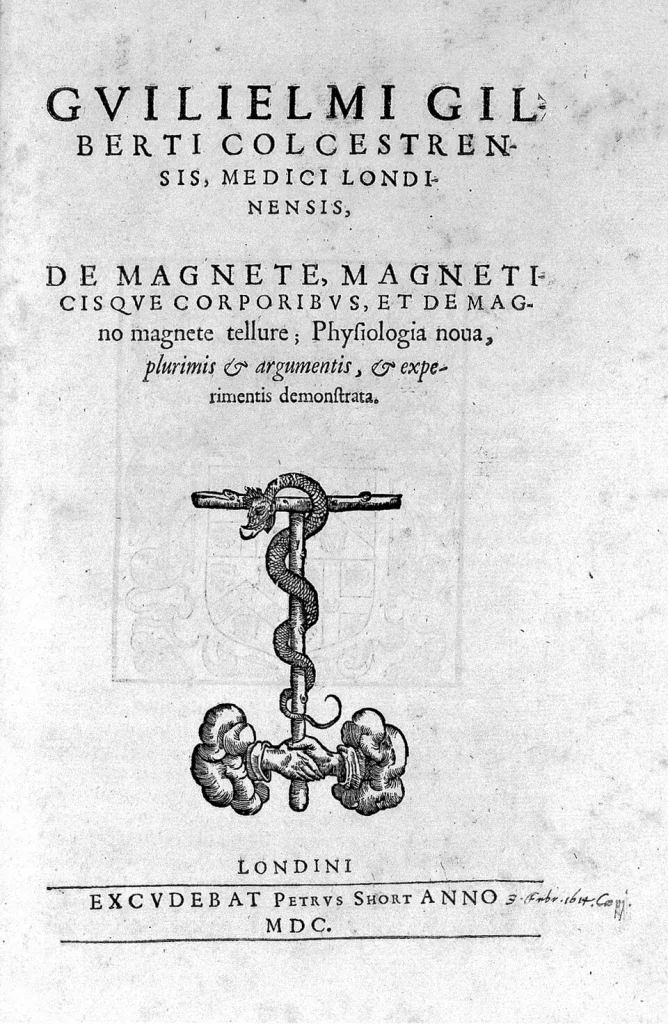
The scientific study of magnetism began with magnetite. In 1600 William Gilbert, a London physician, published De Magnete, the record of years of experiments with lodestones. His key apparatus was the terrella, a lodestone ground into a sphere. Moving a small compass needle over its surface, Gilbert found that the needle pointed toward the sphere’s poles and tilted downward by an angle that changed with latitude, exactly as ships’ compasses and dip needles behave on Earth. He concluded that the planet itself is a great magnet. A profile of Gilbert in Physics World describes how he also floated spherical lodestones on water in small wooden boats and watched them swing into line, an experiment that fed his belief that magnetism turns the Earth.
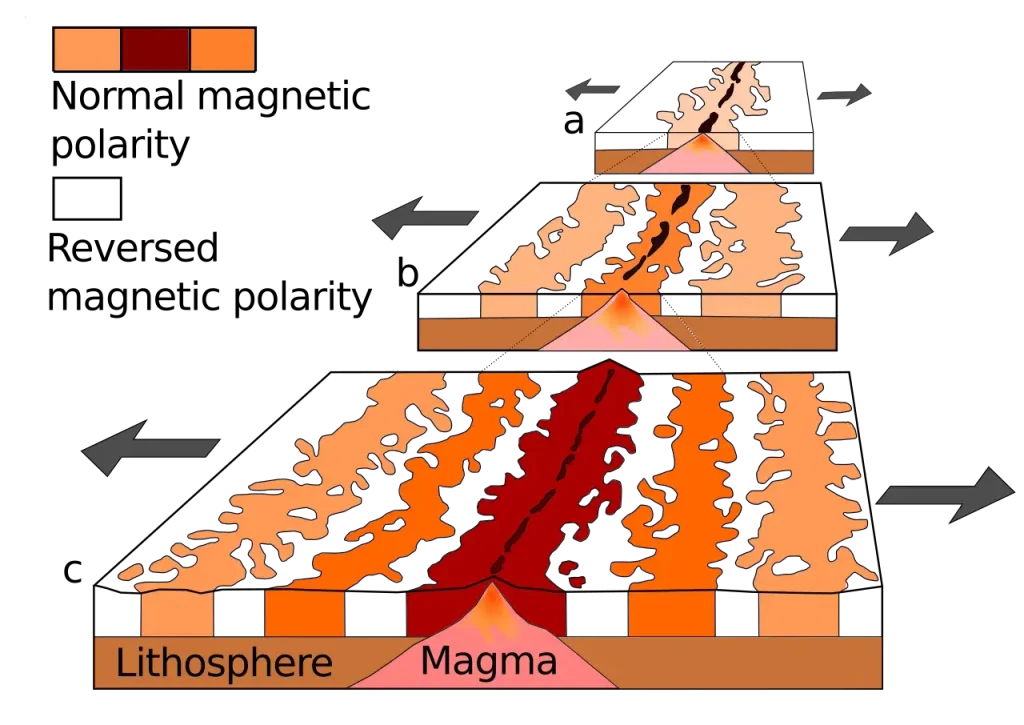
Three centuries later geologists discovered that rocks keep their own record of that field. When lava cools through the Curie temperature of its magnetite, each grain acquires a magnetisation parallel to the field at that place and time, and further cooling locks it in. The US Geological Survey’s primer This Dynamic Earth traces the consequences. Bernard Brunhes in France found in 1906 that some lavas are magnetised in the opposite direction to the present field, and Motonari Matuyama in Japan showed in the 1920s that such reversed rocks are systematically older than normal ones. The field, it seemed, had flipped.
The decisive evidence came from the sea floor. Icelandic mariners had noticed as early as the late eighteenth century that basalt can deflect a compass. In the 1950s ships began towing magnetometers, adapted from wartime submarine detectors, and they mapped long stripes of alternately strong and weak field lying parallel to the mid-ocean ridges. Drummond Matthews of Cambridge surveyed part of the Carlsberg Ridge in the north-west Indian Ocean in 1962, and his research student Fred Vine analysed the data. In Nature on 7 September 1963 the two proposed that new crust forming at a ridge is magnetised in the direction of the field of the day, and that spreading carries it sideways while the field reverses again and again. Lawrence Morley of the Geological Survey of Canada had reached the same idea independently earlier that year and had seen his paper rejected by two journals, so the hypothesis now carries all three names. When a USGS team dated the reversals of the past four million years on land, the pattern matched the stripe widths across the East Pacific Rise at a constant spreading rate. That fit persuaded most remaining sceptics that the sea floor spreads, and the recording medium was titanomagnetite in pillow basalt.
Sediments hold a parallel record. Detrital magnetite grains and the magnetosome chains of dead bacteria rotate into line with the field as they settle, then become fixed as the mud compacts. The signal is far weaker than that of basalt, yet it is continuous. Most of what is known about field behaviour between full reversals comes from such cores. On land the same mineral does humbler work. Airborne magnetometer surveys map buried geology by the magnetite content of the rocks, and iron-ore districts such as Kursk in Russia were first outlined as magnetic anomalies.
What is magnetite used for?
Steel is the main use by a wide margin. The US Geological Survey estimates that the world mined 2.6 billion tonnes of usable iron ore in 2025, containing 1.6 billion tonnes of iron. Australia led with 980 million tonnes and Brazil followed with 420 million. India and China produced 310 million and 290 million tonnes. The Survey does not divide that output by mineral. Much Australian and Brazilian ore is hematite rich enough to ship as mined, whereas the taconite of the American Lake Superior district and many ores of northern China are lean magnetite rock that must be concentrated first. Sweden’s magnetite is far richer and is ground and magnetically cleaned mainly to strip out its phosphorus-bearing apatite.
Concentration is where magnetite pays its way. Taconite with 25 to 35 per cent iron is crushed and ground until the magnetite grains are free, then passed over drum magnets that lift the magnetite out of the slurry. The concentrate is rolled with a clay binder into pellets about a centimetre across and fired. The USGS noted in its 2025 summary that direct-reduction-grade pellets run at 67 per cent iron or higher. American mines produced an estimated 38 million tonnes of usable ore in 2025, down 16 per cent from 45.1 million tonnes the year before, and 98 per cent of shipments went to the steel industry. World iron ore resources exceed 900 billion tonnes holding more than 260 billion tonnes of iron, so supply is limited by cost and energy long before it is limited by geology.
Titaniferous magnetite is also the world’s main ore of vanadium, a metal used to strengthen steel and, increasingly, in redox-flow batteries for grid storage. The USGS review by Kelley and colleagues gives the grade of such deposits as 0.2 to 1 weight per cent V2O5 and names China, Russia and South Africa as the source of most vanadium mined in 2012. Much of the vanadium is recovered from slag after the magnetite has been smelted for iron.
Chemistry uses magnetite as a starting material for catalysts. The iron catalyst of the Haber–Bosch process, which fixes atmospheric nitrogen as ammonia for fertiliser, is made by melting magnetite with a few per cent of promoter oxides such as alumina and potash, then reducing the solidified mass in hydrogen. Oxygen leaves, and the iron that remains is riddled with pores, with a very large reactive surface. Max Appl’s account in Ullmann’s Encyclopedia of Industrial Chemistry describes the same recipe that BASF adopted before the First World War. Iron-oxide catalysts based on magnetite also drive the high-temperature water-gas shift reaction used in hydrogen production.
Several uses depend on density alone. Finely ground magnetite stirred into water makes a suspension whose density can be set between that of coal and that of shale, so coal floats and waste rock sinks. The magnetite is recovered afterwards with magnets and reused. Concrete made with magnetite aggregate is about half as dense again as ordinary concrete and is poured for radiation shielding and for ballast. Non-steel uses as a whole took about 2 per cent of American iron ore products in 2025, according to the USGS. Synthetic magnetite is the black pigment sold as Mars black or iron oxide black, and it colours many toners.
Magnetite’s career in magnetic recording was short. Steven Schoenherr’s chronology for the Audio Engineering Society records that BASF’s Magnetophon tape began with a coating of carbonyl iron, switched to black magnetite powder when mass production started, and changed again in 1939 to gamma ferric oxide, the synthetic equivalent of maghemite. After the war 3M made the same switch in the United States, because the needle-shaped oxide particles held a signal better than cubic magnetite crystals did. Magnetite’s present-day technological uses are at the nanometre scale. Coated magnetite nanoparticles are the magnetic ingredient of most ferrofluids and of several contrast agents for magnetic resonance imaging. Vicki Colvin’s group at Rice University showed in Science in 2006 that 12-nanometre magnetite crystals bind arsenic from water and can then be pulled out with a weak hand magnet, an approach still being developed for low-cost water treatment.
How to identify magnetite
Few minerals are easier to confirm. A small magnet on a string swings toward magnetite from a centimetre or two away and sticks firmly. Drag the specimen across unglazed porcelain and the streak is black. The piece feels heavy for its size and shows no cleavage. Any crystal faces present are usually the eight triangles of an octahedron. A steel blade scratches it only with difficulty. Massive magnetite will also swing the needle of a field compass, a useful warning that bearings taken on the outcrop cannot be trusted.
Four other dark, heavy oxides cause most confusion:
- Hematite gives a red-brown streak and responds weakly to a magnet, if at all.
- Ilmenite is attracted only feebly, and its streak can be brownish black.
- Chromite leaves a brown streak and is weakly magnetic at most.
- Franklinite, the zinc spinel of Franklin and Sterling Hill in New Jersey, forms similar octahedra with a red-brown streak and weak magnetism.
Under the petrographic microscope magnetite is opaque in transmitted light and shows up as black squares or triangles, the cross-sections of octahedra. Reflected light is needed to tell it from other opaque grains. Magnetite appears grey with a brownish tint and reflects about a fifth of the light. Because it is isotropic, it stays uniformly dark between crossed polars. Ilmenite lamellae within it look pinkish brown and change brightness as the stage turns. Hematite replacing it along octahedral planes is whiter and brighter. One caution applies to anyone collecting oriented samples for palaeomagnetic work: keep the magnet in the pocket, since a strong hand magnet can overprint the natural remanence the laboratory hopes to measure.
What is still uncertain about magnetite
The origin of Kiruna-type ore is the largest open question in economic terms. The isotope data of Troll and colleagues, the flotation model of Knipping, the immiscible-melt experiments of Hou and the carbonate–sulphate melts of Bain and Steele-MacInnis each explain part of the evidence, and they lead to different exploration strategies. In July 2026 a team led by Stefan Peters, with Troll among the authors, reported triple-oxygen-isotope evidence that Kiruna’s own magnetite carries oxygen inherited from evaporitic sulphate, which moves the type deposit toward the assimilation camp. If assimilation of evaporite is essential, as the Alberta group argues, explorers should look where intrusions cut salt-bearing sedimentary basins. If iron-rich immiscible liquids are the key, the oxidation state and water content of the parent magma matter more.
The oldest magnetite with a story to tell may sit inside zircon crystals from the Jack Hills of Western Australia. John Tarduno of the University of Rochester and colleagues reported in Science in 2015 that magnetite inclusions in zircons as old as 4.2 billion years carry a remanence acquired when the zircons formed, which would mean Earth already had a magnetic field, and the protection it gives the atmosphere, in the Hadean. Others have contested each step. Transmission electron microscopy then showed that all the magnetite they could find in Jack Hills zircons was secondary, grown in radiation-damaged zones and along dislocations long after crystallisation. Cauê Borlina, working with Benjamin Weiss at MIT, concluded in 2020 that most of the grains are poor magnetic recorders and that the existence of a dynamo before 3.5 billion years ago remains unknown. In 2023 Richard Taylor and colleagues dated the iron itself: atom-probe tomography showed lead-bearing nanoclusters of two ages, 3.4 billion and less than 2 billion years, and iron turned up only in the younger set, in about half of its clusters. The field may well have existed in the Hadean, but the magnetite in these zircons cannot yet show that it did.
The Allan Hills meteorite poses a similar problem of origin at a smaller scale. David Barber and Edward Scott showed by electron microscopy in 2002 that much of its magnetite grew in the solid state where iron-bearing carbonate decomposed, most plausibly during impact heating, and needs no biology. Kathie Thomas-Keprta and her colleagues at Johnson Space Center replied in 2009 that about a quarter of the crystals are too pure and too regular in shape to have formed that way. No test has settled which reading is right, and the episode’s lasting effect has been a much stricter set of criteria for calling any magnetite crystal a fossil.
Closer to home, there is magnetite in the human head, and its source is disputed. Joseph Kirschvink and colleagues at Caltech reported in 1992 that human brain tissue contains at least 5 million single-domain magnetite crystals per gram, and more than 100 million per gram in the membranes around the brain, and they took the crystals to be made by the body. In 2016 Barbara Maher of Lancaster University and her co-authors examined brain tissue from 37 people who had lived in Mexico City or Manchester. They found abundant rounded magnetite nanoparticles whose shapes match particles produced by combustion and braking and differ from the angular biogenic crystals. Such particles are small enough to reach the brain along the olfactory nerve. Whether they contribute to neurodegenerative disease is unproven, and whether the biogenic crystals do anything at all, including the magnetic sense that Kirschvink has tested for in volunteers, is equally open.
Two older puzzles remain active as well. Eighty-seven years after its discovery, physicists are still working out how the electronic instability and the charge order at the Verwey transition drive each other, and the 2025 analysis by Carpenter and colleagues is the latest attempt. Sedimentary geologists have yet to decide how much of the magnetite in banded iron formations is a primary precipitate and how much grew during burial, which determines whether those rocks can be read as records of Precambrian seawater. For a mineral with a formula of seven atoms, magnetite keeps an unusual number of laboratories busy.
Sources
| Source | Link |
|---|---|
| 1. Anthony, J.W., Bideaux, R.A., Bladh, K.W., Nichols, M.C. (eds.) (2001–2005). Magnetite. Handbook of Mineralogy. Mineralogical Society of America, Chantilly, VA. | handbookofmineralogy.org/pdfs/magnetite.pdf |
| 2. Mindat.org (2026). Magnetite: mineral information, data and localities. Hudson Institute of Mineralogy. | mindat.org/min-2538.html |
| 3. Mindat.org (2026). Lodestone, a variety of magnetite. Hudson Institute of Mineralogy. | mindat.org/min-2533.html |
| 4. Bosi, F., Biagioni, C., Pasero, M. (2019). Nomenclature and classification of the spinel supergroup. European Journal of Mineralogy, 31, 183–192. doi:10.1127/ejm/2019/0031-2788 | rruff.info/uploads/EJM31_183.pdf |
| 5. Warr, L.N. (2021). IMA–CNMNC approved mineral symbols. Mineralogical Magazine, 85, 291–320. | doi.org/10.1180/mgm.2021.43 |
| 6. Bragg, W.H. (1915). The structure of the spinel group of crystals. Philosophical Magazine, 30, 305–315. | Print source |
| 7. Nishikawa, S. (1915). Structure of some crystals of the spinel group. Proceedings of the Mathematico-Physical Society of Tokyo, 8, 199–209. | Print source |
| 8. Pearce, C.I., Henderson, C.M.B., Pattrick, R.A.D., van der Laan, G., Vaughan, D.J. (2006). Direct determination of cation site occupancies in natural ferrite spinels by L2,3 X-ray absorption spectroscopy and X-ray magnetic circular dichroism. American Mineralogist, 91, 880–893. | doi.org/10.2138/am.2006.2048 |
| 9. Verwey, E.J.W. (1939). Electronic conduction of magnetite (Fe3O4) and its transition point at low temperatures. Nature, 144, 327–328. | doi.org/10.1038/144327b0 |
| 10. Senn, M.S., Wright, J.P., Attfield, J.P. (2012). Charge order and three-site distortions in the Verwey structure of magnetite. Nature, 481, 173–176. | nature.com/articles/nature10704 |
| 11. European Synchrotron Radiation Facility (2012). Charge order and three-site distortions in the Verwey structure of magnetite. ESRF Highlights 2012. | esrf.fr … Highlights/2012/materials/mat6 |
| 12. Carpenter, M.A., Harrison, R.J., Shaw-Stewart, J., Adachi, K., Senn, M.S., Howard, C.J. (2025). A linear/quadratic order parameter coupling description of the Verwey transition in magnetite, Fe3O4. Acta Crystallographica Section B, 81, 427–436. | doi.org/10.1107/S2052520625004779 |
| 13. Knipping, J.L., Bilenker, L.D., Simon, A.C., Reich, M., Barra, F., Deditius, A.P., Lundstrom, C., Bindeman, I., Munizaga, R. (2015a). Giant Kiruna-type deposits form by efficient flotation of magmatic magnetite suspensions. Geology, 43, 591–594. | doi.org/10.1130/G36650.1 |
| 14. Knipping, J.L., Bilenker, L.D., Simon, A.C., Reich, M., Barra, F., Deditius, A.P., Wälle, M., Heinrich, C.A., Holtz, F., Munizaga, R. (2015b). Trace elements in magnetite from massive iron oxide-apatite deposits indicate a combined formation by igneous and magmatic-hydrothermal processes. Geochimica et Cosmochimica Acta, 171, 15–38. | researchportal.murdoch.edu.au (open-access record) |
| 15. O’Neill, H.St.C. (1987). The quartz-fayalite-magnetite equilibria and free energies of formation of fayalite (Fe2SiO4) and magnetite (Fe3O4). American Mineralogist, 72, 67–75. | Print source |
| 16. Carmichael, I.S.E., Ghiorso, M.S. (1986). Oxidation-reduction relations in basic magma: a case for homogeneous equilibria. Earth and Planetary Science Letters, 78, 200–210. | doi.org/10.1016/0012-821X(86)90061-0 |
| 17. Haavik, C., Stølen, S., Fjellvåg, H., Hanfland, M., Häusermann, D. (2000). Equation of state of magnetite and its high-pressure modification: thermodynamics of the Fe-O system at high pressure. American Mineralogist, 85, 514–523. | Print source |
| 18. Néel, L. (1948). Propriétés magnétiques des ferrites; ferrimagnétisme et antiferromagnétisme. Annales de Physique, 12(3), 137–198. | Print source |
| 19. Dunlop, D.J., Özdemir, Ö. (1997). Rock Magnetism: Fundamentals and Frontiers. Cambridge University Press, Cambridge. | Print source |
| 20. Bowles, J.F.W., Howie, R.A., Vaughan, D.J., Zussman, J. (2011). Rock-Forming Minerals, Volume 5A: Non-silicates: Oxides, Hydroxides and Sulphides (2nd ed.). Geological Society, London. | Print source |
| 21. Wasilewski, P., Kletetschka, G. (1999). Lodestone: Nature’s only permanent magnet. What it is and how it gets charged. Geophysical Research Letters, 26, 2275–2278. | doi.org/10.1029/1999GL900496 |
| 22. Wasilewski, P. (1976). Lodestone: Nature’s own permanent magnet. NASA Technical Memorandum X-71145, Goddard Space Flight Center. | ntrs.nasa.gov/citations/19760021632 |
| 23. Buddington, A.F., Lindsley, D.H. (1964). Iron-titanium oxide minerals and synthetic equivalents. Journal of Petrology, 5, 310–357. | doi.org/10.1093/petrology/5.2.310 |
| 24. Ishihara, S. (1977). The magnetite-series and ilmenite-series granitic rocks. Mining Geology, 27, 293–305. | Print source |
| 25. Cawthorn, R.G., McCarthy, T.S. (1980). Variations in Cr content of magnetite from the Upper Zone of the Bushveld Complex: evidence for heterogeneity and convection currents in magma chambers. Earth and Planetary Science Letters, 46, 335–343. | Print source |
| 26. Kelley, K.D., Scott, C.T., Polyak, D.E., Kimball, B.E. (2017). Vanadium. Chapter U of Critical Mineral Resources of the United States. U.S. Geological Survey Professional Paper 1802-U. | pubs.usgs.gov/publication/pp1802U |
| 27. St. John, J. (2020). Magnetite-ilmenite (Mesoproterozoic, ~1155 Ma; mine at Tahawus/Sanford Lake, New York State, USA) 7. Photograph with locality notes after Kelly (2008), New York State Geological Association Guidebook. | flickr.com/photos/jsjgeology/49895883957 |
| 28. Luossavaara-Kiirunavaara AB (LKAB). LKAB in brief. Company information on the Kiruna mine and orebody. | lkab.com/en/about-lkab/lkab-in-brief/ |
| 29. Troll, V.R., Weis, F.A., Jonsson, E., Andersson, U.B., Majidi, S.A., Högdahl, K., Harris, C., Millet, M.-A., Chinnasamy, S.S., Kooijman, E., Nilsson, K.P. (2019). Global Fe–O isotope correlation reveals magmatic origin of Kiruna-type apatite-iron-oxide ores. Nature Communications, 10, 1712. | doi.org/10.1038/s41467-019-09244-4 |
| 30. Hou, T., Charlier, B., Holtz, F., Veksler, I., Zhang, Z., Thomas, R., Namur, O. (2018). Immiscible hydrous Fe–Ca–P melt and the origin of iron oxide-apatite ore deposits. Nature Communications, 9, 1415. | ncbi.nlm.nih.gov/pmc/articles/PMC5897329 |
| 31. Bain, W.M., Steele-MacInnis, M., Li, K., Li, L., Mazdab, F.K., Marsh, E.E. (2020). A fundamental role of carbonate–sulfate melts in the formation of iron oxide–apatite deposits. Nature Geoscience, 13, 751–757. doi:10.1038/s41561-020-0635-9 | usgs.gov/publications (USGS record of the paper) |
| 32. Bain, W.M., Steele-MacInnis, M., Tornos, F., Hanchar, J.M., Creaser, E.C., Pietruszka, D.K. (2021). Evidence for iron-rich sulfate melt during magnetite(-apatite) mineralization at El Laco, Chile. Geology, 49, 1044–1048. | doi.org/10.1130/G48861.1 |
| 33. Reich, M., Simon, A.C., Barra, F., Palma, G., Hou, T., Bilenker, L.D. (2022). Formation of iron oxide–apatite deposits. Nature Reviews Earth & Environment, 3, 758–775. | doi.org/10.1038/s43017-022-00335-3 |
| 34. Klein, C. (2005). Some Precambrian banded iron-formations (BIFs) from around the world: their age, geologic setting, mineralogy, metamorphism, geochemistry, and origins. American Mineralogist, 90, 1473–1499. | doi.org/10.2138/am.2005.1871 |
| 35. Rasmussen, B., Muhling, J.R. (2018). Making magnetite late again: evidence for widespread magnetite growth by thermal decomposition of siderite in Hamersley banded iron formations. Precambrian Research, 306, 64–93. | doi.org/10.1016/j.precamres.2017.12.017 |
| 36. Klein, F., Bach, W., Humphris, S.E., Kahl, W.-A., Jöns, N., Moskowitz, B., Berquó, T.S. (2014). Magnetite in seafloor serpentinite: some like it hot. Geology, 42, 135–138. | doi.org/10.1130/G35068.1 |
| 37. Templeton, F. (2006). Iron and steel: iron, an abundant resource. Te Ara, the Encyclopedia of New Zealand. Ministry for Culture and Heritage. | teara.govt.nz/en/iron-and-steel/1 |
| 38. Maher, B.A., Taylor, R.M. (1988). Formation of ultrafine-grained magnetite in soils. Nature, 336, 368–370. | doi.org/10.1038/336368a0 |
| 39. Lovley, D.R., Stolz, J.F., Nord, G.L., Phillips, E.J.P. (1987). Anaerobic production of magnetite by a dissimilatory iron-reducing microorganism. Nature, 330, 252–254. | doi.org/10.1038/330252a0 |
| 40. Blakemore, R. (1975). Magnetotactic bacteria. Science, 190, 377–379. | science.org/doi/abs/10.1126/science.170679 |
| 41. Blakemore, R.P., Maratea, D., Wolfe, R.S. (1979). Isolation and pure culture of a freshwater magnetic spirillum in chemically defined medium. Journal of Bacteriology, 140, 720–729. | pmc.ncbi.nlm.nih.gov/articles/PMC216702 |
| 42. Bellini, S. (2009). On a unique behavior of freshwater bacteria [English translation of a 1963 report, University of Pavia]. Chinese Journal of Oceanology and Limnology, 27, 3–5. | doi.org/10.1007/s00343-009-0003-5 |
| 43. Lowenstam, H.A. (1962). Magnetite in denticle capping in recent chitons (Polyplacophora). Geological Society of America Bulletin, 73, 435–438. | Print source |
| 44. Lowenstam, H.A. (1967). Lepidocrocite, an apatite mineral, and magnetite in teeth of chitons (Polyplacophora). Science, 156, 1373–1375. | doi.org/10.1126/science.156.3780.1373 |
| 45. Chang, S.-B.R., Kirschvink, J.L. (1989). Magnetofossils, the magnetization of sediments, and the evolution of magnetite biomineralization. Annual Review of Earth and Planetary Sciences, 17, 169–195. | doi.org/10.1146/annurev.ea.17.050189.001125 |
| 46. Schumann, D., Raub, T.D., Kopp, R.E., Guerquin-Kern, J.-L., Wu, T.-D., Rouiller, I., Smirnov, A.V., Sears, S.K., Lücken, U., Tikoo, S.M., Hesse, R., Kirschvink, J.L., Vali, H. (2008). Gigantism in unique biogenic magnetite at the Paleocene–Eocene Thermal Maximum. Proceedings of the National Academy of Sciences, 105, 17648–17653. | pmc.ncbi.nlm.nih.gov/articles/PMC2584680 |
| 47. Tosca, N.J., Ahmed, I.A.M., Tutolo, B.M., Ashpitel, A., Hurowitz, J.A. (2018). Magnetite authigenesis and the warming of early Mars. Nature Geoscience, 11, 635–639. | pmc.ncbi.nlm.nih.gov/articles/PMC6092749 |
| 48. McKay, D.S., Gibson, E.K., Thomas-Keprta, K.L., Vali, H., Romanek, C.S., Clemett, S.J., Chillier, X.D.F., Maechling, C.R., Zare, R.N. (1996). Search for past life on Mars: possible relic biogenic activity in Martian meteorite ALH84001. Science, 273, 924–930. | doi.org/10.1126/science.273.5277.924 |
| 49. Barber, D.J., Scott, E.R.D. (2002). Origin of supposedly biogenic magnetite in the Martian meteorite Allan Hills 84001. Proceedings of the National Academy of Sciences, 99, 6556–6561. | ncbi.nlm.nih.gov/pmc/articles/PMC124441 |
| 50. Thomas-Keprta, K.L., Clemett, S.J., McKay, D.S., Gibson, E.K., Wentworth, S.J. (2009). Origins of magnetite nanocrystals in Martian meteorite ALH84001. Geochimica et Cosmochimica Acta, 73, 6631–6677. | Print source |
| 51. Harrison, R.J., Dunin-Borkowski, R.E., Putnis, A. (2002). Direct imaging of nanoscale magnetic interactions in minerals. Proceedings of the National Academy of Sciences, 99, 16556–16561. | ncbi.nlm.nih.gov/pmc/articles/PMC139182 |
| 52. Gilbert, W. (1600). De Magnete, Magneticisque Corporibus, et de Magno Magnete Tellure. Peter Short, London. | Print source |
| 53. Pumfrey, S., Tilley, D. (2003). William Gilbert: forgotten genius. Physics World, November 2003. | physicsworld.com/a/william-gilbert-forgotten-genius/ |
| 54. Kious, W.J., Tilling, R.I. (1996). This Dynamic Earth: The Story of Plate Tectonics. Chapter “Developing the theory”. U.S. Geological Survey. | pubs.usgs.gov/gip/dynamic/developing.html |
| 55. Kious, W.J., Tilling, R.I. (1996). This Dynamic Earth. Section “Magnetic stripes and isotopic clocks”. U.S. Geological Survey. | pubs.usgs.gov/gip/dynamic/stripes.html |
| 56. Vine, F.J., Matthews, D.H. (1963). Magnetic anomalies over oceanic ridges. Nature, 199, 947–949. | doi.org/10.1038/199947a0 |
| 57. Geological Survey of Canada / Government of Canada (2017). Seafloor spreading (1963). GSC 175 series, on Lawrence Morley’s contribution. | science.gc.ca/site/science/en/node/198 |
| 58. Tuck, C.C. (2026). Iron ore. In: Mineral Commodity Summaries 2026. U.S. Geological Survey. | pubs.usgs.gov/periodicals/mcs2026/mcs2026-iron-ore.pdf |
| 59. Appl, M. (2006). Ammonia. In: Ullmann’s Encyclopedia of Industrial Chemistry. Wiley-VCH, Weinheim. | doi.org/10.1002/14356007.a02_143.pub2 |
| 60. Schoenherr, S. (2002). The history of magnetic recording. Audio Engineering Society Historical Committee. | aes.org/aeshc/docs/recording.technology.history/magnetic4.html |
| 61. Yavuz, C.T., Mayo, J.T., Yu, W.W., Prakash, A., Falkner, J.C., Yean, S., Cong, L., Shipley, H.J., Kan, A., Tomson, M., Natelson, D., Colvin, V.L. (2006). Low-field magnetic separation of monodisperse Fe3O4 nanocrystals. Science, 314, 964–967. | doi.org/10.1126/science.1131475 |
| 62. Tarduno, J.A., Cottrell, R.D., Davis, W.J., Nimmo, F., Bono, R.K. (2015). A Hadean to Paleoarchean geodynamo recorded by single zircon crystals. Science, 349, 521–524. | doi.org/10.1126/science.aaa9114 |
| 63. Tang, F., Taylor, R.J.M., Einsle, J.F., Borlina, C.S., Fu, R.R., Weiss, B.P., Williams, H.M., Williams, W., Nagy, L., Midgley, P.A., Lima, E.A., Bell, E.A., Harrison, T.M., Alexander, E.W., Harrison, R.J. (2019). Secondary magnetite in ancient zircon precludes analysis of a Hadean geodynamo. Proceedings of the National Academy of Sciences, 116, 407–412. doi:10.1073/pnas.1811074116 | eprints.gla.ac.uk/205237 (open-access record) |
| 64. Borlina, C.S., Weiss, B.P., Lima, E.A., Tang, F., Taylor, R.J.M., Einsle, J.F., Harrison, R.J., Fu, R.R., Bell, E.A., Alexander, E.W., et al. (2020). Reevaluating the evidence for a Hadean-Eoarchean dynamo. Science Advances, 6, eaav9634. | doi.org/10.1126/sciadv.aav9634 |
| 65. Taylor, R.J.M., Reddy, S.M., Saxey, D.W., Rickard, W.D.A., Tang, F., Borlina, C.S., Fu, R.R., Weiss, B.P., Bagot, P., Williams, H.M., Harrison, R.J. (2023). Direct age constraints on the magnetism of Jack Hills zircon. Science Advances, 9, eadd1511. | ncbi.nlm.nih.gov/pmc/articles/PMC9821853 |
| 66. Kirschvink, J.L., Kobayashi-Kirschvink, A., Woodford, B.J. (1992). Magnetite biomineralization in the human brain. Proceedings of the National Academy of Sciences, 89, 7683–7687. | ncbi.nlm.nih.gov/pmc/articles/PMC49775 |
| 67. Maher, B.A., Ahmed, I.A.M., Karloukovski, V., MacLaren, D.A., Foulds, P.G., Allsop, D., Mann, D.M.A., Torres-Jardón, R., Calderon-Garciduenas, L. (2016). Magnetite pollution nanoparticles in the human brain. Proceedings of the National Academy of Sciences, 113, 10797–10801. | ncbi.nlm.nih.gov/pmc/articles/PMC5047173 |
| 68. Hand, E. (2016). Maverick scientist thinks he has discovered a magnetic sixth sense in humans. Science, news feature, 23 June 2016. | science.org/content/article/maverick-scientist-… |