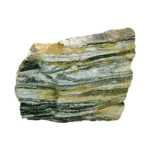
The Banded Rock at the Roots of Continents
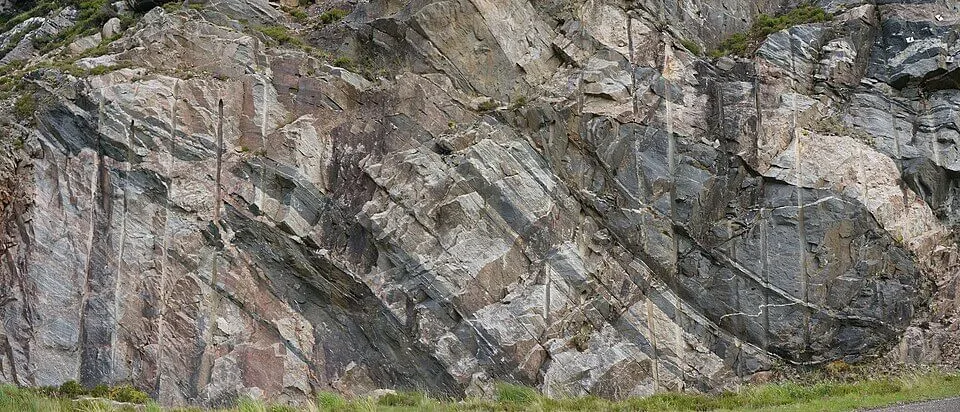
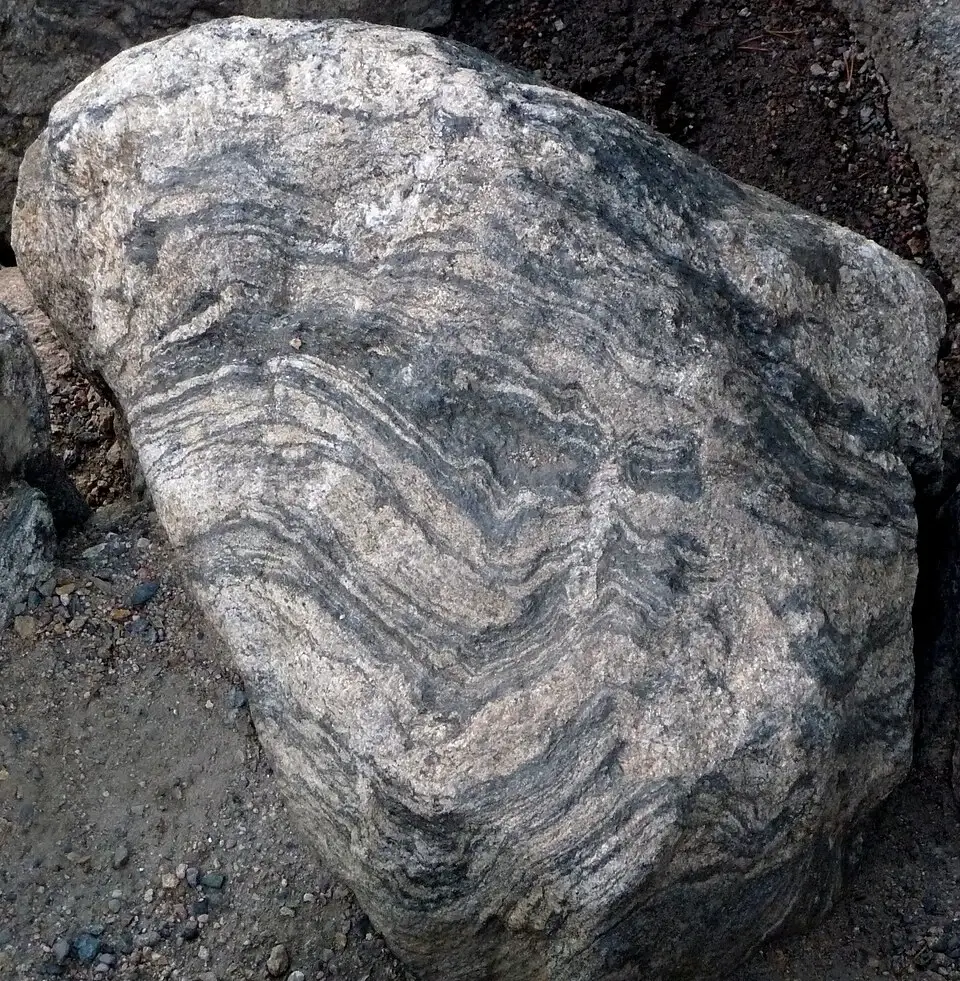
On the A838 just east of Laxford Bridge in the northwest Scottish Highlands, a road cut exposes a wall of grey rock streaked with pink pegmatite and crosscut by black mafic dykes. The bands inside the grey rock are folded into tight, almost theatrical curls. This is gneiss, specifically the Lewisian gneiss, around three billion years old. The outcrop exposes the deep crust of a continent that has been folded and recrystallised repeatedly for most of Earth’s history.
Fact Sheet
| Property | Typical value or range |
|---|---|
| Rock class | High-grade metamorphic, foliated |
| Defining feature | Gneissic banding (compositional segregation) |
| Grain size | Coarse (typically >1 mm) |
| Main minerals | Quartz, plagioclase, K-feldspar, biotite, hornblende, garnet |
| Metamorphic facies | Amphibolite to granulite |
| Temperature of formation | ~500–900 °C (higher in UHT granulites) |
| Pressure of formation | ~0.2–1.2 GPa (≈ 8–40 km depth) |
| Bulk density | ~2.65–2.87 g/cm³ |
| Common protoliths | Granite/tonalite (orthogneiss); shale/greywacke (paragneiss) |
| Oldest known example | Acasta Gneiss Complex, ~4.03 Ga (Canada) |
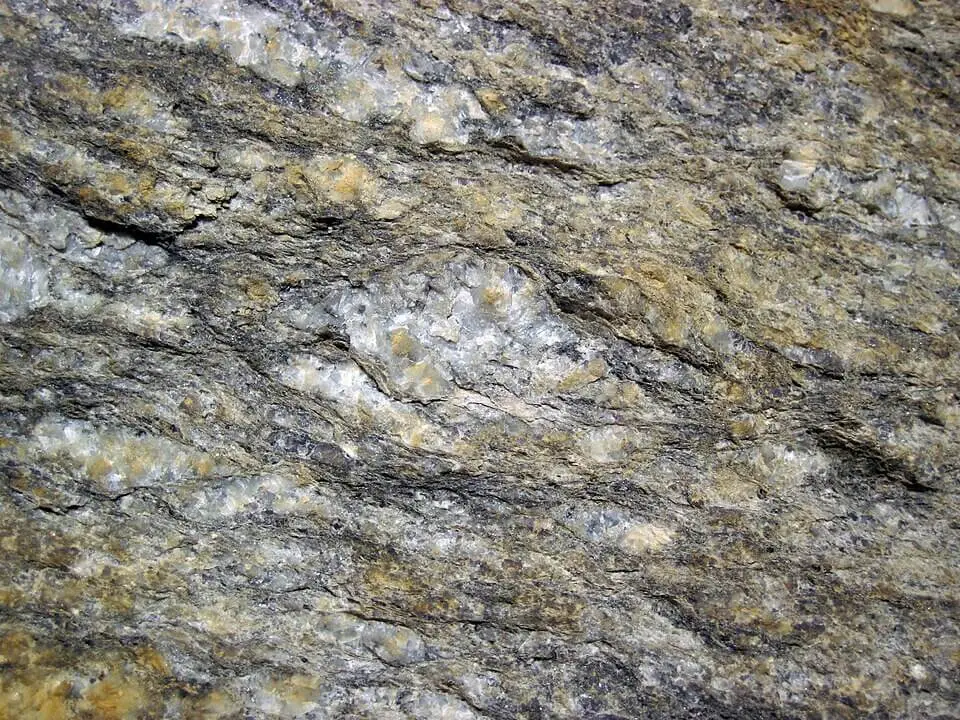
The banding is legible in the field. You can trace a single dark layer across an outcrop, watch it fold around a feldspar augen, and follow it into a shear zone where it thins to a smear. The rock holds a record of pressure and temperature through time, readable in micrograms of zircon.
What is gneiss?
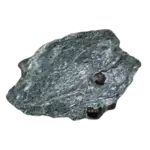
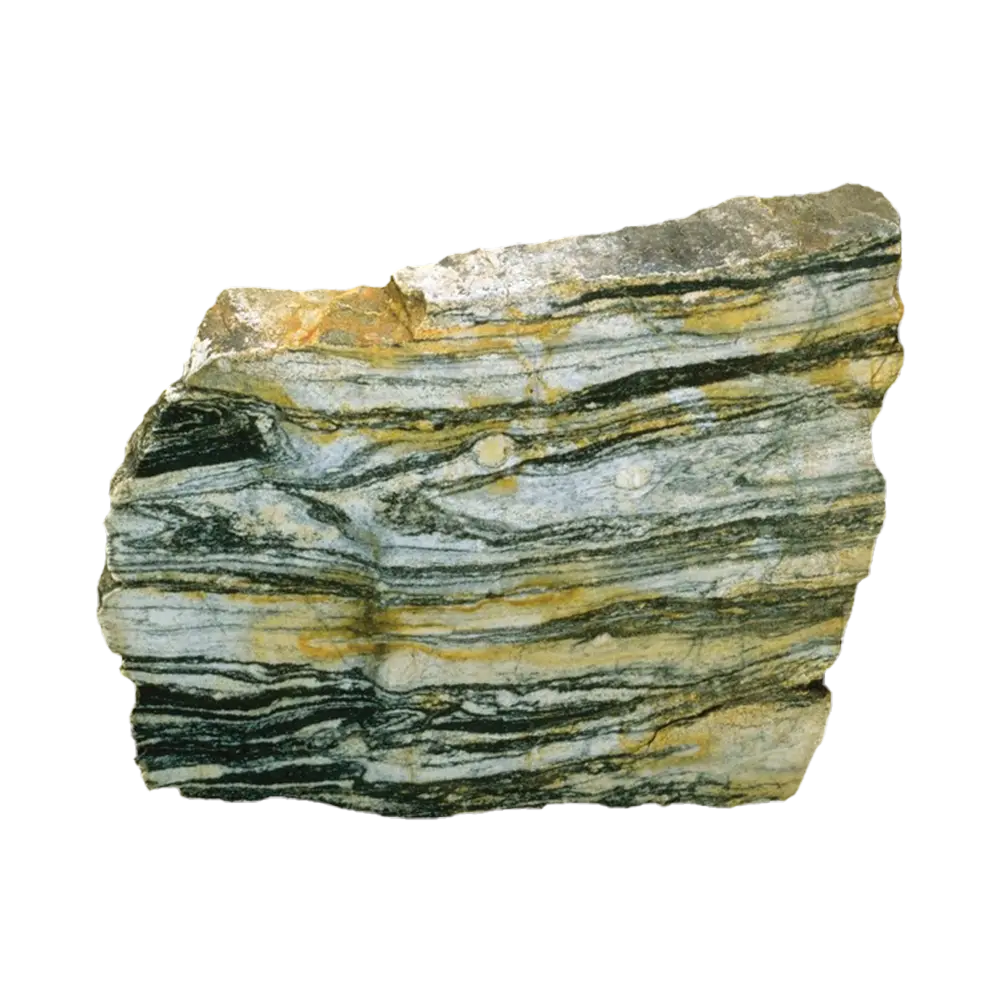
Gneiss (pronounced “nice”) is a coarse-grained, high-grade metamorphic rock defined by a distinctive compositional layering called gneissic banding, alternating light layers rich in quartz and feldspar and darker layers dominated by biotite, hornblende, or garnet. It typically forms under amphibolite- to granulite-facies conditions, roughly 500–800 °C and 0.2–1.2 GPa, deep inside the continental crust.
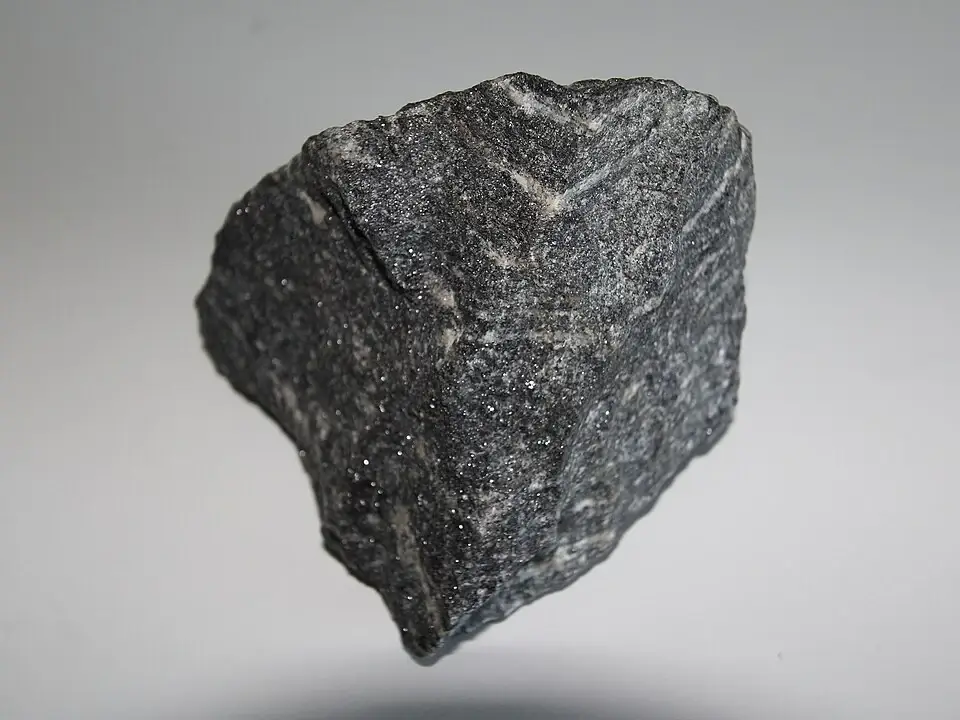
The banding is the diagnostic feature. Schist also forms under high-grade metamorphism, but its fabric is a parallel sheeting of platy micas, schistosity, that splits cleanly along thin planes. Gneiss has thicker, more diffuse bands that do not split, because quartz and feldspar dominate over mica. Push the temperature higher still, and the felsic layers begin to melt; the rock then grades into migmatite, a partly molten hybrid sometimes described as the bridge between metamorphic and igneous worlds.
Composition and texture
The mineralogy of a gneiss depends entirely on what was cooked. Most specimens contain quartz, plagioclase, and alkali feldspar as the bulk light-coloured framework, with biotite, muscovite, hornblende, garnet, and aluminosilicates such as sillimanite or kyanite supplying the dark bands. Accessory minerals include zircon, monazite, apatite, titanite, and Fe–Ti oxides: minor in volume but the key carriers of the U, Th, and Pb that geochronologists use to date the rock.
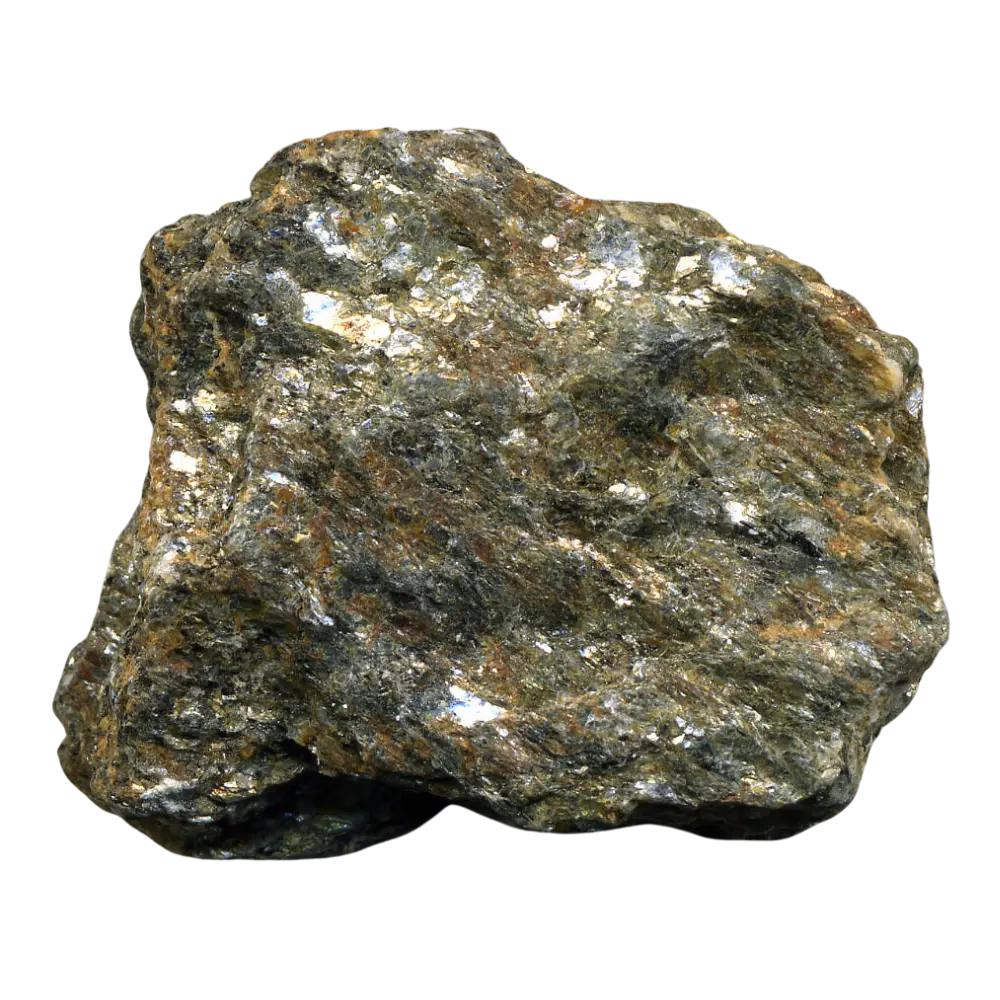
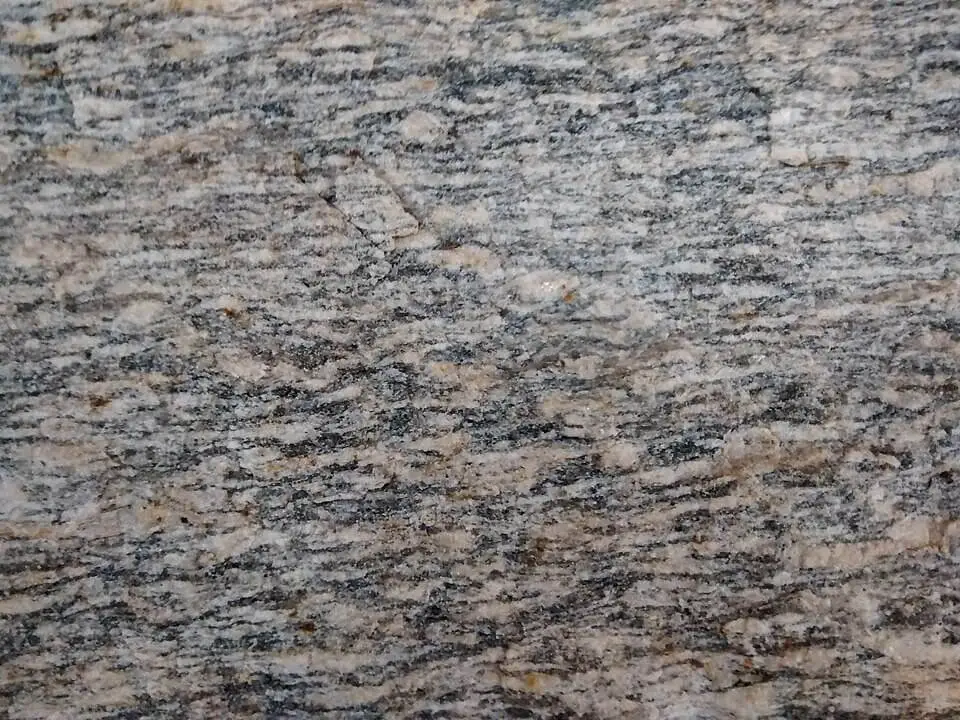
Grain size is coarse: individual feldspars are easily visible to the eye, and porphyroclasts can reach several centimetres across. The defining texture, gneissic banding, is the segregation of leucocratic (felsic) and melanocratic (mafic) layers on scales from millimetres to tens of centimetres. The bands trace strain, they are flattened, folded, and locally rotated. In hand specimen the rock is dense and hard; bulk density runs 2.65–2.87 g/cm³ depending on the proportion of mafic minerals.
Gneiss vs schist vs migmatite
The three rocks sit on a single metamorphic gradient and get confused constantly. Schist forms at slightly lower grade (roughly 400–600 °C) and is defined by schistosity: a parallel sheeting of platy micas that splits cleanly along thin planes. Gneiss forms hotter and deeper (500–800 °C), is dominated by quartz and feldspar over mica, and shows compositional banding rather than mica cleavage; it breaks across the bands, not along them. Push the temperature higher still and the felsic layers begin to melt, producing migmatite, a partly molten hybrid with irregular leucosome pods rather than continuous bands.
A practical field test: schist splits cleanly along its micas; gneiss breaks across the bands because quartz and feldspar dominate; migmatite shows patchy, irregular leucosome rather than continuous layers.
How gneiss forms
To produce gneiss you need temperatures above roughly 500 °C, pressures of at least a few hundred megapascals, ductile deformation, and time. Those conditions are found at depths of about 15 to 35 km in the continental crust, mostly under thickening orogens. The classic settings are continental collision zones (the Alps, the Himalaya, the Caledonides, the Appalachians) and the deep roots of older mountain belts now exposed at the surface as Precambrian shields.
Two metamorphic facies do most of the work. Amphibolite-facies conditions, roughly 500–750 °C and 0.2–1.0 GPa, produce hornblende-bearing gneisses with biotite and plagioclase as common partners. Granulite-facies conditions, generally above about 750–800 °C and often above 0.8 GPa with low water activity, produce orthopyroxene-bearing assemblages, drier mineralogies, and locally the dark, greasy variety known as charnockite. A 2021 review by Laura Sammon and William McDonough in the Journal of Geophysical Research: Solid Earth argued that exposed deep-crustal cross-sections average around 0.8 GPa, roughly 25–30 km depth, which is why amphibolite- and granulite-facies gneisses dominate the rocks we actually get to walk on in old terrains.
Orthogneiss versus paragneiss
The single most useful classification of gneiss is by protolith. Orthogneiss derives from an igneous parent, most commonly granite, granodiorite, or tonalite, and inherits a feldspar-dominated bulk chemistry. Paragneiss derives from a sedimentary parent: shales, greywackes, and arkoses metamorphose into aluminous (pelitic) or quartzofeldspathic (psammitic) gneisses that carry minerals like garnet, sillimanite, kyanite, and cordierite. Distinguishing the two in the field is often impossible without geochemistry, but it matters: orthogneiss tells you where a pluton used to be, and paragneiss tells you where a basin used to be.
How the bands actually form
Several processes contribute to gneissic banding. Metamorphic differentiation segregates minerals during prolonged heating, concentrating quartz and feldspar in one layer and mafic phases in the next. Older layering, sedimentary bedding, igneous compositional variation, earlier foliations, gets transposed and flattened into parallelism with the dominant strain. In ductile shear zones, porphyroclasts are smeared into tails and feldspars rotated into the eye-shaped augen that name one common variety. Most real gneisses preserve a mix.
Varieties of gneiss
Gneiss is named after whatever mineral, texture, or protolith stands out. The common labels:
- Augen gneiss: contains lenticular, eye-shaped feldspar porphyroclasts (from German Augen, “eyes”), produced by shearing of large grains in a finer matrix.
- Banded gneiss: the default; clear alternation of light and dark layers.
- Migmatitic gneiss: preserves leucosomes of crystallized partial melt within darker melanosomes.
- Mylonitic gneiss: recrystallized in a high-strain shear zone, with strongly attenuated bands.
- Granite gneiss, biotite gneiss, garnet gneiss, hornblende gneiss: named for the dominant or diagnostic mineral.
- Leucogneiss: the felsic variety, very low in mafic minerals; Himalayan leucogneisses fall here.
- Pelitic vs psammitic paragneiss: distinguished by whether the sedimentary protolith was a shale or a sandstone.
Where to find gneiss: famous outcrops and complexes
A handful of gneiss complexes carry most of the scientific weight, because they are the oldest known intact crust on the planet.
The Acasta Gneiss Complex sits on a remote slice of the western Slave Province in Canada’s Northwest Territories, about 300 km north of Yellowknife. It is the most-cited candidate for the oldest precisely dated rock on Earth. Sam Bowring and colleagues first reported >3.96 Ga ages from the complex in Geology in 1989. Bowring and Ian Williams refined them to 4.00–4.03 Ga in Contributions to Mineralogy and Petrology a decade later, and in 2016 Jesse Reimink and colleagues dated the Idiwhaa tonalitic gneiss unit to 4,019.6 ± 1.8 Ma in Nature Geoscience. A single zircon xenocryst reported by Iizuka and colleagues in Geology in 2006 yielded a ~4.2 Ga age, hinting at even older source crust, though the result rests on one grain and has not been independently reproduced. The complex is not one rock; it is a billion-year history of magmatism preserved in a 50-km² window of outcrop.
The Nuvvuagittuq Greenstone Belt on the eastern shore of Hudson Bay in northern Quebec is the more controversial contender. In 2008 Jonathan O’Neil, Richard Carlson and co-authors used the short-lived 146Sm–142Nd isotope system to argue that the dominant mafic unit, called Ujaraaluk, formed at roughly 4.28 Ga, which would make it Hadean crust. A 2012 follow-up refined the isochron to 4,321 ± 160 Ma. Other workers, notably Cates, Mojzsis, and Darling et al., argued that the U–Pb zircon minimum age of about 3.75–3.8 Ga is the rock’s actual formation age and that the older 142Nd signature is inherited from an older source. In 2025 O’Neil and colleagues published new U–Pb data on cross-cutting metagabbros in Science, dating them at ~4,160 Ma and providing a minimum age that supports the Hadean interpretation for the host metabasalts. The debate is unresolved, and it is the cleanest example of why dating Earth’s earliest crust is so difficult.
The Itsaq Gneiss Complex in the Nuuk region of southern West Greenland, long known as the Amîtsoq gneiss after Vic McGregor’s original mapping, spans roughly 3,850 to 3,660 Ma. Stephen Moorbath’s group at the University of Oxford did much of the early geochronology in the 1970s, and Allen Nutman’s group has continued the work since. Kamber and Moorbath argued in 1998 that the gneisses might record a single ~3.65 Ga event with inherited older zircons; Nutman and colleagues, in Geochimica et Cosmochimica Acta (2000) and American Journal of Science (2013), argued for true episodic magmatism over ~190 million years. That debate, too, remains live.
The Lewisian Gneiss Complex of NW Scotland and the Outer Hebrides, where this article opened, has Archaean protoliths of 3.2–2.8 Ga that experienced granulite-facies metamorphism in the 2.5 Ga Badcallian event and amphibolite-facies retrogression during the later Laxfordian event after 1.9 Ga. The exposures at Scourie Bay, Laxford, and along the Assynt coast are textbook teaching sites; the British Geological Survey treats the complex as the type basement of Britain.
Other gneiss exposures worth knowing: the Adirondack Mountains of New York preserve granulite-facies gneisses metamorphosed during the ~1.1 Ga Grenville orogeny; the Pilbara and Yilgarn cratons of Western Australia and the broader Canadian and Baltic Shields are dominated by Archaean grey gneisses; the Lepontine dome and the Gotthard massif of the Swiss Central Alps expose Alpine-age gneisses metamorphosed to amphibolite facies at roughly 600–700 °C and 800–900 MPa during Oligocene–Miocene continental collision (Steck et al., 2013, Swiss Journal of Geosciences); the Higher Himalayan Crystalline sequence carries the famous Miocene leucogneisses and leucogranites that formed during exhumation between roughly 26 and 13 Ma.
Uses and significance
Most “black granite” countertops, monuments, and building facades are not granite. The trade name is applied to any dark, polishable holocrystalline rock, diabase, gabbro, anorthosite, and frequently gneiss or migmatite. The Indian dimension-stone industry openly markets gneisses under names like Samantha Blue Gneiss and Kashmir White; many of the swirled, striped, and “exotic” countertop varieties sold in North America and Europe are gneisses or migmatites in geological terms. Gneiss is also widely used as crushed aggregate for road base, as armour stone for coastal defences, and as paving setts: the rock is hard, dense, and resistant to weathering, all consequences of its quartz–feldspar bulk composition and tight interlocking texture.
The scientific significance is bigger. Gneisses are the principal archive of deep continental crust. Because they survive multiple thermal events without being completely reset, and because their zircon and monazite carry intact U–Pb chronometers, they preserve a record of crust formation, mountain-building, and erosion that other rocks lose. The Hadean and Eoarchean story, the existence of any continental crust before 3.8 Ga, the timing of plate tectonic-style processes, the composition of Earth’s earliest atmosphere, depends almost entirely on what can be extracted from the Acasta, Nuvvuagittuq, and Itsaq gneiss complexes, supplemented by detrital zircons such as those from the Jack Hills of Western Australia studied by John Valley and others.
Field identification
Two diagnostic features carry the rock. First, banding that is compositional and continuous on a scale of millimetres to decimetres: wider and more diffuse than schist’s mica sheeting, but more regular than the patchy leucosome–melanosome layering of a true migmatite. Second, a coarse grain size with visible feldspar and quartz: if you cannot see individual feldspars with the naked eye, it is probably not a gneiss. A practical third test: try to split the specimen with a hammer. Schist will cleave along its micas. Slate will cleave even more cleanly. Gneiss tends to break across the bands rather than along them, because the quartzofeldspathic layers behave as a welded framework.
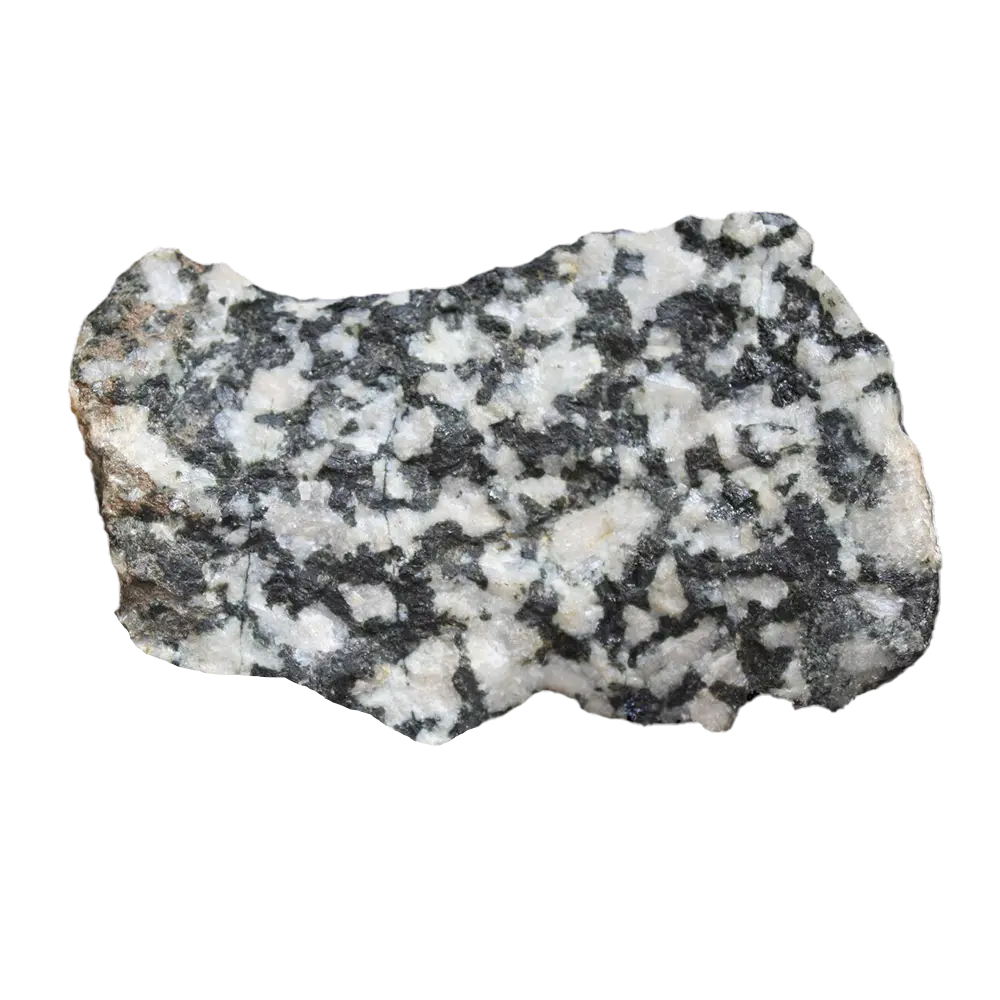
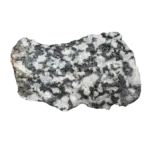
The closest source of field confusion is a foliated granite. Gneiss has compositional layering: light and dark bands of different mineralogy. A foliated granite has aligned biotite or hornblende but uniform bulk composition; the rock is grey-and-speckled all the way through, not striped.
Active research
Gneisses sit at the centre of several live arguments in Earth science. The biggest is when modern-style plate tectonics began: subduction, arc magmatism, and the horizontal motion of rigid plates. Reimink and colleagues argued in 2014 that the earliest Acasta tonalites formed in an “Iceland-like” plume setting rather than at a subduction zone, implying that horizontal tectonics started later. A 2018 study in Nature Geoscience by Bauer, Reimink and others proposed that some of the same Acasta rocks could be impact-melt products rather than ordinary magmatic crust. Aarons, Reimink and colleagues then used titanium isotopes in 2020 (Science Advances) to argue that Acasta gneisses preserve a real shift from plume-style magmatism in the Hadean to arc-style magmatism by ~3.6 Ga.
The Nuvvuagittuq controversy continues in parallel and was reopened by O’Neil and colleagues in 2025 with new evidence for ~4.16 Ga mafic intrusions cutting the host metabasalts. If the host is genuinely older than 4.2 Ga, then Nuvvuagittuq, not Acasta, holds the title of oldest preserved crust on Earth, and the rock would be Hadean.
Beyond geochronology, gneiss domes themselves are a research frontier. The North Himalayan gneiss domes and the metamorphic core complexes of the western United States are interpreted as exhumed deep crust brought to the surface during extension; they offer rare access to rocks that normally sit 20–40 km down. Seismologists use the elastic properties of gneiss to model the lower continental crust in cratonic interiors, and the persistence of melt-bearing lower crust for hundreds of millions of years, documented in the Lewisian by Taylor, Johnson and colleagues, is reshaping how petrologists think about long-term crustal thermal histories.
Frequently asked questions
Is gneiss igneous or metamorphic? Gneiss is metamorphic. It forms when an existing rock, either igneous (orthogneiss) or sedimentary (paragneiss), is heated and deformed deep in the crust without fully melting.
How is gneiss formed? Under temperatures of roughly 500–800 °C and pressures of 0.2–1.2 GPa, at depths of about 15–35 km, usually in the roots of mountain belts. Minerals segregate into light and dark bands during prolonged heating and ductile deformation.
What is gneiss used for? Crushed aggregate, paving setts, armour stone, and dimension stone, most “black granite” and many exotic countertops are gneiss or migmatite in geological terms.
What is the oldest gneiss on Earth? The Acasta Gneiss Complex in Canada, precisely dated to 4,019.6 ± 1.8 Ma. The Nuvvuagittuq Greenstone Belt in Quebec may be older (~4.16–4.3 Ga) but the age remains contested.
Why is gneiss banded? Several processes combine. Minerals segregate by solubility during prolonged heating, older layering gets flattened parallel to the strain direction, and ductile shearing smears and rotates grains into the banded fabric.