Adamite

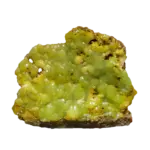
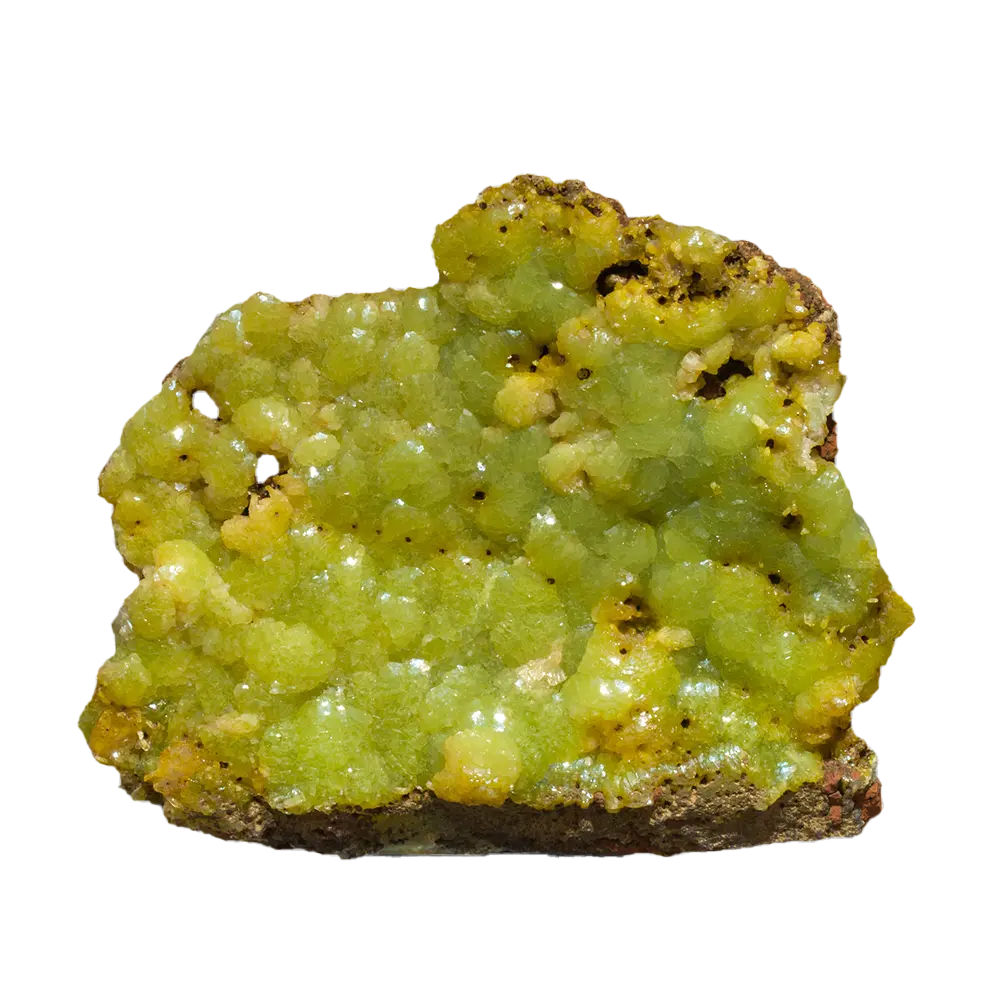
Bright yellow-green adamite specimen close-up
Pascal founder of Geoscopy

admin 

Fact Sheet

  • Chemical formula: Zn₂(AsO₄)(OH)

  • Mineral class/group: Arsenate mineral; olivenite group

  • Crystal system: Orthorhombic

  • Mohs hardness: 3.5

  • Luster: Usually vitreous; sometimes sub-vitreous, waxy, or greasy

  • Streak: White

  • Typical colors: Colorless to white in ideal form; commonly yellow to honey-yellow, green, blue-green, rose, pink, purple, or zoned

  • Notable localities: Ojuela Mine, Mapimí, Mexico; Lavrion/Laurium, Greece; Tsumeb, Namibia; Cap Garonne, France; Chañarcillo, Chile

  • Main value: Collector specimens; rarely faceted as a collector gemstone

What Is Adamite?

Adamite is a zinc arsenate hydroxide mineral with the formula Zn₂(AsO₄)(OH). It is not an everyday rock-forming mineral. Instead, it is a secondary mineral that forms in the oxidized parts of zinc ore deposits where arsenic is also present.

Collectors value adamite because it can grow as bright, glassy crystals in unusually vivid colors: honey-yellow, lime green, blue-green, pink, violet, and sometimes color-zoned combinations of several shades. Adamite is not important as an industrial mineral. Its value lies in its beauty, rarity, and the story it tells about the chemistry of weathered ore deposits.

How Adamite Forms

Adamite usually forms in the oxidized zone of zinc- and arsenic-bearing ore deposits. This is the near-surface part of an ore body where oxygen-rich groundwater reacts with older ore minerals. During weathering, zinc and arsenate can be released, transported over short distances, and then re-precipitated as secondary minerals such as adamite.
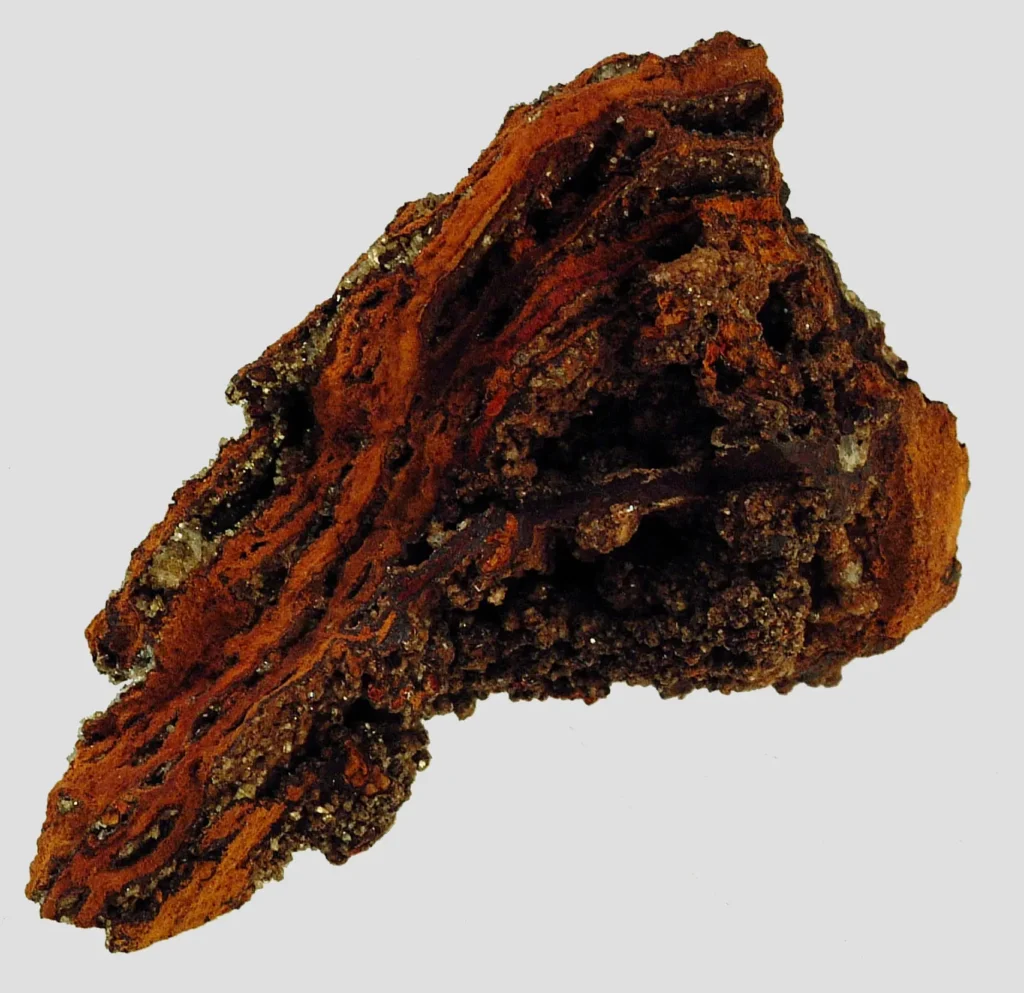
Adamite with limonite from near Durango, Mexico. The green adamite crystals sit on an iron-oxide-rich matrix, a visual reminder that adamite forms as a secondary mineral in the oxidized parts of ore deposits. Photo: Nessa Eull / Geoscience Digital Image Library, via Wikimedia Commons, CC0 1.0 Public Domain Dedication.

This is why adamite is often found with other secondary ore-zone minerals, including calcite, smithsonite, hemimorphite, goethite/limonite, scorodite, mimetite, conichalcite, and other zinc, copper, iron, and arsenate minerals. Its presence tells a geologist that zinc, arsenic, oxygen-rich water, and near-surface weathering have interacted. Adamite is not a deep-Earth mineral; it is a mineral of altered ore deposits.

Why Adamite Has So Many Colors

In its pure form, adamite can be colorless to white, but many collector specimens owe their color to minor substitutions or impurities.

  • Yellow to honey-yellow adamite is common and may be influenced by iron.
  • Green to blue-green adamite is commonly associated with copper-bearing compositions, although older labels such as “cuprian adamite” should be used carefully because some specimens once described that way may actually be zincolivenite.
  • Pink, rose, violet, or purple adamite can be related to cobalt or manganese.
  • Blue and blue-green specimens are especially prized by collectors, including material from classic districts such as Lavrion/Laurium in Greece.

Adamite may also fluoresce under ultraviolet light, sometimes showing a strong green or lemon-yellow glow. This fluorescence is one reason it is especially popular among mineral collectors.
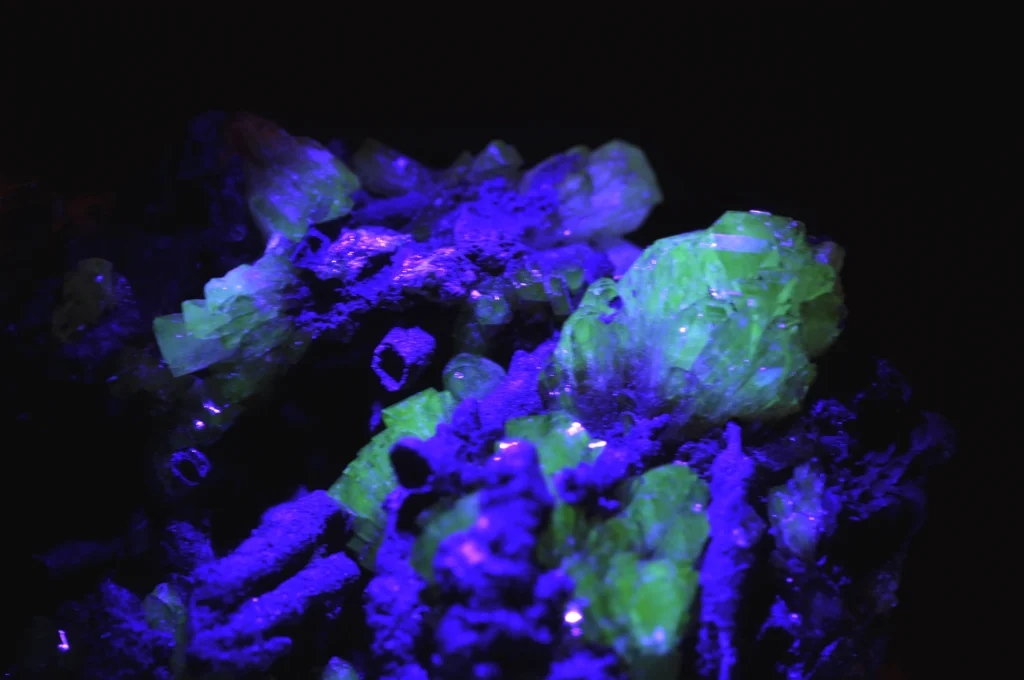
Adamite crystals fluorescing under ultraviolet light. Some adamite specimens are popular with collectors because they can glow bright green or yellow-green under UV light. Photo: Parent Géry, Wikimedia Commons, public domain.

Important Localities

The Ojuela Mine at Mapimí, Durango, Mexico, is one of the classic localities for adamite and has produced many of the specimens most familiar to collectors, especially yellow to green crystals on iron-rich matrix. Other important localities include the Lavrion/Laurium mining district in Greece, known for green to blue-green material; Tsumeb in Namibia, famous for unusual and highly collectible mineral specimens; Cap Garonne in France; and Chañarcillo in Chile, the type locality for adamite.

Uses and Collecting

Adamite has no major industrial use. Its main value is as a mineral specimen: it is colorful, sometimes fluorescent, and often forms attractive crystal clusters. It is occasionally faceted as a small collector gemstone, but it is poorly suited to normal jewelry. With a Mohs hardness of only 3.5, brittle tenacity, and good cleavage, faceted adamite is better treated as a collector curiosity than as a wearable gem.

Safety Note

Adamite contains arsenate in its chemical structure. Normal handling of a stable mineral specimen is not the same as handling a soluble arsenic compound, but sensible precautions still apply: do not grind it, inhale dust, lick it, or place it in water meant for drinking. Wash your hands after handling, especially before eating.
Share Rock

more rocks.minerals

View All
Limestone rock with visible fossil imprint

Limestone

Shist rock example

Schist

Green pyroxene crystal mineral specimen

Pyroxene

Close-up of a granite rock sample

Granite

Diorite rock close up

Diorite

Monazite mineral crystal cluster

Monazite

Clear barite crystal mineral specimen

Barite

Muscovite mineral

Muscovite

Bright yellow-green adamite specimen close-up

Adamite

Large basalt on white background

Basalt

Shiny metallic hematite crystal cluster

Hematite

Descloizite mineral crystal cluster

Descloizite

Clear quartz crystal cluster on black background

Quartz

Quartz, a silicon dioxide mineral, is used in jewelry and electronics.

Read more
Cluster of shiny brown mica crystals

Mica

Mica is a group of silicate minerals with varying compositions mainly in insulation and electronics.

Read more
Gray quartzite rock on white background

Quartzite

Quartzite, a durable metamorphic rock made of quartz, is used in construction and countertops.

Read more
Monazite mineral crystal cluster

Monazite

Monazite, a group of rare earth minerals, is a key source of rare earth elements.

Read more
Amphibole sample on white background

Amphibole

Amphibole is a diverse mineral group used for geological indicators and as insulation.

Read more
Brown volcanic rock texture close-up

Rhyolite

Rhyolite, a silica-rich volcanic rock, is used in construction and research.

Read more
Descloizite mineral crystal cluster

Descloizite

Descloizite is a lead-zinc vanadate mineral, mainly found in Namibia and Mexico.

Read more
Beryl crystals with brown mineral base

Beryl

Beryl is a gemstone mineral, including emerald and aquamarine, and a source of beryllium.

Read more
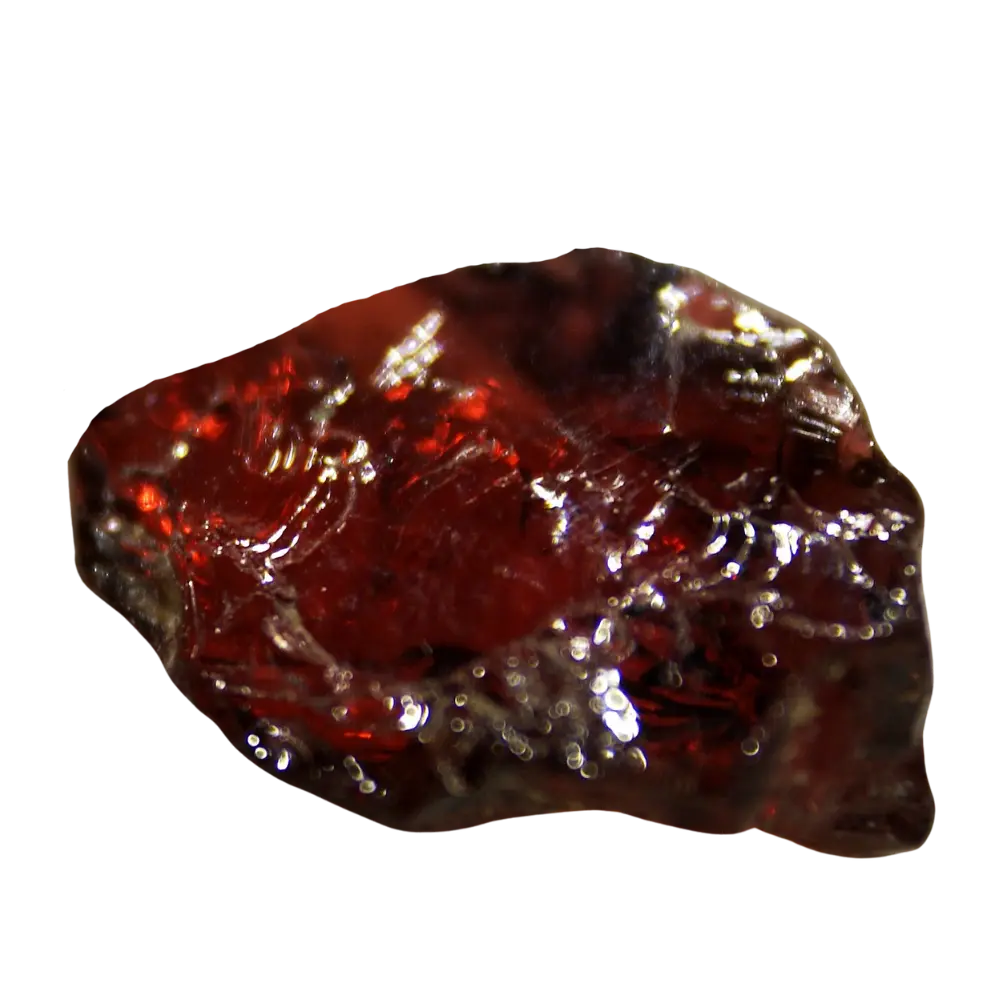
Raw red garnet gemstone close-up

Garnet

Garnet is a group of silicate minerals used as gemstones and abrasives.

Read more
Shiny metallic hematite crystal cluster

Hematite

Hematite is an iron oxide mineral used for iron ore, pigments, and radiation shielding.

Read more
Shiny metallic pyrite mineral cluster

Galena

Galena is the main ore of lead and silver, used in batteries and shielding.

Read more
Limestone rock with visible fossil imprint

Limestone

Limestone, mainly calcium carbonate, is used in construction, cement, and water treatment.

Read more
Green pyroxene crystal mineral specimen

Pyroxene

Pyroxene, a silicate mineral group found in igneous and metamorphic rocks.

Read more
Marble close-up

Marble

Marble, a calcium carbonate metamorphic rock, is used in sculpture, architecture, and countertops.

Read more
Large basalt on white background

Basalt

Basalt is a dark, fine-grained igneous rock used in construction, monuments, and geological studies.

Read more
Dark blue scorodite crystal cluster mineral specimen

Scorodite

Scorodite, a hydrated iron arsenate, is valued for arsenic containment and as a collector’s mineral.

Read more
Muscovite mineral

Muscovite

Muscovite, a mica mineral, is used in insulation, fireproofing, and cosmetics.

Read more
Borax mineral specimen

Borax

Borax is a sodium borate used in cleaning and glassmaking.

Read more
Bright yellow-green adamite specimen close-up

Adamite

Adamite is a rare, colorful orthorhombic mineral prized by collectors for its vibrant crystals.

Read more
White halite rock salt crystal cluster

Halite

Halite, or rock salt, is a sodium chloride mineral used for seasoning, de-icing, and industry.

Read more
Rough beige sandstone rock on white background

Sandstone

Sandstone, composed of quartz and feldspar, is used in construction, paving, landscaping, and glassmaking.

Read more
Close-up of a granite rock sample

Granite

Granite is a durable igneous rock used in construction, monuments, and countertops.

Read more
Metamorphic rock with dark red garnet crystals

Chlorite

Chlorite, a green phyllosilicate mineral, is used as a geological indicator and industrial filler.

Read more
Shiny metallic pyrite mineral cluster

Pyrite

Pyrite, or “Fool’s Gold,” is used for sulfur and iron production.

Read more
Green fluorite crystal on yellowish mineral matrix

Fluorite

Fluorite, a colorful calcium fluoride, is used as flux in steelmaking, glass, and as gemstones.

Read more
Shist rock example

Schist

Schist, a layered metamorphic rock rich in mica and quartz, is often used in construction.

Read more
Calcite crystals on metallic mineral surface

Calcite

Calcite is a trigonal calcium carbonate mineral used mainly in construction for making cement.

Read more
Clear barite crystal mineral specimen

Barite

Barite is a barium sulfate mineral used in drilling, shielding, and paints.

Read more
Talc mineral

Talc

Talc, the softest mineral, is used in baby powder, cosmetics, ceramics, and plastics.

Read more
Dark black biotite mica mineral specimen

Biotite

Biotite is a dark mica mineral used in insulation and geological studies.

Read more
Colorful watermelon tourmaline crystal slice

Tourmaline

Tourmaline is a colorful boron silicate mineral used as a gemstone and in electronics.

Read more
Large translucent gypsum mineral specimen

Gypsum

Gypsum, a soft calcium sulfate mineral, is primarily used as plaster or in cement production.

Read more
Polished sample of a gneiss rock

Gneiss

Gneiss is a durable, banded metamorphic rock used in construction and decoration.

Read more
Piece of red and brown bauxite ore

Bauxite

Bauxite is the main aluminum ore, primarily found in Australia.

Read more
Vanadinite crystal cluster on white background

Vanadinite

Vanadinite is a bright red mineral, primarily sourced from lead deposits.

Read more
Shiny black coal

Coal

Coal, mainly carbon, is used for energy and steel production.

Read more
Bright green olivine crystal mineral specimen

Olivine

Olivine, a magnesium iron silicate, is used in gemstones (peridot) and refractory materials.

Read more
Sample of apatite mineral crystal

Apatite

Apatite is a calcium phosphate mineral found in various colors, primarily used in fertilizers.

Read more
Orange scheelite crystal on gray matrix rock

Scheelite

Scheelite, a calcium tungstate, is the main source of tungsten for tools and alloys.

Read more
Zircon crystal on beige mineral rock

Zircon

Zircon is a durable mineral used in jewelry, geological dating, and ceramics.

Read more
Wulfenite crystal specimen

Wulfenite

Wulfenite is a bright orange or yellow mineral, prized by collectors.

Read more
Shiny black magnetite crystal mineral specimen

Magnetite

Magnetite, an iron oxide with magnetic properties, is used in steel production and catalysts.

Read more
Dark gray shale rock sample

Shale

Shale, a fine-grained sedimentary rock, is used for natural gas, cement, and research.

Read more
White dolomite crystal mineral cluster

Dolomite

Dolomite is a calcium magnesium carbonate used in construction and agriculture.

Read more
Brown crystals of feldspar mineral specimen

Feldspar

Feldspar is an aluminum silicate used in ceramics, glass, and construction.

Read more
White kernite crystal

Kernite

Kernite is a boron-rich mineral used in glassmaking, detergents, and ceramics.

Read more
Diorite rock close up

Diorite

Diorite is a tough igneous rock used in construction, art, and in research.

Read more

join.me

Geology made clear, in your inbox.

Get clear, visual explainers on rocks, minerals, deep time, and the most fascinating parts of Earth science from Geoscopy.
Bright yellow-green adamite specimen close-up

Adamite

Adamite is a rare, colorful orthorhombic mineral prized by collectors for its vibrant crystals.

Read more