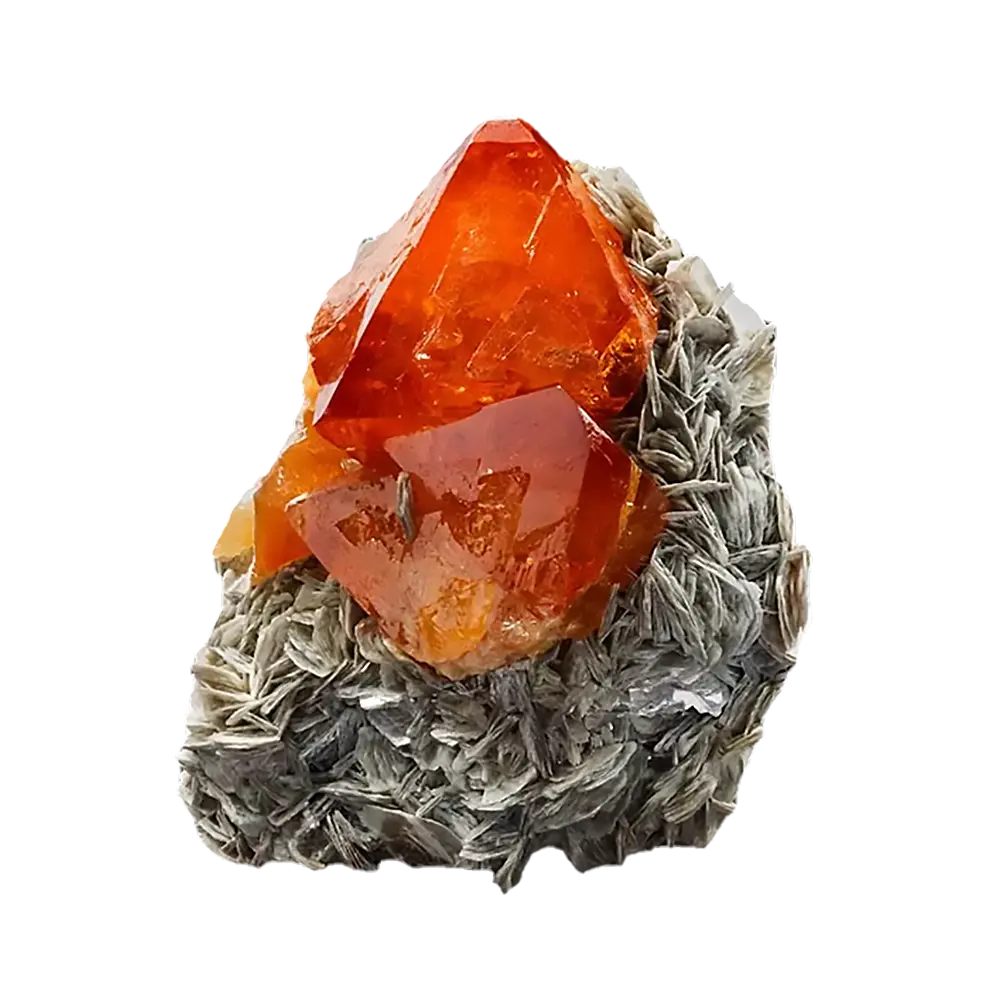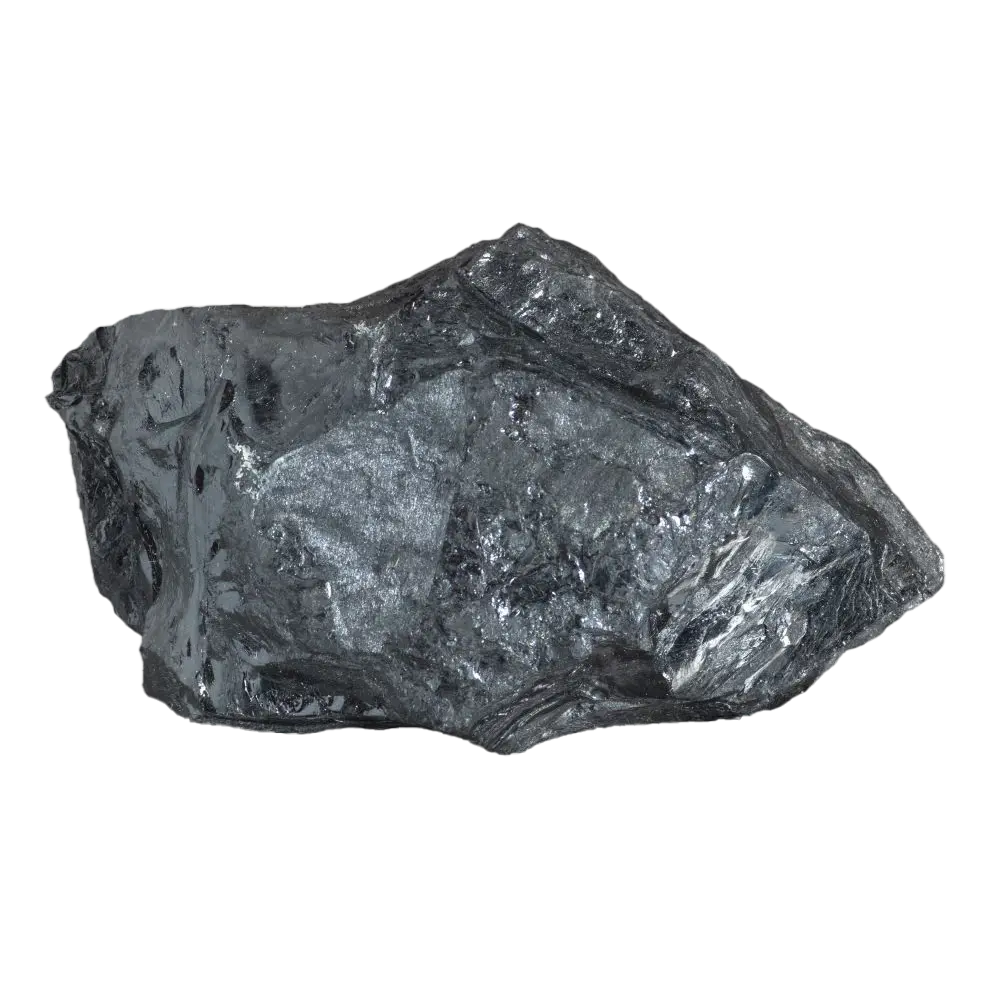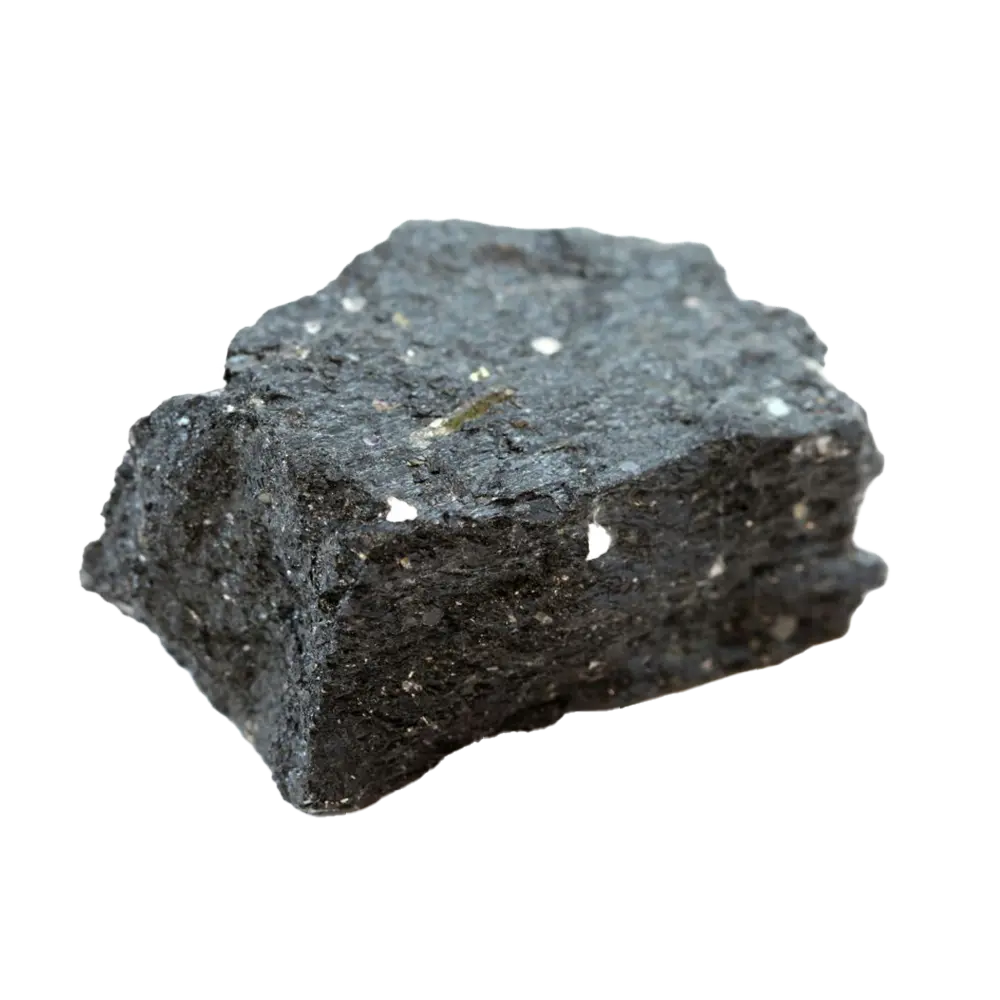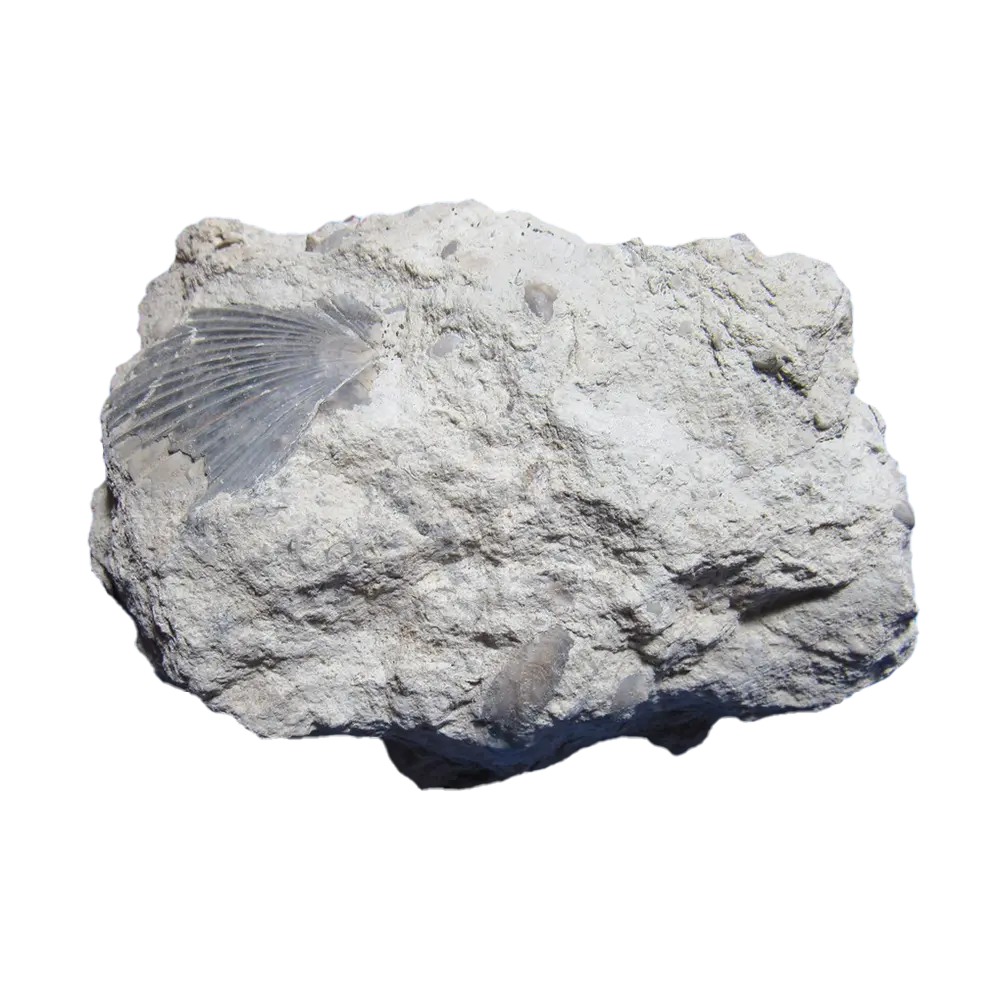

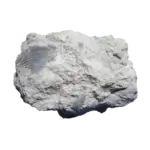
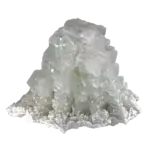

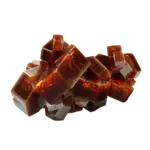
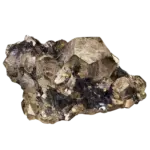
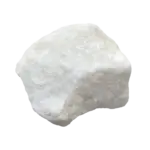
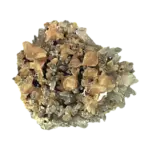
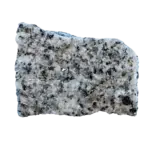
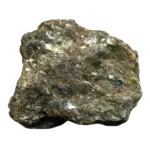

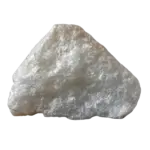
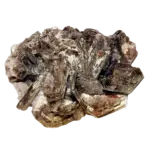
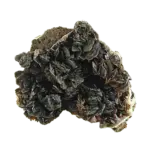
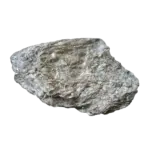
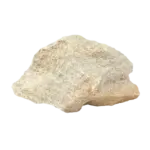
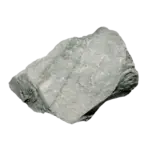
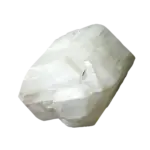
A hundred and one metres below the Polish town of Wieliczka, in a chamber called the Chapel of Saint Kinga, the chandeliers are carved from halite. So are the altar, the floor tiles, and the bas-reliefs of biblical scenes. Miners began hollowing the Wieliczka salt deposit in the thirteenth century and kept at it until 1996. They were quarrying a single mineral, halite, the natural form of sodium chloride, NaCl, that had crystallised out of a shallow Miocene sea roughly 13.6 million years earlier. The same mineral salts your soup, melts winter roads in Ohio, stores strategic crude oil under Louisiana, and is being engineered into caverns that may one day buffer Europe’s hydrogen grid. Few minerals do as much economic and geological work as halite, and you can confirm it with your tongue.
What is halite?
Halite is the mineral form of sodium chloride, with the simple end-member formula NaCl. It is the dominant component of the sedimentary rock rock salt, a near-monomineralic evaporite that forms when seawater or saline lake water dries out. Halite is recognised by the International Mineralogical Association as a grandfathered species in the halide class, with isometric symmetry and a hardness of 2 to 2.5 on the Mohs scale.
The name derives from the Ancient Greek ἅλς (háls), meaning “salt” or “sea.” German mineralogist Ernst Friedrich Glocker formalised the term Halit in 1847, replacing a thicket of older names (Steinsalz, sal gemmae, sel gemme). The current IMA symbol is Hl.
Chemistry and crystal structure
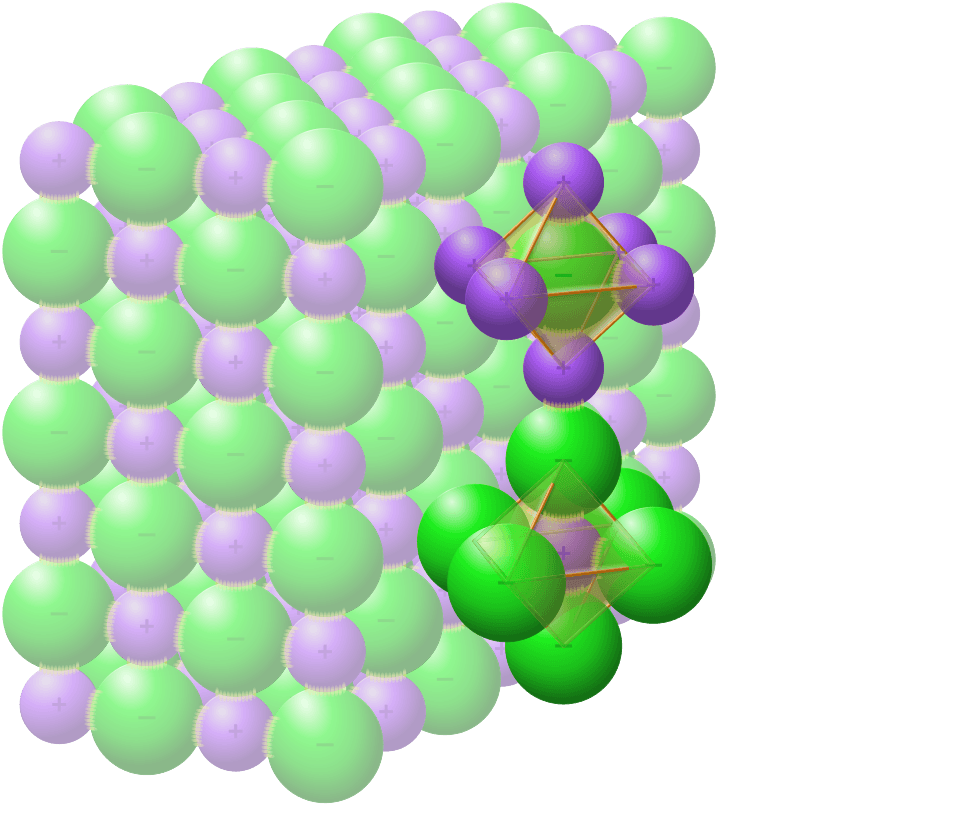
A grain of pure halite is a ridiculously orderly object. Sodium cations (Na⁺) and chloride anions (Cl⁻) alternate on the corners and face centres of a cube, each ion surrounded by six of its opposite-charged neighbours at equal distances. The mineral lends its name to an entire structural family, the halite structure, or NaCl-type, adopted by dozens of binary compounds from galena (PbS) to periclase (MgO). Sir William Henry Bragg and his son Lawrence Bragg used X-ray diffraction on rock salt in 1913–1914 to determine its structure, the first crystal ever solved by the technique that would win them the 1915 Nobel Prize in Physics.
Technically, halite crystallises in the cubic system, space group Fm-3m (no. 225), with lattice parameter a = 5.6404 Å and Z = 4. The bonding is essentially ionic, dominated by electrostatic attraction between Na⁺ and Cl⁻; the Na–Cl bond length is 2.82 Å. Refractive index is 1.5443 and the mineral is optically isotropic, although weak anisotropy can develop under stress. Density is 2.168 g/cm³ measured, 2.165 g/cm³ calculated from the cell parameters. The structure’s high symmetry produces perfect cleavage on {001} in three mutually perpendicular directions, so a hammer blow on a clean cube reliably yields smaller cubes.
Physical properties and how to recognise it in the field
Halite is one of the few rock-forming minerals that can be identified with confidence by a single non-destructive test: taste. A clean lick on a fresh cleavage face gives the unambiguous saltiness of NaCl, distinct from the bitter tang of sylvite (KCl) or the cool astringency of epsomite. Combined with its perfect cubic cleavage, low hardness (a fingernail will scratch it), vitreous lustre, white streak, and solubility in water of roughly 360 g/L at 20 °C, identification is rarely ambiguous.
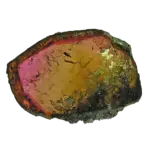
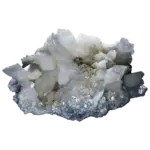
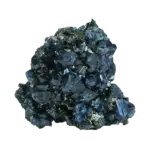
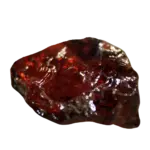
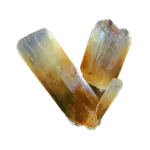
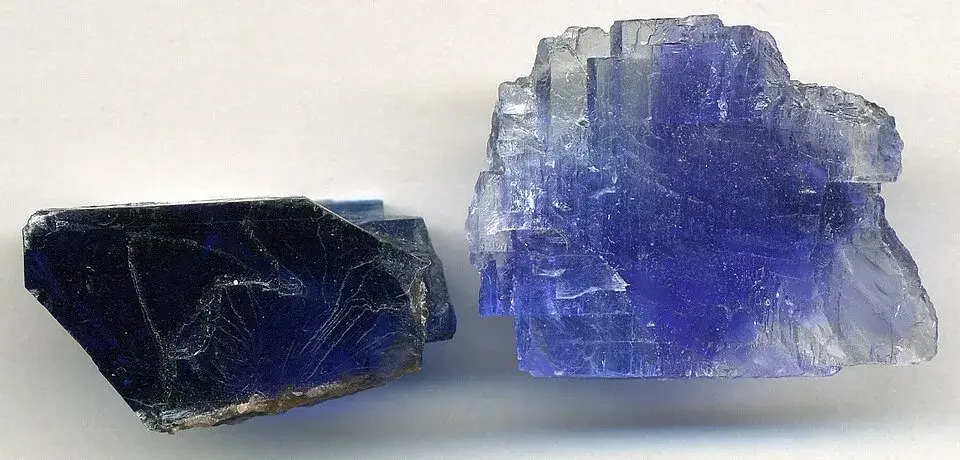
Pure halite is colourless or white. Trace impurities and lattice defects produce a remarkable range of colours: Iron oxide nanoparticles tint Khewra “Himalayan” salt pink to red. At Searles Lake in California, organic matter and halophilic Halobacterium pigments stain salt-pan crystals a vivid rose. The most striking colour is the deep blue-violet of halite from Kłodawa and the wider Zechstein basin. Single F-centres, electrons trapped in chloride vacancies after long-term natural irradiation of the lattice, absorb in the visible, but the saturated blue comes from those F-centres aggregating into colloidal sodium nanoparticles 2.5–3 nm across, a mechanism understood since the 1970s. A 2021 paper by Calas, Galoisy and Geisler in American Mineralogist resolved a long-standing puzzle within that model: why the same nanoparticles colour halite blue but villiaumite (NaF) red. The answer turns on the refractive index of the host mineral, which shifts the surface-plasmon resonance wavelength of the Na colloids.
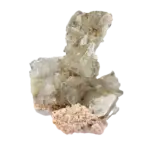
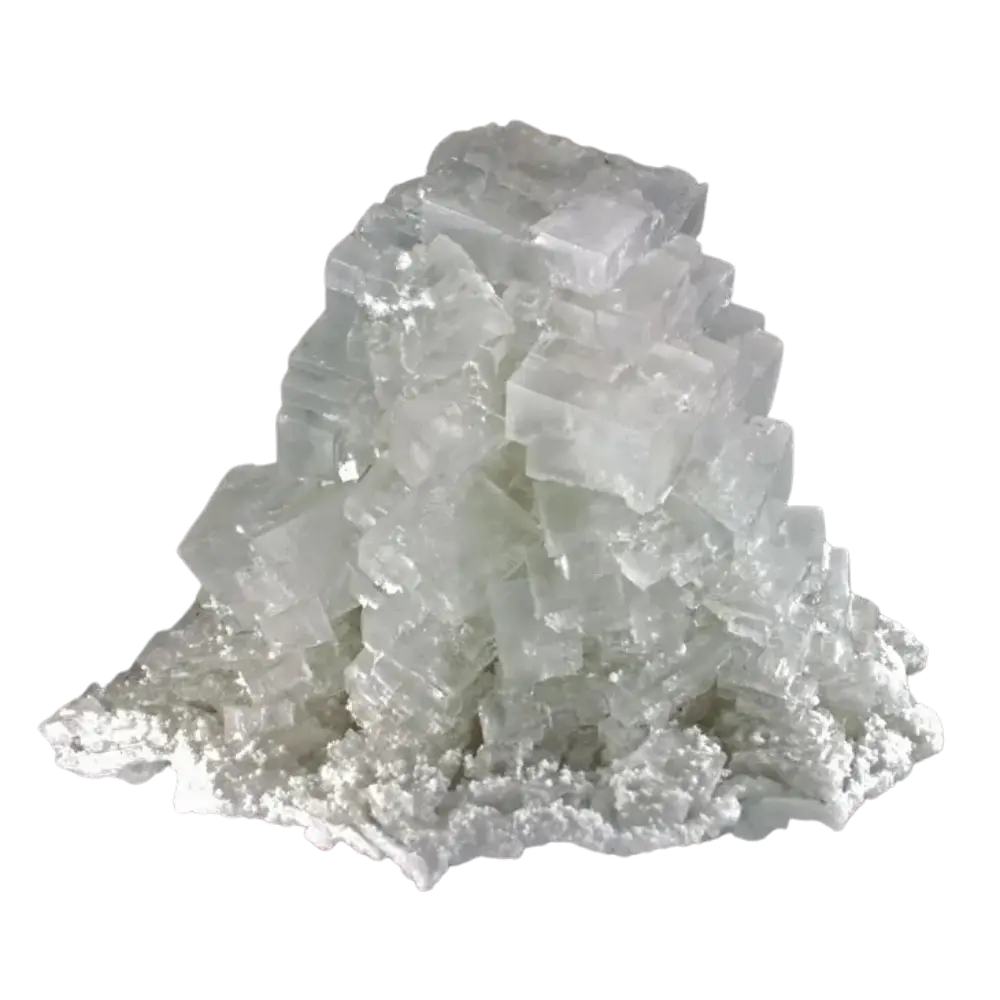
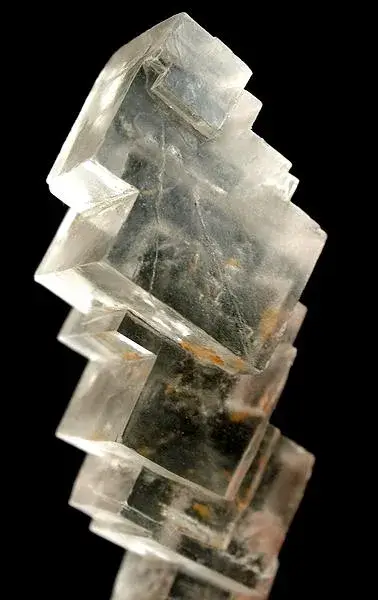
Halite’s growth habits are equally distinctive. Given centuries and a quiet brine, it grows as transparent cubes up to a metre across, Merkers, in Thuringia, has produced specimens approaching that size. At a brine surface, growth runs faster than diffusion: the edges of a cube outpace its faces, and the result is a hopper crystal, a skeletal cube with stepped pyramidal hollows that look like miniature inverted ziggurats. Bury those same cubes a few kilometres deep and load them tectonically, and they recrystallise into fibrous, plastically deformed bands inside salt diapirs.
Fact Sheet
| Property | Value |
|---|---|
| Formula | NaCl |
| IMA status | Approved (grandfathered, pre-1959); symbol Hl |
| Class | Halide |
| Crystal system | Isometric (cubic); space group Fm-3m |
| Lattice parameter | a = 5.6404 Å; Z = 4 |
| Mohs hardness | 2 – 2.5 |
| Density | 2.168 g/cm³ (measured) |
| Cleavage | {001}, perfect in three directions at 90° |
| Fracture | Conchoidal; brittle |
| Lustre | Vitreous |
| Streak | White |
| Refractive index | n = 1.5443 (isotropic) |
| Solubility | ~360 g/L in water at 20 °C; salty taste |
How halite forms: from sabkhas to salt giants
Almost all economic halite is sedimentary. When a body of seawater is partly cut off from the open ocean and evaporation outpaces inflow, the dissolved salts precipitate in a predictable sequence: first calcite and dolomite, then gypsum, then halite once the brine reaches about ten times the salinity of normal seawater (around 350 g/L). Continued evaporation drives precipitation of potassium and magnesium salts, sylvite, carnallite, polyhalite, bischofite. The whole stack is the evaporite sequence, and halite is its dominant volumetric component.
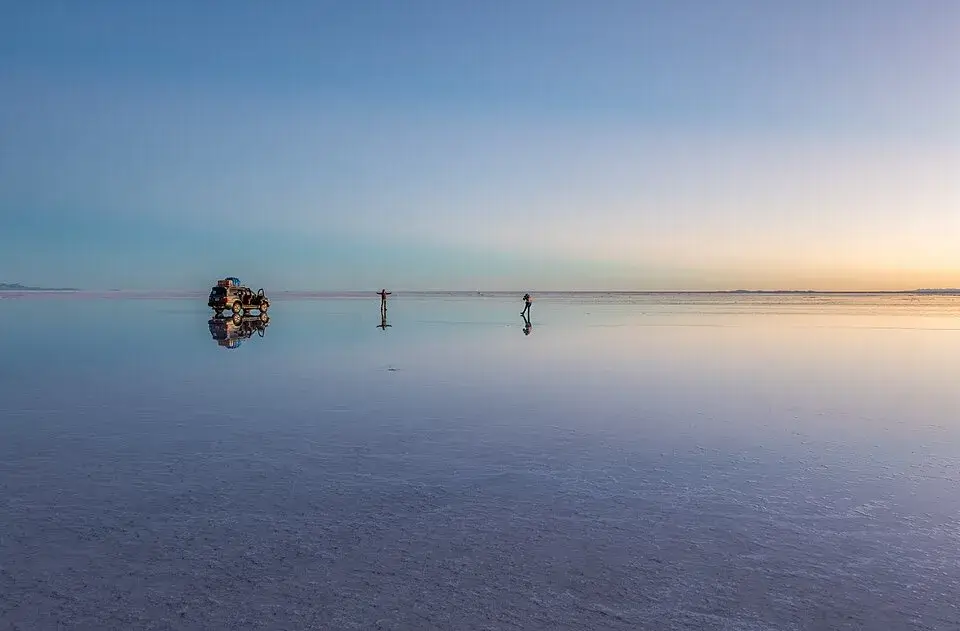
The Salar de Uyuni in Bolivia’s Altiplano covers roughly 10,580 km² at 3,650 m elevation and is capped by a metres-thick crust of nearly pure halite, replenished each rainy season. The Dead Sea, currently dropping more than a metre per year, is precipitating halite onto its floor at rates exceeding 10 cm annually (Lensky et al., 2005). On the Trucial Coast of the Persian Gulf, sabkha mudflats trap supratidal brines that crystallise interstitial halite among gypsum nodules.
Ancient versions of these systems produced the so-called salt giants, kilometre-thick halite bodies that punctuate the geological record. The Permian Zechstein Basin of northern Europe (about 258 Ma) underlies much of Germany, the Netherlands, and the southern North Sea. The Silurian Salina Group floors the Michigan and Appalachian basins. The Ediacaran-to-Cambrian Salt Range Formation of Pakistan supplies Khewra. The most dramatic salt giant of all, the Messinian evaporites of the Mediterranean (5.97–5.33 Ma), records the near-total desiccation of an ocean, discussed below.
Once buried, halite does something most rocks cannot: it flows. At temperatures above about 200 °C and pressures of a few hundred MPa, conditions reached at depths of around 3 km, rock salt deforms by dislocation creep and pressure-solution at strain rates relevant to geological time. Because halite is less dense than the overlying clastic sediments that typically bury it, the salt becomes buoyant and rises in pillows, walls, and diapirs. This is halokinesis, and it has the rheology of a very stiff toothpaste over million-year timescales. The salt domes of the Gulf of Mexico are one consequence of this slow, low-temperature flow. So are the offshore pre-salt plays of Brazil and West Africa, and the so-called salt glaciers of the Iranian Zagros, where extruded halite oozes downhill at centimetres per year under its own weight.
Notable localities
The classic European salt mines lie along a belt from the Salzkammergut to the Carpathians. Wieliczka and Bochnia in southern Poland have produced salt since the thirteenth century; Wieliczka reaches 327 m depth across nine levels and was inscribed on the very first UNESCO World Heritage List in 1978. Hallstatt and Hallein in Austria gave their names to the Hallstatt culture and were already commercial operations in the Bronze Age. Britain’s Cheshire and Cleveland brine fields supply the UK chlor-alkali industry. The Sicilian Messinian outcrops at Realmonte expose folded evaporites in walkable detail.
Pakistan’s Khewra Salt Mine, in the Salt Range of Punjab, is excavated into the Ediacaran-to-early-Cambrian Salt Range Formation. The Pakistan Mineral Development Corporation reports current output of around 350,000 tonnes per year of 98–99% pure halite and reserves of at least 82 million tonnes; this is the source of the pink rock retailed worldwide as “Himalayan salt.”
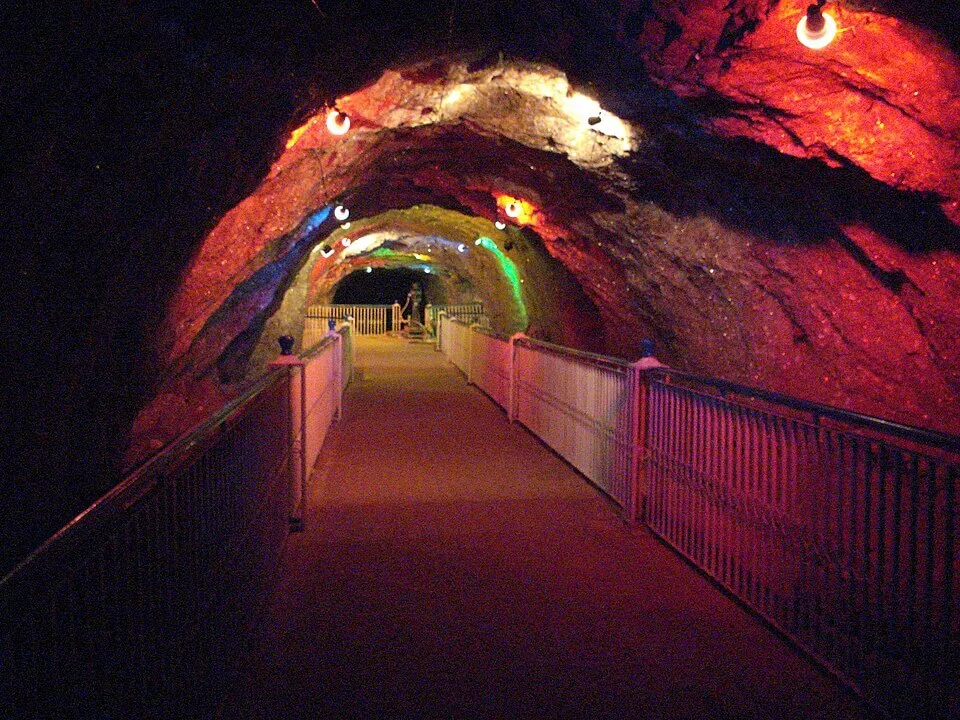
In North America, the Silurian Salina Group hosts the Detroit Salt Mine beneath Michigan, the Cargill operations at Avery Island (Louisiana), and the Sifto mine at Goderich, Ontario, which is the largest underground salt mine in the world. Operated by Compass Minerals, the Goderich workings extend about 1,800 feet (roughly 550 m) below the floor of Lake Huron and produce around seven million tonnes of road salt annually. Kansas hosts the public-tour Strataca mine at Hutchinson. Germany’s Asse and Gorleben salt domes have been pressed into service as radioactive-waste hosts, with mixed results discussed below.
The modern analogues sit on every continent: Salar de Uyuni (Bolivia), the Dead Sea, Lake Eyre (South Australia), Lake Assal (Djibouti, the saltiest large lake on Earth), and the Great Salt Lake (Utah).
Uses and economic importance
Salt is one of the few mineral commodities for which no economic substitute exists in most applications. The U.S. Geological Survey’s Mineral Commodity Summaries 2026 reports U.S. salt production of 40 million tons in 2025; 39 million tons were sold or used, at an estimated value of $2.6 billion, from 60 plants in 15 states. Global production runs at roughly 270–290 million tonnes per year, with China, the United States, India, Germany and Australia leading.
About 42% of U.S. salt consumption went into chemical feedstock in 2025, mostly chlor-alkali, with another 37% to highway de-icing, predominantly rock salt mined directly, though increasingly delivered as wet brine. The remainder splits among water softening, food preservation, animal nutrition, and miscellaneous industrial uses.
Halite has a second, less visible economic role: it builds storage. Salt is essentially impermeable to gas, and at depths of 500–1,500 m it creeps slowly enough to self-heal small fractures while remaining stable on engineering timescales. Solution-mined caverns in salt domes hold most of the U.S. Strategic Petroleum Reserve at Bryan Mound, Big Hill, West Hackberry, and Bayou Choctaw on the Gulf Coast. The same geology supports compressed-air energy storage (the Huntorf and McIntosh CAES plants), natural gas seasonal storage, and a fast-growing roster of green-hydrogen pilots. Recent reviews, for example, Liu et al. (2023, Energy Storage Materials) and the UK Environment Agency’s 2024 geomechanics report, describe a European and North American pipeline of cavern projects aiming at terawatt-hour-scale hydrogen storage by the 2030s.
Most controversially, halite hosts the only deep geological repository for radioactive waste currently operating anywhere in the world. The U.S. Waste Isolation Pilot Plant near Carlsbad, New Mexico, emplaces defence-related transuranic waste in rooms excavated 655 m (2,150 ft) into the Permian Salado Formation; it has been operating since 1999. Finland’s Onkalo, sited in 1.9-billion-year-old granite rather than salt, is in final commissioning and expected to begin emplacing spent reactor fuel in 2026, when it does, halite will share the role with crystalline rock. Germany’s Asse II mine, by contrast, became a cautionary tale when groundwater entered emplacement chambers in the 1990s and 2000s.
Fluid inclusions, ancient seawater, and the Messinian crisis
Halite is the geochemist’s time capsule. As cubes grow on the floor of an evaporite basin, microlitre volumes of the parent brine become trapped along growth zones as fluid inclusions. Crucially, halite cleaves rather than recrystallises under most diagenetic conditions, so these inclusions can preserve a chemical snapshot of seawater hundreds of millions of years old. Tim K. Lowenstein at SUNY Binghamton, with Lawrence A. Hardie, Michael Timofeeff, Sean Brennan, and Robert Demicco, used this property in a landmark 2001 paper in Science to reconstruct the Mg²⁺/Ca²⁺ ratio of Phanerozoic seawater. Their data show systematic oscillations between “aragonite seas” (Mg/Ca > 2, with present-day ratio near 5.2; Late Precambrian, Permian–Triassic, and the past ~40 Myr) and “calcite seas” (Mg/Ca < 2; Cambrian–Mississippian, Jurassic–Cretaceous) that track seafloor-spreading rates and the dominant carbonate mineralogy of marine fossils. Subsequent work by Mebrahtu Weldeghebriel and colleagues (2022, Earth and Planetary Science Letters) has extended the dataset to 2,618 inclusions spanning the Phanerozoic and terminal Proterozoic.
The most cinematic episode in evaporite geology is the Messinian Salinity Crisis. Between 5.97 and 5.33 Ma, the Mediterranean was largely cut off from the Atlantic and deposited roughly a million cubic kilometres of evaporites, including a kilometre-thick halite layer in the deep basins. Wout Krijgsman, Frits Hilgen, Isabella Raffi, Francisco Sierro, and Douglas Wilson nailed the chronology in a 1999 Nature paper, dating the onset at 5.96 ± 0.02 Ma. The drivers, tectonic constriction at Gibraltar versus glacio-eustatic sea-level fall, remain debated; recent syntheses by Marco Roveri et al. (2014, Marine Geology) and the 2024 Nature Reviews Earth & Environment review by García-Castellanos and colleagues argue for tectonic restriction as the dominant control, modulated by orbital climate cycles. The crisis ended catastrophically with the Zanclean Flood, when the Atlantic broke through the Gibraltar sill and refilled the basin within perhaps a few thousand years.
Varieties and related species
Halite has surprisingly few formal varietal names. The most commercially loaded is Himalayan pink salt from Khewra, whose colour reflects iron oxide impurities and trace polyhalite, not the Himalayas (the deposit lies in the Salt Range, hundreds of kilometres south of the Himalayan front). Blue halite, the Stassfurt, Kłodawa, and Saskatchewan specimens prized by collectors, owes its colour to radiation-induced Na nanoparticles, as described by Calas, Galoisy and Geisler (2021).
Within evaporite sequences halite keeps consistent company. Sylvite (KCl, also halite-structure) is its potassium analogue and the principal ore of potash. Carnallite (KMgCl₃·6H₂O) and bischofite (MgCl₂·6H₂O) precipitate later in the evaporation sequence. Polyhalite (K₂Ca₂Mg(SO₄)₄·2H₂O) and kainite add sulfate complexity. Earlier-stage gypsum (CaSO₄·2H₂O) and its dehydrated equivalent anhydrite are usually the bedfellows of halite at the bottom of an evaporite stack. Below −0.1 °C, halite crystallises with water as hydrohalite, NaCl·2H₂O, common in cold-climate fluid inclusions.
What’s still being argued about
Halite still raises questions that haven’t been settled. The strangest involves a bacterium. In 2000, Russell Vreeland, William Rosenzweig and Dennis Powers reported in Nature that they had cultured a spore-forming microbe, strain 2-9-3, from a brine inclusion in 250-million-year-old Salado Formation halite at the WIPP site. If the age were accepted, it would be the oldest viable organism ever revived. The trouble came a year later, when Dan Graur and Tal Pupko (2001, Molecular Biology and Evolution) compared the strain’s 16S rRNA gene to a modern Virgibacillus from the Dead Sea and found the two essentially identical, implausibly so for lineages that had supposedly diverged in the Permian. Satterfield and colleagues (2005, Geology) defended the geological integrity of the inclusions, but the phylogenetic critique has never gone away. The episode is a useful reminder that taphonomic possibility and statistical likelihood are different questions.
A less exotic but more economically loaded question concerns how salt caverns will cope with hydrogen. Caverns that have buffered natural gas for decades cycle two or three times a year. Hydrogen caverns will be expected to cycle dozens of times, potentially weekly, to balance intermittent renewables. The geomechanics of repeated rapid loading on a viscoplastic material, combined with microbial sulphate-reduction at impurity grains and the embrittlement of wellbore steels by H₂, is a research front still being staked out, active papers in International Journal of Hydrogen Energy, Energy Storage Materials and Earth-Science Reviews through 2023–2025.
And then there’s Mars. NASA’s Curiosity rover has detected chlorine-rich phases consistent with halite in bedrock and at vein margins in the Murray formation of Gale crater (Thomas et al., 2019, Geophysical Research Letters). Together with perchlorate detections by the Sample Analysis at Mars instrument and the Phoenix lander, and with Martín-Torres and colleagues’ 2015 evidence for transient night-time brines (Nature Geoscience), halite has become part of the case for episodic liquid water on the modern Martian surface, and a reason to think the planet has its own evaporitic past waiting to be read.