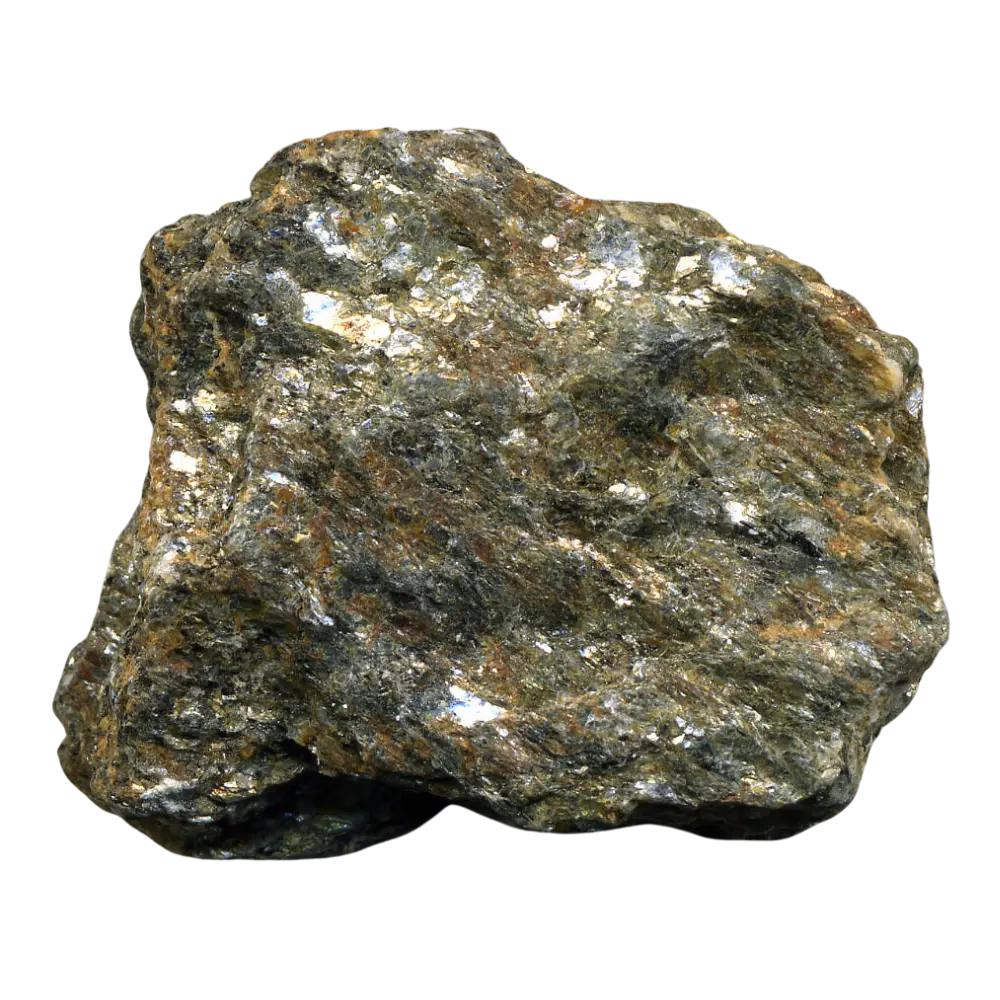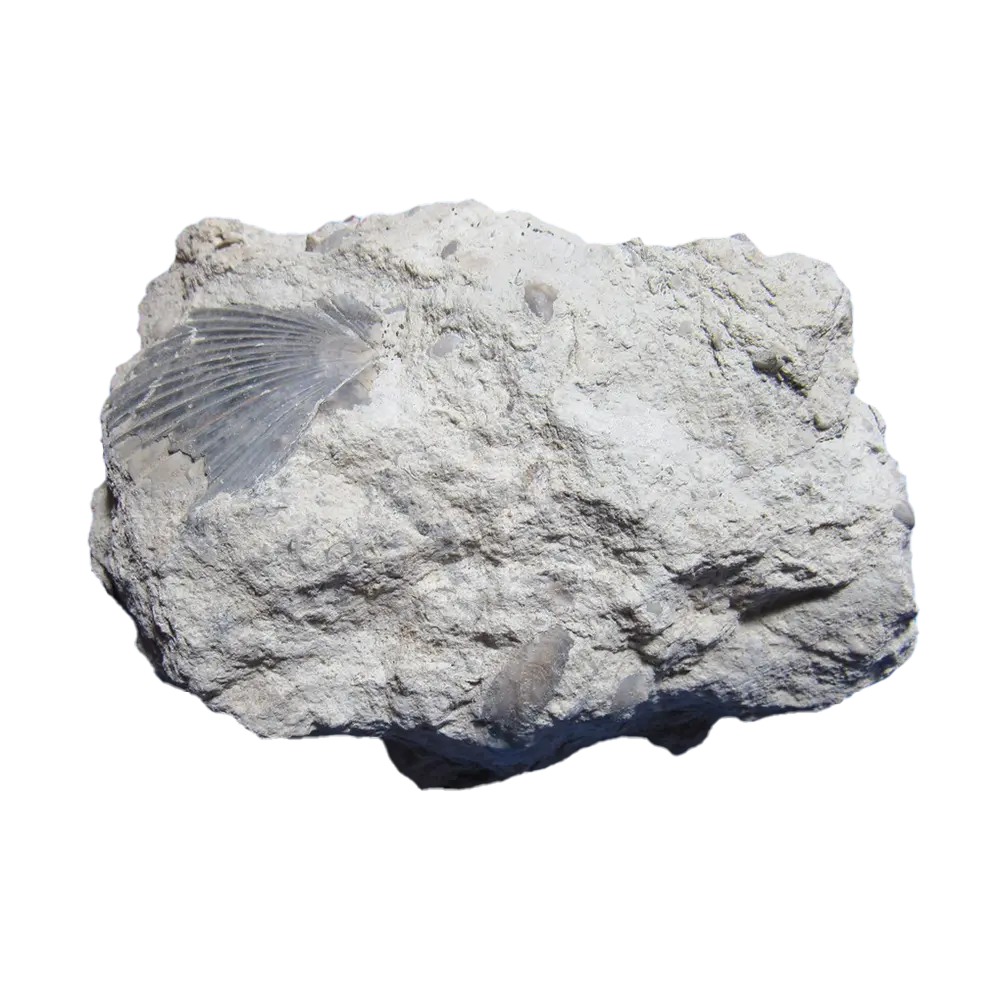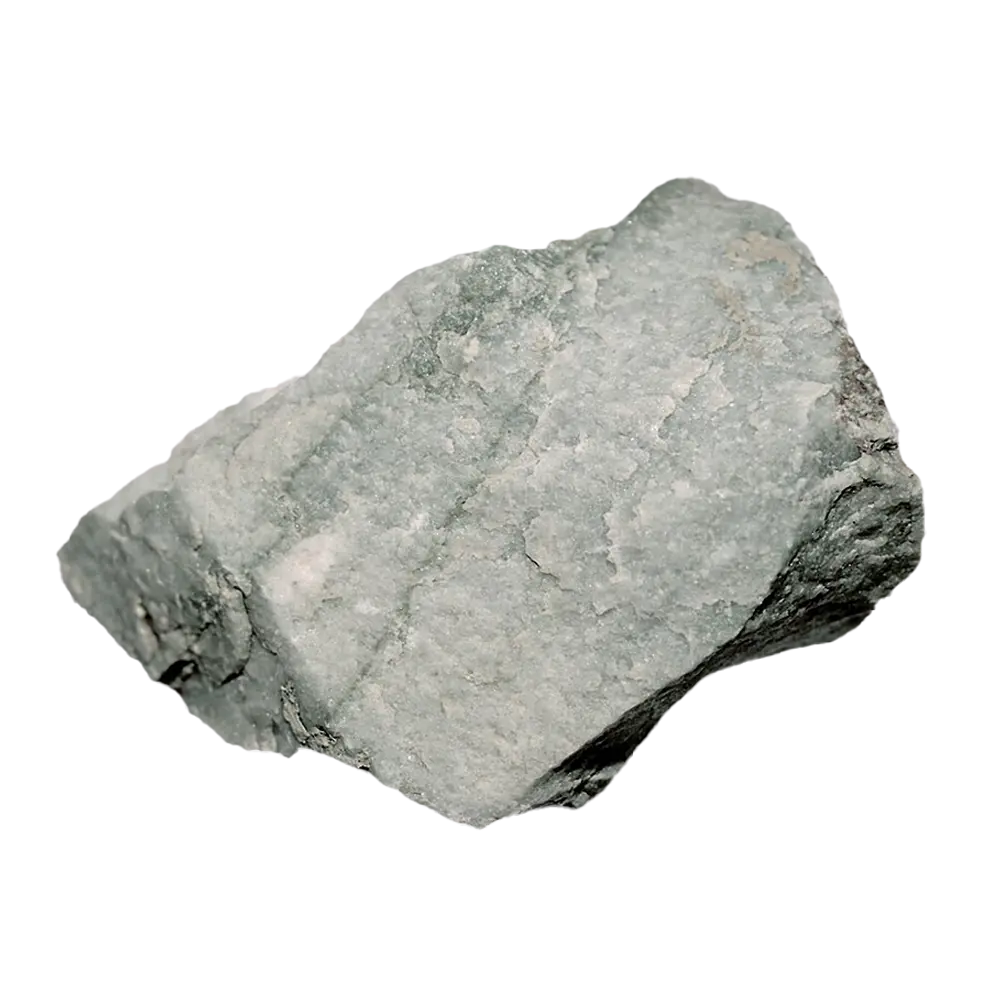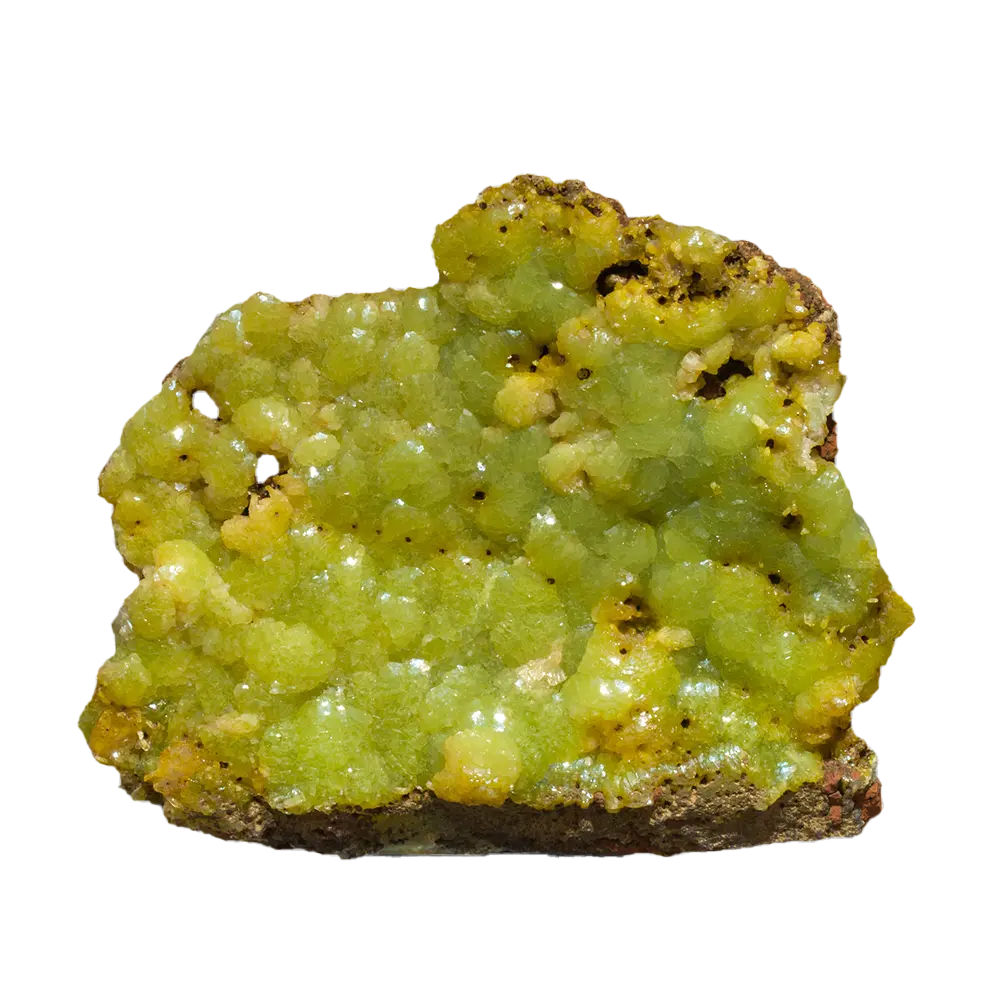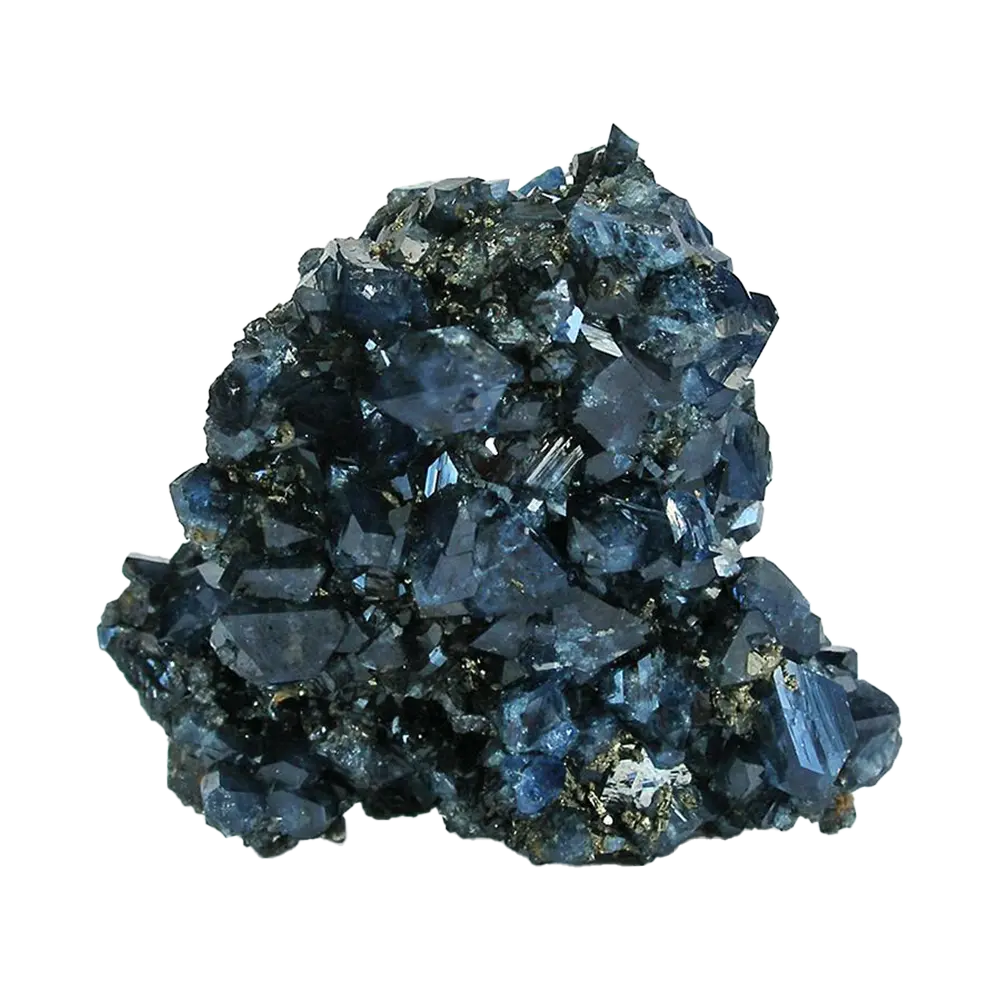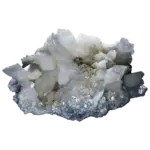
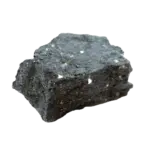
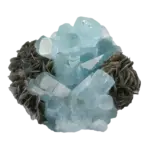
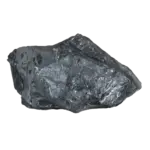
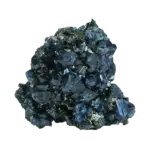
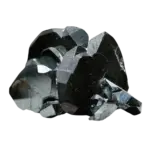
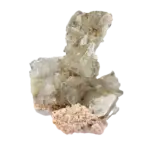
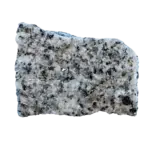
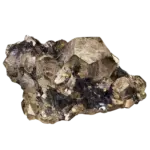
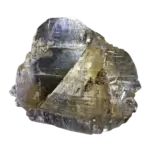
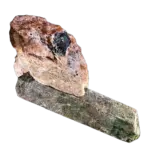
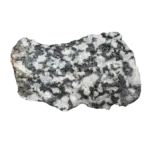
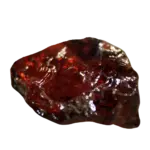
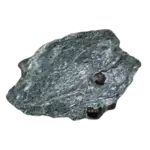
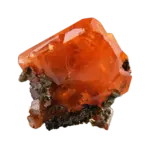
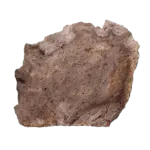
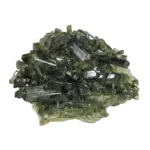
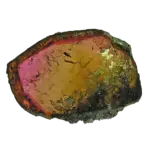
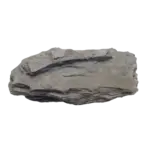
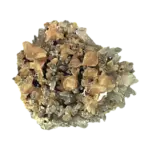
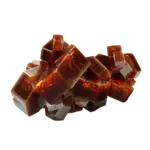
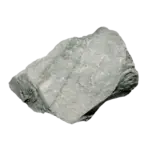
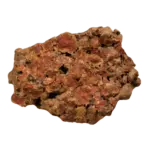
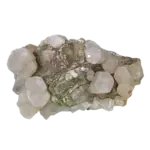
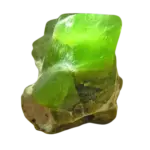
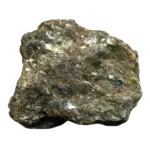
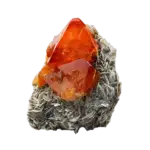
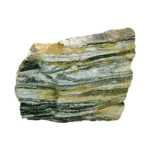
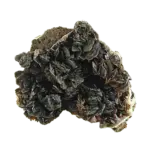
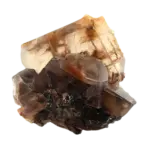
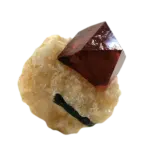
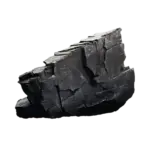
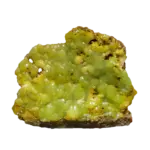
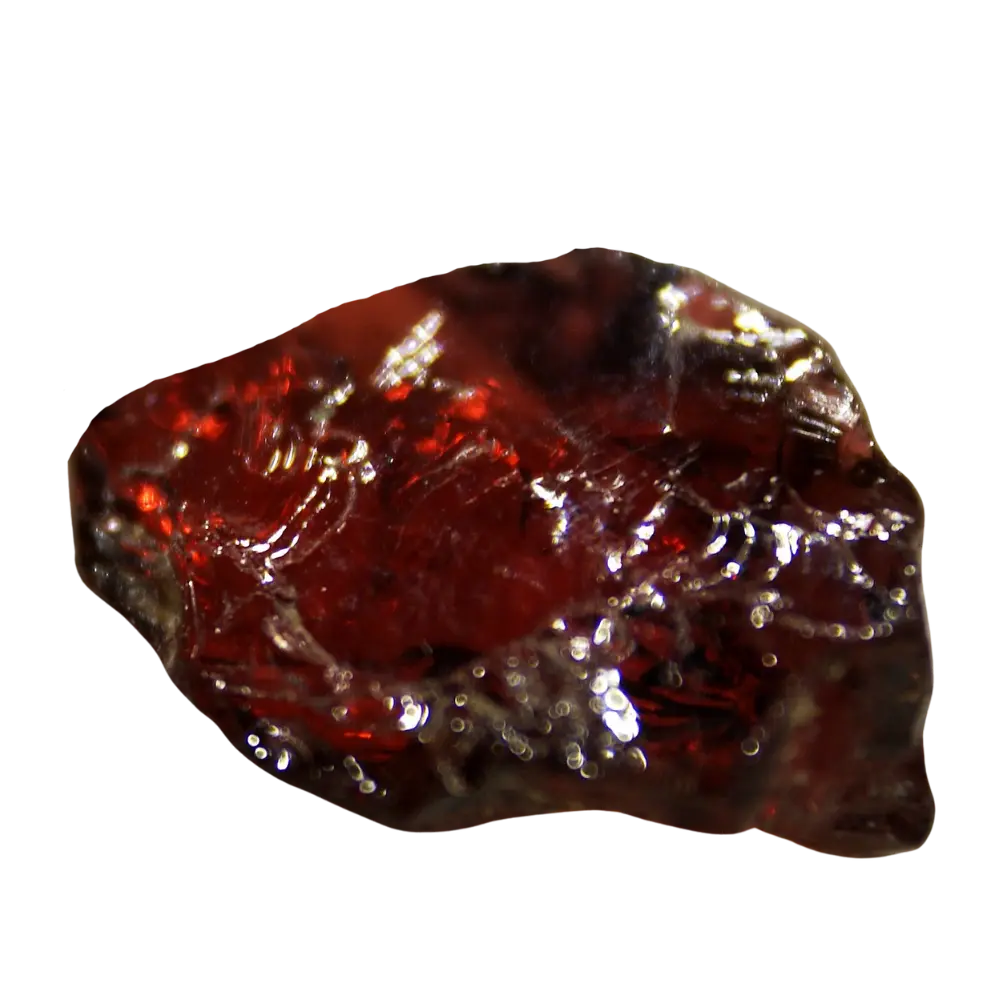
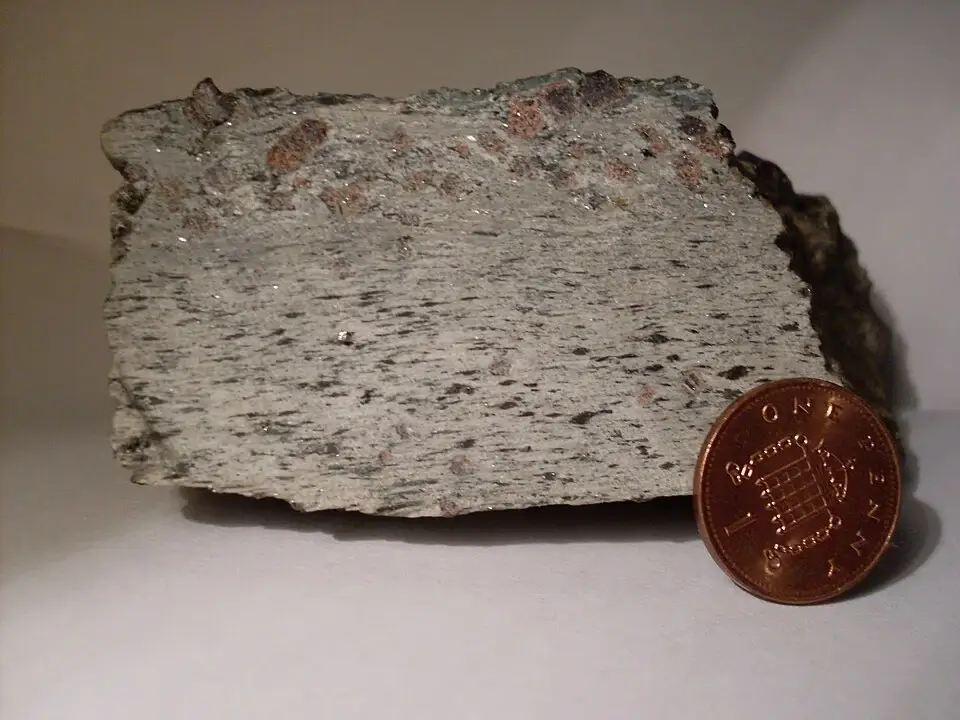
Walk a roadcut in central Connecticut and you will find them: deep red dodecahedra the size of peas, sometimes the size of plums, sitting in grey mica schist like fruit pressed into pastry. They are almandine, Connecticut’s state mineral. They are also instruments. Each grew at a specific temperature and pressure, locking that record into zoned chemistry that survived the long ride back to the surface. Garnet does this almost everywhere it forms: which is why mineralogists love it, and why a piece of jewellery on a January birthday is, in a quieter sense, a barometer that you can hold in your hand.
What is garnet?
Garnet is a group of cubic silicate minerals that share a single structural template but vary widely in chemistry and colour, from deep red and orange to bright green, and occasionally black. The supergroup is built on isolated SiO4 tetrahedra with the general formula {X3}Y2φ12, and includes 32 approved species (Grew et al., 2013), of which six end-members account for almost all the garnet you will meet in the field. The X site is eight-coordinated and typically holds Ca, Mg, Fe2+ or Mn2+; the Y site is octahedral and holds Al, Fe3+, Cr3+ or V3+; the Z site is tetrahedral and is usually Si. Most species crystallise in space group Ia-3d.
The six end-members you actually meet in rocks are pyrope, almandine and spessartine (the three aluminium garnets, sometimes called the pyralspite series) and grossular, andradite and uvarovite (the three calcium garnets, often called the ugrandite series). Grew et al. retired pyralspite and ugrandite as formal divisions in 2013, but the terms remain useful shorthand among petrologists.
Chemistry and crystal structure
Garnet’s structure is a three-dimensional cage of corner-sharing octahedra and tetrahedra. Each octahedron shares its six corners with tetrahedra, each tetrahedron shares its four corners with octahedra, and the larger metal cations sit in the cavities. The cage is dense and exceptionally stable. Garnet survives weathering and sedimentary transport, and in metamorphic rocks it often outlasts the retrograde overprints that consume softer minerals on the way back to the surface.
In {X3}[Y2](Z3)φ12, the anion φ is normally O2−, but in hydrogarnets it is OH− (the so-called hydrogrossular and katoite substitution, with 4H+ replacing Si4+) and in a few rare species it is F−. The classical silicate garnets give the six end-member formulae used in every petrology textbook:
- Pyrope Mg3Al2(SiO4)3
- Almandine Fe2+3Al2(SiO4)3
- Spessartine Mn2+3Al2(SiO4)3
- Grossular Ca3Al2(SiO4)3
- Andradite Ca3Fe3+2(SiO4)3
- Uvarovite Ca3Cr2(SiO4)3
Almost no natural garnet is a pure end-member; most are solid solutions of three or four components. The naming convention used by the IMA is straightforward, whichever end-member contributes the largest mole fraction supplies the species name.
Physical properties
Garnet hardness sits between 6.5 and 7.5 on the Mohs scale, with the iron- and manganese-rich aluminium garnets at the harder end (almandine reaches 7.5) and the calcium garnets a little softer (grossular and andradite typically 6.5–7). Specific gravity climbs from 3.58 for pure pyrope to 4.32 for almandine, with andradite at 3.86, uvarovite at 3.83, grossular near 3.59 and spessartine around 4.19. There is no true cleavage. Fracture is conchoidal to uneven, lustre is vitreous to resinous, streak is white, and the typical crystal habit is the rhombic dodecahedron, the trapezohedron, or a combination of the two.
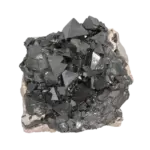
Colour follows chemistry. Almandine and pyrope are red because of Fe2+; spessartine is orange because of Mn2+; uvarovite and tsavorite (Cr- and V-bearing grossular) are green because of Cr3+ and V3+; demantoid is green because of trace Cr3+ in andradite; melanite is black because of Ti4+ and Fe3+.
| Property | Value (range across species) |
|---|---|
| Crystal system | Cubic, space group Ia-3d (tetragonal exceptions: henritermierite, holtstamite) |
| Mohs hardness | 6.5–7.5 |
| Specific gravity | 3.58 (pyrope) – 4.32 (almandine) |
| Refractive index | 1.71 (pyrope) – 1.89 (demantoid) |
| Cleavage | None; conchoidal to uneven fracture |
| Lustre | Vitreous to resinous |
| Streak | White |
| Habit | Rhombic dodecahedron, trapezohedron, combinations; massive granular |
| Approved supergroup species | 32 (Grew et al., 2013) |
How does garnet form?
The garnet group is a mineral family that appears in essentially every major rock environment.
Regional metamorphism
Almandine is the canonical metamorphic garnet. It appears in pelitic schists and gneisses across the amphibolite facies (roughly 500–700 °C, 0.4–1.0 GPa) and persists into granulite facies above 700 °C. In eclogite-facies rocks subducted to depths beyond 50 km, corresponding to pressures above about 1.5 GPa at 500–800 °C, garnet becomes a dominant phase, partnered with omphacitic clinopyroxene. The “garnet zone” of Barrovian metamorphism in the Scottish Highlands gave geology one of its earliest and most durable index minerals.
Contact metamorphism and skarns
Grossular and andradite are the skarn garnets, growing where calcium-rich rocks (limestones, marbles) meet hot, silica- and iron-rich fluids from an intruding pluton. The famous green grossular crystals of Asbestos, Quebec and the deep red hessonite of Italy’s Val d’Ala both formed this way.
Igneous environments
Pyrope is the mantle garnet. It crystallises in peridotite and eclogite at depths greater than about 60 km, and chrome-pyrope from kimberlite xenoliths is the standard indicator mineral that diamond explorers screen for in stream sediments. Spessartine is the granitic-pegmatite garnet, forming clean orange crystals in manganese-rich felsic melts. Almandine also turns up as an accessory in some peraluminous granites and rhyolites.
Sedimentary and hydrothermal
Because garnet is dense and chemically inert, it survives long sedimentary journeys. Detrital garnet concentrates in heavy-mineral placers from Indian and Australian beaches to Alaskan rivers, the same deposits that supply most of the world’s industrial garnet abrasive. True hydrothermal garnet is less common but well documented, including the Cr-bearing andradite (demantoid) of serpentinite-hosted veins in the central Urals.
Notable localities
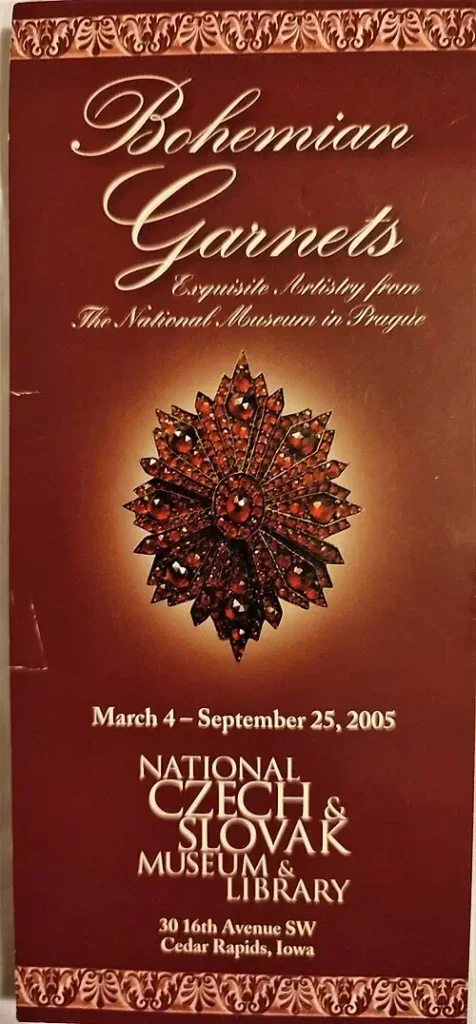
The classical European pyrope locality is the České Středohoří highlands of Bohemia in the Czech Republic, particularly the Podsedice deposit south of the range, where Plio-Pleistocene gravels concentrate Cr-bearing pyrope originally carried to the surface by Cenozoic alkaline volcanics that sampled garnet peridotite at depth. The stones have been worked since at least the sixteenth century and were the favoured red gem of Habsburg court jewellery. Smaller pyrope localities run through southern Africa’s kimberlite fields, the Dora-Maira massif of the western Alps (where ultrahigh-pressure metamorphism produced near-pure pyrope megablasts up to 25 cm across), and the well-known “ant-hill garnets” of the Navajo Nation in Arizona, picked from the spoil piles of harvester ants working over mantle xenoliths.
Almandine’s name traces to Alabanda, a town in ancient Caria (modern Türkiye) where Pliny the Elder noted the trade. The textbook almandine localities are the schists of Connecticut and Alaska’s Wrangell-Garnet Ledge, the dodecahedra of the Zillertal in Austrian Tyrol, and the gem gravels of Sri Lanka and India’s Orissa and Rajasthan. Spessartine takes its name from the Spessart Mountains of Bavaria, formally proposed by François Sulpice Beudant in 1832; today the major gem production comes from Ramona in California, Madagascar, Nigeria and the Tongbei pegmatites of Fujian, China.
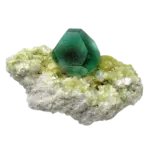
Grossular’s standout variety is tsavorite, the chromium- and vanadium-coloured green grossular from the Tsavo region straddling the Kenya–Tanzania border and from the Merelani Hills of Tanzania. Andradite gives us demantoid, found in the early 1850s along the Bobrovka River in Russia’s central Urals and identified as a chromium-bearing andradite by the Finnish mineralogist Nils Gustaf Nordenskiöld, who announced the find to the St. Petersburg Mineralogical Society in 1864. Russian demantoid is famous for its diagnostic “horsetail” inclusions of fibrous byssolite or chrysotile radiating from a chromite core, a feature so distinctive that it raises rather than lowers the value of the stone. Uvarovite, the rarest of the six common end-members, occurs as bright emerald-green druzes on chromitite, classically at Outokumpu in Finland and in the Saranovskii mine of the Urals. The state gemstone of Idaho is a star garnet, an almandine with rutile or sillimanite inclusions that produce four- or six-rayed asterism.
Varieties
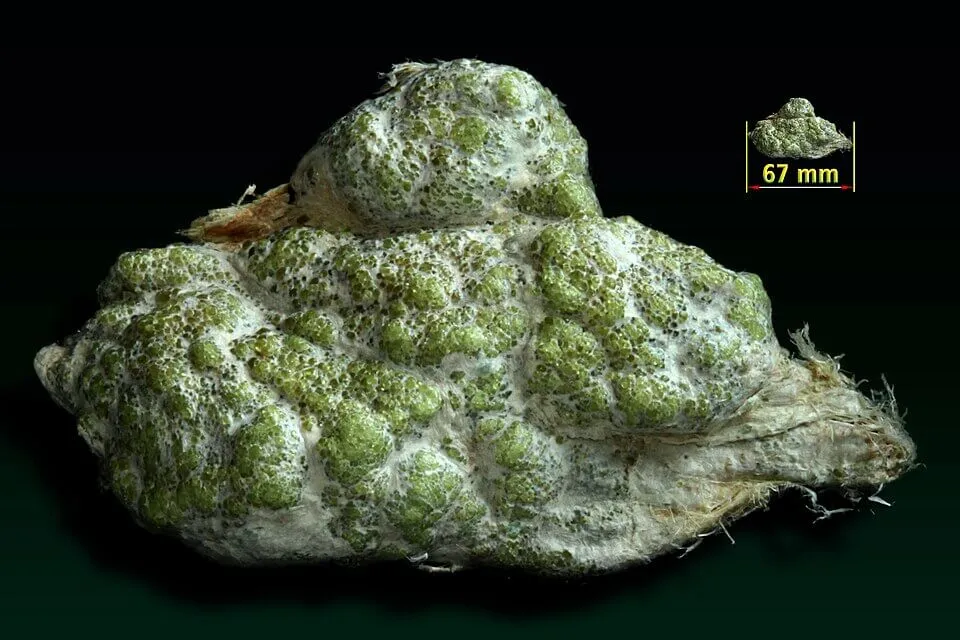
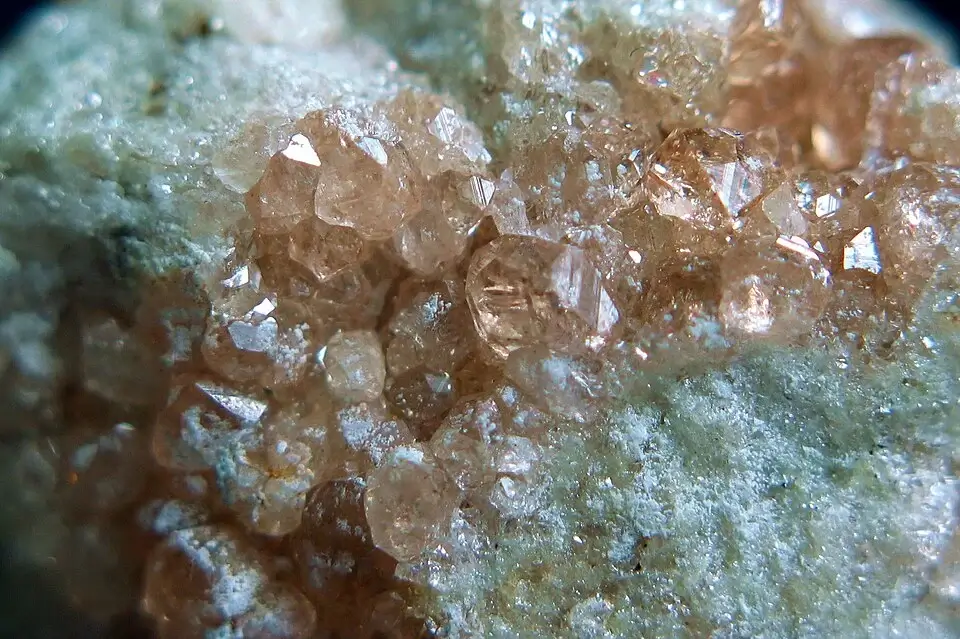
Beyond the six end-members, gemmologists use a thicket of trade names. Rhodolite is a pyrope-almandine solid solution near two-parts-pyrope to one-part-almandine, prized for its raspberry colour. Malaya (or Malaia) garnet is a pyrope-spessartine blend from the Umba Valley of Tanzania. Colour-change garnets, almost always pyrope-spessartine, shift from blue-green in daylight to red under incandescent light because of paired Cr3+ and V3+ absorption windows.
Among the andradites, demantoid is the green Cr-bearing variety, topazolite is the yellow Ti-bearing variety and melanite the black Ti-rich one. Hessonite is the cinnamon-orange Fe-bearing grossular, famously from Sri Lanka. Mali garnet is a grossular-andradite intermediate from the Sandaré region of Mali, with unusually high dispersion. Hydrogrossular, in which (OH)4 replaces SiO4, occurs as massive pink-to-green material in South African rodingites and is sometimes sold as “Transvaal jade”.
The non-silicate-dominant species in the Grew et al. supergroup get less airtime in popular accounts but matter for nomenclature. Schorlomite is the Ti-rich, Si-poor cousin of andradite. Henritermierite, with significant Mn3+ and (OH), is one of the two officially tetragonal garnet species. The bitikleite and berzeliite groups extend the supergroup into Sb-, Zr- and As-bearing chemistries that lie well outside the gem trade.
Uses and significance
Industrial garnet, almost always almandine, alluvial or hard-rock, is the workhorse abrasive in waterjet cutting, sandblasting, water filtration and coated-abrasive papers. The U.S. Geological Survey’s Mineral Commodity Summaries 2024 sheet records U.S. consumption of about 210,000 tonnes in 2023, with U.S. domestic mine production accounting for roughly 7% of world output; the major producing nations are India, Australia, China, the United States and South Africa. Global production sits on the order of one to two million tonnes per year. Almandine’s combination of Mohs ~7.5, specific gravity ~4.1 and semi-friable fracture (it breaks into fresh, sharp edges as it works) makes it nearly ideal for the trade.
Garnet has been a gemstone since the Bronze Age. Predynastic Egyptian jewellery contains almandine beads and inlays; the Anglo-Saxon cloisonné of Sutton Hoo is set with Indian and Sri Lankan garnet shipped along Late Antique trade routes; the “carbuncle” of Pliny the Elder and the King James Bible refers to red almandine or pyrope. Carl Fabergé built green demantoid into Imperial jewellery in the late nineteenth century. Today’s high-end market is led by demantoid and tsavorite, both routinely fetching thousands of dollars per carat for fine stones.
Prices span four orders of magnitude. Bulk faceted almandine sells by the gram and rarely exceeds a few dollars per carat. Rhodolite, spessartine and well-cut hessonite occupy the middle range, from tens to a few hundred dollars per carat. Russian demantoid with diagnostic horsetail inclusions and East African tsavorite of fine colour and clarity routinely sell for two to ten thousand dollars per carat in retail, with exceptional stones above three carats reaching tens of thousands. The highest per-carat prices in the garnet market belong to fine Russian demantoid above five carats and to top-colour East African tsavorite, both of which can exceed ten thousand dollars per carat at retail.
Garnet is also a geobarometer and geothermometer. Pressures and temperatures of metamorphism are routinely calculated from element partitioning between garnet and biotite (the Garnet-Biotite thermometer) or between garnet and clinopyroxene (the Garnet-Clinopyroxene Fe-Mg exchange thermometer used in eclogite work). The GASP equilibrium (garnet–aluminosilicate–quartz–plagioclase) provides another standard barometer. Garnet zoning preserves the P-T-t path of an entire orogenic event in a single crystal a few millimetres across. Lu–Hf and Sm–Nd radiometric dating of garnet, pioneered for Alpine high-pressure rocks by Stéphanie Duchêne and colleagues in a 1997 Nature paper and now used routinely on individual growth zones, dates metamorphic events directly rather than via the indirect zircon U-Pb route. As Baxter, Caddick and Ague put it in their 2013 review in Elements: garnet is a common mineral that turns out to be uncommonly useful.
How to identify garnet in hand specimen
Three diagnostics get you most of the way. First, equant crystal habit: a well-formed rhombic dodecahedron or trapezohedron with no cleavage planes essentially rules out everything except garnet and (rarely) leucite. Second, hardness around 7, garnet scratches quartz with a little effort and is scratched by topaz. Third, density: garnet is noticeably heavy in the hand, with specific gravity routinely above 3.5.
Colour gives you the species in most field settings. Deep wine-red crystals in mica schist or gneiss, in association with biotite, muscovite, staurolite or kyanite, are almandine. Bright red to violet-red crystals in peridotite, serpentinite or kimberlite are pyrope. Orange crystals in a pegmatite, with smoky quartz and microcline, are spessartine. Green or cinnamon crystals in a marble or calc-silicate skarn are grossular. Green druses on chromitite are uvarovite. Black equant crystals in alkaline syenites are melanite. In thin section, all common garnets show very high relief and go isotropic (extinct) under crossed polars, a near-unique diagnostic among the rock-forming silicates.
What remains uncertain or actively researched
The supergroup itself is still moving. Grew et al.’s 2013 nomenclature accommodated 32 species, and a handful of further candidates are working through CNMNC approval. There is ongoing debate about whether some Ti- and Zr-rich garnet compositions deserve their own root names or are best treated as solid solutions of approved species.
A more fundamental question is whether garnet is always cubic. In 2019, Bernardo Cesare and colleagues at the University of Padova reported in Scientific Reports that common (Fe-Mg-Ca-Mn) garnet from low-temperature, high-pressure blueschists (the Franciscan Complex in California and equivalents in Corsica and the Italian Alps) and from greenschist-facies phyllites grows initially as a tetragonal mineral, not cubic, and that the cubic structure is acquired only at higher temperatures. The implication is that classical assumptions about garnet thermodynamics and element partitioning may need revising for low-grade rocks — a not-trivial correction for any geobarometry exercise that crosses the greenschist boundary.
The deep mantle is the third active front. Majoritic garnet, in which Si enters octahedral coordination at pressures above about 7 GPa, dominates the lowermost upper mantle and the transition zone, from roughly 250 km down to 660 km.
Inclusions of majoritic garnet in superdeep diamonds from Jagersfontein in South Africa and Juína in Brazil have been used as natural pressure gauges. Trevor Collerson and colleagues (2010, Geochimica et Cosmochimica Acta) showed that Jagersfontein majoritic inclusions yield pressures of 16.9–22.3 GPa, firmly in the transition zone. More recently, I. Koemets and co-workers (2020, American Mineralogist) measured the elastic properties of natural majoritic garnet inclusions and argued that monomineralic majorite layers in the transition zone, if they exist, should produce a detectable seismic signature. Whether such layers are widespread, and what they would tell us about subducted oceanic crust storage, is an open question.
For a mineral that most people know only as a January birthstone, garnet has done a remarkable amount of work in modern Earth science. It records the pressure and temperature of metamorphism, and can be directly dated, all from a single crystal a few millimetres across. The red stone in a Victorian brooch and the inclusion in a Brazilian superdeep diamond are members of the same supergroup, separated by 600 kilometres of vertical relief and 1.5 billion years of geological history.
Frequently asked questions
Is garnet a precious or semi-precious stone? Garnet is classed as a semi-precious stone in the modern trade, though the precious/semi-precious split is a nineteenth-century commercial convention rather than a mineralogical one. Fine demantoid and tsavorite can fetch several thousand dollars per carat, comfortably above the price of many stones the trade still calls “precious.”
Is garnet the January birthstone? Yes. Garnet is January’s modern birthstone, and the association is much older than the current Jewelers of America list, it appears in European birthstone tables dating to the medieval period.
Is garnet rare? As a mineral group, garnet is common; it occurs in nearly every major rock environment on Earth. As a gemstone, it ranges from abundant (everyday red almandine and pyrope) to among the rarest coloured stones in the trade (Russian demantoid and East African tsavorite of fine quality).
How do you identify garnet? Look for equant dodecahedral or trapezohedral crystals with no cleavage planes, a Mohs hardness near 7 (scratches quartz, is scratched by topaz), and noticeable heft for the crystal size. Deep red in mica schist is almandine; red-violet in peridotite is pyrope; orange in pegmatite is spessartine; green in marble is grossular.
What gives garnet its colour? Chemistry. Iron and magnesium give the deep reds (almandine, pyrope), manganese gives orange (spessartine), trace chromium and vanadium give the greens (uvarovite, tsavorite, demantoid), and titanium gives black (melanite).