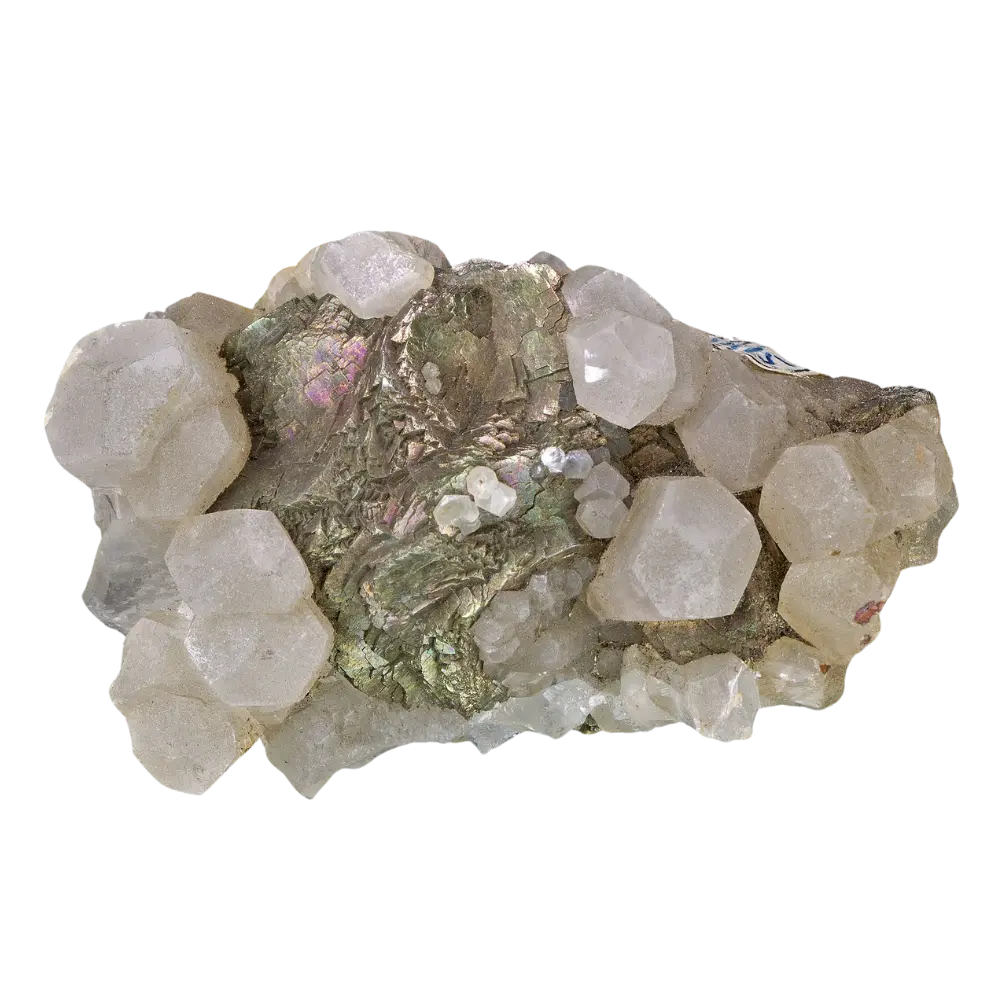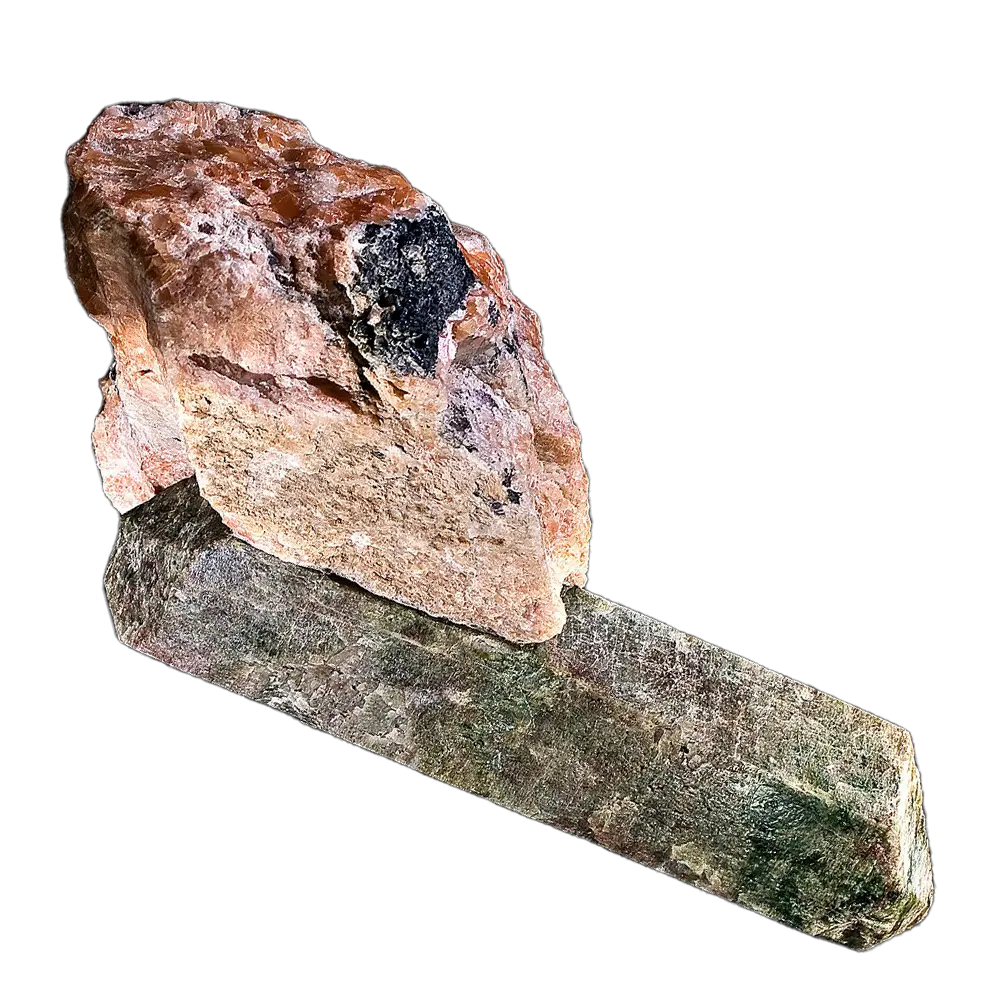


Granite: Formation, Minerals, Types, and Uses
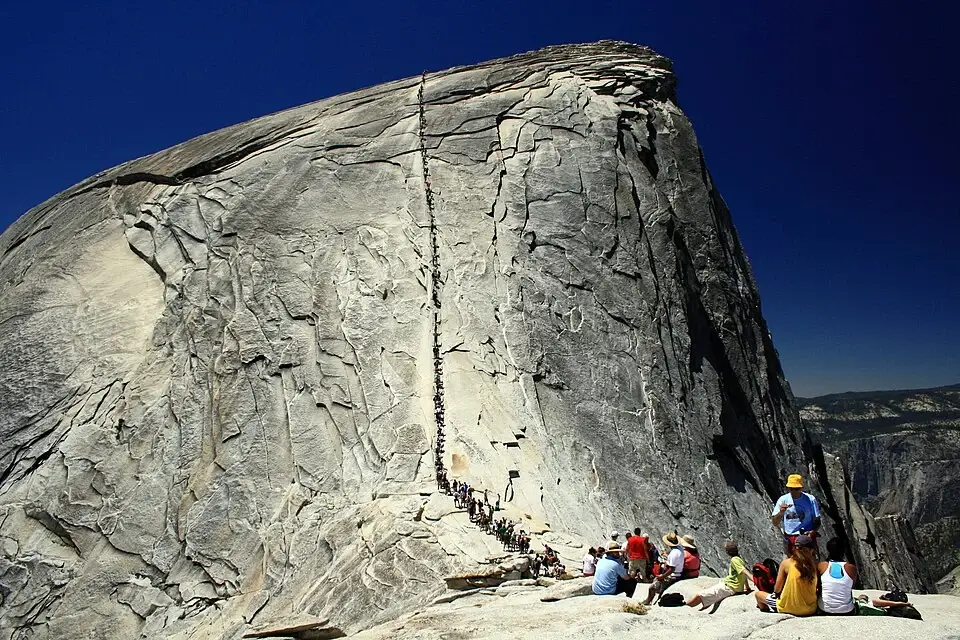
Stand at the foot of Half Dome in Yosemite Valley and you are looking at a kilometres-thick exposure of plutonic rock that crystallised between roughly 93 and 90 million years ago, kilometres beneath a Cretaceous volcanic arc. Most visitors call it granite. A petrologist would say granodiorite. The slippage between the everyday word and the strict mineralogical definition is part of what makes granite one of the most studied and most argued-about rocks in geology.
What is granite?
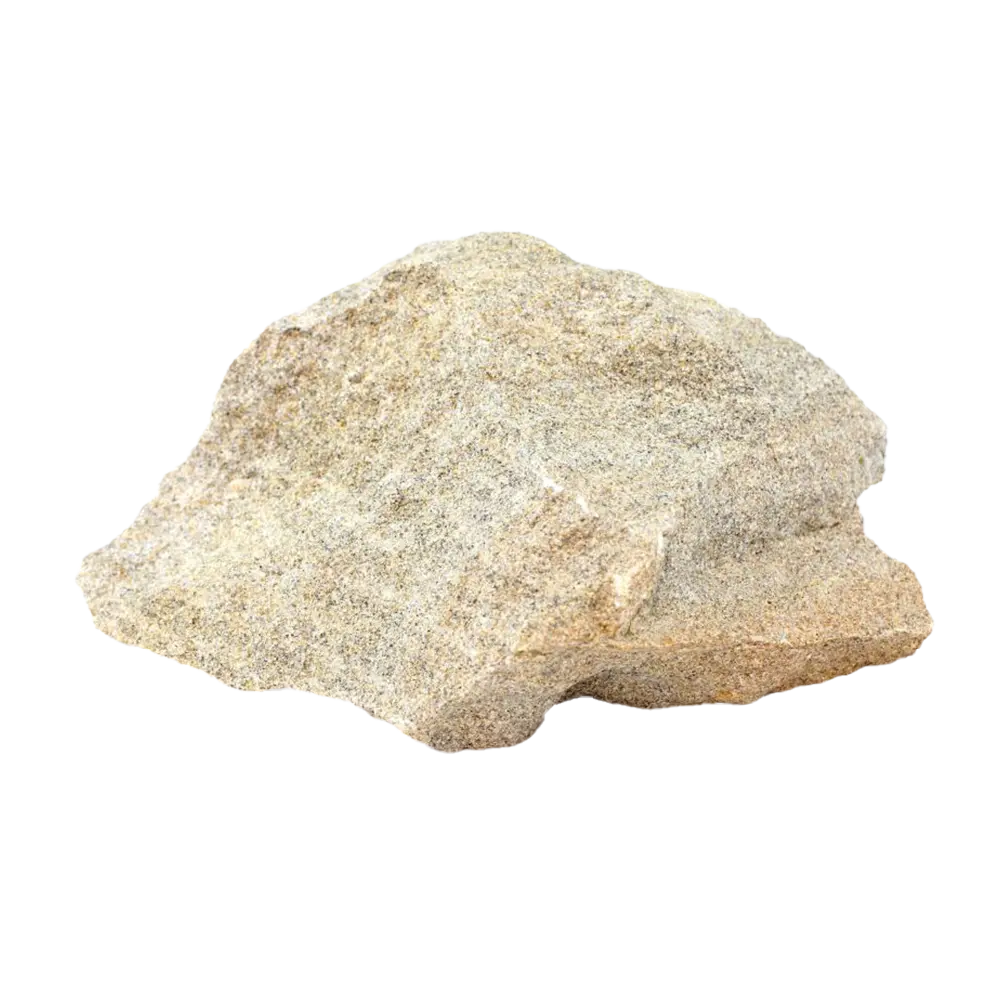
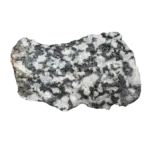
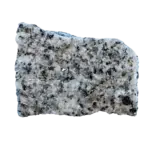
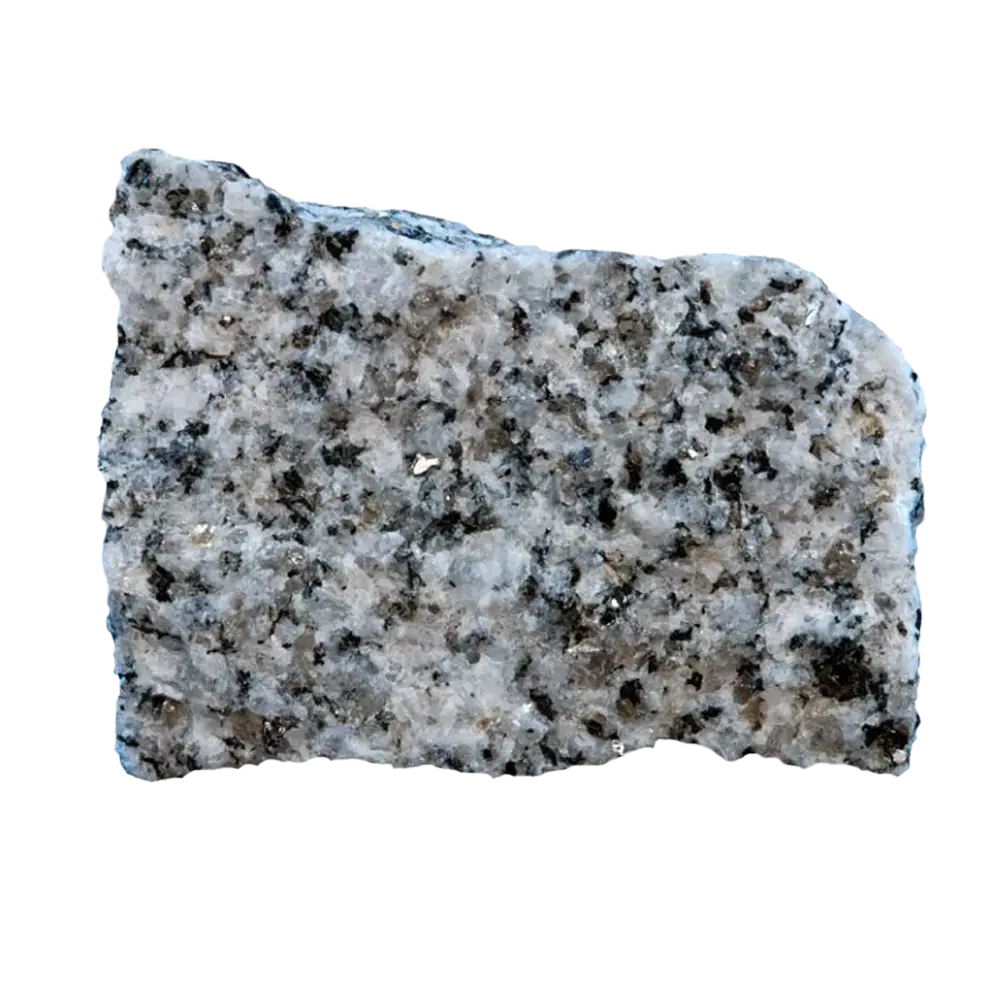
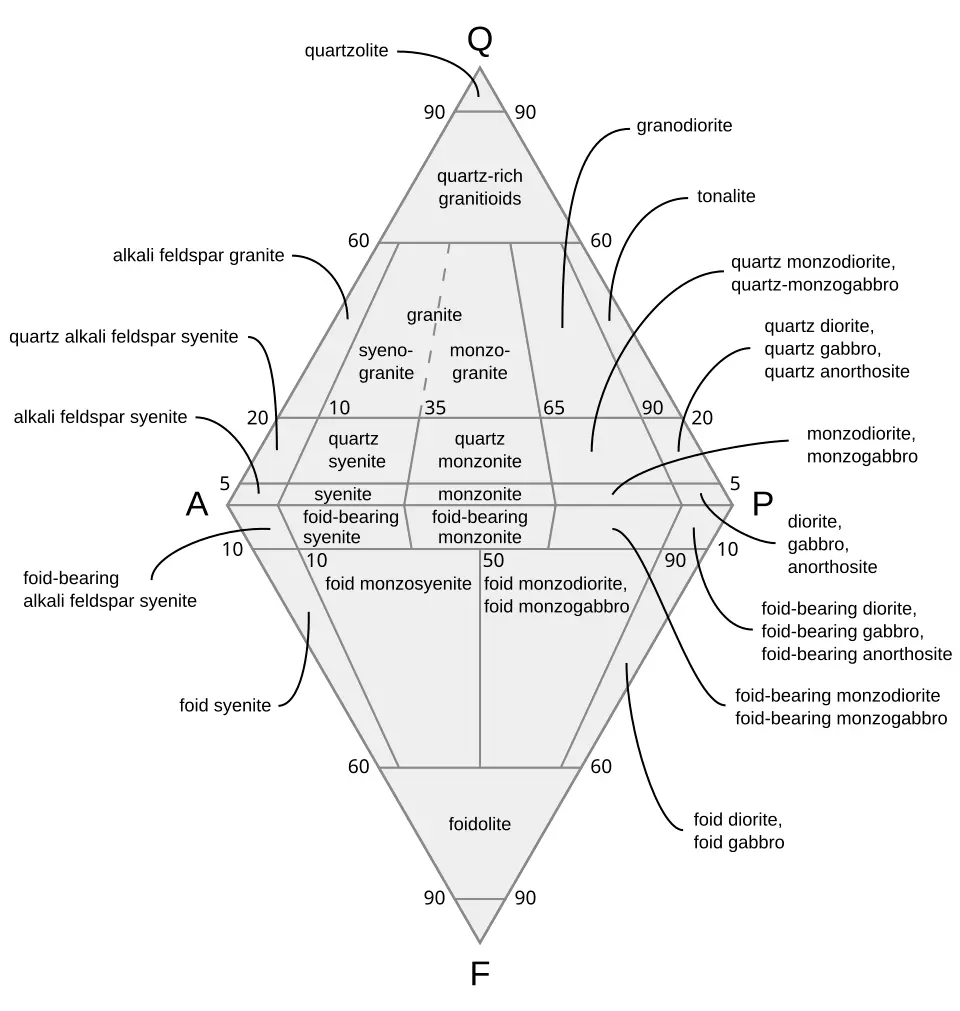
Granite is a coarse-grained, felsic, plutonic igneous rock dominated by quartz, alkali feldspar, and plagioclase. Under the IUGS QAPF classification of Streckeisen (1976), true granite contains 20–60 % quartz by volume, with alkali feldspar making up 35–90 % of the total feldspar. It crystallises slowly at depth from silica-rich magma, giving it a phaneritic, interlocking texture.
The word comes from the Latin granum, “grain,” referring to that visible crystal mosaic. Granite makes up much of the upper continental crust and is the dominant rock type exposed in cratons, in the cores of orogenic belts, and in the great batholiths beneath volcanic arcs. Basalt is the rock of the ocean floor; granite is the rock of the continents.
Chemistry, mineralogy, and crystal structure
Granite is silica-oversaturated. Whole-rock SiO2 typically falls between 69 and 77 wt %, with Al2O3 around 12–16 wt %, and combined Na2O + K2O usually exceeding 7 wt %. This composition forces free quartz to crystallise alongside feldspar rather than being absorbed into framework silicates.
The essential minerals are quartz (SiO2), alkali feldspar (orthoclase or microcline, KAlSi3O8, often perthitic), and sodic plagioclase (oligoclase to andesine, An10–30). Biotite is the most common mafic mineral; muscovite appears in peraluminous varieties; hornblende appears in metaluminous ones. Accessory phases include zircon, apatite, titanite, monazite, allanite, ilmenite, and magnetite. Together they rarely exceed one percent of the rock, but zircon alone hosts most of its U and Th budget and is the workhorse mineral for radiometric dating.
Fact Sheet
| Property | Typical range |
|---|---|
| Bulk effective hardness | ~6–7 (Mohs scale, mineral aggregate) |
| Specific gravity | 2.65–2.75 g/cm³ |
| Porosity | Generally < 1 % |
| Texture | Phaneritic, equigranular to porphyritic |
| Grain size | 1–10 mm (locally up to centimetres) |
| Colour | White, grey, pink, salmon, rarely greenish |
| SiO2 | 69–77 wt % |
| Crystallisation T | ~700–900 °C |
| Emplacement P | 0.2–1.0 GPa (≈ 5–30 km depth) |
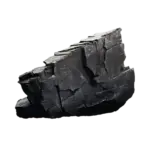
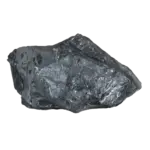
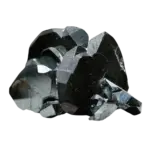
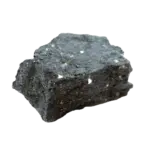
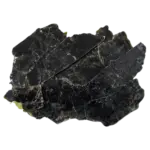
Colour is mostly a feldspar story. Pink and salmon granites are rich in K-feldspar coloured by trace iron and submicroscopic hematite inclusions. Grey granites carry more plagioclase. The dark commercial “black granite” used in monuments and countertops is almost always gabbro or diabase, a basaltic plutonic rock with no quartz at all. The stone trade and the petrologist disagree often and politely.
How granite forms
Granite is born from felsic melt that crystallises at depth. The melt itself can come from two main routes. One is fractional crystallisation of a more mafic parent magma, where early olivine, pyroxene, and calcic plagioclase settle out and the residual liquid drifts toward silica-rich compositions. The other is anatexis, partial melting of pre-existing crustal rocks under high heat flux. Most modern petrologists treat large granitic volumes as products of crustal melting modified by mafic recharge from the mantle, though the relative contribution remains contested.
Following Chappell & White (1974), granites are sorted by source:
- S-type: derived from melting of sedimentary or metasedimentary protoliths. Peraluminous, often muscovite-bearing, common in collisional belts such as the Lachlan Fold Belt of southeastern Australia.
- I-type: derived from melting of older igneous (meta-igneous) crust. Metaluminous to weakly peraluminous, hornblende-bearing, characteristic of continental volcanic arcs.
- A-type: anorogenic, high-temperature, often alkaline and anhydrous; defined by Loiselle & Wones (1979). Typical of rifts and post-collisional extension. Bonin (2007) and subsequent work, including Sasim et al. (2024), have argued that A-type is not a single petrogenetic family but a convergent chemistry produced by varied sources.
- M-type: mantle-derived, rare, found in some primitive island-arc settings. Quantitatively minor in the continental record.
Experimental work by Patiño Douce & Harris (1998) on Himalayan metapelites showed that muscovite-dehydration melting begins at 750–800 °C at 0.6–1.0 GPa and produces liquids essentially identical to natural leucogranites. Biotite dehydration follows at higher temperatures. These reactions release just a few weight percent water, enough to lubricate melt extraction, not enough to flood the rising magma.
Once generated, granitic melt rises through the crust and pools in plutons that range from kilometre-scale stocks to batholiths covering hundreds of thousands of square kilometres, such as the Sierra Nevada Batholith of California or the Coastal Batholith of Peru. Emplacement depths span roughly 5–30 km. The old textbook image was a single bulbous magma chamber inflating like a balloon. That image has been largely overturned.
Glazner, Bartley, Coleman, Gray & Taylor (2004), writing in GSA Today, argued from U–Pb zircon geochronology of the Tuolumne Intrusive Suite that large plutons assemble incrementally over millions of years. Refined dating by Bartley, Glazner & Coleman (2018) in Geosphere sharpened the picture for the Half Dome pluton specifically. The Half Dome Granodiorite, mapped as a single body, gave zircon ages between 92.8 ± 0.1 and 89.8 ± 0.8 Ma: a 3–4 million year lifespan inconsistent with any single thermally viable magma chamber. The model that has gained ground since, partly through the crystal-mush framework of Bachmann & Bergantz (2004) in the Journal of Petrology, treats batholiths as long-lived, mostly crystalline reservoirs that are periodically rejuvenated by mafic recharge.
Notable localities
The Sierra Nevada Batholith of California is the textbook Cretaceous arc batholith: roughly 600 km long, dominantly granodiorite and granite, exposed in Yosemite as El Capitan Granite, Half Dome Granodiorite, and Cathedral Peak Granodiorite. Stone Mountain in Georgia is a single exposed pluton of late Carboniferous biotite granite (~300 Ma), exhumed and weathered into a dome roughly 251 m above the surrounding piedmont. The Conway Granite of New Hampshire is a Mesozoic ring-complex member of the White Mountain magma series, with classic A-type geochemistry.
In Europe, the Cornubian Batholith of southwest England feeds the Land’s End, Dartmoor, and Bodmin Moor exposure, Permian S-type granites famous for tin and tungsten mineralisation. The Mont Blanc Granite of the western Alps is a Carboniferous (~303 Ma) intrusion thrust to elevation during Alpine orogeny. The Adamello pluton in northern Italy is a classic incrementally assembled Eocene–Oligocene composite intrusion.
The Aswan granites of southern Egypt, Precambrian rocks of the Arabian-Nubian Shield, supplied the obelisks and statuary of pharaonic Egypt. The Cape Granite Suite of South Africa underlies Table Mountain’s lower slopes. The Erongo Complex in Namibia is a Cretaceous A-type ring complex famous for gem aquamarine. In the Himalaya–Karakoram corridor, Miocene leucogranites form a discontinuous belt over 2,200 km from Nanga Parbat to Namche Barwa. Australia’s Kosciuszko region exposes Silurian granites of the Lachlan Fold Belt, the type area for S-type petrogenesis.
Varieties and related rocks
“Granite” in the broad field sense refers to any of the granitoid family. The QAPF scheme divides this family into named compositional fields, and texture adds further subdivision:
- Alkali-feldspar granite: alkali feldspar makes up > 90 % of total feldspar (field 2).
- Syenogranite and monzogranite: the two halves of field 3, split at A/(A+P) = 65.
- Granodiorite: plagioclase exceeds alkali feldspar (field 4). The dominant rock of most “granite” batholiths, including the Sierra Nevada.
- Tonalite: quartz-rich with very little alkali feldspar (field 5); plagioclase-dominated.
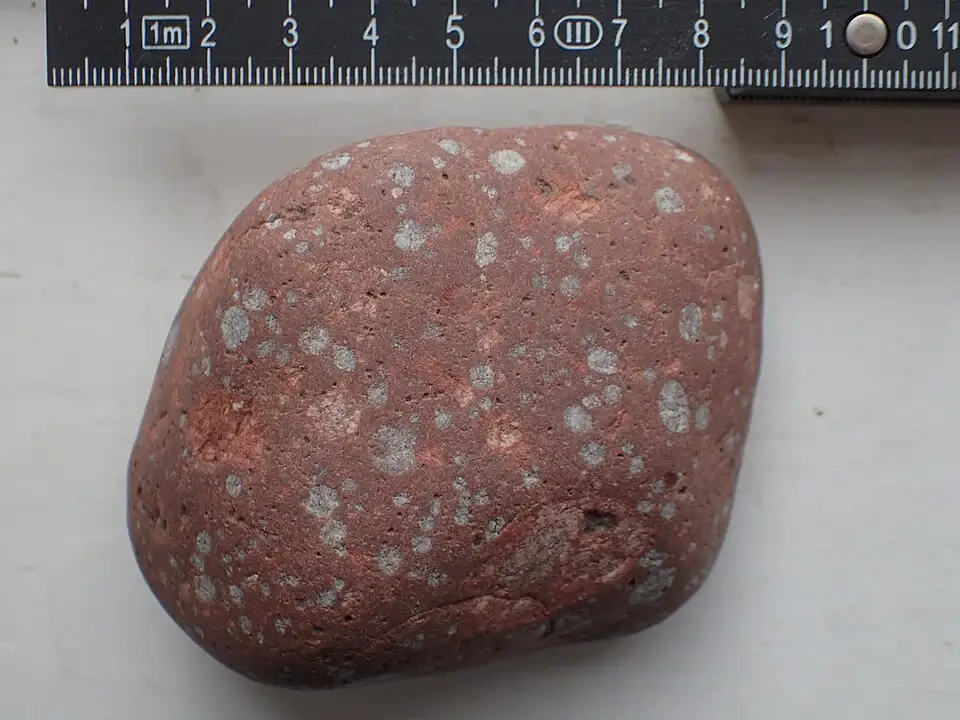
- Porphyritic granite: coarse phenocrysts of K-feldspar in a finer-grained matrix.
- Rapakivi granite: distinguished by ovoidal alkali feldspar mantled by plagioclase, first described from Finland by Sederholm in 1891; typically A-type, mid-Proterozoic.
- Graphic granite: intimate intergrowth of quartz and alkali feldspar producing runic-looking patterns, formed by simultaneous co-crystallisation in pegmatites.
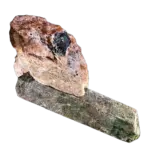
- Pegmatite and aplite: coarse and fine textural end-members of late-stage granitic differentiates. Pegmatites host much of the world’s lithium, beryllium, tantalum, and gemstone production.
- Leucogranite: < 5 % mafic minerals; classic in the High Himalaya.
Why granite matters
Practically, granite has been quarried for at least 5,000 years. The pyramids of Giza incorporated Aswan granite in their inner chambers and sarcophagi, and Menkaure’s pyramid was cased in granite for its lower sixteen courses. The Eads Bridge piers at St. Louis, Mount Rushmore (carved into the 1.7-Ga Harney Peak Granite), Cleopatra’s Needle, the kerbstones of nineteenth-century London, and a sizeable fraction of every modern kitchen countertop are all granite or near-granite. Curling stones, by tradition, are turned from Ailsa Craig microgranite from a small Scottish island.
Scientifically the rock carries far more weight. Granite is the dominant component of the upper continental crust, and the continents are what distinguishes Earth from every other rocky body in the solar system. Zircons extracted from granitic rocks remain the single most important archive of early Earth history; the oldest known terrestrial mineral, a detrital zircon from the Jack Hills of Western Australia, comes from a granitic protolith and dates to 4.404 ± 0.008 Ga (Wilde et al., 2001, Nature). Granite chemistry tracks plate-tectonic regime: I-type and granodioritic compositions mark subduction arcs, S-types mark continental collisions, A-types mark extension. Read the granites of a region and you can read its tectonic history.
How to identify granite in the field
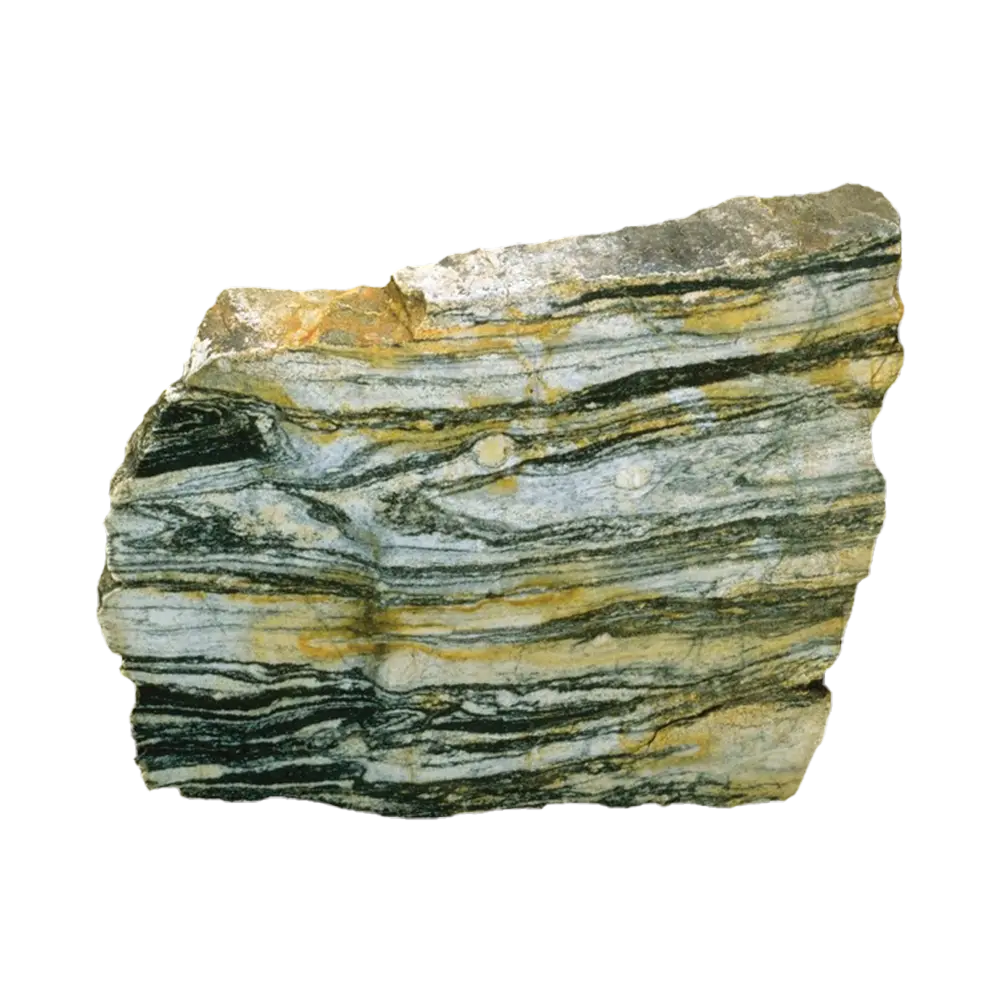
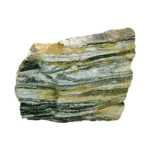
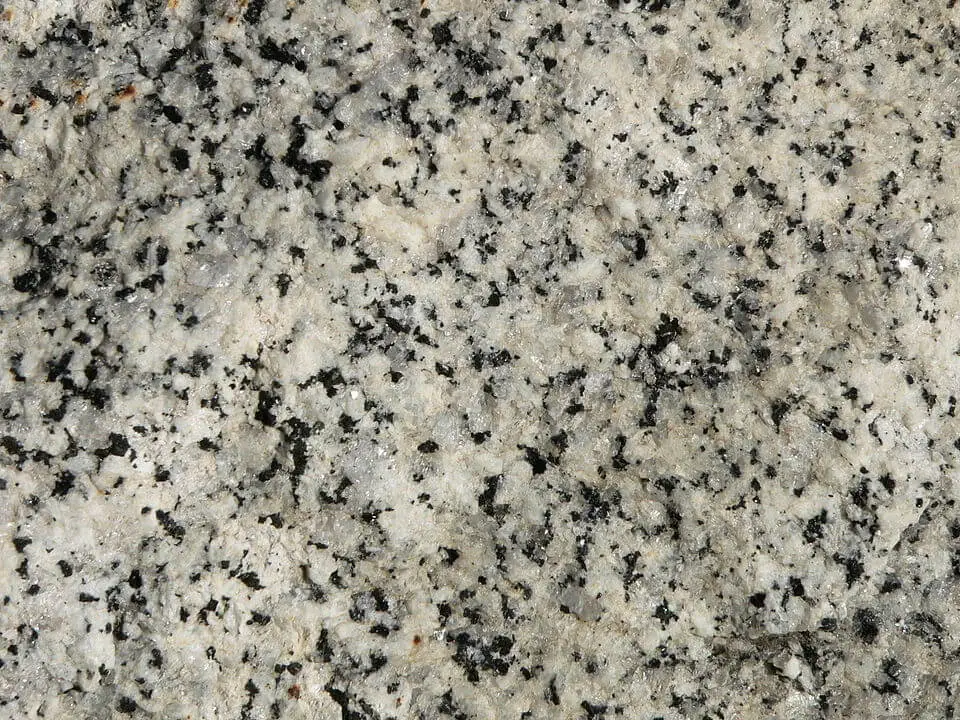
Three quick tests work on a hand specimen. First, the rock should be coarse enough that individual mineral grains are visible without a lens, that rules out rhyolite, the volcanic equivalent of granite, which is fine-grained or glassy. Second, you should see three different minerals in roughly comparable amounts: glassy grey quartz (no cleavage, conchoidal fracture), pink or white feldspar (good cleavage at ~90°, often with striations on plagioclase), and dark biotite flakes or stubby hornblende. Third, the fabric should be isotropic and granular, with crystals interlocking randomly. A planar or banded fabric, light and dark layers, points to gneiss, the metamorphic cousin of granite, and not to granite itself.
K-feldspar tends to be pinker; plagioclase tends to be whiter and may show fine twin striations under a hand lens. If a pink feldspar grain shows perthitic streaks, you are almost certainly looking at granite or syenite. If you see no quartz at all, the rock is a syenite or a monzonite, not a granite.
Ongoing scientific discussions
Granite petrology looks settled from a distance and is anything but up close. Four debates dominate current literature.
Pluton assembly rates and the “granite problem.” The Glazner et al. (2004) model of incremental assembly over million-year timescales is now mainstream, yet field, geochemical, and analogue studies continue to argue over whether large transient magma bodies ever existed beneath the volcanic arc. A 2025 Nature Reviews Earth & Environment synthesis (Bergantz and co-authors) frames the upper crust as a long-lived mush column from which eruptible melt is occasionally extracted. How a chemically homogeneous pluton emerges from many small intrusions, each with its own geochemistry, remains imperfectly explained.
Cold storage versus hot storage. Diffusion chronometry on zircon, quartz, and feldspar zoning suggests crystals spend most of their existence below the solidus or near it, mobilised only briefly before eruption. Critics counter that thermometers and diffusion clocks each carry their own model assumptions. The temperature history of an “average” granitic crystal is still being recalibrated paper by paper.
A-type petrogenesis. Loiselle & Wones (1979) lumped a diverse set of anorogenic, high-Fe, high-HFSE granites under one label. Bonin (2007) and more recent Lithos contributions (including Sasim et al. 2024 on Kazakhstan A-type leucogranites) treat A-type as a convergent texture and chemistry produced by very different source rocks and tectonic regimes. There is no single A-type recipe.
Himalayan leucogranites and continental collision. Patiño Douce & Harris (1998) showed experimentally that pure dehydration melting of metapelites reproduces leucogranite chemistry. A more recent set of Lithos and EPSL papers (Hou et al. 2012; Zhang et al. 2018; Wu et al. 2020; reviews to 2023) point to a contribution from underplated mafic magmas and crustal fluids. Whether Himalayan leucogranites date the India–Asia collision or only post-collisional thermal relaxation depends on which model is correct.