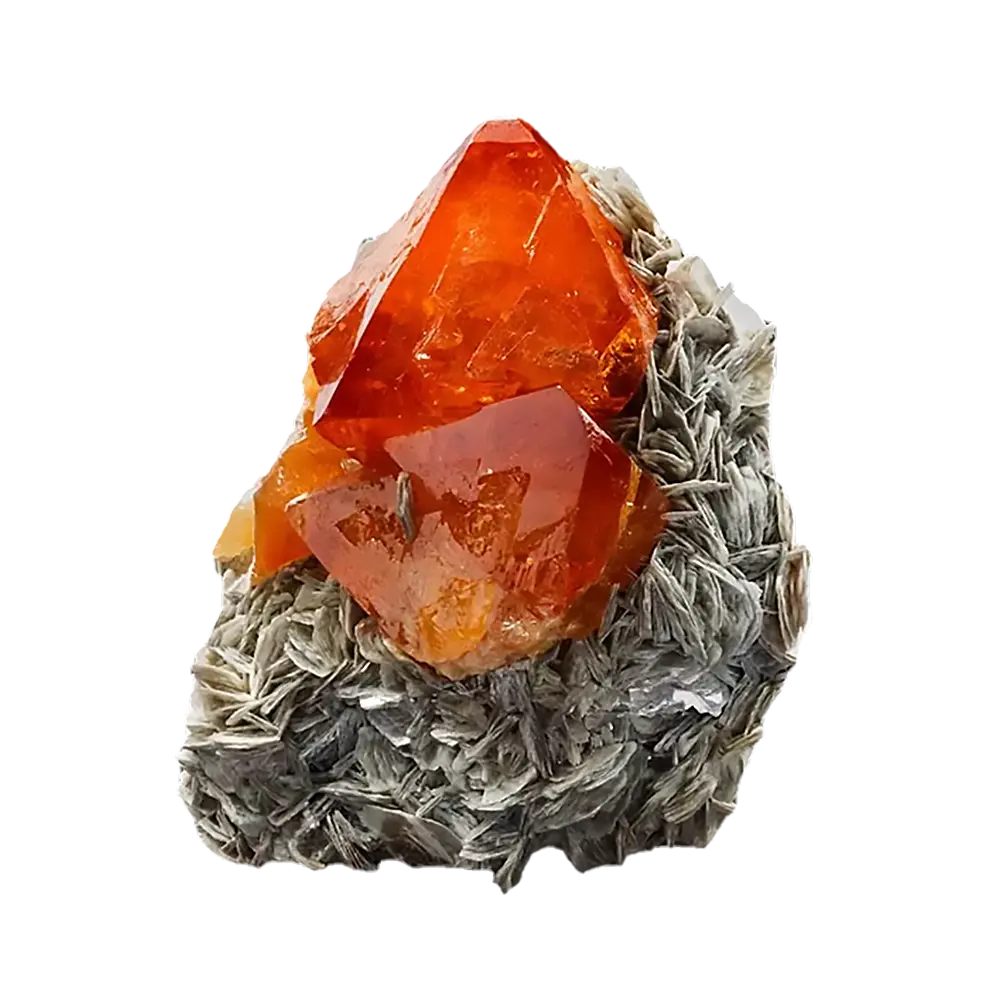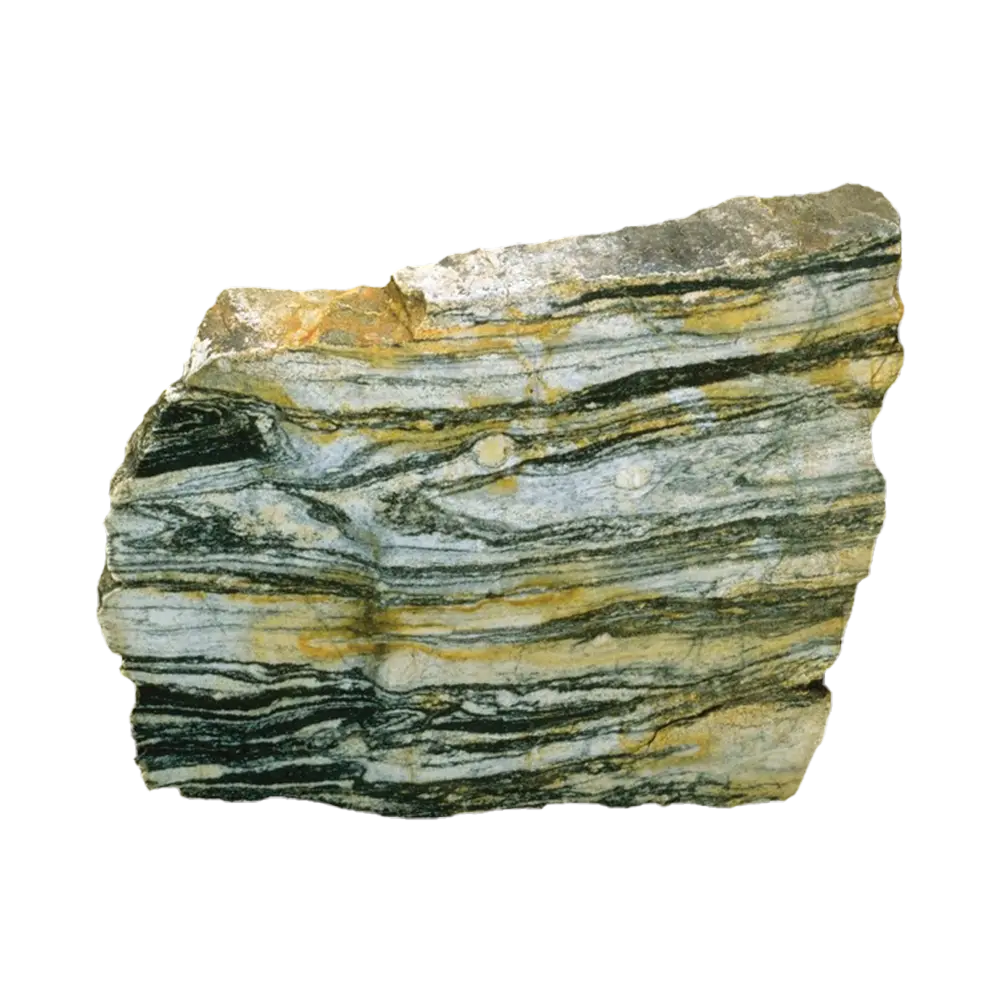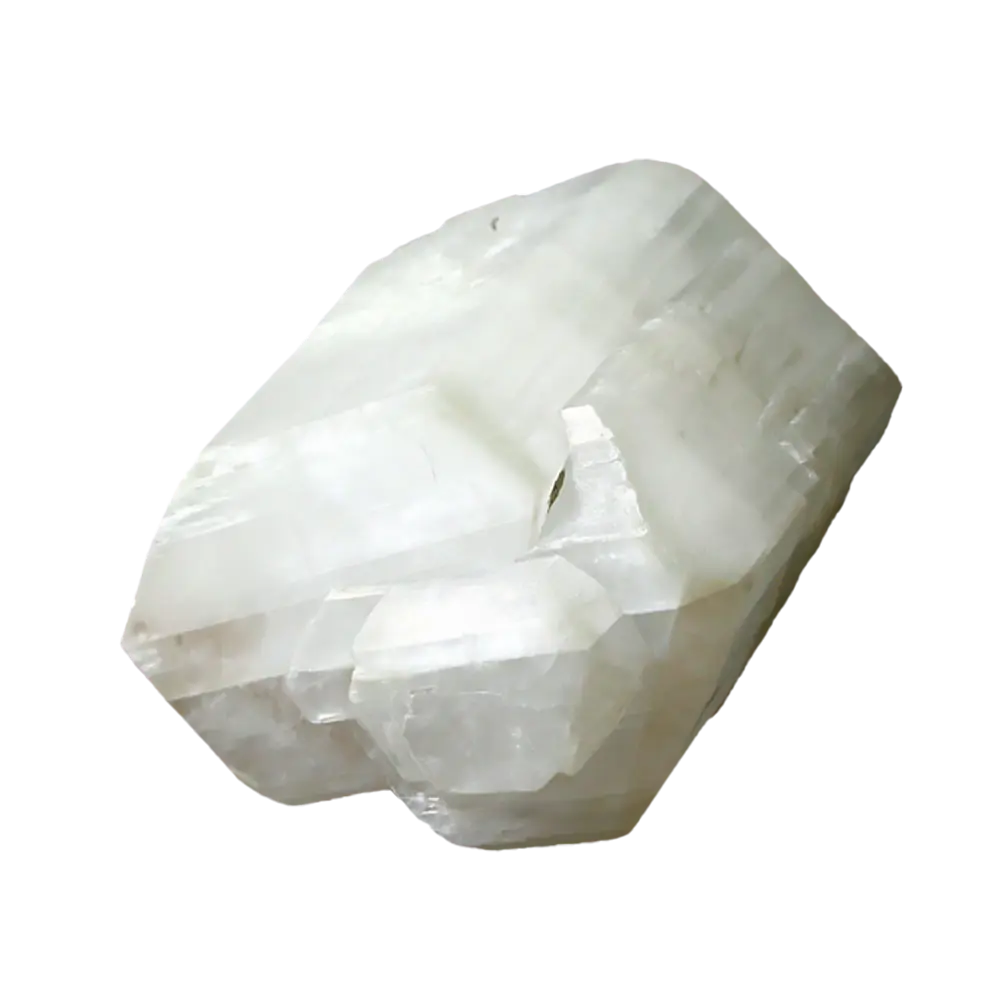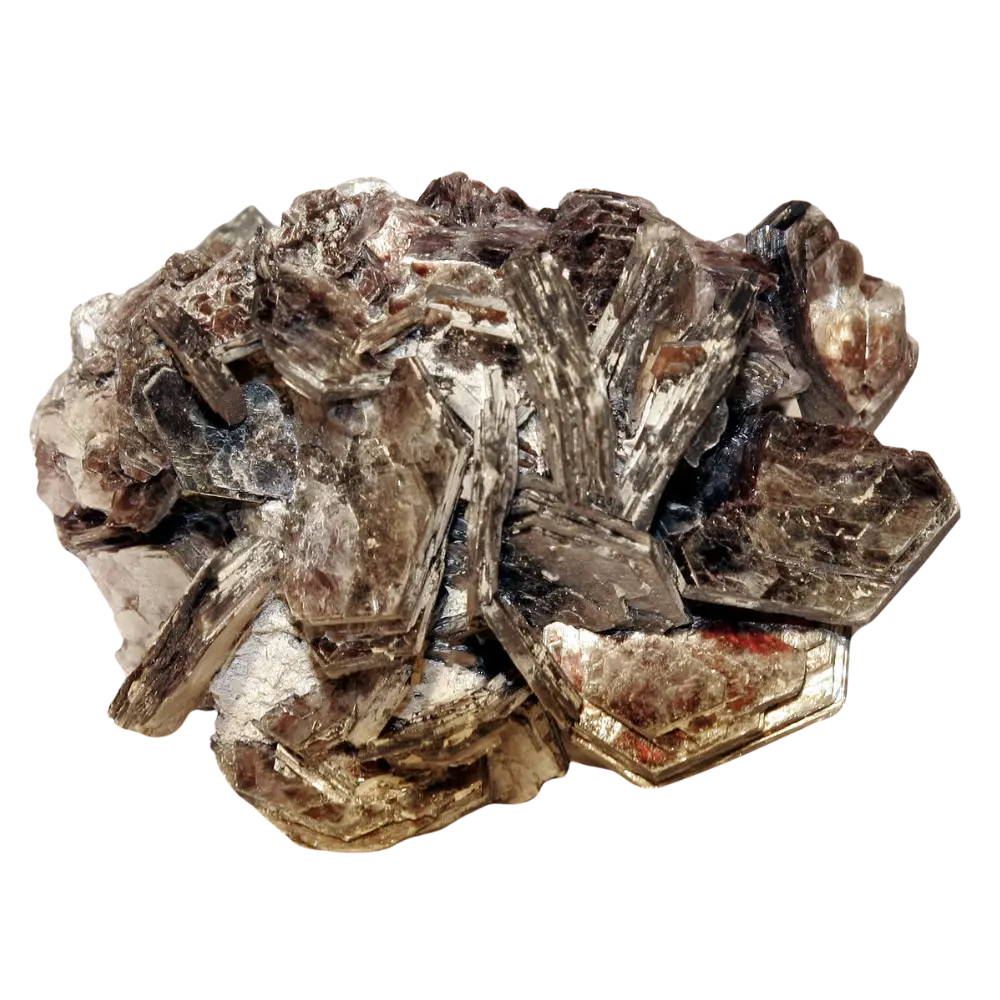
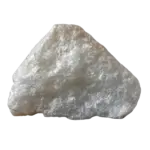
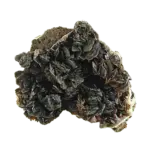
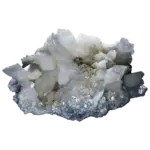
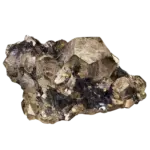
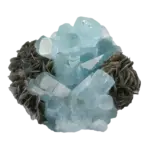
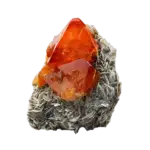
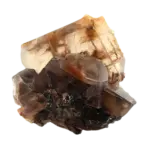
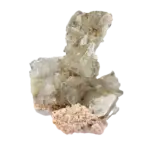
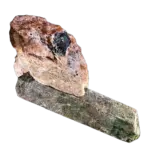
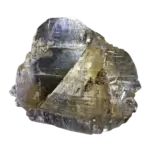
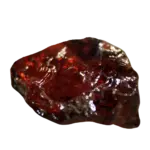
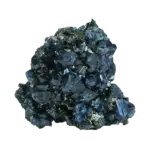
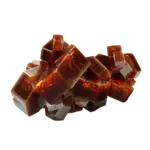
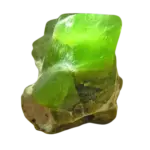
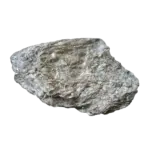
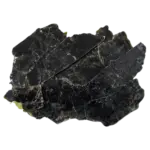
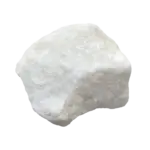
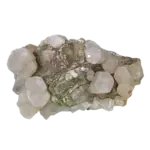
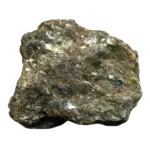
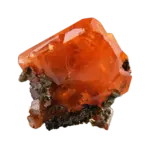
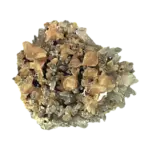
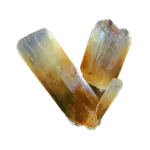
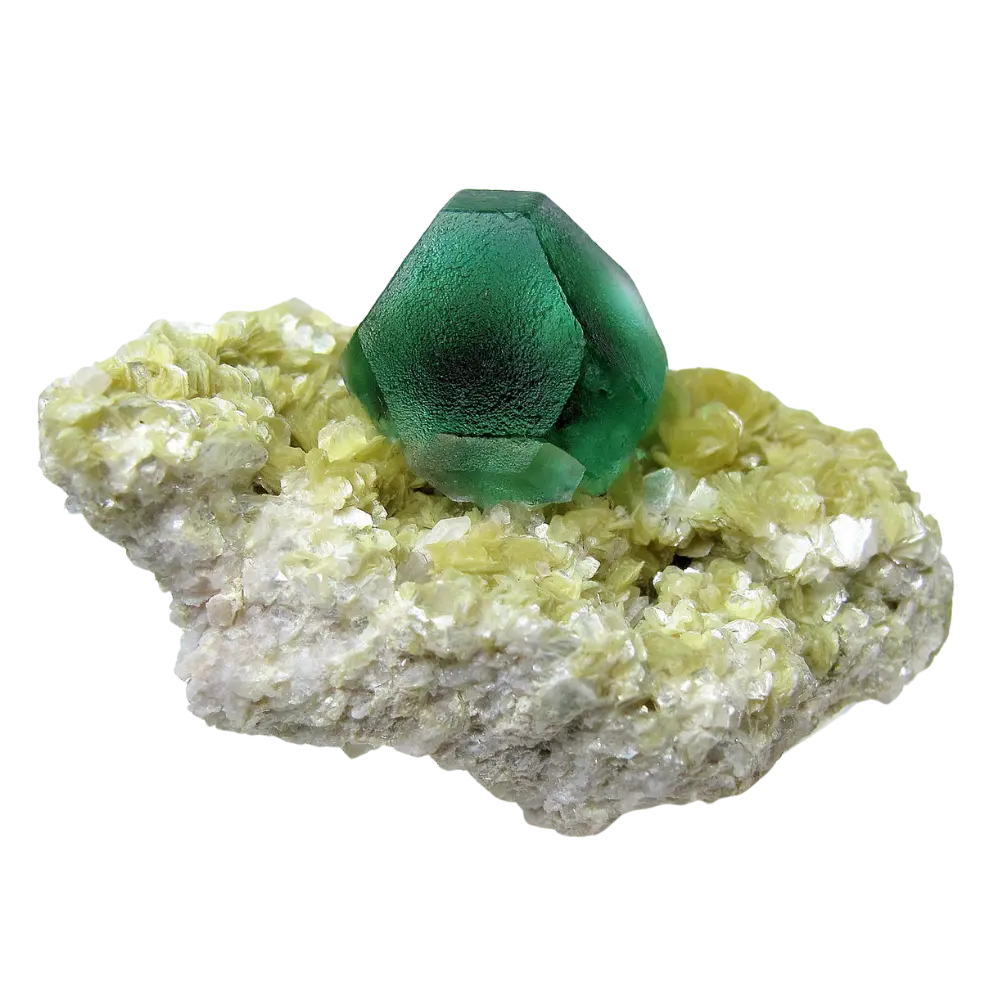
A UV torch, swept across a tray of specimens at a mineral show, will pick out fluorite first: soft blues and violets emerging from cubes that looked unremarkable a second earlier. The same mineral gave the phenomenon its name in 1852, when George Gabriel Stokes saw a chunk of Derbyshire fluorspar glowing under ultraviolet light in his Cambridge laboratory and coined the word “fluorescence.” Three decades later, Henri Moissan isolated the element fluorine for the first time using fluorite stoppers in his electrolyser, an effort that won him the 1906 Nobel Prize in Chemistry and likely shortened a life that ended the following year. One common mineral lent its name to a physical phenomenon, to a chemical element, and to an entire crystal-structure family.
What is fluorite?
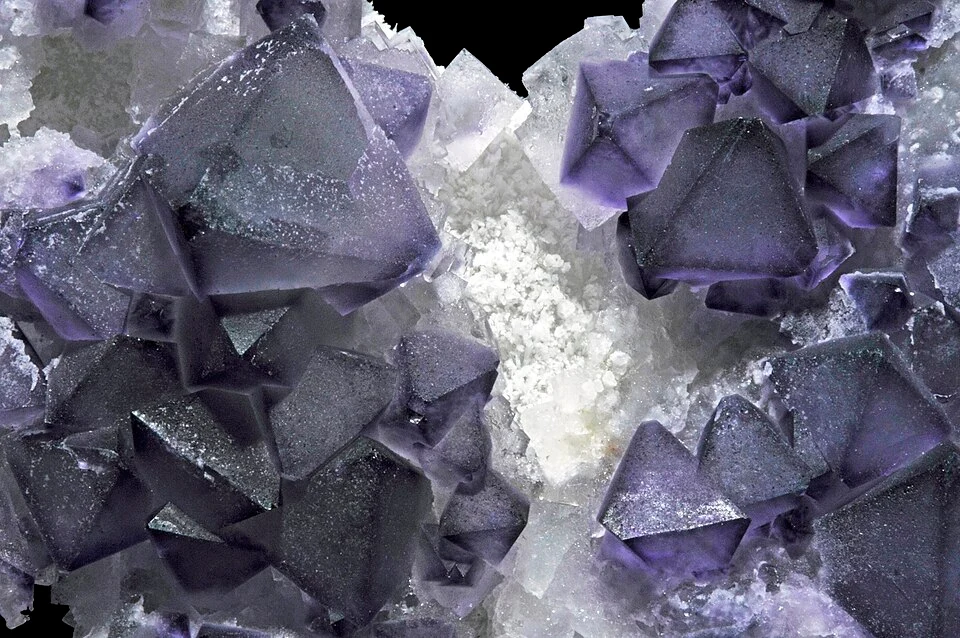
Fluorite is the calcium fluoride mineral CaF₂, a member of the halide class and the type mineral of the Fluorite Group. It crystallises in the cubic system and defines hardness 4 on the Mohs scale. Its octahedral cleavage on {111}, four symmetry-equivalent planes, causes broken crystals to fall apart into clean octahedra, a property no other common mineral shares. Pure fluorite is colourless and water-clear; impurities and radiation damage produce one of the widest colour ranges in mineralogy.
The mineral was named in 1797 by the Italian naturalist Carlo Antonio Galeani Napione from the Latin fluere, “to flow,” in recognition of its long use as a metallurgical flux. The industrial commodity name is fluorspar; mineralogically, fluorite is preferred. Mindat lists more than 12,400 fluorite localities worldwide, making it one of the most widely distributed minerals known.
Chemistry and a structure that taught crystallography
Fluorite crystallises in space group Fm3̄m (number 225) with a lattice parameter a = 5.4626 Å and four formula units per unit cell. Each Ca²⁺ ion sits at the centre of a cube of eight F⁻ ions; each F⁻ is tetrahedrally coordinated by four Ca²⁺. The Ca–F bond length is 2.39 Å. The arrangement is so geometrically clean that it became a structural archetype. Cerium dioxide, cubic zirconia, thorium dioxide, and uranium dioxide all adopt the “fluorite structure.” Switch the cation and anion roles and you get the “antifluorite” structure of lithium oxide and magnesium silicide.
In 1913, William Lawrence Bragg used fluorite as one of the test crystals when he solved the first X-ray diffraction patterns alongside diamond, sphalerite, and the alkali halides. The simplicity of CaF₂ made it diagnostic for the new technique: only two atom types and high cubic symmetry produced an easily interpretable diffraction pattern. Modern crystallography textbooks still use the fluorite unit cell to introduce ionic coordination.
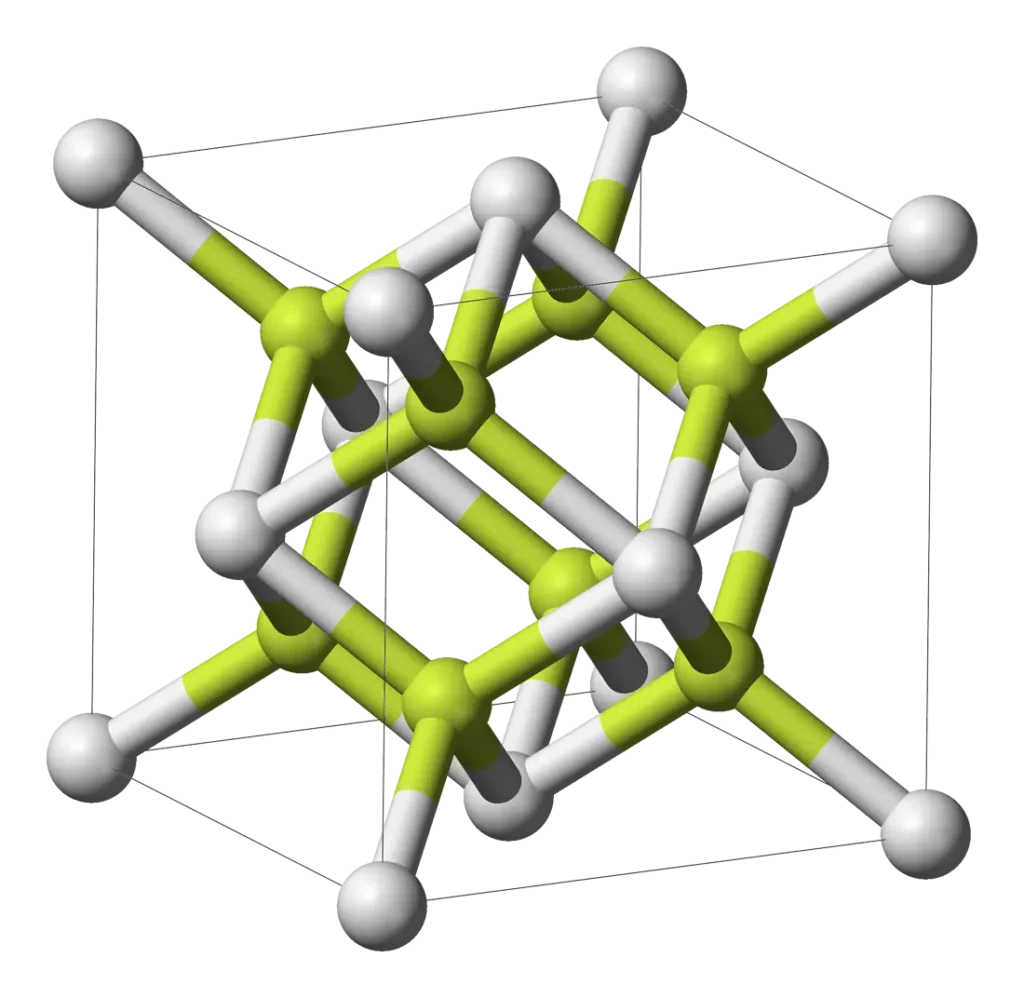
The CNMNC-approved Fluorite Group (Mills et al., 2011) contains four species, all sharing the same cubic Fm3̄m structure and differing only in the divalent cation: fluorite (CaF₂), strontiofluorite (SrF₂; Yakovenchuk et al., 2010), frankdicksonite (BaF₂), and fluorocronite (PbF₂). Recent charge-density work (Stachowicz et al., 2017) suggests the textbook picture of CaF₂ as a purely ionic crystal is an approximation: refined integrated charges of +1.40 e and −0.70 e for Ca and F point to partial covalent character, and the F⁻⋯F⁻ interaction shows features of “charge-shift” bonding.
How to identify fluorite in hand specimen
Cleavage is the most distinctive test. A sharp tap will split a fluorite crystal into perfect octahedra, flat-faced fragments with all faces meeting at the same angles, a property no other common mineral shares. Hardness gives the next clue: fluorite defines Mohs 4, scratching calcite cleanly while yielding to a steel knife. The specific gravity of 3.175–3.184 (up to 3.56 in rare-earth-rich crystals) is enough to feel noticeably heavier in the hand than quartz or calcite of the same size.
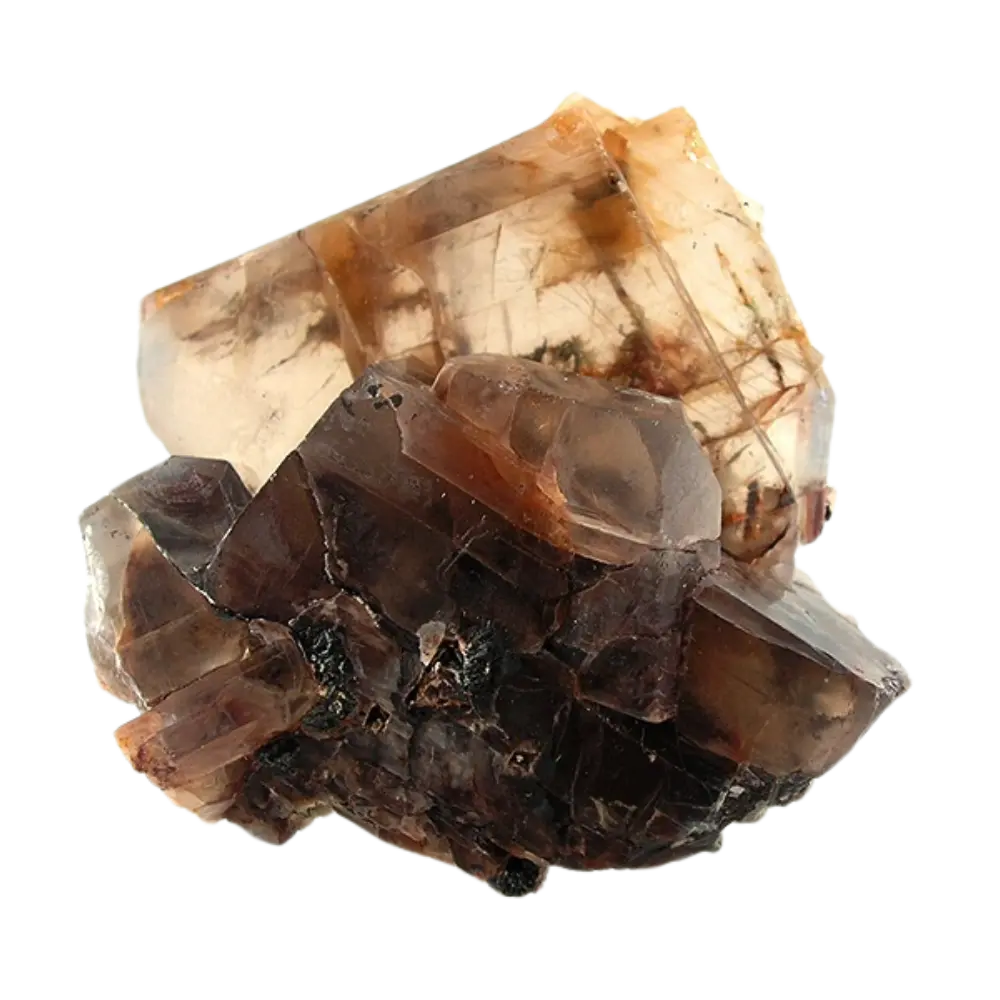
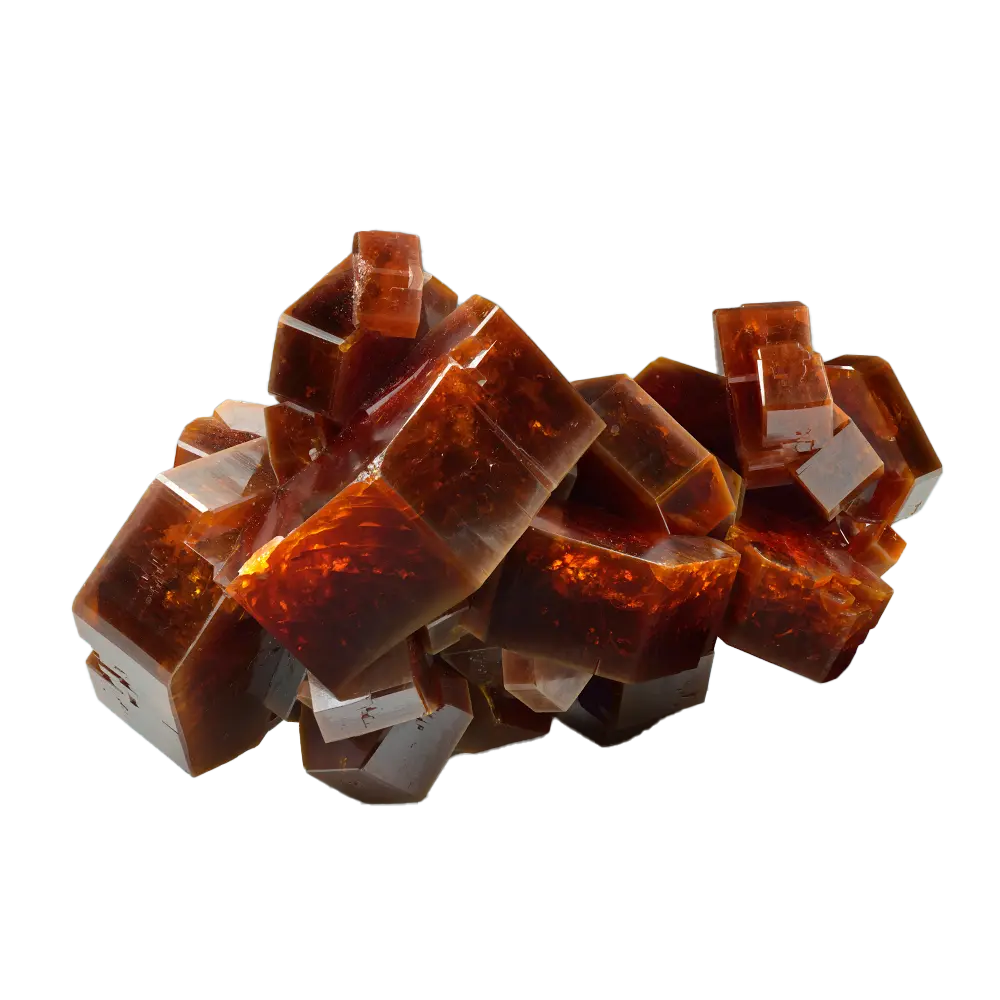
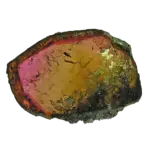
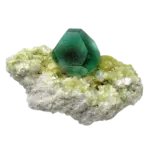
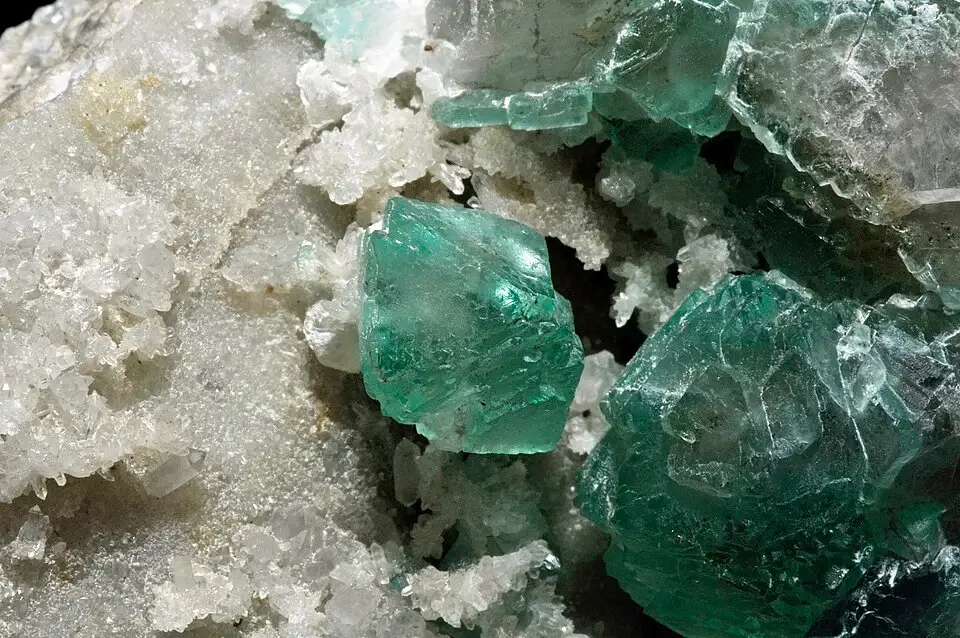
Crystal habit is dominated by cubes (often stepped or with curved edges) and octahedra, with dodecahedra and combinations less common. Twinning on {111} produces interpenetrant cubes that look like two cubes pushed through each other. Lustre is vitreous; streak is white; transparency runs from fully transparent gem material to nearly opaque. Many specimens show colour zoning, phantoms of earlier crystal growth preserved inside later overgrowth, and many fluoresce strongly under shortwave or longwave UV.
| Property | Value |
|---|---|
| Formula | CaF₂ |
| Crystal system | Cubic (isometric) |
| Space group | Fm3̄m (No. 225) |
| Lattice parameter | a = 5.4626 Å |
| Mohs hardness | 4 |
| Specific gravity | 3.175–3.184 (up to 3.56 if REE-rich) |
| Cleavage | {111}, perfect (four directions) |
| Fracture | Subconchoidal to uneven |
| Lustre | Vitreous |
| Streak | White |
| Refractive index | 1.434 |
| Fluorescence | Common; blue, violet, green, yellow, or red under UV |
How fluorite forms
Fluorite is overwhelmingly a hydrothermal mineral. It precipitates from F-bearing aqueous fluids when those fluids cool, react with carbonate wallrock, or mix with another fluid of different chemistry. Most of the world’s specimens, and most commercial fluorspar, form hydrothermally in three principal settings.
Mississippi Valley-type (MVT) deposits supply the largest share of commercial tonnage. Basinal brines at 100–200 °C, roughly four to seven times saltier than seawater, migrate through faulted carbonate sequences, precipitating fluorite together with galena, sphalerite, barite, and calcite. The Illinois–Kentucky Fluorspar District worked this assemblage for over a century. The Northern Pennine Orefield in northern England is a fluorine-enriched variant: Dunham characterised it as a “fluoritic sub-type” of MVT mineralisation in 1983, and recent REE-Sr-Nd work has shown that fluids in the Alston Block were influenced by Permian dolerite intrusions while the adjacent Askrigg Block fluorites lack any such magmatic signature.
Carbonatite-related mineralisation is the second major class. Carbonatite magmas are unusually fluorine-rich because F lowers the solidus of carbonated peridotite and stabilises carbonatitic melt. Bayan Obo in Inner Mongolia, formed during the Mesoproterozoic and overprinted by later subduction-related fluids during the closure of the Palaeo-Asian Ocean (Lai et al., 2013), hosts around 130 Mt of fluorite, the largest single fluorite resource on Earth, and incidentally the largest REE deposit, mined principally for the rare earths.
Granite- and pegmatite-related vein systems supply the third: high-temperature F-rich fluids (sometimes above 400 °C) escaping from late-stage granitic differentiates, depositing quartz–fluorite–topaz–cassiterite assemblages in greisens and tin-tungsten veins.
Fluorite also crystallises in alpine clefts, low-temperature fissures in crystalline basement rocks where percolating fluids precipitate clear-to-coloured euhedral crystals, as well as in pegmatite pockets, hot-spring deposits, and as a cement in some sandstones.
A fluorite crystal carries a chemical record of the fluid that grew it. REE patterns, Y/Ho ratios, Eu and Ce anomalies, and Tb/Ca-Tb/La ratios are routine geochemical tracers for ore genesis. Möller, Parekh and Schneider introduced the Tb/Ca-Tb/La approach to fluorspar genesis in 1976 (Mineralium Deposita 11, 111–116); Bau and Dulski refined the framework for Y/Ho behaviour in fluorine-rich fluids in 1995. Together these tools let mineral deposit geologists distinguish magmatic, sedimentary-basinal, and hydrothermal sources of mineralising fluids from a few milligrams of fluorite.
Where the great specimens come from
The 12,400+ localities on Mindat make any short list of significant occurrences feel arbitrary, but a handful produce the specimens that fill museum cases. The Illinois–Kentucky Fluorspar District in the United States produced spectacular purple, amber, blue, and colour-zoned cubes from underground mines around Cave-in-Rock and Rosiclare in Hardin County, Illinois, and Marion in Crittenden County, Kentucky. Commercial mining ran from the 1840s until the closure of the Annabel Lee Mine in 1995; the abandoned dumps still yield collector specimens. Illinois made fluorite its state mineral in 1965.
In England, Weardale in County Durham produces transparent green crystals whose daylight fluorescence, visible without UV illumination, has been studied since Brewster’s 1838 investigation. Castleton in Derbyshire produces the banded ornamental variety known as Blue John, mined under Treak Cliff Hill since the 1750s and still extracted today at well under half a tonne per year. Blue John is found nowhere else on Earth.
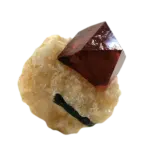
Continental Europe contributes Berbes in Asturias, Spain (purple cubes with blue phantoms), Wölsendorf in Bavaria (dark violet ‘antozonite,’ the only known natural source of elemental fluorine on Earth), and the Clara Mine in Germany’s Black Forest. The Alps produce some of the finest small specimens in all of mineralogy: pink octahedral fluorite from Planggenstock and Göscheneralp in Canton Uri, Switzerland, and deep-red octahedra from Frunthorn in Graubünden: alpine cleft fluorites whose colour comes from rare-earth and yttrium centres and whose bevelled tips and floater habit make them instantly recognisable to alpine collectors.
From Russia and Asia: Dal’negorsk (Nikolaev Mine, Primorsky Krai) produces green octahedra; Yaogangxian and Shangbao in Hunan, China, produce gem-quality colour-zoned cubes. Bayan Obo in Inner Mongolia is the largest fluorite deposit by tonnage on Earth, though almost all of its fluorite is processed for industrial use rather than for specimens. Naica in Chihuahua, Mexico, produces purple cubes in association with galena and the famous selenite crystals.
Why fluorite shows so many colours
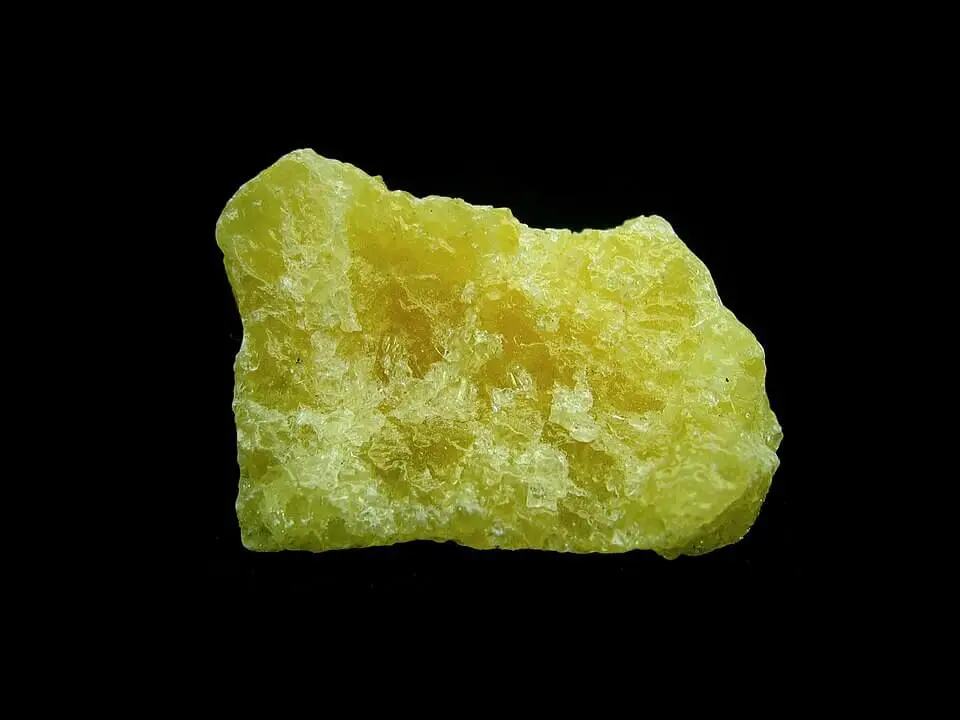
Pure CaF₂ is water-clear. Every colour observed in natural fluorite traces to lattice defects, trace impurities, or radiation damage. The systematic framework was established by Bill and Calas in 1978 (Physics and Chemistry of Minerals 3, 117–131), using optical absorption and electron paramagnetic resonance to identify the principal colour centres. Horsburgh, Finch and Friis re-examined lanthanide and yttrium substitution in natural fluorite with modern spectroscopy in 2023, broadly confirming the framework while tightening the assignments.
The principal natural colour centres are yttrium-associated F-centres, producing blue (Y³⁺ substituting for Ca²⁺ paired with a fluorine vacancy that traps an electron); co-existing Y and Ce F-centres, producing yellow-green; the (YO₂) centre, producing the pink of alpine cleft fluorites; the O₃⁻ molecule ion, producing the yellow of Cumberland and Tarn (France) specimens; and Sm²⁺ contributing to some greens (a reduced-state lanthanide centre produced by natural ionising radiation, alongside the Y–Ce F-centres above). Strong ionising irradiation drives the coagulation of metallic calcium colloids, and the size of these colloidal particles controls the colour produced: small particles give green, intermediate sizes give blue and purple, and the largest produce the dark violet and black of antozonite (Allen, 1952, and successors).
Fluorescence is a separate phenomenon. Eu²⁺ is the most common activator, responsible for the strong blue glow of Weardale and Cumberland specimens under UV: the original effect Stokes observed in 1852. Dy³⁺ produces yellow fluorescence; U-bearing crystals can fluoresce green; the rare variety chlorophane, first described from Siberia, fluoresces and even phosphoresces when warmed.
Blue John is fluorite’s ornamental variety: purple-blue and yellow banded material from Castleton, Derbyshire, worked into vases since at least 1760, when Matthew Boulton was already producing fireplace panels of it in Birmingham. The Roman writer Pliny describes a soft, banded, multicoloured stone called murrhine used for drinking vessels; whether Pliny’s murrhine was Blue John or a closely related banded fluorite from elsewhere in the Empire remains contested, but the resemblance is striking.
What we use fluorite for
The mining commodity comes in two principal grades. Acid-grade fluorspar (over 97% CaF₂) accounts for around 60–65% of world production and feeds hydrofluoric acid manufacture. Almost every fluorine-bearing industrial chemical descends from HF: refrigerants and successor F-gases under the AIM Act phase-down, fluoropolymers including PTFE, lithium-ion battery electrolytes such as LiPF₆, the roughly 30% of new pharmaceutical small molecules that contain at least one fluorine atom, municipal water fluoridation, and uranium hexafluoride for nuclear fuel enrichment. Metallurgical-grade fluorspar (60–96% CaF₂) accounts for the remaining 35–40%, used as a flux in steelmaking and as a furnace additive to lower slag viscosity and remove sulphur and phosphorus from the melt. This is the use Agricola described in De Re Metallica in 1556, and the use that gave the mineral its name.
World fluorspar production in 2024 was approximately 9.5 million tonnes (USGS Mineral Commodity Summaries 2025). China dominates with roughly 55–60% of supply (about 5.7 Mt in 2023), followed by Mexico, Mongolia, South Africa, and Vietnam. The European Union and the United States both classify fluorspar as a critical raw material; United States import reliance runs at 100%, with Mexico supplying about 62% of imports between 2020 and 2023.
A smaller, higher-value market is optical fluorite. CaF₂ has a refractive index of 1.434, an exceptionally low chromatic dispersion (Abbe number 95), and transmits light from about 130 nm in the deep ultraviolet to roughly 9 μm in the mid-infrared. No other crystalline material combines that transmission range with that low a dispersion at industrial scale. Canon’s apochromatic L lenses, high-resolution microscope objectives, and the 193 nm ArF excimer-laser optics that drive semiconductor lithography all depend on it. Natural fluorite of the size and clarity required is too rare for industrial demand; modern optical fluorite is grown synthetically by the Stockbarger method, though the technique still requires natural fluorspar as feed material.
What’s still being argued about
Several questions about fluorite still attract active research.
How fluorine cycles between mantle and crust remains incompletely understood. Many of the world’s major fluorite-bearing carbonatites sit above subduction zones, and recent work suggests that phengite in subducting slabs retains fluorine to depths of 200–300 km before breaking down and releasing it into the overlying mantle wedge (Lai et al., 2013). Why some subduction-related belts produce major fluorite-rich carbonatites and others do not is unresolved.
The origin of fluorite colour remains under active revision despite a framework that has held for nearly half a century. Precisely assigning every observed natural colour to a specific defect is still ongoing work, and the relationship between primary growth-induced colour and secondary radiation-induced colour in deep-violet specimens such as antozonite is particularly contested (Liu et al., 2023; Horsburgh et al., 2023).
The strangest fact about this otherwise common mineral was confirmed only in 2012. Schmedt auf der Günne, Mangstl, and Kraus published in Angewandte Chemie in 2012 the first direct in-situ proof, by ¹⁹F solid-state NMR, that elemental fluorine gas, F₂, exists in nature. The host is “antozonite,” the dark violet fluorite from Wölsendorf in Bavaria that has made miners ill since at least 1816 and whose smell triggered an argument that began with Wöhler and Liebig in the 1820s and was not settled until 2012. The answer turned out to be the one Moissan himself had suggested in the 1890s and that most of his contemporaries refused to believe: F₂ itself. Trace uranium-238 inside antozonite emits ionising radiation that splits CaF₂ into calcium metal clusters, the source of the dark colour, and elemental fluorine, which becomes sealed inside micro-inclusions by the non-reactive fluorite surrounding it. Antozonite was the first mineral in which elemental fluorine was directly proven in nature. It remains the classic natural F₂ host, although elemental fluorine has since also been detected in villiaumite