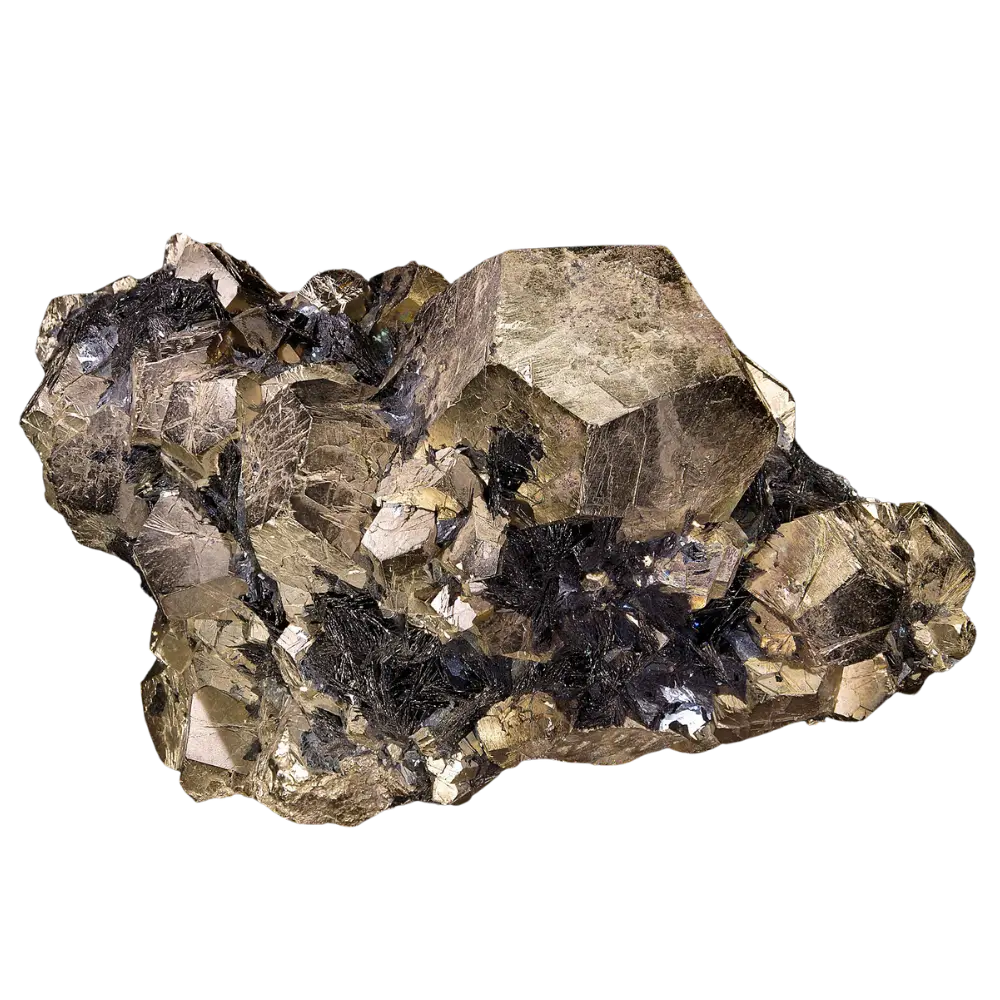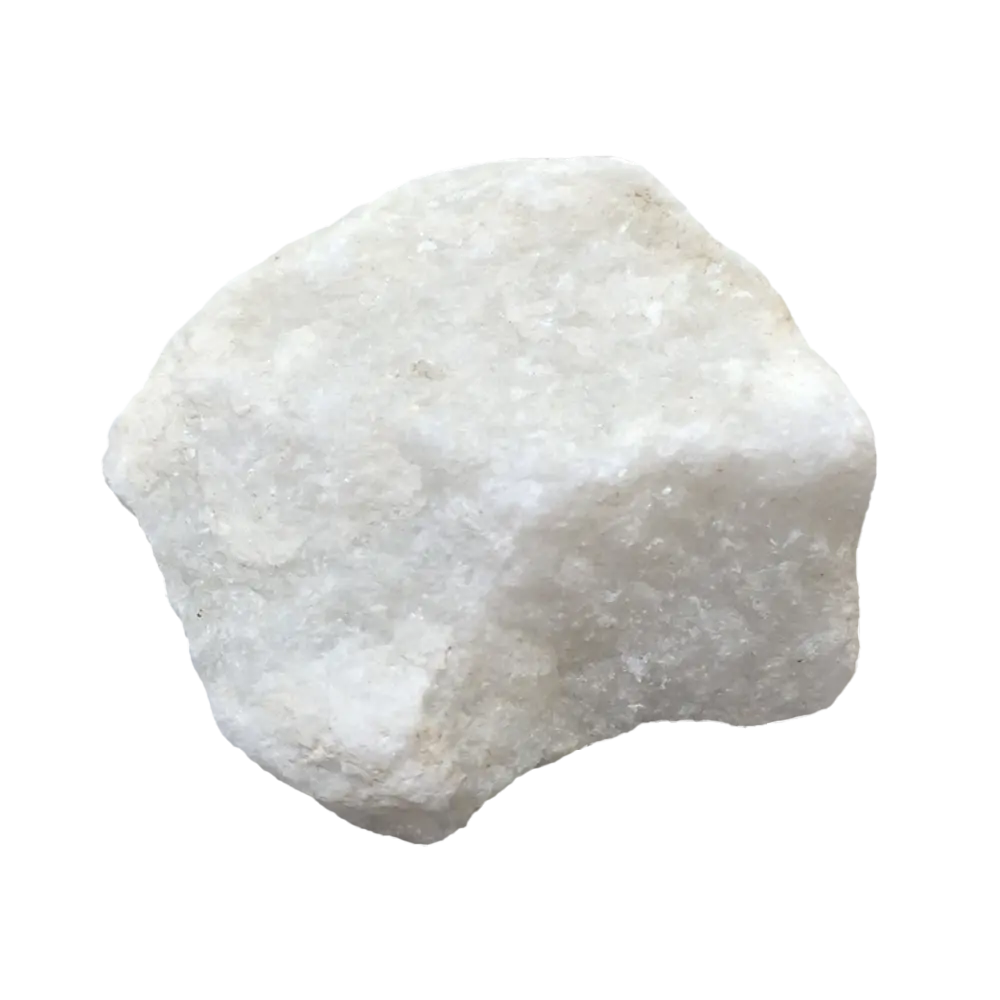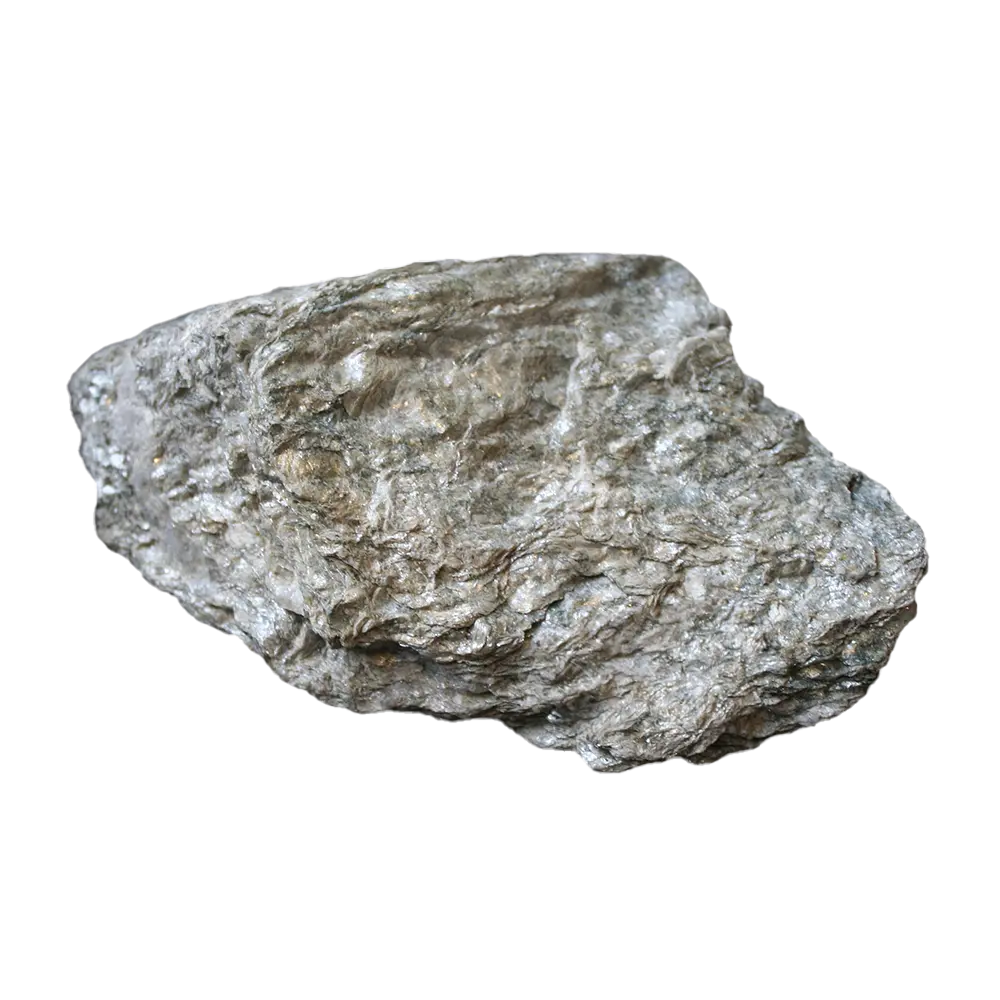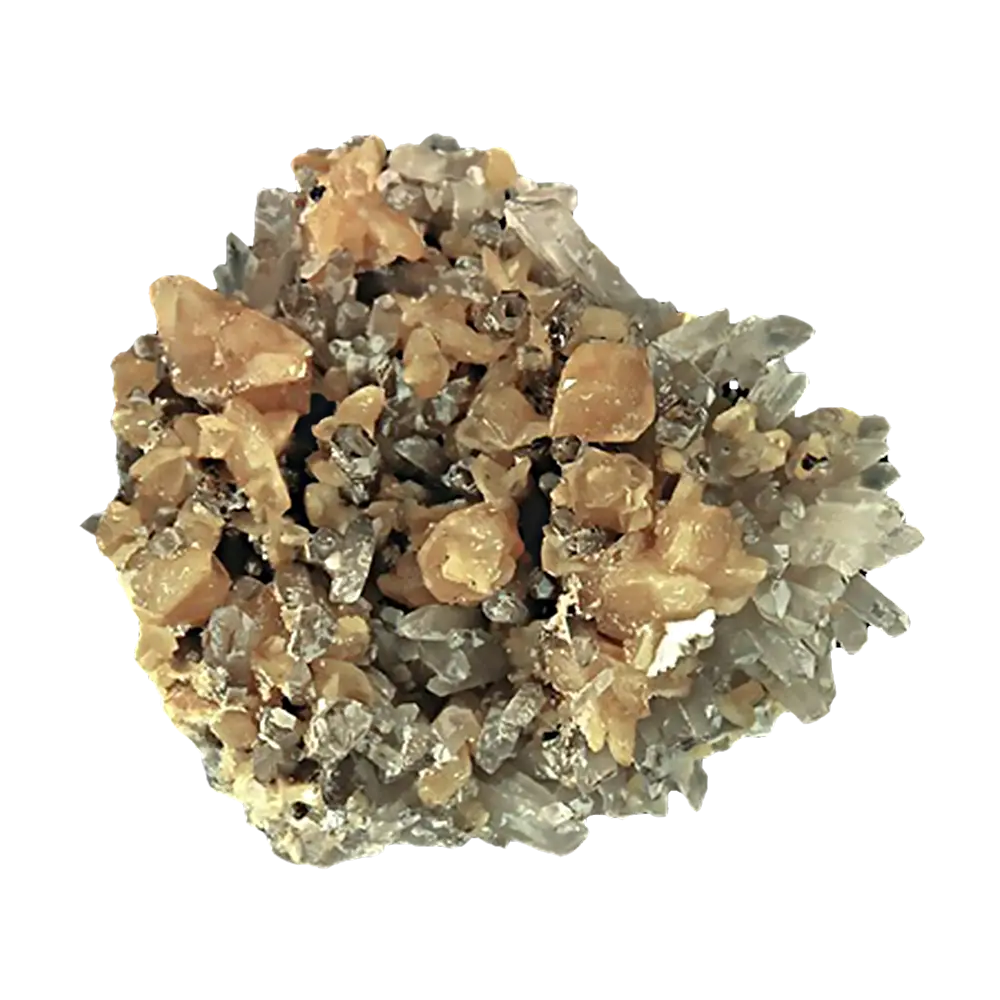
Barite

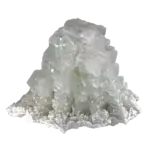
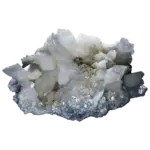
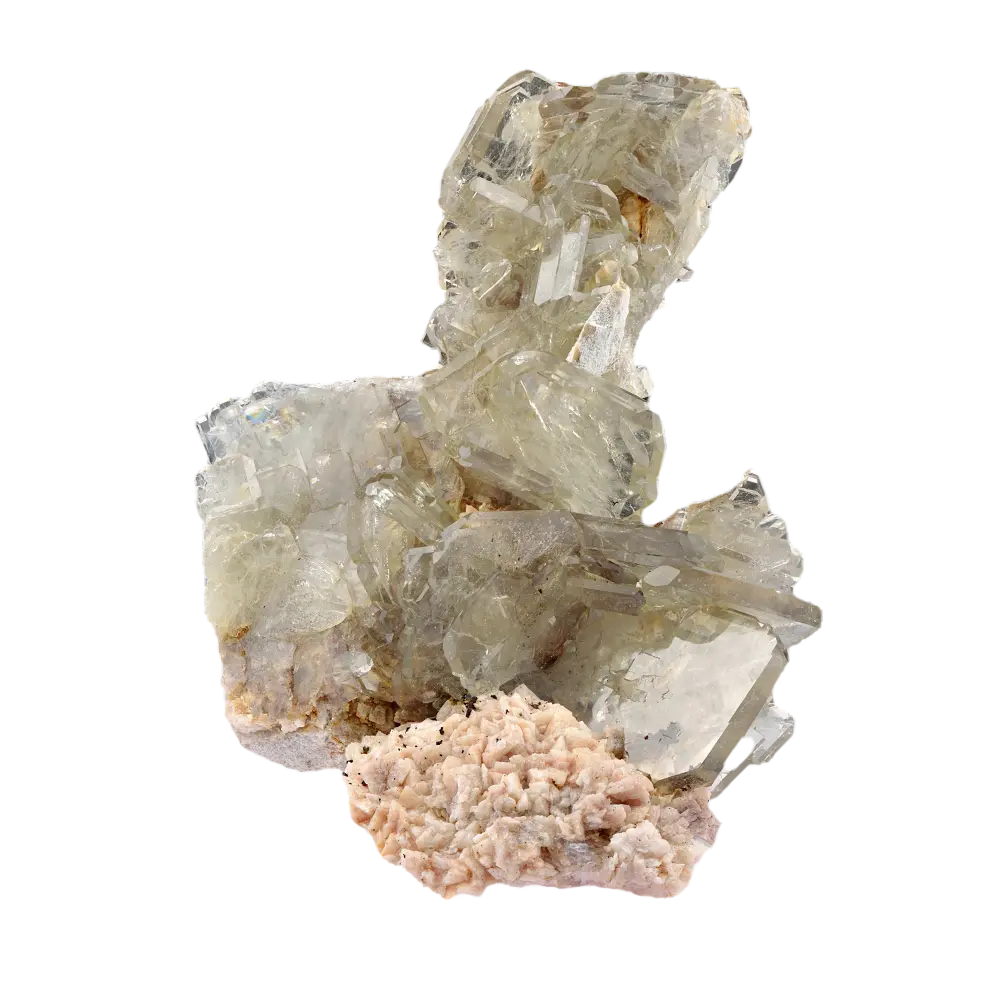
Clear barite crystal mineral specimen
Pascal founder of Geoscopy

admin 

Fact Sheet

  • Mineral type: Sulfate mineral; member of the barite group

  • Chemical formula: BaSO₄ barium sulfate

  • Crystal system: Orthorhombic

  • Mohs hardness: 3–3.5

  • Specific gravity: About 4.5, unusually high for a non-metallic mineral

  • Luster: Vitreous to pearly; sometimes resinous

  • Typical colors: Colorless, white, yellow, brown, gray, blue, green, or pale red

  • Common forms: Tabular crystals, bladed or crested aggregates, rosettes, fibrous masses, nodules, and massive material

  • Common associations: Fluorite, calcite, dolomite, quartz, galena, sphalerite, pyrite, and other sulfide minerals

  • Main uses: Weighting agent in oil and gas drilling fluids; filler or extender in paints, plastics, and rubber; aggregate in high-density concrete for radiation shielding

  • Name: From Greek barys, meaning “heavy.” The spelling “baryte” is the official IMA spelling, while “barite” is common in U.S. usage.

What Is Barite?
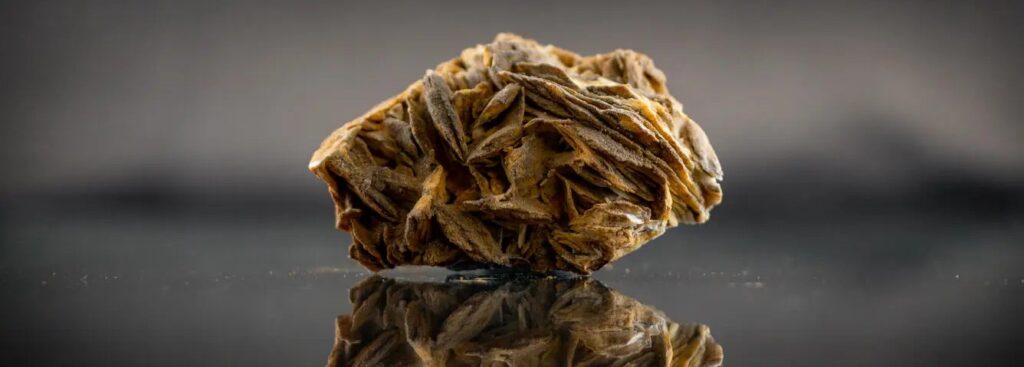
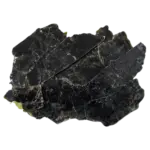
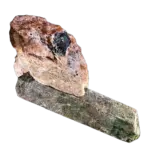
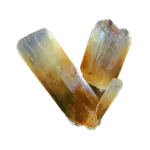
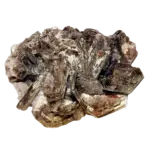
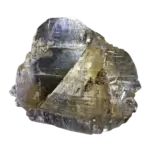
Barite crystal specimen showing layered structure and subtle color variation. Barite’s unusual density is one of its most useful field-identification clues. Source: U.S. Geological Survey, “Barite Crystal 2,” USGS Mineral Photography Collection. Public domain.

Most pale, tabular minerals weigh about what your hand expects. Barite doesn’t. A fist-sized piece comes in around twice as heavy as a similar lump of quartz or calcite, its specific gravity sits near 4.5, unusually high for a non-metallic mineral. That single property is why barite ended up in oil rigs, hospital walls, and paint cans. Crushed and milled, barium sulfate is dense, chemically inert, soft enough to handle, and cheap. The same heft that gives it away in the field is what made it an industrial commodity.

How Barite Forms

Barite crystallizes wherever barium-rich fluids meet sulfate ions. That reaction happens in enough different geological settings, low-temperature hydrothermal veins, sedimentary basins, residual deposits from weathered barite-bearing limestones, cavities in igneous rocks, and seafloor or volcanogenic massive sulfide systems, that the mineral has no single “home” environment. In ore veins, it most often grows alongside fluorite, calcite, galena, sphalerite, and pyrite.

Large economic deposits are commonly grouped into bedded-sedimentary, bedded-volcanic, vein/cavity-fill, and residual deposit types. Bedded-sedimentary deposits are especially important because they can form large, laterally extensive bodies of barite within sedimentary rock sequences.

Color and Crystal Forms
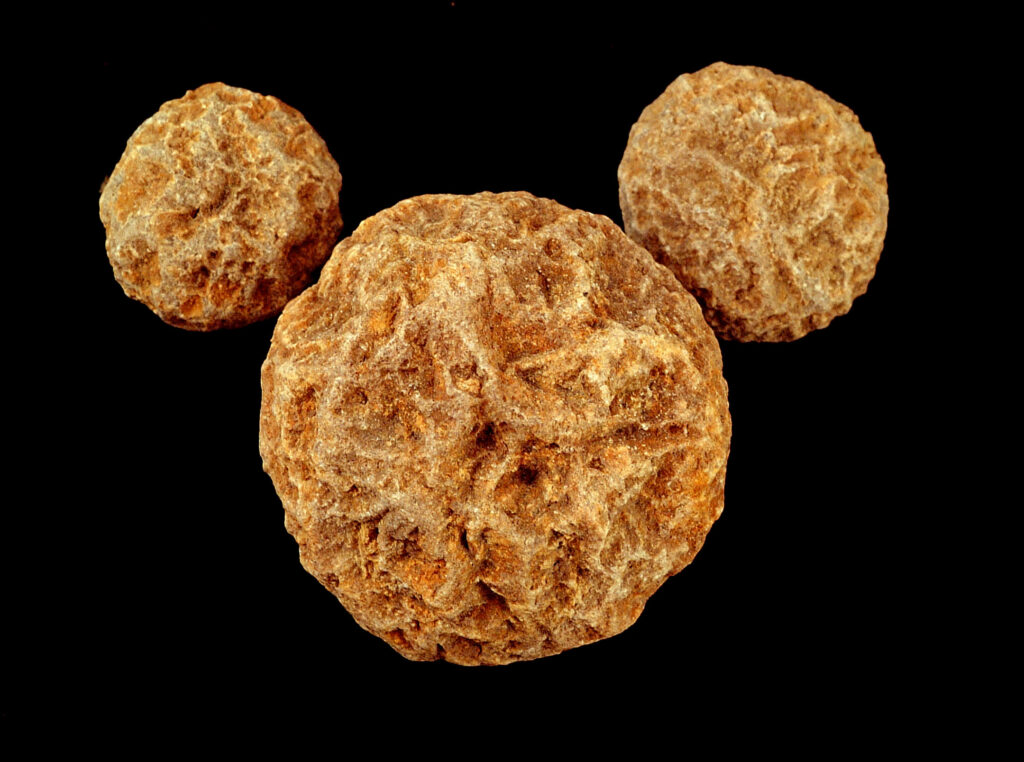
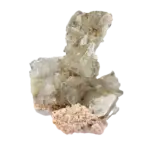
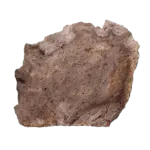
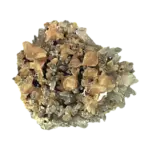
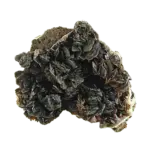
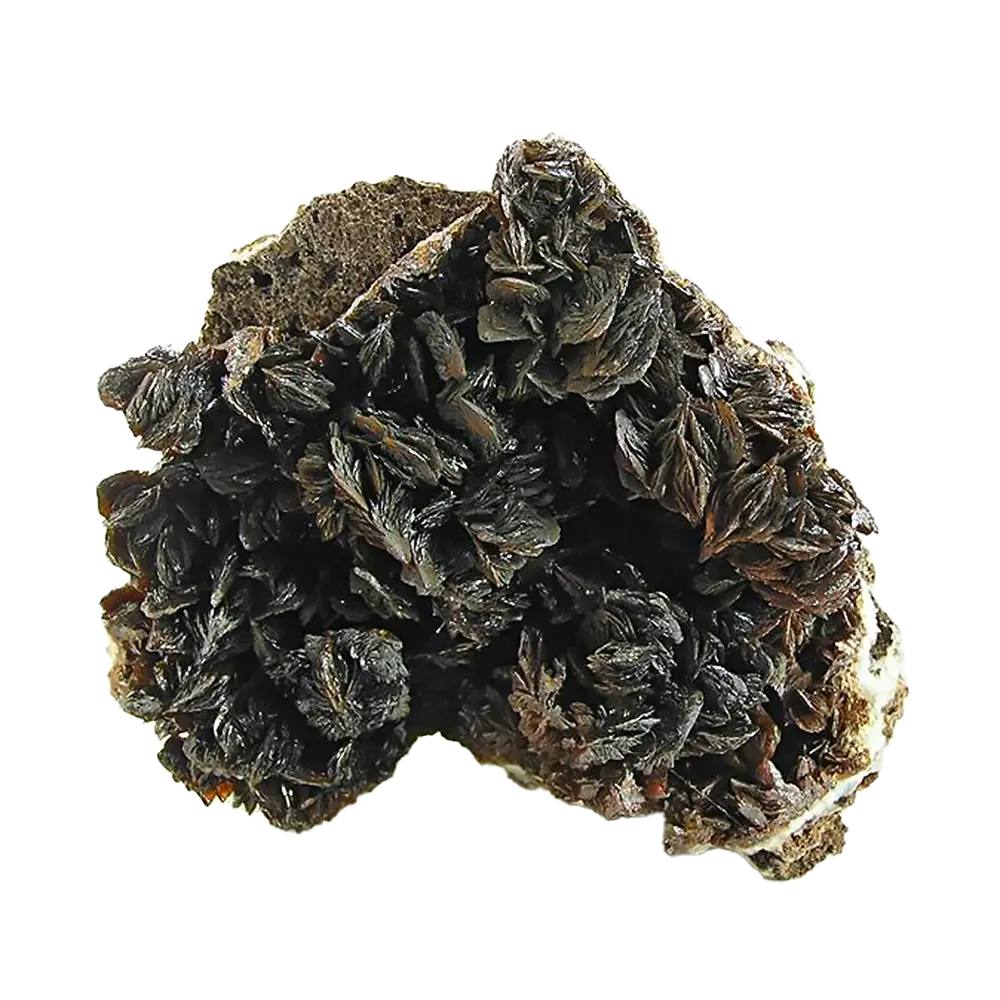
Barite “roses” from near Belle Fourche, South Dakota, USA. These flower-like aggregates are a crystal habit, not a separate mineral species; barite roses can be distinguished from gypsum roses by their higher specific gravity and greater hardness. Source: Geoscience Digital Image Library / Wikimedia Commons, “Barite ‘roses’ (GeoDIL number – 573).” CC0 / public domain dedication.

Barite is often colorless or white, but impurities, inclusions, and structural defects can produce yellow, brown, gray, blue, green, or reddish shades. The color alone is usually not enough to identify it. Its high density, relatively low hardness, crystal habit, and cleavage are more useful clues.

Many specimens form tabular crystals, but barite can also grow as bladed, crested, fibrous, nodular, massive, or rosette-shaped aggregates. The so-called “barite rose” is not a separate species, it’s a crystal habit in which barite blades grow outward from a common center, often trapping grains of the host rock between them.

Oklahoma’s “rose rocks” are the famous example. They form in the Garber Sandstone of central Oklahoma, where barite blades grew through soft red sandstone and locked sand grains between their faces. The result is a flower-shaped cluster of barite-and-sandstone petals, sometimes the size of a fist. Oklahoma made the rose rock its state rock in 1968. They’re easy to confuse with gypsum desert roses, which form in a similar shape but feel noticeably lighter, barite’s density gives it away again.

Where Barite Is Found

Barite is widespread and occurs in many countries. Important specimen localities include parts of England, Romania, Germany, Czechia, Canada, the United States, Mexico, Morocco, and South Africa, among many others.

Industrial production is concentrated elsewhere. The latest USGS Mineral Commodity Summaries put India and China at the top of the producer list, with Morocco, Kazakhstan, Iran, Mexico, Turkey, Russia, Laos, and Pakistan rounding out the major suppliers. In the United States, barite mining is concentrated in Nevada, the country’s only domestic source of significance for over four decades.

Uses of Barite

Drilling fluids

The most important use of barite is as a weighting agent in drilling mud for oil and gas wells. Adding ground barite increases the density of the drilling fluid, helping control formation pressure during drilling.

Paints, plastics, rubber, and other products

Barite is also used as a filler, extender, or weighting agent in products such as paints, plastics, rubber, brake and clutch pads, and some metal-casting compounds. In these uses, its density, chemical stability, pale color, and softness are useful properties.

Radiation shielding

Barite’s density makes it a useful aggregate in heavy concrete designed to absorb gamma radiation. Standard concrete reaches a density of about 2.3 g/cm³; replacing the gravel and sand fraction with crushed barite pushes that to 3.5 g/cm³ or more. The resulting “barite concrete” is used around medical X-ray and CT rooms, radiotherapy bunkers, nuclear power plant biological shields, and laboratory hot cells. Barium itself does most of the work: its high atomic number (Z = 56) makes it efficient at attenuating high-energy photons.

Barium compounds and medical contrast material

Barite is the main commercial source of barium. High-purity barium sulfate is also used as a contrast material in some X-ray and CT examinations of the gastrointestinal tract. This medical use involves specially prepared, highly purified material, not ordinary mineral specimens.

How to Identify Barite
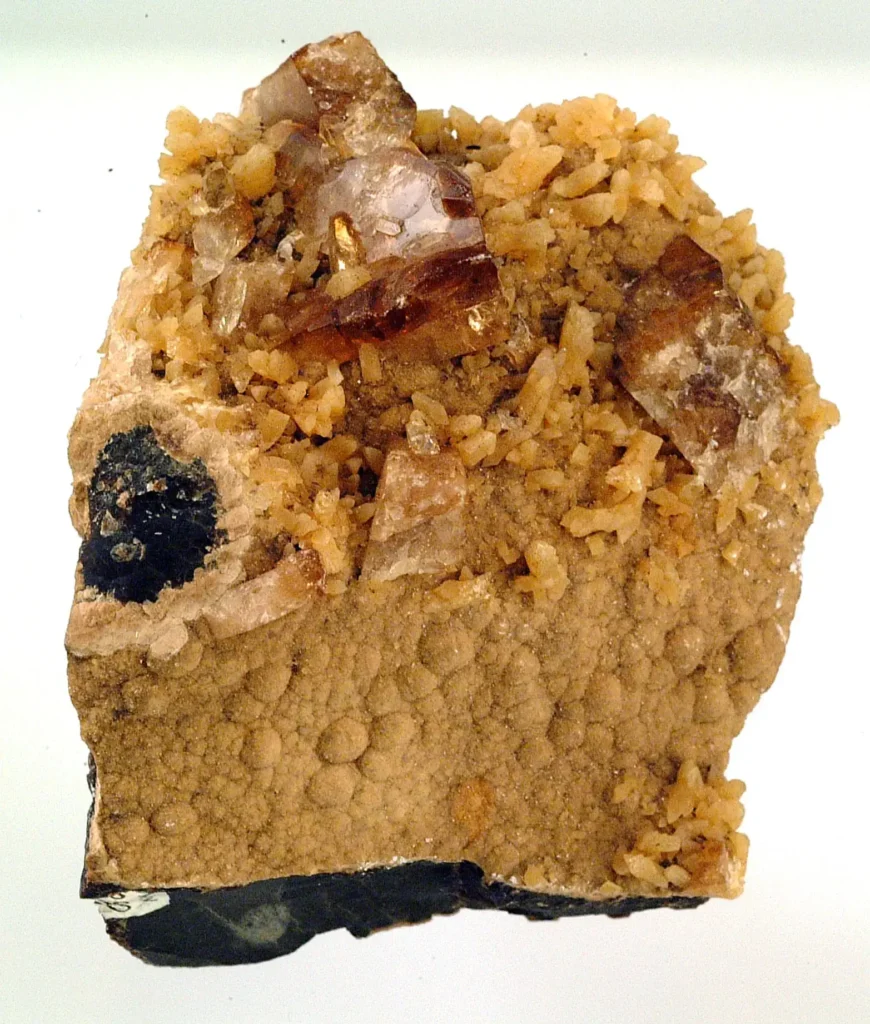
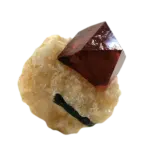
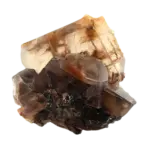
Glassy brown barite crystals on yellow-tan calcite from southwestern North Dakota, USA. Barite commonly occurs with other minerals, so its high density is often more useful for identification than color alone. Source: Geoscience Digital Image Library / Wikimedia Commons, “Barite (GeoDIL number – 568).” CC0 / public domain dedication.

Pick it up. That’s the test. A specimen of barite feels heavier than any pale, non-metallic mineral of similar size has a right to feel, about twice the heft of quartz or calcite. The hardness is low (3–3.5 on Mohs, scratched by a steel knife), the streak is white, and many crystals show tabular or bladed habits.

The trickiest lookalike is celestine, strontium sulfate, the same crystal structure with strontium replacing barium. The two minerals form a partial solid-solution series, so real specimens can be intermediate in composition. A flame test sorts them definitively: barium burns apple-green, strontium burns crimson. In the field, weight again does most of the work, celestine’s specific gravity is about 3.95 versus barite’s 4.5. Calcite, gypsum, and quartz are easier to rule out: none of them feel anywhere near this heavy.

Frequently Asked Questions

Is barite radioactive?

No. Pure barite (BaSO₄) is not radioactive. The confusion comes from barium’s general association with radiation shielding, barium is used in shielding materials because it absorbs radiation, not because it emits any. Some natural barite specimens can contain trace radium impurities and become weakly radioactive, but ordinary mineral specimens are safe to handle.

Why is “barite” sometimes spelled “baryte”?

Both spellings refer to the same mineral. “Baryte” is the official spelling adopted by the International Mineralogical Association in 1971; “barite” is the spelling used in U.S. industrial and government publications, including the USGS. Either is correct depending on the audience.

Is barite valuable?

Industrially, yes: global production runs in the millions of tonnes per year, mostly for oil and gas drilling fluids. As a collector specimen, common massive barite has little value, but well-formed crystals from classic localities (Cavnic in Romania, Mibladen in Morocco, Frizington in England) and rare colors like sky-blue can sell for hundreds to thousands of euros.

What’s the difference between barite and celestine?

Both are sulfate minerals with the same crystal structure, but barite is barium sulfate (BaSO₄) and celestine is strontium sulfate (SrSO₄). Barite is denser (specific gravity ~4.5 vs ~3.95). A flame test separates them: barium burns green, strontium burns red.
Share Rock

more rocks.minerals

View All
Close-up of a granite rock sample

Granite

Borax mineral specimen

Borax

Dark blue scorodite crystal cluster mineral specimen

Scorodite

White dolomite crystal mineral cluster

Dolomite

Green fluorite crystal on yellowish mineral matrix

Fluorite

Large translucent gypsum mineral specimen

Gypsum

White kernite crystal

Kernite

Limestone rock with visible fossil imprint

Limestone

Large basalt on white background

Basalt

Monazite mineral crystal cluster

Monazite

Shiny metallic pyrite mineral cluster

Galena

Talc mineral

Talc

Shiny metallic pyrite mineral cluster

Galena

Galena is the main ore of lead and silver, used in batteries and shielding.
Read more
Beryl crystals with brown mineral base

Beryl

Beryl is a gemstone mineral, including emerald and aquamarine, and a source of beryllium.

Read more
Cluster of shiny brown mica crystals

Mica

Mica is a group of silicate minerals with varying compositions mainly in insulation and electronics.

Read more
Calcite crystals on metallic mineral surface

Calcite

Calcite is a trigonal calcium carbonate mineral used mainly in construction for making cement.

Read more
Muscovite mineral

Muscovite

Muscovite, a mica mineral, is used in insulation, fireproofing, and cosmetics.

Read more
Dark blue scorodite crystal cluster mineral specimen

Scorodite

Scorodite, a hydrated iron arsenate, is valued for arsenic containment and as a collector’s mineral.

Read more
White kernite crystal

Kernite

Kernite is a boron-rich mineral used in glassmaking, detergents, and ceramics.

Read more
Zircon crystal on beige mineral rock

Zircon

Zircon is a durable mineral used in jewelry, geological dating, and ceramics.

Read more
Shiny metallic hematite crystal cluster

Hematite

Hematite is an iron oxide mineral used for iron ore, pigments, and radiation shielding.

Read more
Shiny black magnetite crystal mineral specimen

Magnetite

Magnetite, an iron oxide with magnetic properties, is used in steel production and catalysts.

Read more
Gray quartzite rock on white background

Quartzite

Quartzite, a durable metamorphic rock made of quartz, is used in construction and countertops.

Read more
Marble close-up

Marble

Marble, a calcium carbonate metamorphic rock, is used in sculpture, architecture, and countertops.

Read more
Borax mineral specimen

Borax

Borax is a sodium borate used in cleaning and glassmaking.

Read more
Rough beige sandstone rock on white background

Sandstone

Sandstone, composed of quartz and feldspar, is used in construction, paving, landscaping, and glassmaking.

Read more
Green pyroxene crystal mineral specimen

Pyroxene

Pyroxene, a silicate mineral group found in igneous and metamorphic rocks.

Read more
Wulfenite crystal specimen

Wulfenite

Wulfenite is a bright orange or yellow mineral, prized by collectors.

Read more
Diorite rock close up

Diorite

Diorite is a tough igneous rock used in construction, art, and in research.

Read more
Large translucent gypsum mineral specimen

Gypsum

Gypsum, a soft calcium sulfate mineral, is primarily used as plaster or in cement production.

Read more
Brown volcanic rock texture close-up

Rhyolite

Rhyolite, a silica-rich volcanic rock, is used in construction and research.

Read more
Clear quartz crystal cluster on black background

Quartz

Quartz, a silicon dioxide mineral, is used in jewelry and electronics.

Read more
White halite rock salt crystal cluster

Halite

Halite, or rock salt, is a sodium chloride mineral used for seasoning, de-icing, and industry.

Read more
Sample of apatite mineral crystal

Apatite

Apatite is a calcium phosphate mineral found in various colors, primarily used in fertilizers.

Read more
Amphibole sample on white background

Amphibole

Amphibole is a diverse mineral group used for geological indicators and as insulation.

Read more
White dolomite crystal mineral cluster

Dolomite

Dolomite is a calcium magnesium carbonate used in construction and agriculture.

Read more
Vanadinite crystal cluster on white background

Vanadinite

Vanadinite is a bright red mineral, primarily sourced from lead deposits.

Read more
Limestone rock with visible fossil imprint

Limestone

Limestone, mainly calcium carbonate, is used in construction, cement, and water treatment.

Read more
Large basalt on white background

Basalt

Basalt is a dark, fine-grained igneous rock used in construction, monuments, and geological studies.

Read more
Piece of red and brown bauxite ore

Bauxite

Bauxite is the main aluminum ore, primarily found in Australia.

Read more
Dark gray shale rock sample

Shale

Shale, a fine-grained sedimentary rock, is used for natural gas, cement, and research.

Read more
Metamorphic rock with dark red garnet crystals

Chlorite

Chlorite, a green phyllosilicate mineral, is used as a geological indicator and industrial filler.

Read more
Raw red garnet gemstone close-up

Garnet

Garnet is a group of silicate minerals used as gemstones and abrasives.

Read more
Brown crystals of feldspar mineral specimen

Feldspar

Feldspar is an aluminum silicate used in ceramics, glass, and construction.

Read more
Bright green olivine crystal mineral specimen

Olivine

Olivine, a magnesium iron silicate, is used in gemstones (peridot) and refractory materials.

Read more
Colorful watermelon tourmaline crystal slice

Tourmaline

Tourmaline is a colorful boron silicate mineral used as a gemstone and in electronics.

Read more
Bright yellow-green adamite specimen close-up

Adamite

Adamite is a rare, colorful orthorhombic mineral prized by collectors for its vibrant crystals.

Read more
Close-up of a granite rock sample

Granite

Granite is a durable igneous rock used in construction, monuments, and countertops.

Read more
Orange scheelite crystal on gray matrix rock

Scheelite

Scheelite, a calcium tungstate, is the main source of tungsten for tools and alloys.

Read more
Green fluorite crystal on yellowish mineral matrix

Fluorite

Fluorite, a colorful calcium fluoride, is used as flux in steelmaking, glass, and as gemstones.

Read more
Monazite mineral crystal cluster

Monazite

Monazite, a group of rare earth minerals, is a key source of rare earth elements.

Read more
Dark black biotite mica mineral specimen

Biotite

Biotite is a dark mica mineral used in insulation and geological studies.

Read more
Shiny metallic pyrite mineral cluster

Pyrite

Pyrite, or “Fool’s Gold,” is used for sulfur and iron production.

Read more
Shiny black coal

Coal

Coal, mainly carbon, is used for energy and steel production.

Read more
Clear barite crystal mineral specimen

Barite

Barite is a barium sulfate mineral used in drilling, shielding, and paints.

Read more
Shist rock example

Schist

Schist, a layered metamorphic rock rich in mica and quartz, is often used in construction.

Read more
Descloizite mineral crystal cluster

Descloizite

Descloizite is a lead-zinc vanadate mineral, mainly found in Namibia and Mexico.

Read more
Talc mineral

Talc

Talc, the softest mineral, is used in baby powder, cosmetics, ceramics, and plastics.

Read more
Polished sample of a gneiss rock

Gneiss

Gneiss is a durable, banded metamorphic rock used in construction and decoration.

Read more

join.me

Geology made clear, in your inbox.

Get clear, visual explainers on rocks, minerals, deep time, and the most fascinating parts of Earth science from Geoscopy.
Clear barite crystal mineral specimen

Barite

Barite is a barium sulfate mineral used in drilling, shielding, and paints.

Read more