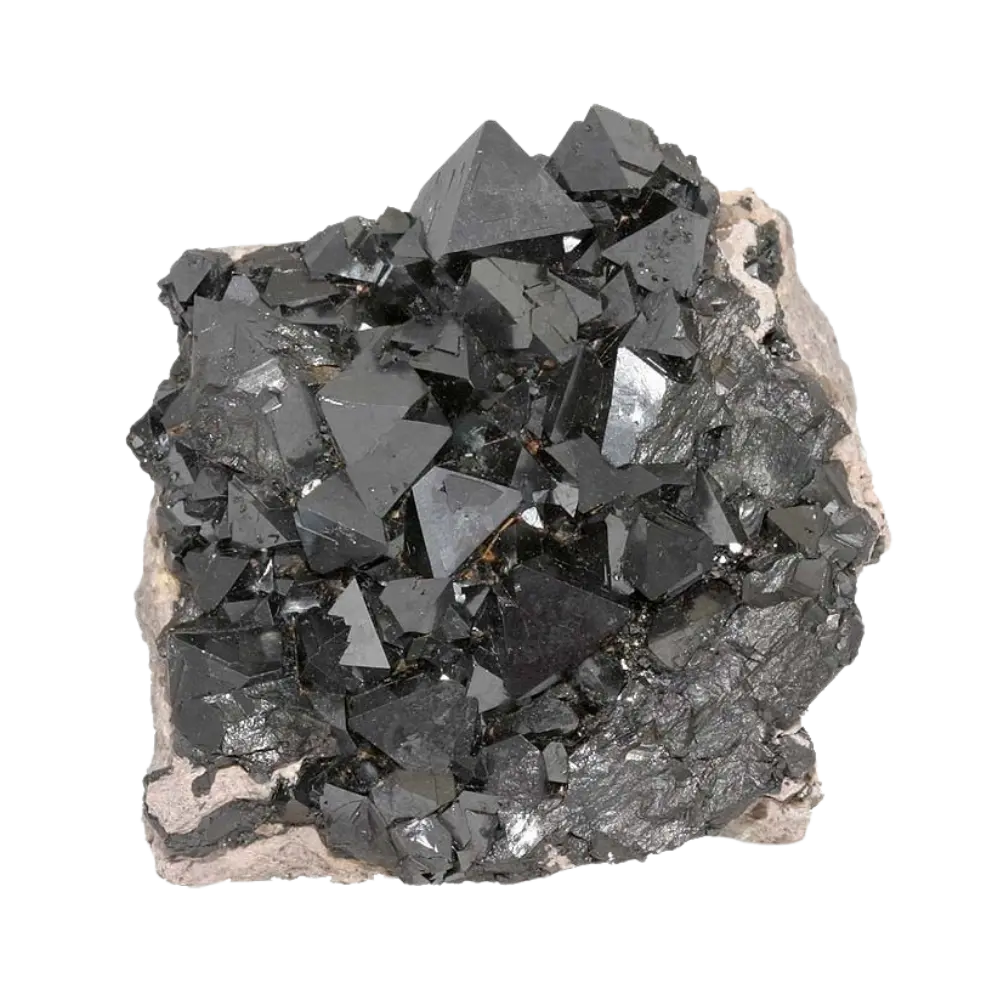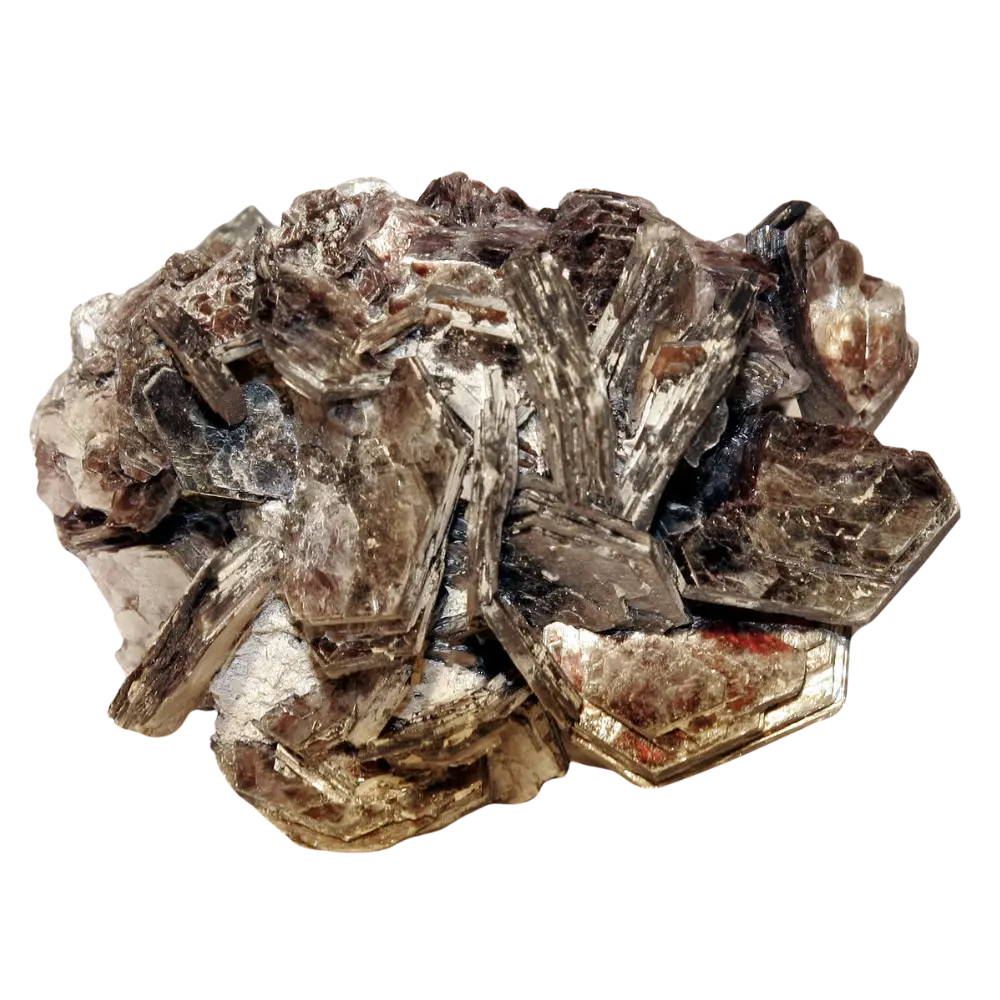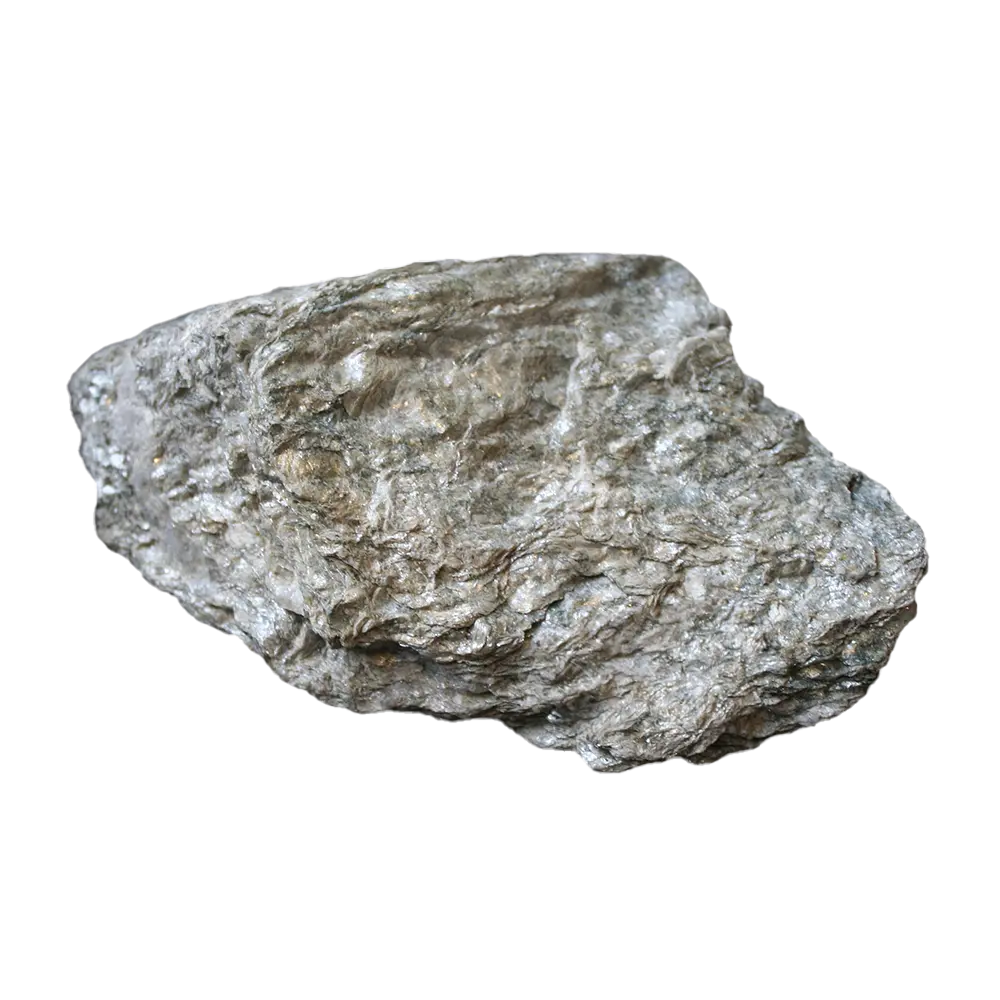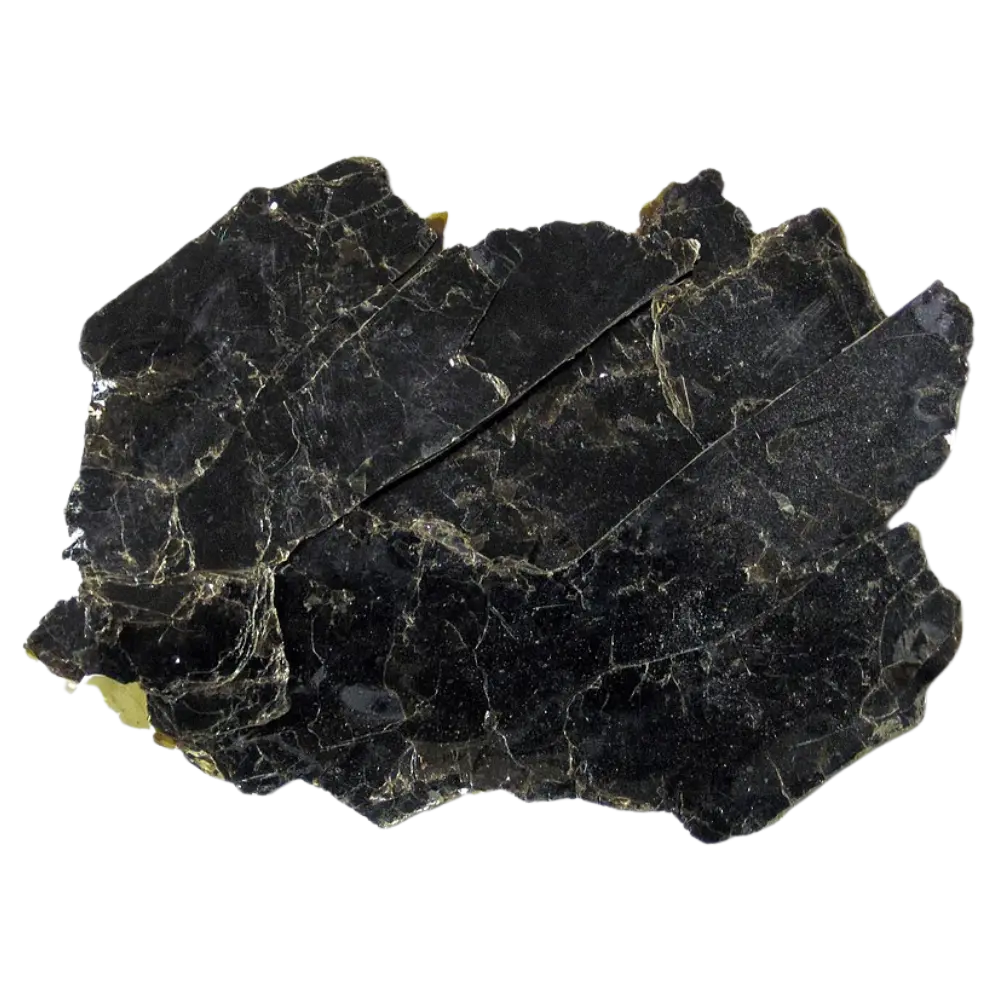
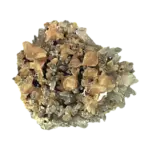
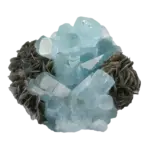
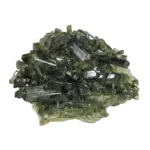
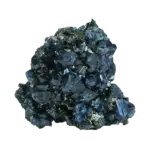
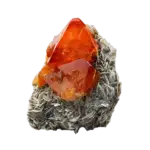
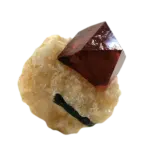
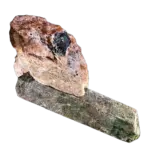
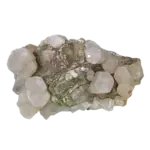
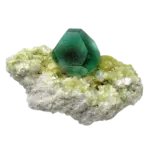
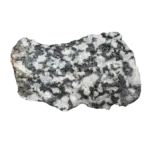
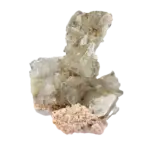
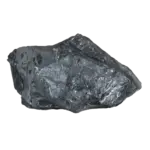
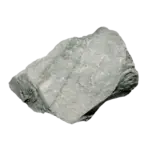
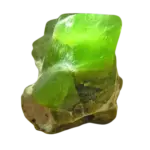
Most rocks in the upper continental crust have, at some point in their history, passed through chlorite. It is that common. Walk into any low-grade metamorphic terrain, slate belts, greenschists, altered ocean-floor basalts, the propylitic shells around copper porphyries, and chlorite is the green stuff making up the matrix. And yet it is almost always overlooked, partly because chlorite is not a single mineral but a group of sheet silicates that even experienced mineralogists struggle to tell apart in hand specimen.
Here is what is actually worth knowing.
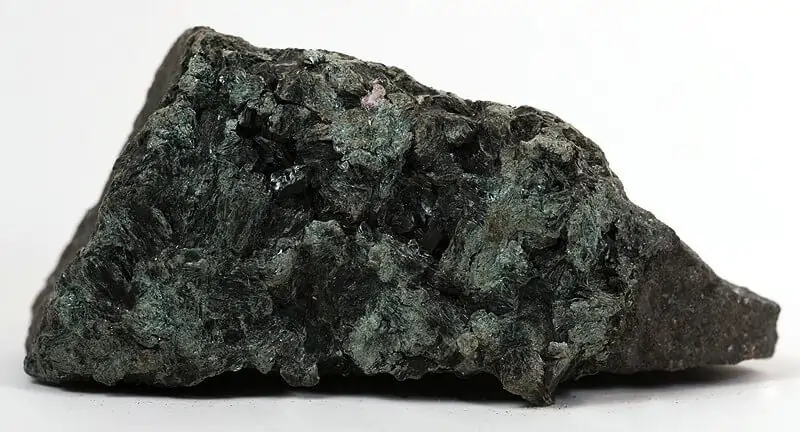
Fact Sheet
- Mineral group: Chlorite, phyllosilicate (sheet silicate)
- IMA statu: Group name; not a valid single species since 1998
- General formula: (Mg, Fe2+, Fe3+, Mn, Al)6(Si, Al)4O10(OH)8
- Most common species: Clinochlore (Mg-dominant) and chamosite (Fe2+-dominant)
- Crystal system: Monoclinic (most species); some triclinic
- Hardness: 2 – 2.5 on Mohs scale
- Specific gravity: 2.6 – 3.3 (varies with iron content)
- Cleavage: Vitreous to pearly on cleavage; dull in fine-grained masses
- Lustre: Vitreous to pearly on cleavage; dull in fine-grained masses
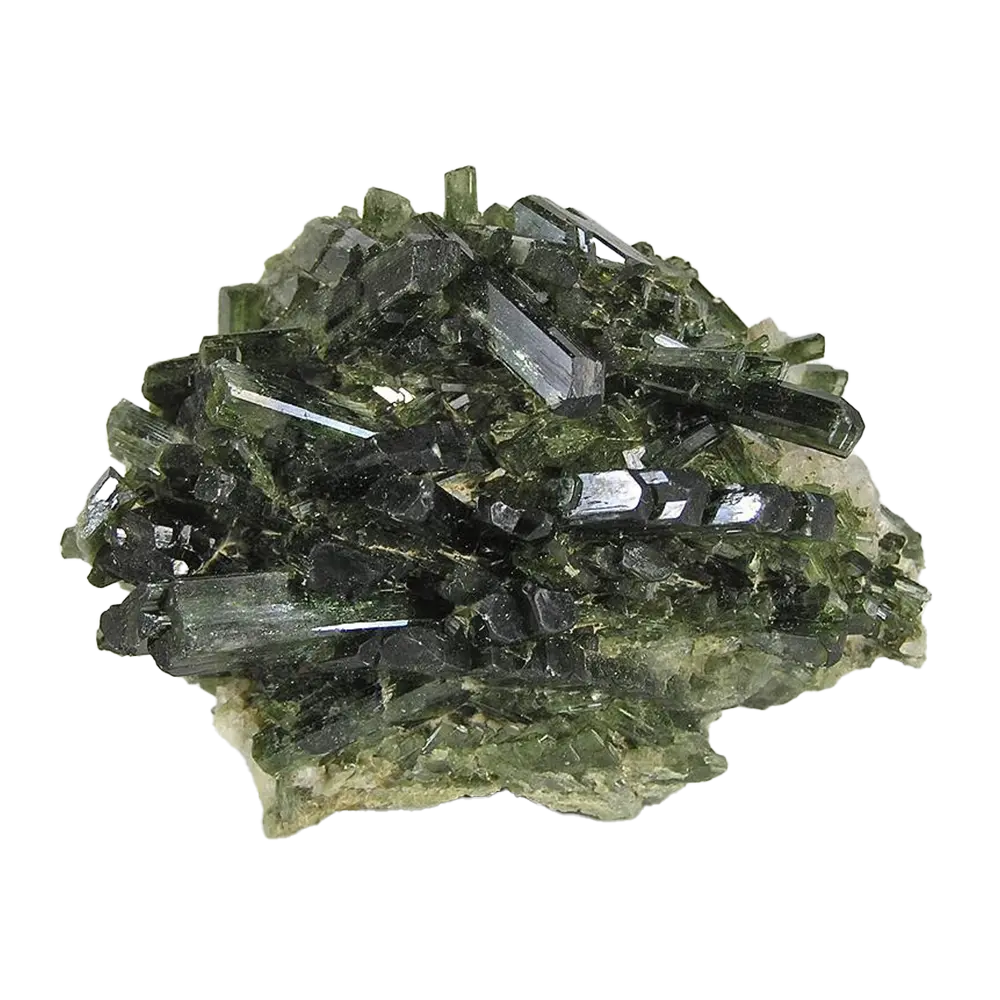
- Color: Most often green; also white, yellow, pink, violet (kämmererite), and black
- Streak: White to pale green
- Etymology: 2.6 – 3.3 (varies with iron content)
What Chlorite Actually Is
Chlorite is a group of phyllosilicates built around stacks of T-O-T (tetrahedral-octahedral-tetrahedral) layers: the same structural motif found in micas and talc. What sets chlorite apart is the presence of an additional brucite-like (Mg, Fe)(OH)2 sheet wedged between every TOT layer. This interlayer carries charge and gives chlorite its slightly stiffer, less elastic plates compared with mica.
The International Mineralogical Association recognises several end-members along this structural template: clinochlore (Mg-dominant), chamosite (Fe2+-dominant), pennantite (Mn-dominant), nimite (Ni-dominant), baileychlore (Zn-dominant), and the di-trioctahedral species sudoite, donbassite, and cookeite (Li-bearing). In practice, almost every chlorite you will encounter in the field is a member of the clinochlore–chamosite solid solution series: the magnesium–iron exchange that controls colour, density, and most of what a petrographer reads off a thin section.
Until 1998, the IMA recognised “chlorite” as a valid single species. It no longer does. The name persists informally because telling clinochlore from chamosite without an electron microprobe is genuinely difficult, and most geologists simply write Chl in their field notebooks and move on.
How Chlorite Forms
Chlorite is the product of low-temperature interactions between mafic minerals and water. Three settings dominate.
Regional metamorphism: the greenschist facies
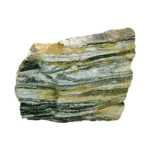
This is the textbook setting. When mafic rocks, basalts, gabbros, andesitic tuffs, are subjected to temperatures of roughly 300–500 °C and pressures of 2–10 kbar, their primary minerals (olivine, pyroxene, plagioclase, biotite, hornblende) break down and re-equilibrate to assemblages dominated by chlorite + actinolite + epidote + albite. The resulting rocks, greenschist, greenstone, chlorite schist, owe their colour to chlorite. George Barrow’s pioneering 1890s mapping of the Scottish Highlands identified the chlorite zone as the lowest of his metamorphic grades, and that nomenclature is still in routine use today.
Hydrothermal alteration
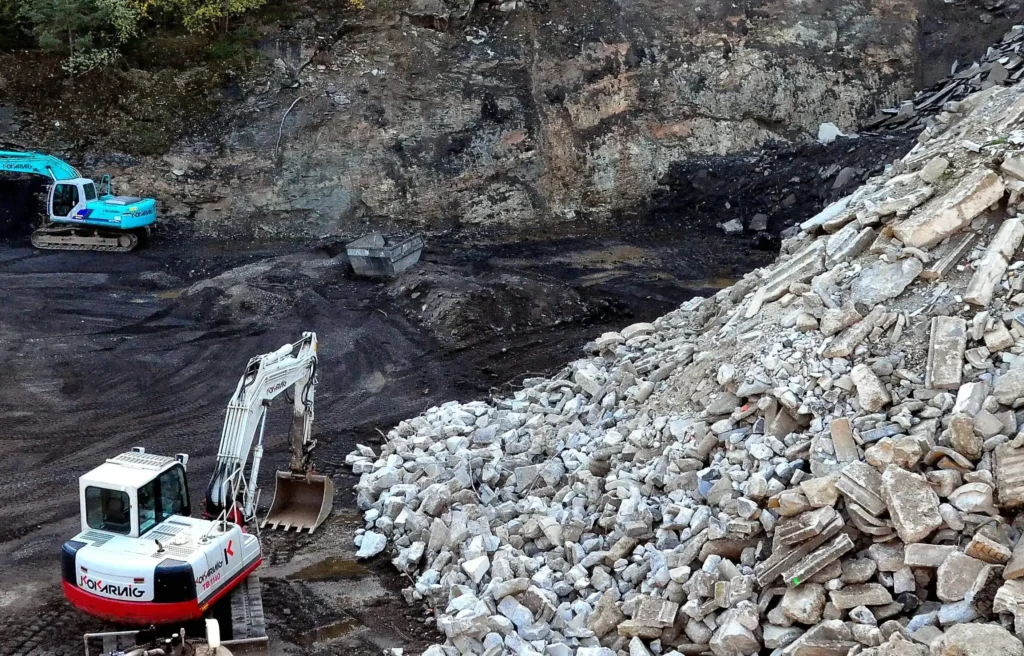
Wherever hot fluids circulate through mafic or intermediate rock, at mid-ocean ridges, around magmatic intrusions, along fault zones, chlorite forms. In porphyry copper systems, chlorite is the diagnostic mineral of the propylitic alteration halo (chlorite + epidote + calcite + albite + pyrite), the broad outer shell that surrounds the ore-bearing potassic core. The chemistry of this propylitic chlorite is now used as a vectoring tool in mineral exploration: systematic variations in Ti, V, Mg and Mn within chlorite can point to a buried porphyry centre kilometres away (Wilkinson et al., 2015).
Diagenesis and reservoir quality
In deeply buried sandstones, authigenic chlorite precipitates as thin coatings on detrital quartz grains. Once burial temperatures climb above roughly 80 °C, those coatings physically inhibit the nucleation of quartz cement, the main porosity killer in deep clastic reservoirs. The result is anomalously high porosity preserved at depths where reservoirs would otherwise be tight. The Triassic Skagerrak Formation of the North Sea Central Graben and the Pearl River Mouth Basin in offshore China are textbook cases (Worden et al., 2020). This is, quietly, one of the most economically important reactions chlorite ever performs.
Other settings
Chlorite also appears as a retrograde product, replacing biotite, garnet or amphibole when higher-grade rocks are uplifted and rehydrated; as a weathering product in soils derived from mafic rocks; and as berthierine and chamosite ooids in shallow-marine ironstones, the protolith of classic minette-type iron ores.
Notable Varieties and Colours
The textbook description of chlorite as “always green” is a useful first approximation but quickly breaks down. A handful of varieties deserve their own mention.
Clinochlore
Magnesium-dominant. By far the most common chlorite. Found in marbles, talc schists, serpentinites and metamorphosed mafic rocks worldwide. Type locality: West Chester, Pennsylvania (Blake, 1851). The name comes from the Greek klinein (“to incline”) plus chloros, in reference to its inclined optic axes.
Chamosite
Iron-dominant. Named after Chamoson in Valais, Switzerland, by Berthier in 1820. Common in oolitic ironstones and reduced marine sediments, and easily confused with the closely related 7 Å mineral berthierine.
Kämmererite
A chromium-rich variety of clinochlore, distinguished by a striking magenta-to-violet colour caused by Cr3+ in the octahedral site. It forms where chrome-bearing fluids interact with serpentinites. The Kop Krom mine in Erzurum Province, Turkey, produces the world’s finest specimens.
Seraphinite
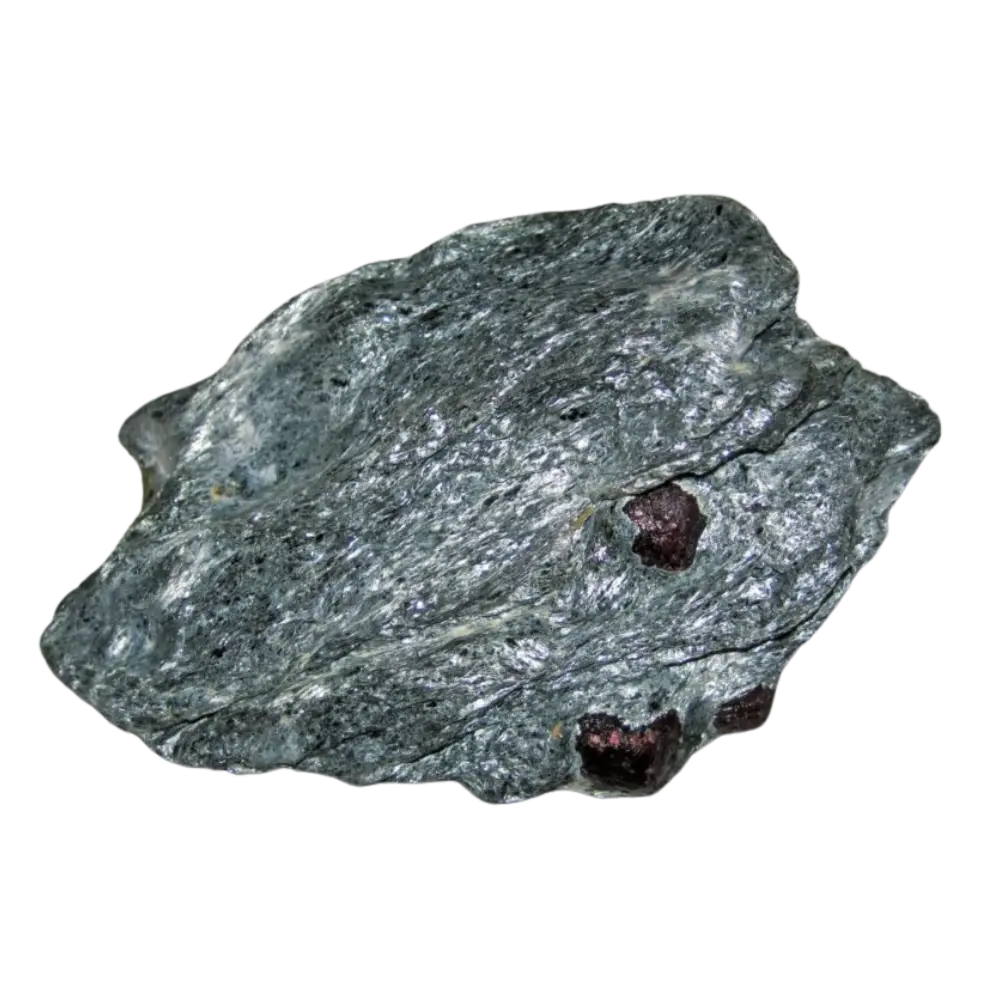
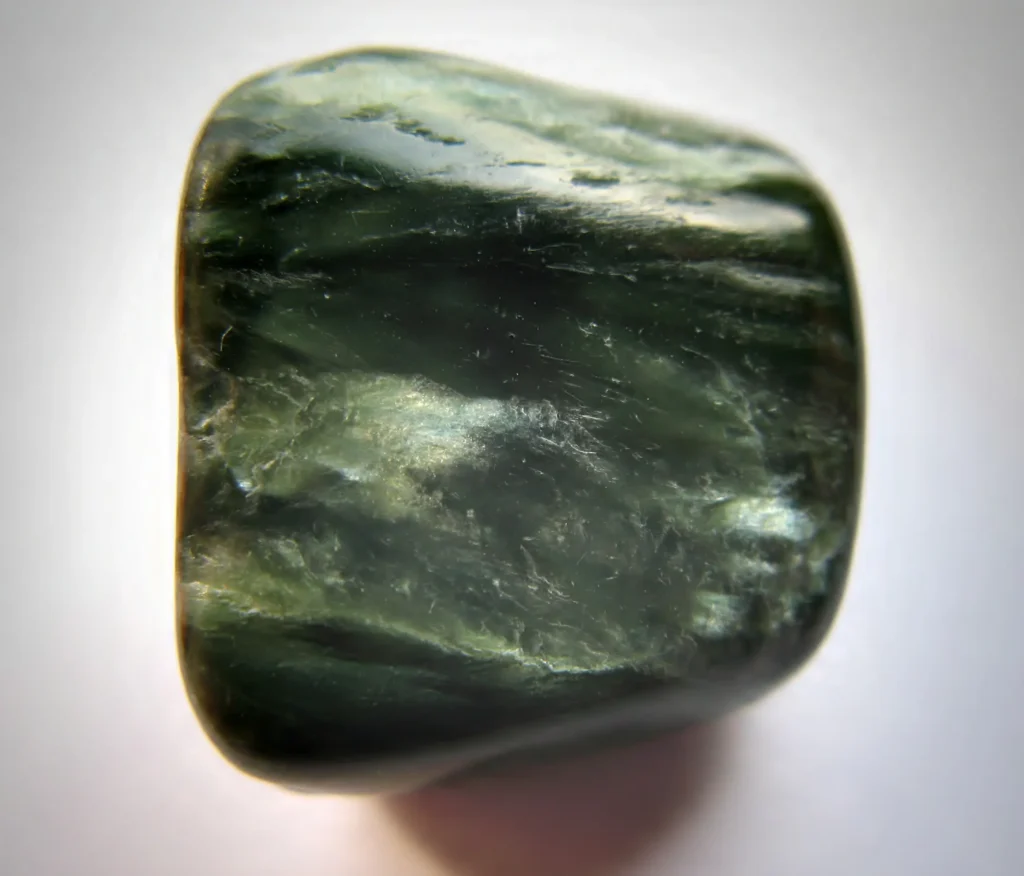
A trade name (not an IMA-approved species) for a fibrous, chatoyant variety of clinochlore from the Korshunovskoye iron skarn in Irkutsk Oblast, Eastern Siberia. The silvery, feather-like patterns that give the material its name are mica inclusions. The Korshunovskoye deposit remains the only commercial source. At Mohs 2–2.5, seraphinite is a fragile lapidary material best suited to cabochons and decorative slabs rather than ring-stones.
Where Chlorite Is Found
Chlorite is genuinely cosmopolitan; it occurs in low-grade metamorphic and altered igneous rocks on every continent. Specimen-quality chlorite, however, comes from a much shorter list of classic localities:
- Switzerland: Zermatt, Binntal and Val d’Anniviers (alpine clefts in metabasites); Chamoson, Valais (chamosite type locality)
- Italy: Val Malenco, Lombardy (clinochlore in serpentinites); Gambatesa Mine, Liguria (pennantite)
- United States: West Chester, Pennsylvania (clinochlore type locality); Tilly Foster Mine, Brewster, New York; the Vermont talc belt
- Russia: Korshunovskoye, Irkutsk Oblast (seraphinite); Akhmatov mine, Urals (kämmererite)
- Turkey: Kop Krom mine, Erzurum (world-class kämmererite)
- Canada: Broughton talc mine, Quebec
- Mali: Kayes Region (sharp pseudohexagonal clinochlore crystals)
Why Chlorite Matters
Chlorite has almost no direct industrial application. It is not mined as a primary commodity anywhere in the world. Its real importance is diagnostic and informational, and on those terms it is one of the more useful minerals a geologist has.
Index mineral for greenschist facies
In Barrovian metamorphic mapping, the appearance and disappearance of chlorite mark major isograds. A pelitic schist with chlorite + muscovite + quartz tells a petrologist they are looking at temperatures of roughly 300–450 °C, the lowest grade of regional metamorphism that produces a foliated rock.
Geothermometry
The Tschermak-substitution exchange in chlorite (Si–Al for Al–Mg) is temperature-sensitive, and several empirical and thermodynamic chlorite thermometers have been developed (Cathelineau & Nieva, 1985; Bourdelle et al., 2013). They are notoriously sensitive to bulk-rock composition and oxidation state, so results are best treated as one constraint among several rather than a stand-alone temperature.
Vectoring tool in mineral exploration
Trace-element systematics in propylitic chlorite, particularly Ti, V, Mn and Mg ratios, are now a routine input for hunting buried porphyry copper deposits. Footprints defined by chlorite chemistry can extend several kilometres beyond conventional whole-rock anomalies (Wilkinson et al., 2015).
Reservoir quality in clastic basins
Chlorite grain coatings preserve porosity in deeply buried sandstones by inhibiting quartz cementation above ~80 °C. Distinguishing pore-bridging chlorite (helpful) from pore-filling chlorite (which destroys permeability) is a core part of clastic reservoir characterisation in petroleum and geothermal exploration.
Decorative and ornamental stone
Chlorite schist and seraphinite are used as ornamental and lapidary materials. Chlorite was also one of the most common stones for carved vessels in the Bronze Age civilisations of Mesopotamia, Iran (the Jiroft culture) and the Indus Valley.
How to Identify Chlorite in the Field
Look for a green, micaceous mineral with perfect basal cleavage, soft enough to scratch with a fingernail (Mohs 2–2.5), and, crucially, plates that bend but do not snap back. This non-elastic flex is the single most useful field test, and the cleanest way to separate chlorite from biotite. Chlorite often has a faint soapy feel, and in thin section it commonly shows characteristic anomalous brown or “Berlin blue” interference colours under crossed polars.
Distinguishing chlorite from other green phyllosilicates:
- Biotite: Plates are elastic; chlorite plates are not. This is the clincher.
- Talc: Markedly softer (Mohs 1) and noticeably soapy.
- Serpentine (antigorite): Usually fibrous or platy without chlorite’s well-developed micaceous habit.
- Glauconite / celadonite: Restricted to sedimentary contexts; almost never appears as visible plates.
Distinguishing clinochlore from chamosite without analytical tools is essentially impossible. Don’t try.
Frequently Asked Questions
Is chlorite a single mineral?
No. Chlorite is the group name for several closely related phyllosilicates. The IMA discontinued “chlorite” as a valid single species in 1998. Clinochlore and chamosite are the two species you will encounter most often.
Does chlorite contain chlorine?
No. The name comes from the Greek chloros, meaning “green”. There is no chlorine in the formula.
Is the mineral chlorite the same as the chlorite ion (ClO2−)?
Different things entirely, despite the shared name. The mineral chlorite is a sheet silicate; the chlorite ion is an inorganic anion used in bleaching and water treatment.
What rocks contain chlorite?
Greenschist, greenstone, chlorite schist, phyllite, slate, propylitically altered volcanic rocks, deeply buried sandstones, serpentinites and metamorphosed mafic intrusions, among many others.
Is chlorite valuable?
Most chlorite has no commercial value. Two exceptions: seraphinite (the lapidary variety from Siberia) and kämmererite (collectors’ specimens, especially from Kop Krom in Turkey).