
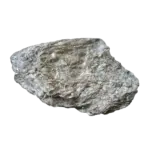
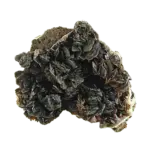
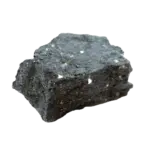
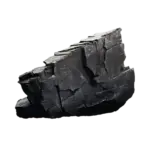
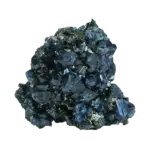


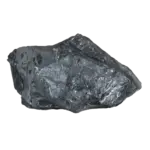
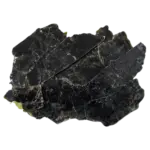
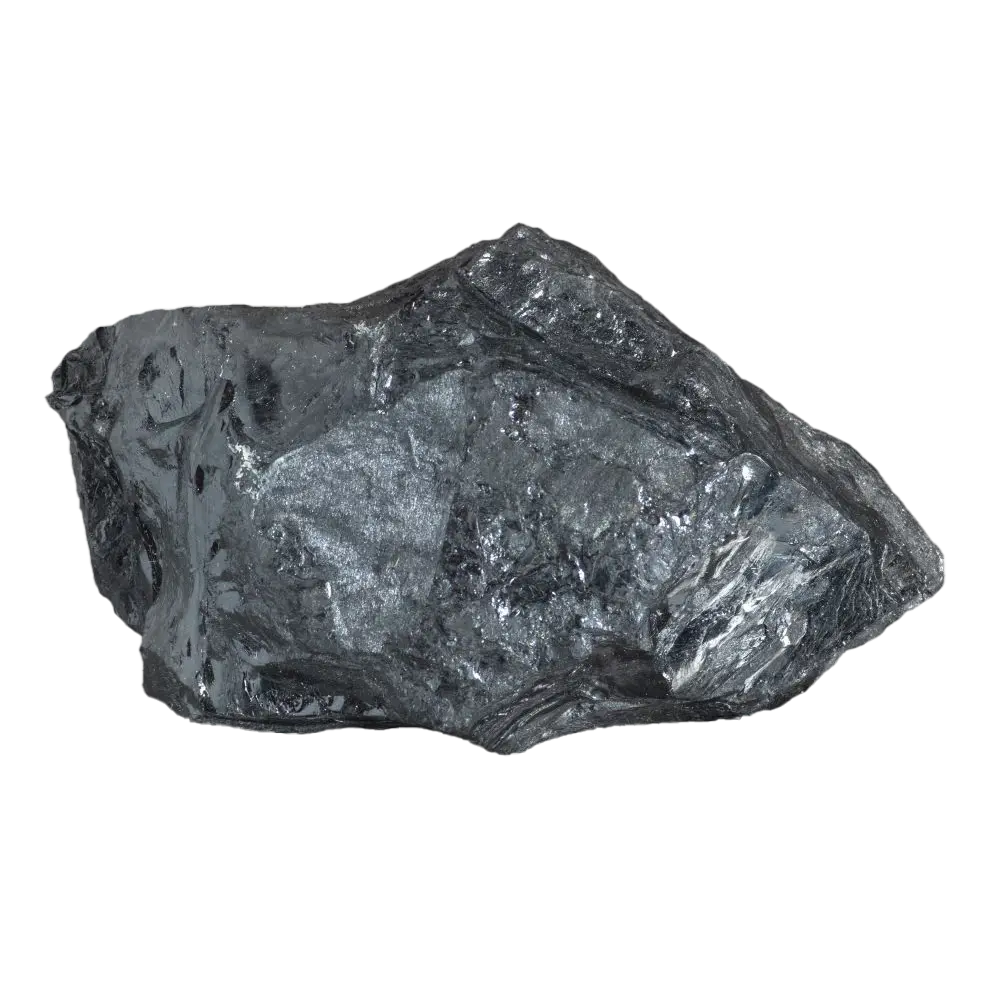
Coal is the most carbon-rich sedimentary rock on Earth, and the most consequential one humans have ever extracted. It powered the Industrial Revolution, still generates more than a third of the world’s electricity, and in 2023 was mined at a rate of 8,970 million tonnes: an all-time high. For geologists, it’s also one of the strangest rocks in the catalog: a stratified deposit composed almost entirely of compressed, chemically transformed plant remains, with its own taxonomy of microscopic constituents and its own classification standard.
Fact Sheet
- Rock type: Organic (biochemical) sedimentary rock
- Chemical composition: 50–95% carbon by weight, with hydrogen, oxygen, nitrogen, sulfur, and trace inorganics
- Hardness (Mohs): ~1 (lignite) to ~3.5 (anthracite)
- Density: 1.1–1.5 g/cm³ (lignite); up to ~1.8 g/cm³ (anthracite)
- Color and luster: Brown to black; dull in lignite and sub-bituminous, vitreous to submetallic in bituminous and anthracite
- Source material: Land-plant remains accumulated in peat-forming wetlands
- Geological age: Most economic coal dates to the Carboniferous (~359–299 Ma), Permian, or Cretaceous–Paleogene
- Major producers (2023): China, India, Indonesia, United States, Australia, Russia: together ~85% of global output
- Classification standards: ASTM D388 (US), ISO 11760 (international), ICCP for maceral nomenclature
What Is Coal?
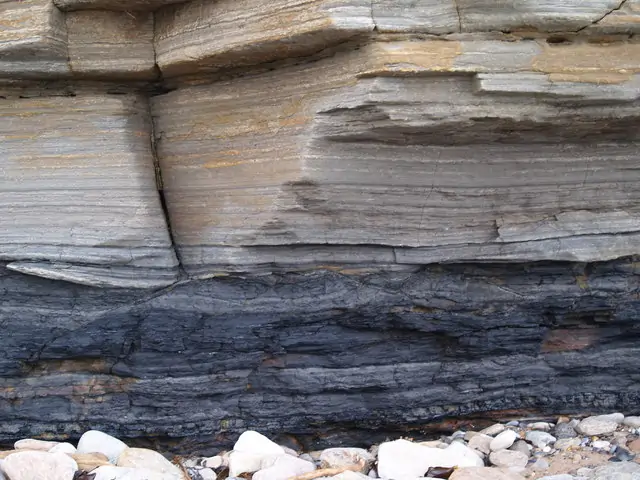
Coal is a combustible, layered sedimentary rock dominated by organic matter rather than mineral grains. Its building blocks are not minerals but macerals: microscopic constituents derived from specific plant tissues. The International Committee for Coal and Organic Petrology recognizes three maceral groups [2]:
- Vitrinite: the most abundant group, derived from woody tissues (bark, stems, roots). Its optical reflectance is the standard industry indicator of coal maturity.
- Liptinite (older term: exinite): derived from waxy or resinous plant parts, spores, cuticles, and algae. Hydrogen-rich and the source of most coal-derived hydrocarbons.
- Inertinite: oxidized or fire-charred plant material; carbon-rich but unreactive in coking.
Geologists distinguish coal from carbonaceous mudstone by a working threshold of roughly 50% organic matter by weight. Below that, the rock is an organic-rich shale; above it, a coal.
How Coal Forms: From Peat to Anthracite
The Coalification Sequence
Coal forms wherever plant productivity outpaces decay, almost always in waterlogged, oxygen-poor environments such as forested swamps, mires, and coastal peatlands. Submerged plant litter resists complete microbial breakdown, accumulates as peat, and is buried beneath new sediment. Increasing temperature and pressure then drive the progressive expulsion of water, methane, carbon dioxide, and other volatiles. This process is called coalification.
The result is a continuous series of increasingly carbon-rich rocks:
| Stage | Carbon (% dmmf*) | Calorific value (MJ/kg) | Vitrinite reflectance Ro (%) |
|---|---|---|---|
| Peat | ~50–60 | ~10–15 | <0.3 |
| Lignite | 60–75 | 15–19 | 0.3–0.5 |
| Sub-bituminous | 75–80 | 19–24 | 0.5–0.6 |
| Bituminous | 80–90 | 24–35 | 0.6–2.0 |
| Anthracite | >90 | 32–35 | >2.0 |
Vitrinite reflectance, the percentage of light reflected from a polished vitrinite surface under oil immersion, is the petroleum and coal industry’s standard maturity indicator and is also widely used to estimate maximum burial temperatures in basin analysis.
Why So Much Coal Formed in the Carboniferous
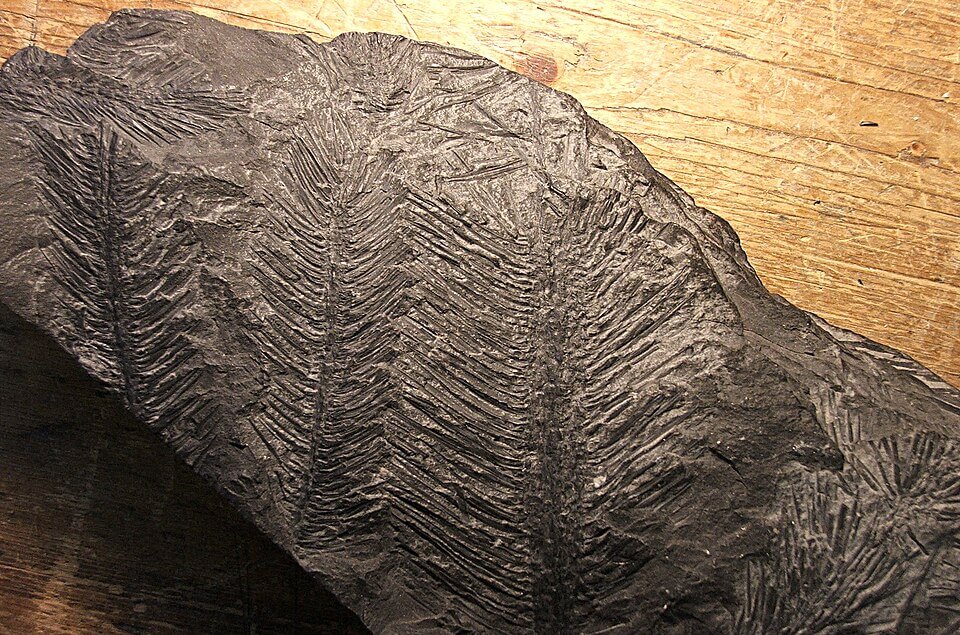
The Carboniferous Period (≈359–299 Ma) is named for its coal. It produced more economically minable coal than any other interval in Earth history, by a wide margin. The popular explanation, repeated in textbooks and pop-science articles for years, was the evolutionary lag hypothesis: woody land plants had recently evolved lignin (a tough biopolymer in cell walls), but fungi capable of degrading it had not yet evolved, so dead wood piled up unrotted for tens of millions of years.
That hypothesis is no longer accepted. A 2016 study in PNAS by Nelsen, DiMichele, Peters, and Boyce assembled phylogenomic, geochemical, paleontological, and stratigraphic evidence against it [4]:
- Many of the dominant Carboniferous coal-forming plants, particularly giant lycopsids such as Lepidodendron and Sigillaria, were built mostly of lignin-poor periderm tissues, not lignin-rich wood.
- Fossil and phylogenomic evidence suggest lignin-degrading fungi, and other microbes capable of attacking lignin, were almost certainly present throughout the Carboniferous.
- An Earth on which lignin simply wasn’t decaying would have produced atmospheric oxygen and carbon-cycle imbalances grossly inconsistent with the geological record.
The current consensus is that Carboniferous coal accumulation reflects a coincidence of tectonic and climatic conditions: continental collisions that produced widespread, low-relief equatorial basins during the assembly of Pangaea; a humid greenhouse climate punctuated by glacioeustatic sea-level cycles that repeatedly drowned and re-exposed coastal swamps; and the spread of vast peat-forming wetlands across what is now eastern North America, western Europe, and parts of China. Coal didn’t accumulate because nothing could rot it. It accumulated because the right plants grew in the right places at the right time.
Coal Rank: The Four Classes
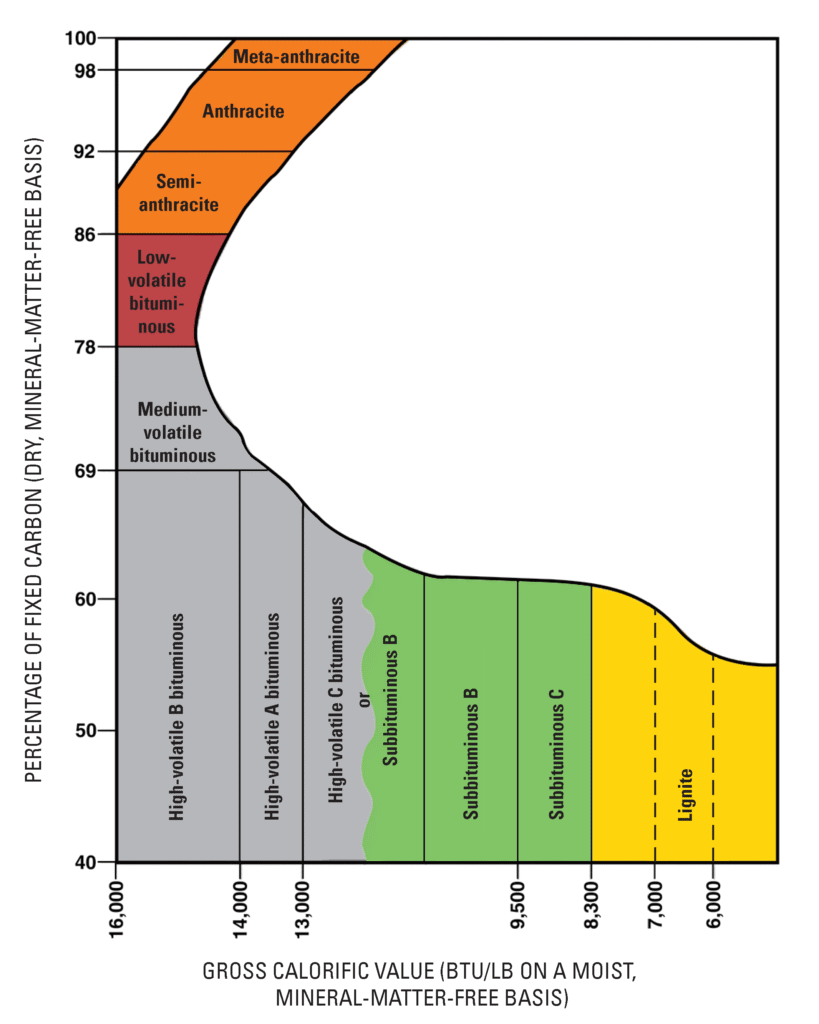
Coal is classified by rank its degree of metamorphism, not “grade.” Grade is a separate concept describing purity (mineral-matter and sulfur content). The American standard ASTM D388-19a separates coals into four rank classes using fixed carbon (for higher-rank coals) and gross calorific value (for lower-rank coals), both calculated on a mineral-matter-free basis.
Peat (precursor)
Not technically coal, but the starting material. Modern peat accumulates at roughly 0.5–1 mm per year. Producing a 10-meter coal seam therefore implies tens of thousands of years of continuous accumulation, with a peat-to-coal compaction ratio of 7:1 to 10:1 depending on final rank.
Lignite (“brown coal”)
The lowest-rank coal. Soft, friable, often retaining visible plant structure. Calorific value 15–19 MJ/kg. High moisture content (30–60%) makes long-distance transport uneconomic, so lignite is typically burned at mine-mouth power plants. Major producers: Germany (Rheinland Basin), Greece, Australia (Latrobe Valley), and parts of China.
Sub-bituminous Coal
Black to dull-black, with carbon content of 75–80% on a dry mineral-matter-free basis. The dominant rank in the Powder River Basin (Wyoming and Montana), which produces around 40% of US coal, making it one of the largest single sources of thermal coal in the world.
Bituminous Coal
The most economically important rank. Hard, banded, and highly variable: ASTM D388 subdivides it into low-, medium-, and high-volatile groups. Medium- and low-volatile bituminous coals that swell and fuse on heating are called coking coals and are the only rank suitable for making metallurgical coke. Major bituminous producers include the Appalachian Basin (US), the Bowen Basin (Australia), the Donetsk Basin (Ukraine and Russia), and Shanxi Province (China).
Anthracite
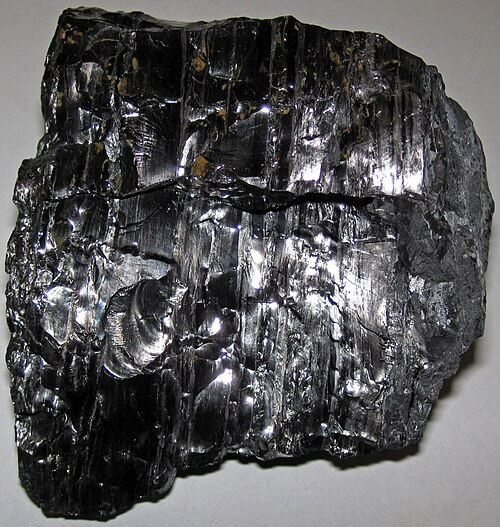
The highest rank. Hard, lustrous, with conchoidal fracture and more than 86% fixed carbon. It burns with a short, smokeless flame. Globally rare, probably less than 1% of world coal reserves, anthracite forms only where bituminous coal has experienced low-grade regional metamorphism, typically near the margins of orogenic belts. The Pennsylvania Anthracite Coalfield (US) and Vietnam’s Quang Ninh Basin are the largest active producers.
Where Coal Is Found
Workable coal seams occur on every continent except Antarctica, where they exist but aren’t mined under the Antarctic Treaty. The world’s most productive basins concentrate in three intervals: the Late Carboniferous–Permian (Northern Hemisphere and Gondwanan coals), the Triassic–Jurassic (parts of China and Australia), and the Cretaceous–Paleogene (Powder River Basin, Indonesia, parts of central Europe).
China
The largest producer and consumer by an enormous margin: roughly 4.6 billion tonnes in 2024, about half of global output. Most production comes from Shanxi, Inner Mongolia, and Shaanxi provinces, drawing on Permian-aged seams of the North China Block. Shanxi alone produces more coal annually than any country except India.
India
Second-largest producer, with output growing roughly 7% in 2024. The major basins are the Permian-aged Damodar Valley (Jharkhand, West Bengal) and the Mahanadi/Talcher fields of Odisha. Indian coal is mostly high-ash, low-sulfur thermal coal feeding domestic power generation.
Indonesia
Third-largest producer and the world’s largest seaborne thermal-coal exporter. Mining is concentrated in Kalimantan and Sumatra, where Eocene–Miocene coals from former tropical wetland systems are extracted in large surface mines. Indonesian production exceeded 800 Mt in 2024.
United States
The Paleocene–Eocene Fort Union Formation of the Powder River Basin (Wyoming and Montana) hosts seams up to 30 m thick, among the thickest in the world, and supplies most US thermal coal. The Carboniferous (Pennsylvanian) Appalachian Basin produces higher-rank bituminous coals, including most US metallurgical export tonnage.
Australia
The fourth-largest producer and the dominant exporter of metallurgical coal. The Permian Bowen Basin (Queensland) and Sydney–Gunnedah Basin (New South Wales) host the bulk of production. The IEA projects Australia will overtake the US and Russia in total coal output by 2027.
Russia, Colombia, South Africa
Russia’s Kuznetsk Basin (Siberia) is among the largest coal reserves in the world; sanctions have constrained but not halted exports. South Africa’s Witbank Coalfield supplies both domestic generation and export markets. Colombia’s Cerrejón mine is a major Atlantic-basin exporter.
How Coal Is Used
Thermal Coal (Electricity Generation)
About two-thirds of mined coal is burned in power plants. Pulverized coal is injected into a boiler furnace where combustion at 1,500–1,700 °C generates steam that drives turbines. As of 2024, coal still supplies roughly 35% of the world’s electricity, its lowest share since the IEA was founded in 1974, but still the single largest source.
Metallurgical Coal (Steelmaking)
Hard coking coals are heated to 1,000–1,100 °C in the absence of oxygen, driving off volatiles and fusing the residue into porous, high-carbon coke. Coke serves as both reductant and structural support in blast furnaces, where it converts iron-oxide ore to molten pig iron. About 70% of global steel is still produced via this route, making coking coal essentially irreplaceable on current technology timescales, though direct reduction with hydrogen is the principal decarbonization pathway under development.
Cement, Chemicals, and Coal-to-Liquids
Coal is widely used as a kiln fuel in cement production, where the high temperatures (~1,450 °C) needed to form clinker make natural-gas substitution costly. Coal can also be gasified or directly liquefied to produce synthesis gas, methanol, ammonia, and synthetic diesel. At industrial scale this is dominated by South Africa’s Sasol facilities and a growing Chinese coal-to-chemicals sector. Globally, however, coal-to-liquids remains a marginal market.
Coalbed Methane and the Coal Gas System
Methane, generated as a byproduct of coalification and adsorbed onto the enormous internal surface area of coal, is both a hazard and a resource. It is responsible for most underground coal-mine explosions, and pre-drainage is now standard in deep operations. Coalbed methane (CBM) has also become a significant share of natural-gas production in the US (San Juan and Powder River Basins) and Australia (Bowen and Surat Basins). Coal seams additionally store carbon dioxide, and CO₂–CH₄ exchange in coalbeds is an active area of carbon-storage research.
Coal in the 2020s: A Changing Picture
Global coal demand reached an all-time high in 2024 at roughly 8.77 billion tonnes, driven by power demand growth in India, Southeast Asia, and China. At the same time, coal’s share of the global electricity mix has been declining for two decades as renewables and gas expand. Whether coal use peaks in the 2020s, 2030s, or later depends almost entirely on the trajectory of Chinese power demand and the speed of build-out for solar, wind, nuclear, and storage. The closure of the United Kingdom’s last coal-fired power plant in September 2024 was a symbolic milestone for the country where the coal economy began.
For geologists, coal remains a remarkable material: an archive of ancient ecosystems, a paleoclimatic recorder, and a still-functioning industrial commodity all at once.
Frequently Asked Questions
Is coal a rock or a mineral?
Coal is a rock, specifically, an organic sedimentary rock. It is not a mineral, because it lacks a fixed crystalline structure and a definite chemical composition.
How long does it take coal to form?
Peat-to-bituminous transformations require burial under several kilometers of sediment for at least tens of millions of years; anthracite requires deeper burial or regional metamorphism. Most economically minable coal is between 100 and 350 million years old.
What’s the difference between coal rank and coal grade?
Rank describes the degree of coalification (lignite → anthracite). Grade describes purity, mostly the proportion of mineral matter (ash) and contaminants such as sulfur. A high-rank coal can still be low-grade if it carries a lot of mineral impurities.
Which type of coal has the most energy?
Anthracite has the highest carbon content and the highest energy density per kilogram. Some low-volatile bituminous coals approach anthracite in calorific value while remaining easier to ignite and burn, which is one reason anthracite is no longer a major fuel in modern power generation.
Is coal still being formed today?
Yes. Peat is forming today in tropical and high-latitude wetlands, and given enough geological time and the right burial history, some of it will eventually become coal. But the global rate of peat accumulation is many orders of magnitude below the rate at which coal is being extracted.