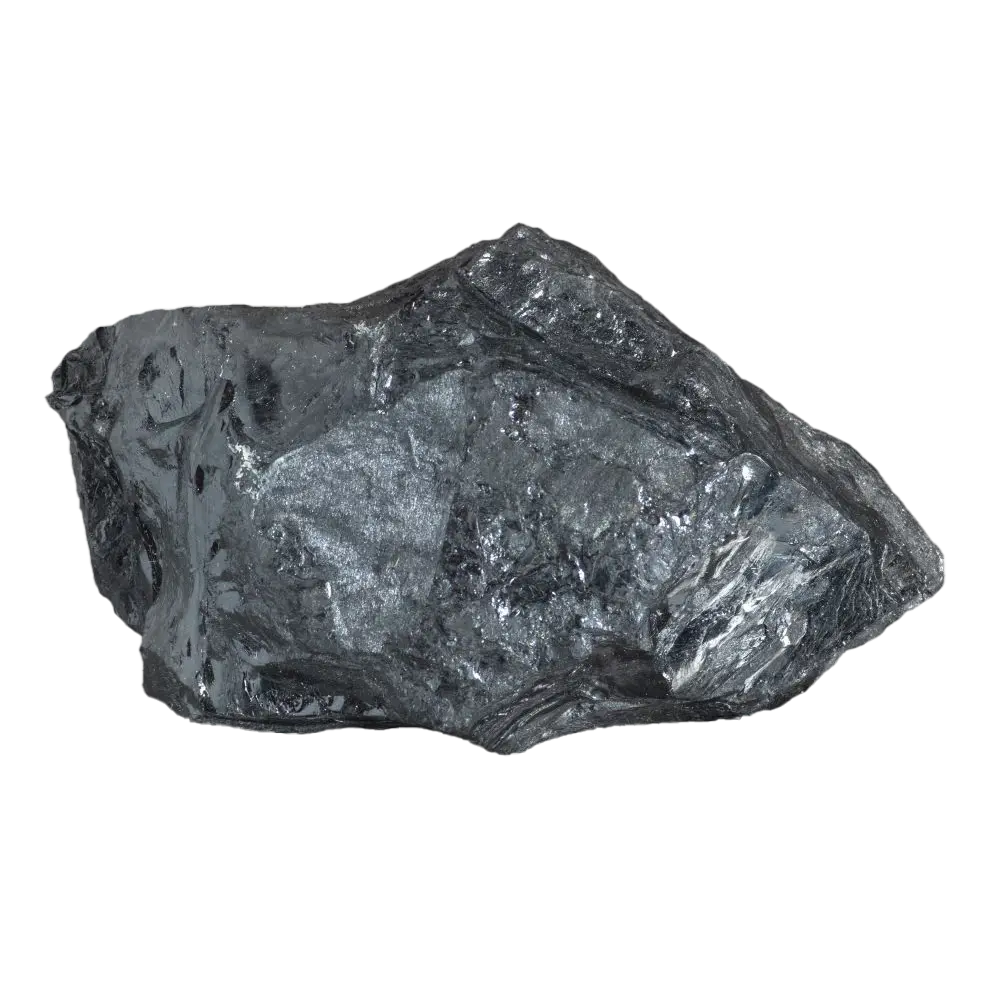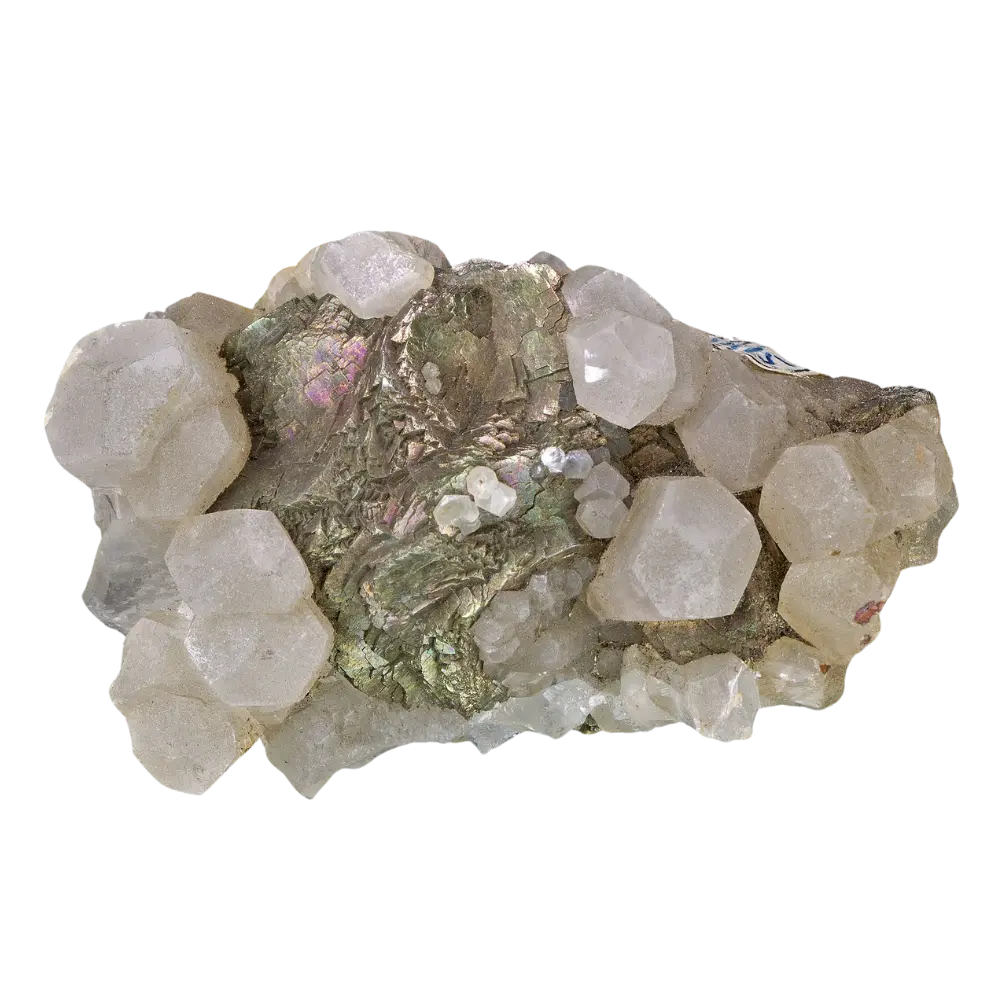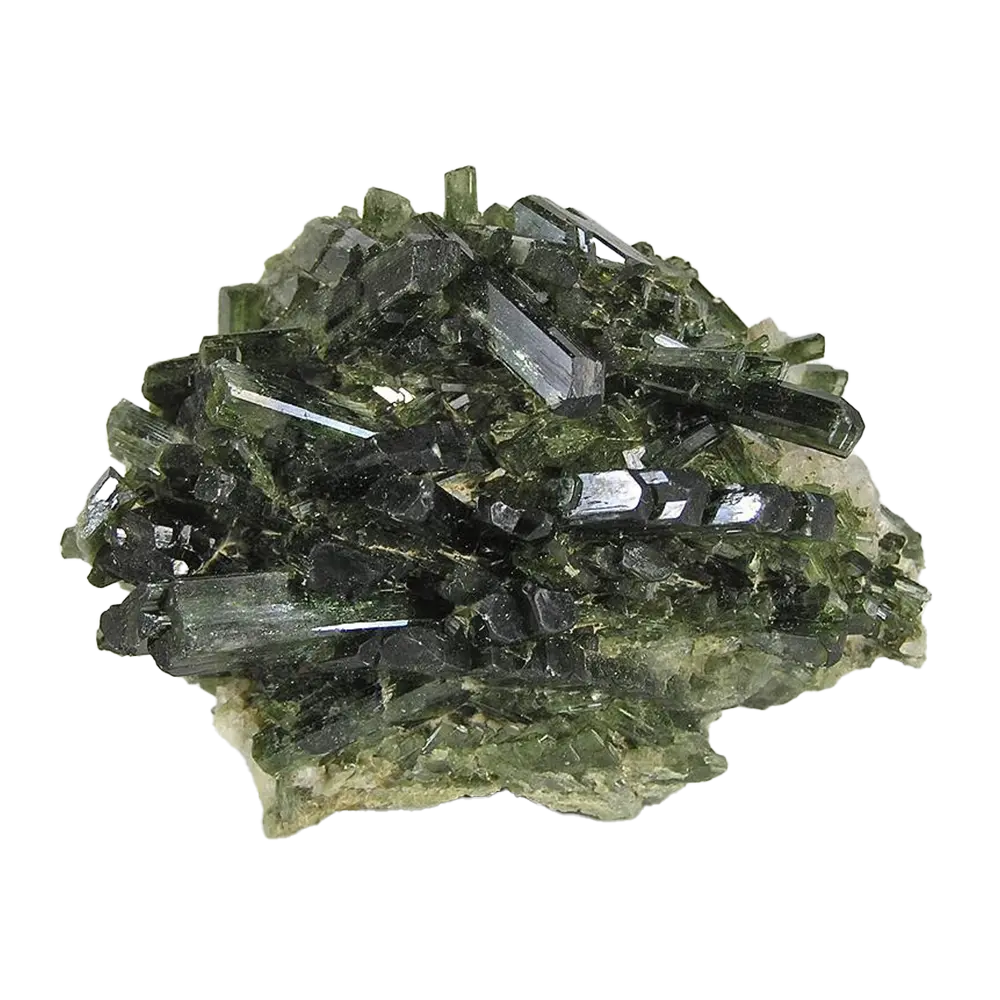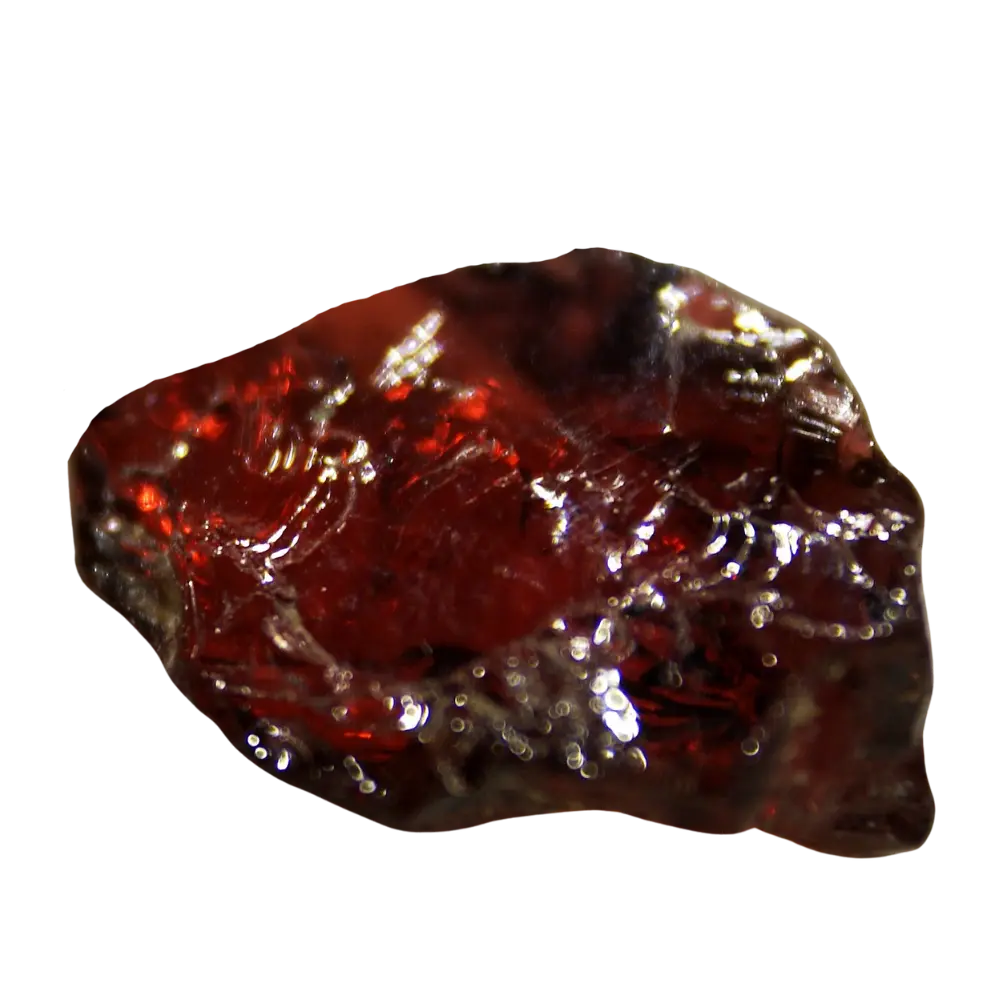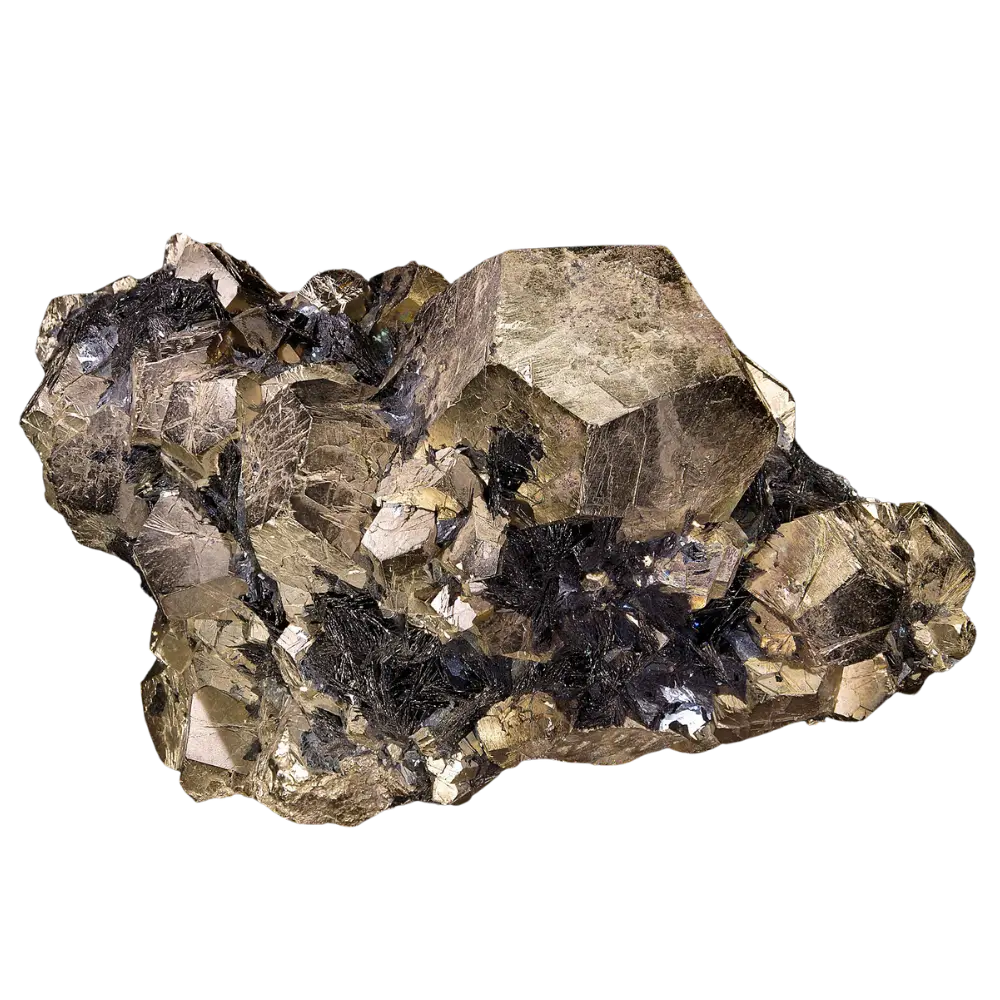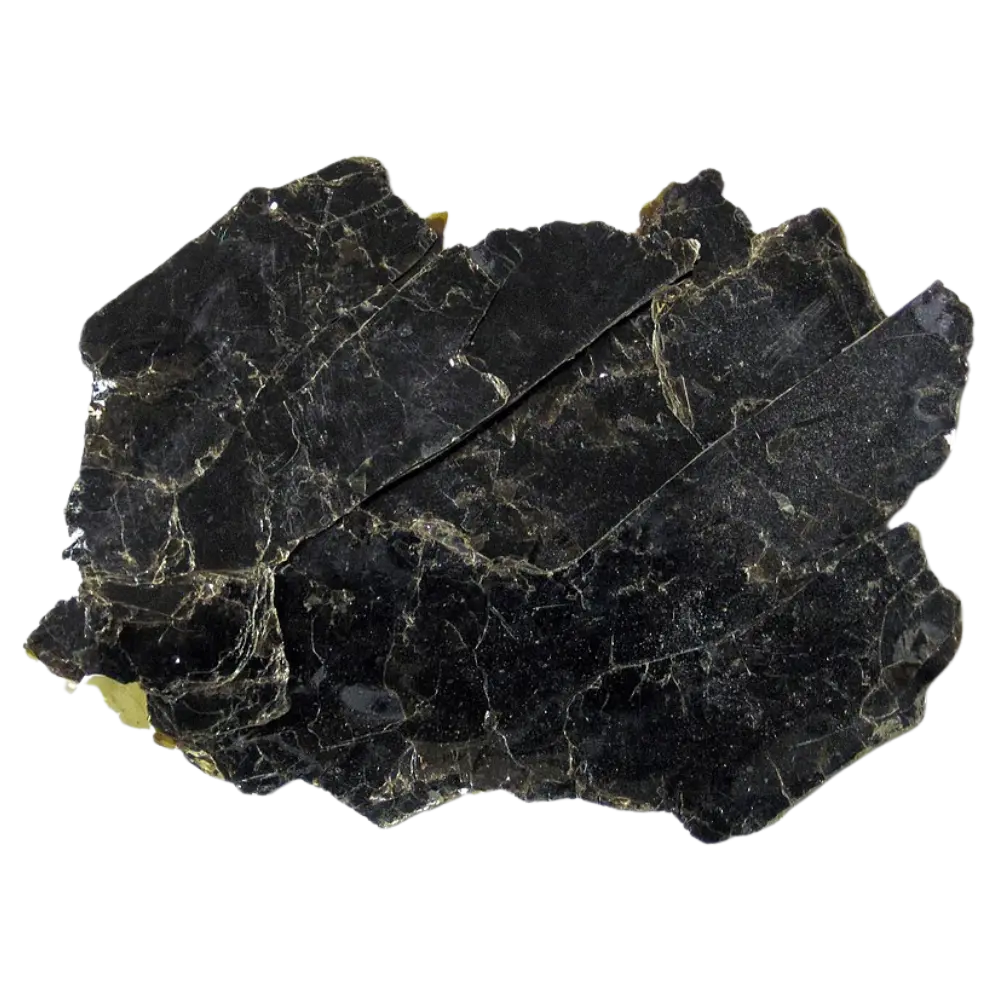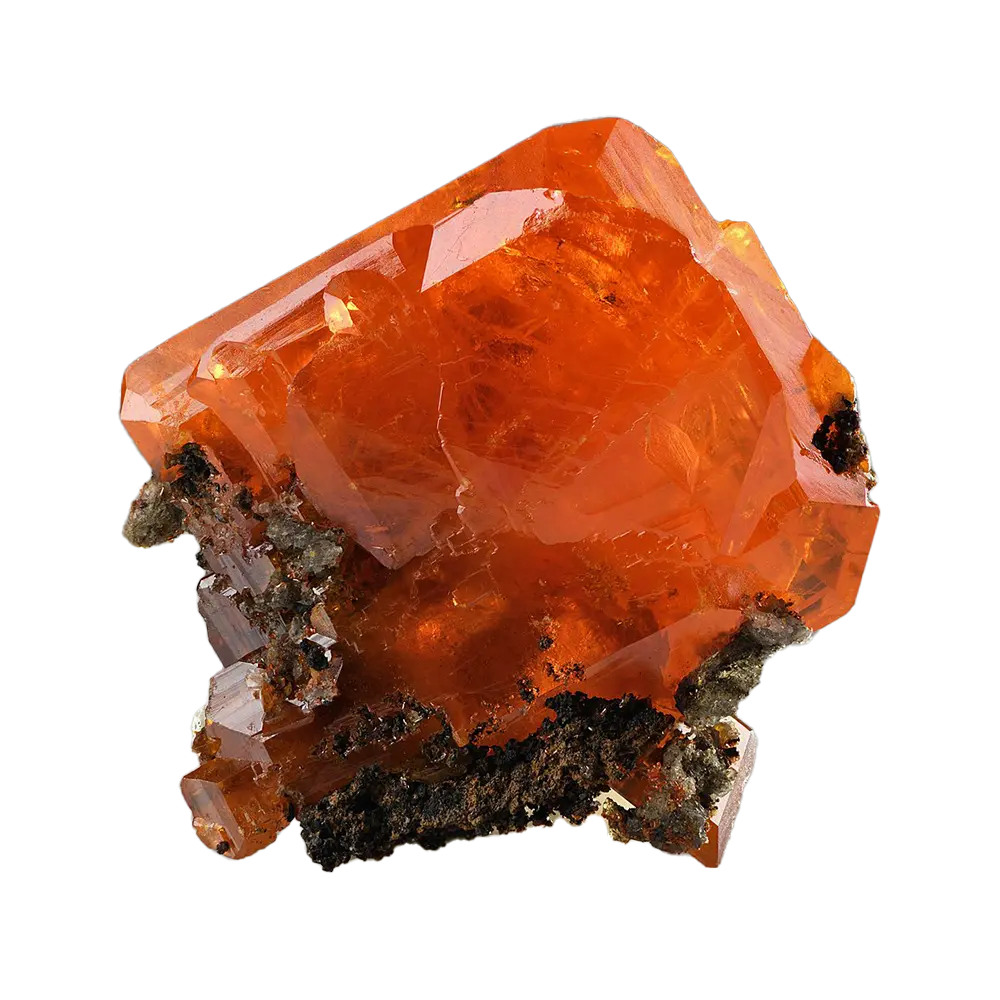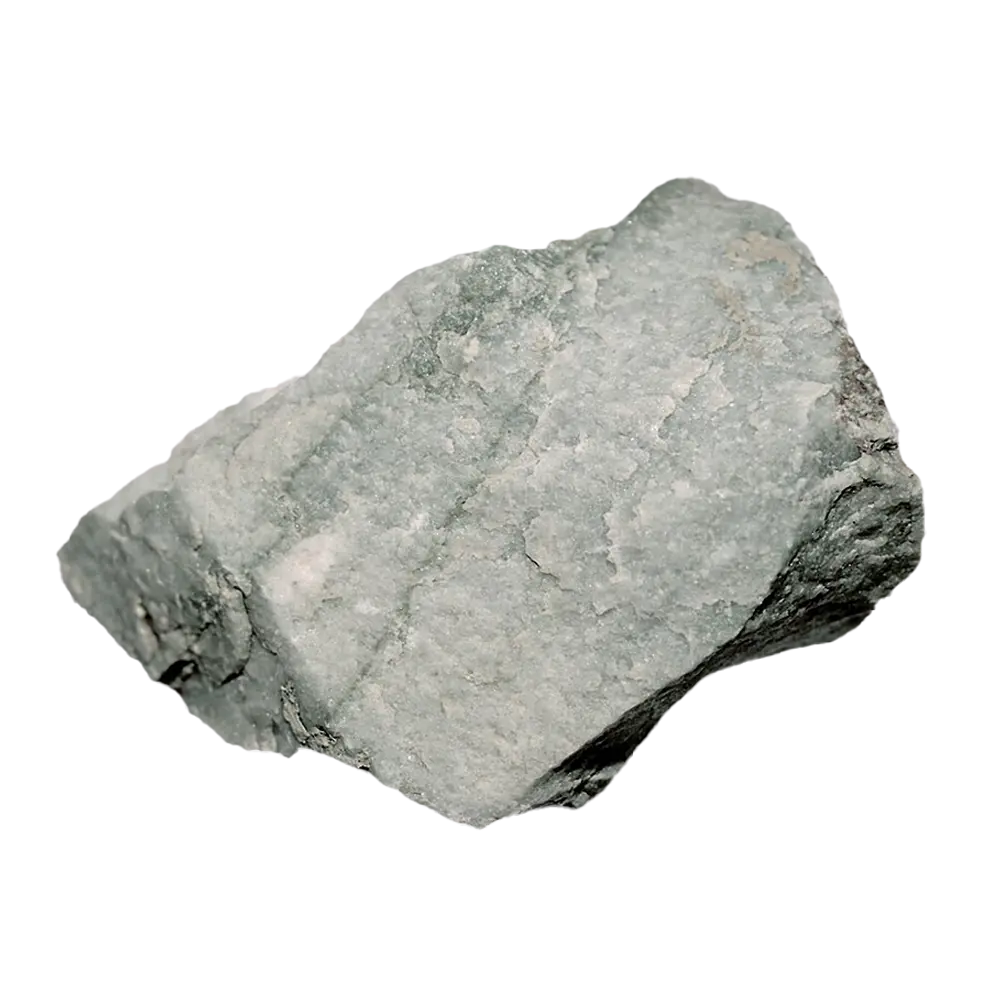
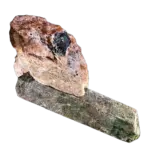
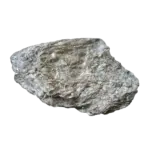
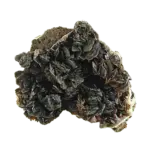
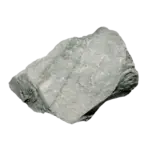
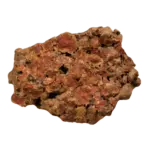
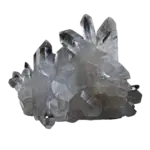
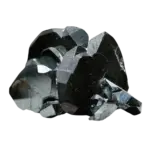
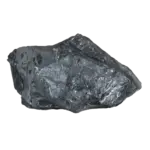
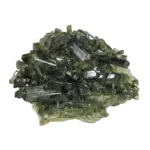
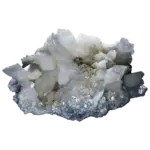
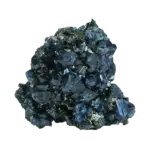
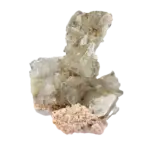
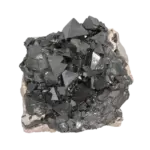
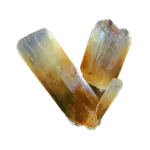
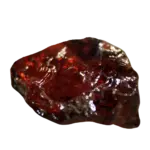
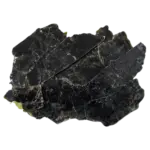
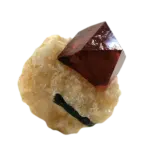
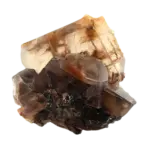
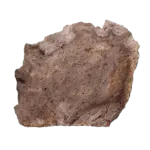
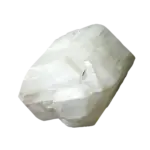
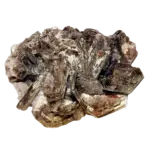
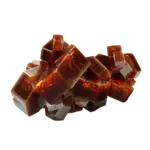
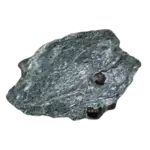
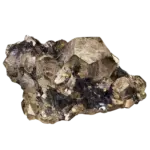
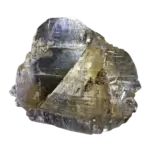
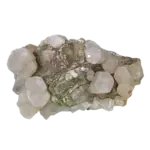
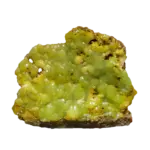
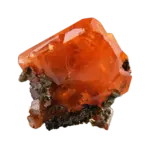
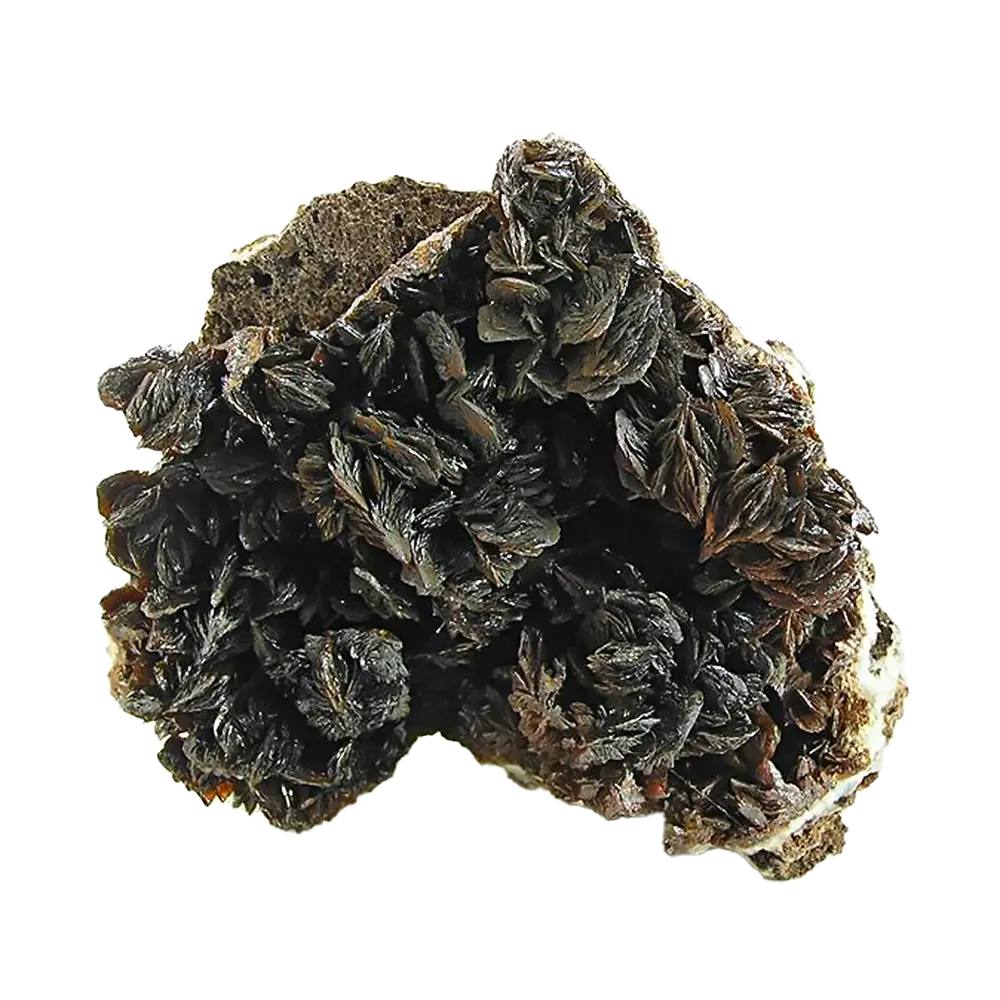
No new descloizite has come out of Berg Aukas since 1978. Every dark, spear-point crystal you see at a mineral show, in a museum case, or on a dealer’s table was pulled from the ground before the mine closed, and those specimens have been quietly appreciating ever since. Other localities produced descloizite. Berg Aukas defined what a great specimen of the species looks like, and its closure permanently fixed the supply.
Descloizite is a lead-zinc vanadate mineral with the formula PbZn(VO₄)(OH). It forms in the oxidized zone of arid-climate lead-zinc deposits, ranges from dark reddish-brown to black, and was a major ore of vanadium until northern Namibia’s Otavi Mountainland mines closed between 1948 and 1978.
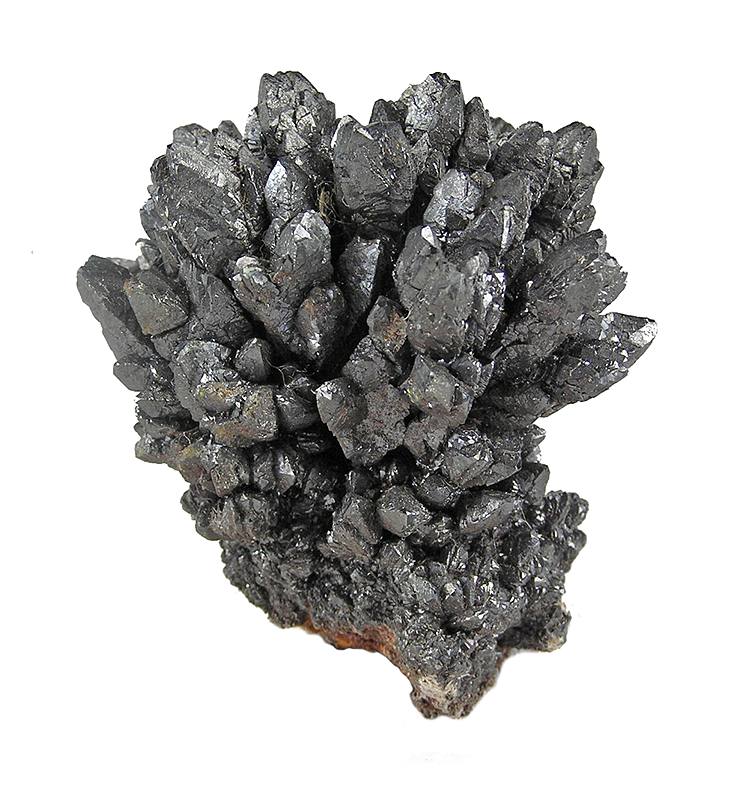
In short Descloizite is a heavy, dark-brown to black lead-zinc vanadate that forms in the oxidized zone of lead-zinc deposits in arid climates. It was a major vanadium ore through the mid-20th century, with northern Namibia’s Otavi Mountainland, Berg Aukas, Abenab, Uitsab, supplying most of the world’s specimens. All of those mines are now closed. Descloizite is closely related to mottramite, with which it forms a continuous Zn–Cu solid-solution series.
Fact sheet
- Chemical formula: PbZn(VO₄)(OH), lead zinc vanadate hydroxide
- Mineral group: Adelite–Descloizite Group; descloizite–mottramite series (Zn ⇌ Cu)
- Crystal system: Orthorhombic (space group Pnma)
- Hardness: 3 to 3½ (Mohs)
- Specific gravity: ~6.2 (heavy, due to lead content)
- Streak: Orange-yellow to brown
- Luster: Greasy to vitreous; sometimes resinous
- Color: Most commonly reddish-brown to blackish-brown; also orange-red, olive-green, and near-black
- Type locality: Sierra de Córdoba, Córdoba Province, Argentina (described by Augustin Damour, 1854)
- Named after: Alfred Louis Olivier Le Grand Des Cloizeaux (1817–1897), French mineralogist
- Major localities: Berg Aukas, Abenab, and Uitsab in Namibia’s Otavi Mountainland; Los Lamentos and Santa Eulalia in Chihuahua, Mexico; Mammoth–St. Anthony Mine, Arizona; Obir, Carinthia, Austria
- Historical use: Important ore of vanadium
What is descloizite?
Descloizite is a basic vanadate of lead and zinc, PbZn(VO₄)(OH), and one of the better-known members of the Adelite–Descloizite Group, a family of orthorhombic arsenates and vanadates whose crystal structures are built from chains of metal-oxygen polyhedra. The structural picture is straightforward enough: zinc atoms sit at the centre of distorted octahedra, those octahedra link into chains, vanadate tetrahedra cross-link the chains, and the much larger lead atoms occupy the cavities in between. Hawthorne and Faggiani worked out the details in 1979, and the framework has held up since.
The zinc site is not picky. Copper substitutes for zinc freely, and the result is a continuous solid-solution series running from descloizite (Zn-dominant) at one end to mottramite (Cu-dominant) at the other. Specimens from the same pocket can sit anywhere along that line, and a single Berg Aukas crystal often shifts its Zn:Cu ratio between core and rim, a record of how the groundwater chemistry changed while the crystal was growing. Old labels like “cuprian descloizite” and “zincian mottramite” are just collector shorthand for which side of the dividing line a given specimen happens to fall on.
How descloizite forms
Descloizite is a secondary mineral. It forms slowly, near the surface, when rainwater and shallow groundwater rework an existing lead-zinc deposit, long after the primary sulfides were laid down. Three conditions have to overlap. Galena and sphalerite must be breaking down through oxidation, releasing lead and zinc. Vanadium must be available locally — usually weathering out of vanadium-bearing shales, basalts, or soils, and migrating through the same groundwater. And the climate must be arid enough that those solutions concentrate rather than flush away. Miss any one of these, and the oxidation zone produces cerussite, smithsonite, or hemimorphite instead.
In the famous Otavi Mountainland deposits of northern Namibia, this took place inside karst cavities dissolved out of Neoproterozoic dolomites of the Otavi Group. Boni and colleagues (2007) showed that most descloizite mineralization there formed during the Oligocene, with some material at Berg Aukas precipitating as recently as the Pleistocene at warm groundwater temperatures of 40–50 °C.
How to identify descloizite
The first thing that betrays descloizite in hand specimen is heft. With a specific gravity near 6.2, it feels conspicuously heavy for its size, the unmistakable signature of a lead-bearing mineral. Once you’ve registered the weight, the habit usually settles it: short orthorhombic prisms or dipyramids tapering to chisel-like spear-points, often growing in dense, three-dimensional sprays on matrix. Drusy crusts, fibrous masses, stalactitic forms, and branching arborescent aggregates are all common alternatives.
Color and streak are where collectors most often go wrong. Descloizite is usually deep reddish-brown to nearly black, but composition shifts the color noticeably, zinc-rich material trends toward orange and yellow, while iron- and copper-rich varieties drift into olive-green and true black. The streak, by contrast, is reliably orange-yellow to brown, and that single test separates descloizite from almost every black sulfide or oxide it might be confused with. A steel knife will scratch it (Mohs 3–3½), but a calcite crystal will not.
The most common confusions are with mottramite (its copper-rich series partner, often greener), vanadinite (typically brighter orange-red, with hexagonal prisms), and pyromorphite (greener and more commonly barrel-shaped). When in doubt, the streak color and crystal symmetry usually settle it.
Descloizite vs. its common look-alikes
| Mineral | Formula | Typical color | Crystal system | Streak | Common habit |
|---|---|---|---|---|---|
| Descloizite | PbZn(VO₄)(OH) | Reddish- to blackish-brown | Orthorhombic | Orange-yellow to brown | Spear-point prisms, drusy crusts |
| Mottramite | PbCu(VO₄)(OH) | Olive-green to black | Orthorhombic | Yellow-green | Botryoidal crusts, small prisms |
| Vanadinite | Pb₅(VO₄)₃Cl | Bright orange-red | Hexagonal | White to pale yellow | Hexagonal prisms, hollow tubes |
| Pyromorphite | Pb₅(PO₄)₃Cl | Green, yellow, brown | Hexagonal | Near white | Barrel-shaped hexagonal crystals |
If a candidate specimen is dark, heavy, has an orange-brown streak, and breaks into orthorhombic spear-points, it is almost certainly descloizite. If the streak runs more yellow-green and the color is olive, you are looking at mottramite or a Cu-rich descloizite, and the boundary between those two is genuinely a matter of which element happens to dominate that particular crystal.
Where descloizite is found
Namibia: the world’s classic locality
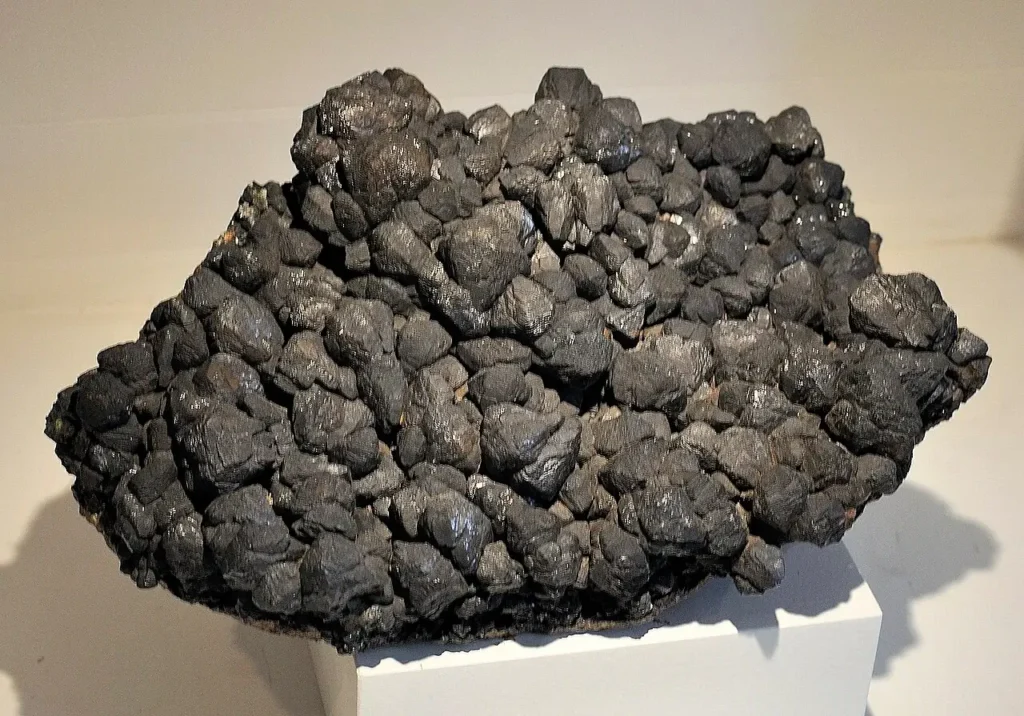
The Otavi Mountainland in northern Namibia is the single most important source of descloizite ever worked. The region’s Zn–Pb–V deposits formed by supergene oxidation of carbonate-hosted sulfide ores, and four mines in particular produced the bulk of the world’s display-quality material:
- Berg Aukas Mine: discovered in 1913, mined until 1978. Famous for descloizite spear-points up to several centimetres across; “Berg Aukas” is essentially synonymous with the species in collector circles.
- Abenab Mine: operated 1921–1948, producing roughly 1.8 Mt of ore at 1.05% V2O5. It held the highest-grade vanadate ore deposit ever mined.
- Uitsab and Baltika: smaller producers in the same belt.
All of these mines are now exhausted as economic deposits, which is why high-quality Berg Aukas descloizite has steadily appreciated on the specimen market since the 1980s.
Other significant occurrences
Outside Namibia, descloizite turns up in most of the world’s classic oxidized lead-zinc districts. The species was first described from Sierra de Córdoba in Argentina, where Damour worked out its identity in 1854 and the locality has carried “type” status ever since. In Mexico, Los Lamentos and Santa Eulalia in Chihuahua produced descloizite alongside wulfenite and vanadinite, in the same kind of arid oxidation zones that made the Otavi deposits possible. The American Southwest contributed the Mammoth–St. Anthony Mine at Tiger, Arizona, and Bisbee in Cochise County, with smaller occurrences scattered through New Mexico’s Caballo Mountains and Georgetown district and at Chalk Mountain in Nevada. Zambia’s Kabwe, long known as Broken Hill before the renaming, was for decades one of the most productive lead-zinc-vanadium camps in southern Africa. And in Europe, the species turns up at Obir in Carinthia and at Mežica, formerly Mies, in Slovenia.
Note: an older error in some online references places “Otavi” in South Africa. The Otavi Mountainland is in Namibia. The confusion comes from the fact that Namibia was administered as South West Africa until 1990.
Why descloizite matters
The vanadium ore that built an industry
For most of the twentieth century, if you wanted vanadium, you went to a lead-zinc oxide deposit in southern Africa. Berg Aukas and Abenab West in Namibia, along with Kabwe in what is now Zambia, were among the only operations anywhere in the world producing lead-vanadate concentrates by froth flotation, and the vanadium recovered from them ended up in the alloy steels that built mid-century industry, tool steels, structural steels, the high-tensile alloys behind oil and gas pipelines.
That supply chain no longer exists. Modern vanadium comes almost entirely as a by-product of titaniferous magnetite mining in South Africa, China, and Russia, and from the slags left over by petroleum refining. The shift happened fast. When Berg Aukas closed in 1978 and the other Otavi mines went down with it, the world’s primary-vanadate ore industry effectively ended in a single decade, and a mineral that had been an industrial commodity became, almost overnight, a specimen-and-research mineral. The descloizite story is partly a story of that transition.
A research mineral
Descloizite has stayed scientifically interesting long after the mines closed. Environmental geochemists study weathered tailings, particularly at Berg Aukas, to track whether vanadium leaches into soils and groundwater. Decades of monitoring show that vanadium mostly stays locked inside primary descloizite even in oxidizing tailings; what little does release is scavenged by secondary hematite.
A collector’s mineral
A serious African mineral collection without a Berg Aukas descloizite is incomplete in the same way one without Tsumeb dioptase or Kombat azurite is incomplete. The species is not fashionable; it is foundational. Museum-grade examples now sell into the four- and five-figure range, and because Berg Aukas, Abenab, and Uitsab are all closed, the supply is finite and slowly contracting as material moves into permanent institutional collections. Whatever descloizite exists on the market today is, in the strictest sense, all that will ever exist.