Fact Sheet
- Rock type: Extrusive igneous rock; volcanic equivalent of gabbro.
- Composition: Mafic. Basalt is typically low in silica compared with felsic rocks and rich in iron and magnesium. A common working range is about 45–52/53 wt% SiO₂.
- Classification: Basalt is classified by mineralogy where crystals are visible, but fine-grained volcanic rocks are commonly named using bulk chemistry, especially the Total Alkali–Silica (TAS) diagram. TAS classification is descriptive, not genetic.
- Main minerals: Plagioclase feldspar and pyroxene are the key minerals. Olivine, Fe–Ti oxides such as magnetite or ilmenite, and sometimes orthopyroxene or pigeonite may also occur.
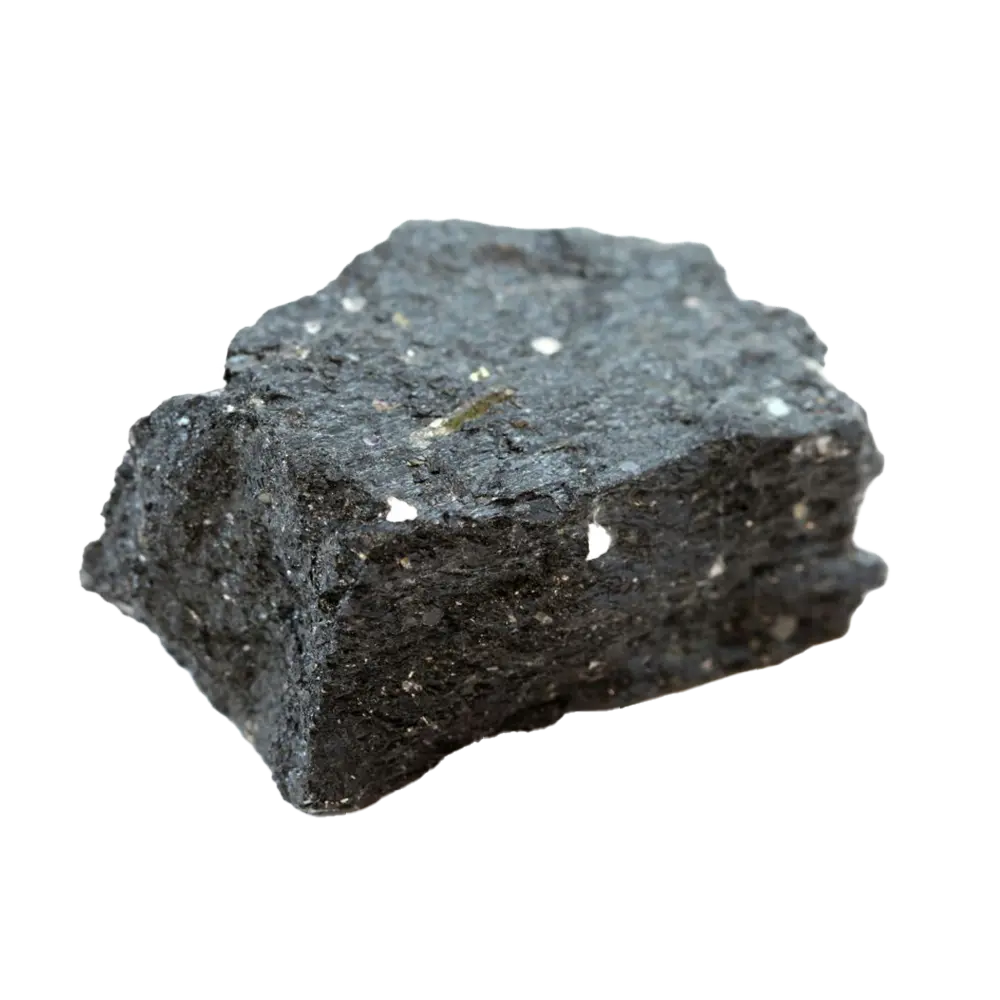
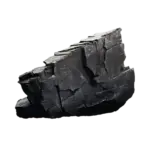
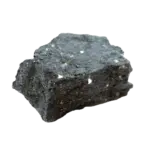
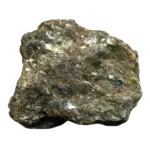
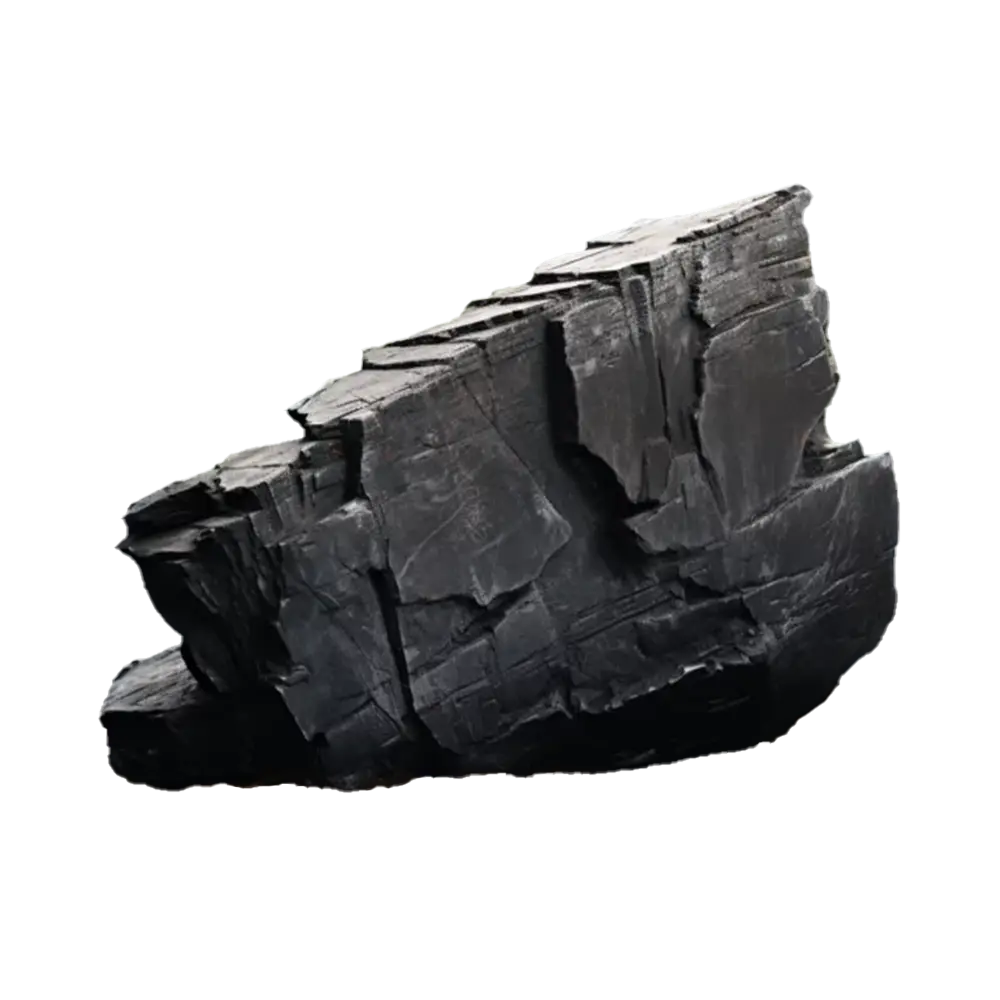
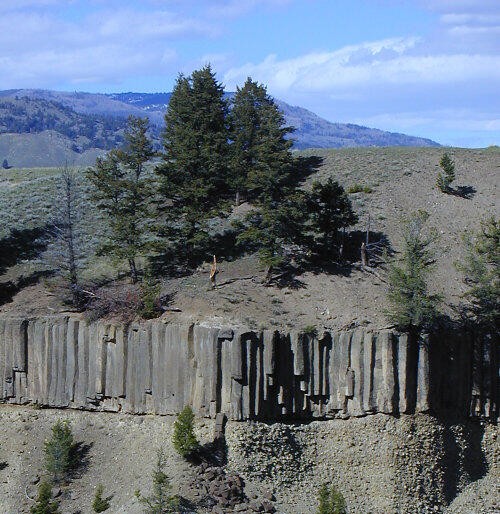
- Texture: Usually fine-grained or partly glassy because it cools quickly at or near the surface. Basalt may be porphyritic, vesicular, scoriaceous, columnar-jointed, or amygdaloidal. Underwater eruptions commonly form pillow basalt.
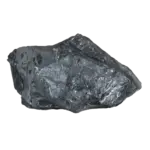
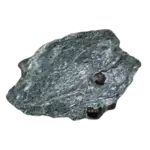
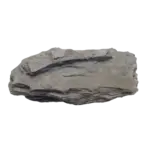
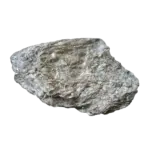
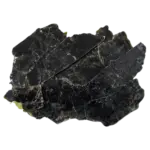
- Colour: Fresh basalt is usually dark grey to black. Weathered surfaces may turn brown, reddish, or greenish as iron-bearing minerals oxidise or alter.
- Density: Commonly around 2.8–3.0 g/cm³, but vesicles, glass, alteration, and porosity can shift this.
- Hardness / strength: Rocks do not have a single Mohs hardness in the way minerals do. Basalt is generally tough and abrasion-resistant, but its engineering strength depends strongly on vesicles, alteration, fractures, and weathering.
- Tectonic settings: Mid-ocean ridges, ocean islands and seamounts, continental rifts, flood-basalt provinces, volcanic arcs, and back-arc basins.
- Common uses: Crushed aggregate, road base, railway ballast, dimension stone, basalt fibre, stone wool insulation, and basalt-hosted CO₂ mineral storage.
Introduction
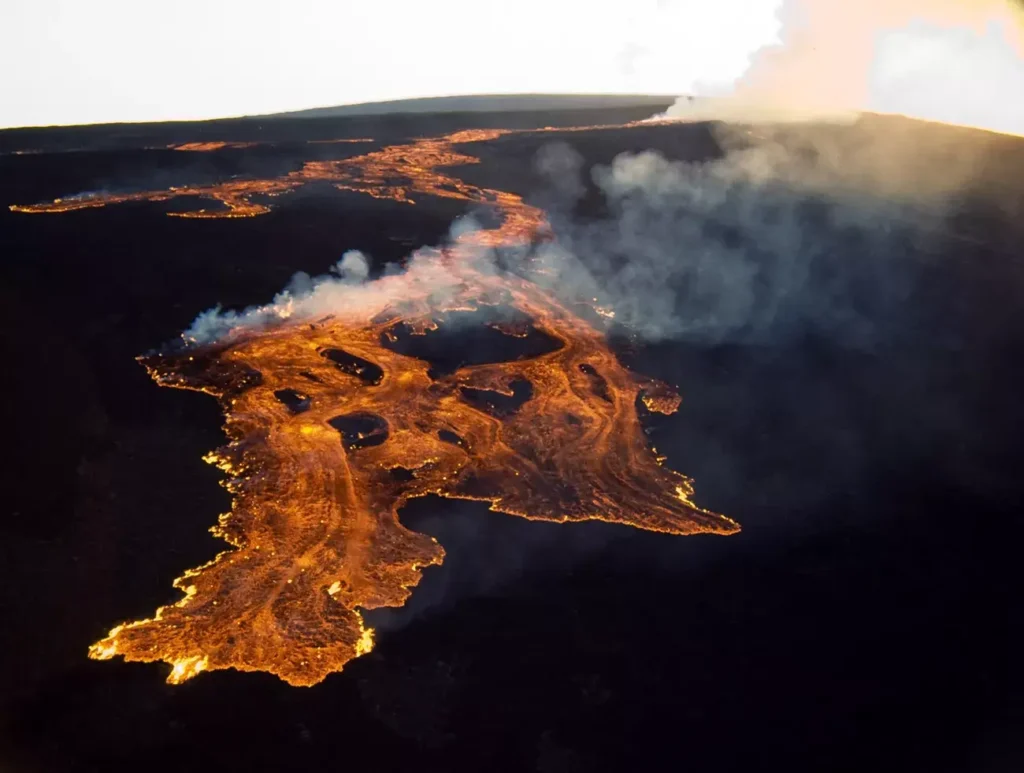
Basalt is the everyday rock of planetary volcanism. It is the most common volcanic rock on Earth, and much of the ocean floor is basaltic. At mid-ocean ridges, new crust is built as mantle-derived melt rises, erupts, and cools into basaltic lava, while slower-cooling magma beneath the surface crystallises into related rocks such as diabase/dolerite and gabbro.
That is why basalt matters far beyond hand specimens. It builds ocean crust, shield volcanoes, lava plateaus, and many of the largest volcanic provinces in Earth history. It is also common on other rocky worlds: basaltic rocks are volumetrically significant on the Moon, Mercury, Mars, and Venus.
The short version: basalt is what you often get when the upper mantle partially melts and the resulting mafic magma reaches the surface quickly. It is simple-looking, dark, and fine-grained — but it records some of the biggest processes on Earth, from seafloor spreading to mass-extinction-scale flood volcanism.
Formation
Basalt forms by partial melting of mantle peridotite. Two mechanisms dominate. Decompression melting occurs where the lithosphere thins or rises, lowering pressure on the mantle below; this drives volcanism at mid-ocean ridges, hotspots and continental rifts. Flux melting occurs where water released from a subducting slab lowers the solidus of the overlying mantle wedge, feeding volcanic arcs.
The melt produced in either case is mafic: high in iron and magnesium, low in silica relative to felsic rocks. It erupts at about 1100–1250 °C. Basaltic lava is hotter and generally less viscous than silica-rich lava, so it often forms fluid flows rather than steep domes. Some basalt flows travel long distances, but flow length depends on eruption rate, slope, lava supply, cooling, and whether the lava is channelled or insulated in lava tubes.
Four tectonic settings produce most of Earth’s basalt:
Mid-ocean ridges. At divergent plate boundaries, mantle rises and partially melts by decompression. The resulting basaltic magma builds new oceanic crust along the global mid-ocean-ridge system, which stretches for nearly 65,000 km.
Ocean islands and hotspots. Mantle plumes or other intraplate mantle upwellings can feed basaltic volcanoes away from plate boundaries. Hawaiʻi is the classic example; Iceland is unusual because hotspot volcanism overlaps with the Mid-Atlantic Ridge.
Subduction zones. Water and other volatiles released from a descending slab help trigger melting in the mantle wedge above it. The resulting magmas may begin basaltic but commonly evolve toward andesite and other compositions in volcanic arcs.
Continental rifts and flood-basalt provinces. Where continents stretch or where unusually large volumes of mantle melt are produced, basalt can erupt through long fissures and build immense lava plateaus. The Deccan Traps, Siberian Traps, Columbia River Basalt Group, and Central Atlantic Magmatic Province are major examples.
Mineralogy and Texture
A typical basalt is an interlocking aggregate of plagioclase feldspar (commonly labradorite, An50–An70), clinopyroxene (augite) and an Fe–Ti oxide phase. Olivine, orthopyroxene or pigeonite may also be present depending on the suite.
Cooling at or near the surface is too rapid to grow large crystals, so the groundmass is aphanitic or partly glassy. Where larger phenocrysts of olivine, plagioclase or pyroxene grew earlier in a magma chamber, the rock takes on a porphyritic texture. Gas bubbles trapped near flow tops produce vesicles. When these vesicles are later filled by secondary minerals such as zeolites, calcite or quartz, the rock is called amygdaloidal.
Geochemical Types
Basalts are divided primarily by alkali content, plotted on the IUGS Total Alkali–Silica diagram. Three broad affinities cover most cases.
Tholeiitic basalt
Tholeiitic basalt is common at mid-ocean ridges, in many ocean-island shield stages, and in many continental flood-basalt provinces. It is generally subalkaline and tends to be silica-saturated to slightly silica-oversaturated.
Alkali basalt
Alkali basalt has higher sodium and potassium relative to silica and is commonly associated with intraplate settings such as ocean islands, continental rifts, and smaller volcanic fields. It is often silica-undersaturated, meaning minerals such as nepheline may appear in the normative chemistry.
Arc basalt (subduction-zone)
Produced where flux melting in the mantle wedge feeds volcanic arcs. Arc basalts span tholeiitic series (typical of intra-oceanic arcs on thin crust, e.g. Izu–Bonin) through calc-alkaline series (typical of mature continental arcs, e.g. the Andes, Cascades). They are generally water-rich and evolve toward andesite as differentiation proceeds.
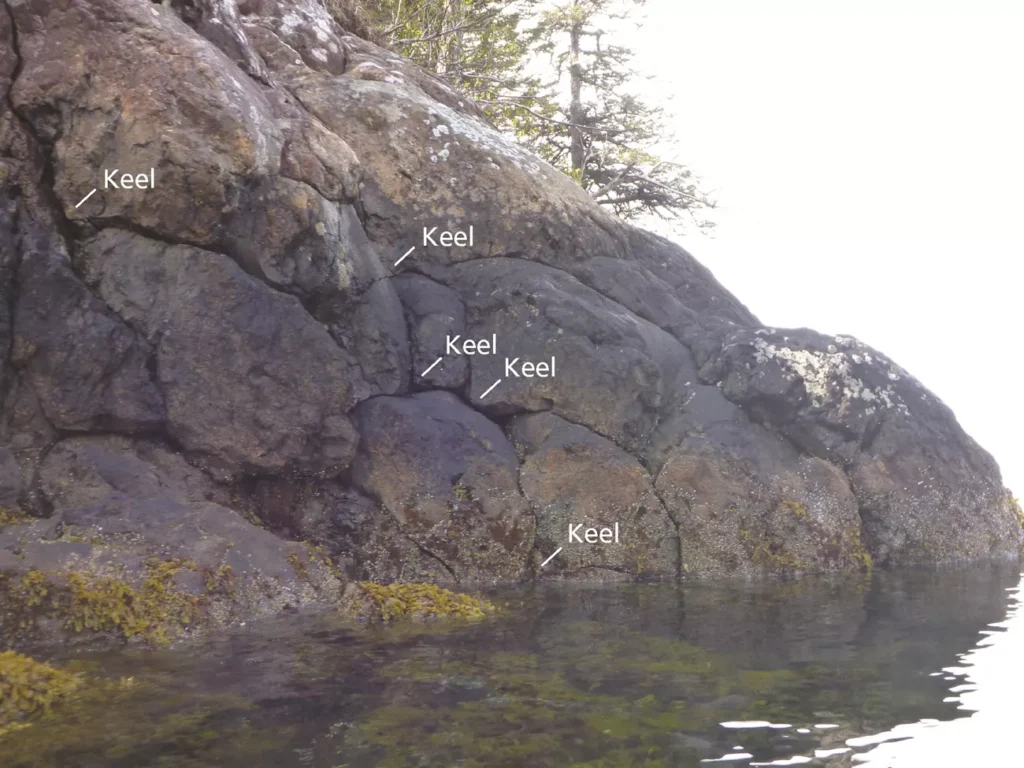
A common point of confusion: pillow basalt is not a chemical type. It is a morphology, formed when basaltic lava is quenched against water and freezes into bulbous, tube-like lobes. Pillow lavas form wherever basaltic magma erupts subaqueously and are particularly diagnostic at slow-spreading ridges such as the Mid-Atlantic Ridge.
Notable Provinces
- The global mid-ocean ridge system. About 65,000 km of submarine ridge generates new oceanic crust almost entirely as tholeiitic basalt. By volume, the largest single source of magmatic rock on Earth.
- Iceland. A rare sub-aerial expression of a mid-ocean ridge superimposed on a mantle plume.
- Hawaiian–Emperor chain. Shield volcanoes built almost entirely of basalt above the Hawaiian hotspot, evolving from tholeiitic to alkalic compositions through their lifetimes.
- Deccan Traps (India). About 500,000 km² of preserved tholeiitic flood basalts, erupted across the Cretaceous–Paleogene boundary (~66 Ma) and implicated alongside the Chicxulub impact in the K–Pg mass extinction.
- Columbia River Basalt Group (USA). The youngest and best-preserved continental flood basalt province, covering ~210,000 km² with an erupted volume of roughly 210,000 km³, emplaced between 16.7 and 5.5 Ma.
- Siberian Traps. Tied in time to the end-Permian extinction (~252 Ma), the largest mass extinction in Earth’s history.
- Central Atlantic Magmatic Province (CAMP). Erupted ~201 Ma at the breakup of Pangaea and linked to the end-Triassic mass extinction.
Applications
Basalt’s strength, hardness and chemical durability make it useful across several industries.
- Aggregate and construction stone. Crushed basalt is widely used as concrete and asphalt aggregate, road sub-base and railway ballast.
- Dimension stone and sculpture. Civilisations from the Olmecs to the Egyptians worked basalt. Modern uses include cladding, paving and memorial stone.
- Basalt fibre. Melted basalt drawn into continuous fibre is used as composite reinforcement, fire-resistant insulation, and as a corrosion-free substitute for steel rebar in concrete (BFRP).
- Stone wool. Spun basalt-rich melt is the basis of mineral-wool thermal and acoustic insulation.
- Mineral carbonation and CO2 storage. Basaltic formations rapidly fix injected CO2 as solid carbonate minerals. The CarbFix project in Iceland has demonstrated mineralisation of injected CO2 in under two years.
Frequently Asked Questions
Is basalt intrusive or extrusive?
Basalt is extrusive. It forms when basaltic lava cools rapidly at or near Earth’s surface, which is why its crystals are too small to see without a hand lens. Its intrusive equivalent, formed when the same magma cools slowly at depth, is gabbro.
How is basalt formed?
Basalt forms by partial melting of mantle peridotite, either by decompression at mid-ocean ridges, hotspots and rifts, or by flux melting above subduction zones, where slab-derived water lowers the mantle solidus. The resulting magma erupts at about 1100–1250 °C.
What is basalt used for?
The largest use by tonnage is as crushed aggregate for concrete, asphalt, road base and railway ballast. Basalt is also processed into continuous fibre for composites and rebar, spun into stone wool insulation, cut as dimension stone, and increasingly used as a host rock for permanent CO2 storage through mineral carbonation.
What is the difference between basalt and gabbro?
They have essentially the same chemistry. The difference is cooling history. Basalt cools quickly at the surface and is fine-grained, while gabbro cools slowly at depth and is coarse-grained. Both are classed as mafic igneous rocks.
Why is basalt so common on Earth and other planets?
Basalt is common because partial melting of silicate mantle rocks often produces mafic magma. On Earth, that magma erupts at mid-ocean ridges, hotspots, rifts, arcs, and flood-basalt provinces. On other rocky bodies, basaltic volcanism is also widespread, although each planet or moon has its own mantle composition, thermal history, gravity, and eruption style. Basaltic rocks are volumetrically important on the Moon, Mercury, Mars, Venus, and Earth.
What colour is basalt?
Dark grey to black on fresh surfaces. Weathering produces brown or red rinds where iron oxidises, and greenish tones where olivine and pyroxene have altered to chlorite or serpentine. The dark colour comes from the rock’s high iron and magnesium content combined with abundant fine-grained pyroxene.
Related Rocks
- Gabbro — the coarse-grained, intrusive equivalent of basalt.
- Andesite — intermediate volcanic rock, common in subduction-zone arcs.
- Peridotite — ultramafic rock of the upper mantle and the source of basaltic melts.
- Diabase / Dolerite — medium-grained basaltic rock from shallow intrusions.