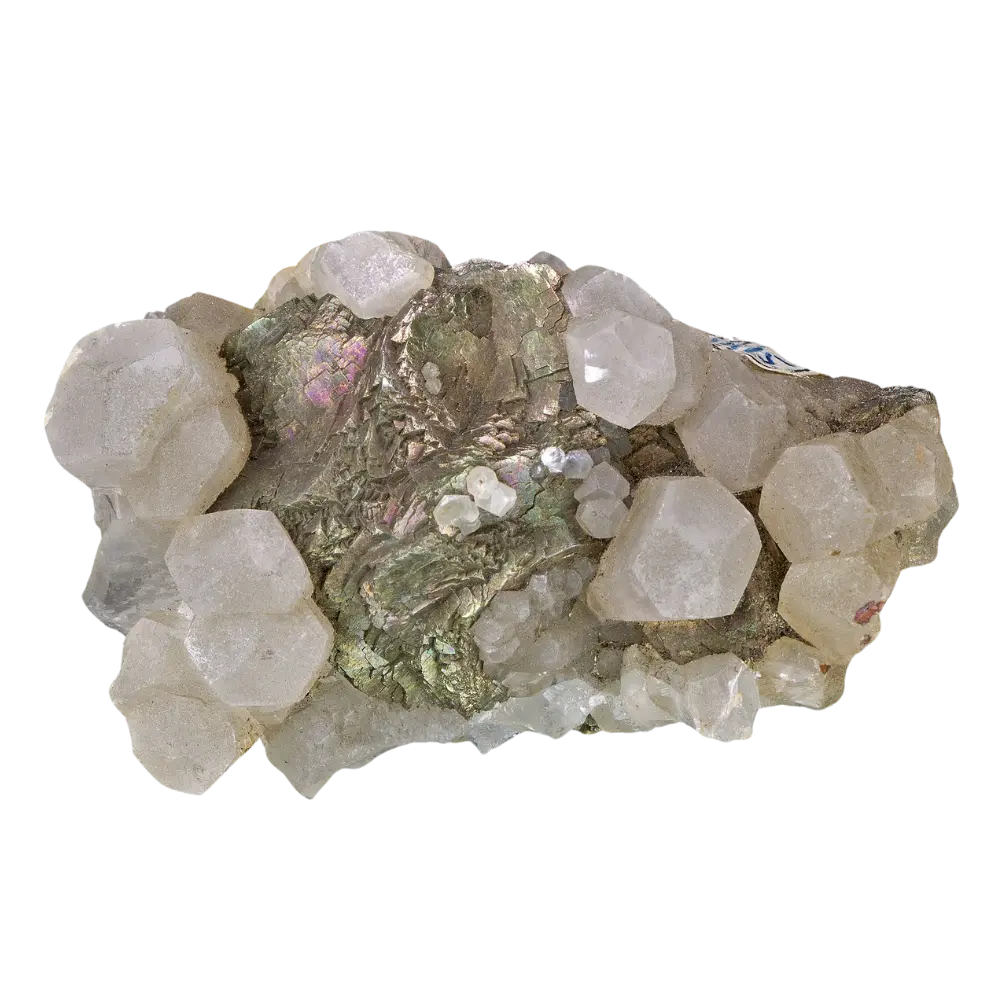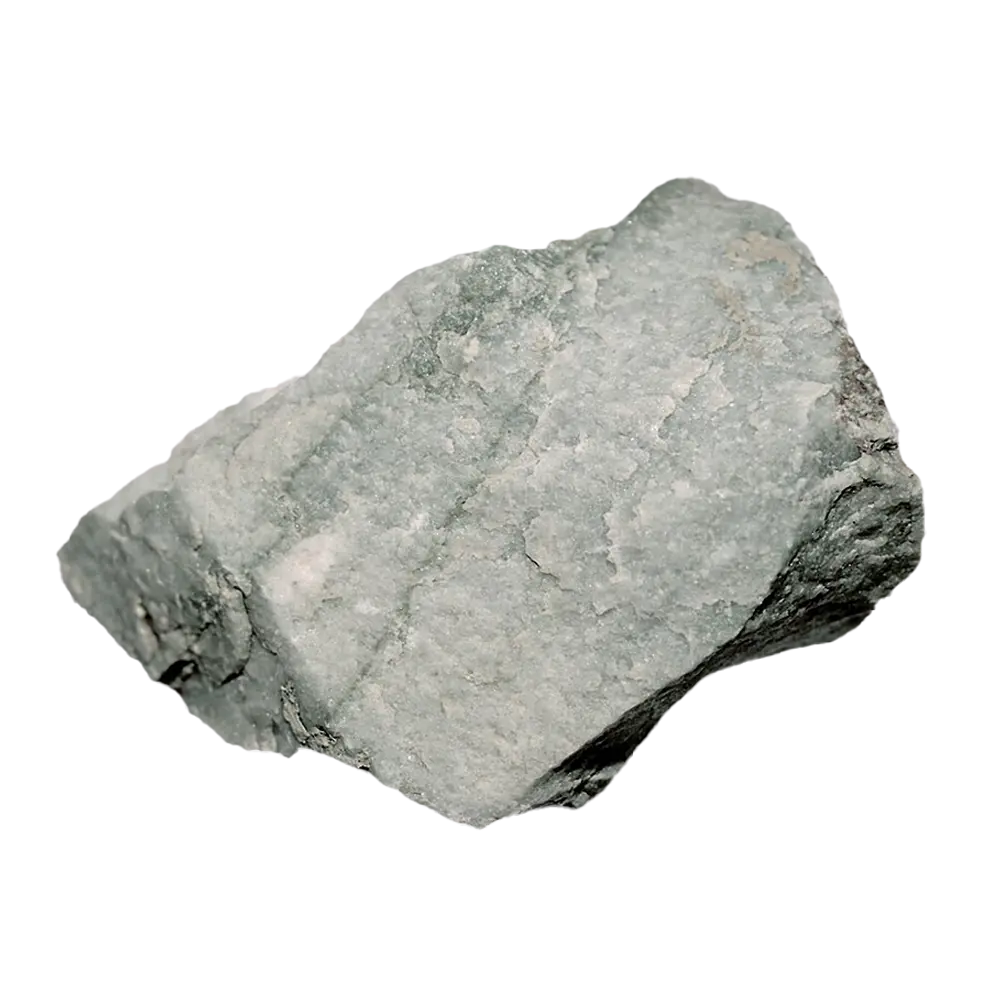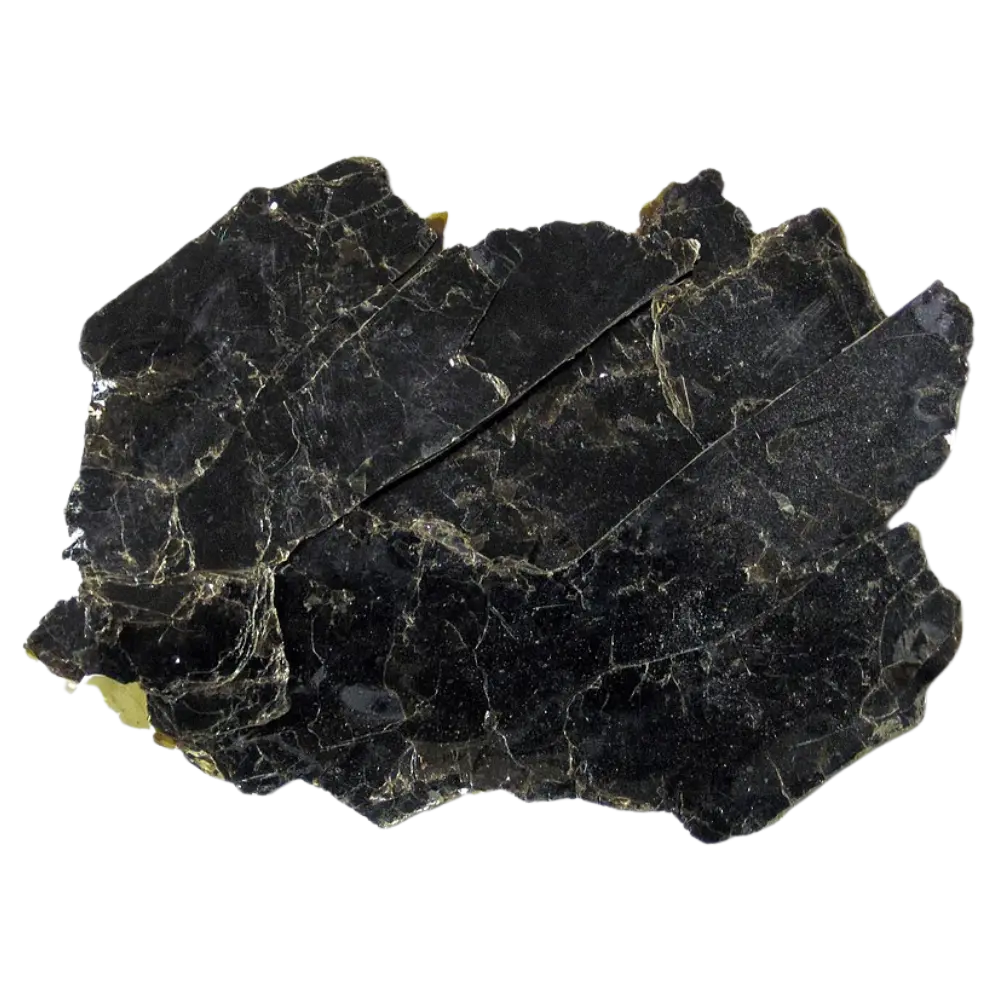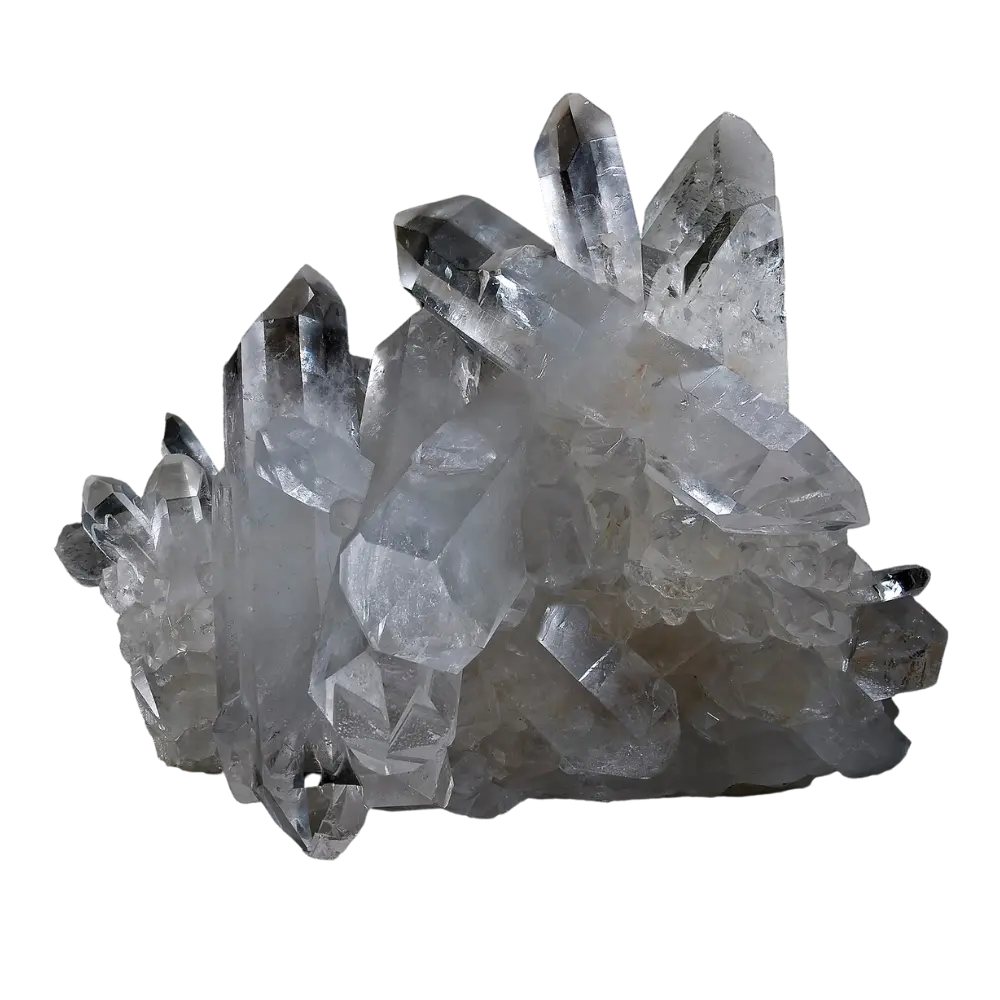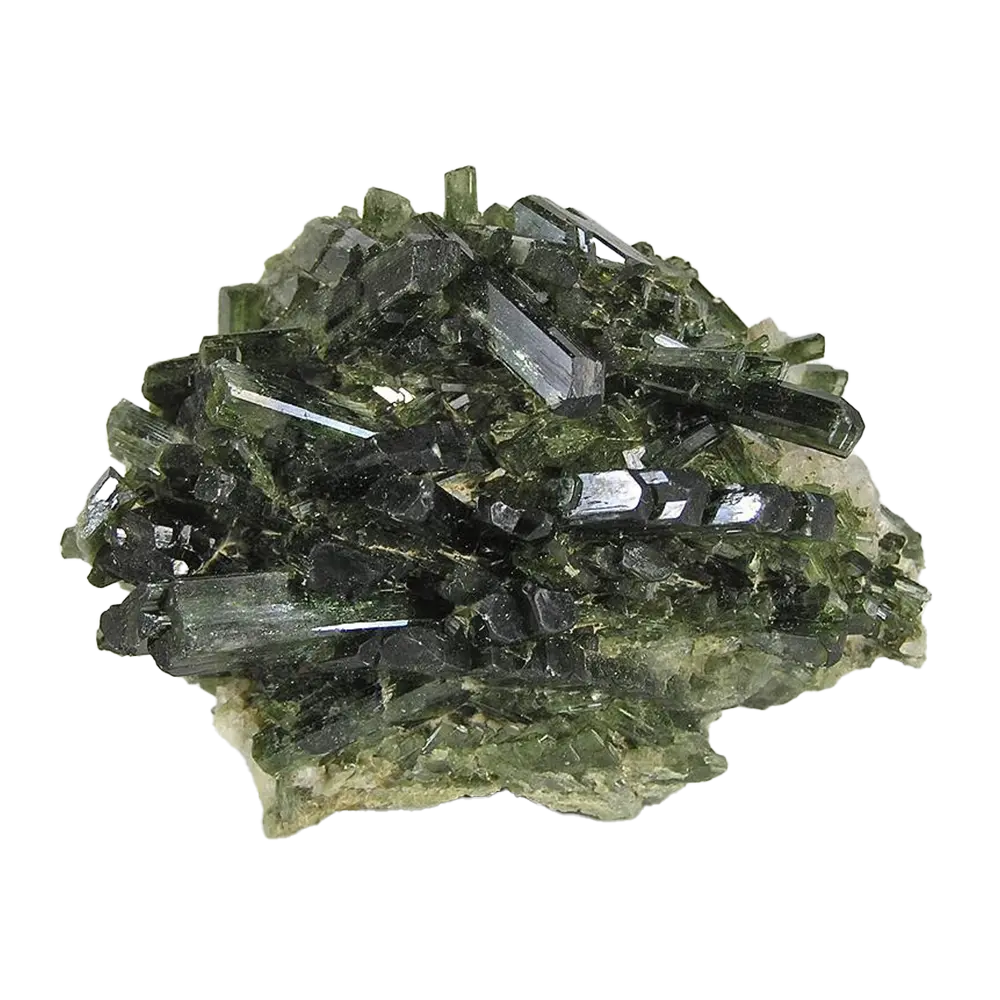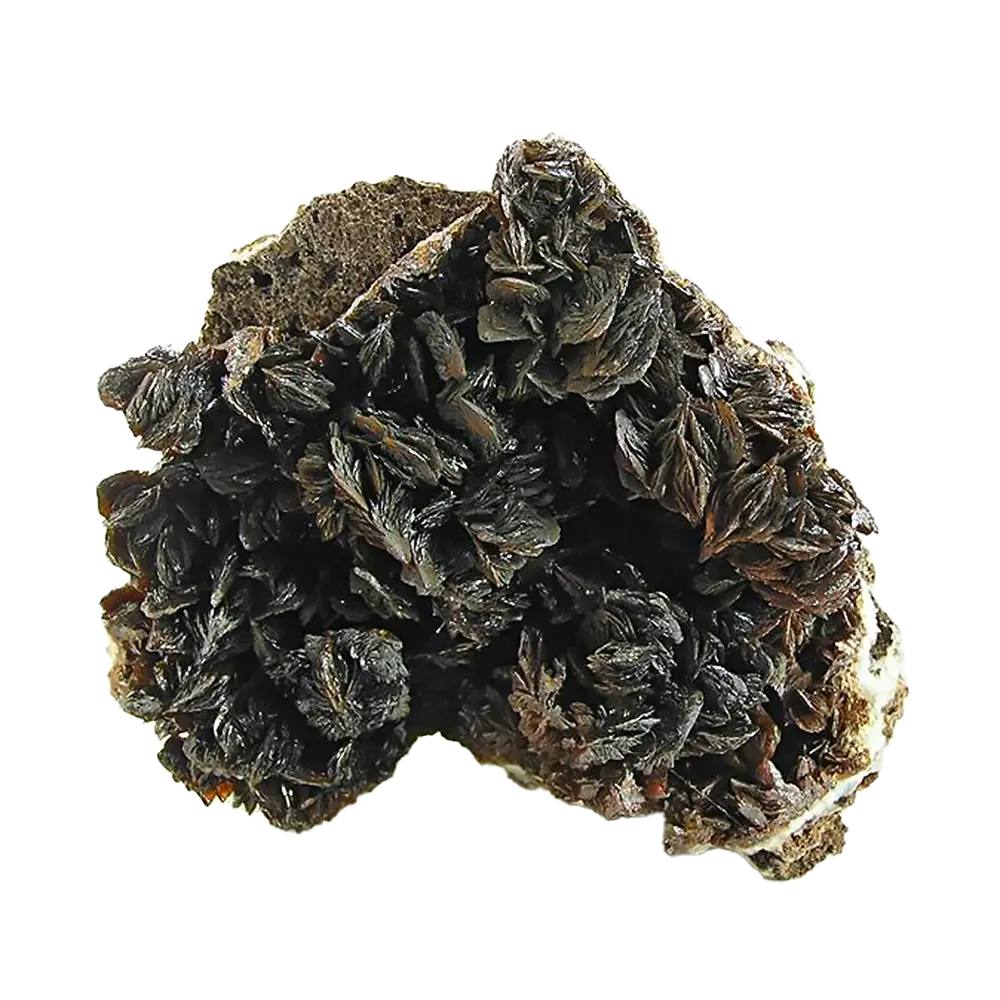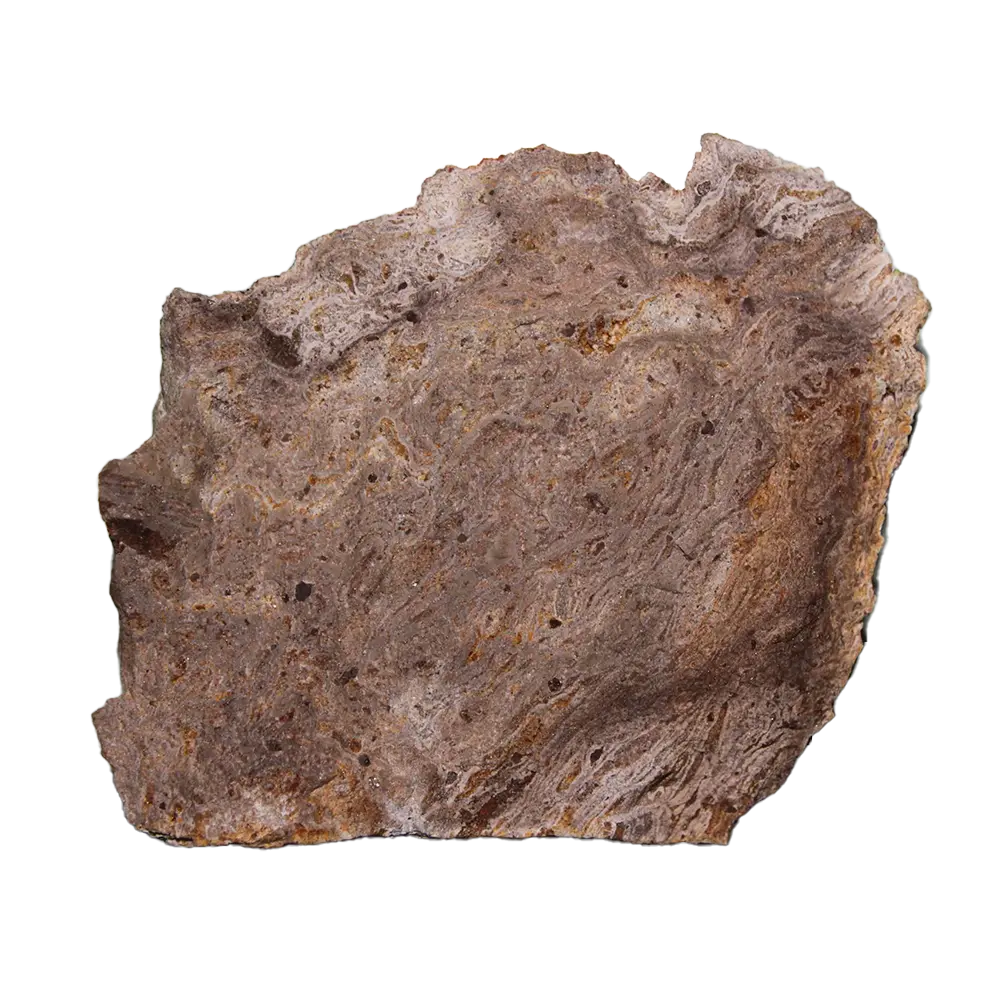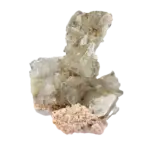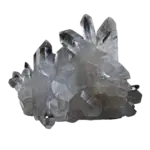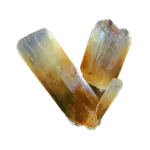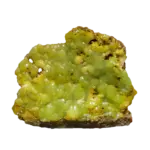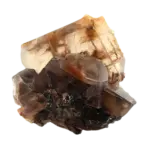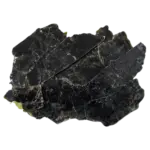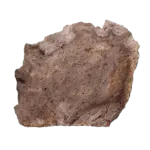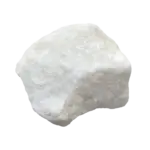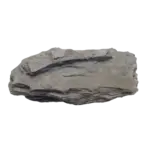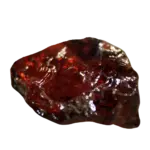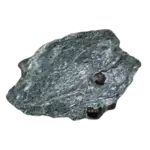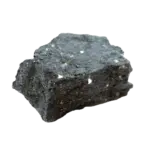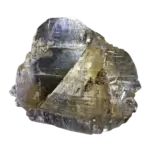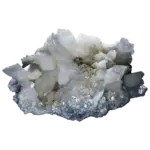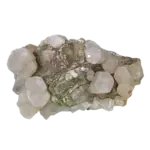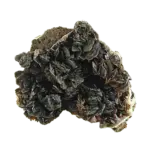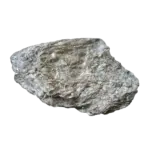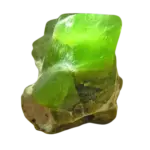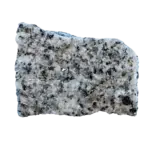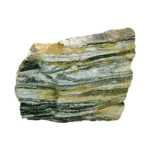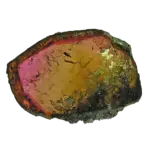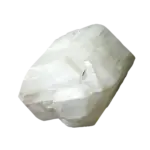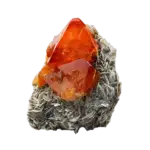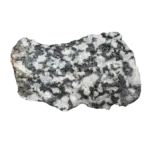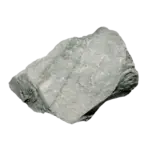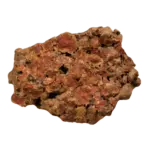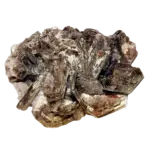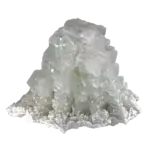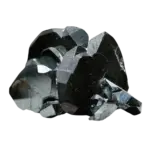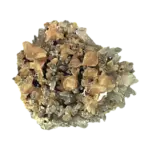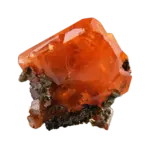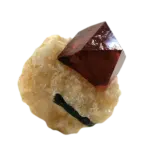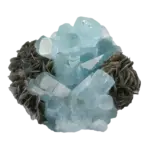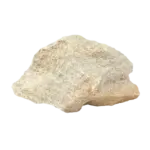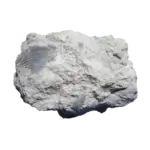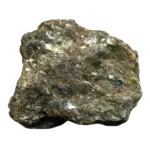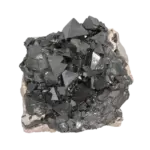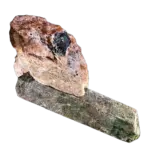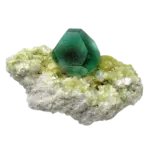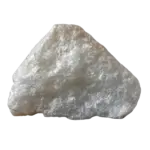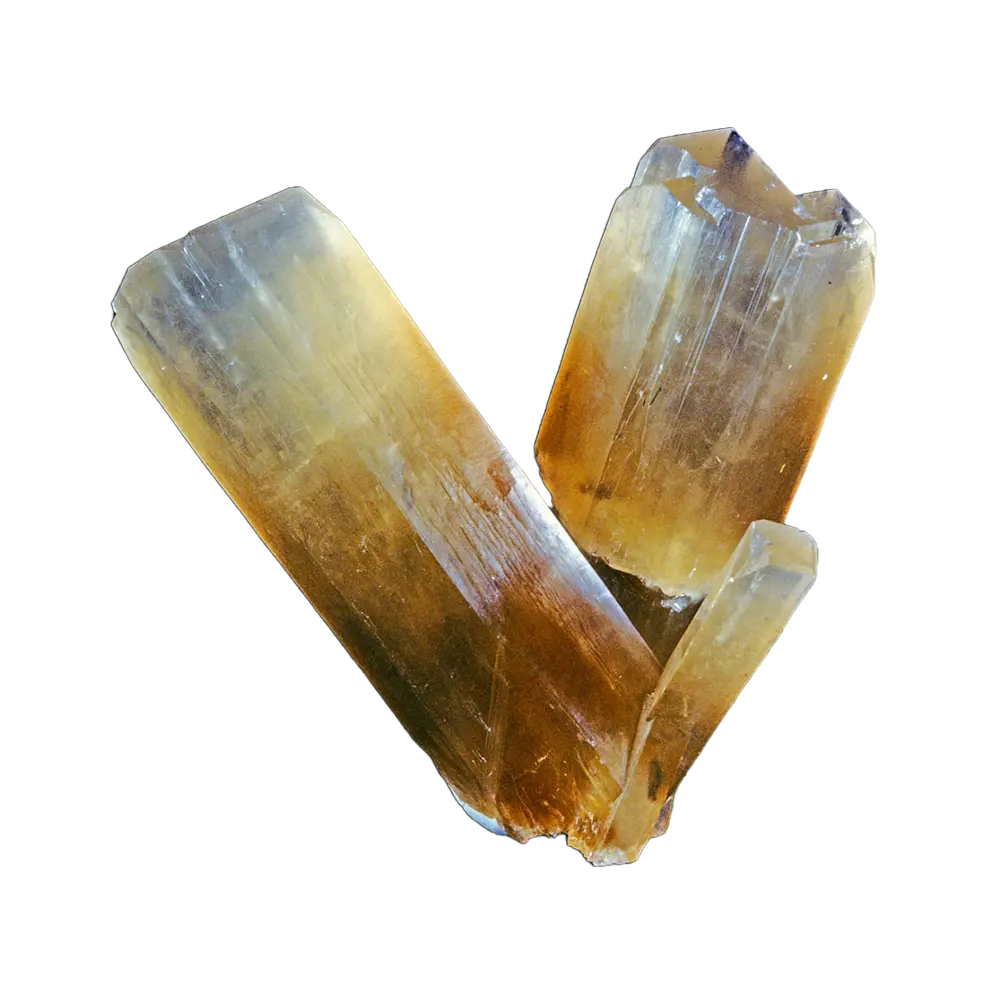
Most people meet borax as a powder under the sink. Every grain of it started as a crystal in a desert lake fed by volcanic hot springs.
Fact Sheet
- Mineral name: Borax (also tincal, sodium tetraborate decahydrate)
- Formula: Na2[B4O5(OH)4]·8H2O (structural); Na2B4O7·10H2O (empirical)
- Crystal system: Monoclinic, space group C2/c
- Hardness: 2–2.5 (Mohs)
- Density: 1.71 g/cm³
- Cleavage: Perfect on {100}, good on {110}
- Luster: Vitreous to resinous; becomes earthy and dull when efflorescing
- Color: Colorless to white; gray, yellow, green, or blue tints from impurities
- Streak: White
- Optics: Biaxial (–), nα=1.447, nβ=1.469, nγ=1.472, 2V≈40°
- Type locality: Tibet (historical)
- Major modern deposits: Kırka (Türkiye); Boron / Kramer deposit (California, USA); Searles Lake (California)
- Common uses: Glass and fiberglass, ceramics, agricultural micronutrients, metallurgical flux, household cleaning
Etymology and the Silk Road
The English word borax comes from Medieval Latin borax, from Arabic būraq, likely meaning “white”, itself from Middle Persian bōrag. The older mineralogical name tincal traces to Sanskrit ṭānkaṇa via Malay tingkal and Persian/Urdu tinkār. That trail of words follows the trade route: borax first reached Europe and the Arab world as raw evaporite from Tibetan salt lakes, where it had been collected and traded for at least a millennium before deposits were known in the West. Until the late nineteenth century, Tibet was effectively the world’s only commercial source.
Mineralogy and structure
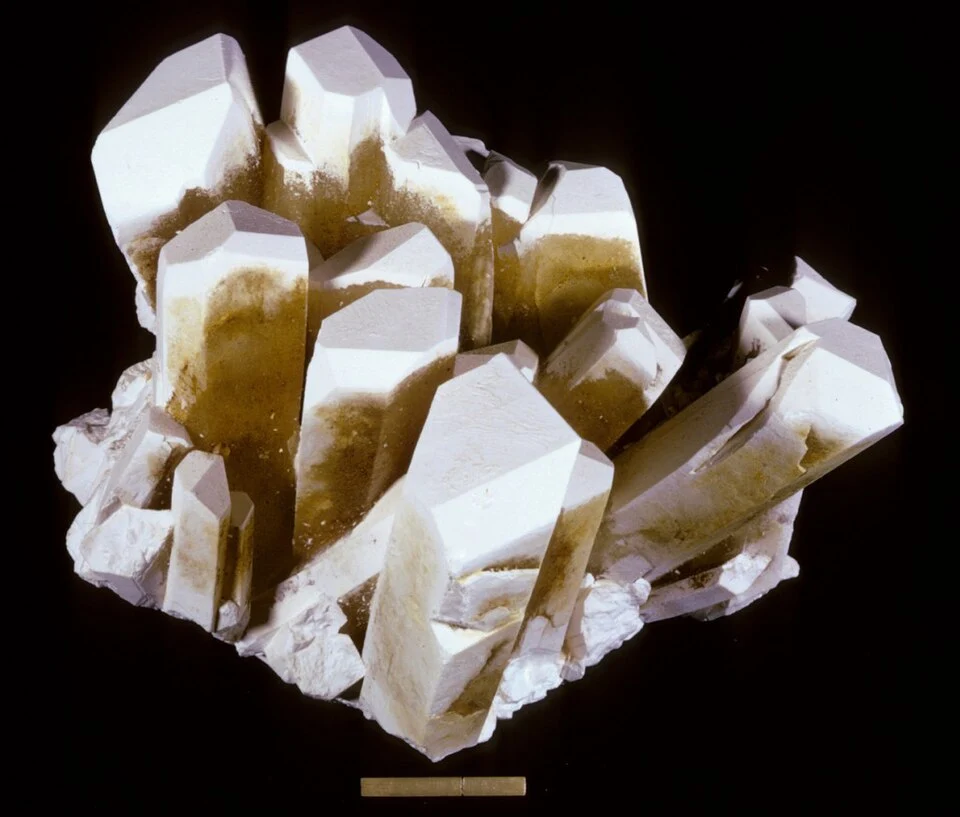
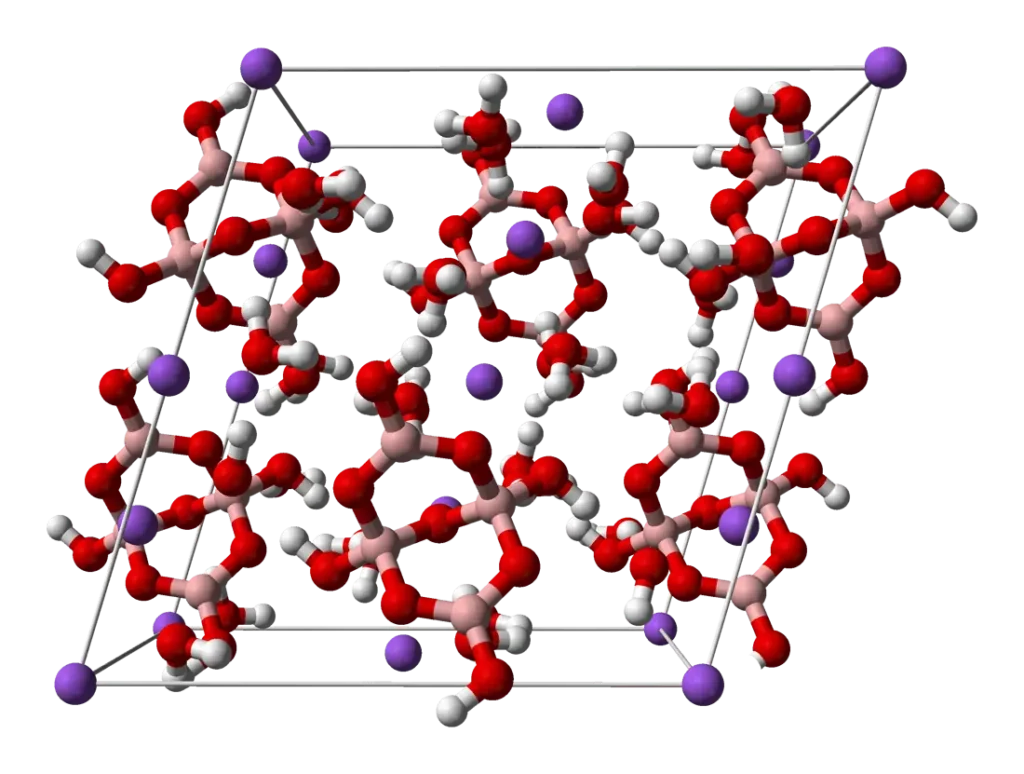
Borax is a hydrated sodium borate built around the tetraborate anion [B4O5(OH)4]2−, in which two boron atoms are coordinated tetrahedrally by oxygen and the other two are coordinated trigonally, a clean illustration of how variable boron’s coordination chemistry can be. Sodium ions and eight additional water molecules occupy the channels between these polyanion units, which is why borax is so soft (2–2.5 on the Mohs scale) and so light (specific gravity 1.71). Crystals are monoclinic, space group C2/c, and typically form short, blocky prisms with pinacoidal terminations. Most natural borax, however, is found as massive granular aggregates or as crusts on playa surfaces.
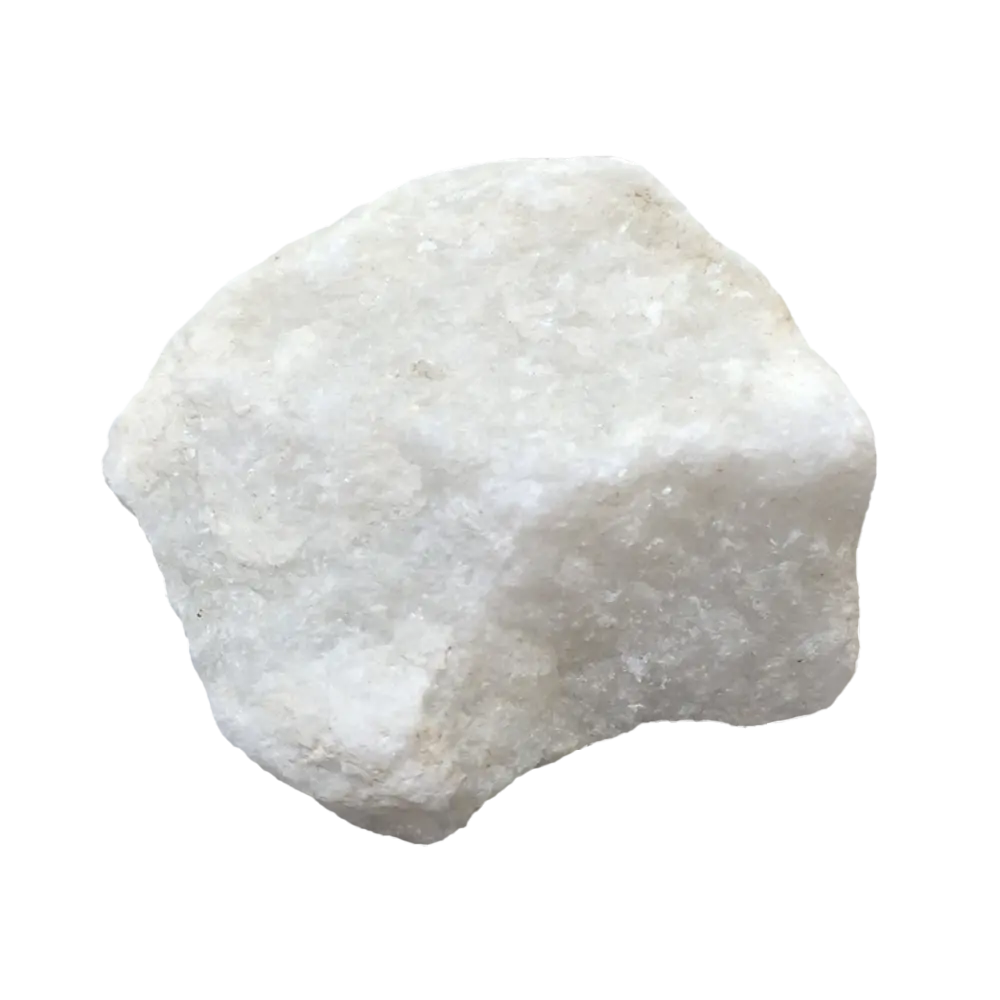
The most distinctive thing about a borax specimen is what happens to it when no one is paying attention. At low humidity, borax spontaneously loses five water molecules and turns into a chalky, opaque pseudomorph of tincalconite (Na2B4O7·5H2O). For this reason, museum and collector specimens are kept in sealed containers or under mineral oil. A borax crystal that still looks fresh and glassy has not been on a windowsill for long.
Formation
Borax is an evaporite. It crystallizes from concentrated, alkaline brines in closed basins where evaporation outpaces inflow, playa lakes, salt flats, and saline springs in arid climates. The boron itself is sourced almost entirely from volcanic activity: thermal springs and hydrothermal systems leach boron from rhyolitic volcanic rocks and feed it, along with sodium, into shallow lakes. As water evaporates, sodium borates precipitate alongside other evaporite phases such as halite, gypsum, and trona.
Borax belongs to a larger family of evaporite borate minerals that includes kernite (Na2B4O6(OH)2·3H2O), colemanite (Ca2B6O11·5H2O), ulexite (NaCaB5O6(OH)6·5H2O), and tincalconite. Which mineral dominates in a given deposit depends on water chemistry, salinity, temperature, and post-burial diagenesis: kernite, for example, forms by partial dehydration of borax during burial at temperatures above about 50 °C.
Major deposits
Two regions dominate world production: the Western Anatolian boron belt in Türkiye and the Mojave Desert of southern California. Together they account for the great majority of global supply, with Türkiye and the United States producing the bulk of refined borates each year (USGS, 2025).
Türkiye
The Anatolian deposits are Miocene lacustrine evaporites associated with calc-alkaline volcanism. Four districts dominate: Kırka (Eskişehir Province), Bigadiç (Balıkesir), Emet (Kütahya), and Kestelek (Bursa). Kırka hosts the world’s largest single tincal/borax deposit and is mined by the state-owned company Eti Maden. Emet and Bigadiç are dominated by colemanite, which is the preferred ore for borosilicate glass.
California
The Kramer borate deposit at the town of Boron, Kern County, is a roughly 16-million-year-old Miocene basin that filled with sodium-borate-rich water from volcanic hot springs along the Western Borax fault. The ore body was discovered in 1925 when a water well struck the sodium borate mass; underground mining began in 1927, and the operation transitioned to open-pit mining in 1957. Today it is operated by Rio Tinto’s U.S. Borax subsidiary as the Boron Mine, the largest open-pit borate mine on Earth and the largest single source of refined borates in the global market.
Searles Lake (San Bernardino County) produces borates and other evaporite chemicals from brines via solution mining. Death Valley’s Furnace Creek Formation hosts the historical nineteenth-century borax workings made famous by the Harmony Borax Works.
The Andean salars
Quaternary salars across the Bolivia–Chile–Argentina altiplano host extensive borate evaporites, but these are mined primarily for ulexite rather than borax decahydrate. The principal sources are Salar de Surire (Chile) and Salar de Uyuni (Bolivia).
Tibet
The original world source. No longer commercially significant, but historically the only one for nearly a thousand years.
Industrial uses
The dominant industrial market for borax and its derivatives is glass, borosilicate glassware (the Pyrex family), fiberglass insulation, and ceramic glazes, which together account for around two-thirds of global boron consumption. Boron oxide lowers the thermal expansion of silicate glass and improves its chemical durability. Other major uses include:
- Agriculture. Boron is an essential plant micronutrient, and borax is a common fertilizer additive.
- Metallurgy. A flux for soldering, brazing, and gold refining; the so-called borax method of artisanal gold mining replaces mercury with borax in some Filipino, Bolivian, and Tanzanian operations.
- Fire retardants. Cellulose insulation is treated with borate to suppress combustion.
- Detergents and cleaning. Borax buffers wash water at alkaline pH and softens hard water; it is increasingly substituted by sodium percarbonate.
- The borax bead test. A classical qualitative analysis: a small bead of fused borax on a platinum wire, dosed with a trace of unknown sample and held in an oxidizing or reducing flame, takes on characteristic colors that identify the metal, cobalt blue, manganese violet, copper green, chromium emerald. Long since superseded by spectroscopic methods, but still elegant, and still part of the historical mineralogical toolkit.
Safety and regulation
This is where most consumer-facing articles about borax are out of date, so it’s worth being precise.
In the European Union, disodium tetraborate (anhydrous, pentahydrate, and decahydrate forms, that is, borax in all its commercial forms) is classified under Regulation (EC) 1272/2008 (CLP) as Reproductive Toxicity Category 1B, with the harmonized hazard statement H360FD: “May damage fertility. May damage the unborn child.” The European Chemicals Agency added borax to the REACH Candidate List of Substances of Very High Concern (SVHC) in 2010. EU rules restrict borax in consumer products, particularly in cosmetics and craft products marketed to children. U.S. and Canadian classifications are less restrictive but generally advise against ingestion and against use in homemade children’s products. Handling solid mineral specimens is not the issue here; the framing of borax as “natural and harmless” common in lifestyle media is what’s not accurate.
Where to find specimens
Display-quality borax crystals are uncommon, because the mineral dehydrates so readily. The best preserved come from the Boron Mine (California), Searles Lake, and historical Tibetan and Death Valley material, usually kept in sealed jars or under oil. Tincalconite, the white, chalky pseudomorph after borax, is far more common and is what most “borax” specimens in old teaching collections actually are.