Bauxite

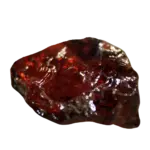
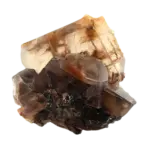
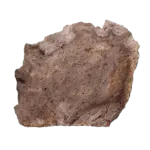
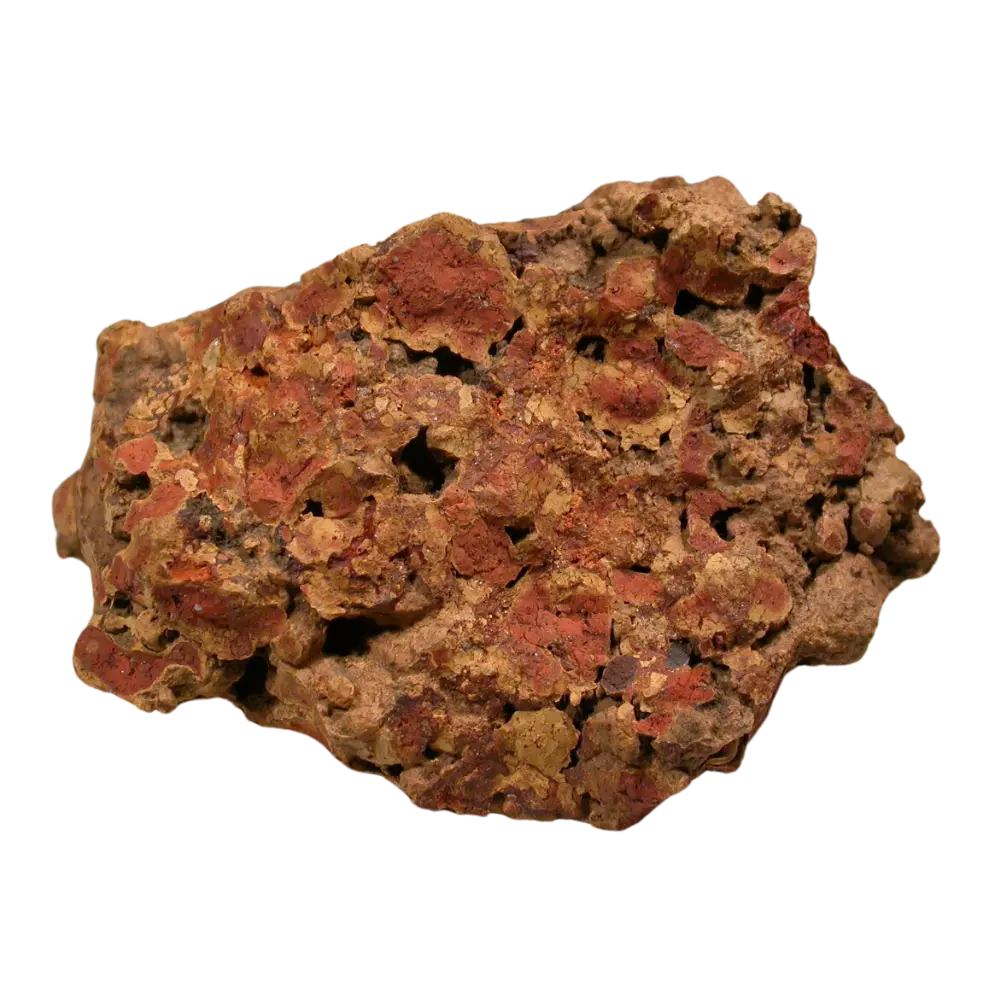
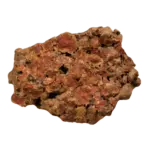
Piece of red and brown bauxite ore
Pascal founder of Geoscopy

admin 

Fact sheet

  • Rock type: Residual sedimentary rock (regolith). Bauxite is a rock, not a mineral, an aggregate of aluminium hydroxides plus iron oxides, clay minerals, and titanium oxides.

  • Principal aluminium-bearing minerals: Gibbsite, Al(OH)₃ (monoclinic); boehmite, γ-AlO(OH) (orthorhombic); diaspore, α-AlO(OH) (orthorhombic).

  • Common accessory minerals: Hematite and goethite (Fe), kaolinite (clay), anatase and rutile (Ti).

  • Bulk composition: Typically 40–60 % Al₂O₃, 10–30 % Fe₂O₃, 1–10 % SiO₂, 1–5 % TiO₂, plus structural water.

  • Hardness of the Al-hydroxide phases (Mohs): Gibbsite 2.5–3.5, boehmite 3–3.5, diaspore 6.5–7.

  • Colour: White to cream where iron-poor; ochre, red, and red-brown where hematite-rich. Pisolitic textures are common.

  • Genetic types: Lateritic bauxite (~88 % of global resources), karst bauxite (~11.5 %), and a minor sedimentary “Tikhvin” type.

  • Top producers (2024): Guinea, Australia, China, Brazil, Indonesia, India.

  • Largest reserves: Guinea holds the largest listed bauxite reserves at roughly 7.4 billion tonnes. Other major reserve holders include Australia, Vietnam, Indonesia, Jamaica, and Brazil.

  • Primary use: Feedstock for alumina and aluminium metal. Roughly 85% of world bauxite production is used to make alumina by the Bayer process; most of that alumina is then smelted to aluminium by the Hall–Héroult process.
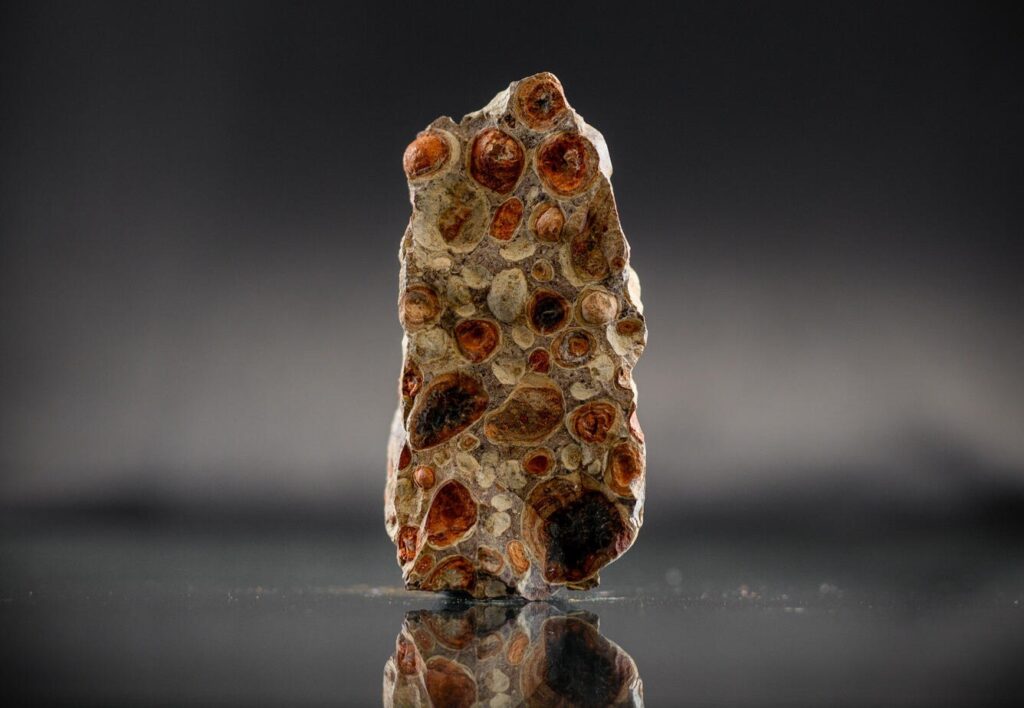
A hand specimen of bauxite showing the earthy texture and reddish-brown colour typical of iron-rich varieties. Source: U.S. Geological Survey, public domain.

A rock named after a Provençal village

In March 1821, the French mining engineer Pierre Berthier was sent to examine a reddish, iron-stained outcrop near the village of Les Baux-de-Provence in the Bouches-du-Rhône. His employers expected an iron ore. Berthier’s analysis, published the same year in the Annales des Mines, showed instead that the rock was dominated by hydrated alumina; the first time a hydrated aluminium oxide had been documented from a European deposit. He simply called it l’alumine hydratée des Beaux. The name beauxite was introduced by Armand Dufrénoy in the mid-nineteenth century and later revised to the modern spelling bauxite by Henri Sainte-Claire Deville in 1861. Industrial exploitation followed almost immediately, and France remained the world’s leading producer until 1913.

What bauxite actually is

Bauxite is not a mineral and has no crystal system of its own. It is a polymineralic, residual rock: the upper, aluminium-enriched horizon of a deeply weathered profile. Three aluminium-hydroxide minerals dominate, and their proportions reflect the depth, temperature, and age of the weathering system: gibbsite in young, low-temperature lateritic profiles; boehmite in older or slightly buried deposits where partial dehydration has occurred; diaspore in deeply buried or low-grade metamorphosed bauxites. The accompanying iron oxides give bauxite its characteristic red and ochre tones; titanium oxides and kaolinite are nearly always present.
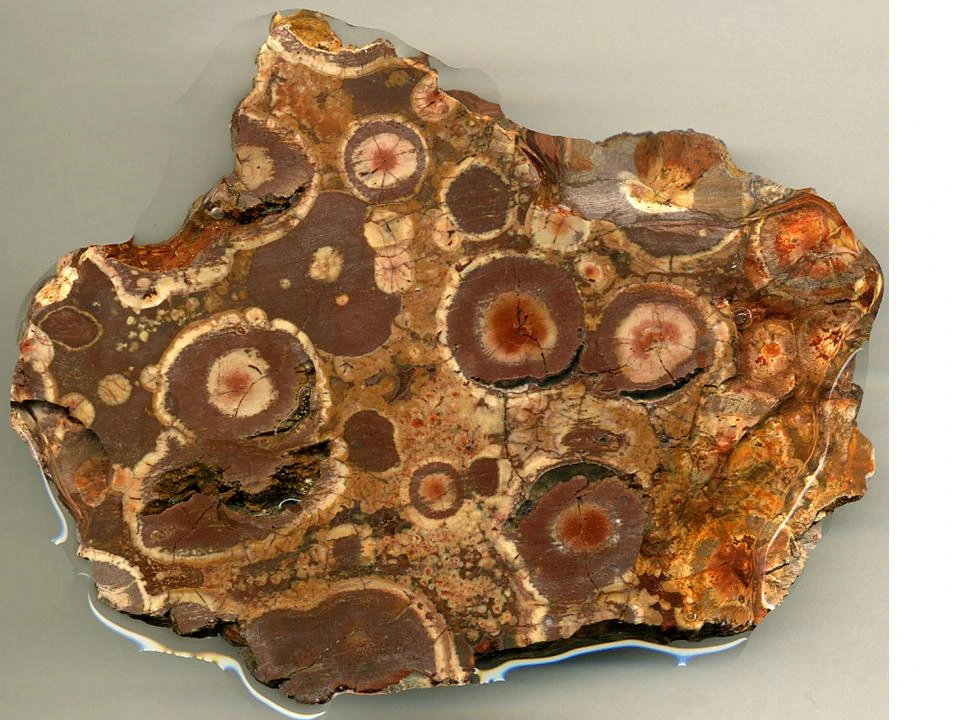
Chertified pisolitic bauxite from Arkansas, USA, showing rounded pisoids on a cut surface. Photo: James St. John / CC BY 2.0 via Wikimedia Commons.

How it forms

Bauxite forms where two conditions hold for long stretches of geological time: a warm, humid climate with strong seasonal rainfall, and a stable, well-drained land surface. Under these conditions, intense chemical weathering hydrolyses silicate minerals in the parent rock, leaches silica and the alkali and alkaline-earth cations away in solution, and leaves an in-situ residue dominated by the least-soluble oxides, those of aluminium, iron, and titanium. The process operates over 10⁵–10⁷ years and requires uninterrupted tectonic stability. The world’s great bauxite plateaux, the Fouta Djallon in Guinea, the Darling Range in Western Australia, the Trombetas in Brazil, all sit on long-stable cratonic surfaces.

Because bauxite formation is so tightly tied to climate and palaeolatitude, ancient bauxite horizons are widely used as palaeoclimatic markers. Their distribution through the Phanerozoic correlates with greenhouse intervals, Carboniferous, Late Cretaceous, Paleocene–Eocene, Middle Miocene, and with continental positions in tropical latitudes.

Lateritic versus karst bauxite

Two genetic classes account for almost all known deposits.

Lateritic bauxites form on aluminosilicate parent rocks, granite, gneiss, basalt, syenite, shale, in the modern tropical and subtropical belt. They are volumetrically dominant (~88 % of global resources), produce thick blanket-like deposits, and supply nearly all of the world’s mined bauxite. Guinea, Australia, Brazil, India, Indonesia, and Vietnam host the major lateritic provinces.

Karst bauxites form in solution depressions on carbonate platforms (limestone, dolomite). They are typically older, many are Mesozoic or even Palaeozoic, and represent fossil weathering systems that have since been buried, exhumed, or tectonically deformed. The Mediterranean province (Greece, Croatia, Hungary, southern France, Turkey) is the type example, alongside Jamaica and Hispaniola.

A small third category, the Tikhvin-type (or sedimentary type), forms by reworking and redeposition of older lateritic bauxite onto an aluminosilicate substrate. The original Tikhvin deposit east of St Petersburg is the namesake.

Where it’s mined today
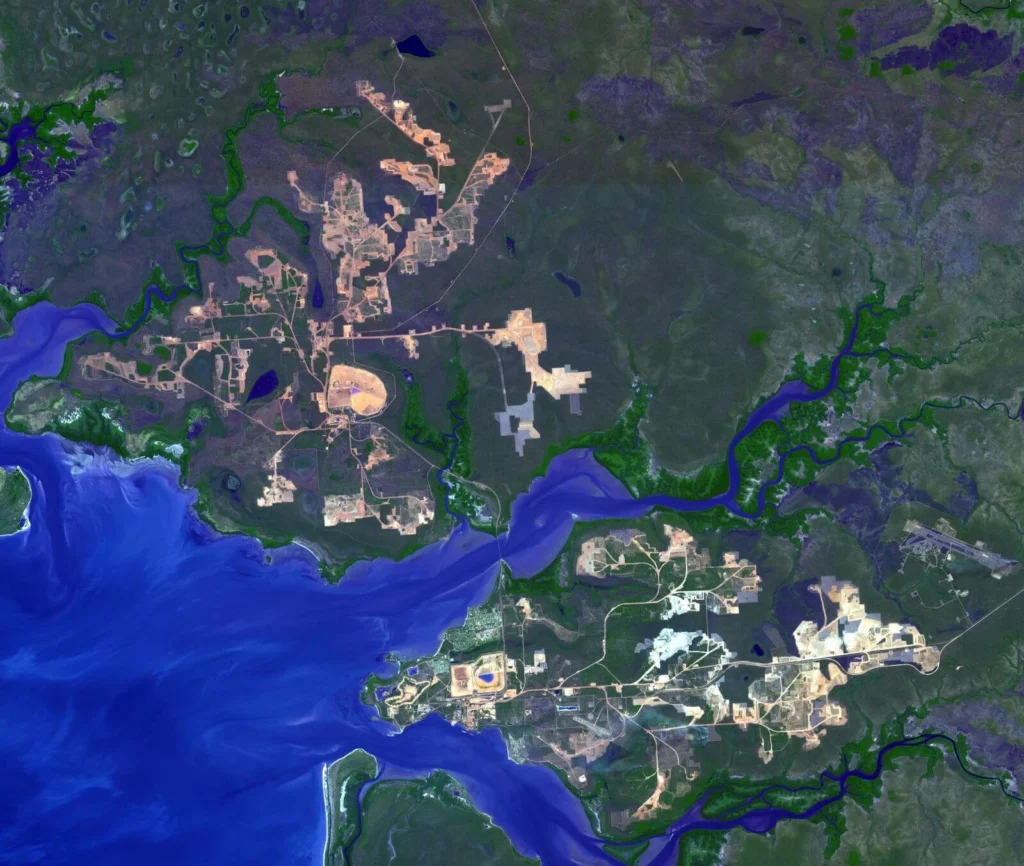
ASTER satellite image (9 August 2013) of the Weipa bauxite operation on Cape York Peninsula, northern Queensland — one of the largest open-pit bauxite mines in the world. The lateritic bauxite forms a near-surface blanket only a few metres thick, exposed by stripping the overlying soil and vegetation. Source: NASA / METI / AIST / Japan Space Systems and U.S./Japan ASTER Science Team.

The latest USGS revision puts 2024 world bauxite mine production at roughly 428 million tonnes. The largest producers were Guinea, Australia, China, Brazil, India, and Indonesia.

  • Guinea ~130 Mt; the Boké–Sangarédi region on the Fouta Djallon is the world’s premier export source.

  • Australia ~100 Mt; Weipa on Cape York Peninsula and the Darling Range west of Perth.

  • China ~93 Mt; mostly diaspore-type karst bauxite in Shanxi, Henan, Guizhou, and Guangxi.

  • Brazil 33 Mt; Trombetas and Juruti in the Amazon basin.

  • Indonesia 32 Mt; Bintan and West Kalimantan.

  • India 25 Mt; mainly Odisha and Andhra Pradesh.

Almost all production comes from open-pit mines, since lateritic bauxite forms a near-surface blanket usually only a few metres to a few tens of metres thick.

From rock to metal

Aluminium extraction is a two-step industrial process and has been since the late nineteenth century. The Bayer process (Karl Josef Bayer, 1888) digests crushed bauxite in hot concentrated sodium hydroxide; aluminium hydroxides dissolve as sodium aluminate while iron oxides, titanium oxides, and silicate residues remain as solid waste; the so-called red mud, or bauxite residue. Pure aluminium hydroxide is then precipitated and calcined to alumina (Al₂O₃). The Hall–Héroult process (1886, independently invented by Charles Hall in the United States and Paul Héroult in France) reduces the alumina to metallic aluminium by electrolysis in a molten cryolite (Na₃AlF₆) bath. As a working ratio, roughly four tonnes of dry bauxite yield two tonnes of alumina, which yield one tonne of aluminium.

Beyond aluminium, bauxite is consumed directly in the manufacture of refractory bricks, abrasive corundum, calcium-aluminate cement, and proppants for hydraulic fracturing. Bayer refining also produces bauxite residue, better known as red mud: a highly alkaline waste dominated by iron oxides, titanium oxides, residual alumina, silica, and caustic soda. More than four billion tonnes are already stored worldwide, making it one of the aluminium industry’s largest environmental liabilities.
Share Rock

more rocks.minerals

View All
Zircon crystal on beige mineral rock

Zircon

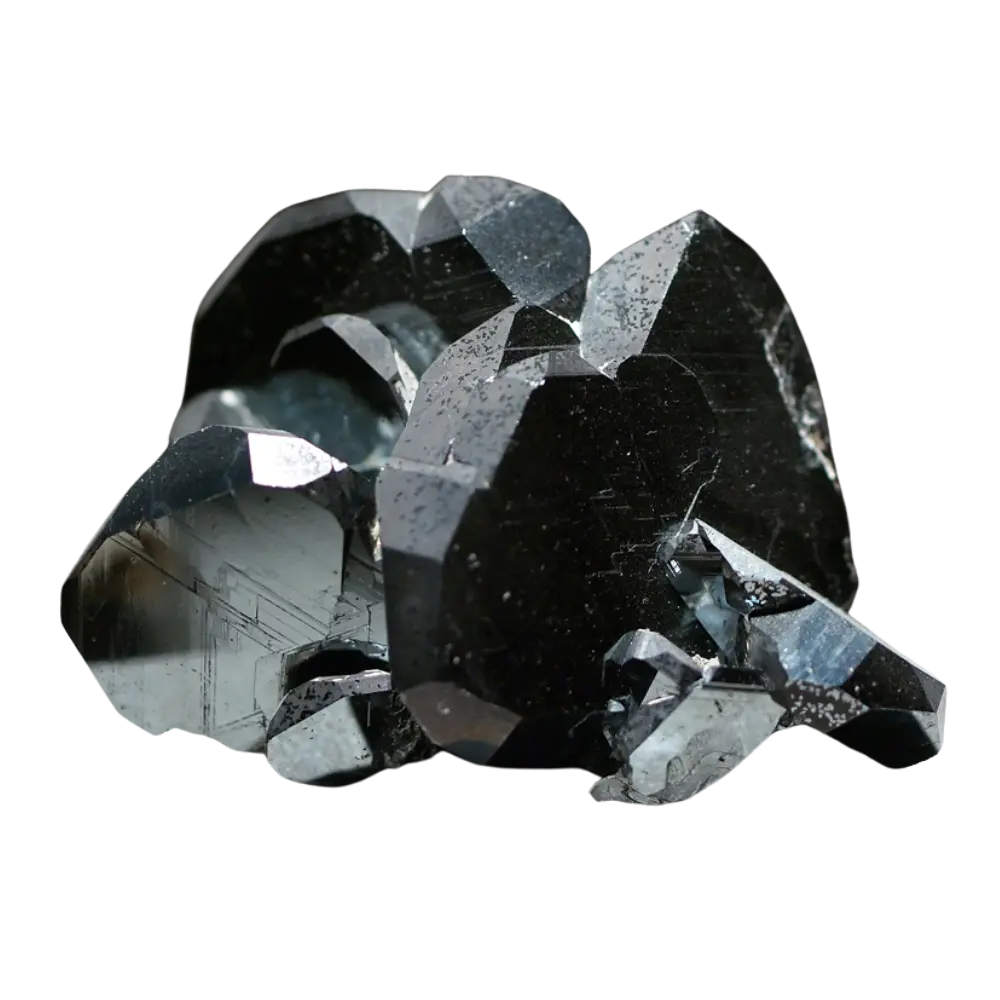
Shiny metallic hematite crystal cluster

Hematite

Rough beige sandstone rock on white background

Sandstone

Dark blue scorodite crystal cluster mineral specimen

Scorodite

Bright yellow-green adamite specimen close-up

Adamite

Orange scheelite crystal on gray matrix rock

Scheelite

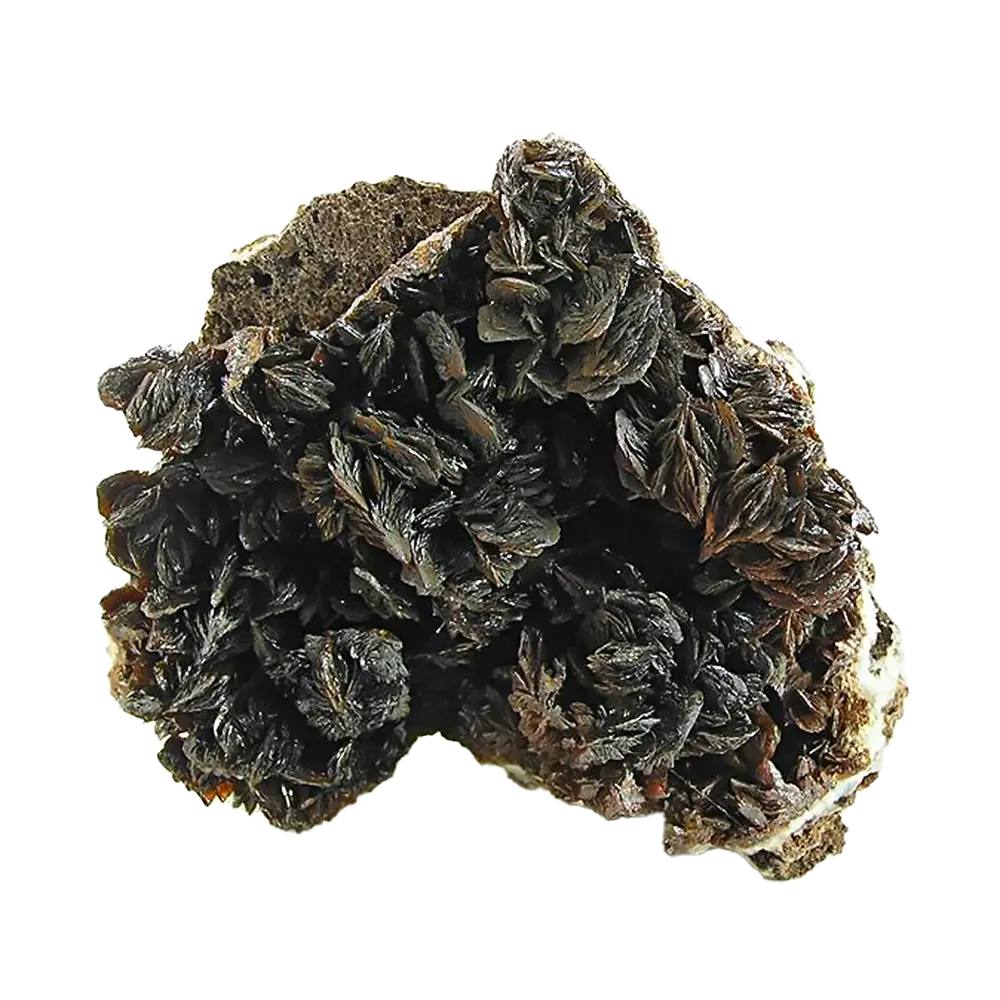
Muscovite mineral

Muscovite

Vanadinite crystal cluster on white background

Vanadinite

White halite rock salt crystal cluster

Halite

White kernite crystal

Kernite

Monazite mineral crystal cluster

Monazite

Beryl crystals with brown mineral base

Beryl

Bright green olivine crystal mineral specimen

Olivine

Olivine, a magnesium iron silicate, is used in gemstones (peridot) and refractory materials.

Read more
Vanadinite crystal cluster on white background

Vanadinite

Vanadinite is a bright red mineral, primarily sourced from lead deposits.

Read more
Colorful watermelon tourmaline crystal slice

Tourmaline

Tourmaline is a colorful boron silicate mineral used as a gemstone and in electronics.

Read more
Muscovite mineral

Muscovite

Muscovite, a mica mineral, is used in insulation, fireproofing, and cosmetics.

Read more
Bright yellow-green adamite specimen close-up

Adamite

Adamite is a rare, colorful orthorhombic mineral prized by collectors for its vibrant crystals.

Read more
Shiny black coal

Coal

Coal, mainly carbon, is used for energy and steel production.

Read more
Rough beige sandstone rock on white background

Sandstone

Sandstone, composed of quartz and feldspar, is used in construction, paving, landscaping, and glassmaking.

Read more
Shiny metallic pyrite mineral cluster

Galena

Galena is the main ore of lead and silver, used in batteries and shielding.

Read more
Talc mineral

Talc

Talc, the softest mineral, is used in baby powder, cosmetics, ceramics, and plastics.

Read more
Borax mineral specimen

Borax

Borax is a sodium borate used in cleaning and glassmaking.

Read more
Clear quartz crystal cluster on black background

Quartz

Quartz, a silicon dioxide mineral, is used in jewelry and electronics.

Read more
Sample of apatite mineral crystal

Apatite

Apatite is a calcium phosphate mineral found in various colors, primarily used in fertilizers.

Read more
Shiny metallic pyrite mineral cluster

Pyrite

Pyrite, or “Fool’s Gold,” is used for sulfur and iron production.

Read more
Beryl crystals with brown mineral base

Beryl

Beryl is a gemstone mineral, including emerald and aquamarine, and a source of beryllium.

Read more
Polished sample of a gneiss rock

Gneiss

Gneiss is a durable, banded metamorphic rock used in construction and decoration.

Read more
White kernite crystal

Kernite

Kernite is a boron-rich mineral used in glassmaking, detergents, and ceramics.

Read more
Diorite rock close up

Diorite

Diorite is a tough igneous rock used in construction, art, and in research.

Read more
Marble close-up

Marble

Marble, a calcium carbonate metamorphic rock, is used in sculpture, architecture, and countertops.

Read more
Piece of red and brown bauxite ore

Bauxite

Bauxite is the main aluminum ore, primarily found in Australia.

Read more
Green pyroxene crystal mineral specimen

Pyroxene

Pyroxene, a silicate mineral group found in igneous and metamorphic rocks.

Read more
Zircon crystal on beige mineral rock

Zircon

Zircon is a durable mineral used in jewelry, geological dating, and ceramics.

Read more
Dark blue scorodite crystal cluster mineral specimen

Scorodite

Scorodite, a hydrated iron arsenate, is valued for arsenic containment and as a collector’s mineral.

Read more
Orange scheelite crystal on gray matrix rock

Scheelite

Scheelite, a calcium tungstate, is the main source of tungsten for tools and alloys.

Read more
Shiny black magnetite crystal mineral specimen

Magnetite

Magnetite, an iron oxide with magnetic properties, is used in steel production and catalysts.

Read more
Clear barite crystal mineral specimen

Barite

Barite is a barium sulfate mineral used in drilling, shielding, and paints.

Read more
Large basalt on white background

Basalt

Basalt is a dark, fine-grained igneous rock used in construction, monuments, and geological studies.
Read more
Wulfenite crystal specimen

Wulfenite

Wulfenite is a bright orange or yellow mineral, prized by collectors.

Read more
White halite rock salt crystal cluster

Halite

Halite, or rock salt, is a sodium chloride mineral used for seasoning, de-icing, and industry.

Read more
Brown volcanic rock texture close-up

Rhyolite

Rhyolite, a silica-rich volcanic rock, is used in construction and research.

Read more
Green fluorite crystal on yellowish mineral matrix

Fluorite

Fluorite, a colorful calcium fluoride, is used as flux in steelmaking, glass, and as gemstones.
Read more
Limestone rock with visible fossil imprint

Limestone

Limestone, mainly calcium carbonate, is used in construction, cement, and water treatment.

Read more
Large translucent gypsum mineral specimen

Gypsum

Gypsum, a soft calcium sulfate mineral, is primarily used as plaster or in cement production.

Read more
Shiny metallic hematite crystal cluster

Hematite

Hematite is an iron oxide mineral used for iron ore, pigments, and radiation shielding.

Read more
White dolomite crystal mineral cluster

Dolomite

Dolomite is a calcium magnesium carbonate used in construction and agriculture.

Read more
Metamorphic rock with dark red garnet crystals

Chlorite

Chlorite, a green phyllosilicate mineral, is used as a geological indicator and industrial filler.

Read more
Descloizite mineral crystal cluster

Descloizite

Descloizite is a lead-zinc vanadate mineral, mainly found in Namibia and Mexico.

Read more
Shist rock example

Schist

Schist, a layered metamorphic rock rich in mica and quartz, is often used in construction.

Read more
Dark black biotite mica mineral specimen

Biotite

Biotite is a dark mica mineral used in insulation and geological studies.
Read more
Close-up of a granite rock sample

Granite

Granite is a durable igneous rock used in construction, monuments, and countertops.
Read more
Monazite mineral crystal cluster

Monazite

Monazite, a group of rare earth minerals, is a key source of rare earth elements.

Read more
Cluster of shiny brown mica crystals

Mica

Mica is a group of silicate minerals with varying compositions mainly in insulation and electronics.

Read more
Gray quartzite rock on white background

Quartzite

Quartzite, a durable metamorphic rock made of quartz, is used in construction and countertops.

Read more
Amphibole sample on white background

Amphibole

Amphibole is a diverse mineral group used for geological indicators and as insulation.

Read more
Calcite crystals on metallic mineral surface

Calcite

Calcite is a trigonal calcium carbonate mineral used mainly in construction for making cement.

Read more
Raw red garnet gemstone close-up

Garnet

Garnet is a group of silicate minerals used as gemstones and abrasives.

Read more
Brown crystals of feldspar mineral specimen

Feldspar

Feldspar is an aluminum silicate used in ceramics, glass, and construction.

Read more
Dark gray shale rock sample

Shale

Shale, a fine-grained sedimentary rock, is used for natural gas, cement, and research.

Read more

join.me

Geology made clear, in your inbox.

Get clear, visual explainers on rocks, minerals, deep time, and the most fascinating parts of Earth science from Geoscopy.
Piece of red and brown bauxite ore

Bauxite

Bauxite is the main aluminum ore, primarily found in Australia.

Read more