
Introduction
The ground gave almost no warning. Somewhere beneath what would one day be southern Africa, a thread of molten rock no wider than a city street had been climbing for a day or less, threading up through 150 kilometres of cold, ancient mantle. As it neared the surface the pressure holding its dissolved carbon dioxide in solution fell away, and the gas came out of the melt all at once, the way a shaken bottle of soda erupts when the cap turns. The magma foamed, accelerated, and blasted a hole through the crust. Rock, gas, and crystals tore upward and fountained into the sky. Among the debris, packed into a slurry of shattered mantle, rode crystals of pure carbon that had already waited more than three billion years for this ride. The eruption lasted hours. Then the vent fell quiet, and it stayed quiet for tens of millions of years.
That is, in essence, how nearly every diamond you have ever seen reached the surface. Not by the slow squeezing of coal over the eons, but by a rare, violent, gas-driven eruption through a structure geologists call a kimberlite pipe, an event so fast it has earned the nickname “diamond rocket.” The diamonds did not form during the eruption. They were passengers, scooped up from the deep and flung to daylight in a single explosive sprint that lasted less time than a long weekend.
What a diamond actually is
A diamond is carbon. It is the same element that darkens a pencil line, blackens a candle flame, and forms the backbone of every living cell. The difference between a diamond and the graphite in your pencil comes down entirely to geometry. In graphite, carbon atoms lock into flat sheets that slide over one another easily, which is why graphite feels greasy and why a pencil leaves a mark. In diamond, each carbon atom bonds to four neighbours in a rigid, fully interlocked three-dimensional lattice. That single structural fact explains why diamond is the hardest natural material known and why it can sit unchanged, chemically and physically, for billions of years.
Diamond is also a far denser way to pack carbon atoms together. A diamond has a density of 3.52 grams per cubic centimetre, about 56 percent higher than graphite. Forcing carbon into that tighter configuration takes enormous, sustained pressure, which is the central reason diamonds are not minerals of the surface world. They belong to the deep Earth, and reaching them at all requires either a journey of hundreds of kilometres downward or, more practically, waiting for the deep Earth to send a piece of itself up to us.
Most natural diamonds crystallise at the base of the oldest, thickest parts of continents, in a layer that geologists call the subcontinental lithospheric mantle. The depth range runs from roughly 150 to 200 kilometres. Temperatures there sit between about 900 and 1,300 degrees Celsius, and pressures climb to tens of thousands of times the pressure of the air at sea level. Above a certain depth, carbon prefers to be graphite. Below the boundary that mineralogists call the diamond stability field, the denser diamond form becomes stable, and carbon-bearing fluids percolating through cracks in the mantle rock can crystallise solid diamond out of solution.
The fluids that do this are not all the same. Studies of the tiny imperfections trapped inside diamonds show a surprising range of source chemistries. Some diamonds grew from carbon-bearing fluids rich in carbonate. Others grew from fluids carrying methane or other reduced carbon compounds. The common thread is that something dissolved carbon at depth, carried it through fractures in the mantle, and then, as conditions shifted, dropped that carbon out as crystalline diamond. The process can take millions of years for a single stone, and a large diamond may record several distinct growth episodes separated by vast stretches of time, like tree rings written in carbon.
The geography of diamond formation is just as specific as the chemistry. Diamonds live almost exclusively beneath cratons, the ancient nuclei of continents that have stayed geologically stable since the Archean, more than 2.5 billion years ago. Cratons have deep mantle roots, sometimes called keels, that protrude downward into the surrounding mantle like the bottom of an iceberg. These keels are old, cold, and chemically depleted, and that combination is exactly what diamond needs. The low temperatures keep carbon in the diamond field rather than tipping it back toward graphite, and the long stability gives diamonds time to grow and survive. Find an ancient craton and you have found the one place on Earth where diamonds are likely to have formed and stuck around.
The coal myth, and why it refuses to die
The notion that diamonds are squeezed coal is one of the most durable errors in popular science. It shows up in classrooms, in films, in offhand remarks at dinner parties. It is worth dismantling carefully, because the myth does not just oversimplify the truth. It points in the opposite direction from what actually happens underground.
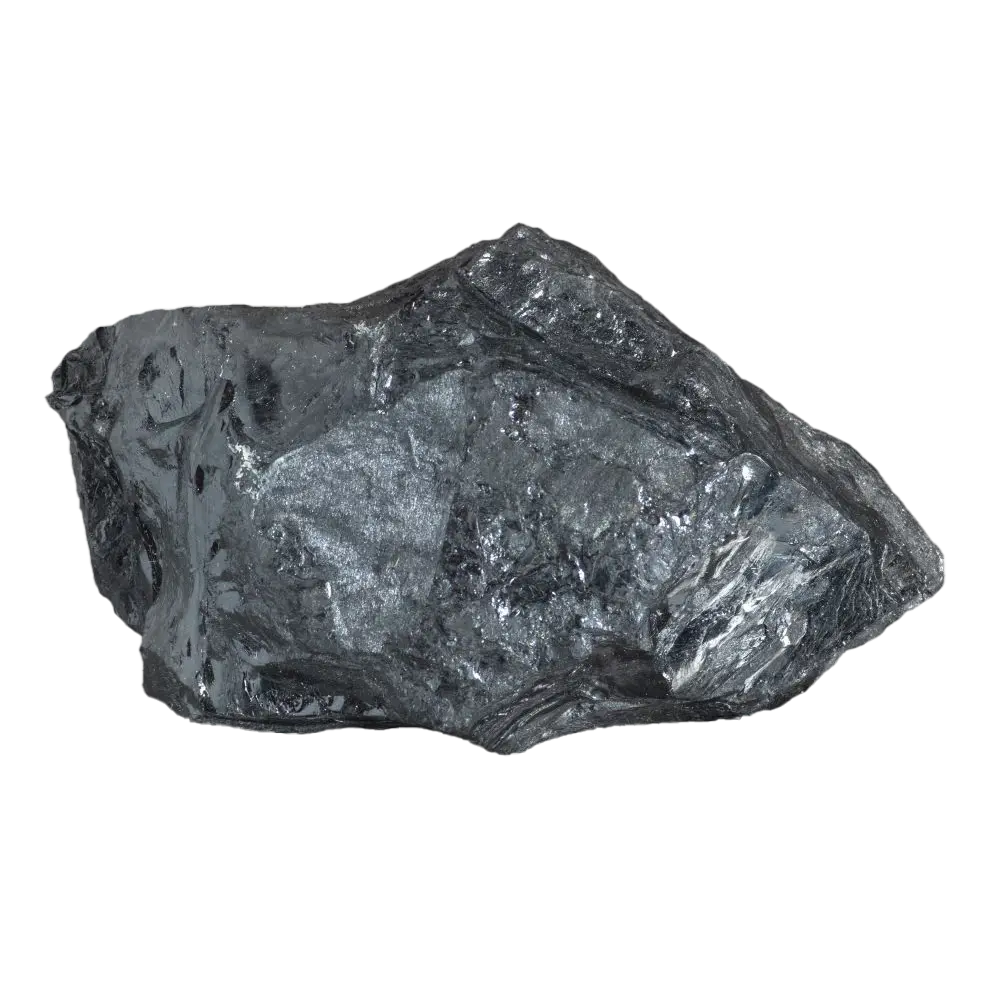
Coal forms from plant debris. Dead vegetation accumulates in swamps and river deltas, gets buried under sediment, and slowly transforms under modest heat and pressure into peat and then into coal. It is a sedimentary rock, formed at and near the surface, and it rarely ends up more than a couple of kilometres underground. The carbon in coal comes from organisms that lived in sunlight.
Diamonds form fifty to a hundred times deeper than coal is ever buried, in the mantle, from carbon that has nothing whatsoever to do with surface plants. The most likely carbon sources are primordial carbon that has been locked inside the Earth since the planet formed, or carbon dragged down into the mantle when tectonic plates sink in subduction zones. The conditions of the deep mantle, brutal pressure and searing heat far below the crust, simply do not exist in the shallow swampy environments where coal is born.
There is also a timing problem that finishes the myth off entirely. The land plants whose remains build coal beds did not appear on Earth until roughly 400 million years ago. Most diamonds are far older than that. A great many crystallised more than a billion years before the first leaf unfurled. You cannot make a diamond out of a plant that will not exist for another billion years. The confusion is forgivable, since coal and diamond are both made of carbon, but that shared element is the beginning and end of the resemblance. The U.S. Geological Survey and gemological researchers alike have spent decades correcting the record, and the verdict is unambiguous: diamonds do not come from coal.
Older than the air we breathe
Here the diamonds turn from jewellery into scientific instruments. As a diamond grows, it sometimes traps tiny grains of other minerals inside its lattice. Jewellers call these flaws inclusions and consider them defects that lower a stone’s value. Geochemists call them inclusions too, and consider them treasure. A sealed inclusion is a pristine sample of the deep mantle, captured at the instant the diamond formed and then protected, for as long as the diamond survives, by the most chemically inert container that nature makes.
Some of those inclusions contain radioactive isotopes that tick like clocks. One of the most useful pairs is rhenium and osmium. Rhenium decays into a specific osmium isotope at a known rate, so by measuring the ratio of the two in a sulphide inclusion, researchers can calculate when the diamond around it grew. The method works because the inclusion and its diamond host formed together and have been sealed off from the outside world ever since.
In 2006, a team led by Karen Westerlund of the University of Cape Town, working with Steven Shirey and Richard Carlson of the Carnegie Institution and colleagues at the University of Glasgow, applied this technique to diamonds from the Panda kimberlite at the Ekati mine in Canada’s Northwest Territories. They analysed sulphide inclusions in peridotitic diamonds and ran the numbers. The diamonds had formed about 3.52 billion years ago, with an uncertainty of around 170 million years. The Gemological Institute of America reports the figure as 3,523 million years. These are the oldest precisely dated diamonds yet found on Earth.
Earth itself is about 4.5 billion years old, so these crystals are roughly three-quarters as old as the planet. They formed during the Archean eon, when Earth was assembling its first continents. They predate the Great Oxidation Event, the transformation around 2.4 billion years ago when free oxygen first accumulated in the atmosphere. They are older than the breathable air, older than every animal and plant, older than nearly every form of complex life. When these diamonds crystallised, the sky had no oxygen worth speaking of, and the only life on the planet was microbial.
The chemistry of those Panda inclusions delivered a second discovery. Their osmium isotopes and their sulphur signatures pointed toward subduction, the process by which one tectonic plate sinks beneath another and drags surface material down into the mantle. That made these diamonds one of the oldest physical records we have of plate tectonics operating in something like its modern style. As Shirey summarised the finding, “We found that the diamonds are 3.5 billion years old and that they resided at relatively low temperatures for billions of years.”
The second clause matters as much as the first. The diamonds did not merely form 3.5 billion years ago; they then sat in the cool, stable root of an ancient continent for more than three billion years, going nowhere and changing not at all, until something finally came along to carry them up. Diamonds are remarkable not only for how they form but for how long they can wait. The deep keels of cratons are, in effect, long-term storage vaults, and the contents can stay locked away for almost the entire history of the planet.
Diamonds from Shirey’s broader body of work also turn out to be the deepest natural samples we can study. Most gem diamonds come from 150 to 200 kilometres down, but a rarer class, the so-called superdeep diamonds, formed as deep as 700 kilometres, not in cratonic keels at all, but where slabs of subducted ocean floor release melts in the mantle transition zone, well into the lower reaches of the upper mantle and beyond. No drill comes close to those depths. The deepest hole ever bored into the Earth, the Soviet-era Kola Superdeep Borehole, reached only about 12 kilometres before the rock grew too hot and plastic to continue. Diamonds routinely deliver samples from fifty times deeper than that, free of charge, packaged in the toughest wrapper in mineralogy.
The delivery system: what kimberlite is
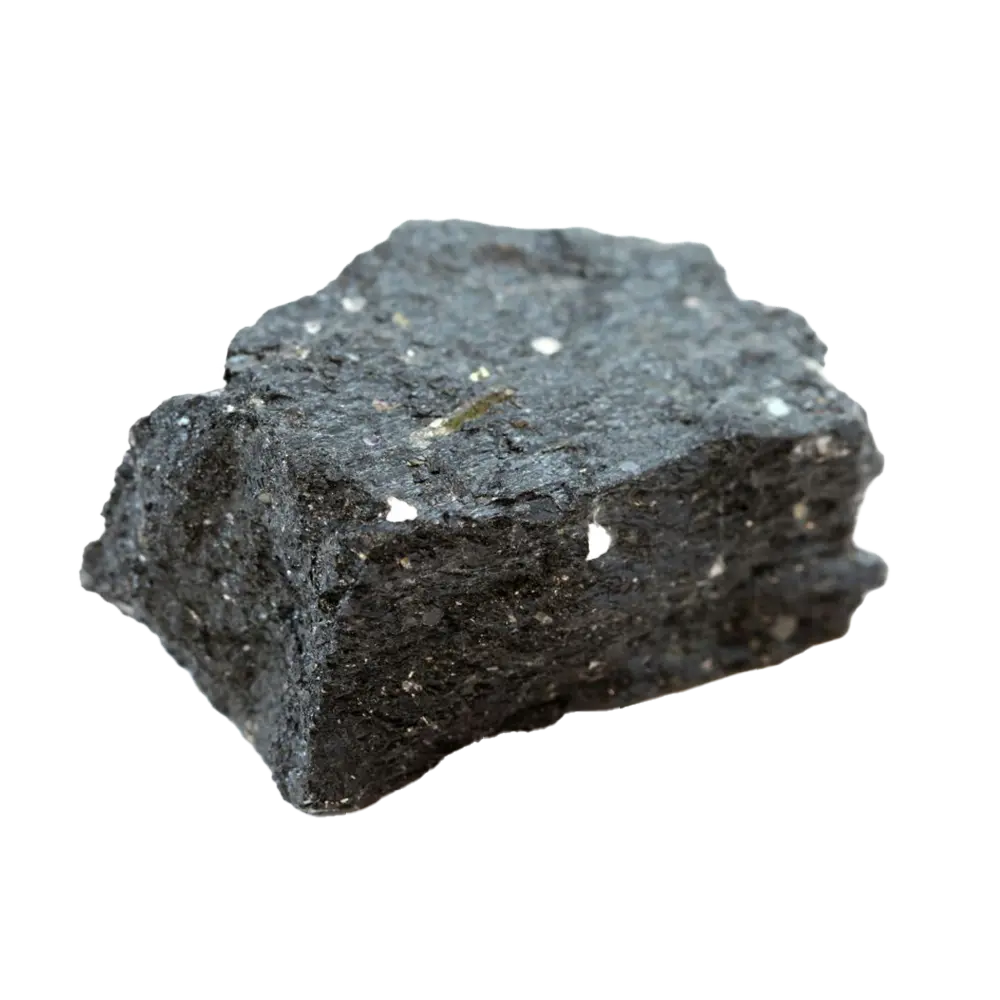
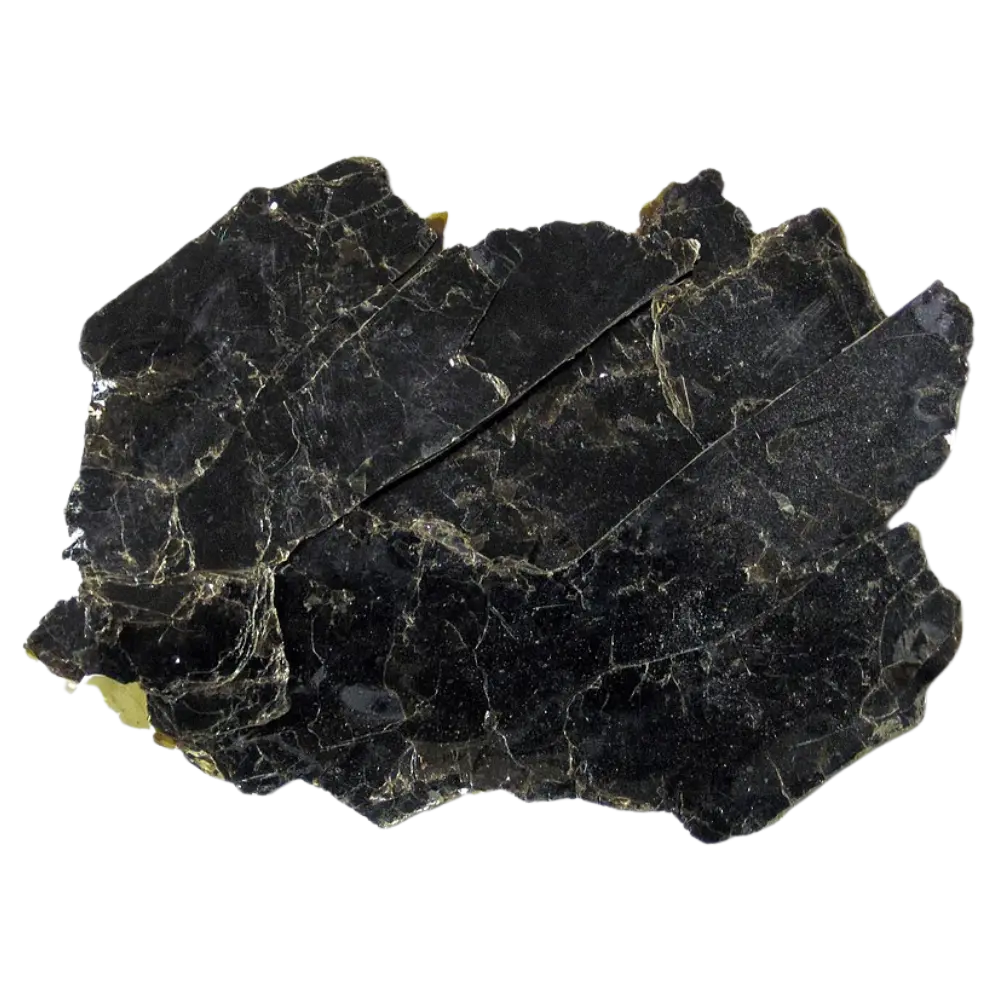
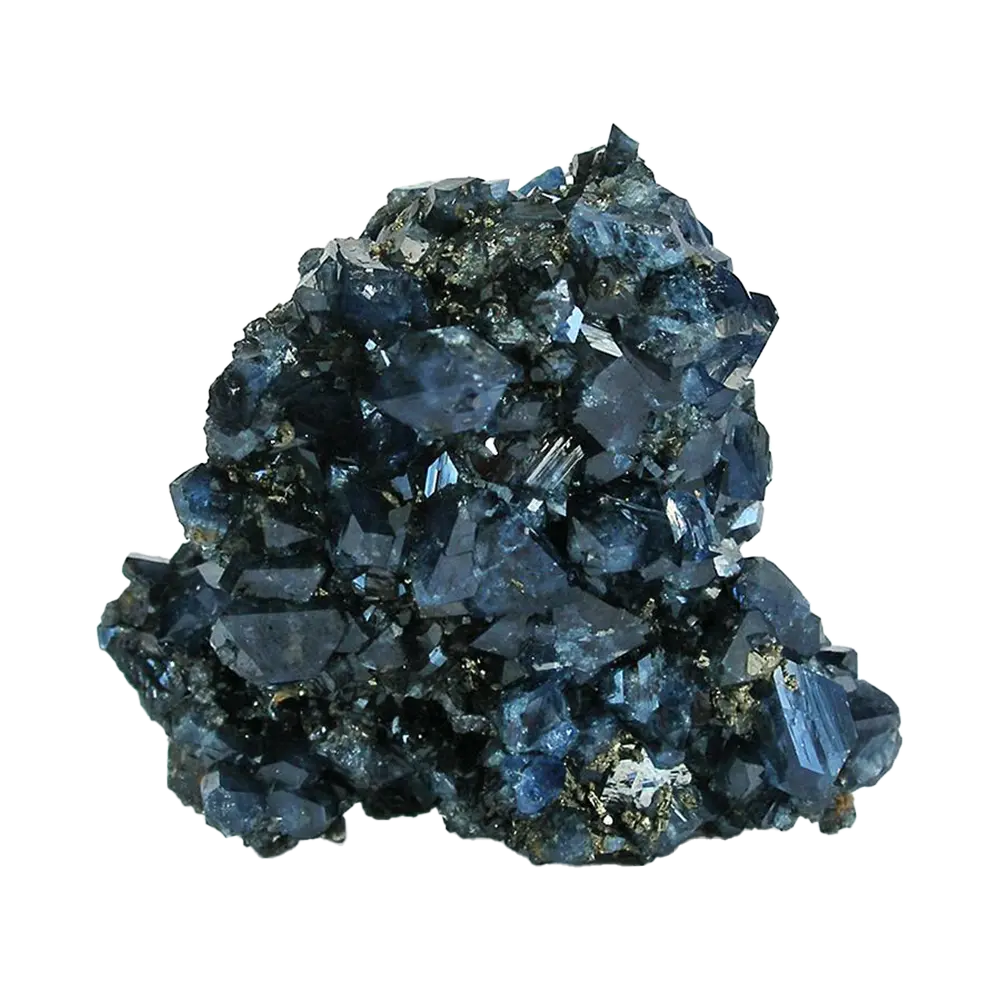
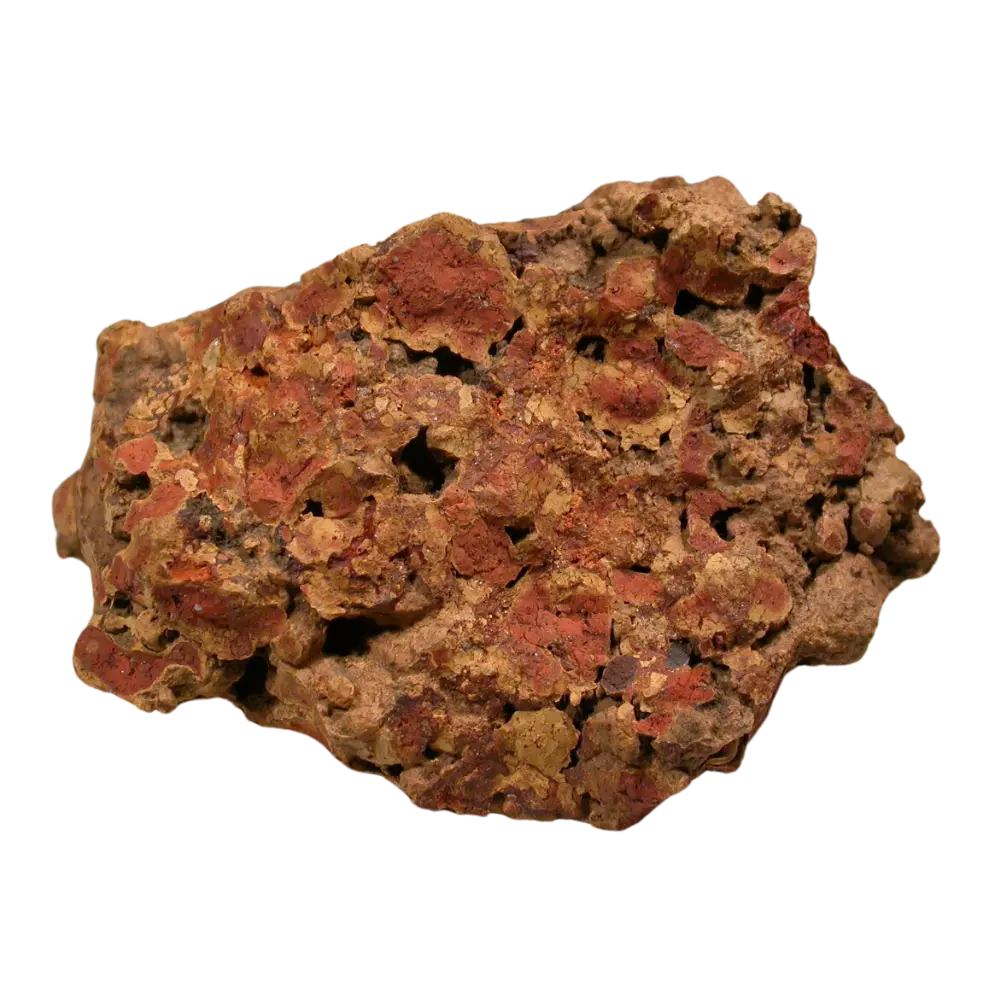
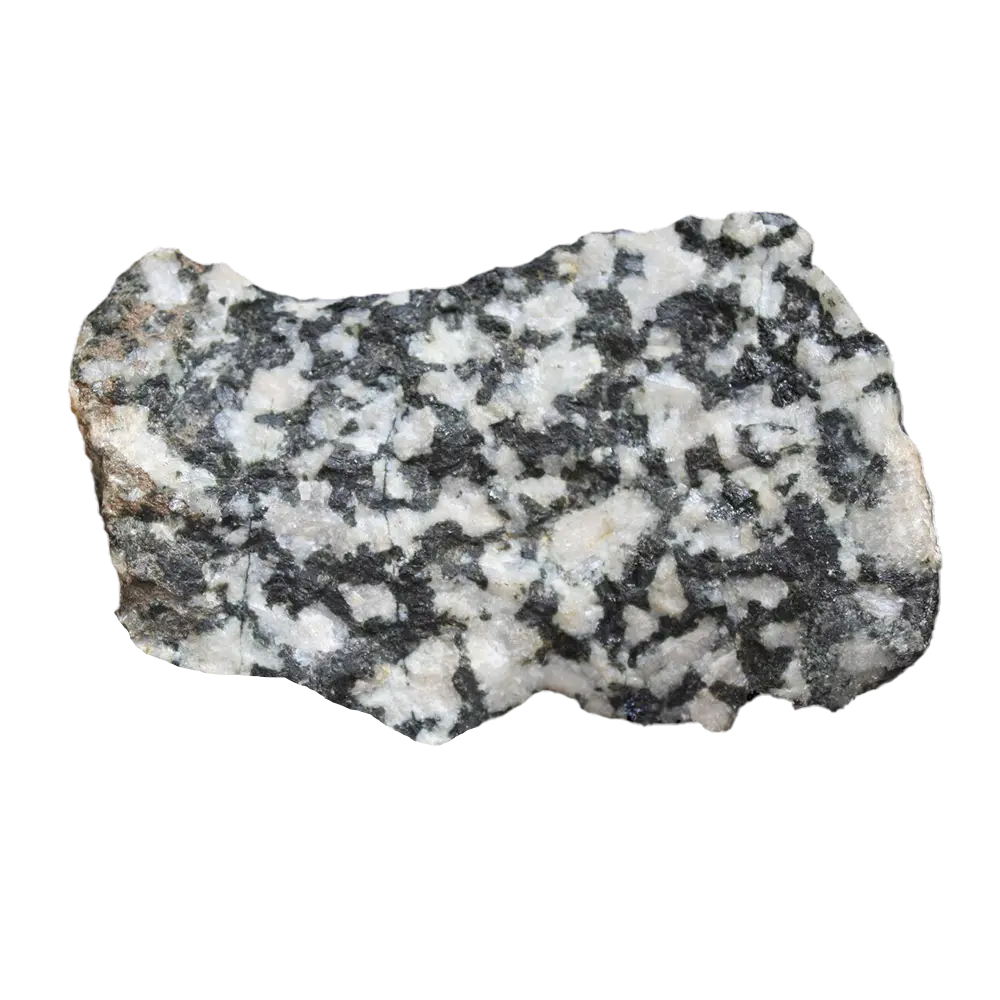
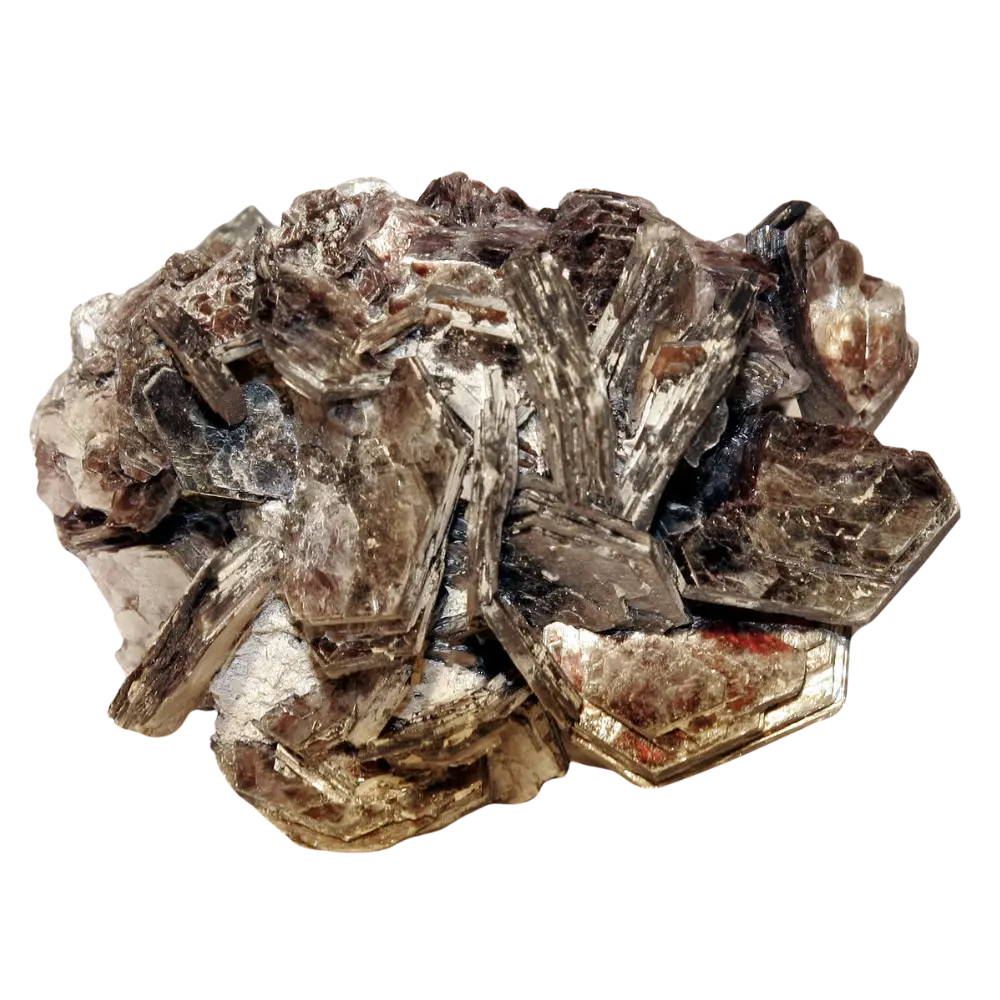
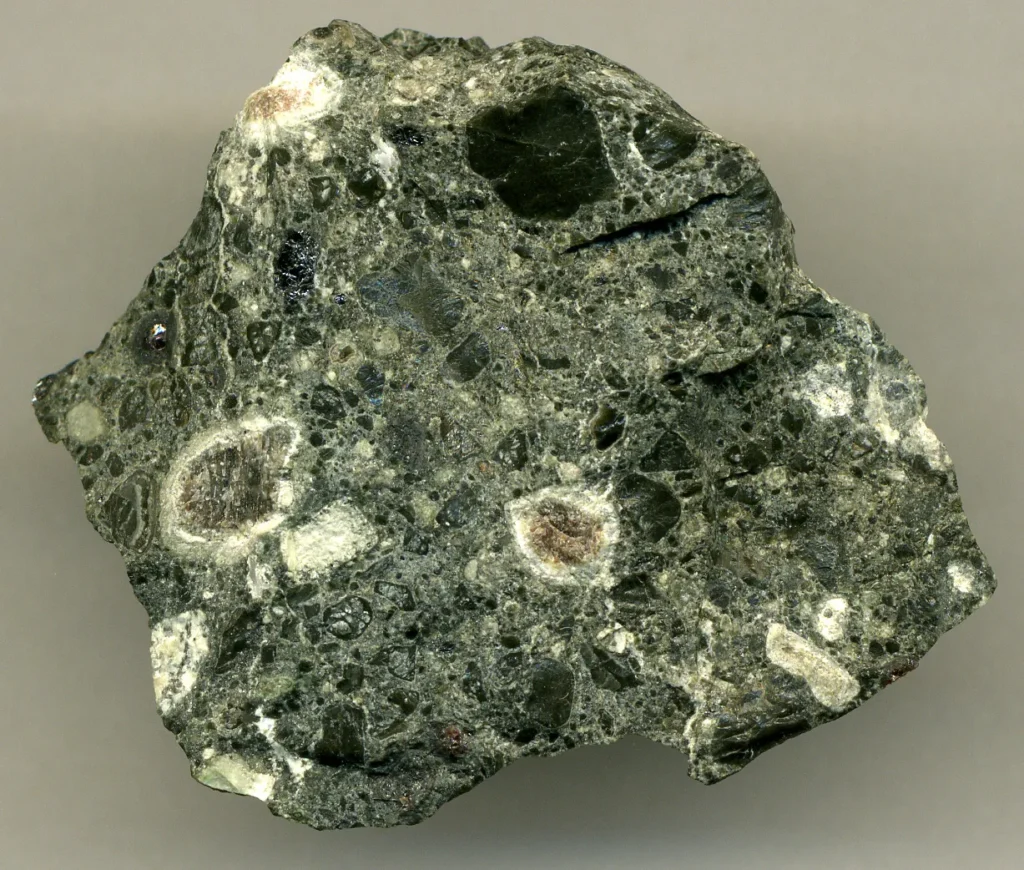
The vehicle that brings diamonds up is kimberlite. The rock takes its name from Kimberley, South Africa, where it was first recognised as the source of diamonds in the nineteenth century, and it is one of the strangest products of Earth’s interior. Kimberlite is a volatile-rich, silica-poor, ultramafic igneous rock that originates as a small-degree melt deep in the mantle, by most estimates at depths greater than 200 kilometres. Its mineral content runs to olivine, phlogopite mica, pyroxene, and garnet, laced with a long list of trace minerals. Fresh kimberlite tends to be a dark slate blue or blue-green, which early miners at Kimberley nicknamed “blue ground.” Where it had weathered near the surface, oxidation turned it yellow, and the diggers called that “yellow ground.” Both, they learned, could carry diamonds.
Kimberlite is also, by a wide margin, the most important source of diamonds on Earth. More than 70 percent of the world’s mined diamonds come from kimberlite pipes, with most of the remainder recovered from alluvial deposits, the rivers and beaches where weathered diamonds wash and concentrate after erosion frees them from their original pipe. The only other significant primary source is a related rock called lamproite, best known from the Argyle mine in Australia.
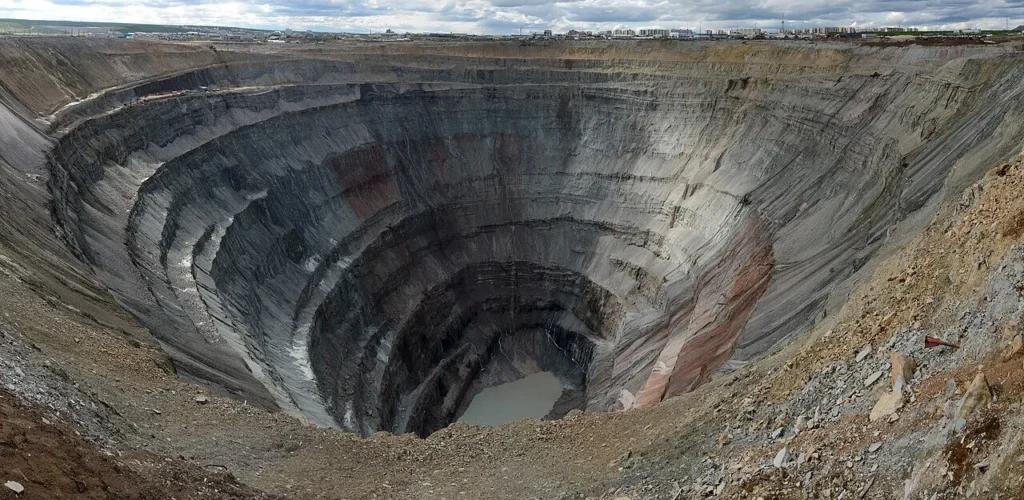
What sets kimberlite apart is its shape. It does not build the broad cone of a familiar stratovolcano. Instead it freezes into a structure shaped like a carrot, narrow at depth and flaring toward the surface. Geologists call these kimberlite pipes. At the bottom sits a sheeted complex of thin feeder dykes reaching down toward the mantle source. Within a kilometre or two of the surface, the rising magma blasts out a wider, conical-to-cylindrical zone called a diatreme, which is the part that erupts explosively and the part that miners chase downward. When a diamond company talks about working a “pipe,” this buried carrot is what they mean. The Big Hole at Kimberley, the Mir crater in Siberia, the open pits at Diavik and Ekati, all of them are the top of a kimberlite pipe, dug out and followed down.
Diamonds are passengers, not products
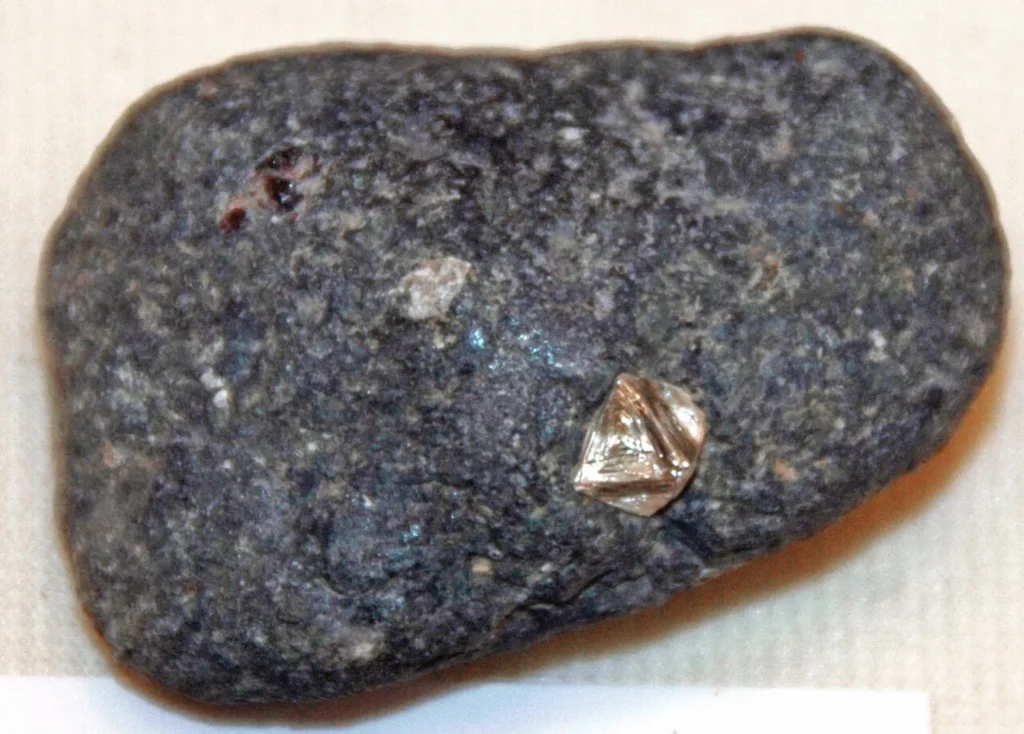
The single most important fact about kimberlite, and the one most people get wrong, is that diamonds do not crystallise out of kimberlite magma. They are hitchhikers, scooped up en route rather than grown in the melt. Isotopic dating shows this over and over: the diamonds are far older than the kimberlite that carries them, frequently by billions of years. The Panda diamonds are about 3.52 billion years old. The Panda kimberlite that brought them up erupted only about 53 million years ago. The crystals predate their own elevator by a factor of more than sixty.
As the kimberlite melt rises, it tears loose chunks of the surrounding mantle rock, which geologists call xenoliths, meaning foreign rocks, and it plucks out individual mineral grains, which they call xenocrysts, meaning foreign crystals. Diamonds ride up as xenocrysts, ripped from the diamond-bearing layers the magma happens to pass through on its way out. The magma behaves like a thief, grabbing whatever lies in its path and smuggling it to the surface. If the layers it passes through hold no diamonds, or if the diamonds get destroyed along the way, the kimberlite arrives barren. Most do. Over the past 140 years or so, geologists have sampled thousands of kimberlite pipes, of which only around one in ten contains any diamonds at all, and only a small handful of those are rich enough to mine at a profit.
The rocket ride: why speed saves the diamond
Here is the central puzzle of the whole story. Diamond is stable only at the high pressures of the deep mantle. Bring it up slowly while it is still hot, and the carbon atoms get enough time to rearrange themselves into graphite, the form that is stable at low pressure. A diamond hauled gently and warmly to the surface would arrive not as a glittering gem but as a smear of soft grey graphite. The fact that diamonds reach us intact, with their lattice and their brilliance preserved, tells us two things at once. The journey was fast, and the cooling at the end was abrupt.
How fast? Several independent lines of evidence point to ascent rates measured in metres per second, a world away from the centimetres per year that govern most geological motion. The cleverest early measurement came in 2000, when Simon Kelley and Jan-Anne Wartho published a result in the journal Science using a kind of natural stopwatch. They examined argon trapped in grains of the mineral phlogopite carried up inside mantle xenoliths. Argon leaks out of phlogopite at a rate that depends on temperature, so the amount still locked inside a grain records how long that grain stayed hot during its ascent. Working with xenoliths from Malaita in the Solomon Islands and from Elovy Island on Russia’s Kola Peninsula, they reported in the paper that the data “indicate transport times of hours to days depending upon the magma temperature.” The diamonds, in other words, had spent only hours to a few days in transit.
Later work tightened the picture. Drawing on the geometry of kimberlite dykes exposed in the walls of diamond mines, on laboratory studies of how thin sheets of magma move through rock, and on the sheer mass of mantle cargo a kimberlite can carry, researchers place ascent rates through the lithosphere in the range of about 4 to 20 metres per second. A 2019 overview in the journal Elements by Kelly Russell, Stephen Sparks, and Janine Kavanagh frames the transit through roughly 150 to 200 kilometres of cratonic lithosphere as taking less than ten hours up to about two days. At the upper end of those speeds, the magma moves faster than a car on a motorway while dragging tonnes of broken rock along with it.
You may have seen kimberlite described in news coverage as erupting “at the speed of sound” or rising at “around 80 miles per hour.” Those are vivid framings, and they should be read with care. They are not measured deep-ascent rates. They are estimates, sometimes of velocity at or near the surface during the final explosive phase, sometimes simply rhetorical flourishes. The figures grounded in peer-reviewed measurement are the ones above: a few to a couple of dozen metres per second through the lithosphere, with the full journey from mantle source to surface taking somewhere between several hours and a couple of days. That is the speed that matters, because it is fast enough to outrun the chemistry that would otherwise turn diamond back into worthless graphite.
What powers the elevator
If diamonds are passengers, what supplies the thrust? The answer is gas, mostly carbon dioxide, and the physics of how that gas comes out of solution as the magma climbs.
In 2012, Kelly Russell and colleagues at the University of British Columbia and in Munich published an influential mechanism in Nature. They argued that kimberlite begins life as a carbonatite melt, extremely rich in dissolved carbon dioxide and very low in silica. As this primitive melt rises through the mantle, it assimilates silicate minerals from the rocks it passes, especially orthopyroxene. Dissolving orthopyroxene pushes the melt toward higher silica content, and a higher silica content sharply reduces how much carbon dioxide the melt can keep dissolved. Past a critical threshold, the carbon dioxide exsolves in a runaway burst, foaming out of the liquid. The escaping gas lowers the magma’s density and raises its buoyancy, which speeds it up, which exposes it to fresh rock to assimilate, which exsolves still more gas. The whole process feeds on itself. Russell’s team named it assimilation-fuelled buoyancy, and it elegantly explains how a dense, crystal-choked magma can accelerate upward even while carrying more than 25 percent of its volume as mantle debris. To reconstruct the original melt, the researchers worked backward from young kimberlite lavas, stripping out roughly a quarter of the rock as entrained mantle crystals, the same proportion of cargo the mechanism predicts.
In 2025, a study in the journal Geology put hard numbers on the gas requirement. Ana Anzulović, a doctoral research fellow at the University of Oslo’s Centre for Planetary Habitability, and her colleagues Anne Davis, Carmen Gaina, and Razvan Caracas modelled the Jericho kimberlite of Canada’s Slave craton at the atomic scale. Using molecular dynamics software that simulates the forces between individual atoms, they tracked how carbon dioxide and water alter the density and mobility of the melt at the pressures and temperatures of different depths. The headline result is precise and striking. The melt needs at least 8.2 weight percent carbon dioxide to stay buoyant enough to cross the Moho, the boundary between mantle and crust, and rise through it. With less carbon dioxide than that, the melt is denser than the surrounding rock and never erupts at all. The diamonds would stay locked in the mantle forever.
Anzulović described the moment of realisation plainly: “I was actually pretty surprised that I can take such a small scale system and actually observe, ‘Okay, if I don’t put any carbon in, this melt will be denser than the craton, so this will not erupt.'” The model also found that the most volatile-rich kimberlite melts can carry up to about 44 percent of their load as peridotite, the mantle rock, an astonishing cargo capacity for such a low-viscosity liquid. The two volatiles play different parts. Water makes the melt more diffusive and runnier, so it can move quickly through the mantle. Carbon dioxide structures the melt at depth and then, near the surface, degasses violently to drive the eruption upward.
Assemble the pieces and the rocket makes physical sense. A deep, gas-charged melt begins to rise. It assimilates rock as it climbs, which forces its dissolved carbon dioxide out of solution. The exsolving gas makes it more buoyant, accelerating the ascent in a self-reinforcing loop. Near the surface the gas comes out in a final explosive rush, foaming the magma and blasting it through the crust in a matter of hours. The eruption hauls diamonds and mantle fragments to daylight and then freezes them in place. The abrupt cooling at the surface is the last lock, trapping the carbon in its diamond form before it can change. Speed at depth and a sudden chill at the end together explain why diamonds survive a journey that, taken slowly, would destroy them.
The supercontinent heartbeat
For more than a century, one fact about kimberlites looked like a riddle with no answer. They erupt in the quiet interiors of ancient continents, the most geologically stable real estate on the planet, far from the plate boundaries and mantle plumes where almost all other volcanism happens. Hawaii sits over a plume. The Andes ride a subduction zone. Iceland straddles a spreading ridge. Kimberlites do none of these things. They blast up through the thick, cold, supposedly inert cores of continents, places where the crust is hardest to disturb. As Thomas Gernon of the University of Southampton put it, the question of how they got there “was an elephant in the room that no one had a good explanation for.”
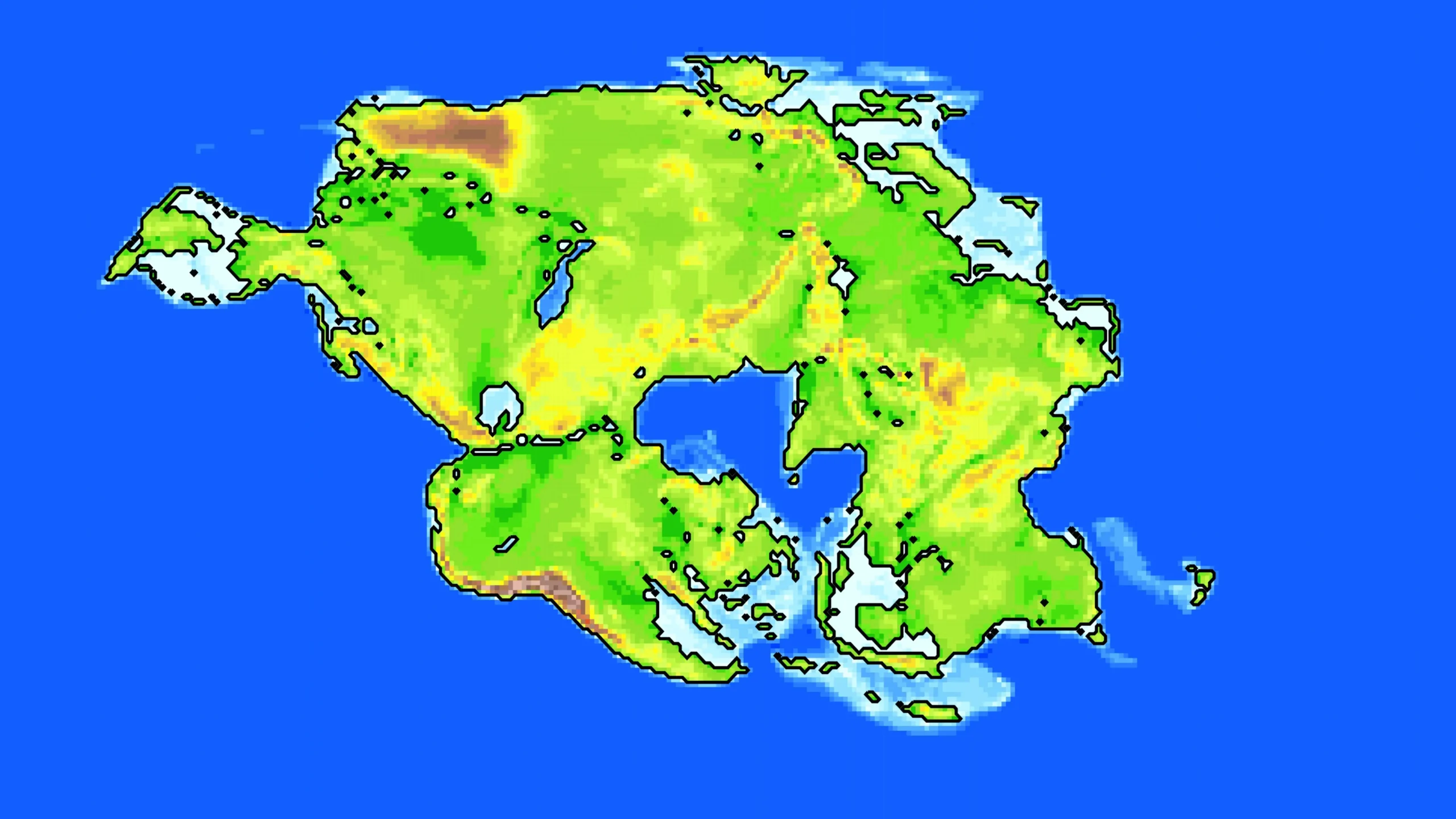
Kimberlites also do not erupt steadily through time. They come in pulses, clustering in certain windows of geological history and falling silent in between. Geologists had long noticed that these pulses seemed to track the assembly and breakup of supercontinents, the grand cycle in which Earth’s landmasses gather into a single mass and then tear apart again every few hundred million years. The correlation was suggestive, but the mechanism connecting a continental breakup to a violent eruption thousands of kilometres inland, tens of millions of years later, was missing.
In 2023, Gernon and an international team supplied it in Nature. They gathered the timing and location of kimberlite eruptions over the past billion years and ran the data through statistical analysis and machine learning, hunting for any consistent relationship with the breakup of continents. The relationship they found was remarkably tight. The paper’s abstract states that “most kimberlites spanning the past billion years erupted about 30 million years (Myr) after continental breakup, suggesting an association with rifting processes.” Reporting the work, Scientific American summarised the team’s finding that after plates “start to pull apart, then 22 million to 30 million years later, kimberlite eruptions peak,” with the kimberlites of Africa and South America firing about 25 million years after the breakup of Gondwana around 180 million years ago.
The mechanism they proposed is a slow-motion chain reaction, a kind of geological domino effect. When a continent begins to rift apart, the thick keel beneath it is disturbed along its edges. A small patch of that keel becomes unstable and peels away, sinking into the hotter mantle below. Its removal destabilises the neighbouring patch of keel, which sinks in turn, triggering the next, and the next, in a migrating sequence of instabilities. The disturbance marches inland from the rifted margin at a steady pace of roughly 20 kilometres per million years. Each time a patch of cold keel peels off and sinks, hot mantle wells up to replace it. That upwelling mantle decompresses and partially melts, and the small-volume, gas-rich melt it produces is exactly the kind that becomes kimberlite. The eruptions therefore advance from the continental edges toward the interiors over tens of millions of years, which is precisely the pattern the team detected in the rock records of Africa, North America, and South America.
An author correction to the paper appeared in Nature in December 2023, but it does not change the central conclusion about the lag between continental breakup and kimberlite eruption. The result reframes kimberlites as the delayed aftershocks of continental rifting, the deep mantle’s slow response to a wound at the surface. It also carries a practical edge that the team was quick to point out. If you know when and where a continent broke apart, the model tells you roughly when and where to expect diamond-bearing pipes. As Gernon told reporters, “We know where, when and why kimberlites are forming and that’s really useful for exploration.”
Where the diamonds are
Kimberlite pipes turn up on every continent, but a handful of places have shaped the history of diamonds and of the science that explains them. Every one of them sits on a craton, an ancient continental core that has stayed stable for billions of years and kept its deep root cool enough to make and preserve diamonds. The map of the world’s great diamond mines is, at bottom, a map of the world’s oldest crust.
Kimberley and the Big Hole, South Africa
The diamond age began in South Africa, and it began with a child and a pebble. In 1866, fifteen-year-old Erasmus Jacobs picked up a glittering stone on the bank of the Orange River. It proved to be a 21.25-carat diamond, later named the Eureka. In 1869, an 83.5-carat stone called the Star of South Africa surfaced nearby and sold for a fortune. In 1871, prospectors traced diamonds to a low hill called Colesberg Kopje, on a farm belonging to the De Beers brothers, and the rush was on. A ramshackle settlement of tents and shanties ballooned into a town of 50,000 people, and in 1873 it was renamed Kimberley after the British colonial secretary.
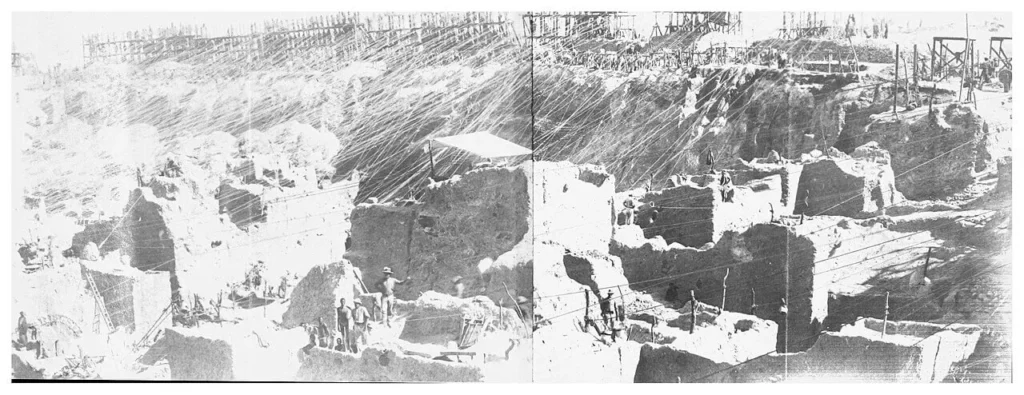
What followed counts among the most extraordinary feats of manual labour in human history. From mid-1871 to 1914, as many as 50,000 miners attacked the kimberlite pipe with picks, shovels, buckets, and ropes, hollowing out a crater that became known simply as the Big Hole. By the time work ceased on 14 August 1914, they had removed more than 22 million tonnes of rock by hand and recovered about 2,722 kilograms of diamonds, equal to 14,504,566 carats. The pit measures roughly 463 metres across and was dug to a depth of 240 metres before debris and later water reduced the visible depth to around 175 metres. Once the open workings grew too dangerous, the pipe was followed underground by Cecil Rhodes’s De Beers company to more than 1,000 metres. The Big Hole is widely described as the largest hand-dug excavation on Earth, although that distinction is disputed with the nearby Jagersfontein mine.
The human cost belongs in any honest account of the place. The mine ran on migrant labour under harsh and racially segregated conditions, in a town where disease, accidents, scarce water, and brutal heat killed many workers, the great majority of them Black labourers housed in closed compounds. Kimberley’s diamond wealth also built the fortune of Cecil Rhodes, whose De Beers Consolidated Mines, formed in 1888, went on to dominate the global diamond trade for the next century. The town gave its name to the rock itself, so that every kimberlite on every continent now carries a trace of this one South African mining camp in its name.
Mir, Siberia
For decades the Soviet Union had no domestic diamond supply and depended on imports for the industrial diamonds its factories needed. That changed on 13 June 1955, when geologists Yuri Khabardin, Ekaterina Elagina, and Viktor Avdeenko, working on the sprawling Amakinsky Expedition through the wilderness of Yakutia in eastern Siberia, found the telltale signs of a diamond-bearing pipe. They named it Mir, the Russian word for peace. Khabardin received the Lenin Prize in 1957 for the discovery, one of the highest honours the Soviet state could bestow.
Mining Mir meant waging war against one of the cruelest climates on the planet. Winter in this part of Siberia runs for seven months, and temperatures can plunge below minus 40 degrees. Steel turned brittle and snapped, rubber shattered, and oil froze solid. Crews resorted to jet engines and dynamite to break through the permafrost. The open pit they eventually carved became one of the largest excavated holes in the world, about 525 metres deep and 1,200 metres across, so vast that the airspace above it was reportedly closed because of dangerous downdrafts. In its peak years during the 1960s, the mine produced about 10 million carats of diamonds annually, of which roughly 20 percent were gem quality, and its upper layers ran as rich as four carats per tonne of ore, an exceptional grade. Surface mining ended in 2001 after 44 years, and underground operations later resumed. The Mir kimberlite itself erupted in the Devonian, roughly 360 million years ago, a pulse of Siberian kimberlite volcanism that may be linked to an ancient failed rift called the Vilyuy Rift on the eastern edge of the Siberian craton.
The Slave craton, Canada
Diamonds came late to Canada, and their discovery reads like a prospecting thriller. Geologists Chuck Fipke and Stewart Blusson spent more than a decade chasing a faint trail of indicator minerals across the northern wilderness, convinced that the ancient Slave craton near Lac de Gras had exactly the deep, cold root that diamonds require. In 1991, working with the mining company BHP, they confirmed diamond-bearing kimberlite at Point Lake. The announcement set off the largest mineral staking rush in Canadian history, with claims spread across tens of thousands of square kilometres almost overnight. Canada’s first diamond mine, Ekati, opened in 1998. The Diavik mine, operated by Rio Tinto, followed a few years later, and Canada rose to become one of the world’s leading diamond producers.
The Lac de Gras kimberlites are geologically young, having erupted around 53 to 56 million years ago, but the diamonds they carry are ancient. Among them are the 3.52-billion-year-old crystals from the Panda pipe at Ekati, the oldest precisely dated diamonds on Earth. Some of these pipes are extraordinarily rich, with diamond grades of several carats per tonne, far above most mines worldwide. The Slave craton has become one of the most scientifically productive diamond regions anywhere, precisely because its mantle root has stayed cool and stable since the Archean, both making diamonds and keeping them. It is also the testing ground for much of the newest science, including the Jericho kimberlite that anchored the 2025 modelling of carbon dioxide and ascent.
How prospectors actually find a pipe
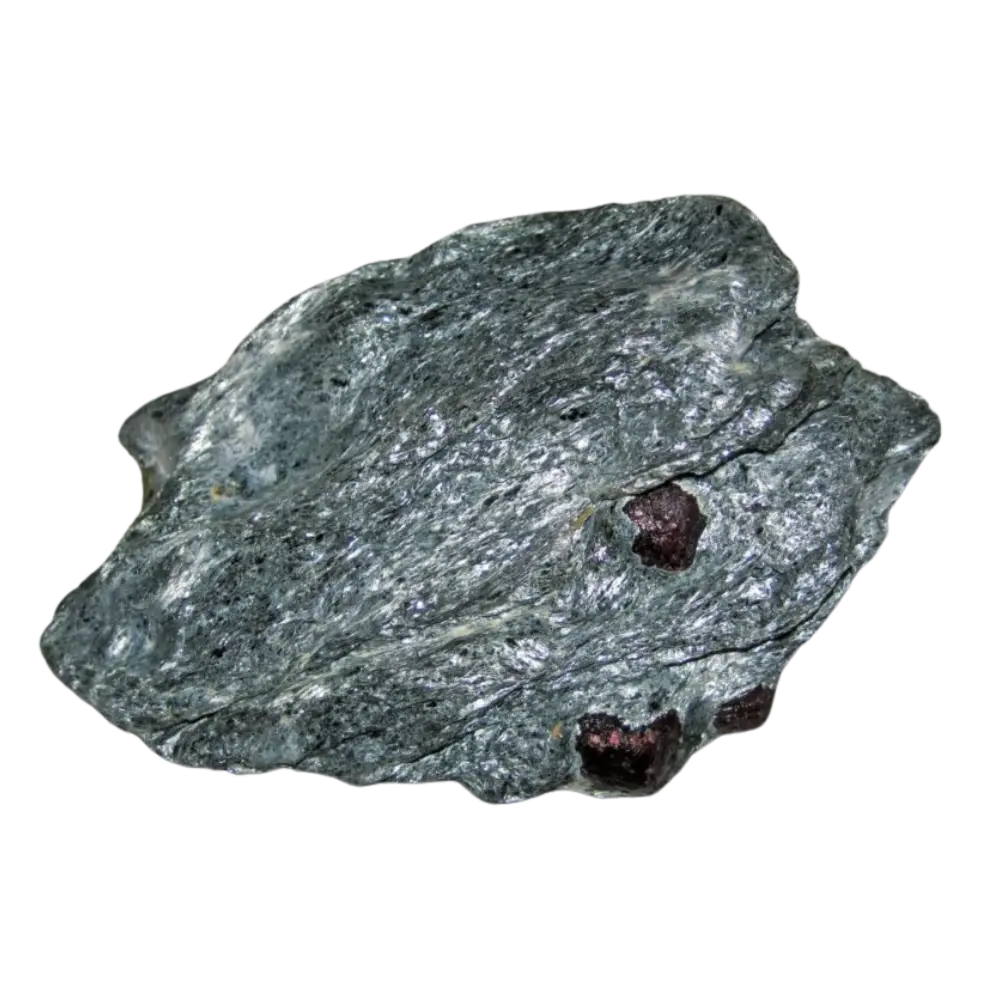
Diamonds themselves are far too rare and scattered to hunt for directly. Even a rich kimberlite might hold only a few carats of diamond per tonne of rock, a concentration of around one part per million, and many economic pipes carry far less. So prospectors look instead for the company a kimberlite keeps. As kimberlite weathers at the surface, it sheds a suite of distinctive, durable minerals that survive in streams and glacial debris long after the softer rock has crumbled. These indicator minerals include chromium-rich pyrope garnet, often a vivid purple-red, chrome diopside in bright green, and magnesium-rich ilmenite. Geologists collect heavy mineral concentrates from sediments and trace the indicators back upstream or up-ice toward their source. Magnetic and gravity surveys help too, because kimberlite contains magnetite and is denser than much of the rock it intrudes. The hunt is a detective story written in scattered crystals, working backward from the trail to the hidden pipe that left it.
Why any of this matters
Diamonds are worth studying for reasons that have little to do with engagement rings. They are the deepest, oldest, most durable natural samples we can ever hold in our hands. The deepest reach to us from as far as 700 kilometres down, far below anything a drill could touch. The oldest carry sealed records from a time before there was oxygen in the air. Each diamond is a time capsule, and the inclusions trapped inside preserve the chemistry, temperature, and even the tectonic style of a part of the Earth no instrument will ever visit.
By reading those inclusions, researchers have reconstructed when continents first formed, when plate tectonics began operating in its modern form, how carbon cycles between the surface world and the deep interior, and how the mantle beneath ancient cratons has evolved across billions of years. The same isotopes that date a diamond also reveal whether its carbon came from the primordial mantle or from surface material recycled downward through subduction. That turns each crystal into a witness for processes that unfolded before there was anyone, or anything, to witness them. The history of the planet’s first continents is, in part, written inside its gemstones.
The applied payoff is exploration. Knowing that diamonds live in the cool roots of old cratons, that kimberlites tap those roots, and that eruptions cluster tens of millions of years after continental breakup hands prospectors a map of where to search. So does understanding the indicator minerals that point back toward a buried pipe. The 2025 work on carbon dioxide thresholds even hints at why some pipes are diamond-rich while their neighbours are barren, because the gas budget that drives the eruption also governs how much mantle cargo the magma can carry to the surface intact. A pipe that ran low on carbon dioxide may have stalled in the crust, never erupting, leaving its diamonds stranded at depth. A pipe that carried enough delivered its load to daylight.
There is a humbling coda to all of this. No human has ever watched a kimberlite erupt. The youngest known kimberlite volcanoes, in the Igwisi Hills of Tanzania, are only about ten thousand years old, and even they predate any written record. Everything we know about the diamond rocket has been reconstructed after the fact, from frozen plumbing exposed in mine walls, from argon trapped in microscopic flakes of mica, from the chemistry of crystals that grew before the air was breathable, and from the statistics of eruptions spread thinly across a billion years. A dinosaur may well have looked up and seen one of these fountains tear open the ground. We have only the wreckage, and the diamonds inside it, to tell us what happened, and that wreckage has turned out to be one of the richest archives the Earth keeps of its own deep past.
Frequently asked questions
Are diamonds made from coal?
No. This is a myth. Coal is a sedimentary rock made from surface plants, and it is rarely buried more than a couple of kilometres deep. Diamonds form from carbon in the mantle, around 150 to 200 kilometres down, and most diamonds are far older than the first land plants, which did not appear until roughly 400 million years ago. Coal and diamond share only the element carbon. A diamond cannot be made from a plant that would not exist for a billion years after the diamond crystallised.
How old are diamonds?
Many are over a billion years old, and the oldest precisely dated diamonds, from sulphide inclusions in stones from Canada’s Ekati mine, are about 3.52 billion years old. That is roughly three-quarters the age of the Earth and older than the oxygen in the atmosphere. Diamonds have formed in distinct episodes throughout Earth’s history, and some are probably still forming in the deep mantle today.
How fast does kimberlite erupt?
Peer-reviewed estimates put the ascent through the lithosphere at roughly 4 to 20 metres per second, with the full journey from the deep mantle to the surface taking from under ten hours up to about two days. Argon trapped in mica grains inside mantle xenoliths independently points to transport times of hours to days. Popular descriptions such as “speed of sound” or “80 miles per hour” are dramatic framings rather than measured deep-ascent rates, and they should not be taken as the speed at which the magma crosses the mantle.
Where do diamonds come from?
Geologically, diamonds form in the cool roots of ancient continents, where carbon crystallises 150 to 200 kilometres deep beneath stable cratons. They reach the surface inside kimberlite eruptions, which act as rapid elevators from the mantle. The leading mining regions include South Africa, Russia’s Siberian craton, Botswana, and the Slave craton of northern Canada, all of them built on very old continental crust.
What is a kimberlite pipe?
A kimberlite pipe is a carrot-shaped volcanic structure, narrow at depth and flaring toward the surface, formed when gas-rich kimberlite magma blasts up through the crust and excavates a wide vent called a diatreme near the top. These pipes are the main primary source of diamonds, accounting for more than 70 percent of mined production. Most pipes contain no diamonds at all, and only a small fraction are rich enough to mine economically.
Can scientists predict where diamonds will be found?
Increasingly, yes. Research linking kimberlite eruptions to the breakup of supercontinents, combined with indicator-mineral surveys and geophysical methods such as magnetic and gravity mapping, helps narrow the search to the most promising ground. The 2023 finding that kimberlites tend to erupt about 30 million years after continental rifting, migrating inland at around 20 kilometres per million years, gives explorers a framework for predicting where diamond-bearing pipes are most likely to lie.