







Introduction
In November 2012, Rebecca Flowers of the University of Colorado Boulder and Kenneth Farley of Caltech published a claim in the journal Science that a stretch of the western Grand Canyon had been excavated to within a few hundred meters of its modern depth by about 70 million years ago. The reaction was immediate. Karl Karlstrom, a geologist at the University of New Mexico, has described being asked whether it was now true that the canyon itself was 70 million years old, and being irritated by the implication that dinosaurs might have peered into something like the gorge we see today.
That exchange captures the strangeness of one of geology’s longest-running arguments. The rocks at the bottom of the Grand Canyon are nearly two billion years old, and nobody disputes that. What scientists have fought over for more than 150 years is something subtler and far harder to pin down: not the age of the rock, but the age of the hole.

The question that won’t die: how old is the Grand Canyon?
The short answer is that the Grand Canyon as an integrated, through-flowing chasm, a continuous gorge with the Colorado River running its full length, is young, roughly 5 to 6 million years old. But parts of the canyon are far older, and the river that carved it has a separate and longer history. The age of the river and the age of the canyon are not the same question, and conflating them is the single most common error in popular accounts of when did the Grand Canyon form.
The deepest difficulty is that geologists are trying to date an absence. A canyon is rock that used to be there and is now gone. The very material whose removal you want to time has been carried down the river and out to sea. There is no layer you can sample that says “this is the moment a cubic kilometer of sandstone left.” So researchers have had to become detectives, reading clues that survive only indirectly: the cooling history of rocks brought toward the surface as the load above them eroded away, the chemistry of cave deposits, the chemical fingerprints of sand grains transported hundreds of kilometers, and the gravels left behind at the canyon’s mouth.
The clues run from John Wesley Powell’s 1869 expedition to a landmark study published in April 2026, and from the riverbed gravels to the laboratory methods that turned a century of hand-waving into a quantitative feud, where two respected labs can take the same rocks and reach opposite conclusions about the canyon’s age.
A canyon of unimaginably old rocks
Before the argument about carving, a word about the stratigraphy, because it is the source of much confusion. The walls of the Grand Canyon expose more than a billion and a half years of Earth history, stacked in a sequence that John Wesley Powell sorted into three great packages of rock.
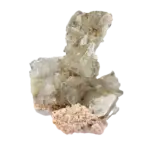
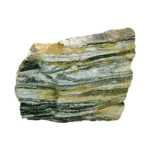
At the very bottom sit the Vishnu Basement Rocks. The oldest of them, the Elves Chasm pluton near River Mile 115, has been dated to about 1,840 million years, the oldest rock identified in the canyon. The metamorphic Vishnu Schist and the associated Brahma and Rama schists formed roughly 1,750 to 1,730 million years ago, pressure-cooked at depths near 20 kilometers as ancient volcanic island chains collided with the growing edge of North America. Granite intruded these rocks as the Zoroaster plutonic suite.
Above the basement lie the tilted sedimentary and volcanic layers of the Grand Canyon Supergroup, deposited between roughly 1,255 and 730 million years ago and then faulted and tipped. Above those, separated by one of the most famous gaps in the rock record, sit the flat-lying Paleozoic strata that form the cliffs and ledges visitors photograph: the limestone, sandstone, and shale that climb from the Tonto Group up to the rim. The rim rock itself, the Kaibab Formation, was deposited about 270 million years ago in a shallow Permian sea, before the age of the dinosaurs, as the National Park Service likes to point out.
The gap between the Vishnu basement and the overlying strata is the Great Unconformity, a missing slice of time that Powell first recognized and that represents hundreds of millions of years for which the rock record was eroded away. The Park Service states the contrast plainly: the rocks span over 1.5 billion years, yet the canyon landscape “has been carved in only the past 5–6 million years.” Hold those two numbers apart and most of the public confusion dissolves: ancient rocks, young canyon.

How was the Grand Canyon formed? The Colorado River and the Kaibab problem
The Colorado River did the cutting. That much has been agreed since Powell. The puzzle that organized the field for over a century is that the river does something rivers are not supposed to do. It crosses the Kaibab Arch (also called the Kaibab upwarp or uplift), a broad north–south dome of rock that stands higher than the land on either side of it. Water does not flow uphill. Explaining how the Colorado got across that high ground is the central mechanical problem of how was the Grand Canyon formed.
The Kaibab Arch is a product of the Laramide orogeny, the mountain-building episode that warped western North America starting around 75 million years ago. So the dome is old. The integrated river, on most readings, is young. A young river cannot have been sitting in place sawing through a dome that rose long before the river existed. That timing mismatch is what every model of canyon origin has to solve.
Antecedence: Powell’s elegant, flawed idea
Powell, who led the first documented passage through the canyon in 1869 with a crew that began as ten men and ended as six, favored antecedence. The river, he reasoned, was already established on a lower landscape and simply held its course while the Kaibab dome rose slowly beneath it, like a knife held in place while a stick of butter is pushed up against the blade. As the land rose, the river sawed down, maintaining its path and carving the canyon into the rising structure.
Antecedence is intuitive, and it dominated thinking for decades. Its fatal weakness is the same timing problem: if the upwarp grew tens of millions of years before the modern Colorado existed, the river could not have been there to ride it up. The alternatives geologists proposed since, superposition, stream capture, headward erosion, karst piracy, lake spillover, are all attempts to get a young river across an old hill without invoking a river that was implausibly ancient.
The 1869 expedition and the birth of the debate
On 24 May 1869, Major John Wesley Powell and nine men set out from Green River Station in Wyoming Territory in four wooden boats. Three months and six days later, six of them emerged at the mouth of the Grand Canyon, having completed the first recorded passage of the full length of the Colorado River through its canyons. The journey cost the expedition a boat at Disaster Falls, a third of its food, and three men who left at Separation Canyon and were never seen again.
Powell’s later writings, published as The Exploration of the Colorado River and Its Canyons, framed the questions geologists still argue about. He named the Great Unconformity. He proposed antecedence. He grasped that the canyon was a record of erosion on a colossal scale. The 1869 run, and Powell’s subsequent surveys, also helped create the institutions, the U.S. Geological Survey among them, that would spend the next 150 years trying to answer the question he raised.
The “muddled” middle century and the 1964 symposium
For most of the twentieth century the debate over the canyon’s origin meandered. A turning point came in August 1964, when Edwin McKee, often called the father of Grand Canyon geology, convened a ten-day symposium at the Museum of Northern Arizona. For the first time, about twenty geologists gathered in one place specifically to thrash out how the Colorado River and the Grand Canyon had formed and how old they were. The meeting opened with a three-day field trip to the Lake Mead country and the western canyon, then moved to formal group discussions.
Out of that symposium came the influential 1967 Museum of Northern Arizona Bulletin by McKee and colleagues, which re-articulated the three central questions that still structure the field: when did the river begin, how did its separate segments become integrated into one system, and what were the early drainage courses? McKee also enlisted two doctoral students to study critical deposits in the western canyon. One was Richard Young, who worked on the gravels of the Hualapai Plateau. The other was Ivo Lucchitta, whose conclusions would anchor one entire side of the feud.
Ivo Lucchitta and the case for a young canyon
Lucchitta studied the deposits at the mouth of the canyon for his 1966 PhD on the upper Lake Mead area adjacent to the Grand Wash Cliffs. His central observation has held up the young-canyon position ever since. West of the canyon, in the Grand Wash Trough where the Colorado exits the Colorado Plateau, sits a thick pile of sediment: conglomerate, evaporites, and the capping Hualapai Limestone, interbedded with datable volcanic ash.
If a deep canyon roughly like the modern one had existed and had been drained by a through-flowing river before about 6 million years ago, that river should have dumped an unmistakable delta of Colorado Plateau detritus into the Grand Wash Trough. It did not. The diagnostic Colorado River sand and gravel appear there only above the Hualapai Limestone, whose top is pinned by a volcanic ash bed dated to about 5.97 million years. Below that, the basin records internal drainage, lakes and marshes fed by groundwater and local springs, not a continental river.
Lucchitta’s point was blunt: a canyon where the present one sits would have left unmistakable evidence at its mouth, in the Grand Wash Trough, and that evidence is missing. The absence of that evidence before about 6 million years is the bedrock of the young-canyon model. It is a geological argument, not a laboratory one, and it has proven remarkably durable. Lucchitta spent the rest of his career, into the twenty-first century, defending a Colorado River no older than the latest Miocene.
The lake-spillover idea takes shape
If the river is young and the Kaibab Arch is old, how did the water get over the hill? One answer that kept resurfacing for nearly a century is lake spillover. The seed was planted by Eliot Blackwelder in 1934, who rejected antecedence for the river’s course through the Laramide uplifts and suggested instead that the river’s “haphazard” path originated from lakes filling, overtopping their basins, and spilling across divides, integrating one basin into the next from the top down.
In northeastern Arizona, the Miocene Bidahochi Formation records a lake basin sometimes called Hopi Lake or Lake Bidahochi, sitting east of the Kaibab–Coconino high. Robert Scarborough argued in 1989 that this lake might have drained when it overtopped the barrier. In 2001, Norman Meek and John Douglass took the idea a decisive step further, proposing that incision of the Grand Canyon was triggered when the lake spilled across the elevated Kaibab–Coconino tract, without needing any pre-existing canyon to guide the flow. Around the same time, Jon Spencer, Philip Pearthree, P. Kyle House, and colleagues assembled stratigraphic evidence from the lower Colorado River corridor in Nevada and western Arizona showing a whole cascade of spillover events stepping the river down toward the Gulf of California.
The spillover camp had what antecedence lacked: a physical mechanism that could get a young river over an old hill. John Douglass even modeled the process on a scaled stream table for a 2008 National Geographic documentary. But the model also had forceful critics. In 2013, William Dickinson published a paper in the journal Geosphere titled, bluntly, “Rejection of the lake spillover model for initial incision of the Grand Canyon, and discussion of alternatives,” arguing that several lines of evidence, the spatial pattern of drainage, the timing of drainage reversal, did not fit a simple Hopi Lake spillover. The mechanism was plausible but unproven, and it would stay that way for another decade.
The 2000 symposium and a field that grew up
By the turn of the millennium the field had matured. A second major gathering, held 5 to 11 June 2000 and coordinated by Richard Young, produced the Grand Canyon Association monograph Colorado River: Origin and Evolution. New dating tools were arriving from physics and geochemistry labs. The argument over Colorado River Grand Canyon age was about to turn quantitative, and, paradoxically, far more bitter, because precise numbers gave rival camps precise things to disagree about.
How do geologists date a hole in the ground?
The detective’s central trick is this: You cannot date eroded rock that is gone, but you can date the rock left behind by asking when it last cooled. As a canyon deepens, rock that was once buried, and therefore warm, because the Earth gets hotter with depth, is brought closer to the cool surface. Certain minerals contain natural radioactive clocks that start ticking when the mineral passes below a specific temperature. Measure where the clock stands, and you learn when the rock cooled, which tells you when the overlying material was stripped away.
Apatite (U-Th)/He thermochronology
Apatite is a common phosphate mineral, calcium phosphate, found as tiny grains in many rocks. It contains traces of uranium and thorium, which decay radioactively and produce helium as a byproduct. The key fact is temperature-dependent: above a certain temperature, helium diffuses out of the apatite crystal as fast as it is produced, so none accumulates. Below that temperature, the closure temperature, around 70 °C for apatite, helium begins to be retained and the clock starts. Measure the parent uranium and thorium and the daughter helium, and you get the time since the grain cooled through roughly 70 °C.
To turn a temperature into a depth, geologists use the geothermal gradient, the rate at which the Earth warms with depth. At a typical continental gradient near 25 °C per kilometer, 70 °C corresponds to a depth of a couple of kilometers. So an apatite helium date tells you, approximately, when a given sample arrived within about two kilometers of the surface as erosion peeled away the rock above it. Sample the canyon floor and the rim, compare their cooling dates, and you can ask when the relief between them was created.
One subtlety drives much of the feud: the closure temperature is not a fixed constant. It depends on how much radiation damage the crystal has accumulated over its lifetime, because damage traps helium more effectively. This is why the radiation-damage accumulation and annealing model (RDAAM) matters so much. Depending on a grain’s effective uranium content and thermal history, the effective closure temperature can sit anywhere from the low 60s to above 70 °C. Two labs can take the same helium measurements, plug in different but defensible assumptions about radiation damage and cooling rate, and model substantively different cooling histories. That is not fraud or incompetence. This is the frontier of the method, not a flaw in it.

The 4He/3He refinement
Flowers and Farley’s 2012 study used a more powerful variant developed with David Shuster: 4He/3He thermochronometry. By bombarding grains with high-energy particles to produce a uniform synthetic helium-3, then measuring how the natural helium-4 is distributed inside each crystal during controlled step-heating, the method reconstructs not just a single cooling date but a continuous low-temperature cooling path. Applied to the Grand Canyon, the team sampled rock from the modern canyon floor and from the rim above it. The logic is clean: if the floor and the rim cooled through closure at very different times, the canyon’s relief was created recently; if they cooled together long ago, the canyon is old.
Zircon (U-Th)/He
Zircon retains helium to much higher temperatures than apatite, roughly 180 to 200 °C, so it records deeper, older cooling. At the Grand Canyon, zircon helium dating has been used to probe the deep-time history of the basement and the Great Unconformity. Intriguingly, in heavily radiation-damaged grains, zircon can also pick up a young overprint, recording recent reheating and cooling consistent with canyon carving.
Detrital-zircon provenance
A completely different use of zircon ignores temperature. Every zircon grain carries a uranium-lead crystallization age, a birth certificate that points back to the igneous rock where it formed, and therefore to a source region. By dating thousands of detrital zircon grains in a sedimentary deposit, geologists build an age spectrum that fingerprints where the sediment came from. If a basin suddenly fills with grains whose spectrum matches the upper Colorado River watershed, a connection to that watershed has just opened. This is the method behind the 2026 breakthrough discussed below.
Speleothems and the water table
Caves in the canyon walls contain mammillary calcite, a knobbly deposit that forms at the water table. Victor Polyak, Carol Hill, and Yemane Asmerom of the University of New Mexico dated these by uranium-lead in a 2008 Science paper and used them to track the falling water table, which they treated as a proxy for canyon incision. Their data implied the canyon evolved from west to east. As they reported, “Samples in the western Grand Canyon yielded apparent water table decline rates of 55 to 123 meters per million years over the past 17 million years, in contrast to eastern Grand Canyon samples that yielded much faster rates (166 to 411 meters per million years),” with a burst of accelerated incision in the east around 3.7 million years ago. Critics, including Pearthree, Spencer, and Pederson, argued the two oldest data points reflected local base-level or tectonic effects rather than canyon cutting, and the speleothem result remains contested.
The old-canyon model: a Grand Canyon as old as the dinosaurs
The modern old-canyon case was built largely by Brian Wernicke at Caltech together with Flowers and Farley. In 2008, Flowers, Wernicke, and Farley used apatite helium data to argue that the southwestern Colorado Plateau had an erosion history reaching back into the Late Cretaceous. In 2011, Wernicke published “The California River and its role in carving Grand Canyon” in the GSA Bulletin, proposing a large ancestral drainage he called the California River, with a major reach flowing northeast, opposite to today’s flow, through a deep paleocanyon roughly the length and breadth of the modern Grand Canyon, incised mainly around 80 to 70 million years ago, with a later drainage reversal.
Then came the 2012 Science paper, “Apatite 4He/3He and (U-Th)/He Evidence for an Ancient Grand Canyon.” Flowers and Farley reported that data from the western Grand Canyon basement indicated it had been excavated to within a few hundred meters of its modern depth by about 70 million years ago, “in contrast to the conventional model in which the entire canyon was carved since 5 to 6 Ma,” as the abstract put it. The press ran with it: a Grand Canyon as old as the dinosaurs.
Wernicke suggested the original canyon would have resembled a deeper version of present-day Zion Canyon, cut through Mesozoic strata that were later stripped away, with a pulse of erosion between 28 and 15 million years ago exposing the older rocks we see now.
The old-canyon model does not deny that the modern Colorado River is young or that it integrated recently. Its claim is more specific: that a deep gorge in roughly the modern location predates the modern river by tens of millions of years. That decoupling is precisely what the young-canyon camp rejects.
The young-canyon counterattack
The Karlstrom group at the University of New Mexico, joined by Lucchitta and others, responded fast and hard. In April 2013, Karlstrom and ten coauthors published a comment in Science, and Lucchitta published a separate one; Flowers and Farley answered in the same issue (volume 340, pages 143–146).
The young-canyon argument has two prongs. The geological prong is Lucchitta’s: the missing delta in the Grand Wash Trough, plus the observation that no paleocanyon existed near the canyon’s mouth while the interior basin filled between roughly 17 and 5 million years ago. The thermochronology prong is subtler. Karlstrom’s group argued that the same kind of cooling data, modeled with different and in their view more realistic assumptions, do not require an ancient canyon at all. Their models showed rim samples sitting some 30 to 35 °C cooler than river-level samples until about 20 million years ago, the opposite of what you would expect if the canyon were already deep at 70 million years, because a deep canyon would have brought floor and rim to similar near-surface temperatures long before.
The two camps were, in effect, looking at overlapping datasets and reading them through different physical models of how helium behaves in damaged crystals. That is what makes this feud so instructive. Both camps had good data; they disagreed about how to interpret it at the limits of what the method can resolve.
The composite solution: different segments, different ages
In January 2014, Karlstrom and colleagues published in Nature Geoscience the paper that has done the most to reframe the question: “Formation of the Grand Canyon 5 to 6 million years ago through integration of older palaeocanyons.” Their key move was to stop treating the canyon as a single object with a single age and instead break it into five segments, each with its own history.
The experimental logic was sharp. As the authors framed it, they investigated four of the five segments, “and if any segment is young, the old canyon hypothesis is falsified”, because a 70-million-year-old canyon cannot contain a 6-million-year-old segment in its middle. Reconstructing thermal histories from paired canyon-floor and rim samples, they concluded:
- The Hurricane segment formed between 70 and 50 million years ago.
- The Eastern Grand Canyon formed between 25 and 15 million years ago.
- Marble Canyon and the westernmost Grand Canyon were carved within the last 5 to 6 million years.
Karlstrom has likened the modern canyon to a highway built by stitching several older roads into one continuous route. Some segments are genuinely ancient paleocanyons. But the integrated Grand Canyon, the throughgoing chasm with the Colorado River running its entire length, came together only when the river linked these segments 5 to 6 million years ago. As the Nature Geoscience abstract states, “although parts of the canyon were carved more than 50 million years ago, two key segments formed less than 6 million years ago, implying that the canyon is a young feature.”
The composite model is a reconciliation, not a victory for either side. It grants the old-canyon camp its ancient paleocanyons while insisting that the canyon as a connected system is young. Karlstrom himself framed it as a resolution rather than the last word. The work was funded by a three-year National Science Foundation Tectonics Program grant.

The rebuttal exchange: same rocks, opposite conclusions
The 2013 Science exchange is the purest distillation of the Grand Canyon age controversy, because both sides were arguing from overlapping datasets. In their “Response to Comments,” Flowers and Farley stood firm. They wrote that “(U-Th)/He data from the western canyon, totaling 29 reproducible analyses from six samples and two labs, compellingly support an ancient canyon,” and that “three dispersed analyses from one anomalous sample do not refute this conclusion.” They pointed to the nearby Milkweed, Hindu, and Peach Springs paleocanyons, real, uncontroversial Late Cretaceous to early Tertiary gorges with at least 1,200 meters of relief that intersect the western Grand Canyon, as concrete proof that deep ancient canyons existed in exactly this region.
Lucchitta and the Karlstrom group countered on several fronts. The canyon looks too immature and youthful to be 70 million years old. A paleocanyon coincident with the modern one should have transported large quantities of debris into the Grand Wash Trough while it was being carved, yet that debris is absent. And the Pierce Canyon alluvial fan was deposited across the supposed ancient eastward-eroding drainage, which therefore could not have existed. Their bottom line: the western canyon was the result of geologic processes that took place after 5 to 6 million years ago.
Both camps published their numbers. Both accused the other of unjustified modeling assumptions. Neither conceded. More than a decade later, neither has fully conceded. That persistence is the clearest sign the evidence really is ambiguous at the edges. Neither side is simply being stubborn.
Zircon enters the fight: 2021 and 2022
Two later papers in the journal Geology extended the thermochronology to zircon, and, revealingly, came from overlapping author groups that nonetheless emphasized different conclusions. In December 2021, Barra Peak, Rebecca Flowers, Francis Macdonald, and John Cottle published “Zircon (U-Th)/He thermochronology reveals pre-Great Unconformity paleotopography in the Grand Canyon region, USA.” Their zircon helium dates ran as old as 809 ± 25 million years, and they argued for the existence of ancient topographic highs below the Great Unconformity, suggesting that the famous “Great Unconformity” is really several unconformities formed over hundreds of millions of years.
In February 2022, Olivia Thurston, William Guenthner, Karl Karlstrom, Jason Ricketts, Matthew Heizler, and J. Michael Timmons published “Zircon (U-Th)/He thermochronology of Grand Canyon resolves 1250 Ma unroofing at the Great Unconformity and <20 Ma canyon carving.” They resolved a major basement cooling event between 1,300 and 1,250 million years ago, and found very young zircon helium dates, 7 to 3 million years, which they interpreted as the data being sensitive to recent canyon carving and reheating. The two groups then exchanged a formal Comment and Reply in Geology volume 50, disagreeing over whether the Grand Canyon Supergroup was ever deposited in the western canyon.
The lesson of these papers is twofold. First, the same mineral system was now being read for both the deepest events in the canyon’s history and the most recent. Second, even as the tools grew more sophisticated, the underlying disagreement did not dissolve. It became more refined.
The 2026 breakthrough: a lost river and a spilling lake
The newest chapter shifts attention away from the canyon walls and toward a basin upstream, using detrital-zircon provenance rather than thermochronology. On 16 April 2026, lead author John J. Y. He, a geologist at UCLA, together with corresponding author Ryan Crow of the U.S. Geological Survey and a collaborating team, published in Science (volume 392, pages 289–295) “Late Miocene Colorado River arrival in the Bidahochi basin supports spillover origin of Grand Canyon.”
The team dated roughly 3,600 detrital zircon grains from Bidahochi sandstones at 19 sites, upstream of the canyon on Navajo Nation land, and from deposits downstream. As the abstract reports, they found “new evidence from zircon uranium-lead geochronology for the arrival of distinctive Colorado–Green River sediment in the Bidahochi basin by 6.6 million years ago derived from the Browns Park Formation.” That arrival coincided with an order-of-magnitude jump in deposition rate, a rise in carbonate strontium isotope ratios, ripple marks recording a strong current flowing into standing water, and the appearance of large fish species adapted to fast-flowing water. Interbedded volcanic ash beds let the team pin the ages down.
The picture is striking. The ancestral Colorado River was delivering water and sediment into a long-lived lake in the Bidahochi (Hopi Lake) basin, well before the modern canyon existed. A lake that fills must eventually overflow. The team argues the lake rose high enough to overtop the Kaibab Arch and spill westward, sending water along what became the canyon’s route. The river first exited the Grand Canyon on its modern course around 5.6 million years ago, and, the USGS reports, “two million or so years later, evidence indicates the river system had fully integrated, connecting headwaters in the Rockies all the way to the Pacific through the Gulf of California”, an integration the river had essentially completed by roughly 4.8 million years ago, when its sediments first appear downstream of the canyon.
This is the long-debated lake-spillover hypothesis, finally backed by direct provenance data rather than inference. Corresponding author Ryan Crow was careful not to overclaim. As he explained, “Other processes, such as karst piping, which involves water transport through rock, and headward erosion, may have also contributed to the establishment of the river’s course. Some reaches were likely newly carved, and others would have been significantly deepened by the integrated Colorado River over millions of years.”
Even now, not everyone agrees
The 2026 paper has not ended the feud; it has redrawn the battle lines. Karlstrom and his collaborator and spouse, University of New Mexico geochemist Laura Crossey, contest the interpretation that the Bidahochi basin held one large continuous lake; other work suggests it may have been a series of ephemeral lakes in a closed-basin playa setting. They also point to evidence for a notch in the Kaibab Arch carved by the Little Colorado River as much as 10 million years before the main Colorado arrived, which would have let water flow through rather than pool behind the arch.
From the old-canyon side, Rebecca Flowers called the spillover reading a reasonable interpretation that nonetheless leaves other routes open. Barra Peak, now at the University of Texas at Austin and not part of the study, judged it “pretty convincing in terms of arguing that lake spillover was important for the canyon higher and farther north than it had previously been thought to be the case.” The new data make spillover more plausible and place it higher and farther north than before; they do not prove it was the sole mechanism, and they do not settle whether a deep western paleocanyon predated the river.
So, how old is the Grand Canyon? A verdict
Weighing the evidence as it stands in 2026, the most defensible answer is this. The integrated Grand Canyon, the continuous gorge with the Colorado River flowing its full length to the sea, is about 5 to 6 million years old, and the river system had reached the Gulf of California by roughly 4.8 million years ago. This is the mainstream position, and it now rests on four independent pillars: the missing delta at the Grand Wash Trough, the roughly 6-million-year cap on the Hualapai Limestone, the segment-by-segment thermochronology of the 2014 composite model, and the 2026 detrital-zircon provenance data.
But the canyon is not all one age, and that is the part most accounts get wrong. Several segments are measurably older, carved by precursor rivers into paleocanyons tens of millions of years before the modern river stitched them together. The Hurricane segment (70–50 Ma) and the Eastern Grand Canyon (25–15 Ma) carry that older signal. And a minority of respected researchers, Flowers and Farley among them, still read the helium data as evidence that a deep western canyon existed near 70 million years ago.
The cleanest way to state the verdict: the river is young, the integrated canyon is young, some of the canyon’s individual pieces are old, and the rocks themselves are ancient. Anyone who hands you a single tidy number for the Grand Canyon’s age is smoothing over one of the most unresolved arguments in the field.
Did dinosaurs see the Grand Canyon?
Probably not a canyon you would recognize, and this is exactly the image that so annoyed Karlstrom. The rim rock predates the dinosaurs, and the disputed old-canyon model would put a deep western gorge in the landscape during the Late Cretaceous, when dinosaurs lived in the region. But the mainstream view holds that the integrated Grand Canyon did not exist until tens of millions of years after the dinosaurs went extinct about 66 million years ago. A Late Cretaceous dinosaur might conceivably have stood near an ancestral paleocanyon somewhere in the region. It did not look out over today’s Grand Canyon.
Is the Grand Canyon still getting deeper?
Yes, though slowly, and the answer touches another active research thread. Work by Ryan Crow, Karl Karlstrom, and colleagues found that the Colorado River has been incising in a temporally steady way over the past million years, but with significant variation along its length. Their measurements show incision of about 160 meters per million years in the eastern canyon, dropping to about 101 meters per million years in the west. They interpreted that west-to-east contrast as evidence for ongoing, mantle-driven differential uplift of the Colorado Plateau. The river is still cutting down, even as Glen Canyon Dam upstream now traps most of the sediment that once gave the Colorado its abrasive, canyon-carving power.
Why 150 years of disagreement is not a failure
Each round of the feud forced a new tool into the field. McKee’s 1964 symposium organized a scattered discipline; Lucchitta’s mapping set a geological constraint that has never been easy to dismiss; Polyak’s speleothems imported cave chemistry; Wernicke, Flowers, and Farley brought thermochronology; Karlstrom’s team forced everyone to think in segments; and the 2026 USGS-led work turned detrital zircons into a tracer for a vanished river. The argument has been sharpened, not settled, and the next call to the Park Service may carry a different number. The Grand Canyon has functioned, in Barra Peak’s phrase, as “a really amazing natural lab.”