

Introduction
On Valentine’s Day 1981, twelve-year-old Todd Domboski crossed his grandmother’s backyard in Centralia, Pennsylvania, and the ground opened under him. He dropped into a hole about four feet wide, by Domboski’s own later account close to 150 feet deep, though he sometimes described it as nearer 300, grabbed a tree root, and held on. His fourteen-year-old cousin, Eric Wolfgang, hauled him out. The steam pouring from the pit was later measured carrying a lethal concentration of carbon monoxide. A few minutes longer and he would likely have died. Beneath that lawn, a fire had already been burning for nineteen years.
An underground coal fire, or coal seam fire, is a fire that burns below the surface in a coal bed, coal waste pile, or abandoned mine, often for decades or far longer, because the fuel is enormous, the heat is trapped underground, and oxygen leaks in through cracks and old tunnels faster than anyone can seal them. Most coal fires that start in the open should die within days. A handful become effectively permanent. Centralia has burned since 1962. Germany’s Brennender Berg has smoldered since 1668. Australia’s Burning Mountain has been alight for at least 6,000 years. To understand why, you have to understand coal itself.
The town the fire emptied: Centralia, Pennsylvania
The mainstream account of how the Centralia mine fire started is mundane, and disputed in its details. In May 1962, the borough council wanted its landfill tidied before Memorial Day. The dump sat in an abandoned strip-mine pit near the Odd Fellows Cemetery, a pit roughly 300 feet wide and 75 feet long, cut into a 50-foot-deep strip mine that Edward Whitney had cleared in 1935. On May 27, 1962, hired members of the volunteer fire company set the trash alight and doused the visible flames that night. The fire was not fully out. An unsealed opening in the pit floor, the kind of breach that regional inspector George Segaritus had already flagged as a hazard, let the fire reach the labyrinth of anthracite mine workings underneath.
That is the version reported by journalist David DeKok, who concluded the fire began with the deliberate landfill burn. It is not the only version. Joan Quigley, in her 2007 book The Day the Earth Caved In, argues the fire actually started the day before, when a trash hauler dumped hot ash or coal-burner waste into the open pit; she points to borough minutes from June 4, 1962, that refer to two fires at the dump. A separate “Bast Theory” holds that an older colliery fire from 1932 was never fully extinguished and simply reached the landfill. The exact ignition is unsettled, but the consensus puts the start at the May 1962 dump, and the failure on the missing fire-resistant clay barriers that should have separated burning trash from coal.
This is the version reported by journalist David DeKok, who concluded the fire began with the deliberate landfill burn. By August 9, 1962, carbon monoxide had reached lethal levels in nearby mines, and all Centralia-area mines were closed the next day. Early excavation crews dug toward the fire but consistently underestimated its size; some efforts arguably made things worse by breaching mine chambers and admitting more air. Across roughly two decades, government agencies spent millions on excavation, flushing, and trenching, and none of it held. By 1984 the cost of a trenching project judged capable of actually stopping the fire had been estimated at $660 million, with no guarantee of success, a figure cited by the Penn State University Libraries’ Center for the Book in its account of the disaster.
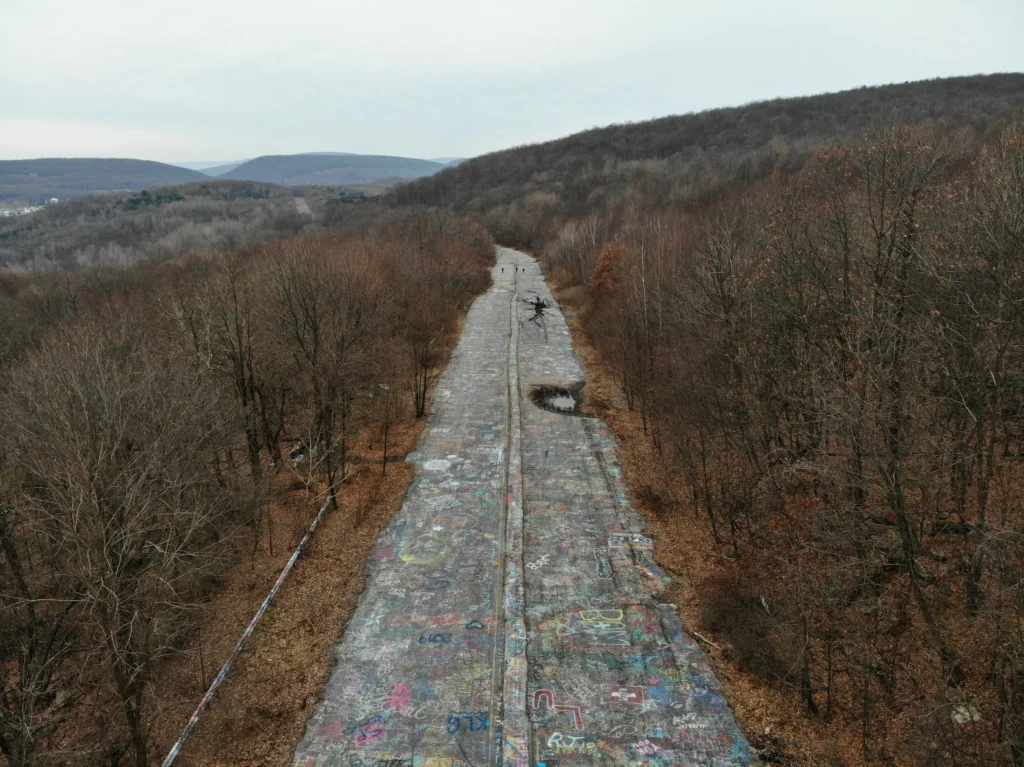
Faced with that price tag, the government chose to move the people instead of the fire. In 1983 Congress appropriated $42 million for voluntary acquisition and relocation; per the Pennsylvania Department of Environmental Protection’s chronology, actual relocation spending from 1983 onward has come to approximately $41.6 million of that sum, and the large majority of Centralia’s roughly 1,000 residents took voluntary buyouts. About 500 buildings were demolished. In 1992 the Commonwealth condemned all property under eminent domain; in 2002 the U.S. Postal Service discontinued Centralia’s ZIP code. The population fell from about 1,000 in 1980 to five residents by 2020.
The fire burns at depths reaching about 300 feet, across a footprint long described as roughly 3,700 acres along an eight-mile stretch, though its active fronts are far smaller. At current rates it could keep burning for more than 250 years. Treat that as a soft projection rather than a measurement, it is an estimate of how long the accessible coal might last, first widely cited around 2006 and repeated since, not a calculated extinction date. As for Todd Domboski: he survived the sinkhole that made him famous, struggled with the trauma for decades, and died of a drug overdose in February 2022.
Why underground coal fires burn for centuries: the chemistry of self-heating coal
Coal does not need a match. Left exposed to air, it begins to oxidize, and that reaction gives off heat. According to the U.S. Geological Survey’s Fact Sheet 2009-3084 (Kolker and colleagues), the two main culprits are oxidation of the carbon in the coal itself, carbon combining with oxygen to make carbon dioxide and heat, and oxidation of the pyrite (iron sulfide) within it, which also releases heat and, in the presence of water, forms sulfuric acid. Water vapor adsorbing onto coal surfaces and bacteria interacting with coal add still more heat. If that heat cannot escape faster than it builds, the coal warms itself. Laboratory figures cited for Burning Mountain put coal’s self-heating threshold as low as 35 to 140 degrees Celsius.
This is the crux. In an ordinary fire you remove heat, fuel, or oxygen and it dies. An underground coal fire defeats all three levers at once. The fuel is a geological deposit, effectively unlimited on human timescales. The heat is wrapped in hundreds of feet of overburden, so it accumulates instead of radiating away; the USGS notes the minimum temperature required for combustion actually falls at depth. And the oxygen arrives through a self-renewing plumbing system: as coal burns away, the ground above subsides and cracks, opening fresh fractures that pull in air. Guillermo Rein, a fire scientist at Imperial College London who visited Burning Mountain in 2014, puts it plainly, the fire heats the rock, the rock expands and cracks, and the fire makes its own chimney and its own supply of oxygen.
That is also why the standard rescues fail. Water injected into a hot, fractured seam flashes to steam and vents straight back out, and the coal reignites once it dries. Trenching to cut off the fire means excavating ahead of an underground front whose exact position is hard to map; dig in the wrong place and you hand the fire more air. Mark Engle of the USGS once likened the effort to a frustrating game of whack-a-mole: “You put one down, then 300 feet later another one picks up.” Smothering a fire with grout, fly ash, or inert gas can work, but only for small, shallow, well-defined fires. For a sprawling burn in old, interconnected workings, the geometry is the enemy.
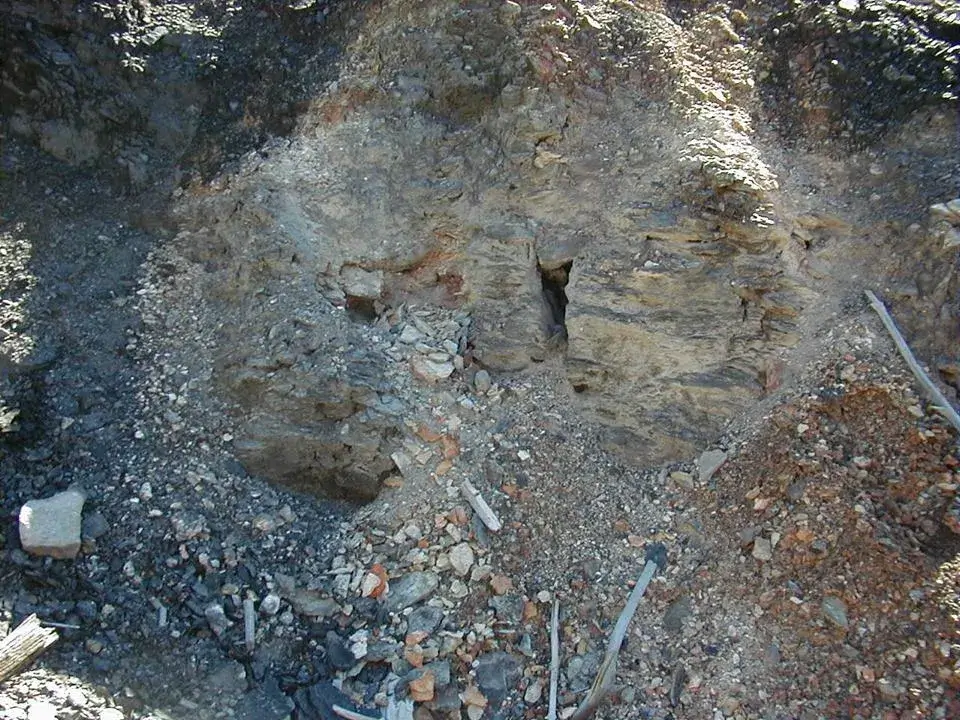
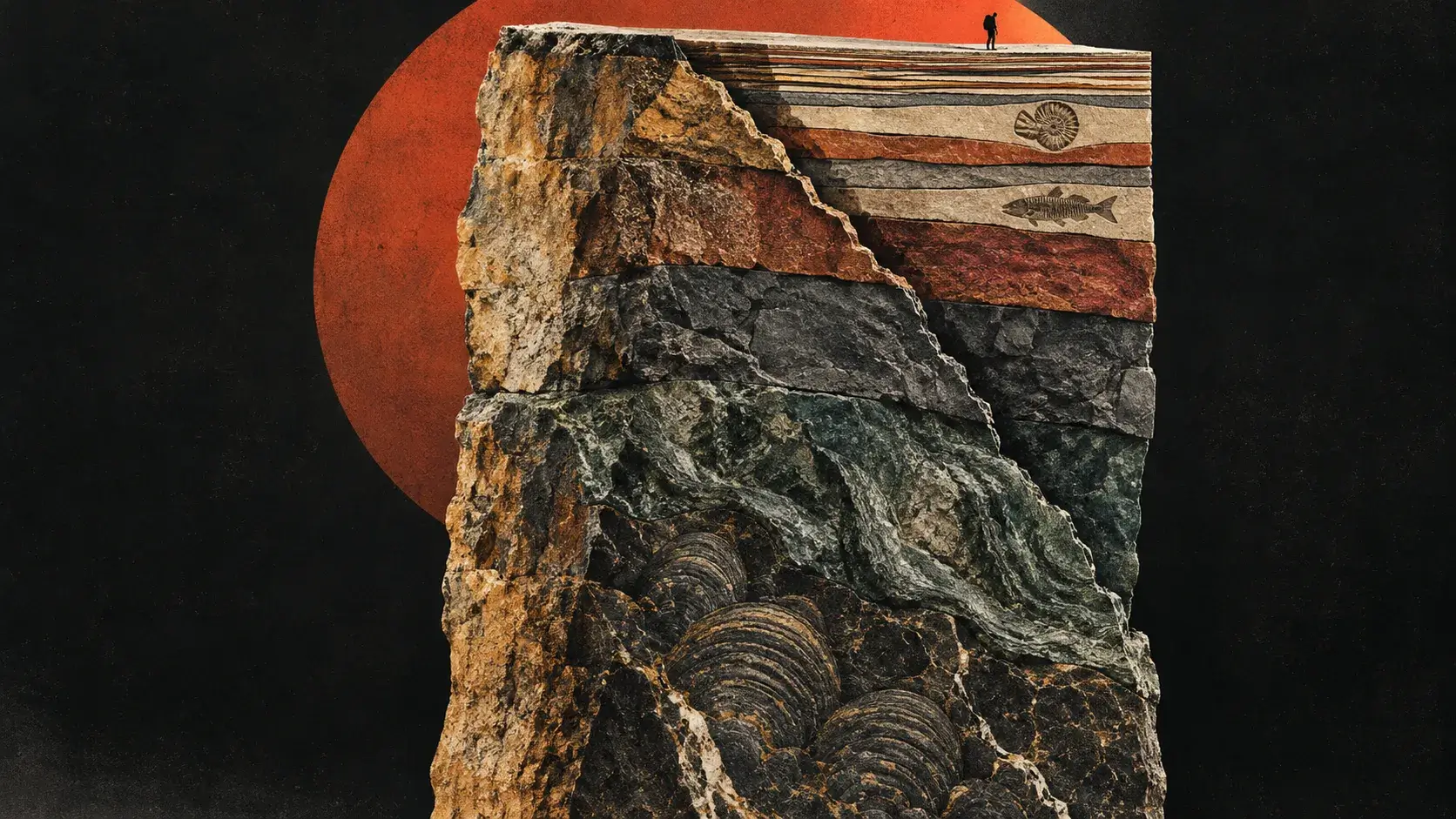
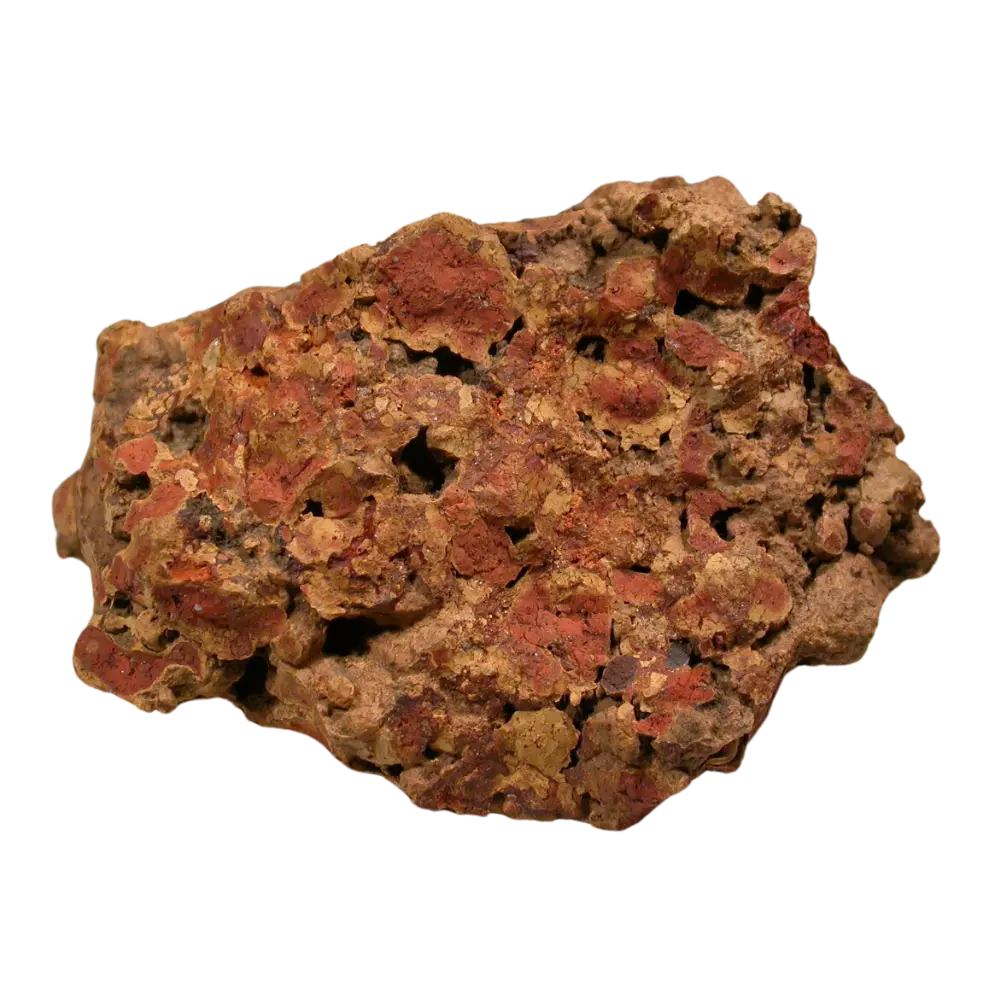
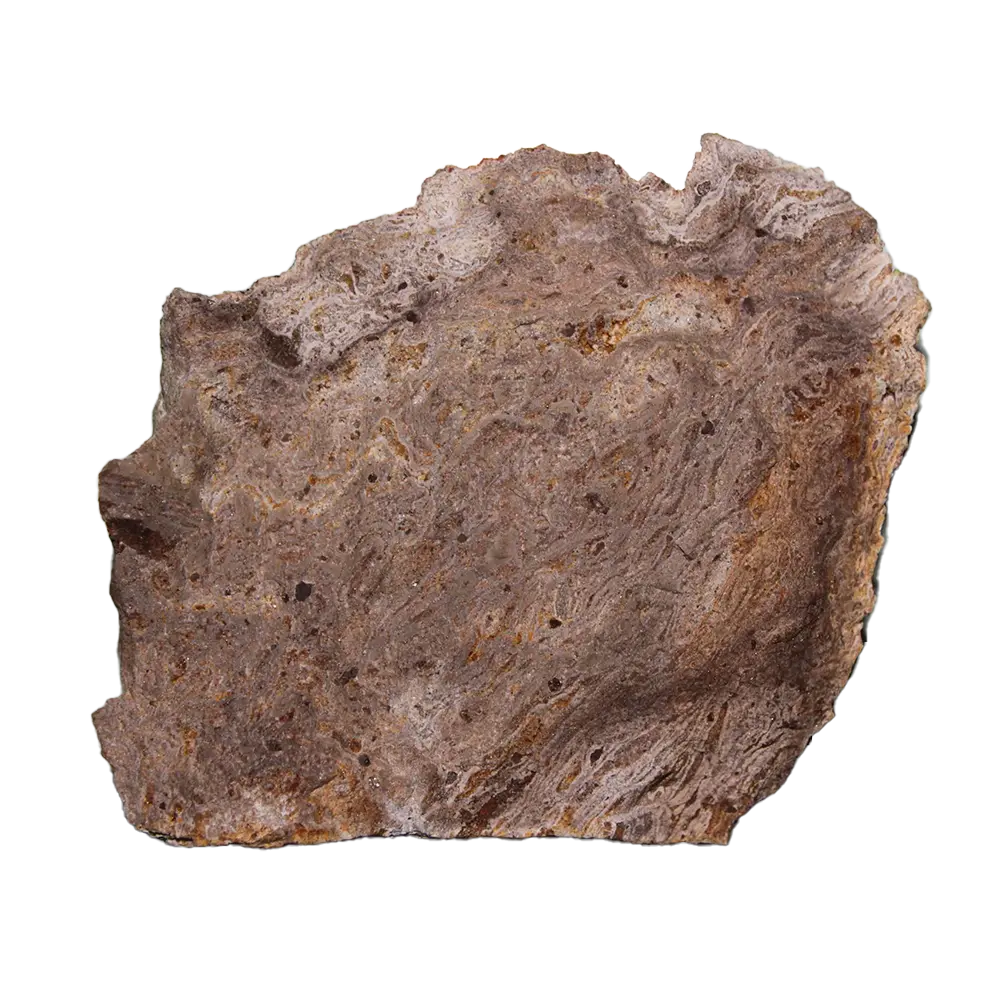
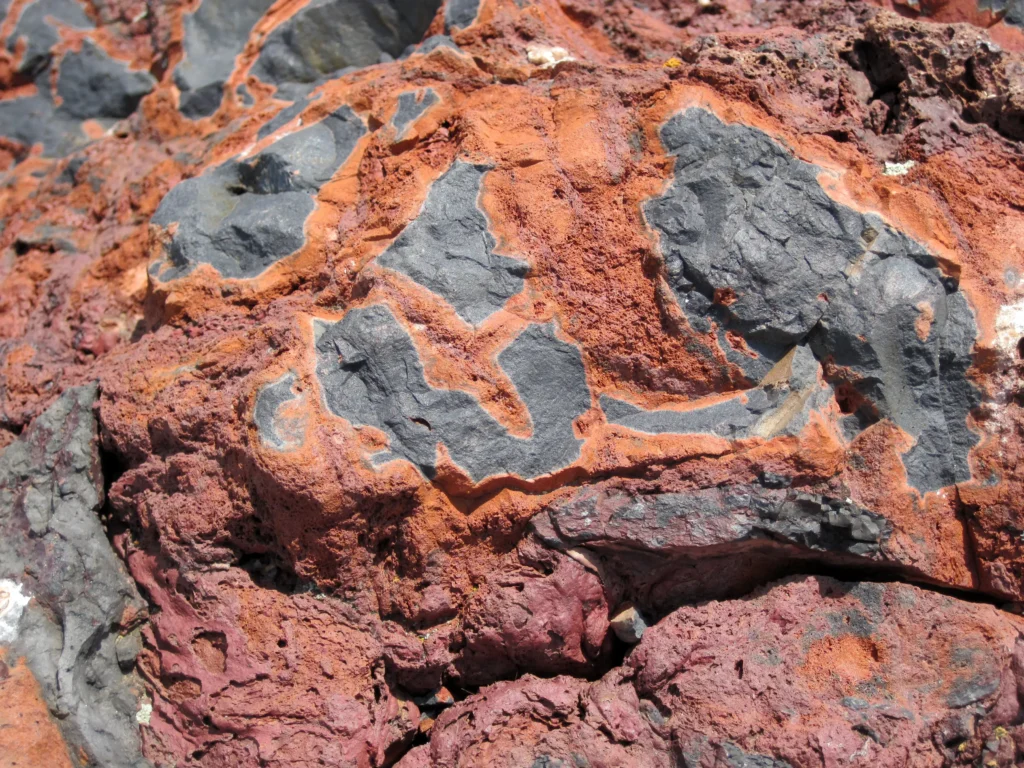
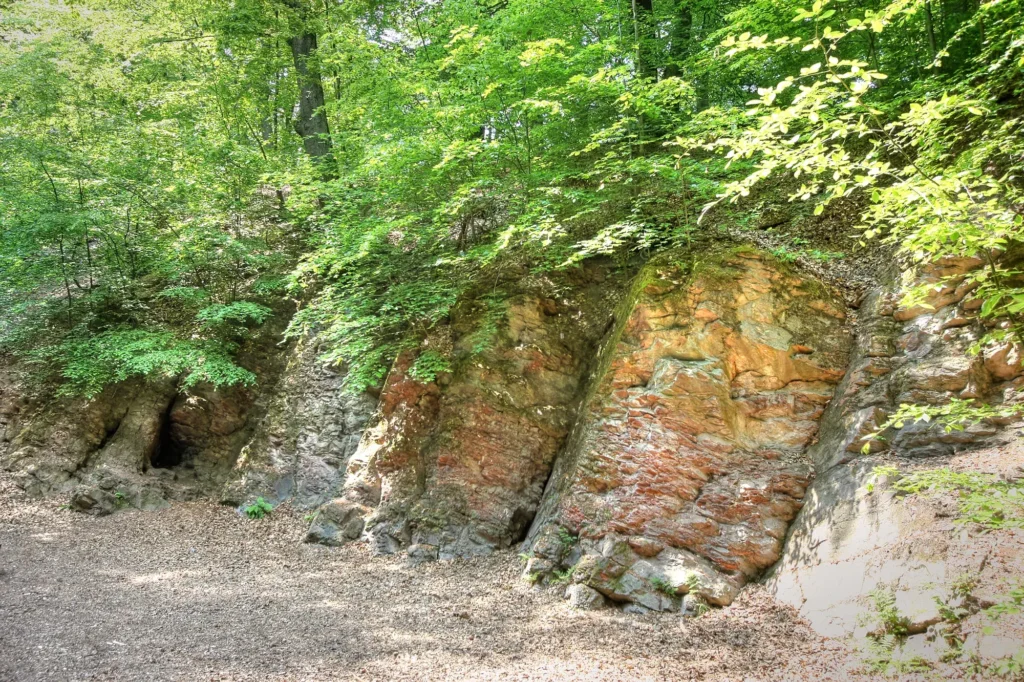
The combustion also rewrites the rock. Where a seam fire gets hot enough, it bakes the surrounding sediment into a hard, reddish rock called clinker; where temperatures climb past roughly 1,100–1,200 degrees Celsius it can melt rock outright into a glassy slag called paralava. These pyrometamorphic rocks are the fossil signature of coal fires. In the Powder River Basin of Wyoming and Montana, clinker outcrops cover thousands of square kilometers and, by USGS dating, record coal beds that have ignited and burned naturally for at least the past four million years.
Burning Mountain, Australia: a fire older than the pyramids
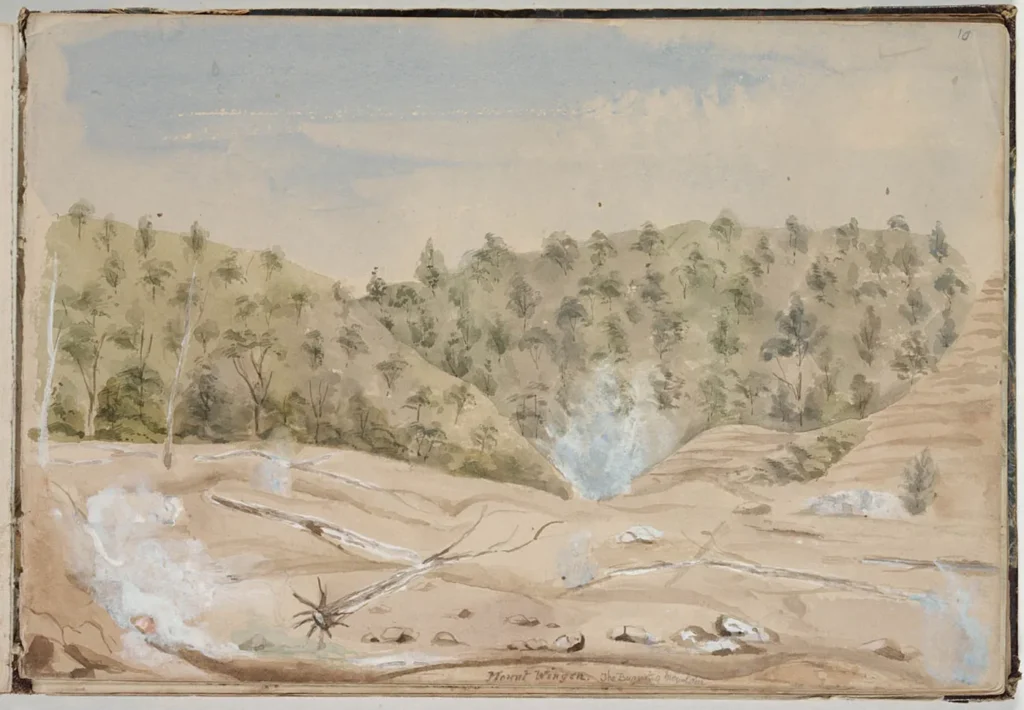
About 224 kilometers north of Sydney as the crow flies, a four-hour drive up the New England Highway, sits a hill the local Wanaruah people named Wingen, their word for “fire.” Beneath Mount Wingen, a coal seam roughly 30 meters down has been burning for at least 6,000 years, which makes it the oldest known coal fire on Earth. When a farmhand first reported the smoke in 1828, he assumed he had found a volcano; the geologist Reverend C.P.N. Wilton correctly identified it as a burning coal seam in 1829.
The age deserves care. Nobody has directly dated the ignition. The 6,000-year figure is inferred from the fire’s southward migration: it creeps roughly one meter per year and has left a scorched path about 6.5 kilometers long. Run the arithmetic backward and you get several thousand years, but the calculation assumes a steady rate over the whole distance. Rein has said the fire is “at least 6,000 years old” and “could actually be hundreds of thousands of years old,” while cautioning that the evidence for a much greater age is unpublished and not peer-reviewed. NSW National Parks gives a more conservative 5,500 years. The defensible statement is this: at least roughly 6,000 years, possibly far older, with a real margin of uncertainty.
What you actually see at Burning Mountain is almost nothing, and that is the point. No flames. The fire smolders, more like the embers in a barbecue than an open blaze. As Rein told ScienceAlert, “No one knows the size of the fire under Burning Mountain, you can only infer it… It’s likely a ball of around 5 to 10 meters in diameter, reaching temperatures of 1,000 degrees Celsius.” On the surface there is white ash, ground warm to the touch, rock stained yellow and red by cooking minerals, a sulfurous smell, and slumping where the burnt-out seam has collapsed. The forest dies as the fire approaches and slowly returns behind it. What lit it, a lightning strike, a bushfire, or spontaneous combustion, is unknown.
Brennender Berg, Germany: the fire Goethe came to see
Europe has its own ancient ember. In a wooded gorge between Dudweiler and Sulzbach in the Saarland, a coal seam called the Brennender Berg, literally “Burning Mountain”, has smoldered since 1668. The cause is uncertain; the likeliest explanation is spontaneous combustion in coal disturbed by unplanned mining, though local legend blames a shepherd’s fire that crept down through tree roots to the seam.
Its lasting fame comes from a single visitor. In 1770 Johann Wolfgang von Goethe detoured to see it, and later described the scene in his memoir Dichtung und Wahrheit: “We were enveloped by a strong sulphur smell; one side of the cave was almost glowing, and covered with reddish, white-roasted rock. Dense steam arose from the crevices and we could feel the hot ground even through the thick soles of our shoes.” That is a precise, firsthand account of a coal-seam fire’s surface signature, written more than 250 years ago, the glowing baked rock, the sulfur, the heat through the soles of the boots. The fire weakened markedly by the end of the 18th century and today reveals itself mostly as warm air and faint steam seeping from rock crevices after rain. It is now a protected natural monument.
Jharia and northern China: coal fires at industrial scale
Centralia and Burning Mountain are famous because they are strange. The fires in India’s Jharia coalfield matter because they are enormous, and because hundreds of thousands of people live directly on top of them.
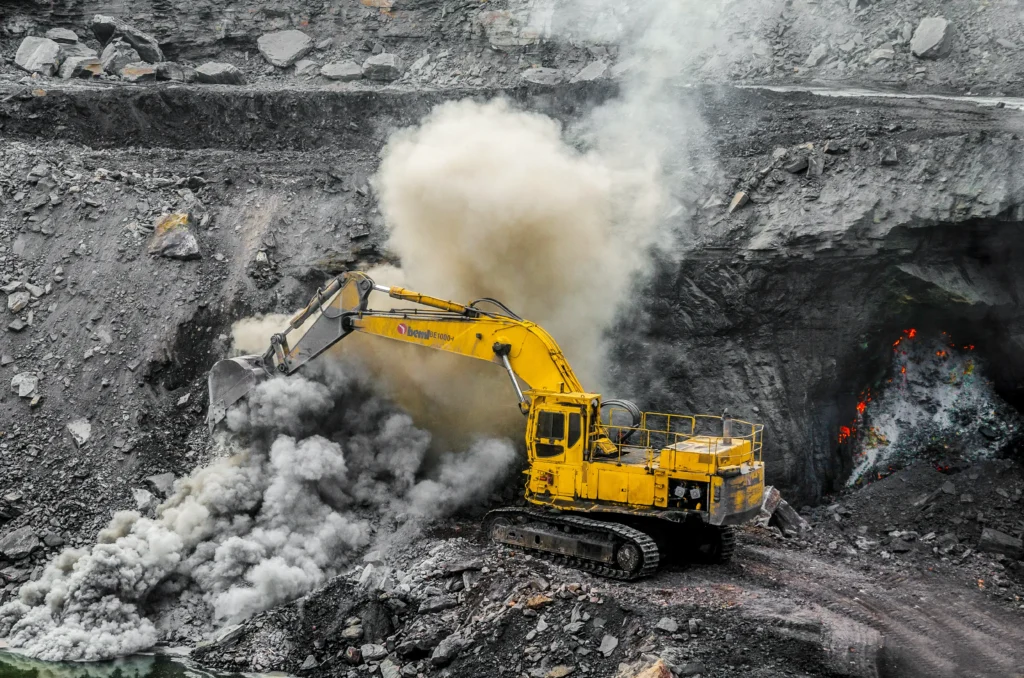
Jharia, in Jharkhand state, sits on India’s prime coking-coal reserves. Mining began in 1894, and the first underground fire was recorded in 1916, in the XIV seam of the Bhowra colliery. The fires never stopped. More than 70 are now burning, fed by decades of unscientific extraction, including “pillar-robbing” that collapsed old workings, and modern opencast mining that exposes fresh coal to air. Per the Jharia Master Plan of 2009, an estimated 37 million tonnes of coal have been lost to the underground fires, while another 220 billion tonnes are rendered unmineable. The human toll is the real story. Ground subsides without warning and swallows homes; the 1930 collapse of the Khas Jharia mine, which dropped buildings into the earth, was an early warning that went unheeded. Air pollution is severe. And resettlement has crawled: as Mongabay reported in 2019, a relocation plan had moved “a mere 3,000 families out of 140,000” to a nearby township.
Northern China holds the largest concentration of coal fires on the planet. The USGS fact sheet, citing remote-sensing studies, reports that somewhere between 10 million and 200 million metric tons of Chinese coal, about 0.5 to 10 percent of national production, is consumed by fires or made inaccessible each year. That is a startlingly wide range, and it honestly reflects how hard these fires are to quantify even from orbit.
The climate and health bill nobody has fully added up
Coal fires emit carbon dioxide and methane, plus carbon monoxide, mercury, sulfur dioxide, particulates, and toxic trace elements like arsenic and selenium. The hazards split across two scales. Locally, the danger is immediate and well documented: carbon monoxide and oxygen depletion in homes and sinkholes, sudden ground collapse, and chronic exposure to combustion gases, the things that emptied Centralia and that sicken Jharia today.
Globally, the picture is genuinely uncertain, and the best sources say so out loud. The USGS states that “the contribution of coal fires to the global pool of atmospheric CO2 is little known but potentially significant,” and that the emissions data are “not sufficient for uncontrolled coal fires to be taken into account as a source category in current climate model projections.” You will see confident percentages quoted for coal fires’ share of global CO2; treat them skeptically, because the people doing the actual measuring have declined to endorse a number. For mercury, the USGS offered a careful order-of-magnitude estimate, quoted here verbatim: “a preliminary estimate of annual Hg emissions from coal fires worldwide is comparable in magnitude to the 48 tons of annual Hg emissions from all U.S. coal-fired power-generating stations combined.” That benchmark is useful precisely because it is framed as preliminary, not as a hard tally.
Even the headcount of fires is an estimate. You will often read that “thousands” of coal fires are burning worldwide, or “more than 1,000 at any one time.” These figures come from extrapolation, not a global census, and should be read as rough orders of magnitude rather than counts.
A related burning ground: the dimming “Door to Hell”
A footnote on a different kind of eternal fire. In Turkmenistan’s Karakum Desert, the Darvaza gas crater, the “Door to Hell”, has blazed since 1971, when, by the most common account, a Soviet drilling operation collapsed into a gas cavern that was then deliberately set alight. It is not a coal fire. It is natural-gas seepage burning at the surface, the same impression of a fire that cannot be put out, but an entirely different fuel and mechanism. A related burning ground, not a cousin.
And it is fading. As of 2025–2026 the crater is dimming. The energy-monitoring firm Capterio, in analysis reviewed by The New York Times, found the flames’ heat intensity had fallen by more than 75 percent over three years. Turkmenistan’s state gas company attributes the decline to two wells drilled nearby in 2024 to draw off gas; Capterio’s data suggest the fading may have begun before that, hinting at natural underground changes. The twist is that a weaker flame is not obviously good news. While it burns, the fire converts leaking methane into the less potent greenhouse gas carbon dioxide, and the nonprofit Carbon Mapper measured methane emissions rising to about 1,960 kilograms per hour in October 2025, above the 2022–2025 average of roughly 1,300. If the flame dies but the gas keeps escaping, the climate trade could be a poor one.
Frequently asked questions
How long has Centralia been burning?
Since 1962. The mainstream account dates the fire to a landfill burn on May 27, 1962, though the precise ignition is disputed. It is still burning beneath the borough today, more than six decades later.
How long will Centralia burn?
Estimates suggest it could continue for more than 250 years, based on how much accessible coal remains underground. This is a projection, not a measured end date, and should be treated as a rough figure.
Can underground coal fires be put out?
Rarely, and only with difficulty. Small, shallow, well-defined fires can sometimes be smothered with grout or inert material. Large fires in fractured or interconnected mine workings defeat water (which flashes to steam and vents back out) and trenching (which can admit more oxygen), which is why fires like Centralia and Jharia have burned for generations.
How many coal fires are burning right now?
No one knows exactly. Common estimates range from more than 1,000 to several thousand worldwide at any given time, but these are extrapolations rather than a verified count.
What is the oldest underground coal fire?
Australia’s Burning Mountain (Mount Wingen) is the oldest known, burning for at least roughly 6,000 years and possibly far longer. The age is inferred from the fire’s slow southward migration, not directly dated.