


Introduction
Sometime around 1271, a young Venetian crossed the desert east of the oasis town of Lop, on the southern edge of the Taklamakan, and heard the sand sing: the eerie, droning boom of what we now call a singing, or booming, sand dune. Marco Polo wrote it down years later, in a Genoese prison cell, dictating to a fellow inmate. A traveller who fell behind the caravan after dark, he said, would hear voices he took for his own companions, sometimes calling him by name, and follow them off the track until he was lost and never seen again. In daylight the desert did it too. Men heard what they swore were the strains of many instruments, above all drums, and the clatter of a passing army. Caravans took to hanging bells on the necks of their animals so that no one would wander off toward the music.
Five and a half centuries later, on the far side of the world, Charles Darwin heard the same phenomenon under a different name. In 1835, working the coast of northern Chile, Darwin spent time in the desert near Copiapó, and the locals told him about a nearby hill they called El Bramador, the roarer or bellower
. Darwin, by his own admission, did not pay close enough attention at the time. As far as he understood it, the hill was covered in sand and made its noise only when people climbed it and set the sand moving. He noted, almost as an afterthought, that the same thing had been reported on the authority of the naturalists Seetzen and Ehrenberg at Mount Sinai, by the Red Sea, where generations of travellers had heard the mountain itself seem to ring.
Polo blamed spirits. The Bedouin of Sinai blamed the bells of a Christian monastery swallowed by the dunes, still tolling somewhere underground. The Chilenos had their bellowing hill. For most of recorded history the booming of these singing sand dunes belonged to folklore, filed alongside sirens and buried bells. The real explanation turns out to be stranger than the legends, and it took the better part of two centuries, and a genuine, still-smoldering scientific feud, to pin down. The short version is this: under the right conditions, a few hundred million grains of sand can briefly fall into step and play a single deep note, loud enough to carry for miles. The dune becomes, for a minute or two, a musical instrument the size of a building.

A camel caravan on the Silk Road, from the Catalan Atlas of 1375. Marco Polo’s crossing of the Lop Desert produced the most famous early account of “singing” sand, which he ascribed to talking spirits. Image: Abraham Cresques (1375), Bibliothèque nationale de France, public domain, via Wikimedia Commons.
What the sound actually is
Start with what you would hear if you were standing there. It is no whistle and no shriek, a low, droning boom, somewhere between a pipe organ held on one pedal note and a propeller plane passing low overhead. It comes up through the soles of your feet as much as it reaches your ears, a vibration you feel in your chest. People who have triggered it by sliding down a slip face describe a sound so physical and so apparently disembodied that the first instinct is to look for its source somewhere other than the sand they are sitting on.
The numbers behind that impression are specific. A booming dune produces one dominant frequency, usually in the range of 70 to 105 hertz, with a set of weaker overtones stacked above it. That fundamental sits roughly two octaves below the middle C of a piano, down in the lower reaches of a cello’s range, which is exactly why so many listeners reach for the word “musical” rather than “noise.” The sound can reach about 105 decibels, comparable to standing near heavy machinery, and on a still day it carries astonishingly far. A large slumping event has been heard up to ten kilometres (six miles) away. Once it gets going it can hold for several minutes, and, this is one of the details that sent scientists chasing resonators for years, it often keeps sounding for up to a minute after every visible grain has stopped moving.
Different dunes sing different notes, and they are remarkably consistent about it. The barchan dunes near Tarfaya, on Morocco’s Atlantic edge of the Sahara, hold a tone close to 105 Hz, near a low G-sharp, and they hold it whether the avalanche is large or small and wherever on the dune it happens. Nevada’s Sand Mountain, near Fallon, rumbles lower, with measured peaks around 50 to 80 Hz, call it the low B to C-sharp two octaves under the piano’s middle. In Chile, the dune field known as the Mar de Dunas sings a low F at about 87 Hz. And in the Sharqiya (Wahiba) Sands of Oman, where the grains come in a wide spread of sizes, the dunes don’t settle on a single note at all but throw out a chord spanning roughly 90 to 150 Hz, close to nine different notes at once. That last fact, as we’ll see, turned out to be a crucial clue.
What strikes physicists about these notes is how pure and how stable they are. A struck object usually rings with a messy pile of frequencies that fade at different rates; a booming dune instead holds one dominant tone with a tidy ladder of overtones above it, closer to a bowed string than to a thud. It is steady enough that you can name the note. And it is reproducible, come back to the Tarfaya dunes on another dry day and they will give you the same low G-sharp, not because the dune is the same shape, since the wind is forever rearranging it, but because the grains are the same size, and in the end it is the grains that decide.
If you grew up on a particular kind of science-fiction, the marriage of deep desert and deep sound will already be ringing a bell. Frank Herbert built the ecology of his 1965 novel Dune around exactly this pairing. On the desert planet Arrakis, the colossal sandworms are drawn to steady, rhythmic vibration travelling through the sand, which they read as prey or as a rival in their territory. The Fremen, the planet’s desert people, survive by learning to walk without rhythm, an irregular, shuffling, arrhythmic gait designed to blend into the natural slosh of wind-driven sand so that nothing down below comes looking. When they want to summon a worm deliberately, they plant a “thumper,” a spring-driven stake that pounds the surface at a steady beat, and they walk away from it fast.
The line outlived the book. In 2001 the British producer Fatboy Slim released “Weapon of Choice,” with Bootsy Collins on vocals and a now-legendary Spike Jonze video of a deadpan Christopher Walken dancing alone, and finally flying, through a deserted hotel lobby. The hook, Walk without rhythm, and it won’t attract the worm
, is lifted straight from Herbert’s desert. (In a small piece of cosmic timing, Walken went on to play the Emperor Shaddam IV in Dune: Part Two in 2024, and cheerfully admitted he’d never noticed the connection.) The image is almost too neat for a phenomenon that runs on the opposite principle. Out on a real dune, the boom is not the danger of rhythm but its triumph: the sound exists because millions of grains briefly manage to move in time with one another. Herbert’s Fremen suppress the rhythm to stay alive. A singing dune is what happens when the rhythm wins.
Singing, booming, squeaking, barking: a quick taxonomy
Before going further it helps to separate two phenomena that the popular literature constantly blurs, because they have different sounds, different settings, and almost certainly different mechanisms in their fine detail.
The first is squeaking or whistling sand, the kind you can find on certain beaches. Scuff your feet hard through dry sand above the high-tide line at Porth Oer in Wales, the beach is literally called Whistling Sands, or at Singing Beach in Massachusetts, or on Kauai’s Barking Sands, and you can get a short, high, almost cartoonish squeak or bark out of it. The sound is brief, it follows your footstep, and its pitch is high, typically many hundreds of hertz, often above 500 Hz. It has been reported on dozens of beaches around the British Isles alone. This is real, and it shares some ingredients with its bigger cousin, but it is a different animal.
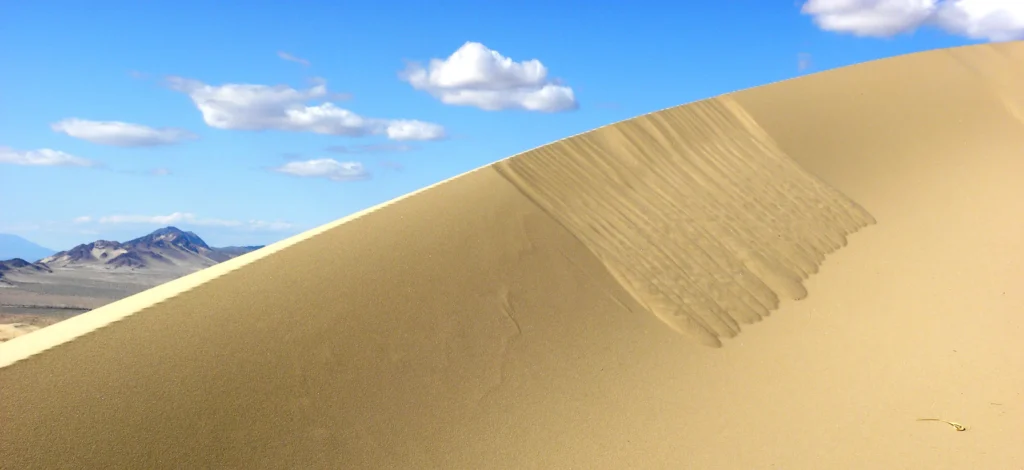
The second is booming or singing sand, the desert-dune phenomenon this article is about. It is far rarer, far louder, far lower in pitch, and it is triggered not by a footstep but by an avalanche, a mass of sand slumping down the steep lee face of a big dune, whether nudged loose by the wind, by a slope that has grown too steep to hold itself, or by a person deliberately sliding down. The boom is sustained, it is low, and it can outlast the avalanche that started it. Where a squeak is the sound of your shoe, a boom is the sound of a hillside coming loose.
The distinction matters because the two have repeatedly been mistaken for each other in the records, and because a place can have one without the other. Hawaii’s Barking Sands and the Whistling Sands of Wales are squeaking beaches, not booming dunes. The dunes of Tarfaya, Sand Mountain, the Badain Jaran in China, and the Sharqiya Sands of Oman are the genuine booming article. Keep the two apart and a lot of the apparent contradiction in older accounts dissolves.
Where the dunes sing
Booming dunes are scarce. The most careful modern reviews put the count at roughly three to four dozen sites worldwide where the real low-frequency boom has been documented. Set against the planet’s deserts, that is almost nothing. Deserts cover roughly a fifth of Earth’s land, only about a tenth of that desert is actually buried in dunes, and only a vanishingly small fraction of those dunes can sing. They are clustered, sensibly enough, in the driest places on Earth.
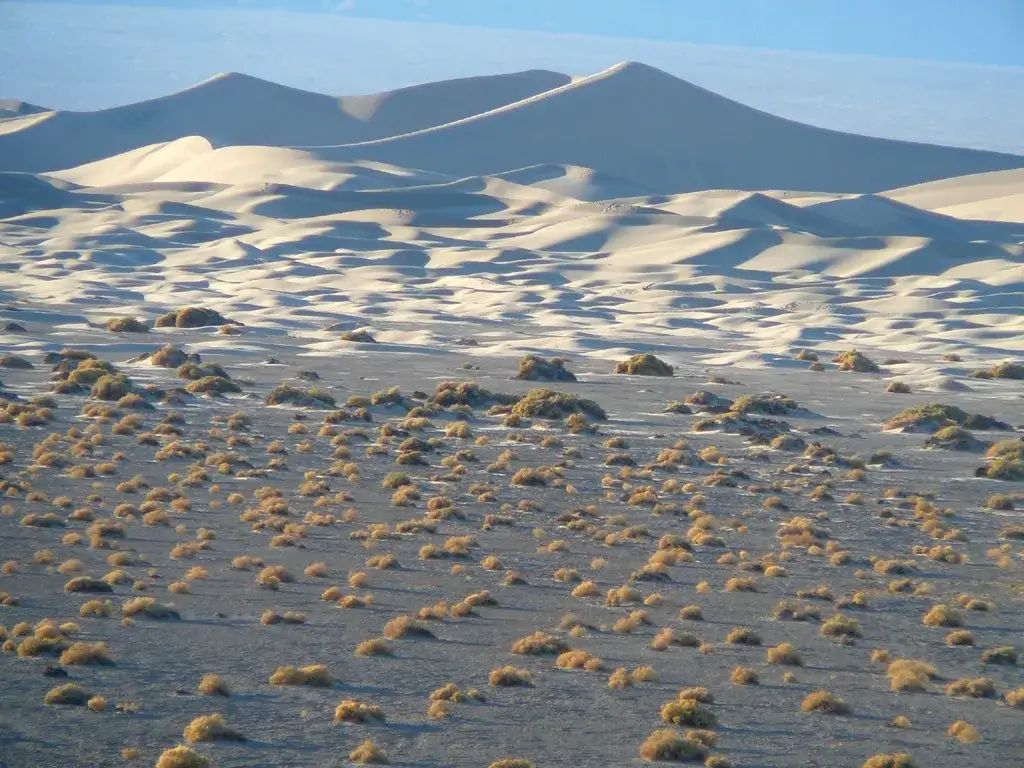
North America has one of the best collections, which is why so much of the science was done there. California alone holds several: the towering Kelso Dunes in the Mojave, the Eureka Dunes in a remote corner of Death Valley (among the tallest in the country, rising some 200 metres off the valley floor), and the Dumont Dunes and Panamint Dunes nearby. Across the state line, Nevada’s Sand Mountain and Big Dune boom, and so do the dunes of Great Sand Dunes National Park in Colorado, the dunes near Alamosa that inspired a 1947 Bing Crosby tune, “The Singing Sands of Alamosa.”
Asia has the giants. The Badain Jaran desert in Inner Mongolia contains some of the tallest stationary dunes on Earth, well over 450 metres, and they are famous boomers. Near the Silk Road city of Dunhuang, in Gansu, the dune ridge called Mingsha Shan, literally “Singing Sand Mountain”, curls around the spring-fed oasis of Crescent Lake; the sound was noted there in Chinese records well over a thousand years ago, described as resembling music heard on a fine day. China recognises four classic “singing sand” sites, the dunes near Hami in Xinjiang reputedly giving the finest tone. Mongolia has the great dune of Khongoryn Els, and Kazakhstan has the well-known Singing Dune of Altyn-Emel.
The Arabian Peninsula sings across its sand seas, dunes near Mesaieed in Qatar, the great linear dunes south of the Liwa oasis in the Emirates, and the Sharqiya Sands of Oman, where Simon Dagois-Bohy and his colleagues did some of the most revealing fieldwork. North Africa has the booming barchans near Tarfaya in Morocco, along with sites in Mauritania, Egypt’s Western Desert, and the Sinai, where Gebel Naqous, the “Mountain of the Bell,” carries the legend of the buried monastery that Darwin had heard about secondhand. Down in the southern hemisphere, southern Africa has the booming dunes of the Namib and the “Roaring Sands” of the Kalahari’s Witsands, and Chile has its bellowing hills in the Atacama, including the Mar de Dunas and the dune Darwin’s informants called El Bramador.
The recipe for a singing dune
Not every dune can do this, and the dunes that can are picky. Decades of sampling, collecting “singing” sand, carting it back to a lab, and discovering it often goes quiet once you do, have narrowed the requirements to a handful of conditions that all have to line up at once.
The grains have to be the right size, and nearly all the same size. Booming sand is fine, with grains typically between about 0.1 and 0.3 millimetres across, at the Tarfaya dunes Bruno Andreotti measured an average diameter of about 0.18 mm. More important than the absolute size is the sorting: the grains have to be remarkably uniform, all within a narrow band of diameters. Wind is the sieve that achieves this. Moving air picks up and carries grains within a particular size range and leaves the rest behind, so a mature dune face can end up sorted to a degree that would be hard to reproduce on purpose. When the grains are all alike, they can move together; when they aren’t, they can’t. The Oman dunes make the point by counterexample. Their sand spans a wide spread of sizes and produces that muddy nine-note chord, but sieve the same sand down to a single narrow fraction, around 200 to 250 micrometres, and it suddenly plays one clean tone.
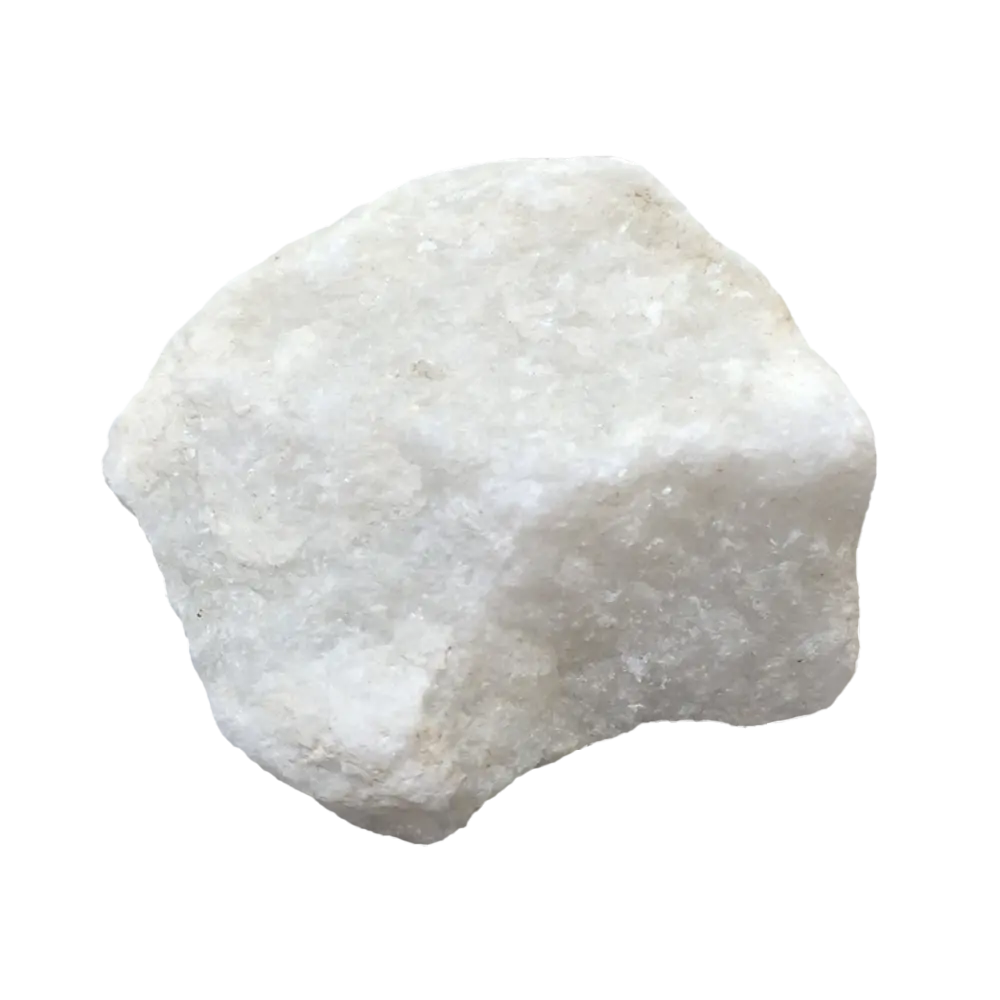
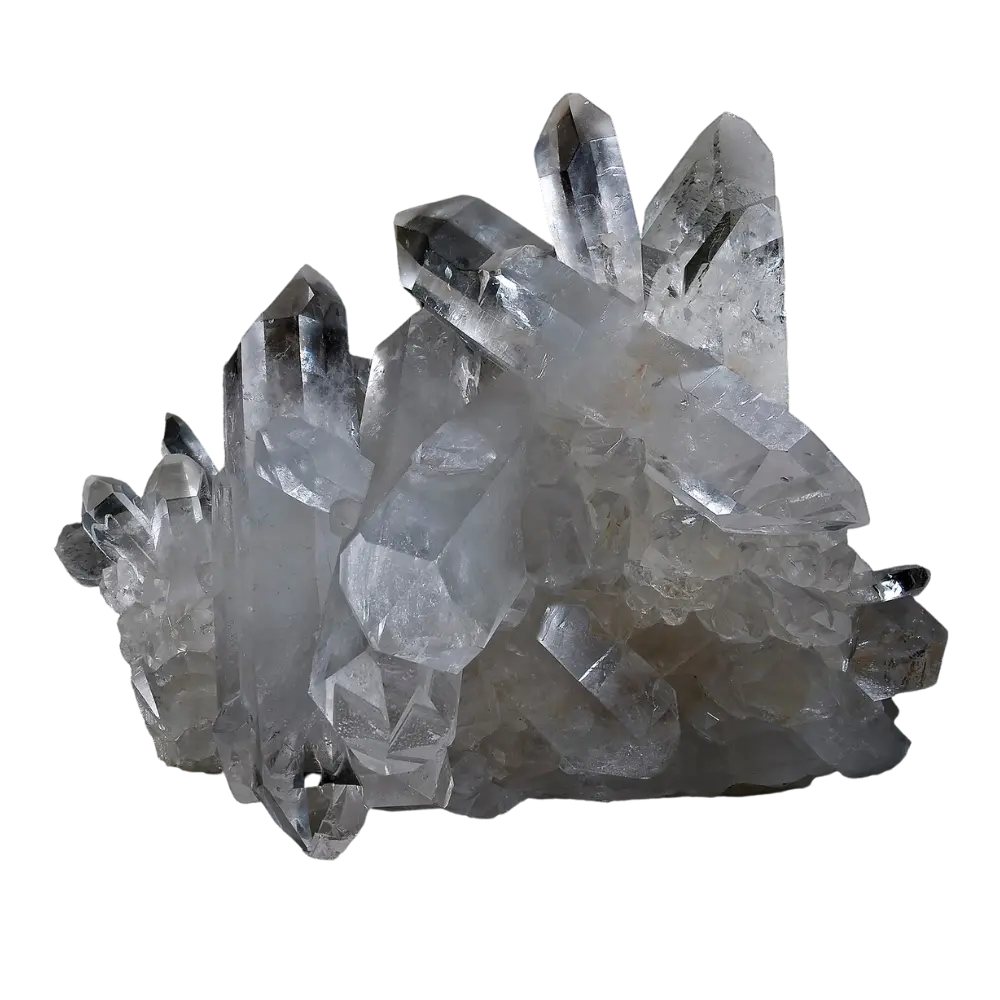
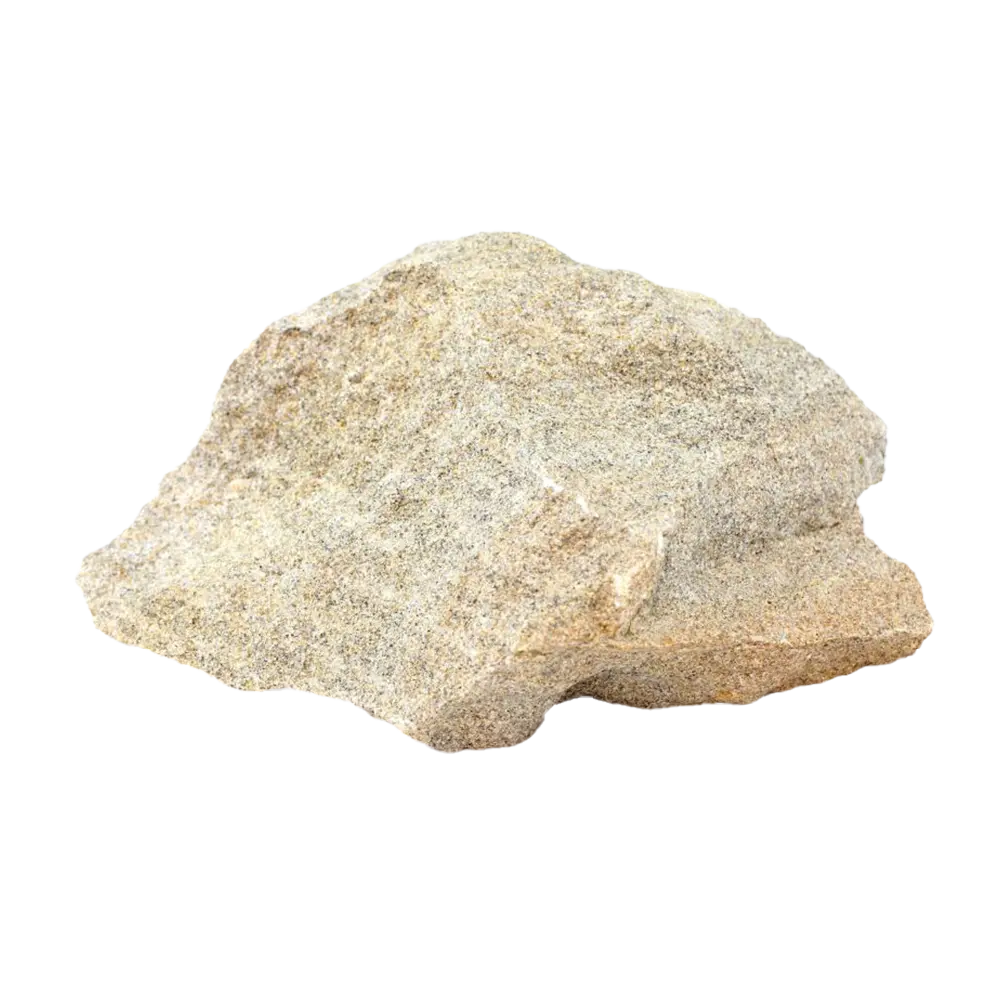
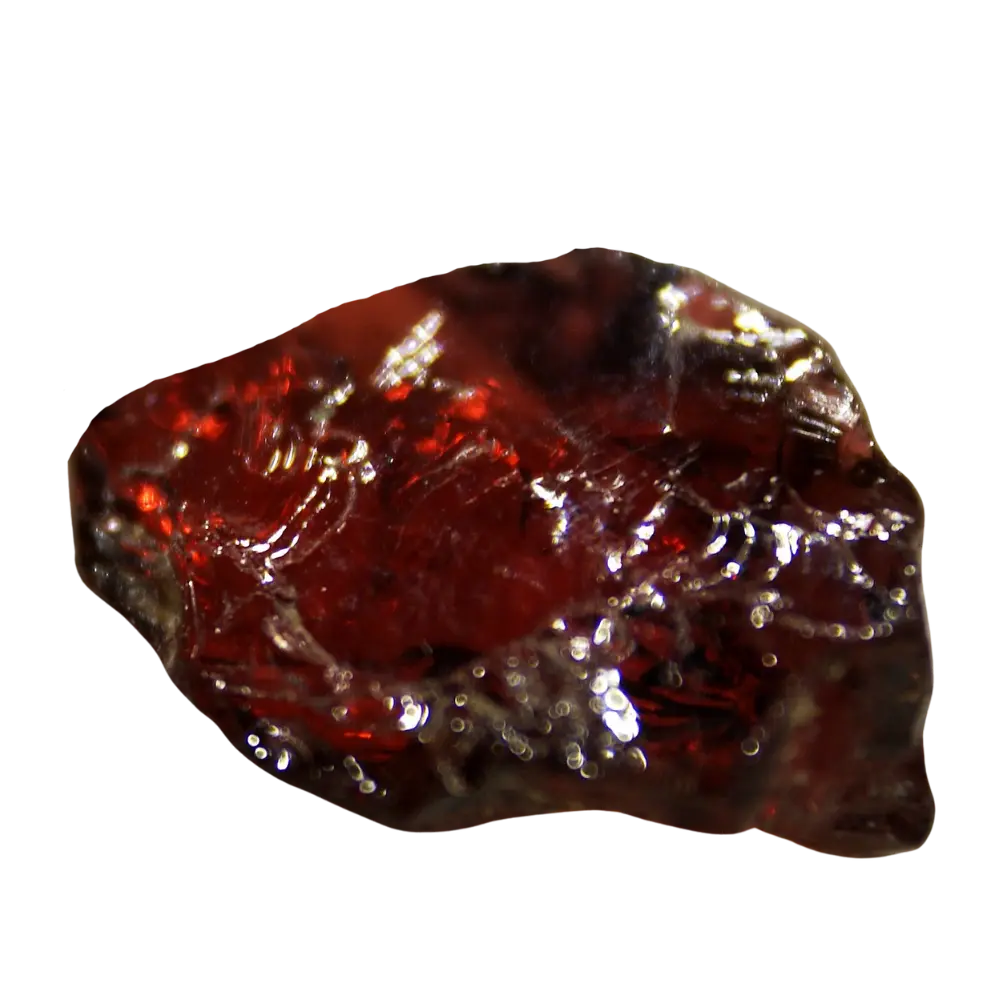
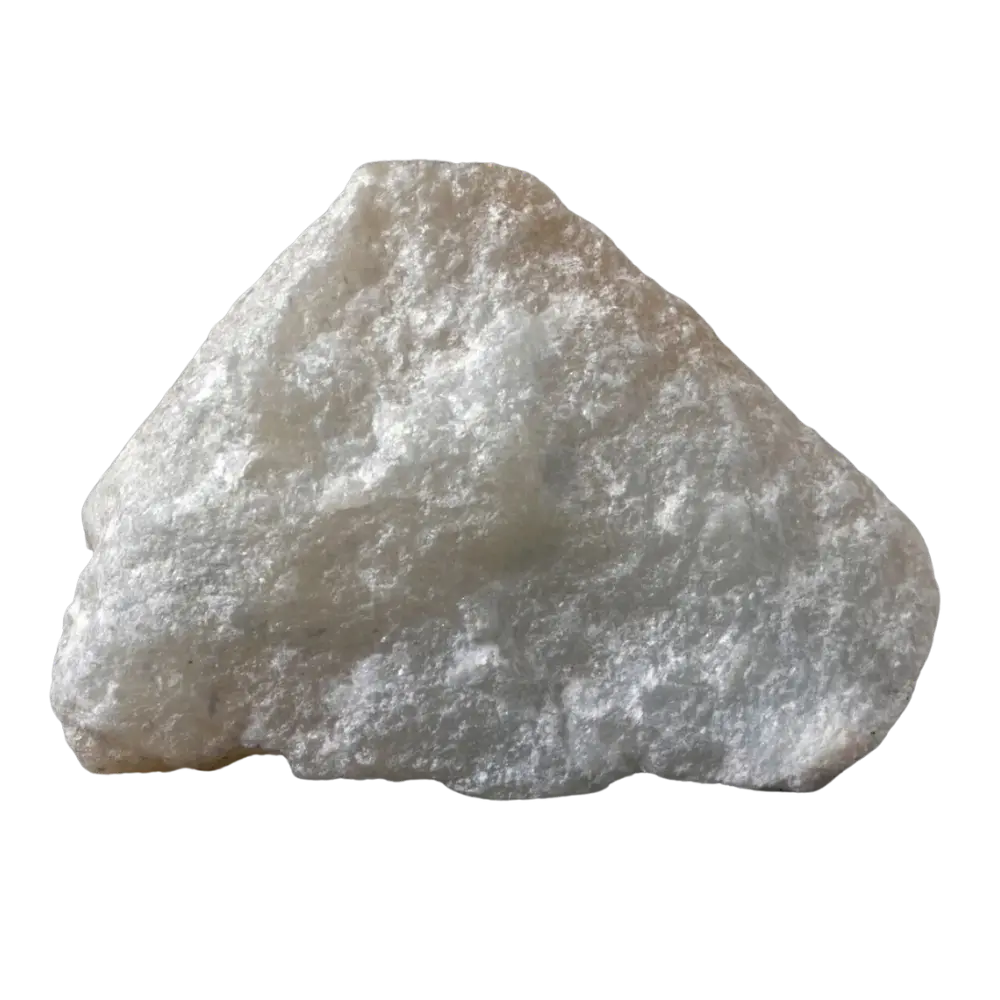
The grains have to be rounded, polished, and rich in silica. Booming sand is overwhelmingly quartz, the same hard, glassy mineral that makes up well-sorted quartz sand the world over and, compacted over geological time, the ancient dunes turned to stone that we call sandstone. Under a microscope the grains of a singing dune are strikingly smooth and well rounded, having been tumbled and frosted by untold journeys on the wind. James Lindsay and colleagues, comparing booming and non-booming sands in the 1970s, concluded that an unusually high polish was one of the things that set the singers apart.
The sand has to be bone dry. This is non-negotiable, and it is why booming dunes fall silent in winter or after rain, sometimes for months. A trace of moisture is enough to make the grains stick to one another instead of sliding freely, and a dune that boomed gloriously in August can be mute in January because water from a single storm is still locked in the pile. Dryness is the easiest condition to meet in a desert and the easiest to lose.
And the slope has to be steep enough to avalanche. The booming face is the lee, or slip, face of the dune, the steep side sheltered from the wind, where blown sand piles up until it reaches the angle of repose, around 30 to 35 degrees, the steepest angle dry sand can hold before it gives way. Push it past that, by adding sand at the top or by sitting down and sliding, and a sheet of grains lets go and flows downslope. That flowing sheet is the engine of the whole phenomenon. No avalanche, no boom.
There is one more ingredient that remains genuinely contested, and it’s worth being honest about the uncertainty. Many singing sands carry a thin surface coating, a kind of thin desert glaze of silica and trapped moisture, sometimes called “desert glaze,” built up over repeated cycles of wetting and drying. In 1997 a group led by David Goldsack reported in Nature that booming sands were about 95 percent silica and carried just such a gel-like coating, and argued that the coating raised the friction between grains and helped them sing. Others were skeptical from the start, calling the link interesting speculation and no more. A later Chinese study went further and concluded that the sound had nothing to do with any silica gel or the grains’ chemistry, attributing it instead to tiny pits on the grain surfaces acting as resonating cavities. The fair summary today is that a surface coating is associated with many singing sands and plausibly helps, by tweaking how grains grip and release one another, but it has not been shown to be necessary, and exactly what it does is unsettled.
Two centuries of getting it wrong
For a long time the singing sands were a curiosity that serious science kept at arm’s length, partly because they are so hard to study. You cannot order a boom on demand. The dune has to be dry, the season has to be right, and you have to be standing on the correct face when a few thousand tonnes of sand decides to let go. As one nineteenth-century correspondent to Nature put it, the trouble was never a shortage of singing sands but a shortage of observers in the right place at the right moment.
The Victorians produced theories anyway, and most of them were wrong in instructive ways. Some imagined air being squeezed in and out of the gaps between grains, like the chambers of a tiny organ. Others reached for electricity, proposing that friction between grains built up a static charge whose discharge somehow made the sound, an idea that still circulates in popular accounts today, despite there being no good evidence that it produces the note. A few invoked underground volcanism. Lord Curzon, the British statesman, was sufficiently captivated to devote a long chapter of his 1923 Tales of Travel to “the Singing Sands,” cataloguing reports of “singing, sounding, rumbling, musical, barking, moving sands” from across the deserts of the world and confessing himself unable to explain any of them.
The first person to drag the subject toward physics was Ralph Bagnold. A British army officer who spent the 1920s and 1930s driving Model T Fords across the unmapped interior of the Egyptian and Libyan deserts, Bagnold became fascinated by how sand moves, and in 1941 he published The Physics of Blown Sand and Desert Dunes, the book that founded the modern science of windblown sediment, the saltation of bouncing grains, the slow creep of the surface, the architecture of dunes. He gave the singing sands a chapter of their own. He recorded the folklore, the sirens, the bells of the engulfed monastery, and then he recorded what he had heard himself. On a still night in the desert he heard the sand start up so suddenly and so loudly that, by his account, normal conversation became difficult, and the booming carried on for several minutes without a break.
Bagnold suspected the answer lay in friction and the way dry grains shear and dilate as they flow past one another, and he kept working on the mechanism into the 1960s. But the first hard, quantitative measurement of a booming dune came in 1975, when Dean Criswell, John Lindsay, and David Reasoner hauled instruments out to Sand Mountain in Nevada and recorded the seismic and acoustic signals of forced shearing directly. They found the seismic energy concentrated in sharp peaks between 50 and 80 hertz, and they noted, almost in passing, that dunes like this had been described for more than fifteen hundred years. For the first time the phenomenon had numbers attached to it. The arguing could finally be about data.
The modern fight: two answers to one question
By the early 2000s the question had sharpened to its essential form. Everyone agreed the sound began with an avalanche of dry, well-sorted sand. Everyone agreed it was not the wind whistling and not the whole dune ringing like a struck bell, dunes of wildly different sizes at the same site produce the same note, which rules out the dune itself acting as the resonant body. The open question was narrower and harder: what sets the frequency? Two research groups, working largely in parallel, arrived at two genuinely different answers, and they have been arguing about it, in the politest and most technical possible terms, ever since.
The Paris answer: the grains keep time with each other
The first answer came from a group in Paris associated with Stéphane Douady and Bruno Andreotti. In a pair of landmark papers in Physical Review Letters, Andreotti’s “The Song of Dunes as a Wave-Particle Mode Locking” in 2004, and Douady and colleagues’ “Song of the Dunes as a Self-Synchronized Instrument” in 2006, they made a radical-sounding claim. The sound, they argued, is produced by the relative motion of the grains themselves, and its frequency is simply the rate at which grains in the flowing layer collide.
The mechanism works like a feedback loop. As the surface layer of sand shears downslope, grains bump and grind past one another. Those collisions set off faint elastic vibrations that travel along the surface of the sand. Those vibrations, in turn, nudge the grains, so that instead of colliding at random they start to collide together, in phase, the way a crowd of people on a footbridge can unconsciously fall into step and set the whole structure swaying. Once the grains synchronise, their combined, coherent motion drives the air above the slope like the cone of a vast loudspeaker, and you get a clean, loud tone instead of a hiss of random noise. Andreotti measured the surface waves running out from a Moroccan avalanche at about 40 metres per second and found the sound saturated at around 105 decibels exactly when the vibration grew strong enough to start throwing grains up off the flowing layer, a natural volume limit built into the physics.
The frequency, in this picture, is set by the shear rate of the avalanche, which for flowing grains is the same as their collision rate. That leads to a clean prediction: the note should depend on the size of the grains and the pull of gravity, and on essentially nothing else. Written out, the frequency scales roughly as the square root of gravity divided by grain diameter, captured in the relation Γ ≈ 0.4 × √(g/d), with g the acceleration of gravity and d the mean grain size, a scaling Andreotti measured directly in his 2004 fieldwork and that Dagois-Bohy and colleagues later confirmed across both field and laboratory avalanches. Bigger grains, lower note. No dune required, just a shearing layer of the right sand. Andreotti liked to describe the result as a completely new kind of musical instrument.
The Caltech answer: the dune’s skin is a waveguide
The second answer came in 2007 from a group at Caltech, Nathalie Vriend, Melany Hunt, Robert Clayton and colleagues, in a paper with the confident title “Solving the Mystery of Booming Sand Dunes.” They had gone into the field with seismic gear, the kind geophysicists use to image the layers beneath the surface, and laid out long lines of geophones across booming dunes at Dumont, Eureka, Big Dune and Kelso. What they reported was a different story about the frequency.
A dune, they pointed out, is not uniform. It has a surface layer of loose, dry sand sitting on top of older, more compacted sand, and seismic waves travel faster through the stiffer material below than through the loose stuff on top. That arrangement, a slow layer sandwiched against faster material, is, in physics, a waveguide. It can trap sound waves and bounce them back and forth, and at certain frequencies those reflections reinforce one another and resonate, just as a particular length of organ pipe favours a particular note. The Caltech team argued that the booming frequency was fixed not by the grains but by the depth of that dry surface layer: a few tens of centimetres of loose sand acting as a natural resonating channel. Their measurements put the relevant wave speeds near the surface at around 200 metres per second.
This had real explanatory appeal. It offered a tidy reason why a dune might keep booming for up to a minute after the avalanche stops, the trapped sound is still ringing in the waveguide, and why booming is so fussy about location and season, since the depth and stiffness of that surface layer change as the dune dries out or wets up. It made the dune’s internal structure, not just its sand, the thing that mattered.
The exchange
The two camps did not quietly agree to differ. In 2008, Andreotti, Lénaïc Bonneau and Éric Clément published a formal Comment in Geophysical Research Letters disputing the Caltech analysis, and Vriend’s group replied in the same issue. The Paris objection, stripped of its mathematics, was that the kind of simple, non-dispersive sound propagation the waveguide model assumed doesn’t actually hold in loose sand squeezed only by its own weight, where the relevant waves run along the surface and behave quite differently. They argued that when you looked at all the data, the booming frequency didn’t track the predicted resonant frequency of the surface layer; that changing how you triggered the avalanche didn’t change the note, as a resonance story might suggest it could; and that the existence of a dry surface layer set a threshold for booming, you need enough dry sand for the surface vibrations to propagate at all, without that layer’s depth being the thing that selects the pitch. The Caltech group, in turn, defended the waveguide and pointed to their field measurements.
The experiment that moved the needle
The cleanest test came in 2012. If the boom truly needs a layered dune underneath it to resonate, then you should not be able to make the sound without one. So Simon Dagois-Bohy, Sylvain Courrech du Pont and Stéphane Douady took singing sand from the Moroccan and Omani dunes and made it avalanche on a hard plate in the laboratory, with no dune beneath it at all, in work they published in Geophysical Research Letters as “Singing-sand avalanches without dunes.” The sand still sang. A shearing layer of the right grains, flowing over a rigid surface, produced the characteristic tone with nothing to resonate inside.
The same study tied the loose ends together. It confirmed that a dune with well-sorted grains plays a single, well-defined note while a dune with a broad spread of grain sizes produces the noisy, multi-note spectrum heard in Oman, and that sieving the Omani sand down to one size restored a pure tone. It nailed the frequency to the 0.4 × √(g/d) relationship between pitch and grain size. The weight of evidence pointed hard at one conclusion: the sound is generated by the synchronisation of avalanching grains, and no resonator is needed to produce it.
That did not erase the Caltech picture so much as relocate it, and, in a sense, vindicated a hunch the Paris group had floated back in 2006, that resonance might matter, while moving it out of the dune and into the flowing sand. The honest state of play today separates two questions that the early debate had tangled together. The generation of the sound, why there is a clean tone at all, and what sets its pitch, is best explained by grain synchronisation in the shearing flow, and that mechanism works with or without a dune. But out in the field, on a real dune the size of a building, a near-surface waveguide may still help trap, sustain, and amplify the emission once it’s been generated, and the depth of dry sand sets a threshold below which a dune won’t boom at all. The Caltech group’s later work, including a detailed 2015 study in Physics of Fluids, drew a useful distinction between the sustained, near-monotone booming and the short, broadband bursts they called burping, the pulse-like sounds you get from briefly shearing the surface by hand, before a full avalanche locks into a steady note. Whether the surface layer plays any role in fixing the frequency in the field remains disputed, and probably secondary. Plenty about the microscopic coupling that lets grains fall into step is still unknown, and so is the deeper mystery of why two chemically near-identical sands can differ so completely, one singing and one staying mute.
It is worth sitting with how unusual this is. In most of modern physics the “what” and the “why” arrive together. Here, scientists can tell you with confidence what sets the note, the size of the grains, while still arguing over exactly why grain size should matter the way it does, and over what the dune’s structure contributes. The sand has kept one of its secrets even after giving up the main one.
Why a humming dune is worth a physicist’s time
It would be easy to file all this under harmless wonder, a strange noise in a strange place, explained, the end. But the singing dunes sit at the intersection of several things scientists badly want to understand, which is why serious researchers keep going back to them with seismometers and high-speed cameras.
The first is the physics of granular flow, one of the genuinely hard unsolved problems in everyday physics. A pile of sand can sit motionless like a solid, pour like a liquid, and gust like a gas, sometimes within the same second, and we still lack a complete theory that handles all three. A booming dune is a granular flow that has spontaneously organised itself into coherent, large-scale motion, millions of independent grains briefly behaving as one. That kind of emergent synchronisation, where local interactions add up to a single collective rhythm, shows up across nature, from flashing fireflies to the swaying of crowded bridges, and the dunes are a rare case where you can hear it happen and measure it cleanly. The same family of physics underlies the avalanches and landslides that kill people, and understanding when a granular slope shifts from quiet creep into sudden coherent movement is not an academic question on a mountainside above a town.
Bagnold’s foundational work on how grains saltate and creep is still the basis of every model of how deserts move, how dust storms load the atmosphere, and how coastlines and farmlands lose their soil to the wind. The dunes that sing are simply the most theatrical members of a family of processes, aeolian processes, that quietly reshape a fifth of the planet’s surface.
And then there is the rest of the solar system, because Earth is far from the only world with dunes.
Dunes on other worlds
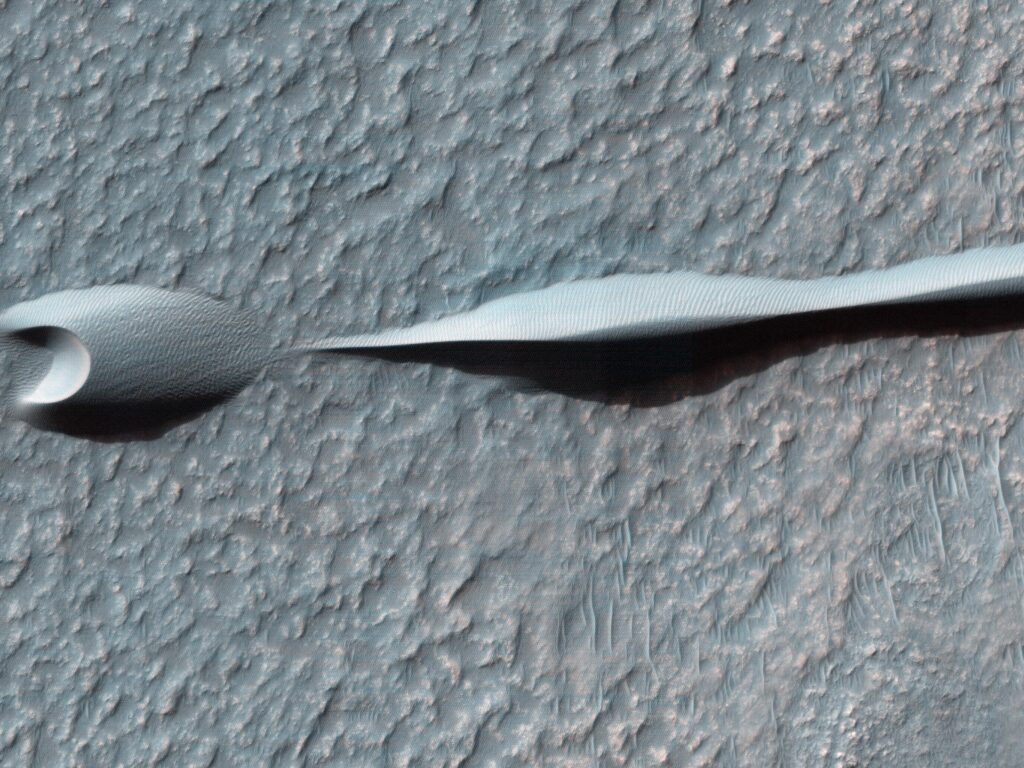
Mars is covered in dunes. Orbiters have photographed barchans, transverse ridges, linear dunes and great star-shaped piles that would look entirely at home in the Sahara, and the high-resolution cameras on NASA’s Mars Reconnaissance Orbiter have caught them moving, ripples migrating, slip faces advancing, sand visibly shifting under the planet’s thin present-day air. The dunes are made largely of dark volcanic grains rather than pale quartz, and the Martian atmosphere is less than a hundredth as dense as ours, so the physics of how a grain bounces and how sound couples into the air are both badly different from anything on Earth. Nobody has ever recorded a Martian dune singing, and whether one could is an open question rather than a finding. It is a tempting thought, and it should be labelled as exactly that: a thought.
Stranger still is Titan, Saturn’s giant moon. When the Cassini spacecraft turned its cloud-piercing radar on Titan in 2006, it found vast fields of long, parallel dunes wrapped around the moon’s equator, some of them a couple of kilometres wide and around a hundred metres tall, marching across hundreds of kilometres of terrain. They are dunes in form, but not in substance: Titan is far too cold for rock to weather into quartz sand, and its dunes appear to be built from grains of solid organic material, hydrocarbon soot and ice, the frozen fallout of an atmosphere thick with methane and complex carbon chemistry. Curiously, the dunes run in the opposite direction to Titan’s gentle prevailing surface winds, a puzzle scientists have traced to brief, stronger wind reversals around the moon’s equinoxes.
Could an alien dune sing? In principle, perhaps, a sufficiently dry, well-sorted, avalanching slope of the right grains might synchronise on any world with gravity and an atmosphere. In practice it is pure speculation, unobserved on any body but our own. What the extraterrestrial dunes really offer is a comparison. Take the same basic process, wind sorting and stacking loose grains, and run it under a tenth of Earth’s gravity, in a near-vacuum, or out of frozen hydrocarbons at 180 degrees below zero, and you learn which features of a dune are universal and which are accidents of being on Earth. The singing is, as far as we know, one of our planet’s own peculiar talents.

Standing on a singing dune
Go and hear one, if you ever get the chance, and the science makes the experience richer rather than smaller. You climb the windward side, which is the easy slope, your feet sinking and the sand sliding back beneath you. At the crest you cross over onto the steep lee face, the one held at the edge of collapse, and you sit down and start to slide. For a moment there is just the cool give of dry sand. Then the ground beneath you begins to vibrate, the note rises out of the slope, and the whole hillside hums a low chord you can feel in your sternum. You are not hearing spirits, or buried bells, or a bellowing hill. You are listening to a few hundred million grains of quartz, sorted to a single size by ten thousand years of wind, fall briefly into step and play their one rehearsed note.
Marco Polo heard it and reached for the supernatural. Darwin heard about it and, by his own admission, didn’t listen closely enough. Bagnold heard it and started doing the arithmetic. It took the better part of two centuries, two stubborn research groups, and a tray of sand sliding across a bare laboratory plate to work out that the desert’s eeriest sound is also one of its most ordinary, friction and gravity and grain size, organised for a minute into music. Herbert’s Fremen had it exactly backwards. They walked without rhythm to keep the desert silent and the monster away. Stand on the right dune on a dry afternoon, let the slope find its rhythm, and the only thing that comes up out of the sand is a single, sustained, impossibly deep note: the desert, for a minute, playing itself.
Frequently asked questions
Why do sand dunes make noise?
A large dune booms when a layer of dry, well-sorted sand avalanches down its steep lee face. As the grains shear past one another they fall into synchronised motion, colliding in phase rather than at random, and that coherent movement drives the air like a loudspeaker, producing a loud, low tone. It isn’t the wind whistling, and it isn’t the whole dune ringing like a bell; it’s the organised motion of the avalanching grains themselves.
What note do singing sand dunes sing?
Usually a single low note between about 70 and 105 hertz, roughly two octaves below the middle C of a piano, down in a cello’s lower range. The exact pitch depends mainly on the size of the sand grains: the dunes near Tarfaya in Morocco hold a tone near 105 Hz (about a low G-sharp), while Nevada’s Sand Mountain rumbles lower, around 50 to 80 Hz. Dunes with a wide spread of grain sizes, like those in Oman, can sound several notes at once.
Is singing sand dangerous?
The sound itself is harmless, though at up to about 105 decibels it’s loud enough to feel as a vibration in the chest. The real hazard is the avalanche that makes it: triggering the boom means deliberately setting a steep, unstable slip face in motion, so treat a big dune face with the caution you’d give any loose slope.
Why does the sand go quiet when it rains or in winter?
Why does the sand go quiet when it rains or in winter?
Booming needs bone-dry sand. Even a trace of moisture makes the grains stick rather than slide freely, which stops them synchronising, so a dune that booms all summer can fall silent for months after a storm until the trapped water finally dries out.
What’s the difference between singing sand and squeaking sand?
They’re related but distinct. Squeaking or whistling sand is the short, high-pitched (often above 500 Hz) sound you can scuff out of certain dry beaches by walking on them. Booming or singing sand is the rare desert-dune phenomenon: a sustained, much lower-pitched (70–105 Hz) tone triggered by a sand avalanche, loud enough to carry for kilometres. Hawaii’s Barking Sands and the Whistling Sands of Wales are squeaking beaches; Tarfaya and Sand Mountain are booming dunes.
Do other planets have singing sand?
Other worlds definitely have dunes, Mars has active sand dunes that orbiters have watched move, and Saturn’s moon Titan has vast dune fields built from frozen organic grains. But no “singing” has ever been observed beyond Earth. Whether an alien dune could boom is an open and entirely speculative question; the different gravity, atmospheres and grain materials would change both how the sand moves and how sound travels through the air.
If you found this fascinating, you might also enjoy our pieces on why cooling lava cracks into hexagonal columns, the slow chemistry of desert varnish, and the geology behind the “Eye of the Sahara,” the bull’s-eye of the Sahara. For the primary research behind this article, see the open Geophysical Research Letters paper from Caltech, the Annual Review of Earth and Planetary Sciences overview of booming dunes, and NASA’s JPL Photojournal for images of dunes on Mars and Titan. For the foundations of how windblown sand behaves, the U.S. Geological Survey’s overview of aeolian processes is a good place to start.