
A Field Tradition That Looks Weirder Than It Is
Yes, geologists really do lick rocks. If you’ve ever caught one mid-lick on an outcrop, you weren’t hallucinating, and they hadn’t lost their mind to fieldwork. Licking, or wetting, or biting, is a genuine, centuries-old field method. Done in the right circumstances, it tells you something useful in seconds. Done in the wrong ones, it can hurt you.
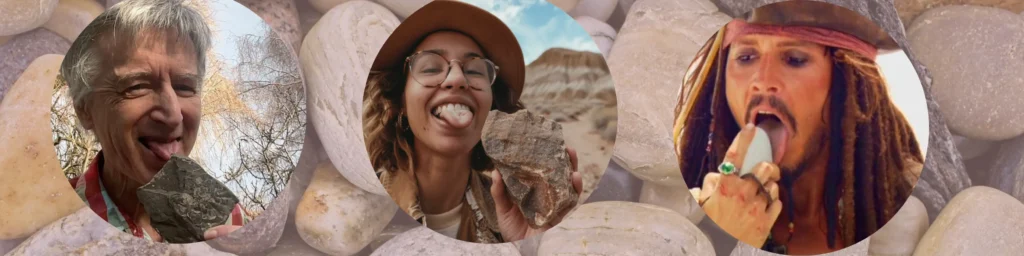
This guide covers why the practice exists, the specific rocks and minerals where a tongue gives a real answer, the ones you should never put anywhere near your mouth, and the cleaner alternatives that have largely replaced licking in modern fieldwork.
A Brief History of Rock Licking
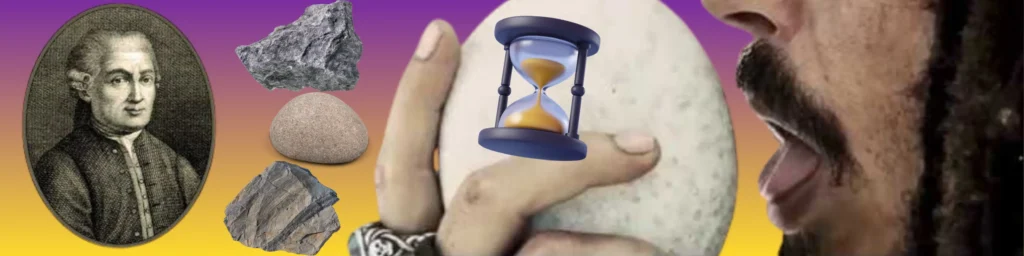
Before portable lab analysis, geologists relied heavily on direct sensory observation, and that sometimes included taste. In the 18th century, the Veronese mining expert and early geologist Giovanni Arduino, often called the father of Italian geology, used taste as one of several field observations. Jan Zalasiewicz, later awarded the 2023 Ig Nobel Prize for his essay on why scientists lick rocks, notes that Arduino described rocks and minerals as having different tastes: some sour, some acidic, some even burning the tongue. Arduino sometimes heated, burned, boiled, or dissolved specimens before tasting them. Strange as it sounds today, this was part of a much broader sensory approach to mineralogy before modern analytical tools existed. Arduino is also historically important for his fourfold division of rocks into Primary, Secondary, Tertiary, and a later “Fourth Order,” a scheme that helped shape early stratigraphy.
Arduino wasn’t an outlier. Tasting was standard practice in early stratigraphy and mineralogy, passed on through generations of field geologists. The tradition survived long enough to win an Ig Nobel Prize in 2023, when geologist Jan Zalasiewicz published an essay defending the practice and noting that many of his colleagues still recognise certain sediment layers by taste alone.
Today the practice is more selective and more cautious, but it hasn’t disappeared. It’s a small piece of methodological knowledge that still earns its place in a field geologist’s toolkit.
Why Geologists Lick Rocks: The Four Reasons That Hold Up
1. Moisture reveals what a dry surface hides
A dusty, dry rock face flattens contrast. Wetting it acts like a thin coat of varnish: mineral grains, fossil outlines, sedimentary laminations and bioturbation traces all sharpen. Spit is the most always-available water source in the field, which is the practical reason licking caught on. Most geologists today carry a water bottle and use a few drops instead: same effect, no contact with the rock.
2. Some minerals have a diagnostic taste
Halite (NaCl, rock salt) is the textbook case. Optically it can resemble quartz, calcite or gypsum. None of those taste salty; halite does, immediately and unmistakably. Its potassium-bearing cousin sylvite (KCl) often occurs alongside halite and looks nearly identical, but it tastes sharply bitter; diagnostic enough on its own to separate the two in evaporite sequences. Borax has a faint alkaline sweetness. These flavours are reliable because the dissolved ions act directly on taste receptors; chemistry, not folklore.
3. Porous materials stick to a wet tongue
A piece of fossil bone and a piece of weathered limestone can look identical in hand. Touch a fossil to a clean tongue, and it sticks: the original bone microstructure is preserved as fine porosity, which creates capillary suction. Most rocks, including petrified wood and bone-shaped limestone fragments, don’t. Paleontologists use this routinely on dig sites to triage finds in seconds.
The same principle applies to clay-rich rocks. Kaolinite and other fine-grained clays absorb moisture so quickly that a dry sample latches onto a wet tongue. Exploration geologists working hydrothermal alteration zones use the stick test to flag clay-rich zones without waiting for XRD.
4. Teeth detect grain size that eyes can’t
Telling a claystone from a siltstone visually is hard, both look fine and grey. But the threshold between silt (about 4–63 µm) and clay (under 4 µm) sits right at what your front teeth can feel. Take a small chip, grind it gently between your incisors. Smooth and clay-like means mudstone or shale. Faint grit means siltstone. Engineering geologists have used this to estimate grain-size distribution in the field for decades.
Rocks and Minerals Where the Lick Test Actually Works
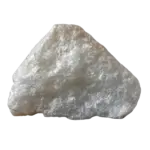
Halite (salty)
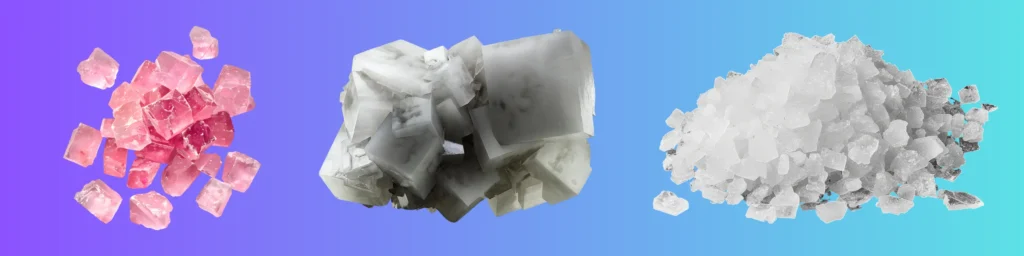
Salty taste, cubic cleavage, hardness 2.5. One touch settles it. Halite is the textbook lickable mineral: it can occur as clear or white cubic crystals that resemble quartz, calcite or gypsum, but none of those will taste of salt. Useful in the field for confirming an evaporite outcrop in seconds.
Sylvite (bitter)

Sylvite (KCl) often co-occurs with halite in potash deposits and looks nearly identical. The taste tells them apart: pungent and sharply bitter where halite is clean and salty. Standard differentiator in evaporite stratigraphy.
Kaolinite and other clays (sticky, not flavoured)

Kaolinite has no diagnostic taste, but a dry sample adheres strongly to a moist tongue. Same principle for montmorillonite and most fine-grained clays, they absorb moisture rapidly through capillary action. Useful for distinguishing kaolinite from soft white minerals like talc or gypsum, and for flagging clay-altered rock in hydrothermal zones.
Fossil bone vs. lookalike rock (porous, sticks)
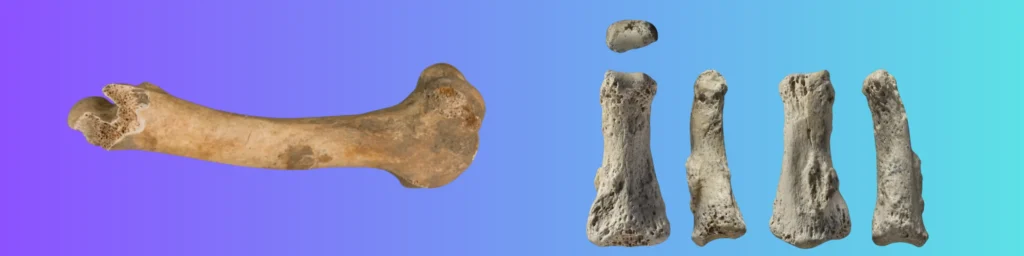
The classic paleontology field test. Fossil bone retains the original Haversian-canal porosity, which creates suction against a moist tongue. Petrified wood and bone-shaped limestone fragments don’t. If it sticks, the porosity is right for bone.
Mudstone vs. siltstone (grit between the teeth)

Grind a rice-sized chip between your incisors. Smooth means mudstone or shale (clay particles under 4 µm, below the threshold of tooth detection). Faint grit means siltstone (silt grains 4–63 µm, just large enough to feel). Spit it out afterwards.
Minerals You Should Never Put in Your Mouth
Knowing what not to lick is the more important half of this skill. Several common minerals are toxic enough that even trace ingestion is a real problem. The shortlist:
Arsenic minerals (arsenopyrite, realgar, orpiment)
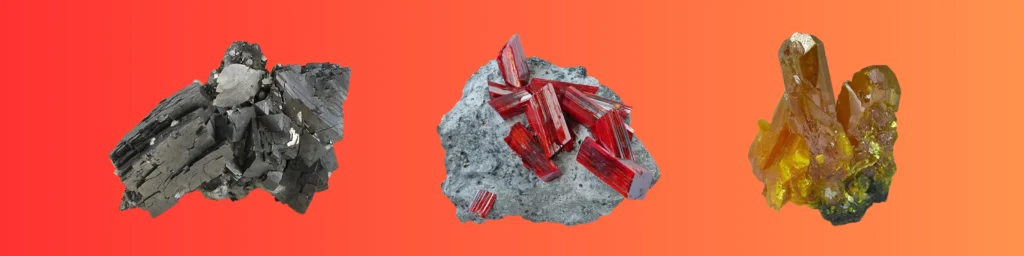
Anything with arsenic in the formula stays out of your mouth. Arsenopyrite (FeAsS) is widespread in mineralised veins; realgar and orpiment are the bright red and yellow arsenic sulphides used historically as pigments. Arsenic is colourless and nearly tasteless in trace amounts, which is precisely why it was the favoured poison of European court intrigues. Identify these by colour, association and instruments, never by taste.
Cinnabar and other mercury minerals
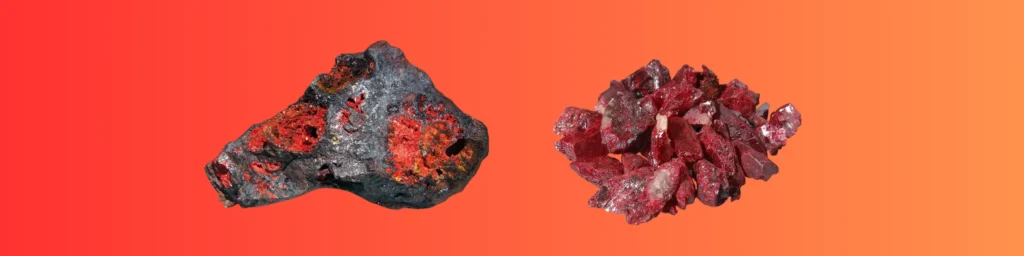
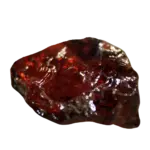
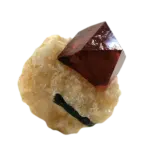
Cinnabar (HgS) is a deep red mineral that historically poisoned generations of miners. Solid cinnabar is much less volatile than liquid mercury, but it is still a mercury mineral. Dust, accidental ingestion, impurities, and heating are the real concerns, so it should never be tasted or handled casually. The classic “mad hatter” symptoms come from chronic low-dose exposure. Identify by colour, density and crystal habit, not by tasting.
Uranium minerals (autunite, torbernite, uraninite)
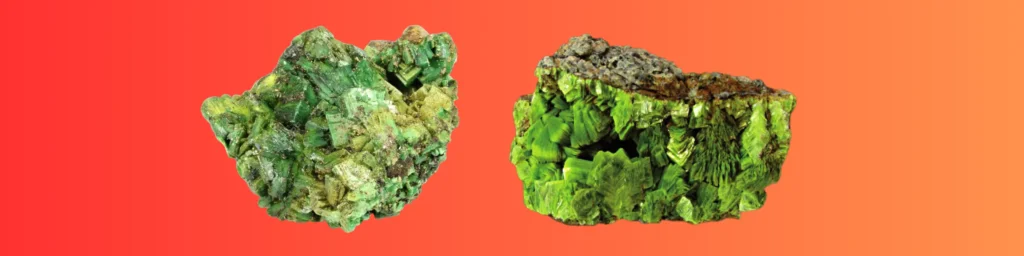
The hazard here is both radiological and chemical. Uranium minerals can contain alpha-emitting radionuclides, which are far more dangerous inside the body than outside it, and uranium itself is also a heavy metal with chemical toxicity. Do not taste, grind, or handle these casually. Alpha emitters do little damage on intact skin but cause serious internal harm if ingested. Use a Geiger counter and gloves; uranium minerals are often visually striking, which is exactly the temptation to resist.
Lead minerals (galena, cerussite)
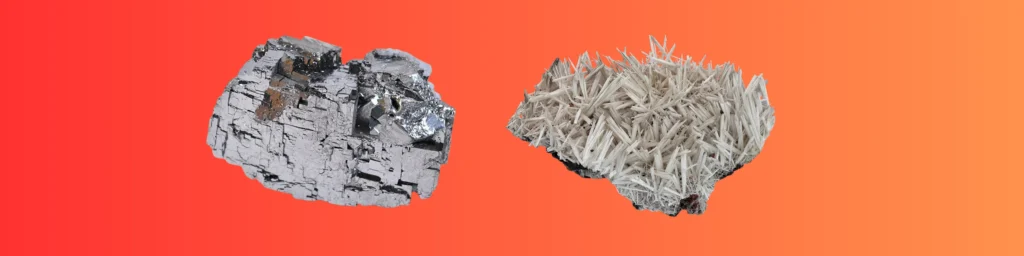
Galena (PbS) is the silvery cubic lead ore, easily identified by density and cleavage. Cerussite (PbCO₃) is more soluble than galena and dissolves into bioavailable lead readily. The closely related lead salt lead(II) acetate, historically nicknamed ‘sugar of lead’, is famously sweet — a different compound, but a useful illustration of how palatable some lead chemistry is.
Soluble copper salts (chalcanthite, antlerite)

Chalcanthite is the vivid blue copper sulphate. It dissolves in water, tastes metallic-sweet, and is used as a fungicide for a reason. As a general rule, intensely blue or green water-soluble minerals are worth treating with suspicion until you’ve identified them another way.
Anything fibrous, friable or contaminated

Asbestiform minerals (chrysotile and the amphibole asbestos varieties) shed inhalable fibres. Outcrops near former industrial sites, mine tailings or agricultural land may carry surface contaminants that have nothing to do with the rock itself. The default for unfamiliar samples is: don’t.
Field Practice vs. Lab Practice
In the field

Licking is a quick check used sparingly and only on freshly broken surfaces, never on weathered faces, which are sampling the local soil, lichen and microbial film rather than the rock. Many geologists substitute spit dropped onto the rock, or a squeeze from a water bottle, for the same effect without contact. The hand lens does most of the actual identification work; the tongue is a supplementary tool used in maybe one in fifty observations.
In the lab and the classroom
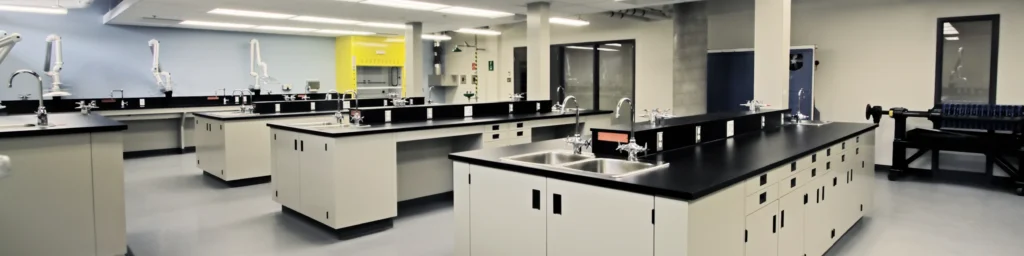
Licking is no longer accepted practice. Samples are shared, contaminants from previous handling are unknown, and modern lab equipment makes the test redundant. Many modern teaching labs discourage or prohibit tasting mineral samples, especially shared classroom specimens, for safety and hygiene reasons. The exception is controlled demonstrations, for instance, instructors passing around clean halite chips for a single supervised taste, and even those are increasingly replaced with edible analogues like rock candy in outreach settings.
Cleaner Alternatives for Mineral Identification
The lick test exists because it’s fast and free. Most of what it tells you can be gotten more safely from tools that fit in a field bag.
Hand lens (10×)
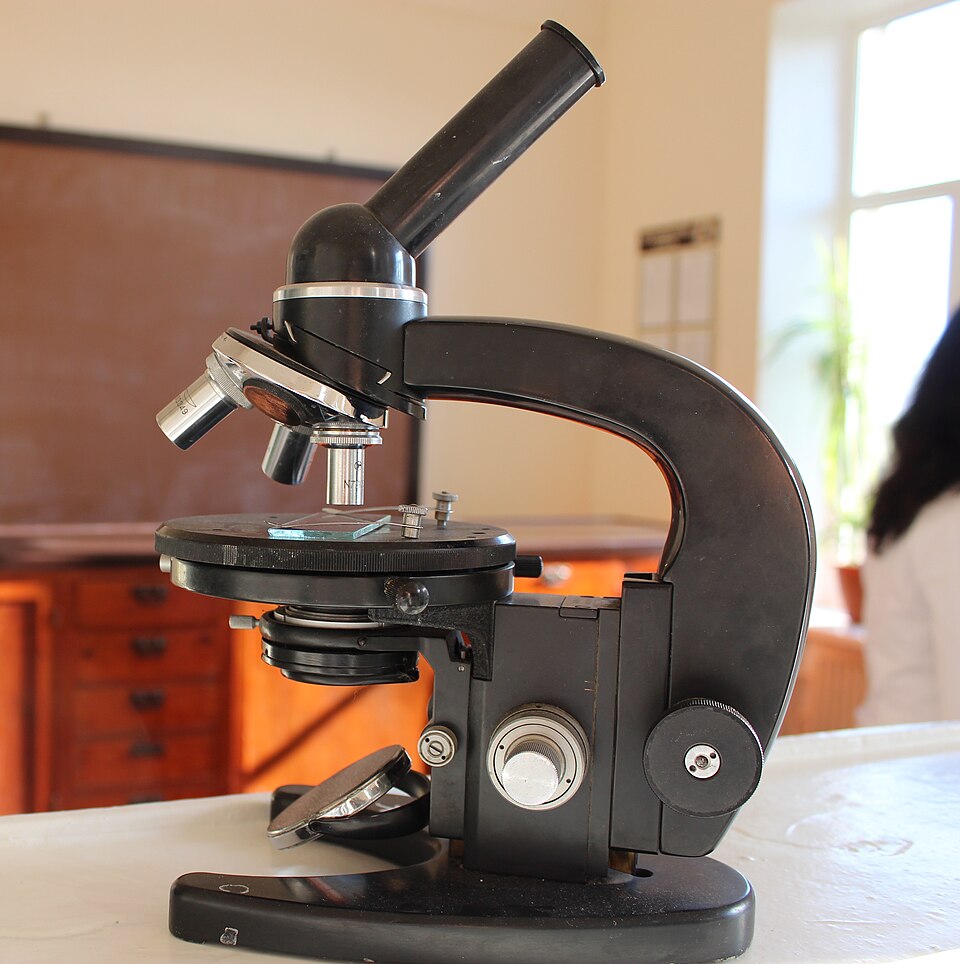
The single most valuable identification tool a field geologist owns. Crystal habit, cleavage, grain size, and inclusions are all visible at 10× magnification. Most of what wetting a rock would reveal is visible through a lens on a dry surface.
Streak plate
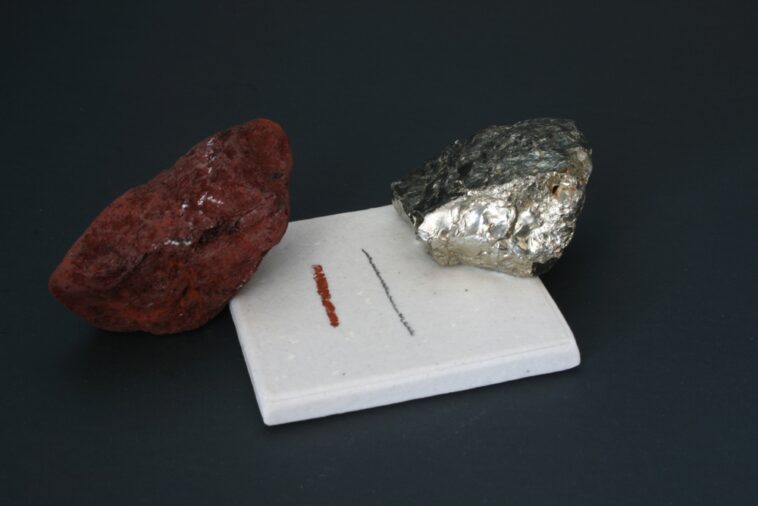
An unglazed porcelain tile. Scratch the mineral; the powder colour is often more diagnostic than the bulk colour. Hematite is the classic example, black or silvery as a crystal, blood-red as a streak. Distinguishes hematite from magnetite, chromite and other dark oxides without ambiguity.
Mohs hardness
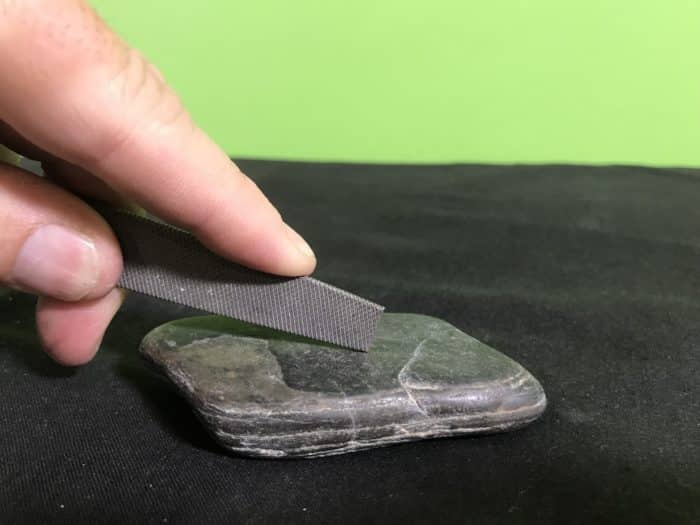
Fingernail (~2.5), copper coin (~3), steel knife (~5.5), quartz (7). Distinguishes calcite from quartz, halite from glass, gypsum from anhydrite. Field hardness picks are inexpensive and pocket-sized.
Dilute HCl
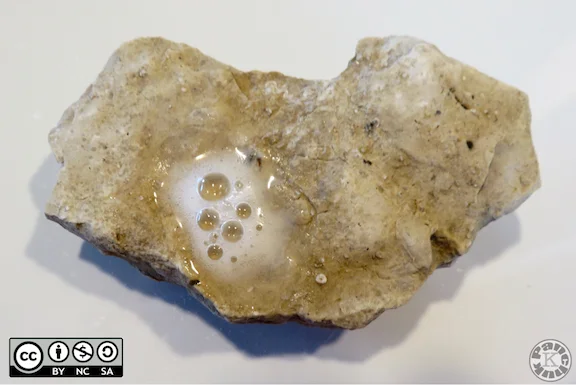
A drop on the rock fizzes if carbonate is present, the fastest way to separate limestone or marble from a lookalike sandstone or chert. Vinegar works at lower sensitivity if HCl isn’t available.
Water
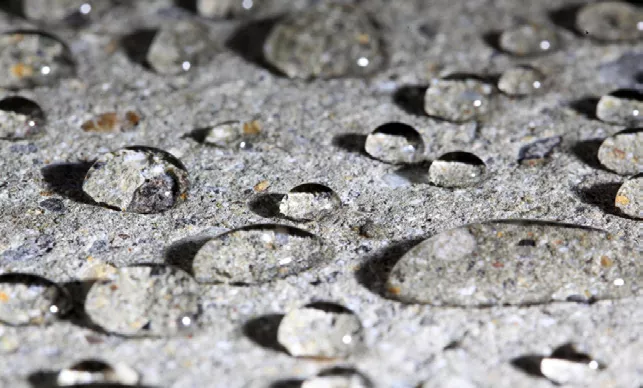
If the only reason to lick is to wet the surface, a drop from a bottle does the same thing. A small dropper is worth carrying. A water-drop absorption test on porous rocks also gives a quick read on permeability.
UV light, magnet, and instruments
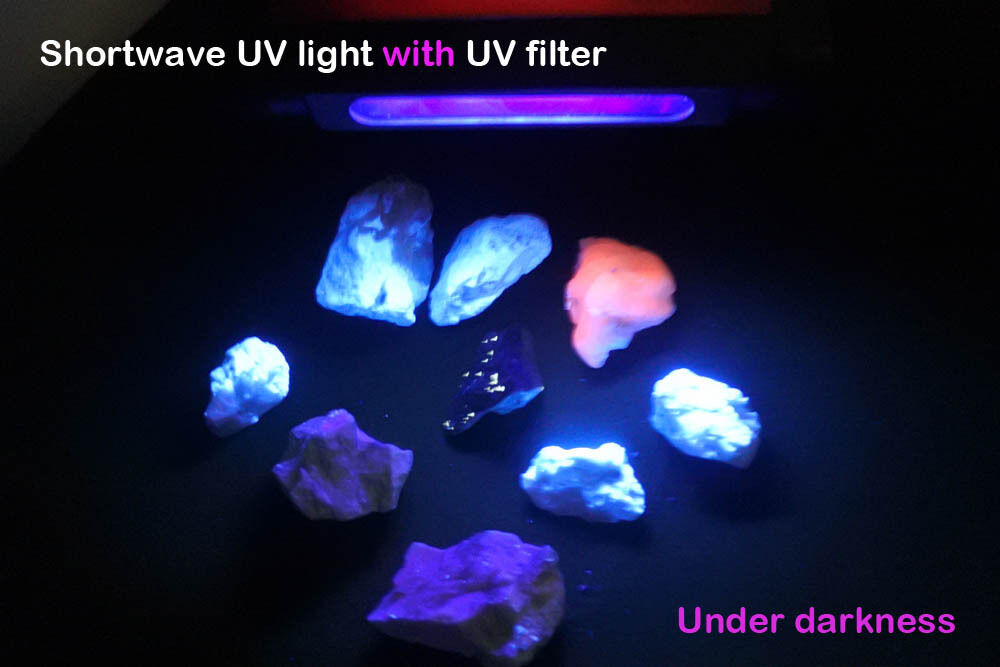
Some uranium and tungsten minerals fluoresce under UV; magnetite is strongly magnetic where hematite is not. Both tools are pocket-sized. For higher confidence, portable XRF and Raman analyzers exist for professional fieldwork.
When the Lick Test Earns Its Keep
The honest summary: licking rocks is a niche field skill, not the central one. It earns its keep in three specific situations, a suspected halite or sylvite where colour and habit are ambiguous; a possible fossil bone fragment that needs a quick triage; and a fine-grained sediment where grain size separates two interpretations. In those cases, a clean fresh surface and a quick touch will tell you something a hand lens won’t.
Outside those cases, the cost-benefit usually doesn’t favour the tongue. Modern fieldwork has better tools, and the catalogue of toxic minerals is long enough that the default for an unfamiliar sample is to identify it some other way. The geologists who lick rocks well are the ones who know exactly when not to.
For more on the field tools that have largely replaced taste tests, see Geoscopy’s guide to essential field geology tools.
Frequently Asked Questions
Why do geologists lick rocks?
To wet the surface and bring out texture, to taste-test a small group of identifiable minerals (halite, sylvite, kaolinite), to detect porosity in fossil bone via tongue suction, and occasionally to feel grain size in fine sediments using the teeth.
Is it safe to lick a rock?
Only if you know what it is and you’ve broken a fresh surface. Many common minerals, arsenic sulphides, cinnabar, lead minerals, uranium minerals, soluble copper salts, are toxic. Unfamiliar samples should be identified another way.
What rocks should you never lick?
Arsenopyrite, realgar, orpiment, cinnabar, galena, cerussite, chalcanthite, autunite, torbernite, uraninite, asbestos-bearing rocks, and anything from a contaminated site.
What does halite taste like?
Like ordinary table salt, sodium chloride. The taste is immediate and unambiguous, which is why it remains the textbook example of a lick-identifiable mineral.