
Introduction
On a June afternoon in 1890, in the wooded uplands of northern Bucks County, Pennsylvania, a country physician named John J. Ott struck a stone with a steel hammer and a clear, bell-like note rang out over a brass band. The crowd had gathered for the third annual meeting of the Buckwampum Historical and Literary Society. The suggestion to build the instrument had come from a local historian, William J. Buck, and Ott had taken him at his word, hauling boulders off the slope of the Stony Garden field and arranging them by pitch. Each stone weighed roughly 200 pounds, about 91 kilograms, and Ott found he could nudge a note sharper or flatter by chipping a sliver from the rock. Backed by the Pleasant Valley Band, he worked through a short program that included “Home Sweet Home” and a composition of his own with the unimprovable title “Sounds from the Ringing Rocks.” A witness recorded the detail that matters most: “The clear, bell-like tones of the rocks could be heard above the notes of the horns.”
Ott was playing geology. The boulders he carried down the hill belong to a class of stone that geologists call sonorous or lithophonic rock, rock that rings like struck metal rather than landing with the dull, earthy chock we expect from a hammer blow. A century and a third later, the central question about these ringing rocks, the one that hung over Ott’s concert, has not been answered. We know a great deal about what these rocks are, where they came from, and which conditions produce them. We do not, in any settled and peer-reviewed way, know the precise physical mechanism that makes one boulder sing and the boulder lying against it stay mute.
What a ringing rock actually sounds like
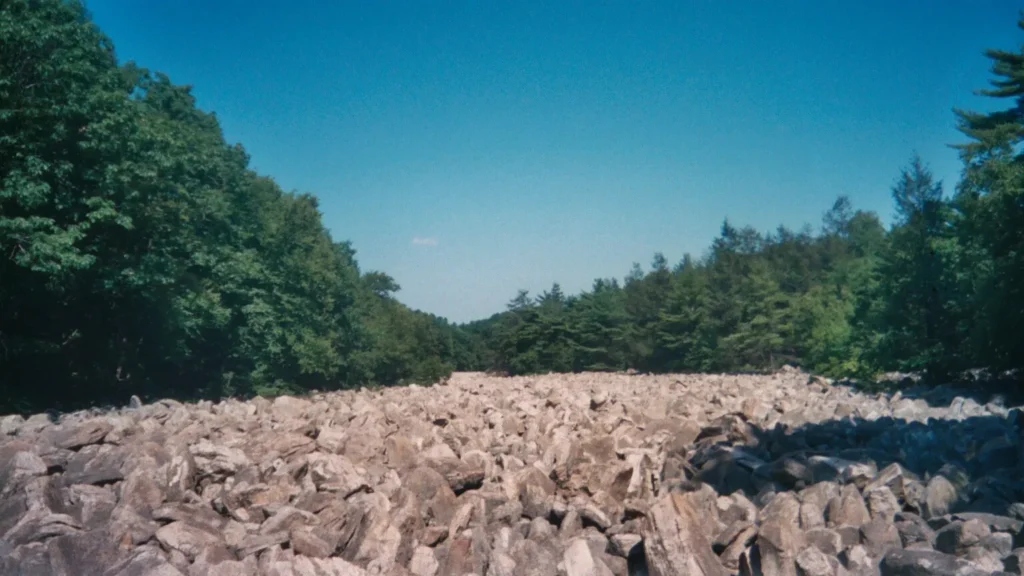
Begin with the experience, because the science only makes sense once you have heard the thing. The most visited ringing-rock site in the United States is Ringing Rocks County Park near Upper Black Eddy, in Bridgeton Township, Bucks County. A short, flat trail leads from a cramped dirt parking lot through ordinary Pennsylvania hardwood forest, and then the trees stop. In front of you is a barren field of dark, angular boulders, seven to eight acres of them, piled up to ten feet deep in places, with almost no soil, no shade, and very little growing between the stones except, by various accounts, some unusually large spiders.
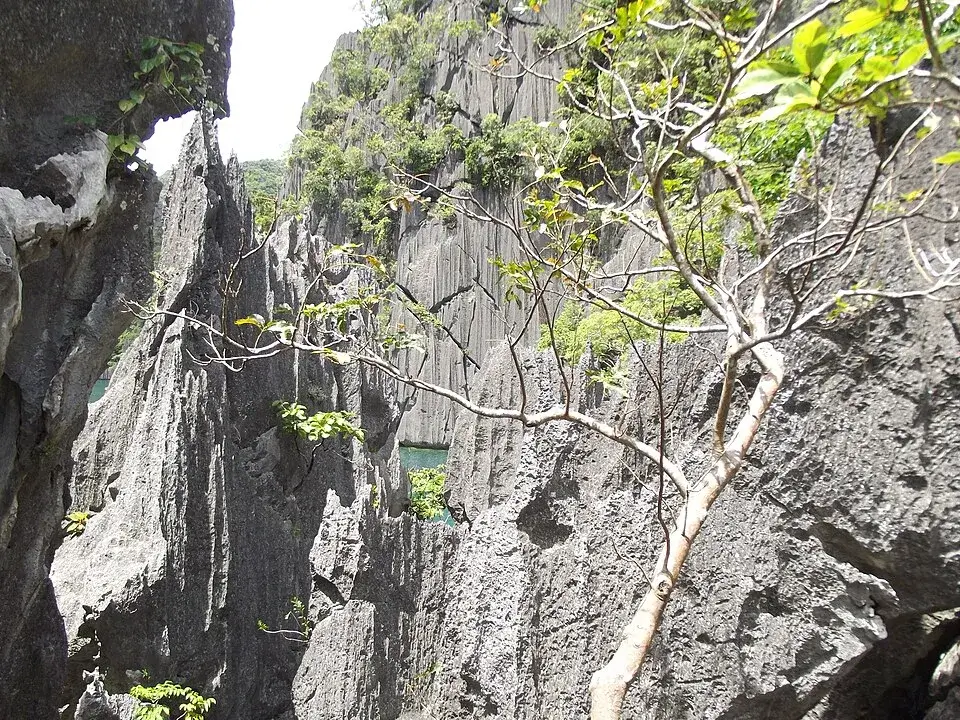
Visitors come armed with hammers, the local etiquette is bring your own, and the field fills with a percussion of taps. Most strikes produce exactly what you would predict: a flat thud, the sound of a hammer hitting a rock, the brief metallic clink of steel on stone and nothing more. Then you hit the right boulder and the note rings out, sustained for several tenths of a second, closer to an anvil or a heavy bell than to anything you associate with geology. The acoustic consulting firm Acentech, which spent a field day measuring the park’s rocks in 2020, described the good ringers as producing “a few loud, clear tones that take several tenths of a second to decay,” sometimes layered with “a wide band of complex tones that decay slightly more rapidly.” Early visitors reached for the same comparison again and again: the rocks, they wrote, ring “like that of a blacksmith’s anvil.”
Two features of that experience are central to everything that follows. First, the live and dead rocks look identical. There is no visible mark, no color, no obvious texture that separates a ringer from a thudder; you find the live ones only by hitting them, which is why the best ringers in a heavily visited field are studded with bright, chipped scars where generations of hammers have landed. Second, the proportion of ringers is surprisingly low. By most counts, only about a third of the boulders in a given field will ring, and roughly two-thirds will not.
Why do ringing rocks ring?
A rock rings for the same broad reason a bell or a wine glass rings. Strike it, and it vibrates at its natural resonant frequencies, radiating those vibrations into the air as sound. Whether the vibration sustains into an audible tone or dies instantly depends on how efficiently the material carries an elastic wave and how quickly it dissipates that energy as internal friction. A material with high stiffness and low internal damping rings; a material that bleeds vibrational energy into heat and microscopic grinding goes thud. Engineers describe this with a quantity called the quality factor, or Q: a high-Q object loses little energy per cycle and rings for a long time, a low-Q object barely rings at all.
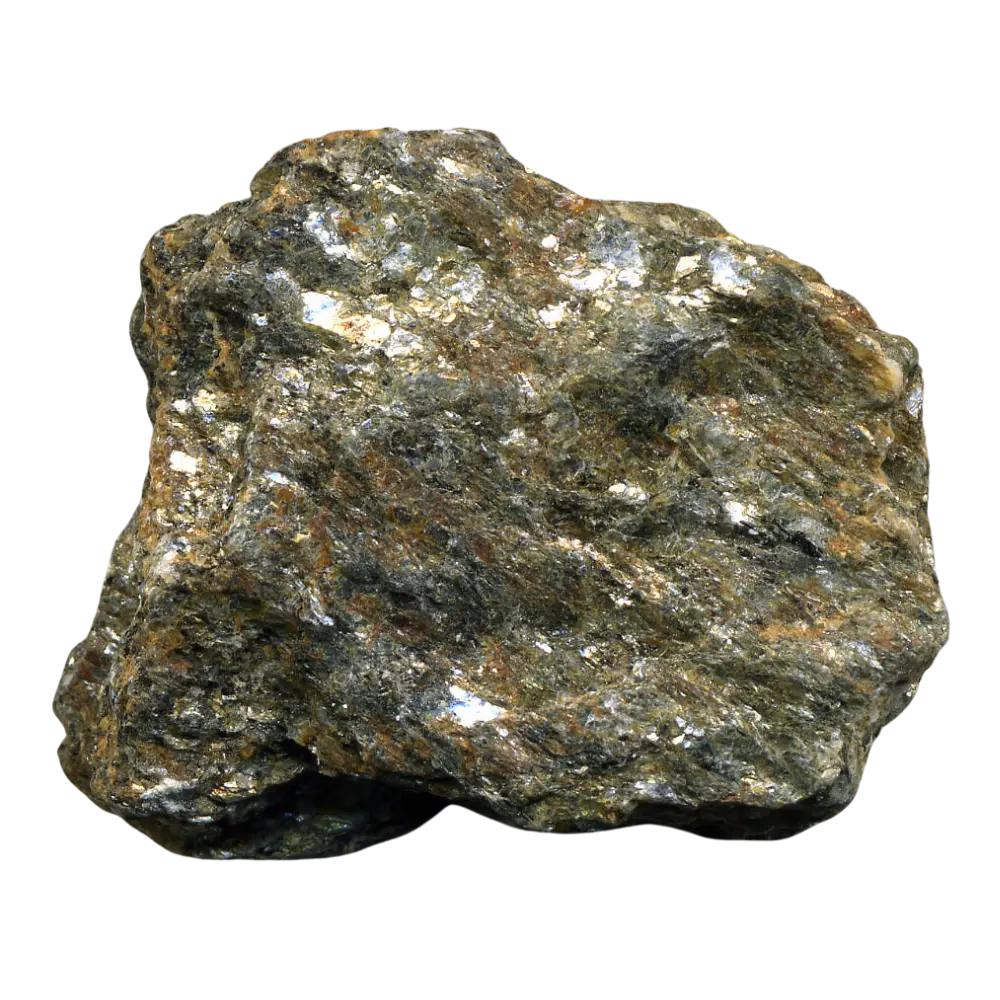
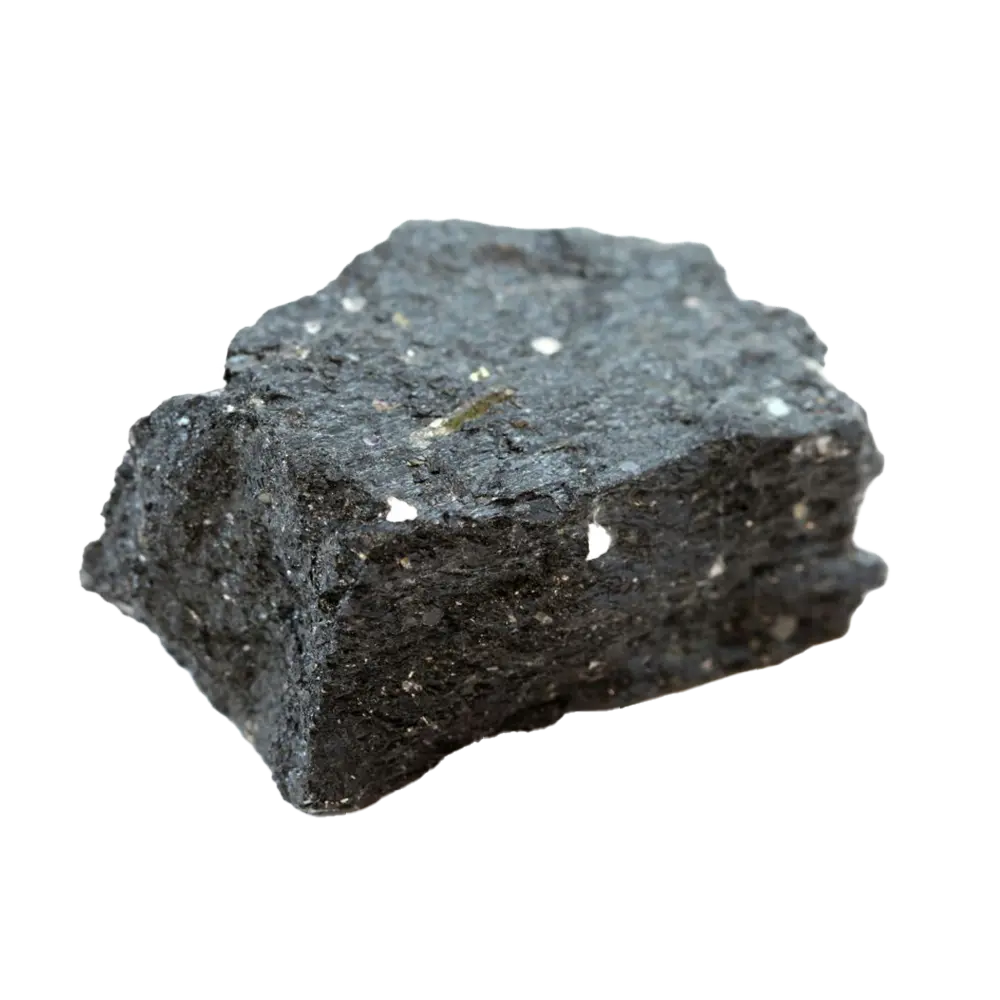
The rocks at these sites are well suited to high-Q behavior at the level of raw material. In Pennsylvania they are diabase, a dark, dense, hard intrusive igneous rock, chemically equivalent to basalt and gabbro but intermediate in grain size, made mostly of interlocking plagioclase feldspar laths and pyroxene. Diabase has a specific gravity around 2.9 to 3.3 grams per cubic centimeter and a Mohs hardness of roughly 6 to 7. It is stiff, it is dense, and its tightly interlocked crystal fabric lets an elastic wave travel through it with relatively little loss. Sound moves through such rock at something on the order of several kilometers per second. On material grounds, a clean, unfractured block of diabase is a plausible bell.
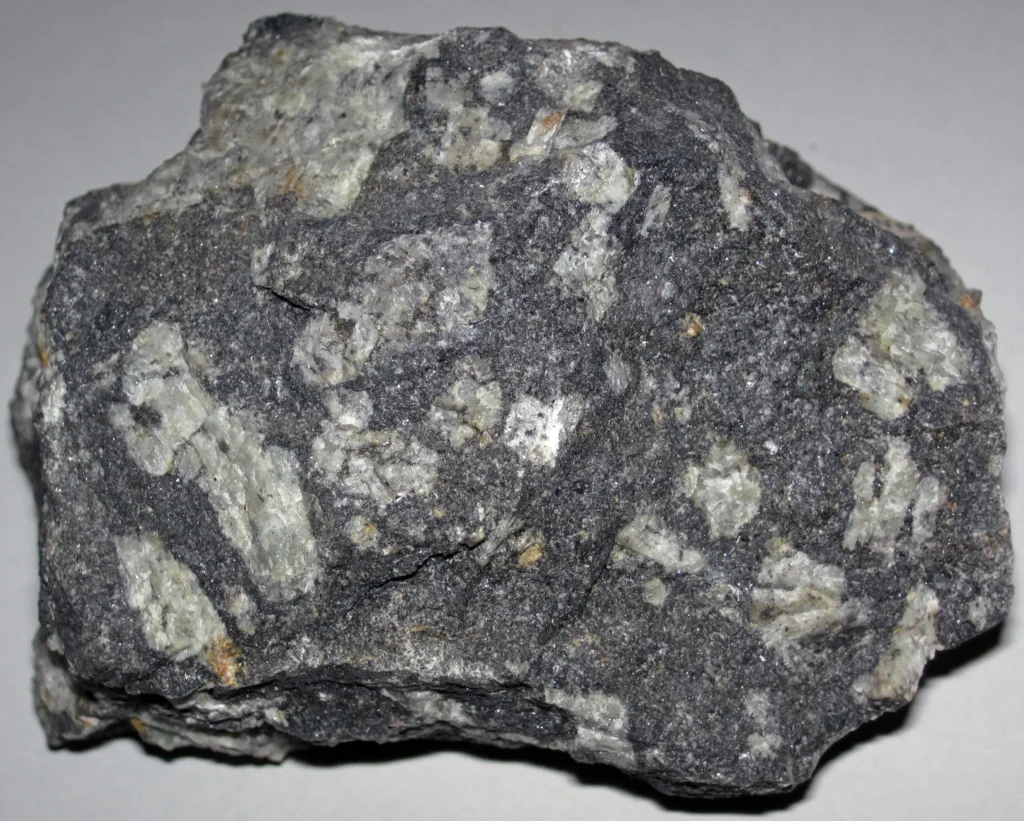
But material alone cannot be the whole answer, and the reason is sitting right there in the field. Every boulder in a Pennsylvania ringing-rock field is made of essentially the same diabase, and yet only a third of them ring. Whatever separates a live rock from a dead one is not the rock type. It is something about the individual stone, its internal condition and locked-in history, that two boulders of identical composition do not share. Resolving what that something is has occupied the handful of people who have seriously studied the problem, and it is exactly where the settled science runs out and the argument begins.
The iron myth, and why it won’t die
The most durable wrong answer is iron. It is intuitive and it is repeated everywhere, including by tourism sites and travel writers to this day: the rocks ring like metal because they are full of metal, specifically iron, and the iron gives them their bell tone. The story has the appeal of all tidy explanations and the disadvantage of being false.
Chemical analysis of the Coffman Hill diabase, the specific rock body that feeds the Upper Black Eddy field, puts its iron content, expressed as ferric oxide, at roughly 9 to 12 percent. That is high compared with an average igneous rock; granite typically runs around 3 percent. But it is squarely within the normal range for a basalt, which is what diabase essentially is. Mafic rock is iron-rich by definition; there is nothing exotic about these numbers. If 9 to 12 percent iron made a rock ring, ordinary basalt and gabbro the world over would chime, and they do not.
The Montana ringing rocks close the case from the other direction. They are not diabase at all but an olivine-pyroxene monzonite, a different rock from a different geologic setting two-thirds of a continent away, and their iron content as ferrous oxide is about 7 percent of the whole rock, lower than the Pennsylvania diabase. They ring just as well. As Rock & Gem Magazine summarized the point in 2023, “Some speculate that it’s because of iron within the makeup of the stones, but in reality, most only have roughly seven percent of this element. Plus, there are other rocks with far higher concentrations, which do not have this melodious characteristic.” Two rock types, two iron contents, the same bell tone. Iron content rides along; it does not drive. The metallic timbre that fools the ear is better attributed to a combination of the rock’s high density and its internal elastic stress, a sound you can crudely reproduce on a kitchen scale by tapping the handle of a ceramic coffee cup.
How the fields formed: a sea of rock at the edge of the ice
Before asking why individual rocks ring, it helps to understand why these strange, barren boulder fields exist at all, because the geology of their formation turns out to be tightly bound up with the acoustics. The story in Pennsylvania has three acts: an intrusion, an exhumation, and an ice age.
Act one: the diabase intrudes
About 200 million years ago, at the beginning of the Jurassic, the supercontinent Pangaea was tearing apart along what would become the Atlantic margin. As Africa pulled away from North America, the crust stretched and faulted, opening sedimentary basins such as the Newark Basin that stretches from New York to Virginia. Mafic magma rose from the upper mantle and injected itself between layers of those basin sediments, forming sheets of diabase called sills. The Pennsylvania Geological Survey dates the diabase intrusion in the Ringing Rocks area to roughly 200 million years ago, into Triassic sediments that had begun accumulating around 230 million years ago.
One detail of that cooling history matters enormously for the ringing. As the magma sat in the sill, two heavy minerals that had already crystallized in the mantle, olivine and pyroxene, settled out and collected along the base of the sheet. When the whole sill finally solidified, that crystal-rich bottom layer became a distinct rock unit, only about 10 to 15 feet thick, significantly harder, denser, and more resistant to weathering than the ordinary diabase above it. This basal olivine diabase is the rock that makes ringing fields. Most observers never notice the distinction, because the normal diabase and the olivine diabase are both dark gray to black and look the same to the eye; telling them apart often requires a microscope. The diabase sill as a whole formed at a depth of roughly 1.2 to 1.9 miles, about 2 to 3 kilometers below the surface, under the weight of everything above it, a fact that will return when we get to the question of where the rocks’ internal stress comes from.
Act two: the corestones emerge
Over the next 200 million years, normal faulting tilted the Newark Basin to the northwest, and erosion stripped away the overlying rock until the tough diabase stood out as local high ground. Long before the boulders ever reached the surface, chemical weathering worked downward along the natural joints in the buried rock, rounding off the corners of the blocks underground and leaving rounded kernels of fresh, hard rock, corestones, surrounded by softer, decomposed material called saprolite. This is the same spheroidal weathering that produces rounded boulders in granite landscapes worldwide. When the soft saprolite was later eroded away, the resistant corestones were left behind as discrete boulders.
This two-stage origin is the core finding of the one peer-reviewed geomorphology paper on the site, by A. Psilovikos of Aristotle University in Greece and the Princeton sedimentologist Franklyn B. Van Houten, published in Sedimentary Geology in 1982. They concluded that the huge residual boulders on the slopes of Coffman Hill “probably are corestones of a tor derived from the early Jurassic diabase sill,” produced first by chemical weathering along joints before regional uplift, then exhumed as the old landscape was dissected. The barren block field itself, they argued, “probably resulted from local mass transport of large boulders from a higher part of Coffman Hill by periglacial creep and solifluction during the Pleistocene epoch.”
Act three: the periglacial finish
That word, periglacial, is the key to why ringing fields exist where they do. During the last ice age, the Wisconsinan glaciation, the great Laurentide ice sheet stopped just to the north of these diabase outcrops. The rock was never buried under the ice, which would have ground it to rubble; instead it lay a few miles beyond the margin, in a frigid landscape of permafrost and brutal freeze-thaw cycles. As the acoustician Colin Worrich of Acentech put it, Bucks County “was located just a few miles south of the Wisconsinan Glacier… When the glaciers began retreating north about 12,000 years ago, warmer temperatures, forests, and soil moved in, leaving boulder fields as the last visible remains of Pennsylvania’s Ice Age past.”
Water seeped into the rock’s joints, froze, expanded, and pried the bedrock apart into blocks, frost wedging. On the gentlest slopes, the resulting boulders crept slowly downhill atop slippery thawing permafrost in a process called solifluction (gelifluction, when the ground beneath is frozen). The combination produced a felsenmeer, German for “sea of rock”: a barren block field formed essentially in place, on a slope shallow enough, generally less than 25 degrees, that the fine weathered material flushed away before soil could form, but not so flat that the boulders would simply break down where they lay. In the Pennsylvania fields the diabase unit dips about 8 to 10 degrees and the ground surface slopes less than 15 degrees in the same direction, the narrow geometric window that lets a broad expanse of the thin olivine-diabase layer be exposed at once. Edgar T. Wherry, a mineralogist and botanist who studied the fields while teaching at Lehigh University, was the first to identify them correctly as felsenmeer, in a 1912 paper in the Proceedings of the Academy of Natural Sciences of Philadelphia with the wonderful title “Apparent Sun-Crack Structures and Ringing-Rock Phenomena in the Triassic Diabase of Eastern Pennsylvania.”
Why, then, are ringing fields so rare, when periglacial boulder fields are common across Pennsylvania and New Jersey? Because almost everything has to line up. You need the basal olivine-diabase unit specifically, not the ordinary diabase. You need that thin unit to dip in the same direction as the ground surface so a wide sheet can be exposed. You need a slope in the narrow tolerable range. And you need the rock to have sat at the southern edge of the Pleistocene ice rather than under it. The Newark-series diabase sills crop out in a belt running the length of the Appalachians, yet only a narrow band in southeastern Pennsylvania and adjacent New Jersey produces ringing fields. The geologists John and Joseph Pontolillo catalogued at least sixteen ringing-rock sites in Pennsylvania and New Jersey in a 1993 inventory; most that have not been destroyed by quarrying or development are on private land. Three are readily accessible to the public: Ringing Rocks County Park and Stony Garden in Bucks County, and Ringing Hill Park near Pottstown in Montgomery County.
Why don’t all the rocks ring?
This is the question visitors actually ask, and it is the heart of the unsolved problem. The boulders are the same rock, formed by the same processes, lying in the same field. Yet roughly two-thirds of them thud and roughly one-third ring, with no outward sign of which is which.
That one-third figure has actually been tested. In November 2020 the acousticians Colin Worrich and Anthony DeMarte of Acentech spent an afternoon at Ringing Rocks County Park with professional sound equipment, taking a hammer to what they describe as “a random, evenly-distributed sample of 534 rocks.” Of those, 167 met their criteria for ringing. From that sample they concluded, with 95 percent confidence, that the true proportion of ringers in the field is 31 percent, give or take 4 percent. The Pennsylvania Geological Survey’s own field guide notes the folk estimates run from one in six to one in three; the Acentech measurement lands at the upper end and puts a real confidence interval on the long-repeated “about a third.”
The leading explanation for the difference is internal elastic stress. The idea is that a live rock is a rock under a high state of locked-in internal stress, and that this stress is what allows it to ring, much as a guitar string under tension sings while a slack string only flops. A dead rock, in this view, is one whose internal stress has been relieved, either by mechanical breakage or by slow weathering, leaving it unable to sustain a clear vibration. The analogy explains several observations at once. It explains why breaking a ringer kills the ring: snapping a boulder in two releases the locked stress, and what is left is a “dead chunk of rock.” It explains why less than a third of the field rings, if stress is relieved more readily in some boulders than others. And it gives the field a kind of life cycle, in which a rock can ring for a span of its existence and then fall silent as its stress dissipates.
What this internal-stress picture does not yet do is fully specify the underlying physics, and that is where reasonable, well-informed sources begin to contradict one another. There are really two open questions nested inside the stress hypothesis. Where does the stress come from? And is it a stress of tension or of compression? Neither has a settled, peer-reviewed answer, and the secondary literature splits on both.
The experiments: three attempts in sixty years
Remarkably little hands-on experimental work has ever been done on the ringing. The phenomenon is famous, freely accessible, and scientifically odd, and yet the entire experimental record amounts to three efforts spread across more than half a century, none of them a comprehensive modern study.
Faas and Flocks, 1966: the tones beneath hearing
The first serious acoustic investigation came from Richard W. Faas, a geologist at Lafayette College in Easton, Pennsylvania, who took rocks from the Bucks County field back to his laboratory in 1965 and reported results with J. Flocks in the Proceedings of the Pennsylvania Academy of Science in 1966, under the title “Some acoustic properties of the ringing rocks diabase, Kintersville, Pennsylvania.” Faas found that when a rock was struck it produced not a single clean note but a series of tones, most of them at frequencies below the range of human hearing. The sound a person actually hears, he concluded, is produced because these constituent tones interact with one another; the audible ring is an emergent product of inaudible components. Faas had characterized the nature of the sound. What he could not do was identify the specific physical feature of the rock that generated it. That part of the mystery survived his work intact.
The Acentech measurements decades later were consistent with Faas’s basic picture and added a wrinkle. The acousticians found that no rock, not even the most bell-like, produces a single pure pitch. Each strike generates many frequencies of varying prominence, “with little to no relation among them”, they are not the neat integer harmonics of a tuned musical instrument. A ringing rock is acoustically messy; what makes it sound like a bell is the persistence of a few prominent tones, not the purity of a fundamental.
Gibbons and Schlossman, 1970: the sawn cores
The single most influential experiment, and the one every subsequent account leans on, was performed around 1970 by two Rutgers University geologists, John F. Gibbons II and Steven Schlossman, and published in December 1970 in the American Museum of Natural History’s magazine Natural History, in an article titled, inevitably, “Rock Music” (volume 79, number 10, pages 36 to 41). It is worth being precise about what they actually did, because it is so often summarized loosely.
Gibbons and Schlossman took live (ringing) and dead (non-ringing) boulders from the Bucks County park back to the lab. They sawed the ends and sides off the boulders, leaving only central cores, and they attached delicate foil strain gauges, instruments capable of measuring minute changes in dimension, to track whether the cores changed size once the surrounding rock was cut away. The dead rocks did nothing; their cores showed no measurable change after sawing. The live rocks did something striking: within a few days of being cut, their cores changed dimension on the order of one ten-thousandth of an inch per inch of sample length. According to the Acentech account, the live cores “shrunk,” which Acentech read as evidence that the rock had been held in tension, stretched, so that cutting it free let it contract. Other accounts of the same experiment say the opposite, that the cores expanded once the surrounding rock was removed. That flat contradiction, whether a freed core shrinks or swells, turns out to be the entire physical argument, as we will see. And in the experiment’s most suggestive step, the researchers used laboratory equipment to apply stress to a previously dead, non-ringing core, and it “rang clearly.” West Chester University geologist Ron Sloto, who has studied the regional rocks for decades, corroborates the timescale, telling Rock & Gem that live ringing rocks “measurably expanded, or relaxed, within 24 hours of being cut into slices.” Sloto adds a vivid field observation: he lives near a quarry where, occasionally, one of these rocks will explode when it is cut, as the internal pressure is suddenly released.
The experiment established two things that are now treated as settled. Live rocks are under significant internal elastic stress; dead rocks are not. And that stress is causally tied to the ringing, because relieving it (by sawing) silences a live rock and imposing it (in the lab) can make a dead rock sing. What the experiment did not settle, and what its interpreters have fought over ever since, is the direction of that stress and its ultimate origin.
Acentech, 2020: myth-busting with a sound meter
The most recent fieldwork, the Acentech afternoon of 2020, was explicitly informal, the authors called it spending “a good use of our time and expensive company equipment” rather than a rigorous study, but it tested three popular claims with real instruments and produced clean results. They confirmed the one-third figure (31 percent, plus or minus 4). They found that boulder size correlates only loosely with pitch: their smallest rock was indeed the highest-pitched, but their largest produced a prominent pitch about twice as high as a rock 2.5 times smaller, and two rocks of nearly identical volume rang at wildly different pitches. Size matters, they concluded, but shape, position, and internal stress matter at least as much.
Their third test punctured one of the most cherished local legends: that a ringing rock goes silent once you carry it out of the field. The Acentech team hauled a ringer off the boulder field and onto a bed of ordinary soil and struck it again. It still rang. What changed was timbre, not the ability to ring: the rock’s most prominent pitch in the field had been a clear 4,253 hertz, and on the soil that prominent pitch shifted up to 5,660 hertz, with some component tones amplified and others reduced. The lesson is precise and important. The arrangement and support of a boulder in the field, how it rests, what it touches, how freely it can vibrate, shapes the exact timbre you hear, but it does not confer or remove the ability to ring. That ability lives inside the rock. A rock that rings in the field rings off it; only breaking it or weathering it away kills the ring.
This is also where the romantic legend about removal gets its kernel of truth. People who carted home small “ringers” sometimes reported that the rocks fell silent, and skeptics like the Fortean writer Ivan T. Sanderson insisted the opposite, that his trophies kept singing. Both can be right. A whole rock removed intact keeps ringing; a rock broken to a portable size, or one whose stress slowly relaxes over the years, does not. And the practical reason most “stolen” rocks today are large and intact is grimly simple: the fields have been picked clean of small portable ringers, and the remaining ones weigh over a ton.
The live debate: tension or compression, weathering or burial
The Gibbons–Schlossman data are read in two contradictory ways by serious secondary sources, and the contradiction has never been settled by new experiment.
Reading one: weathering creates tension
The first reading, which traces back to Gibbons and Schlossman themselves, holds that the stress is tensile and that it is created at the surface by chemical weathering. As the outer rind of a boulder weathers, the pyroxene in the rock converts to montmorillonite, an expansive clay mineral. That swelling skin stretches the boulder’s surface and puts the dense, unweathered core into tension. The Acentech write-up frames it exactly this way: internal forces “pulling the constituent molecules away from each other,” so that the stretched-out rock carries higher-pitched sound the way a tensioned guitar string does. The Pennsylvania Geological Survey’s field guide endorses the same mechanism in plain language: “As the outer rim of a boulder weathers, pyroxene minerals expand into clays, creating tension in the rock.”
This reading has a strong piece of field evidence behind it: microclimate. Gibbons and Schlossman noticed that live rocks cluster toward the open, sunlit middle of a field, away from soil and shade, while the boulders along the shaded, tree-covered margins tend to be dead. Their explanation was that the dry, sunbaked microclimate of the open field slows weathering to a crawl, letting the surface clay expand gradually and the internal tension build and persist, whereas at the shaded edges the surface stays damp, weathering races ahead, the rock simply exfoliates and breaks down, and the necessary stress never accumulates. The Acentech team confirmed the geographic pattern in 2020, edge rocks under tree cover tended to be non-ringers, and read it as support for the weathering-tension theory. The geomorphologists Pontolillo and Pontolillo likewise concluded that this microclimate scenario explains why some open-field boulders ring while none of the shaded ones do.
Reading two: burial created compression
The second reading rests on the opposite field observation and draws the opposite physical conclusion. Here the relevant accounts, including Sloto’s, report that a live core expands when it is sawed free, that it “expanded, or relaxed, within 24 hours of being cut.” A core that swells once its neighbors are cut away was being squeezed, held in compression, and releasing the confinement let it spring outward. (The shorthand “relaxation” some accounts use blurs the sign, but whether the freed core shrinks or swells is the crux.) On this reading, surface weathering of a thin skin could not possibly generate the severe, evenly distributed internal stresses the rocks display; a thin expanding rind would just make the surface peel and exfoliate, which is precisely what the ringing rocks do not do.
The alternative, often called the relict stress theory, locates the stress not at the surface today but deep in the rock’s past. The diabase sill crystallized roughly 2 to 3 kilometers below the surface, under the immense load of the overlying rock column. That burial imposed severe loading stresses on the rock, the same kind of stress that, in deep mines more than a mile down, causes sudden decompression “rock bursts” when the confining rock is removed. The theory holds that these ancient loading stresses became locked into the boulders and that the slow weathering rate of the dry felsenmeer simply keeps them from dissipating. Residual loading stress would be distributed evenly through a boulder, which fits the observation, and it predicts that the stress is relieved, and the ring lost, only when a boulder is mechanically broken or weathers severely. Under this view the rock is, again, like a tensioned string, but the tension is a fossil of the rock’s deep-crustal origin. It is worth being candid that the two readings are not equally tidy as physics: a thin surface rind that swells outward would tend to compress the core rather than stretch it, which is the objection the compression camp presses hardest, and which the tension reading has never fully answered.
These two stories cannot both be the whole truth, and they do not even agree on what the 1970 experiment showed. One says the cores shrank, the stress is tensile, and it was made recently at the surface by clay-forming weathering; the other says the cores expanded, the stress is compressive, and it was inherited from deep burial hundreds of millions of years ago. They make different predictions, if slow weathering alone created the stress, the critics of reading one point out, then deserts the world over should be full of ringing-rock fields, and they are not. Yet the microclimate evidence linking ringers to the sunny, slowly weathering center of the field is real and hard to wave away. The direction and origin of the locked-in stress remain genuinely unresolved, and the field needs the modern study no one has done: high-resolution measurement of the stress field inside live and dead boulders, with current instruments, by researchers who can settle the sign of the stress rather than infer it from a single 1970 experiment described secondhand.
The honest summary from the people who study them
Working geologists who deal with these rocks tend to land on a deliberately untidy answer. Stuart Parker, a geologist with the Montana Bureau of Mines and Geology, told Rock & Gem in 2023: “It’s not so simple that there is one specific thing that makes them ring. There are several different factors. There’s still a lot to be figured out… It’s still pretty much an open question.” Joan Gabelman, a geologist and certified mineral examiner for the Bureau of Land Management’s Butte Field Office, was blunter still in correspondence with the Daily Montanan: “No one REALLY KNOWS why the rocks ring.” The most defensible synthesis is that high material density and stiffness set the stage, locked-in internal elastic stress is necessary for a sustained ring, the particular microclimate of an open felsenmeer is what lets that stress persist in a given boulder, and the boulder’s size, shape, and support in the field tune the exact timbre. The piece still missing is a rigorous account of where the stress originates and which way it points.
Ringing Rocks Park, Pennsylvania
The most famous of the eastern sites, Ringing Rocks County Park, sits on a bluff above the Delaware River near Upper Black Eddy, in Bridgeton Township, Bucks County, not far downriver from where Washington made his Christmas crossing. The seven-to-eight-acre boulder field, officially the Bridgeton Boulder Field, is one of the largest diabase boulder fields in the eastern United States. The land was acquired by the Penn family from the Lenape through the 1737 Walking Purchase, and the earliest published description of the field appears in William Watts Hart Davis’s 1876 history of Bucks County. In 1895 the field was bought by Abel B. Haring, president of a bank in Frenchtown, New Jersey, who wanted to protect it from development and reportedly refused an offer from a manufacturer of Belgian paving blocks who wanted to quarry the stones. Haring donated the roughly seven-acre field to the Bucks County Historical Society in 1918; it later passed to the county, and additional purchases have grown the park to about 129 acres. The park also holds High Falls, the largest waterfall in Bucks County, a seasonal cascade over a flat ledge of hornfels, the sedimentary rock that the original diabase intrusion baked and hardened, and which now forms the resistant floor beneath the diabase boulders.
Stony Garden, on the northwest slope of Haycock Mountain near Bucksville, is the largest of the public fields, a series of disconnected boulder accumulations strung out over nearly half a mile where the olivine-diabase unit crops out along the mountain’s base. It is undeveloped, reached by a hiking trail from a State Game Lands parking area, and was bought by the Commonwealth around 1920 as part of Game Lands Tract 157. This is the field from which Dr. Ott carried his 200-pound instruments in 1890. Ringing Hill Park, three miles northeast of Pottstown in Montgomery County, has the longest documented history of the three: its boulder field was noticed in 1742 when a road was cut between Pottstown and Pennsburg, and in 1894 the Ringing Rocks Electric Railway Company bought the hill, ran a trolley line to it, and operated an amusement park there until 1932. The site is now owned by the Ringing Hill Fire Company.
The barren, lifeless quality of these fields fed a long tradition of folklore. Native stories marked the places as spiritually charged; white settlers translated that as “cursed.” Legends grew that no animal would cross the rocks and no plant would grow among them, and that the devil himself had blighted the ground. The Fortean writer Ivan T. Sanderson, in his 1967 book Things, declared that “something was frightfully wrong here,” rejected the well-understood geology of igneous intrusion, and floated the idea that the field had been formed by a cosmic impact, claiming falsely that compasses went haywire and that no life existed on the boulders. His speculation was popular and was repeated for decades in paranormal books and websites, which is a large part of why the phrase “scientists are baffled” still clings to a phenomenon whose formation, at least, is well understood. The barrenness is not supernatural; it is what a felsenmeer looks like, a surface too well-drained and soil-poor for much to take root, slowly being reclaimed at its shaded edges by the encroaching forest.
The Montana ringing rocks
The other great North American ringing-rock locality lies about as far from Bucks County in geology as in distance. The Ringing Rocks pluton sits on the southwestern flank of Dry Mountain in Jefferson County, Montana, roughly 15 miles southeast of Butte, reached by a rough gravel road about three miles north of the Pipestone exit off Interstate 90. The Bureau of Land Management established the Ringing Rocks Recreation Area there in 1964; today it is one of the few places where the public is openly encouraged to go at federal land with a hammer. Local lore credits a Butte man named R. T. “Kid” Ogle with the modern discovery, around the early twentieth century, after his boot struck a rock that rang; he led tours to what he called “Ogle’s Volcano.” A grimmer chapter came in the 1960s, when a contractor named Norman Rogers held a mining claim and was quarrying the dark rock to sell as an industrial abrasive until the BLM invalidated the claim by classifying the stone as common rock and set the area aside.
The Montana rock is not diabase. It is an olivine-pyroxene monzonite, and the geologic setting is a volcanic vent rather than a sedimentary basin. The pluton is a small, almost perfectly cylindrical intrusive ring complex about a kilometer across, the deep-seated vent of a volcano that erupted in the Late Cretaceous, around 76 million years ago, on the southeastern periphery of the Boulder Batholith. The batholith itself, the great mass of granite that hosts Butte’s famous copper deposits, formed during a pulse of magma intrusion roughly 73 to 78 million years ago; modern USGS SHRIMP uranium-lead zircon geochronology dates the dominant Butte Granite to about 76.7 ± 0.5 million years. The Ringing Rocks pluton is a textbook example of magma mixing in a conduit, between an olivine basalt and a granitic magma, which produced a hybrid rock that crystallized against the conduit walls.
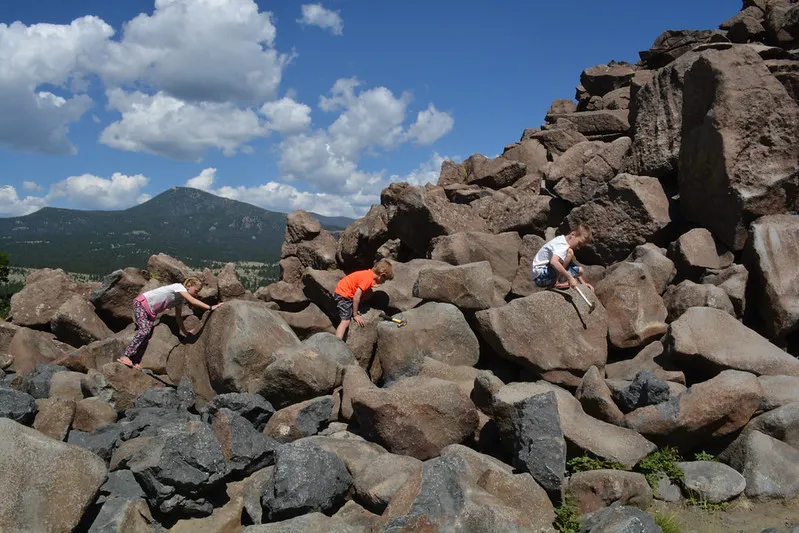
The petrology was worked out in two University of Montana theses that are the closest thing to primary scientific literature on the Montana site: Barbara A. Butler’s 1983 study, “Petrology and geochemistry of the Ringing Rocks pluton, Jefferson County, Montana,” and Thomas Charles Johannesmeyer’s 1999 master’s thesis, “Magma mixing and mingling in the Late Cretaceous Ringing Rocks pluton Jefferson County Montana and implications for the generation of the Boulder batholith.” They found that the pluton’s outer mafic zone contains two nearly chemically identical hybrid rocks distinguished only by whether the early olivine and pyroxene crystals survived. The rock that kept those crystals, the olivine-pyroxene monzonite, or OPM, is extremely resistant to weathering; its altered twin breaks down readily into soil. Where the resistant OPM stood as thin vertical walls, intense Pleistocene freeze-and-thaw shattered them “much like breaking tempered glass,” and the debris collected into a tor, a pile of loose boulders, at the south end of the pluton. From Butler and Johannesmeyer comes the figure that demolishes the iron myth from the western side: the iron content of the OPM as ferrous oxide is about 7 percent of the whole rock.
What is striking is how much the two sites share despite their unrelated origins. Both are made of dense, hard mafic igneous rock rich in olivine and pyroxene phenocrysts. Both produce boulders isolated from severe weathering inside well-drained, periglacially shattered fields. Both display the same odd surface weathering, channels, grooves, and “potholes” cut into the rock. Both ring, both go silent when removed or broken (the Montana rocks reportedly stop ringing when taken from the pile, though this may reflect the same support-and-timbre effect Acentech measured in Pennsylvania), and both have an iron content that proves iron is beside the point. The convergence is itself a clue: whatever makes a rock ring is something two very different dense mafic rocks can both achieve when periglacial processes shatter them into well-drained, slowly weathering boulder fields.
Ringing rocks around the world
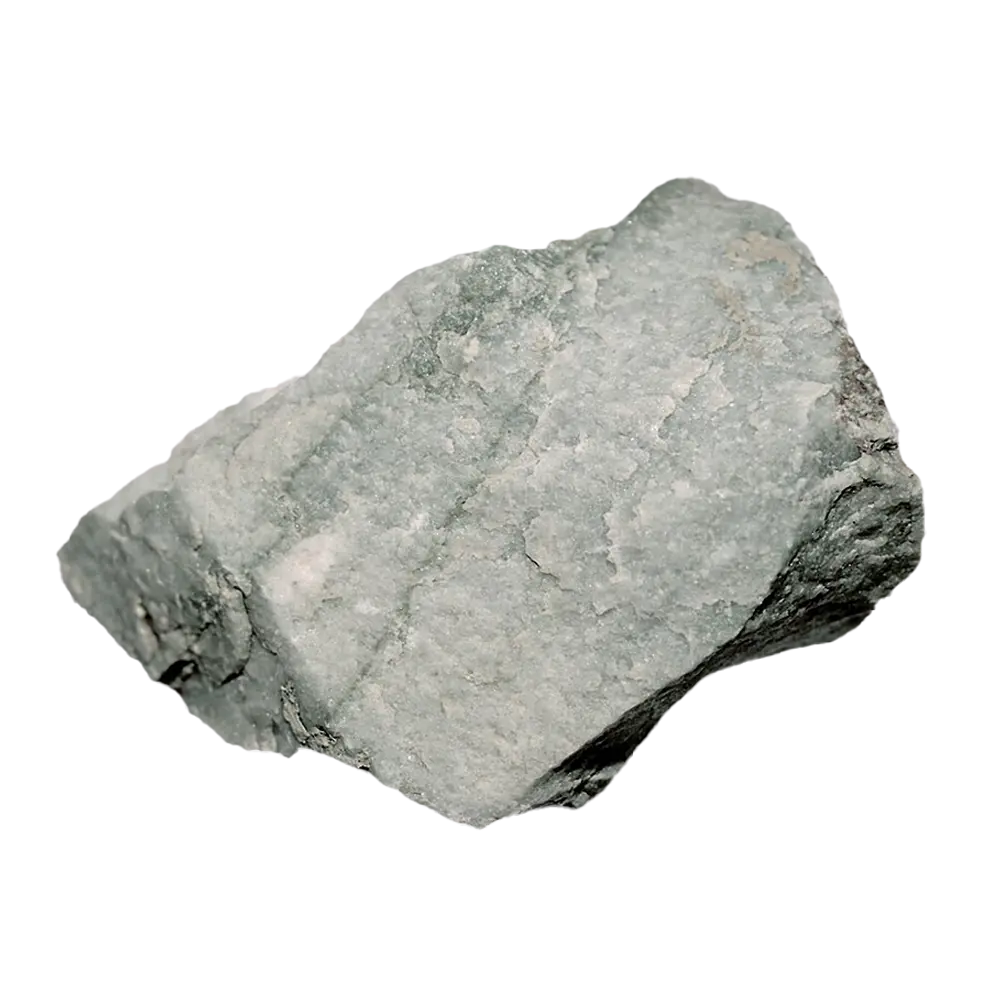
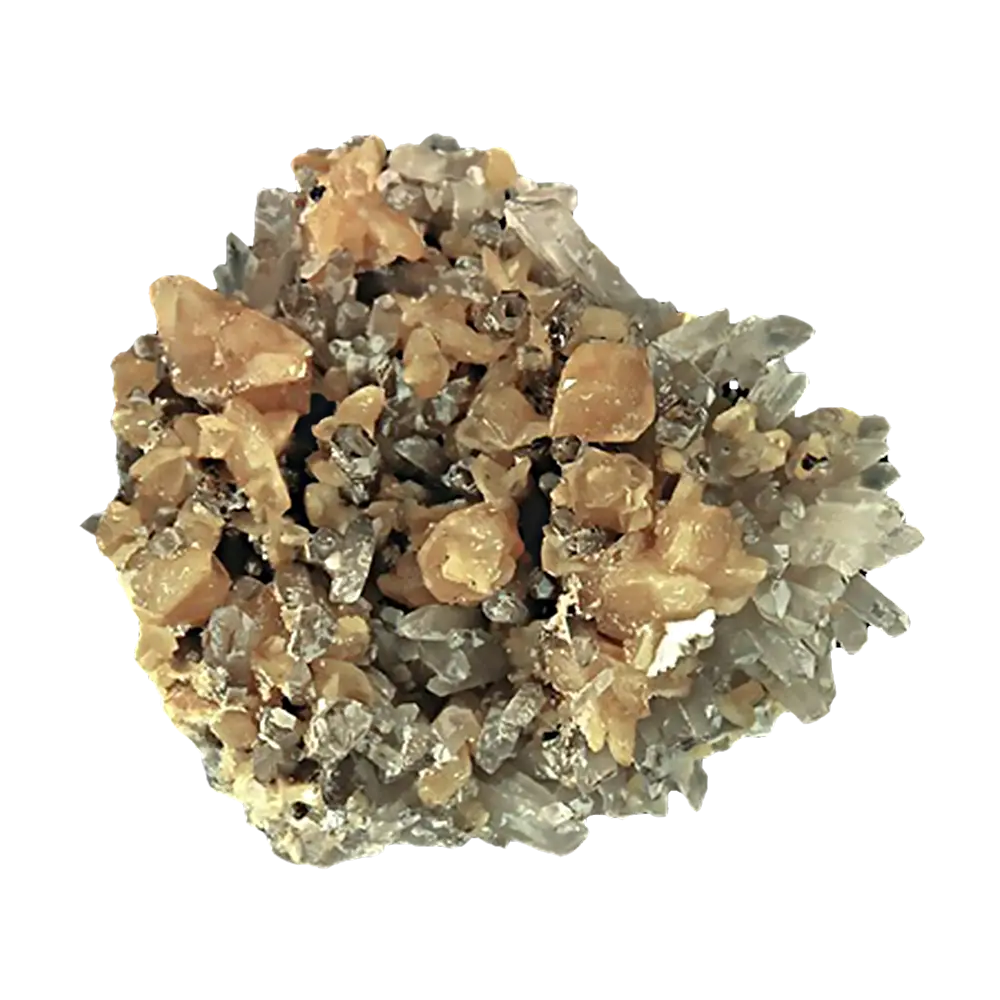
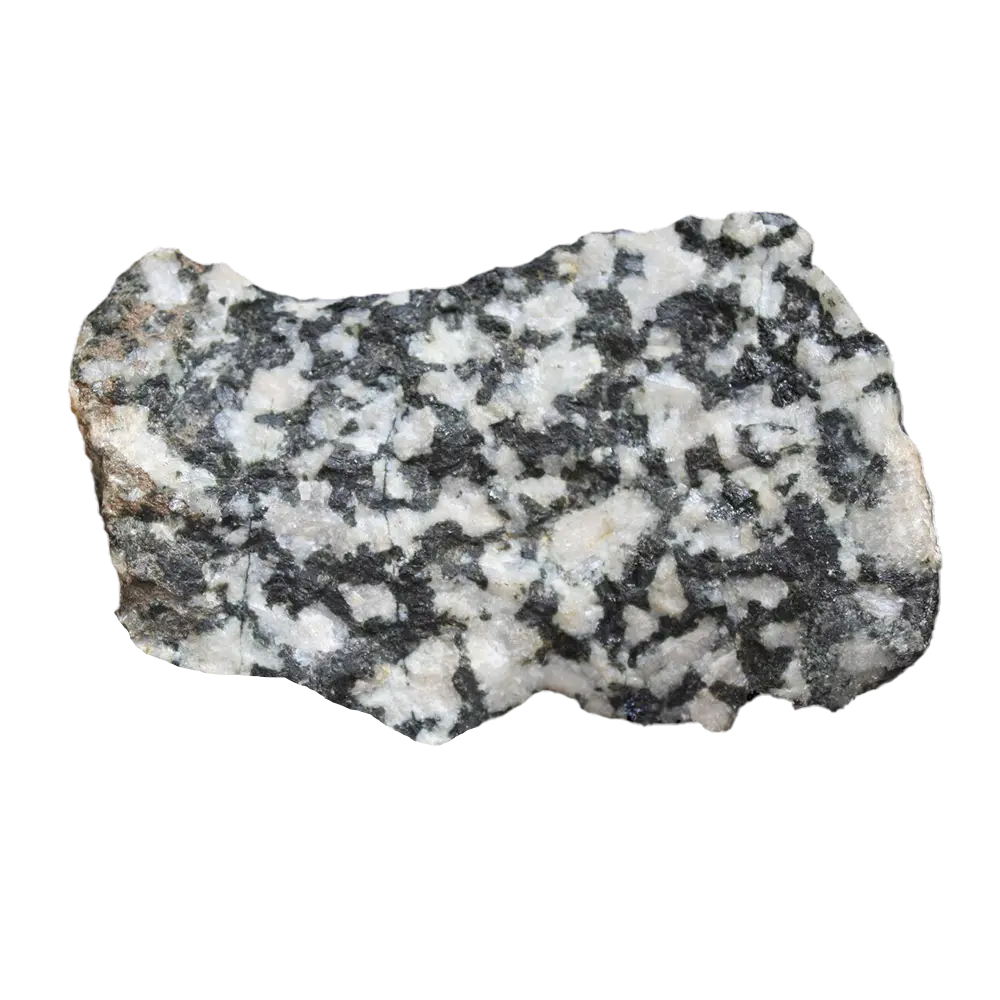
Sonorous stone is not a uniquely American curiosity. Lithophones, instruments made of tuned ringing rock, go back thousands of years; humans have struck resonant stones for ritual and music since before written history. The Musical Stones of Skiddaw in the English Lake District, assembled in the nineteenth century, are a tuned lithophone of 61 pieces of hornfels, a dense metamorphic rock. The Ringing Rocks of Kiandra in New South Wales and the ultramafic gabbro-peridotite Bell Rock Range in Western Australia ring; so do phonolite outcrops in several countries, phonolite is literally named for the metallic clink it makes. There is a persistent, much-discussed claim that some of the bluestones of Stonehenge, hauled from the Preseli Hills of Wales where dolerite is said to ring, may have been chosen partly for their sonorous quality, though this remains speculative. The diversity of rock types that ring, diabase, monzonite, hornfels, phonolite, dolerite, reinforces the central point: ringing is not the property of one mineral or one chemistry. It is a property of certain dense, stiff, low-damping rocks in particular states, and the conditions that put a rock into that state, more than the rock’s name, are what decide whether it sings.
Why it remains unsolved
The strangest fact about the ringing rocks is not the sound itself, but that a famous, accessible, hammer-it-yourself phenomenon has gone more than fifty years without a comprehensive scientific study. The experimental record is genuinely thin: Faas and Flocks characterizing the tones in 1966, Gibbons and Schlossman sawing cores in 1970, and an informal afternoon of measurements by an acoustics firm in 2020. The Pennsylvania boulder fields have exactly one peer-reviewed geomorphology paper to their name, the 1982 Psilovikos and Van Houten study, and that paper is about how the field formed, not why the rocks ring. The Montana site’s best science is two student theses about its petrology. As the Acentech write-up put it, with evident frustration, “It’s a shame that it’s been over 50 years since a comprehensive scientific study of these boulders was last undertaken.” The same writers noted, accurately, that there has “not been any actual scientific studies to identify the source of the phenomenon” in the rigorous, modern sense.
Part of the reason is that the question falls between disciplines. It is partly petrology, partly geomorphology, partly rock mechanics, partly acoustics, and no single field owns it. Part of it is that the phenomenon is, in the grand scheme, low-stakes; it does not threaten a city or unlock a resource. And part of it, ironically, is that the rocks are so easy to enjoy that the popular fascination has outrun the scientific attention, there is a vast literature of travel blogs and paranormal speculation and almost no instrumented research. The pieces of a real answer are visible. We know the rocks are stressed; we know stress and ringing are linked; we know the microclimate pattern. What is missing is a study that measures the internal stress field of live and dead boulders directly, determines once and for all whether that stress is tensile or compressive, and traces it to either surface weathering or relict burial. Until someone does that, the ringing rocks will keep their central secret.
A note before you go and hit one
The fields are fragile and, in some cases, legally protected. In Montana the BLM asks visitors to leave the rocks where they lie; removing them is illegal, and a removed rock generally loses the character of its place. In the Pennsylvania fields, decades of collecting have already stripped away the small portable ringers. Wear sturdy shoes, wet diabase is treacherous, and, as the Montana geologists like to add, wear eye protection, because you are about to hit very hard rock with a hammer. Then find a sunlit boulder out toward the middle of the field, away from the shade, and tap it. If you are lucky, you will hear what Dr. Ott’s audience heard over the brass in 1890: a clear, bell-like tone rising out of a stone that has no business making music, carrying with it a question that the rock, after two hundred million years and more than a century of curiosity, still has not answered.
Frequently Asked Questions
Why do ringing rocks ring?
A ringing rock vibrates at its natural resonant frequencies when struck, like a bell, and sustains the vibration into an audible tone because the rock is dense, stiff, and loses little energy to internal friction. The key extra ingredient is internal elastic stress: experiments show that “live” (ringing) boulders are under significant locked-in stress, and that releasing this stress by sawing a rock silences it, while applying stress to a “dead” rock can make it ring. The precise origin and even the direction (tension versus compression) of that stress are still debated, and no comprehensive peer-reviewed study has resolved it.
Is it true that only about one-third of the rocks ring?
Yes. In 2020 acousticians from Acentech struck a random sample of 534 boulders at Ringing Rocks County Park in Pennsylvania; 167 met their criteria for ringing, giving a result of 31 percent ringers, plus or minus 4 percent, at 95 percent confidence. Live and dead boulders look identical, so the only way to tell them apart is to strike them.
Does the high iron content make the rocks ring?
No. The Pennsylvania diabase contains about 9 to 12 percent iron as ferric oxide, which is high for an average igneous rock but normal for a basalt, and the Montana ringing rocks contain only about 7 percent iron as ferrous oxide yet ring just as well. Iron gives the sound its metallic quality but is not the cause; the ringing is better attributed to the rock’s density combined with internal elastic stress.
Do ringing rocks stop ringing if you take them out of the field?
An intact ringing rock keeps ringing when removed; the Acentech team carried a ringer onto ordinary soil and it still rang, though its dominant pitch shifted (from about 4,253 Hz in the field to 5,660 Hz on soil) because its support changed. What does kill the ring is breaking the rock, which releases its internal stress, or long-term weathering. The legend that removed rocks go silent likely comes from people breaking boulders into portable pieces and from efforts to discourage theft.
How did the ringing-rock boulder fields form?
In Pennsylvania, diabase magma intruded the Newark Basin about 200 million years ago, and a dense basal layer of olivine diabase formed at its base. Erosion later exposed the rock, and during the last ice age the outcrops lay just south of the Laurentide ice sheet in a periglacial climate. Repeated freeze-thaw shattered the rock into boulders that crept slightly downslope, producing a barren “sea of rock” called a felsenmeer once the glaciers retreated about 12,000 years ago. The Montana field formed differently, from a Late Cretaceous volcanic pluton shattered by Pleistocene frost into a tor.
Where can I hear ringing rocks?
The most accessible sites are Ringing Rocks County Park near Upper Black Eddy, Stony Garden near Bucksville, and Ringing Hill Park near Pottstown, all in southeastern Pennsylvania, plus the BLM’s Ringing Rocks Recreation Area near Pipestone, southeast of Butte, Montana. Bring your own hammer in Pennsylvania, wear sturdy footwear and eye protection, and in Montana leave the rocks in place, removing them is illegal there.