
Introduction
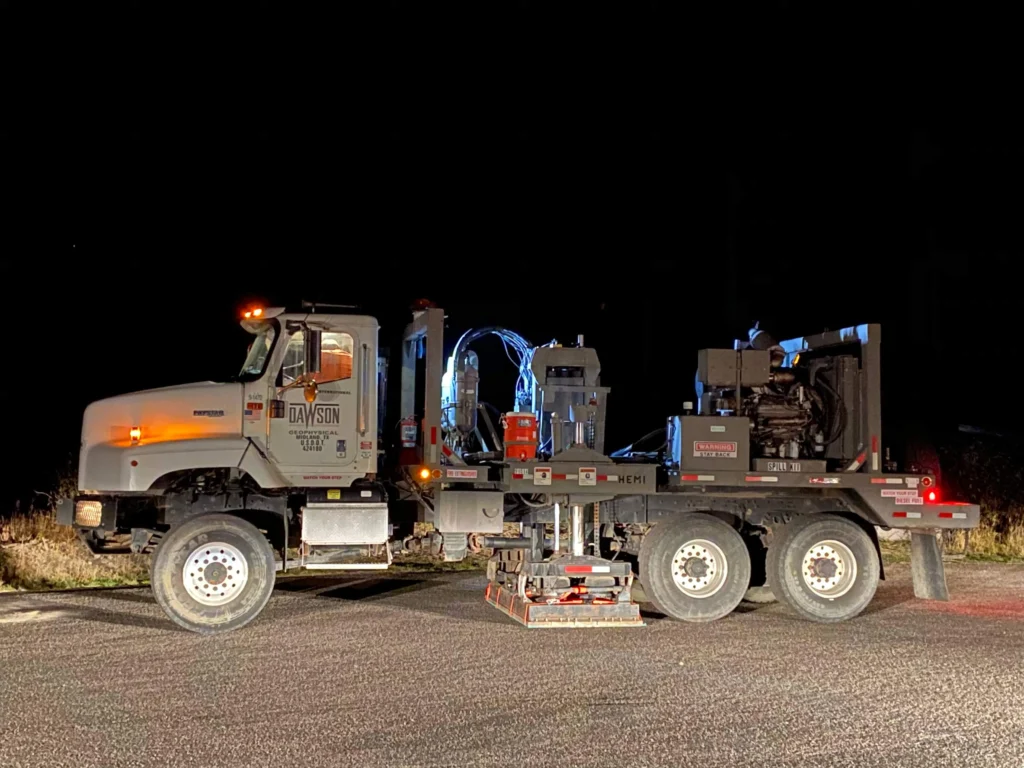
In the summer of 2020, with the park’s gates shut to most visitors and the roads emptied by the pandemic, a 53,000-pound truck crept onto a paved turnout near the Continental Divide in Yellowstone and began to shake the ground. It worked only after dark, parked on roadside pullouts, so it would not rattle the few travelers passing through by day. A truck-mounted steel plate pressed to the asphalt anddrove up to about 220,000 newtons of force into the crust, sweeping through a rising band of frequencies from roughly 6 to 30 cycles per second, according to Physics Today. The truck was not drilling for oil. It was knocking on the roof of one of the largest volcanic systems on Earth, listening for the echo.
That echo, once scientists untangled it, became one of the most reassuring discoveries in the recent history of Yellowstone research. Beneath the northeastern part of the caldera, a sharp boundary rang back from about 3.8 kilometers down, roughly 2.4 miles. It marked the very top of the magma reservoir, and the way it behaves is a big part of why the supervolcano is not exploding.
What scientists actually found beneath Yellowstone
The work was published in the journal Nature on April 16, 2025, by a team led by Chenglong Duan and Brandon Schmandt of Rice University, with collaborators from the University of New Mexico, the University of Utah, and the University of Texas at Dallas. Their paper, “A sharp volatile-rich cap to the Yellowstone magmatic system,” reports the clearest image yet of where Yellowstone’s magma begins.
For decades the answer to a simple question “how deep is the magma under Yellowstone?” was frustratingly fuzzy. Earlier studies placed the top of the reservoir anywhere from about 3 to 8 kilometers down, a smear of uncertainty that made it hard to compare today’s volcano with its condition before past eruptions. “For decades, we’ve known there’s magma beneath Yellowstone, but the exact depth and structure of its upper boundary has been a big question,” Schmandt said in a Rice University statement. “What we’ve found is that this reservoir hasn’t shut down, it’s been sitting there for a couple million years, but it’s still dynamic.”
The new image pins the boundary at about 3.8 kilometers and shows it is startlingly abrupt, less than 100 meters thick, according to the Yellowstone Volcano Observatory. Seismic waves do not fade across it gradually. They hit it and bounce, the way sound bounces off a hard ceiling. “Seeing such a strong reflector at that depth was a surprise,” Schmandt said. “It tells us that something physically distinct is happening there, likely a buildup of partially molten rock interspersed with gas bubbles.”
How a vibrating truck mapped the top of the magma chamber
To understand why this is hard, picture trying to photograph the bottom of a muddy pond by throwing pebbles and watching the ripples. Yellowstone’s fractured, hydrothermally cooked crust scatters seismic energy badly, turning clean signals into noise. Natural earthquakes had been used for years to build smoothed-out pictures of the magma body, Mike Poland, scientist-in-charge of the Yellowstone Volcano Observatory, has described those older images as showing an “amorphous blob.”
So the team made their own earthquakes, on schedule and on demand. The vibroseis truck, a machine built for oil and gas exploration, vibrated the ground at 110 locations, delivering 20 treatments lasting 40 seconds each, according to the University of Utah. Poland described the method plainly in Cowboy State Daily: “It’s not punching the ground like a jackhammer. The plate makes contact with the ground and generates energy tuned to a frequency that we know will do a nice job bouncing off things in the subsurface.” To catch the returning waves, the team deployed about 650 portable geophones along the park’s roads at intervals of 100 to 150 meters, supplemented by several dozen permanent stations of the Yellowstone Seismic Network.
The fieldwork ran under a National Park Service research permit (YELL-2020-SCI-8146) and was funded by the National Science Foundation. Coordinating a heavy industrial truck inside a protected park, at night, during a pandemic, leaned heavily on researchers from the University of Utah and the University of New Mexico. As Rice University noted, collaboration with University of Utah professor Jamie Farrell, “a Yellowstone geophysics expert and seismic network operator”, was essential to making the unusual survey possible.
The raw data were nearly unreadable. Duan, who developed the imaging method as a doctoral student, built a wave-equation technique designed for irregular, messy field data and combined it with a signal-detection trick borrowed from earthquake monitoring, the STA/LTA function, to pull faint, coherent reflections out of the static. “The challenge was that the raw data made it almost impossible to visualize any reflection signals,” Duan said. The persistence paid off in what he called “one of the first super clear images of the top of the magma reservoir beneath Yellowstone caldera.”
Why a leaky cap keeps the supervolcano from erupting
The cap is not a solid plug of rock. It is a zone where bubbles collect, and the discovery is good news precisely because of how those bubbles behave.
As magma rises and the pressure on it drops, dissolved gases come out of solution, the way carbon dioxide fizzes out of a soda the instant you crack the cap. This is called volatile exsolution. At Yellowstone, the modeling shows that at 3.8 kilometers the pressure is finally low enough for water and other volatiles to begin forming bubbles. Those bubbles accumulate in the pore spaces at the top of the reservoir, which is exactly what produces the sharp seismic reflection.
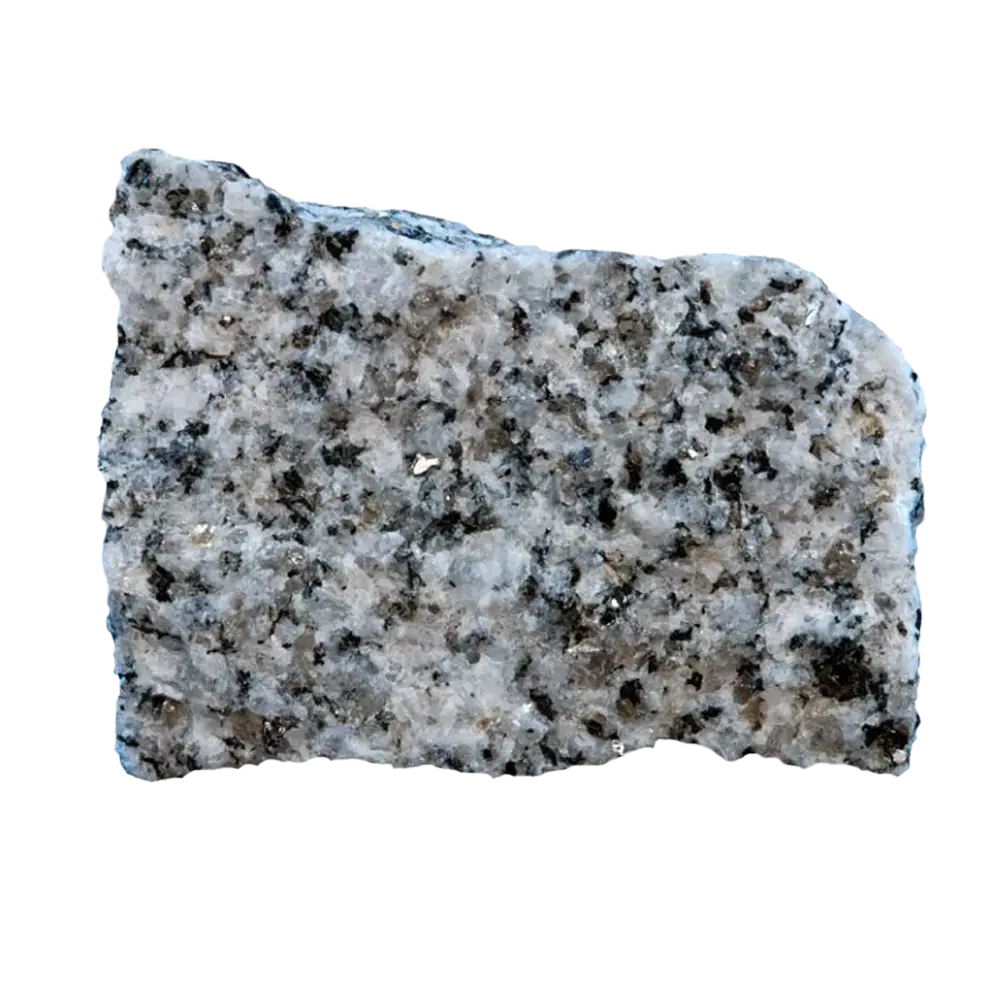
To match the strength of that reflection, Duan and Schmandt tested many combinations of rock, melt, and gas. A simple two-part mixture of crystals and molten rock did not fit. What fit was a three-part recipe: solid mineral crystals, silicate melt, and bubbles of supercritical water, water held at such high temperature and pressure that it behaves as neither ordinary liquid nor gas. The reservoir’s heat also drives off carbon dioxide, the same magmatic gas that seeps up through the park’s soils. The best-fitting model puts total porosity at the top of the reservoir at about 14 percent, with the rock roughly 86 percent solid crystals. Poland summarized the split in Cowboy State Daily: the new model estimates “roughly 14 percent fluid, mostly supercritical gas, and 86 percent solid crystals in the cap layer.” The paper models that pore space as a near-even mix of supercritical water bubbles and rhyolite melt.
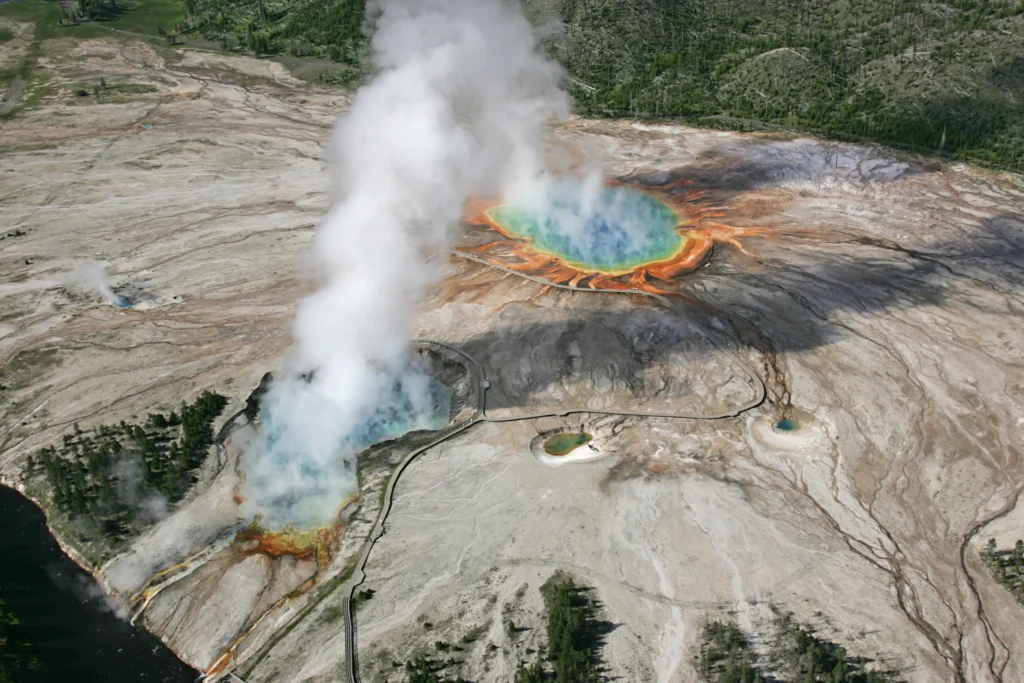
Bubbles in a magma chamber can be ominous. When they pile up and cannot escape, they raise buoyancy and pressure, and that is one of the recipes for an explosive eruption. Yellowstone is doing the opposite. The bubble and melt content sits well below the levels associated with magmas that are about to blow. Instead of trapping gas, the cap leaks it. “Although we detected a volatile-rich layer, its bubble and melt contents are below the levels typically associated with imminent eruption,” Schmandt said. “Instead, it looks like the system is efficiently venting gas through cracks and channels between mineral crystals, which makes sense to me given Yellowstone’s abundant hydrothermal features emitting magmatic gases.”
He compared the rhythm to steady breathing: bubbles rise, escape through the porous cap, and relieve pressure before it can build. The geysers, fumaroles, and mud pots that draw millions of tourists are, in this reading, the exhaust of that system, magmatic gas working its way to the surface. All that hissing and steaming is a sign the volcano is venting normally, not winding up.
The paper concludes that the bubble fraction at the top of the reservoir today is lower than typical pre-eruptive conditions for rhyolite magmas, and that the system is in a stable state of efficient bubble ascent into the hydrothermal system, consistent with the long-standing assessment that this caldera system is in repose. The Yellowstone Volcano Observatory, run by the U.S. Geological Survey, agreed. Poland, who was not part of the study, called the result striking for what it demonstrates about modern imaging, likening it to taking an MRI of the Earth: being able to resolve a cap only a few hundred feet thick more than two miles underground.
Is Yellowstone going to erupt? What the eruption record really says
To put a “breathing” magma cap in context, it helps to know what Yellowstone is capable of, because the record is genuinely enormous. The hotspot beneath the park has produced three caldera-forming eruptions in the past 2.1 million years.
The oldest and largest, the Huckleberry Ridge eruption about 2.1 million years ago, expelled more than 2,450 cubic kilometers of material and built the Island Park Caldera straddling the Wyoming–Idaho border. The second, the Mesa Falls eruption about 1.3 million years ago, was far smaller at roughly 280 cubic kilometers and formed the Henry’s Fork Caldera, large, but below the threshold geologists use for a “supereruption.” The most recent, the Lava Creek eruption, ejected about 1,000 cubic kilometers and collapsed the ground into the present Yellowstone Caldera. That eruption is commonly dated to about 640,000 years ago, though more recent argon dating has refined it to roughly 631,000 years ago; both figures appear in the USGS literature.
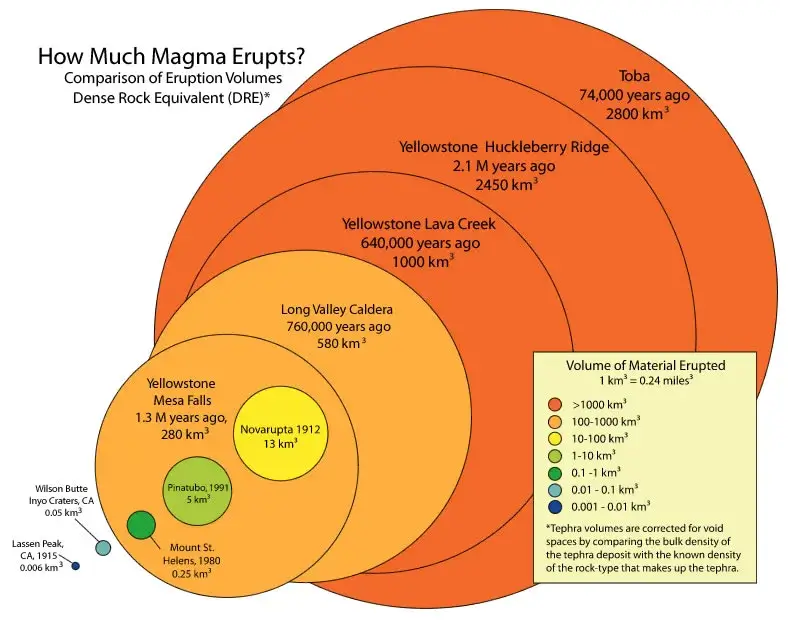
For comparison, the Lava Creek eruption was roughly a thousand times the size of the 1980 Mount St. Helens eruption, and Huckleberry Ridge was larger still. Those numbers are why “supervolcano” entered the vocabulary, and why the internet periodically panics.
Which brings up the figure that launches a thousand doomsday headlines. The USGS notes that, given Yellowstone’s history, the yearly probability of another caldera-forming eruption can be approximated as 1 in 730,000, or about 0.00014 percent. That number deserves a giant asterisk, and the USGS supplies it: the figure is “based simply on averaging the two intervals between the three major past eruptions, this is hardly enough to make a critical judgment,” and, the agency adds, “catastrophic geologic events are neither regular nor predictable.” It is not a forecast. It is a long-division exercise on three data points.
The related claim that Yellowstone is “overdue” is, in the agency’s own blunt phrasing, false. As the USGS puts it: “‘Overdue’ can apply to library books, bills, and oil changes, but it does not apply to Yellowstone!” The intervals between the big eruptions are not evenly spaced, so there is no schedule to be late for. The most recent volcanic activity of any kind was a rhyolite lava flow that formed the Pitchstone Plateau about 70,000 years ago, a far more typical event than a supereruption.
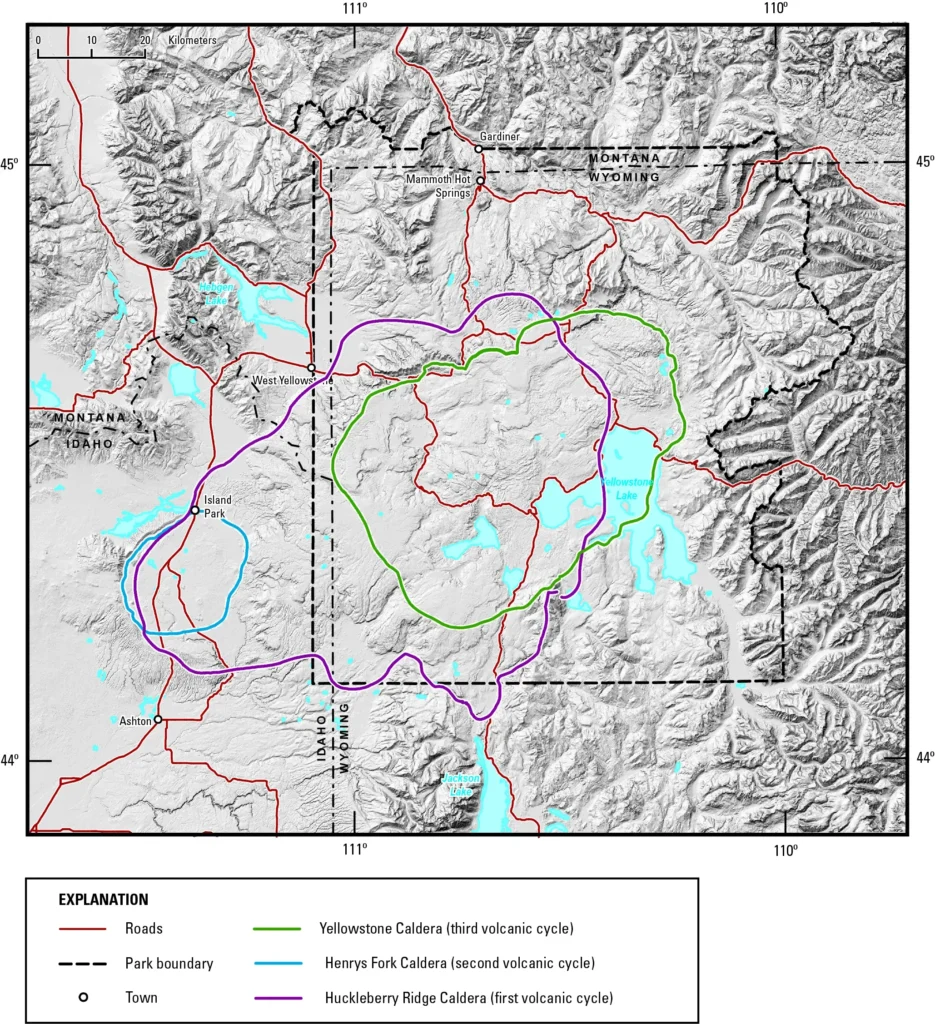
Digital elevation model of the Yellowstone region showing the calderas from the three most recent volcanic cycles, including the present Yellowstone Caldera (green) formed by the Lava Creek eruption. Credit: Figure developed by Mark Stelten, USGS (modified from Christiansen et al., 2007), Public Domain, via USGS.
What’s keeping Yellowstone from erupting, and what could change the picture
The honest answer to “what’s keeping Yellowstone from erupting” is that the system simply is not primed to erupt. Multiple independent lines of evidence now point the same way. Seismic tomography and a separate 2025 magnetotelluric study both find that the magma reservoir is mostly solid crystal mush with only a modest fraction of molten rock, far short of the highly molten state a caldera eruption would require. The new magma-cap study adds the missing piece at the very top: even where gas does collect, it escapes efficiently rather than building toward a blast.
That said, the discovery is valuable precisely because it gives scientists a baseline to watch. If future surveys detected the cap thickening, the melt fraction climbing, or bubbles accumulating faster than the system can vent them, those would be meaningful changes worth tracking. The team framed their result as a new benchmark for monitoring, not an all-clear that ends the conversation.
It is also worth keeping the real hazards in proportion. Poland and others have repeatedly stressed that hydrothermal explosions and earthquakes, not volcanic eruptions, are the dangers most relevant on a human timescale at Yellowstone. The July 2024 explosion at Biscuit Basin’s Black Diamond Pool, driven by flashing steam rather than magma, was a reminder that the park’s plumbing can turn violent on a local scale without the volcano doing anything unusual.
For now, the picture from 3.8 kilometers down is a calm one. Yellowstone’s magma reservoir is hot and slowly exhaling, and the lid that scientists finally found leaks faster than gas can build behind it.
Frequently asked questions
How deep is the magma under Yellowstone?
The top of Yellowstone’s main magma reservoir lies about 3.8 kilometers (2.4 miles) beneath the northeastern part of the caldera, according to the 2025 Nature study led by Chenglong Duan and Brandon Schmandt. Earlier estimates ranged from about 3 to 8 kilometers; the new seismic imaging sharpened that to a distinct boundary less than 100 meters thick. The crystal-rich reservoir itself extends down through roughly the 3-to-8-kilometer depth range.
Is Yellowstone overdue for an eruption?
No. The U.S. Geological Survey is explicit that Yellowstone is not overdue, because its past eruptions did not happen on a regular schedule. The three caldera-forming eruptions occurred about 2.1 million, 1.3 million, and roughly 631,000–640,000 years ago, intervals that are uneven, so there is no fixed cycle to be late for.
What keeps Yellowstone from erupting?
The reservoir is mostly solid crystal mush rather than eruptible liquid, and the newly mapped volatile-rich cap leaks gas instead of trapping it. At about 14 percent porosity, with bubbles rising and escaping through cracks into the hydrothermal system, pressure vents steadily rather than building toward an explosion. Researchers compared the effect to steady breathing.
Is Yellowstone going to erupt soon?
There is no sign of an imminent eruption. The Yellowstone Volcano Observatory keeps the system at a normal alert level, and the magma is far too solid and too efficiently degassed to drive a large eruption. The most likely future activity, if any, would be a lava flow confined to the caldera, not a continental catastrophe.
What is the chance of a Yellowstone supereruption each year?
The USGS approximates the annual odds of another caldera-forming eruption at about 1 in 730,000, but stresses this is not a prediction. The figure is simply the average of the two intervals between three past eruptions, and catastrophic geologic events are neither regular nor predictable.
What was the largest Yellowstone eruption?
The Huckleberry Ridge eruption about 2.1 million years ago, which expelled more than 2,450 cubic kilometers of material and formed the Island Park Caldera. It was more than twice the size of the Lava Creek eruption (~1,000 cubic kilometers) that created the present Yellowstone Caldera around 631,000–640,000 years ago.