
A Stone From the Cerrado
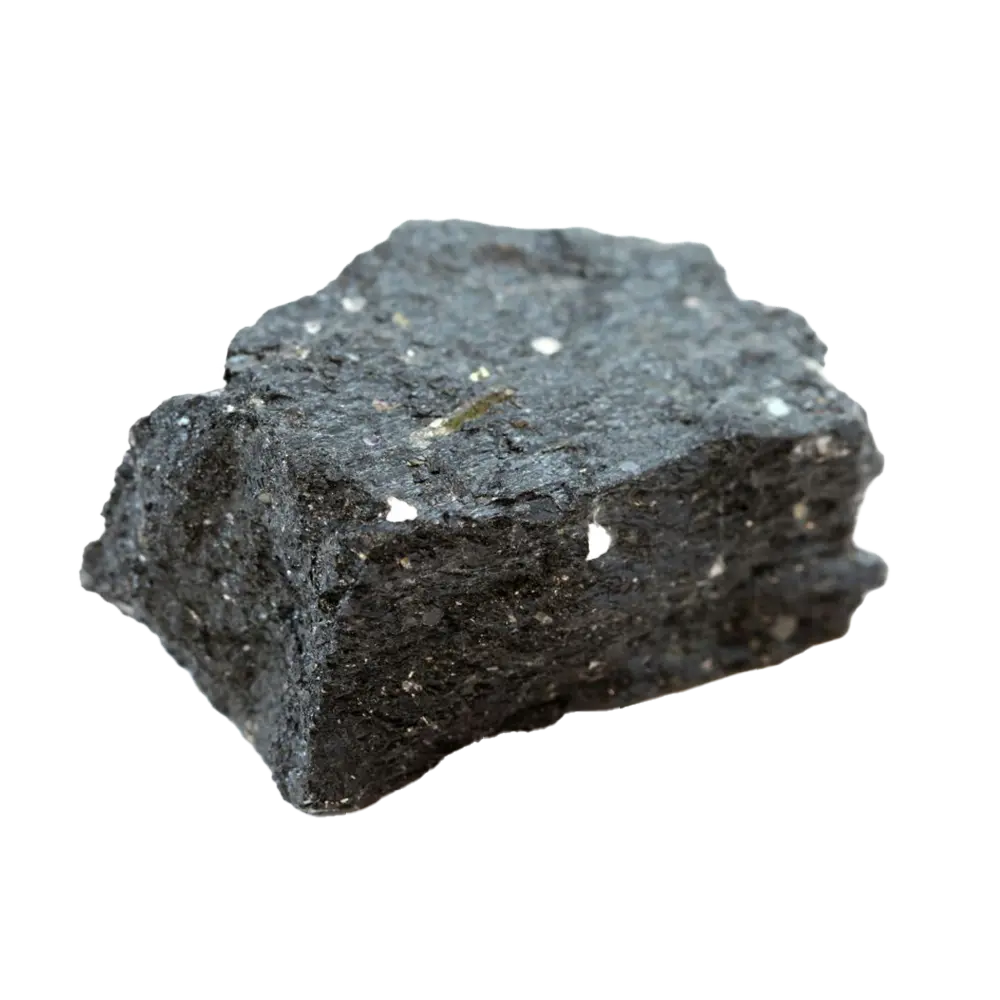
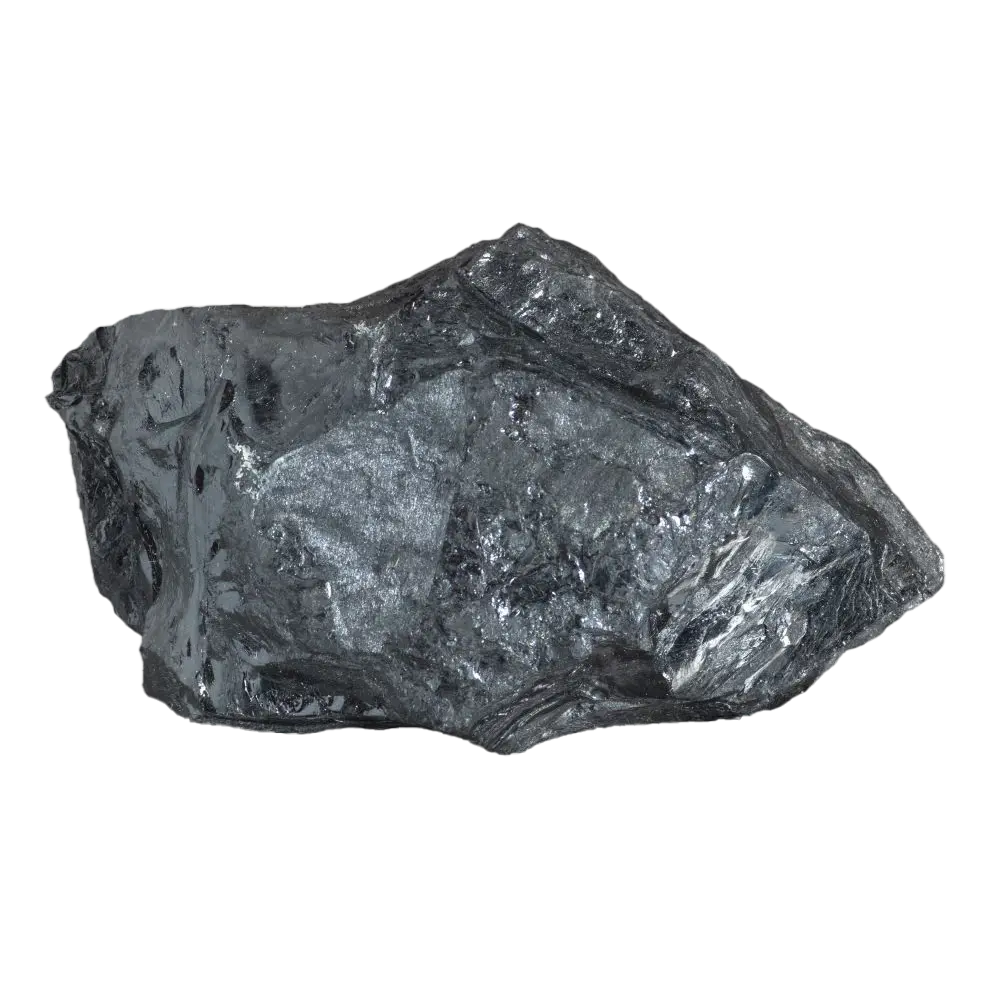
Sometime in 2023, a man in northern Minas Gerais photographed a strange dark pebble he had picked up on his father’s farm. The thing was black, oddly pitted, lighter than a quartz cobble, and shaped like a teardrop. He posted the picture in an online meteorite-identification group. The post drifted, as such posts do, until it reached Gabriel Gonçalves Silva, a chemistry researcher at the University of São Paulo, who forwarded it to his collaborator Álvaro Penteado Crósta at the State University of Campinas (UNICAMP). Crósta has been hunting Brazilian impact craters since his master’s project in 1978. He had never seen a Brazilian tektite. No one had.
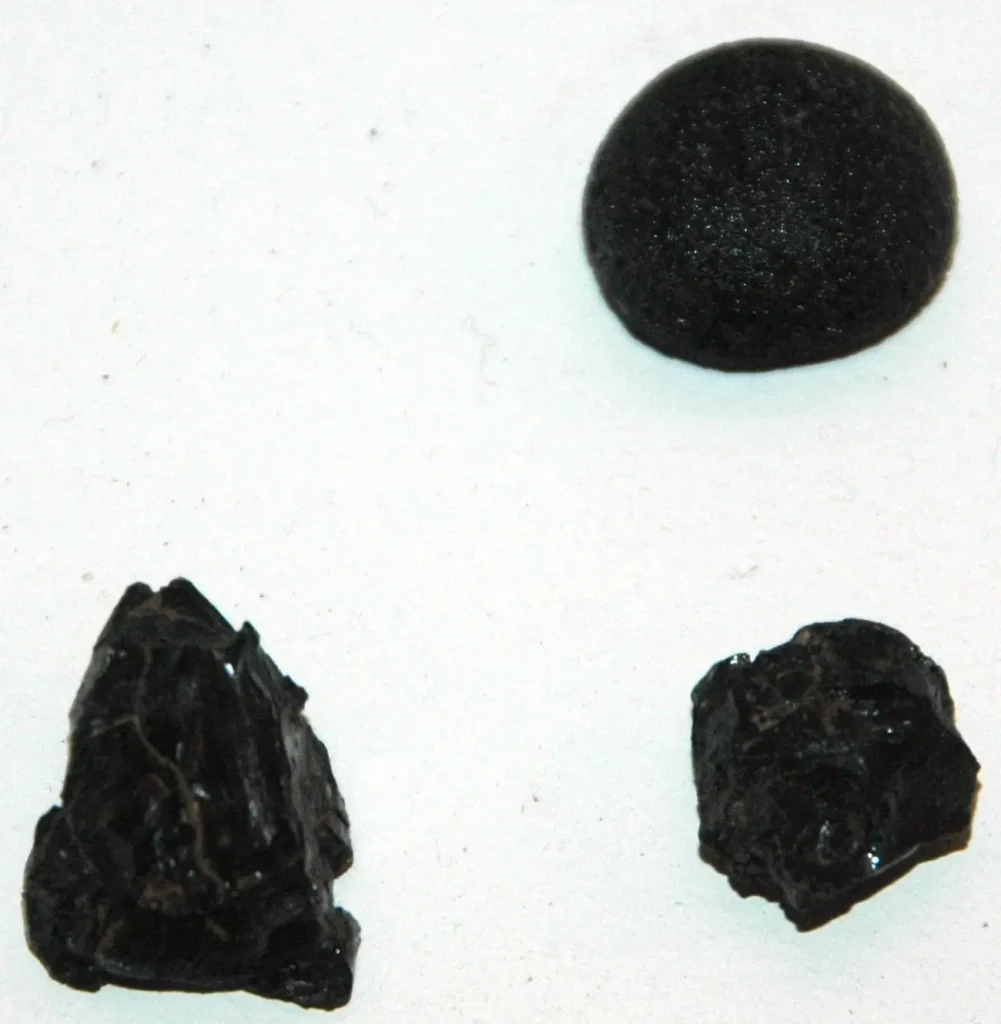
He was skeptical. “Tektites are extremely rare,” Crósta later told Eos. “They form under very specific conditions and do not survive long in the geological record. So it was a total surprise.” Locals around Taiobeiras, Curral de Dentro, and São João do Paraíso had nicknamed the stones turmalina fundo de garrafa, “bottle-bottom tourmaline.” One collector’s mother, the Brazilian newspaper Estado de Minas would later report, had thrown a whole tin of them out. Then a second resident, in a town dozens of kilometres from the first, contacted the team with the same kind of rock. Silva and Crósta went north.
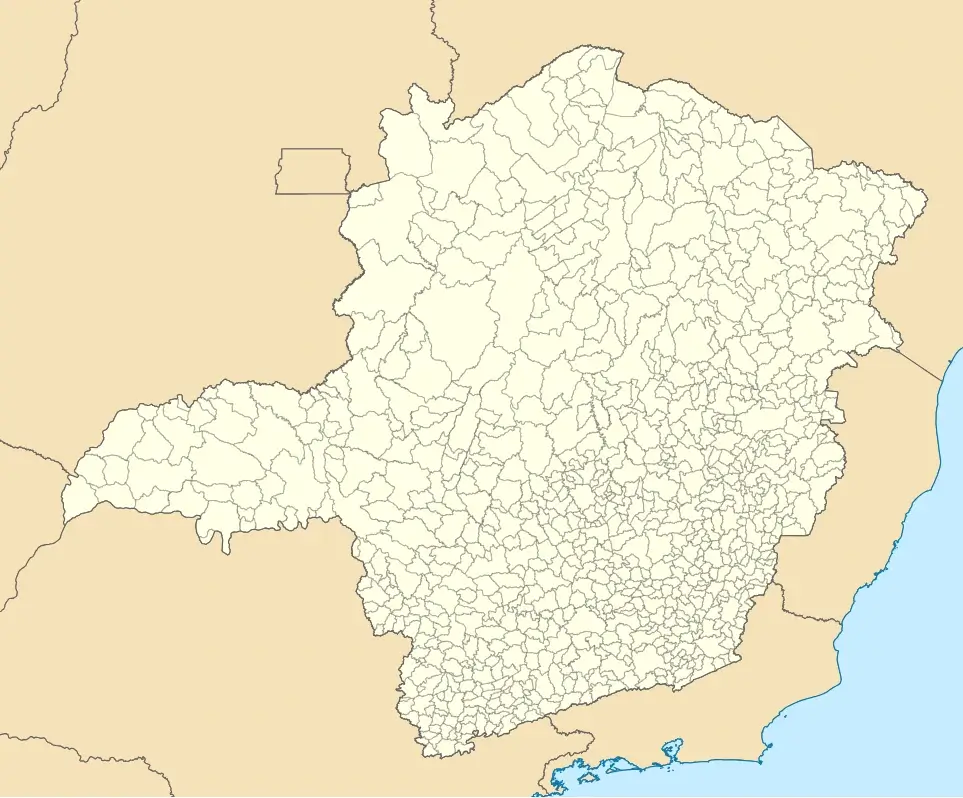
What they found, and confirmed on 2 December 2025 in the journal Geology, is the sixth tektite strewn field ever recognised on Earth, and the first in South America. The team named the glasses geraisites, after the state of Minas Gerais. The 40Ar/39Ar clock they read inside the glass put the formation event at roughly 6.3 million years ago, in the late Miocene. A new chapter of Earth’s impact record had been sitting on Brazilian farmland, getting kicked aside by cattle, for ages.
What Makes a Glass a Tektite
Volcanic glass is common; slag from old foundries even more so; lightning fuses sand into fulgurites in coastal dunes. Black, drop-shaped, glassy pebbles sitting in the dust of a cerrado farm could, at first glance, be any of these things. To call a glass a tektite is to make a much narrower claim: that the glass was generated by a hypervelocity meteorite impact, melted out of crustal target rock, lofted ballistically through the upper atmosphere, and rained down hundreds, sometimes thousands, of kilometres away.
Five tektite strewn fields had been recognised before this paper. Four are old enough that they were named in the nineteenth or early twentieth century: the Australasian field (sprawling across more than 10% of Earth’s surface, from Indochina to Antarctica), the Central European moldavites of southern Bohemia and Moravia, the Ivory Coast or ivorites of West Africa, and the North American bediasites and georgiaites of Texas and Georgia. A fifth, the Belize impact glasses, around the Pook’s Hill area, was promoted to full tektite status only in 2021 by Pierre Rochette’s group after they tied the Belize glasses to the 14-km Pantasma crater in Nicaragua. Crósta’s team has now added a sixth.
The Water Test
The single most discriminating measurement Crósta’s team ran was the boring one: how much water is locked inside the glass. Volcanic glasses such as obsidian carry between about 700 ppm and roughly 2% water, the latter equal to 20,000 parts per million. Geraisites measure between 71 and 107 ppm by Fourier-transform infrared spectroscopy, with the published paper rounding to a 70–110 ppm range. That is a difference of about two orders of magnitude, call it a hundred-fold gap. Tektites are, in Crósta’s phrase to the FAPESP press office, “notoriously much drier.”
The reason is the impact itself. A meteorite striking the crust at tens of kilometres per second flash-vaporises and shocks the target rocks. Volatile species, water foremost among them, are baked out in milliseconds. Lava cooling from a volcano never sees those temperatures or those pressures; it traps its dissolved water. So when an analyst sees a silica-rich natural glass with sub-1000 ppm water, the impact origin is already heavily favoured before any other test.
Lechatelierite and Shock
The other diagnostic is microscopic. Inside the geraisites, the team identified rare inclusions of lechatelierite, a pure silica glass that forms only when quartz is shock-melted above about 1,730 °C. Lechatelierite is what survives when a quartz grain in the target rock is hit hard enough to skip past its crystalline structure and freeze into a featureless amorphous solid. It does not form in volcanoes. It is one of the standard impact diagnostics, used decades ago by Christian Koeberl, Wolf Uwe Reimold and colleagues to tie the North American tektites to the Chesapeake Bay structure.
Beyond water and lechatelierite, the geochemistry told the same story. Geraisites carry 70.3–73.7 wt% SiO₂ and a combined alkali load (Na₂O + K₂O) of 5.86–8.01 wt%, putting them in the dacite-to-rhyolite field of the standard Total Alkali–Silica (TAS) diagram. Chromium varies from 10 to 48 ppm, nickel from 9 to 63 ppm, a slight inhomogeneity in trace elements that is consistent with mixed source rock rather than pure magmatic differentiation. The pitted surfaces of the geraisites, Crósta added in the FAPESP release, are “traces of gas bubbles that escaped during the rapid cooling of the molten material as it travelled through the atmosphere.”
Spherical. Ellipsoidal. Drop-shaped. Discoid. Dumbbell. Twisted. The shape catalogue alone matches the splash-form vocabulary that has been used for Australasian and Ivory Coast tektites for a century. Fragments range from under a gram to 85.4 grams, with the longest specimens reaching about five centimetres.
The Argon Clock: Dating Geraisites to 6.3 Million Years Ago
Dating a tektite is harder than dating a lava flow. The glass cools from a molten state, so the radiogenic argon clock in its potassium-bearing components ought to reset at the moment of impact. But tektites carry the chemical fingerprints, and sometimes the unreset argon, of their target rocks. If the target is old continental crust, some of the parent argon-40 can be inherited rather than newly accumulated, biasing the apparent age toward older values.
Fred Jourdan’s team at the Western Australian Argon Isotope Facility at Curtin University ran the geraisites through step-heating 40Ar/39Ar analysis. The result, reported in the published abstract, is three plateau ages clustering tightly: 6.78 ± 0.02 Ma, 6.40 ± 0.02 Ma, and 6.33 ± 0.02 Ma. Three glasses, three ages, all within a few hundred thousand years. A tight enough cluster to argue for a single event rather than a series of unrelated impacts. The team’s best estimate for the formation age is about 6.3 Ma.
But Crósta is careful. “The age of 6.3 million years should be interpreted as a maximum age,” he told the FAPESP press office, “since some of the argon may have been inherited from the ancient rocks targeted by the impact.” That caveat matters. The true age could be appreciably younger, depending on how much old argon the parent rocks dragged into the melt. The Geology paper itself notes that “the possible presence of inherited 40Ar* will require more analyses to fully establish their age.”
Six-point-three million years places the impact in the Messinian stage of the late Miocene (7.246–5.333 Ma). The Messinian Salinity Crisis, the cyclic desiccation of the Mediterranean, began around 5.97 Ma, several hundred thousand years after the geraisite event. There is no causal or stratigraphic link in any published source connecting the two; the temporal adjacency is coincidence, not consequence. No extinction has been tied to the impact either. The geraisite event sits in a quiet corner of late Miocene chronology, recorded so far only in the glass itself.
Tracing the Target Rock to the São Francisco Craton
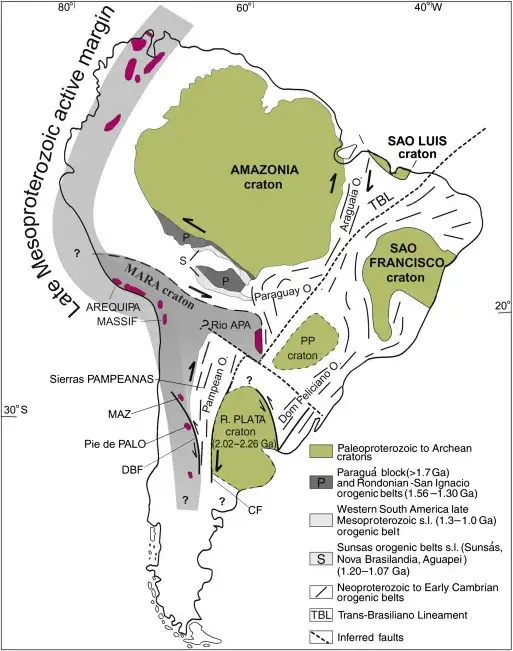
Once you have a tektite, the next puzzle is the target. Tektites are messy fingerprints of the rocks that were melted; their bulk chemistry, isotopes, and trace elements all carry inheritance. Crósta’s team measured the strontium, neodymium and hafnium isotopic compositions of the geraisites and modelled the Nd and Hf “model ages”, calculations that effectively ask, when did this material last separate from the mantle?
The answer was striking. The model ages point to a continental crustal source, most likely Mesoarchean felsic rocks, between roughly 3.0 and 3.3 billion years old. That is more than half the age of the Earth. The K₂O/Na₂O and SiO₂/Al₂O₃ ratios (1.6 and 4.9 respectively, with bulk SiO₂ near 71.9 wt%) reinforce a granitic protolith.
“The isotopic signature indicates a very ancient continental, granitic source rock,” Crósta said. “This greatly reduces the universe of candidate areas.” Only one Archean cratonic block in eastern Brazil — one containing the Mesoarchean granite-greenstone components that fit the geraisite isotopic signature — meets the geography of the strewn field: the São Francisco craton, which outcrops across Bahia and Minas Gerais and underlies most of the region where the geraisites have been found. The hunt for the crater is now a hunt across the São Francisco craton.
The Sixth Strewn Field
In the paper as published, the geraisite strewn field is described as a strip about 90 kilometres long through northern Minas Gerais. Since submission, finds in Bahia and most recently Piauí have stretched the apparent field to more than 900 kilometres, according to Crósta’s statements to FAPESP. “Now that the news is being spread,” he told Eos, “we might get contacted by more people with new samples.” The 90-km figure belongs to the peer-reviewed paper; the 900-km figure is current as of February 2026 press reporting, not yet peer-reviewed.
Either way, the field is mid-sized: smaller than the Australasian behemoth but, per Crósta to Eos, comparable in extent to the Belize field. Of the six known tektite fields, only three have fully confirmed, drilled source craters. Geraisites join Australasian and Belize tektites in the unconfirmed-crater category.
Australasia’s Missing Crater
The Australasian tektite strewn field is the largest and youngest on Earth, dated to 788.1 ± 2.8 ka by Jourdan and colleagues in their 2019 Meteoritics & Planetary Science study, and covering more than 10% of Earth’s surface. Its crater has eluded discovery for over a century. In 2020, Kerry Sieh’s group at the Earth Observatory of Singapore published four lines of converging evidence, tektite geochemistry, 40Ar/39Ar dating of overlying lava flows, gravity anomalies, and a thick proximal breccia, pointing to a ~15-km-diameter crater buried beneath the Bolaven Plateau in southern Laos. A 2023 follow-up paper (Sieh et al., PNAS) documented the proximal ejecta. The Bolaven Plateau is now the leading candidate for the Australasian source, though the case remains contested in the literature (Mizera 2022; Sieh et al. 2024 reply), and the structure itself remains under about 300 metres of basalt and has never been drilled. The geraisites are not alone, Australasian and Belize tektites also lack drilled, fully confirmed source craters.
Moldavites and the Ries
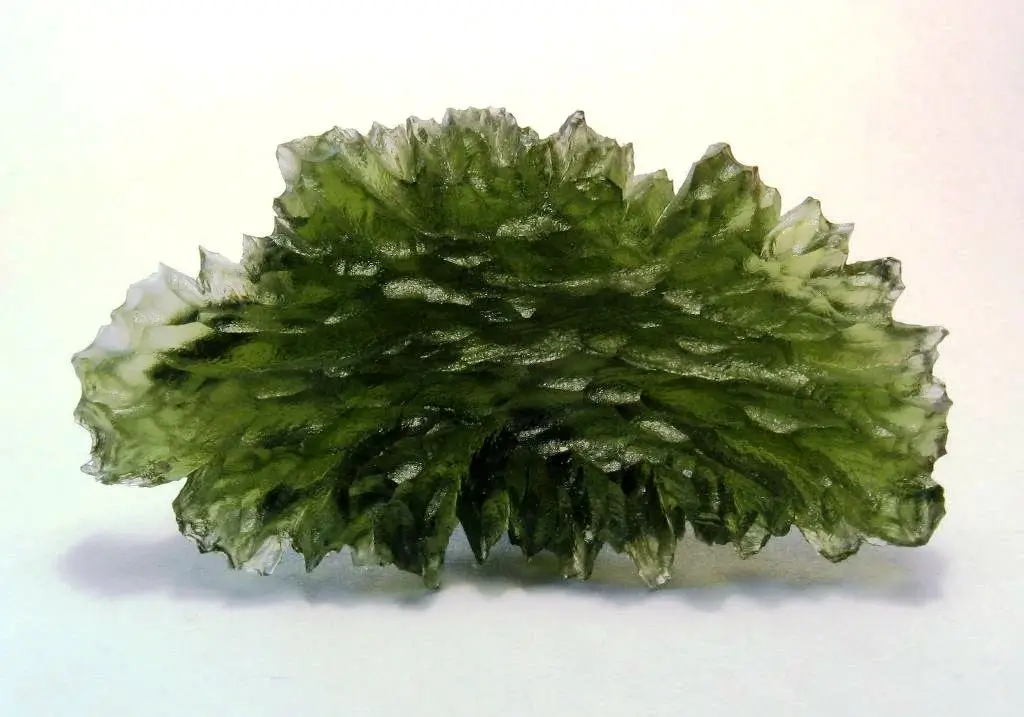
Central European moldavites are the textbook case of a tektite traced to a crater. The bottle-green Bohemian and Moravian glasses, in human use since the Gravettian, around 29,000 BP, when moldavite shards turned up alongside the Venus figurines at the Willendorf sites in Lower Austria, were tied to the Nördlinger Ries crater (~24–26 km diameter, depending on which rim is used) in Bavaria by a converging set of evidence reviewed comprehensively by Dieter Stöffler and colleagues in 2013. Impact age, geochemistry, isotopic systematics, and direction of ejecta dispersal all align. The Ries impact, dated to 14.808 ± 0.038 Ma by Schmieder and colleagues’ 2018 high-precision 40Ar/39Ar study of moldavites from Besednice, Chlum nad Malší, and Jankov, melted surface sediments of the Swabian Alb and flung them up to 450 km eastward into what is now the Czech Republic.
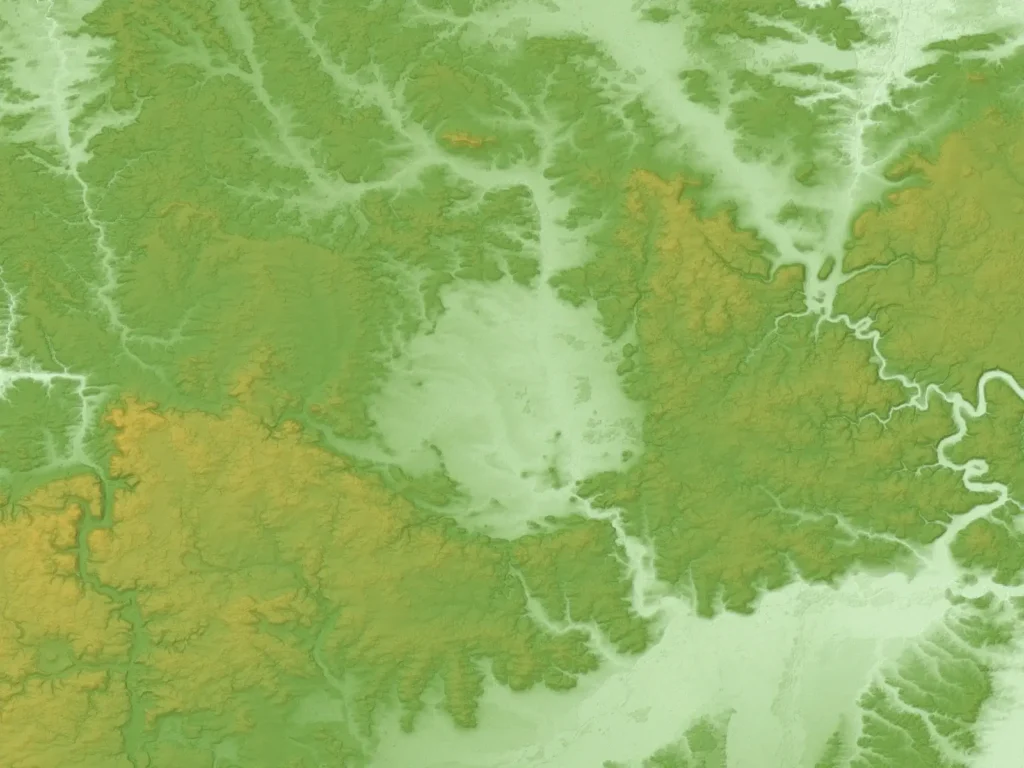
Ivory Coast and Bosumtwi
The Ivory Coast tektites, a few hundred specimens at most in public and private collections, were tied to the 10.5-km Lake Bosumtwi crater in Ghana by Christian Koeberl, Billy Glass and colleagues in a long series of papers culminating in Koeberl et al. 1997. The decisive evidence was the age match (about 1.07 million years for the crater, near-identical for the tektites) and matching Sr-Nd-Os isotopic systematics. Bosumtwi is now one of the best-preserved young impact craters on Earth, drilled by the International Continental Scientific Drilling Program in 2004.
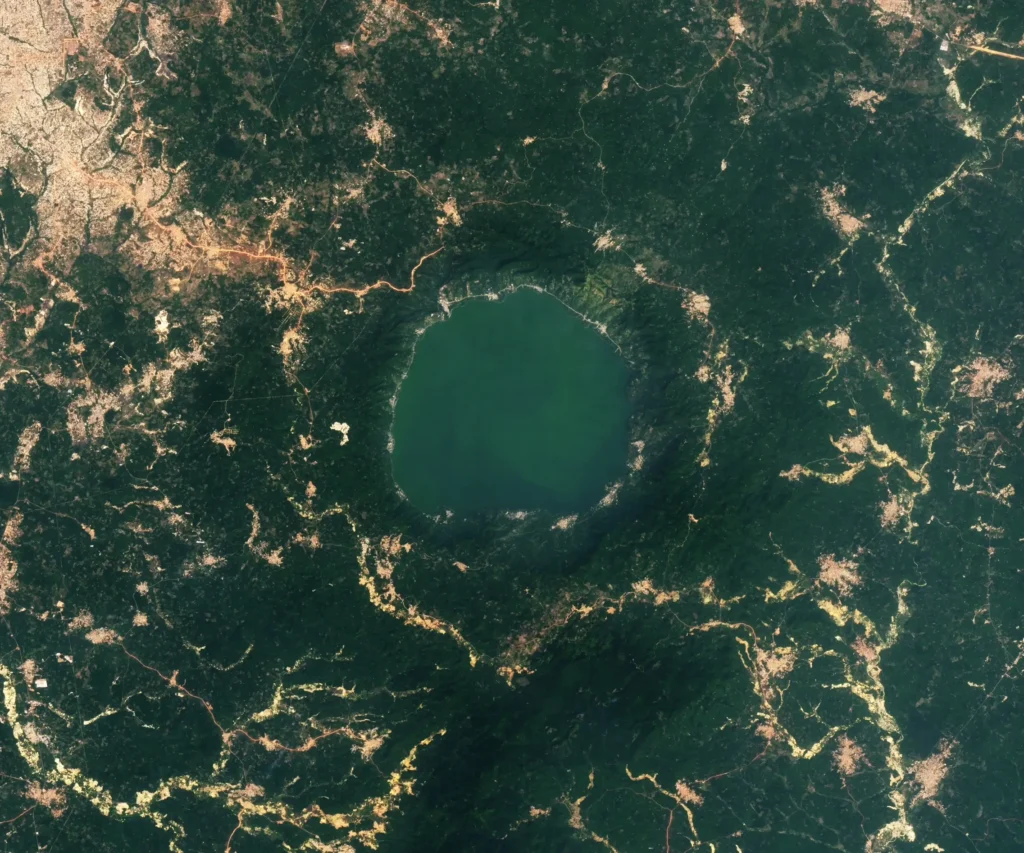
North America and Chesapeake Bay
The North American tektites, split into the bediasites of Texas and georgiaites of Georgia, with a vast microtektite layer extending offshore, were linked to the 85-km Chesapeake Bay impact structure by Koeberl, Poag, Reimold and Brandt in 1996. Drill cores beneath the bay revealed shocked quartz, planar deformation features, and impact melt breccias; the radiometric age of the tektites (35.5 ± 0.3 Ma) matched the crater’s biostratigraphic age. This is the oldest of the well-tied tektite fields.
Belize
The youngest entry to the club, before the geraisites, was Belize. Glassy tektite-like specimens collected near Pook’s Hill in western Belize were dated to roughly 804 ± 9 ka and tied by Pierre Rochette’s team in 2021 to the recently identified 14-km Pantasma crater in Nicaragua, about 530 km away. Some impact geochemists remain cautious; in 2022 a paper noted that the bulk chemistry alone is not unambiguous, although the very low water content, lechatelierite inclusions and absence of crystals together favour an impact origin.
That brings the count to six.
Where Is the Crater?
Christian Köberl of the Universität Wien, the dean of tektite geochemistry, has stayed cautious. He was not part of the Crósta team. In Eos, he framed the geraisite paper with characteristic precision: “It is an interesting finding that adds probably the second additional tektite strewn field, besides the Belize one, to the four ‘classical’ fields that have been known for more than 100 years.” “Six occurrences of different tektites worldwide are a rather small number,” Köberl added. “This discovery adds important new observations and data to our understanding of tektites, but more analyses will be necessary.”
So where is the crater?
The geraisite strewn field, even at the conservative published length of 90 km, is large enough to demand a substantial impact. The aggressive water depletion of the final glass, the wide aerodynamic dispersion, and the bulk volume of melted material all imply a kilometres-wide structure, although Crósta’s team is explicit that they cannot yet pin down the impactor’s size or velocity. “The team is currently working on a mathematical model of impacts to estimate parameters such as the energy released, the velocity, the angle of entry, and the volume of molten rock,” the FAPESP release states. Present tense. Ongoing.
Brazil is geologically unusual in how few impact structures it preserves. Brazil’s confirmed-impact register is short — nine structures (Reimold et al. 2022; Kenkmann 2021): Araguainha (40 km), Serra da Cangalha (13.7 km), Cerro do Jarau (~13.5 km), Vargeão (12.4 km), Santa Marta (~10 km), Vista Alegre (9.5 km), Nova Colinas (~7 km, confirmed 2022), Riachão (4.1 km), and the small, deeply weathered Colônia structure (3.6 km), most of them much older than 6.3 Ma. The São Francisco craton is also one of the most stable and deeply weathered portions of the South American crust. A crater of even ten or fifteen kilometres in diameter, buried under late Cenozoic sediments, lateritic regolith, or cerrado vegetation, could sit unseen for tens of millions of years. Crósta has started the search using satellite imagery, aerogeophysical surveys, and circular anomaly detection. “In the future, aerogeophysical methods such as magnetic and gravimetric surveys may reveal circular anomalies associated with a buried or eroded crater,” FAPESP reported.
There is also the possibility that the crater is no longer in Brazil at all. Crósta has noted to multiple outlets that the impact may have occurred offshore, with the 900-km dispersal pattern suggesting more samples will turn up in adjacent regions. The Australasian field has its crater under volcanic flows in Laos; the North American field’s crater is offshore beneath Chesapeake Bay. The geraisite crater could be hiding under Brazilian topsoil, under Atlantic sediment, or under the lateritic skin of the craton.
Why the Geraisite Discovery Matters for Earth’s Impact Record
Tektites are small objects asked to carry a great deal of inference. A single 5-centimetre splash-form glass, dropped into a cerrado pasture six million years ago, can constrain when an impact happened, identify the rock it melted, and, if you can find the crater, close the loop on a planetary collision. Three of the six known tektite fields have a confirmed source crater. The other three, Australasian, Belize, and now Brazil, don’t.
The geraisite discovery expands South America’s chronically thin crater census, a continent whose impact record has long lagged behind North America, Europe, and Australia. Alongside Belize, it also shows that the four classical strewn fields were undercounting late-Cenozoic tektite-producing impacts, a trend Köberl now frames as the second confirmation of the same point. And it pins an unknown kilometre-scale impact, six million years deep, to the São Francisco craton, one of the oldest pieces of continental lithosphere in the Southern Hemisphere.
Crósta likes to draw the Mars comparison. “The Earth was bombarded just like Mars,” he told Eos. “But here we do not see the craters as easily because our planet is very dynamic, with plate tectonics and erosion. To study this history, we must search for traces, and tektites are one of them.” Pantasma’s crater sits hidden under jungle and pumice. Chesapeake Bay’s is drowned under brackish sediment. Yarrabubba, in the Pilbara, has been weathered down to a geochemical ghost detectable mainly through shocked zircon. Tanis records its impact one continent away, as a death assemblage of fish killed within hours of the Chicxulub strike. Libyan Desert Glass remains argued over. Geraisites, sitting on Brazilian farmland and nicknamed “bottle-bottom tourmaline,” may be the most casual record of all.
The Crósta team’s paper closes with a forward-looking line that reads as both confidence and admission: “This has important implications regarding Earth’s overall impact record, hinting that there might be other still undiscovered tektite occurrences with distinct origins, chemical compositions, and ages.” Four of the six fields had been known since the early twentieth century. A fifth, Belize, was confirmed in 2021. A sixth, in Brazil, in 2025. The sky has been falling longer, and in more directions, than the four classical fields ever revealed. The next geraisite-equivalent may be sitting in someone’s drawer right now, mistaken for a piece of slag or a bottle bottom. Crósta’s phone, by all indications, has been ringing.
The crater, meanwhile, is somewhere in the cerrado, or under it.
Frequently Asked Questions
What is a geraisite?
A geraisite is a natural impact glass, or tektite, found in northern Brazil. The glasses range from less than a gram to about 85.4 grams, appear black and opaque in normal light but translucent grey-green under bright light, and take splash-form shapes (spherical, drop-shaped, dumbbell, twisted). They were officially named in the December 2025 Geology paper by Álvaro Crósta and colleagues after the Brazilian state of Minas Gerais, where the first specimens were collected. Geraisites are the sixth tektite strewn field recognised on Earth and the first in South America.
How old is the Brazilian tektite field?
The best 40Ar/39Ar age from the Crósta et al. study is roughly 6.3 million years, placing the impact in the Messinian stage of the late Miocene. Three plateau ages (6.78 ± 0.02, 6.40 ± 0.02 and 6.33 ± 0.02 Ma) cluster tightly enough to argue for a single event. Crósta cautions that 6.3 Ma should be read as a maximum age, because some of the radiogenic argon may have been inherited from the very ancient target rocks rather than reset at impact.
Where is the crater that made the geraisites?
It has not been found. Isotopic data (Sr, Nd, Hf) point to a target of Mesoarchean granitic crust between 3.0 and 3.3 billion years old, consistent with the São Francisco craton of eastern Brazil. Crósta’s team is searching with satellite imagery, magnetic and gravimetric data, and impact modelling. The crater could be buried under sediments or laterite, deeply eroded, or, given the >900-km extent of the strewn field reported since the paper was submitted, possibly offshore. Three of the six known tektite fields still lack confirmed source craters; the geraisite field is currently one of them.