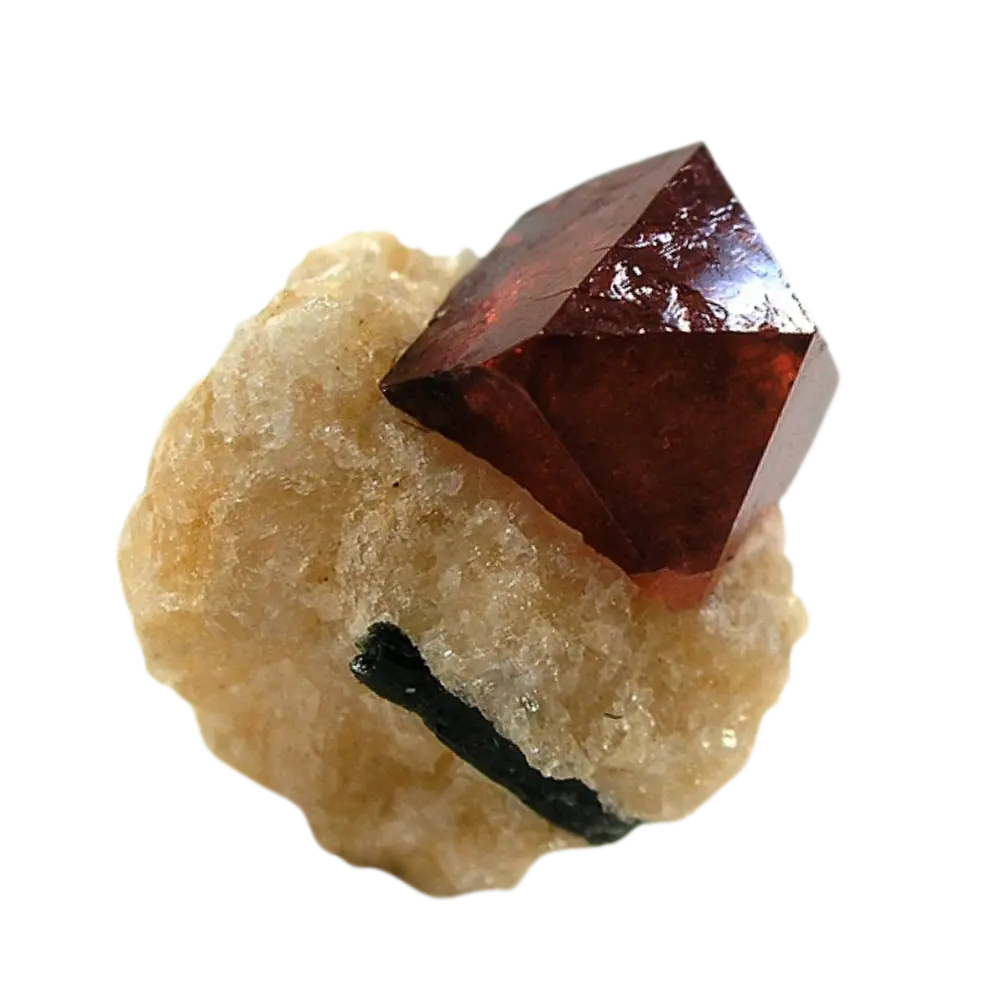

In April 2000, two brothers drilling a tunnel 300 metres beneath a Mexican mountain broke through a wall and stepped into the largest natural crystals ever measured, translucent beams of selenite up to 11.4 metres long, grown over hundreds of thousands of years in water hot enough to kill. This is the story of the Cave of Crystals at Naica, the most spectacular and least visitable mineral chamber on Earth, and of why almost everything astonishing about it comes down to a single temperature.
A Door Into the Mountain
The drill bit punched through into empty space, and the air that came back through the hole was wrong. Too hot. Too wet. It smelled of stone and sulfur.
It was April 2000, roughly 300 metres below the surface of the Sierra de Naica in Chihuahua, Mexico. Two miners, brothers named Juan and Pedro Sánchez, were cutting a new tunnel for Industrias Peñoles, the company that has worked this mountain for lead, zinc and silver for generations. They were drilling through the Naica fault, the kind of fractured ground that mining engineers watch nervously because it can flood a working level in minutes. What they hit was not water. It was a void.
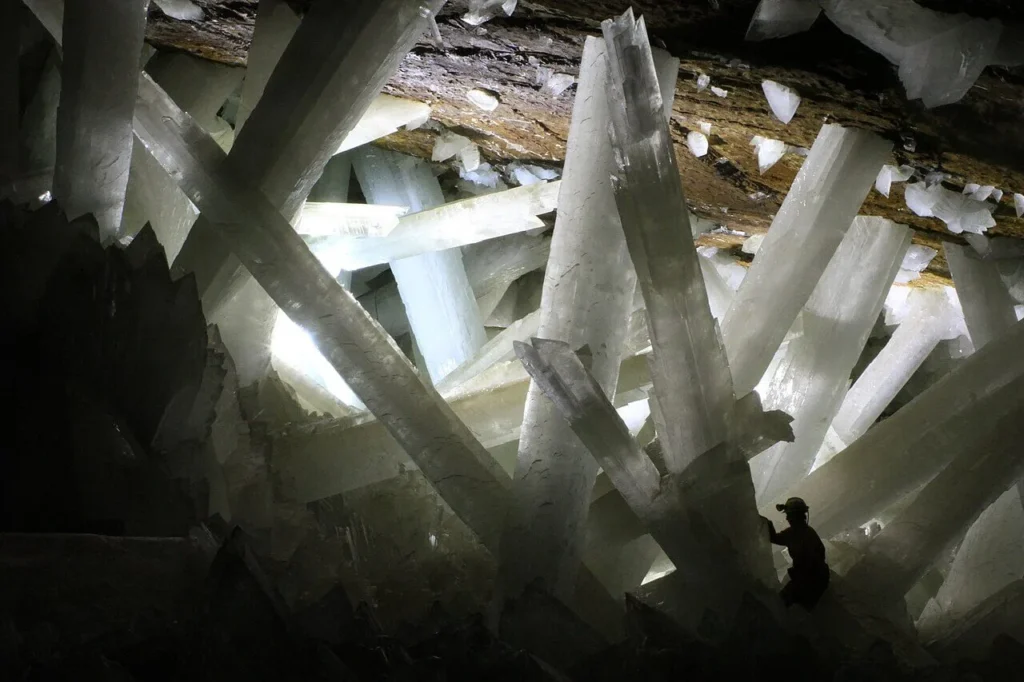
When they widened the opening and brought their lamps to the gap, the light did something it is not supposed to do underground. It went in, and it kept going, refracting and scattering off surface after surface, throwing back a cold pale glow from every angle. The chamber beyond was packed with crystal. Not the fist-sized points of a rock shop. Not even the metre-long blades the mine already knew about from a cave found a century earlier. These were beams the length of utility poles, a metre thick at the base, crossing the room at every angle as if the cave had been strung with frozen searchlights.
The brothers had broken into what would be named the Cueva de los Cristales, the Cave of Crystals. By most accounts they recognised at once that they had found something extraordinary and reported it to mine management; an iron door was soon installed to control access. The discovery story has been retold in National Geographic, in the journal Geology, and across science media, and the brothers’ names recur consistently across those accounts. A small note of caution belongs here: the Sánchez brothers appear in many secondary sources and on Wikipedia, but they rarely speak for themselves in the technical literature, and at least one popular account names a different pair of brothers. The weight of reporting supports Juan and Pedro Sánchez, and that is how they enter the record.
What the brothers could not have known, standing in that doorway in the heat, was that almost everything remarkable about the room in front of them came down to a single number near 58 degrees Celsius, and to the fact that the mountain had held itself close to that number, without flinching, for the better part of a million years.
What the Naica Crystals Actually Are
At its simplest, the Cave of Crystals is a chamber in limestone host rock, roughly horseshoe-shaped, about 109 metres long in its full extent, with a volume between 5,000 and 6,000 cubic metres, more than twice the water an Olympic pool holds. The famous part, the main chamber, is smaller, on the order of 30 metres by 10. The floor is paved with faceted crystal blocks. Out of the floor and walls grow the beams.
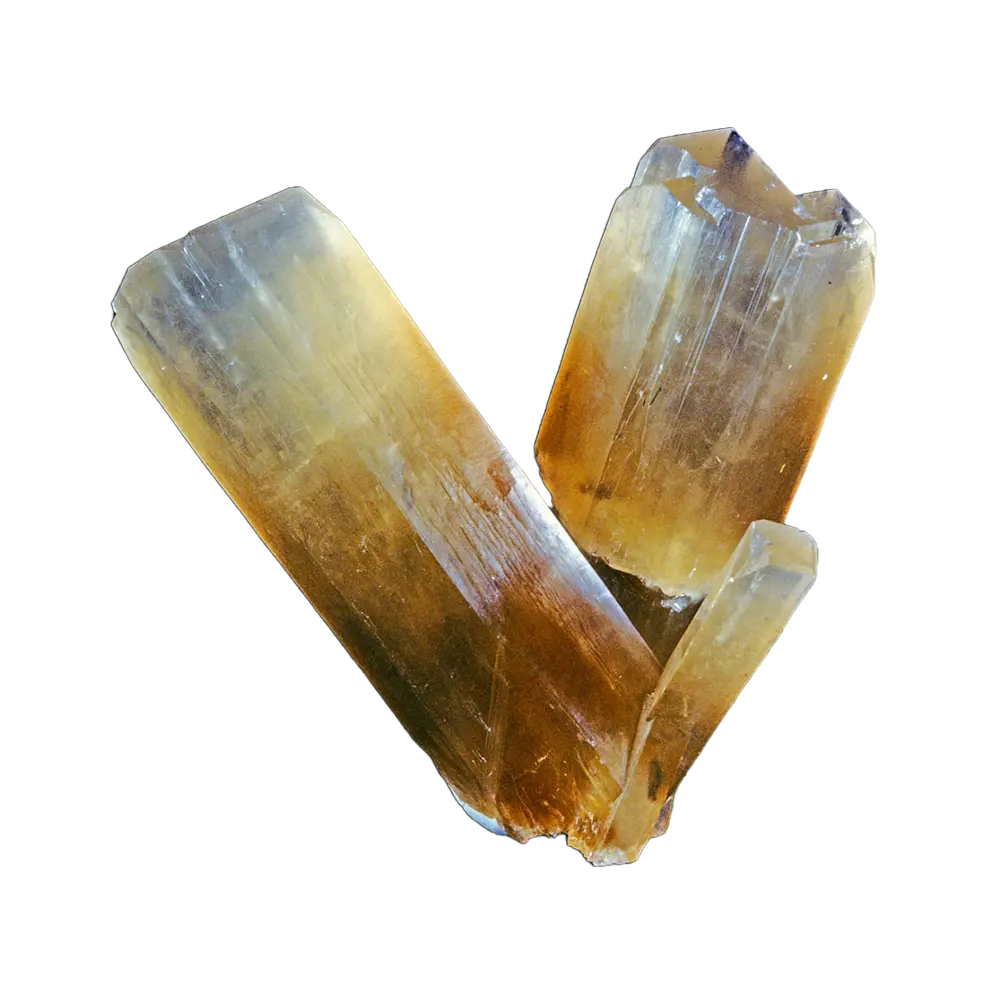
Those beams are selenite: the clear, colourless variety of gypsum, which is calcium sulfate dihydrate, CaSO₄·2H₂O. Gypsum is one of the most ordinary minerals on the planet. It lines desert playas, it is mined by the megatonne for plaster and drywall, and it turns up as small crystals in caves all over the world. There is nothing exotic in the chemistry. Two things make Naica’s gypsum extraordinary: size, and the conditions that allowed that size.
The largest crystal documented in the cave is 11.40 metres long, about 37.4 feet, the height of a four-storey building. Wikipedia and the technical literature put its volume at roughly 5 cubic metres and its estimated mass at about 12 tonnes. Those are the figures best supported by careful measurement, and they are the ones to trust.
You will, however, run into a different set of numbers almost everywhere you look. A great many popular sources, and even Guinness World Records, state that the largest beam is 12 metres long, 4 metres in diameter, and weighs up to 55 tonnes; others, including the American Chemical Society’s own Chemical & Engineering News, give an estimated 40 to 50 tonnes. These larger figures circulate widely, but they are not well supported by the measured dimensions of the actual record crystal, and the “4 metres in diameter” claim in particular is hard to reconcile with photographs and with the roughly 1-metre widths the scientists describe. The honest position is this: the best-documented record beam is 11.4 metres long, about a metre wide, and around 12 tonnes. The 55-tonne figure is a popular claim that should be treated with skepticism rather than repeated as fact.
For comparison, the beams are tall enough that a standing adult reaches barely past the base of the largest ones. Photographs of the chamber almost always include a person in a silver suit, precisely because the human eye refuses to believe the scale otherwise.
The cave that came before
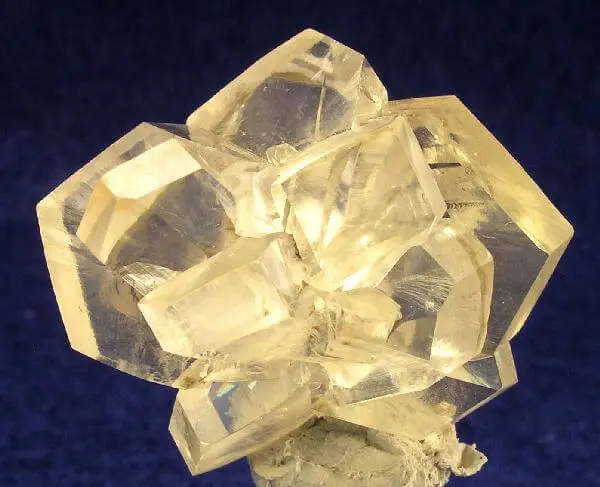
Naica had hinted at this for ninety years. In 1910, miners working a level about 120 metres down broke into a smaller chamber lined with crystal blades and named it the Cueva de las Espadas, the Cave of Swords. Its crystals are spectacular in their own right but far smaller, most around a metre long, some reported up to about two metres. Because the Cave of Swords sits higher and shallower, its water cooled faster, and faster cooling is exactly the wrong condition for growing giant crystals, for reasons we will come to.
The Cave of Swords has a sadder history, too. It was opened to visitors relatively early, and souvenir hunters and collectors stripped and damaged many of its finest blades before anyone thought to protect it. The Cave of Crystals escaped that fate almost entirely, and the reason is brutal: it is far too hostile for casual tourism. Its inaccessibility, the same quality that makes it so hard to study, is what kept it pristine.
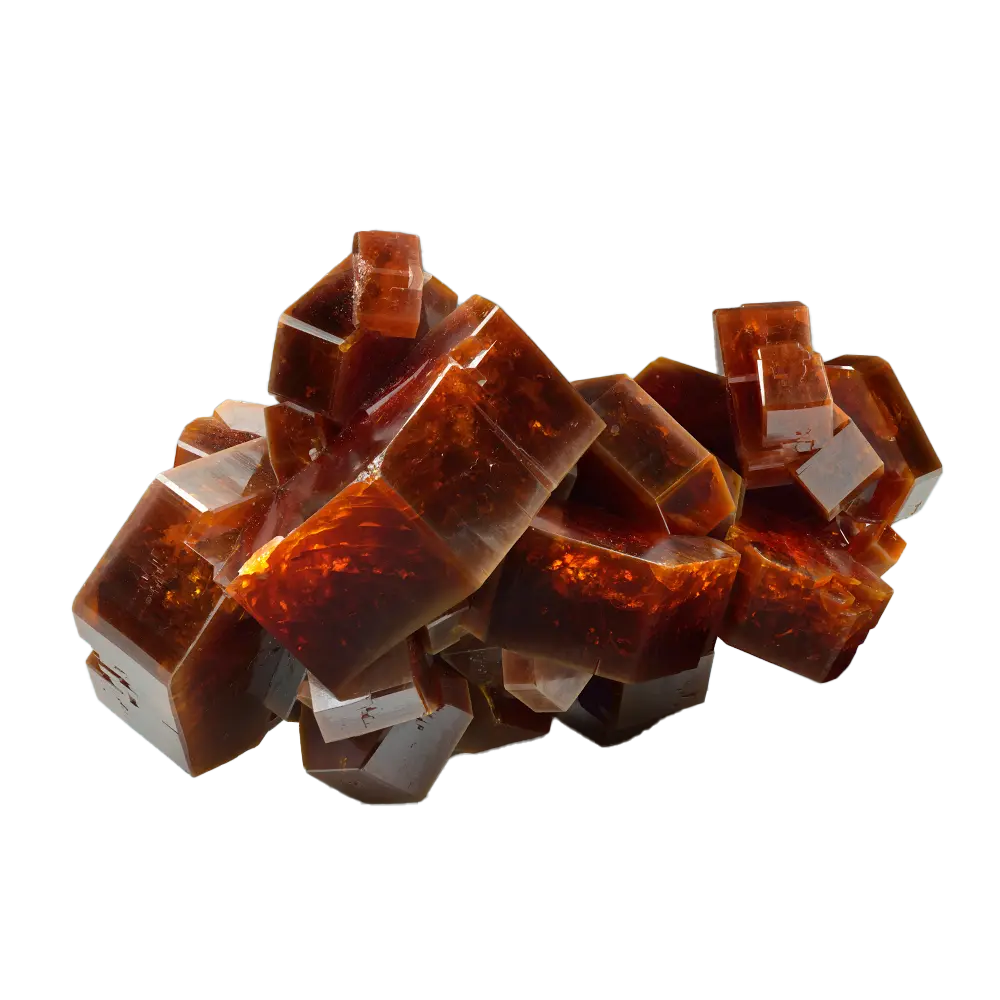
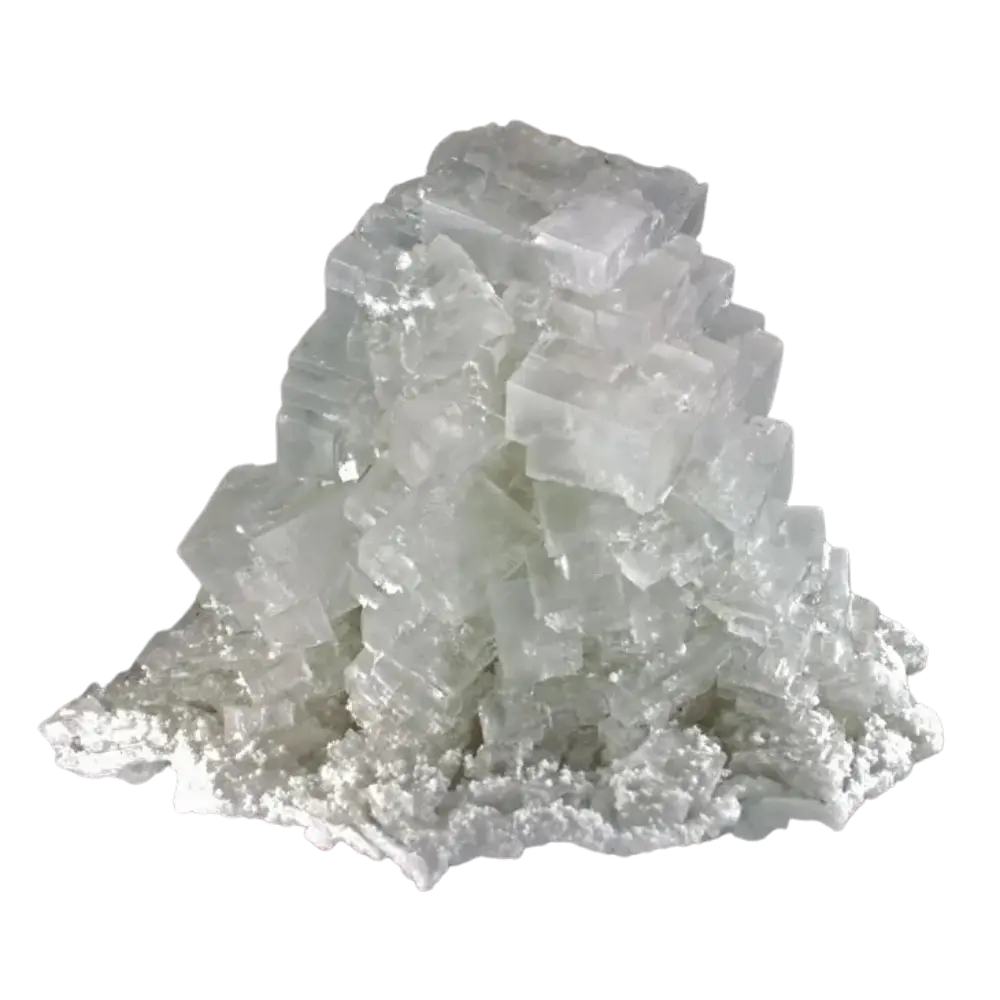
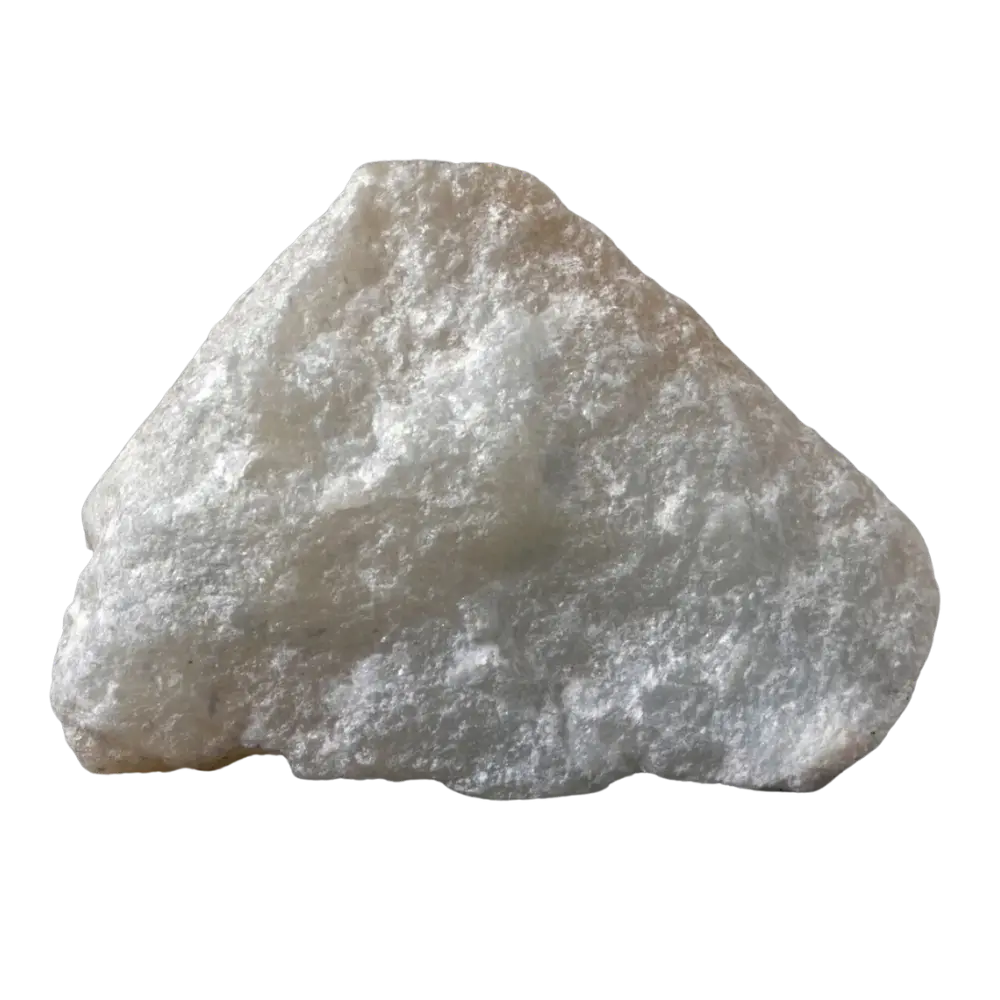
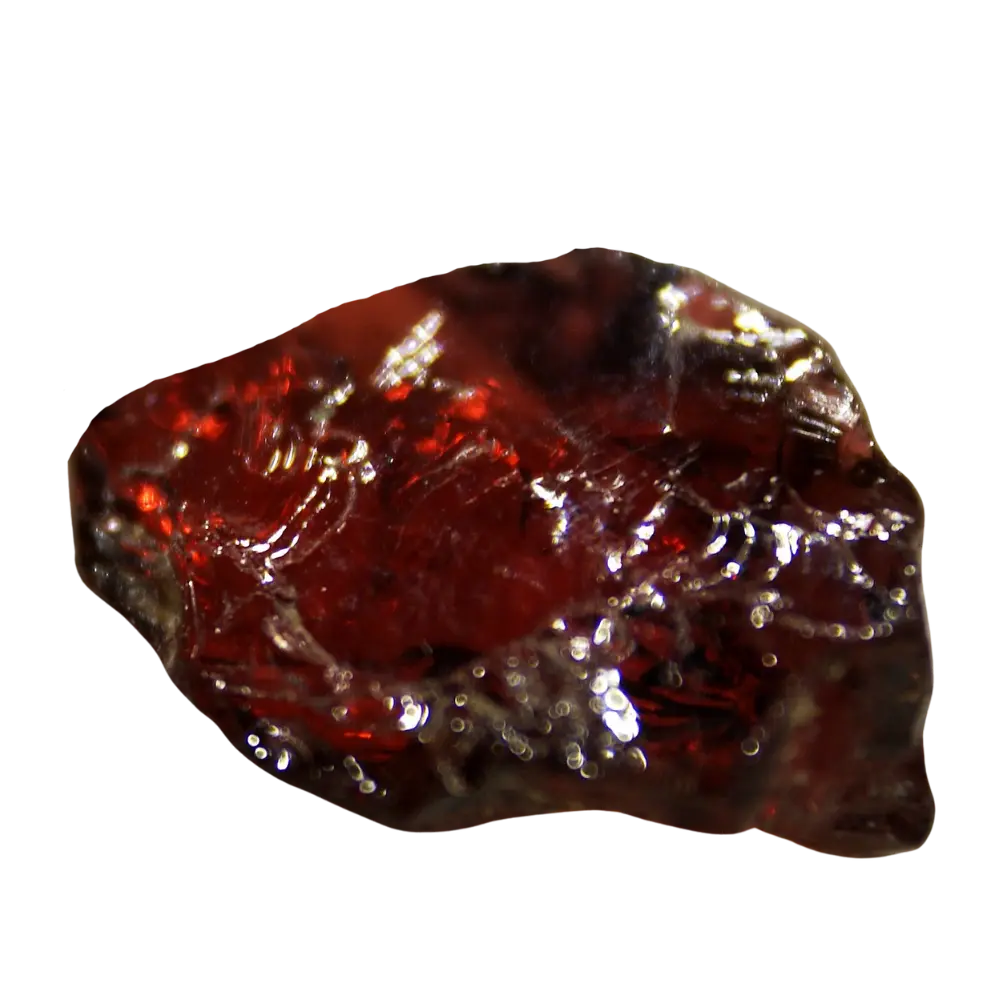
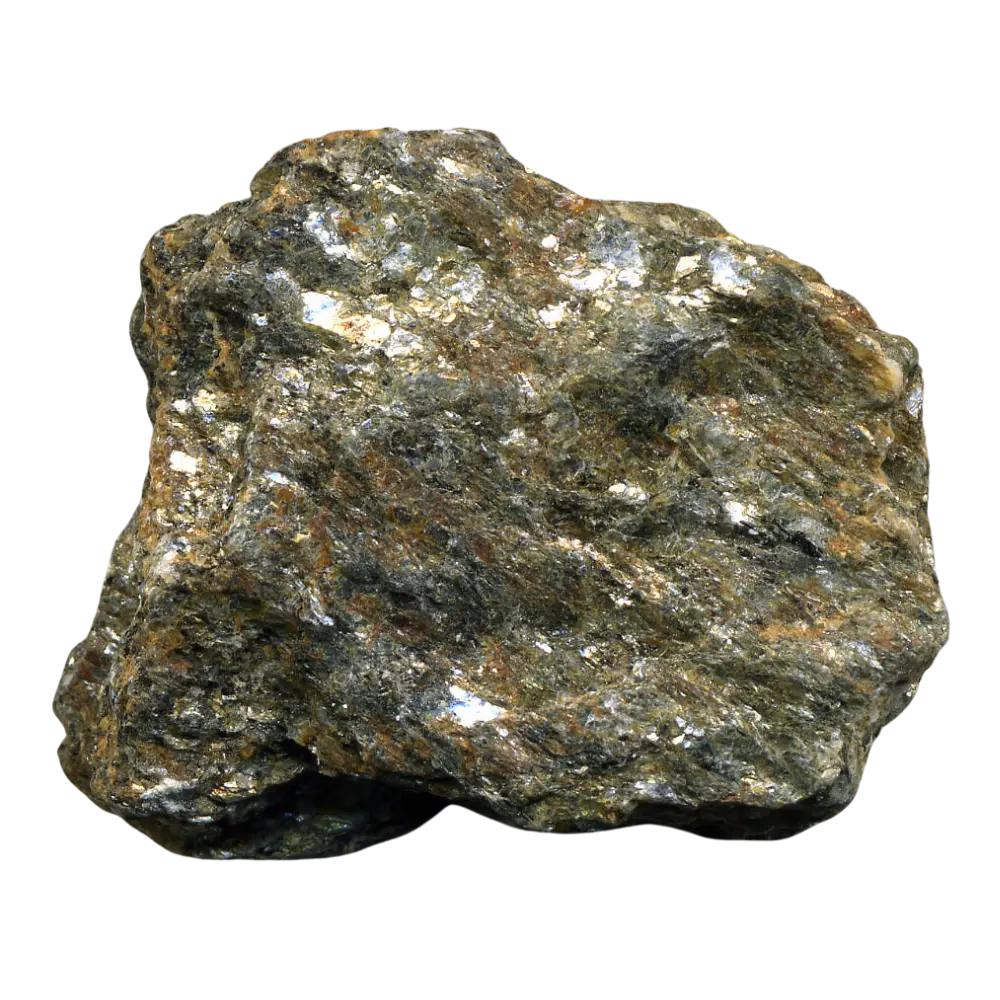
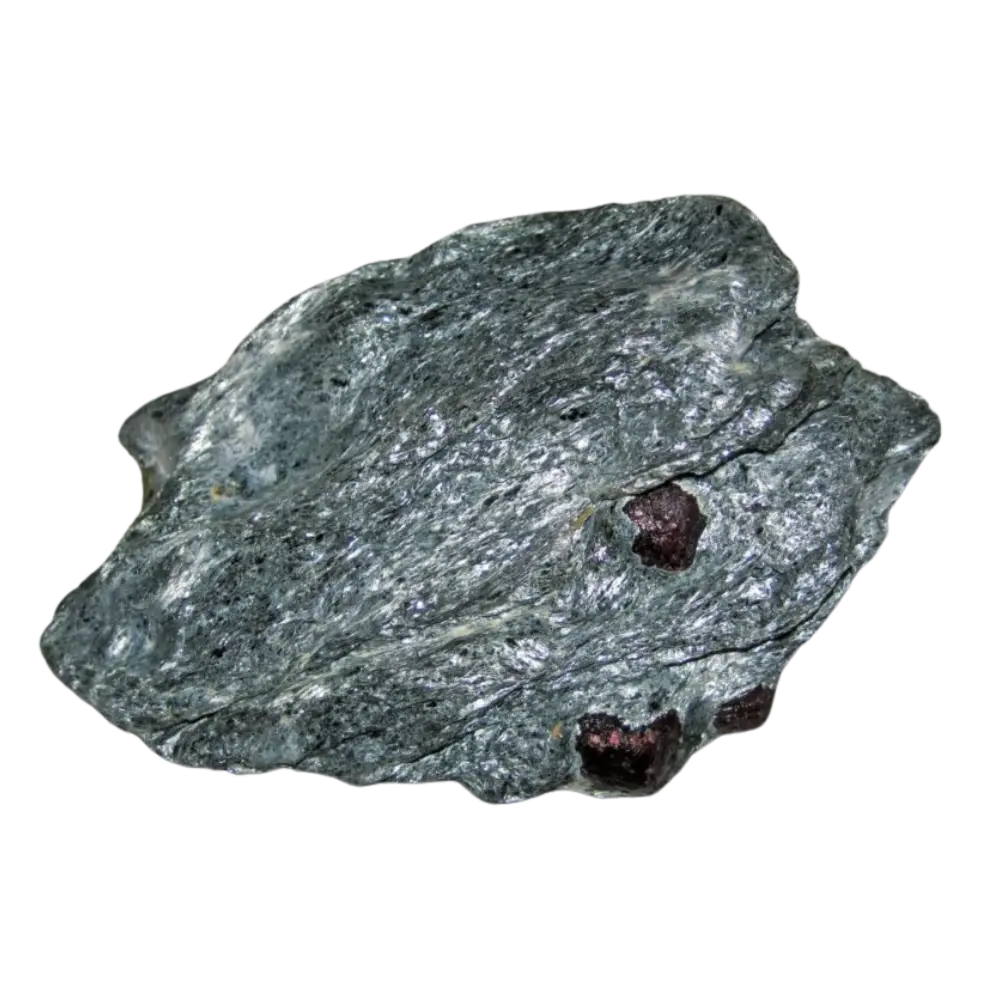
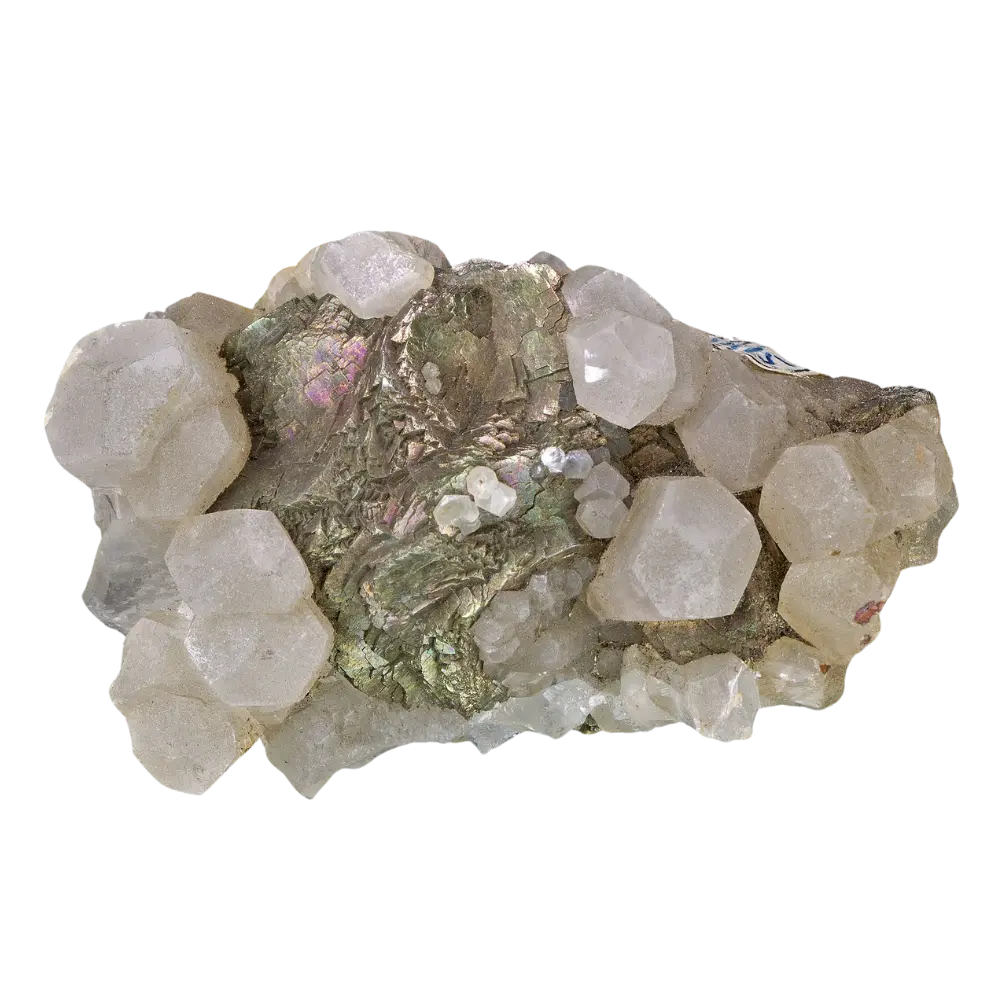
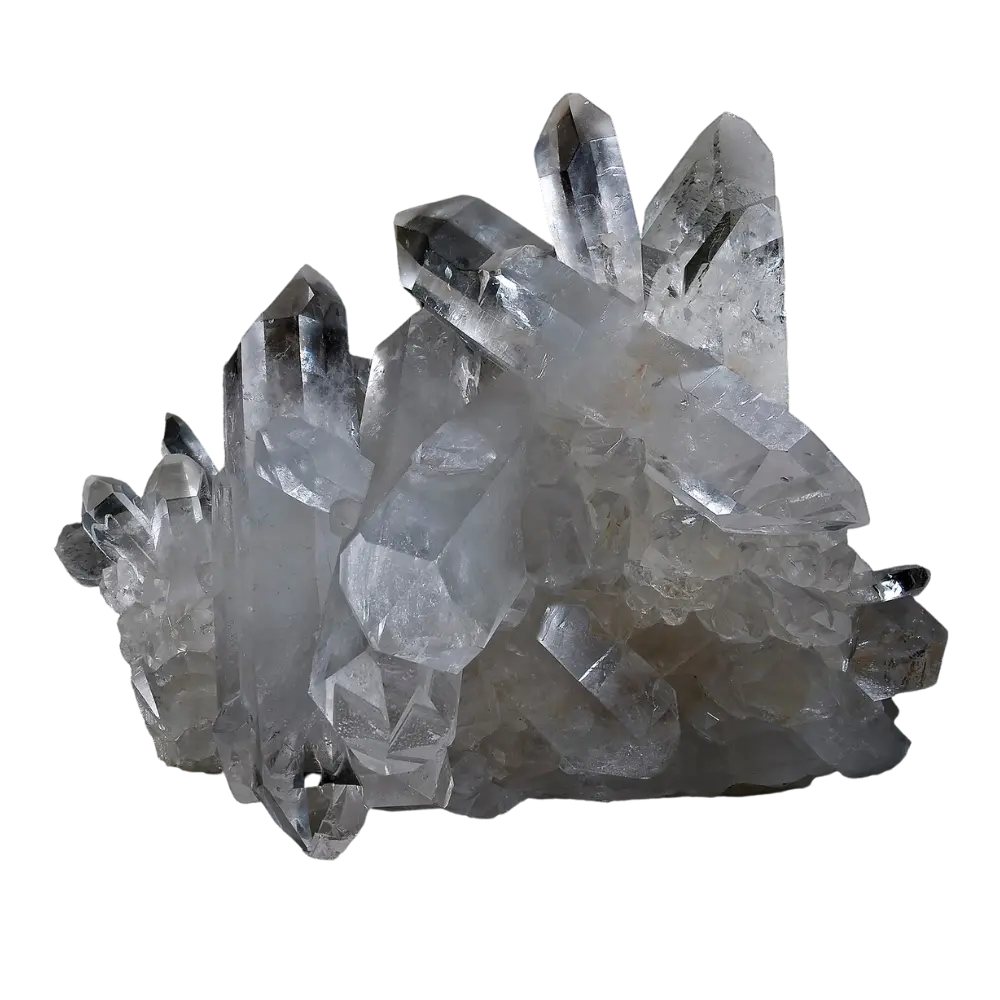
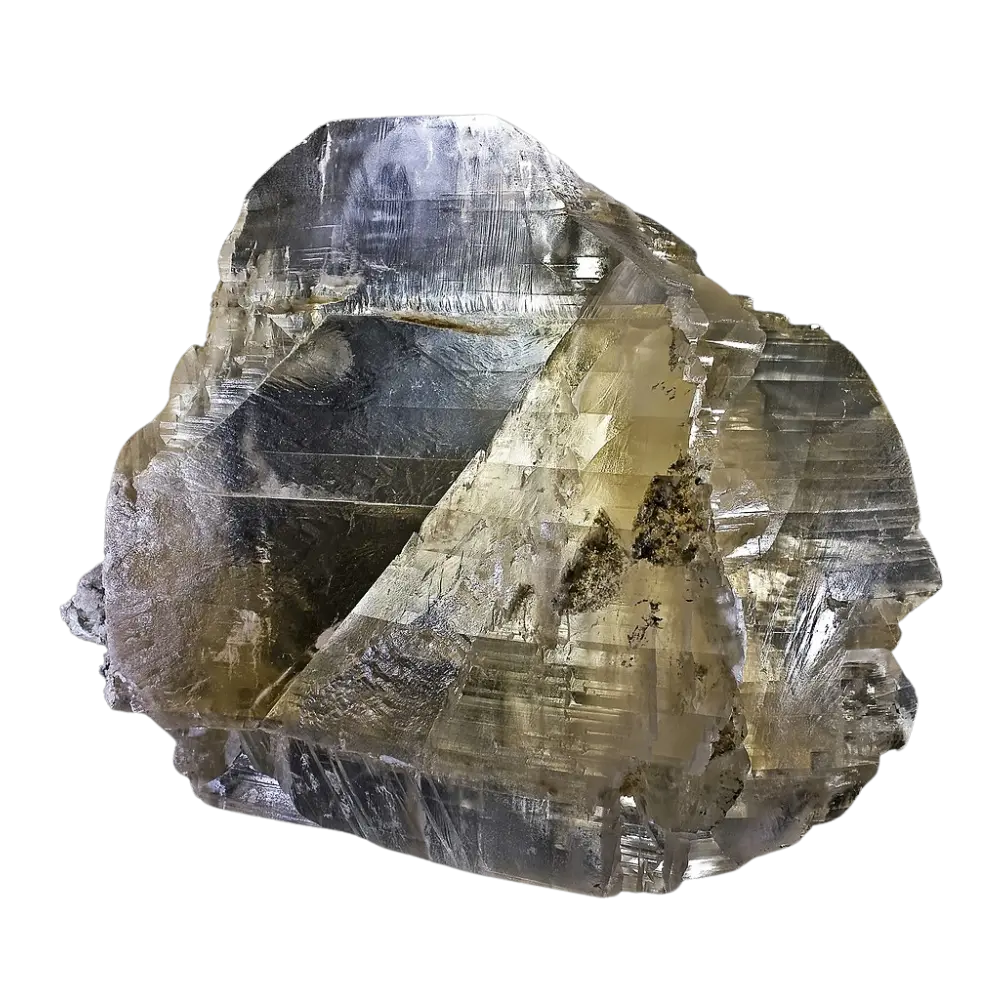
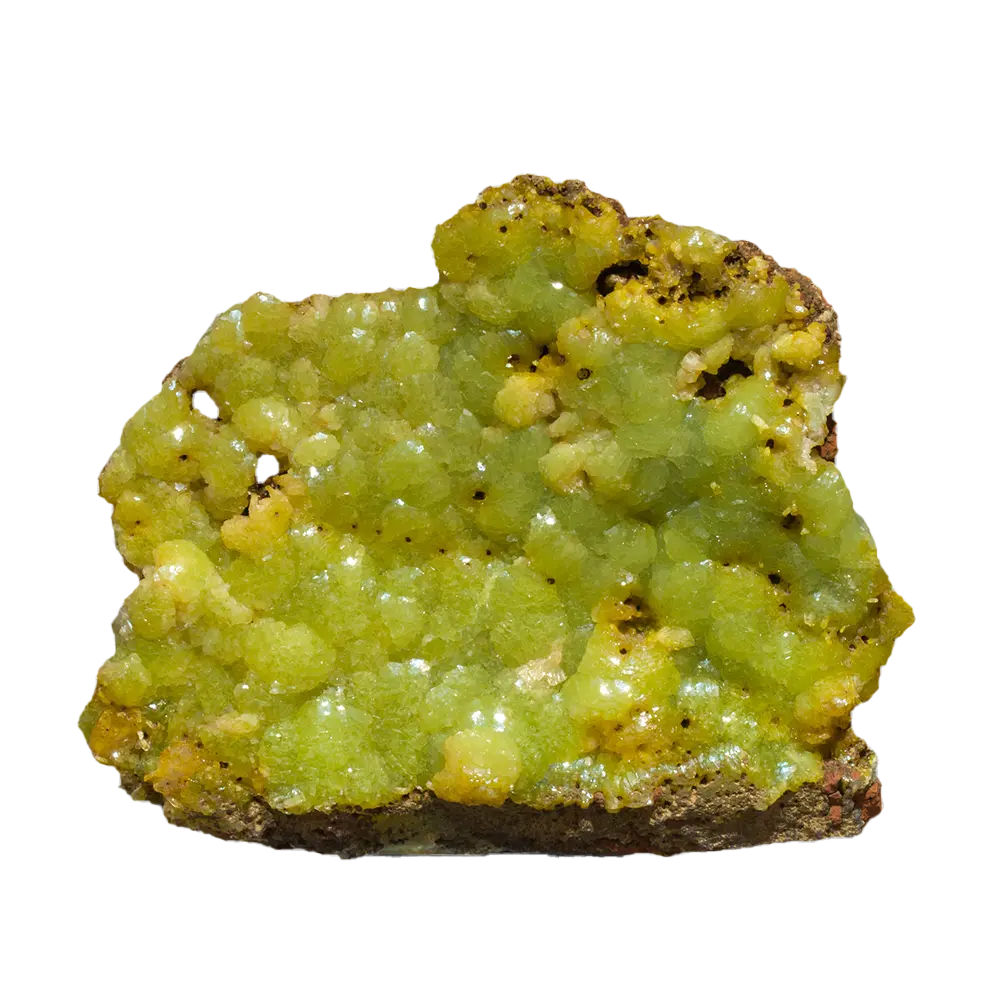
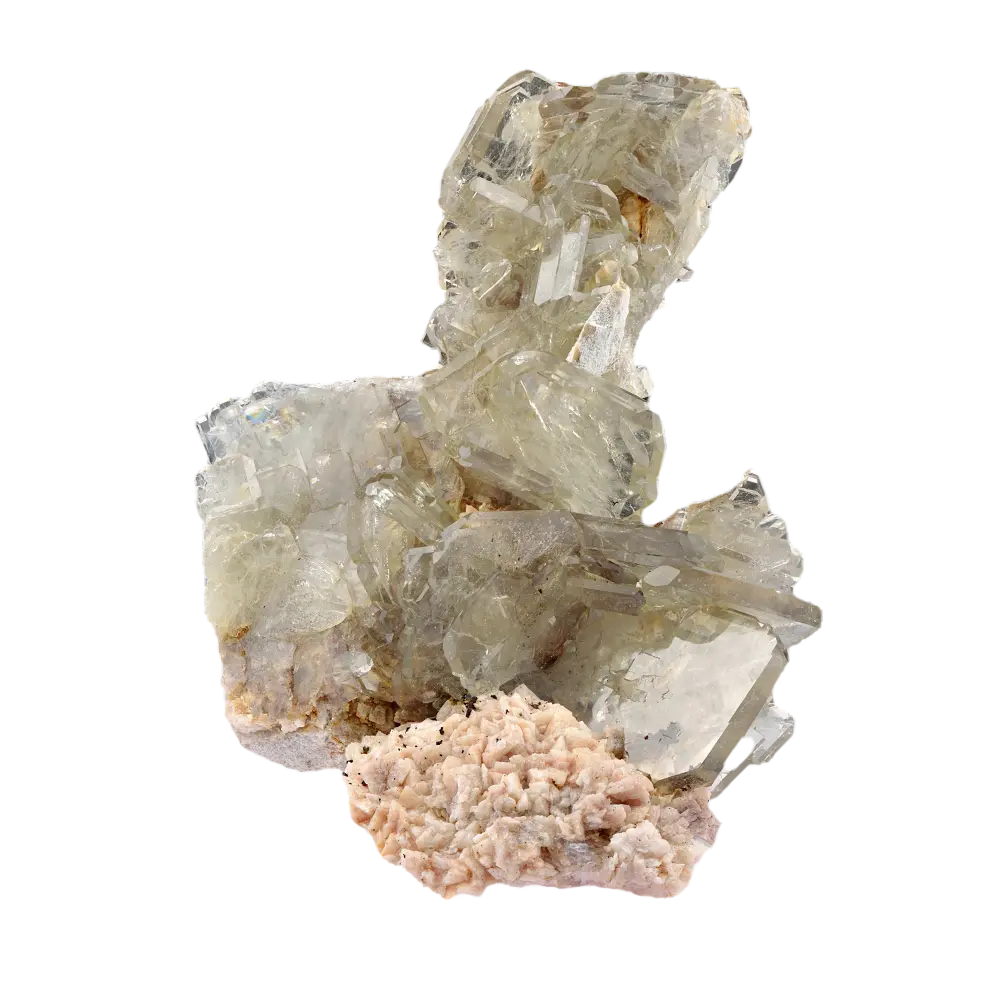
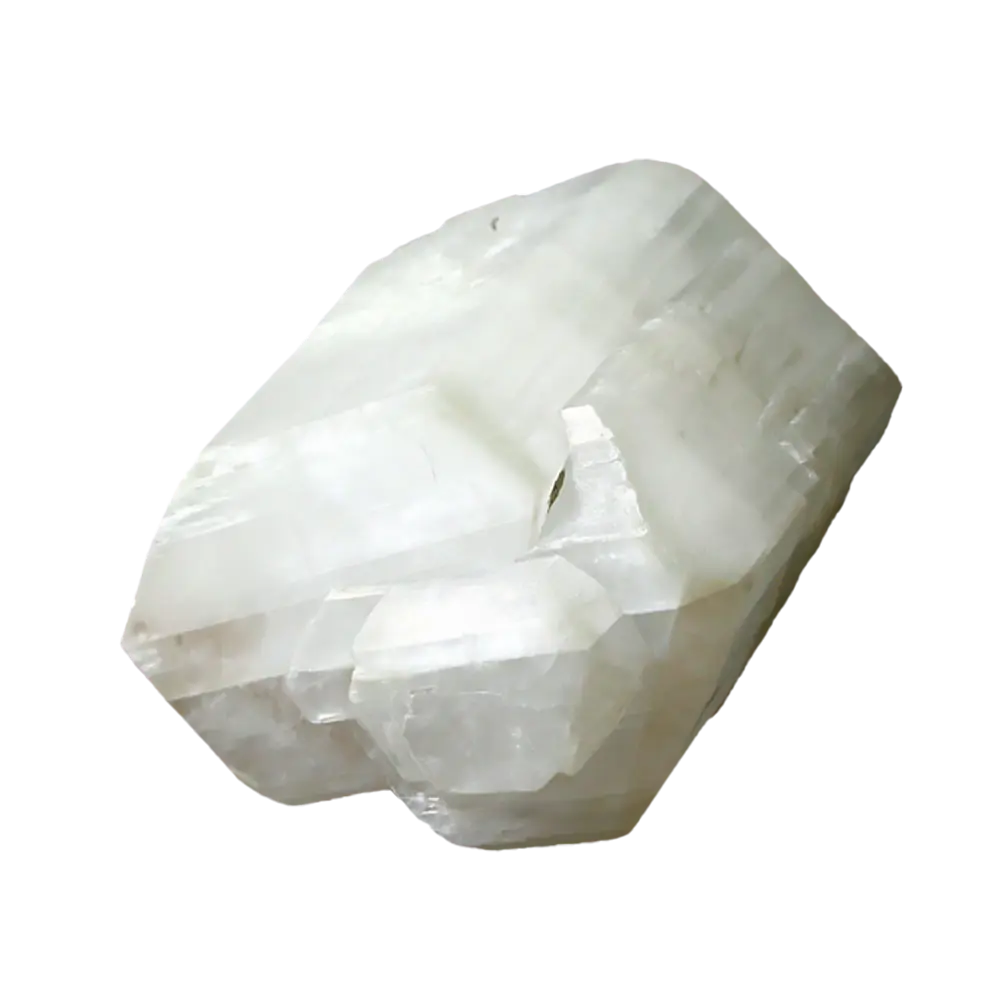
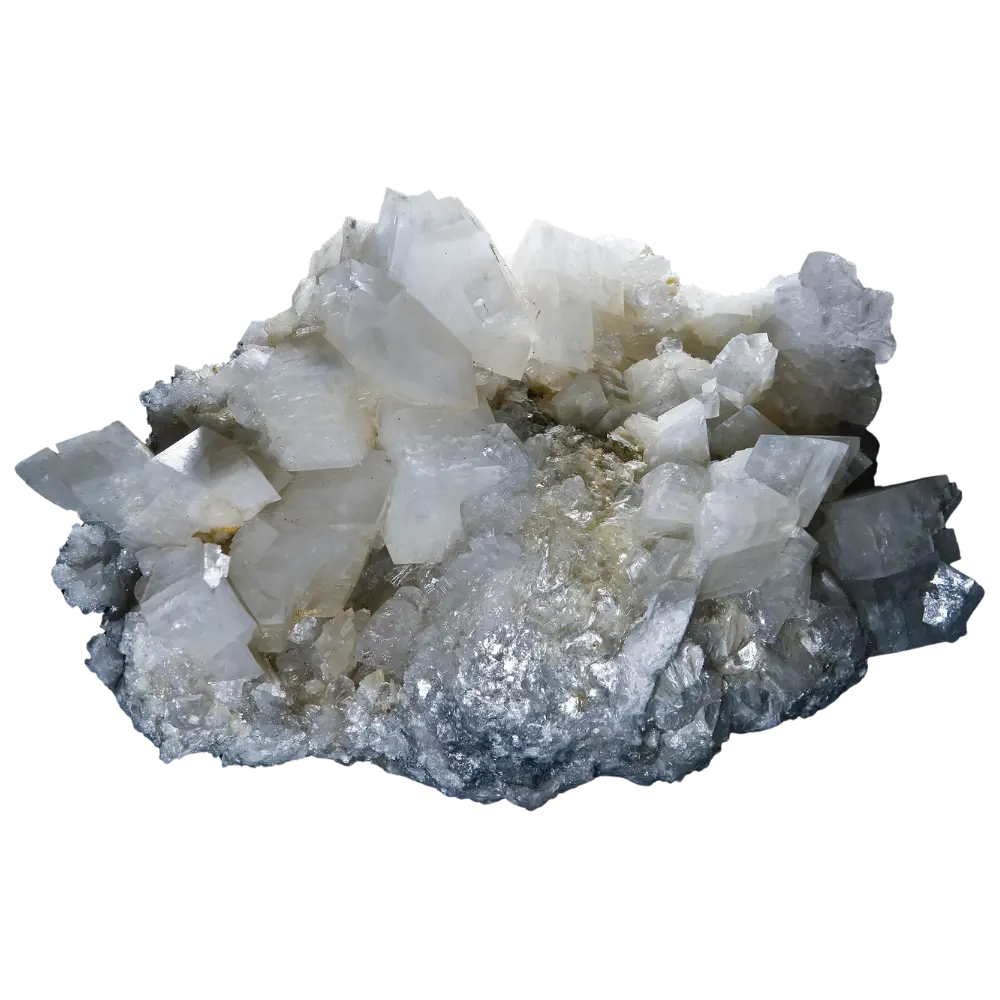
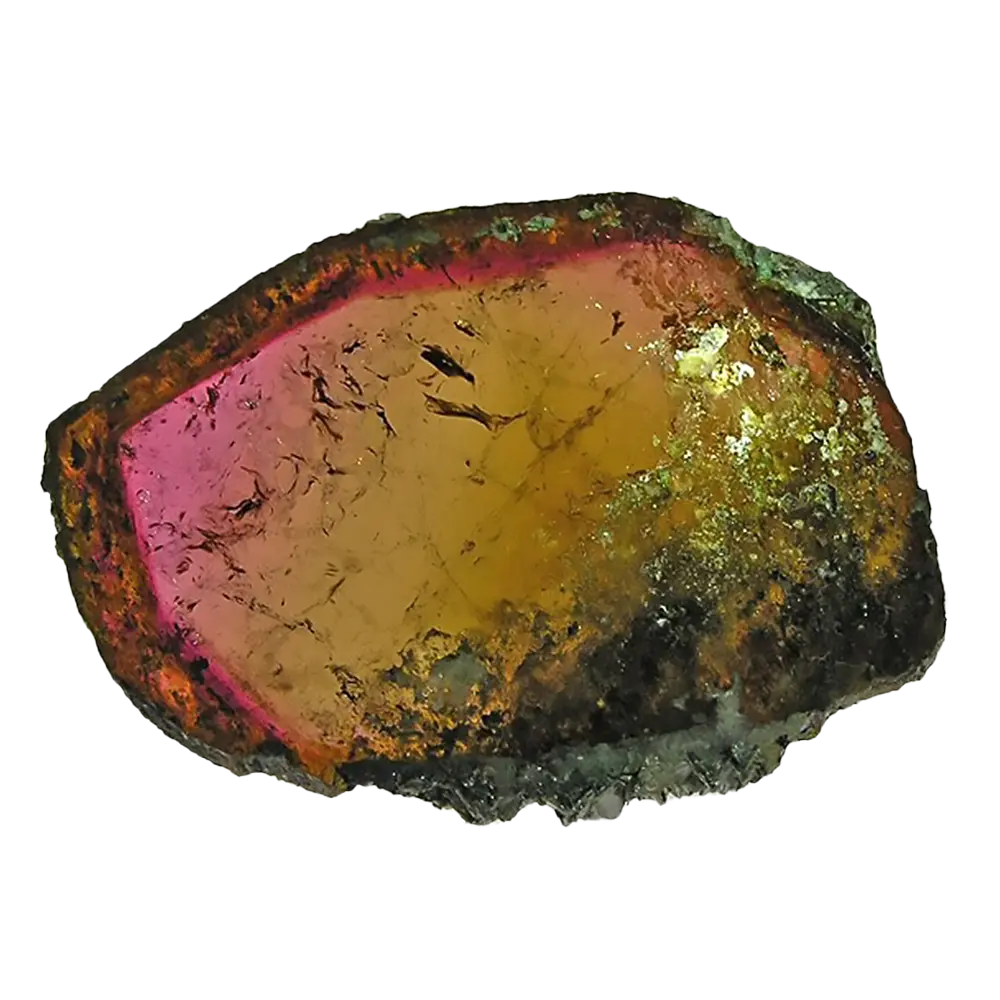
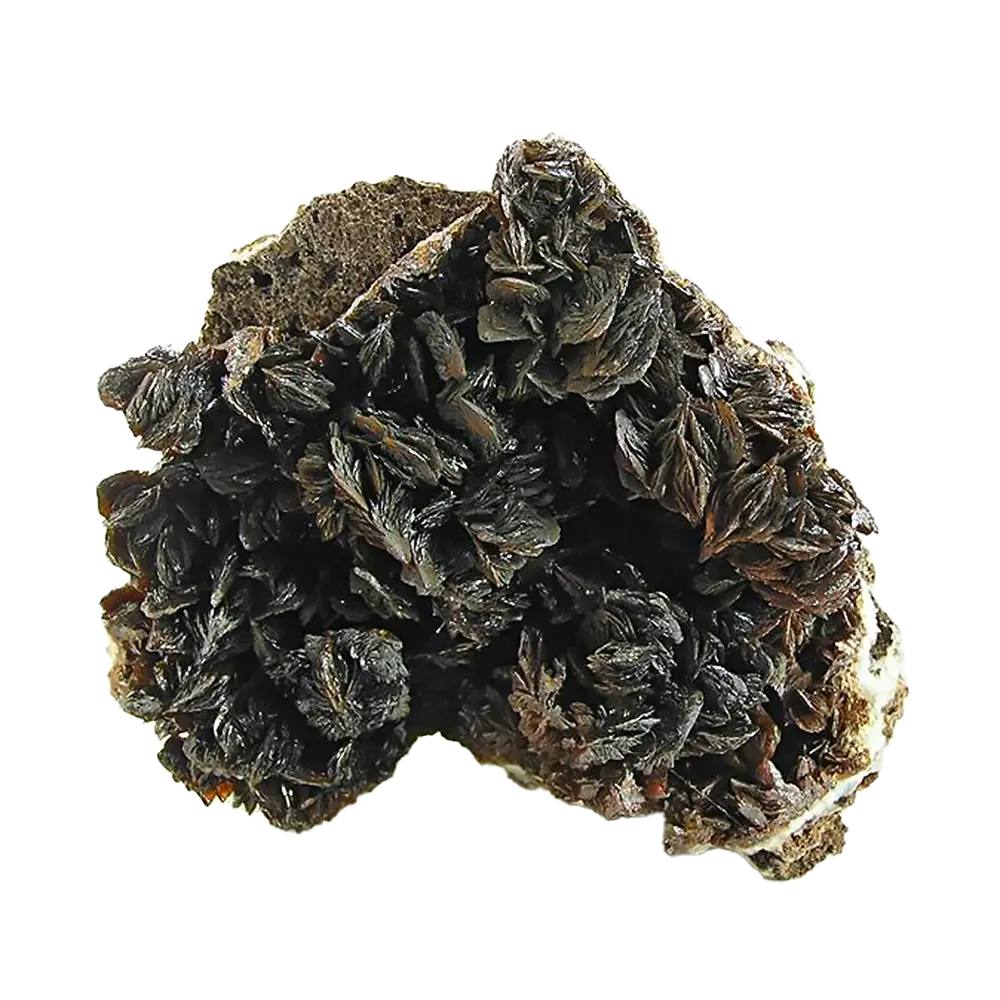
Here is a specimen of selenite gypsum from the same mine, the kind of crystal that fits in a museum case rather than a cathedral.
How big are the Naica crystals and how old are they? The best-documented record beam is 11.4 metres long, about a metre wide, and roughly 12 tonnes. The largest crystals grew over a span of at least 500,000 years, plausibly approaching a million.
How the Crystals Grew
To understand Naica you have to start with the mountain itself, and with heat coming from below.
Beginning roughly 26 million years ago, volcanic activity built the Sierra de Naica and laced the limestone with veins of metal ore. The mountain sits on a fault, and below it, two to three miles down, three to five kilometres, lies a body of magma. That magma is the engine. For an immense span of time it has heated the groundwater circulating through the rock, and that hot water is what mining at Naica has always had to fight, pumping it out by the swimming-pool-load to keep the tunnels open. The caves themselves sit roughly 160 metres below the natural water table, and it was the mine’s pumping, which had been lowering that table for decades, that drained the chambers and stopped the crystals’ growth before anyone broke into the largest of them. The crystallographer Alexander Van Driessche, who studied the cave, told Chemical & Engineering News that Peñoles pumped water out of the mountain at a rate roughly equivalent to filling an Olympic-sized swimming pool every 40 minutes, creating an artificial lake near the town of Naica.
This is a hydrothermal system, rock and mineral chemistry driven by hot, mineral-laden water moving through the crust. The water that filled the Naica caverns was rich in dissolved calcium sulfate. The key player early on was not gypsum but anhydrite, calcium sulfate without the water in its structure, CaSO₄, the “dry” sibling of gypsum. Anhydrite precipitated out of the hot mineralised water as the system matured. And anhydrite holds a secret that turns out to govern the whole story: it is stable only when the water is hot. Once the temperature falls below a threshold, anhydrite becomes unstable in the presence of water and slowly dissolves, and gypsum becomes the stable form instead.
That threshold sits at about 58 degrees Celsius, the published value is 58 ± 2 °C. It is the single most important number at Naica. Above it, anhydrite rules and gypsum will not grow. Below it, anhydrite begins giving itself up, feeding calcium and sulfate back into the water, and that dissolved material can rebuild itself as gypsum.
The chemistry of a self-feeding crystal
The breakthrough in understanding came in 2007, when Juan Manuel García-Ruiz of the University of Granada and Spain’s CSIC research council, with colleagues Roberto Villasuso, Carlos Ayora, Àngels Canals and Fermín Otálora, published “Formation of natural gypsum megacrystals in Naica, Mexico” in the journal Geology (volume 35, issue 4, pages 327–330). It is the foundational paper on how the crystals formed, and its central idea is elegant.
García-Ruiz’s team studied fluid inclusions, tiny pockets of the original growth solution trapped inside the crystals as they grew, sealed microscopic time capsules that preserve the chemistry and temperature of the moment of formation. Analysing those inclusions, they found the crystals grew from low-salinity water at a temperature of about 54 °C, just slightly below the 58 °C point at which the solubilities of anhydrite and gypsum are equal. Sulfur and oxygen isotope signatures pointed to the source of the sulfate: dissolving anhydrite that had been laid down earlier during the mine’s hydrothermal mineralisation.
Put those pieces together and you get what the team called a self-feeding mechanism, driven by a “solution-mediated, anhydrite–gypsum phase transition.” The logic runs like this. The cave water sits just below 58 °C. At that temperature anhydrite is very slightly soluble and dissolves, releasing calcium and sulfate. The water is now very slightly supersaturated with respect to gypsum, but only very slightly, because the two minerals’ solubilities are almost identical right at that temperature. So gypsum crystallises, but slowly, and without triggering a storm of new crystal nuclei. The anhydrite keeps dissolving, the gypsum keeps growing, and the system can run in this near-balanced state for as long as the temperature holds.
That last point is the whole trick. A big crystal needs not just material but restraint. If the water had been strongly supersaturated, it would have nucleated countless small crystals all at once, you would get a frost of tiny gypsum needles, not a handful of giants. To grow beams metres long you need the supersaturation kept extremely low and extremely steady, so that the few crystals that do start can keep adding material, layer by patient layer, for geological ages without competition. García-Ruiz’s calculations showed the mechanism only works inside a very narrow temperature window. Naica happened to sit inside that window, and stay there.
This is why the shallower Cave of Swords grew only metre-long blades. At 120 metres depth its water cooled faster and dropped through the critical range more quickly, so its crystals had less time and less stable conditions. The deeper Cave of Crystals, 180 metres lower, cooled far more slowly and lingered just below the transition temperature for an enormous span. Same chemistry, different patience, wildly different result.
It was García-Ruiz who gave the cave its most-quoted description. Standing among the beams, he reached for the only metaphor large enough and called it “the Sistine Chapel of crystals”, a phrase he offered to National Geographic in 2007 and which has followed the cave ever since. “There is no other place on the planet,” he said, “where the mineral world reveals itself in such beauty.” He also said something more practical and, in hindsight, prophetic: that the only reason anyone could walk into the chamber at all was that the mine’s pumps were holding back the water, and that if the pumping ever stopped, the cave would flood and the crystals would simply resume their growth in the dark.
Are the Naica crystals still growing? Probably. The water at that depth is about 55 °C, which still favours gypsum growth, so the beams are thought to be slowly adding length again, by about a hair’s width per century, though no one has measured it directly since reflooding.
The World’s Slowest Crystals
How slowly does a crystal grow when it is barely out of equilibrium with the water around it? In 2011, Van Driessche, García-Ruiz and colleagues answered that question with a measurement so small it set a record.
The work appeared in the Proceedings of the National Academy of Sciences, A. E. S. Van Driessche, J. M. García-Ruíz, K. Tsukamoto, L. D. Patiño-Lopez and H. Satoh, “Ultraslow growth rates of giant gypsum crystals,” volume 108, issue 38, pages 15721–15726, published in September 2011. The team built a high-resolution white-beam phase-shift interferometry microscope, an instrument that uses light interference to detect the rise of a crystal surface at the scale of fractions of a nanometre. They took pristine cleaved faces of Naica gypsum, immersed them in actual water from the mine, and watched the surface for a day or two at a time.
At 55 °C, near the temperature at which the crystals would have grown most slowly, they measured a growth rate of (1.4 ± 0.2) × 10⁻⁵ nanometres per second. The paper describes this as the slowest directly measured normal growth rate for any crystal growth process. A nanometre is a billionth of a metre; this is a few hundred-thousandths of a nanometre every second. The surface of a Naica crystal advances by roughly the width of a single atom over the course of a day or two.
Translate that to human units and it turns absurd. Van Driessche put it memorably to Chemical & Engineering News: the growth is “equivalent to adding the thickness of a sheet of paper every 200 years.” Other coverage of the study rendered the same crawl as the crystals thickening by about the width of a human hair each century. At that pace, the team calculated, a gypsum beam a metre thick growing at 55 °C would have needed on the order of a million years to form, the figure usually cited is about 990,000 years. Nudge the temperature up by a single degree to 56 °C and the same beam could form in roughly half the time, around 500,000 years, because the growth rate climbs steeply as the water cools further from the anhydrite transition. The paper’s own worked example is more modest: a beam about 35 centimetres across, growing at 57 °C, would take roughly 100,000 years. The exact number depends sharply on temperature, which is why the literature gives a range rather than a single figure.
The age estimates from growth rates line up reasonably with independent dating. Stein-Erik Lauritzen of the University of Bergen used uranium–thorium dating, a radiometric method that compares uranium and its decay product thorium-230, useful out to roughly 500,000 years, to put a maximum age on the giant crystals of about 500,000 years. Preliminary U–Th work on individual Naica crystals returned ages spanning tens to a couple hundred thousand years, with the oldest dated subsample around 191,000 years in a neighbouring chamber. So the crystals are best described as having grown over a span of at least 500,000 years, with the largest beams plausibly approaching the better part of a million.
There is a quieter discovery folded into all this dating work. Researchers extracted fossil pollen from inside a Naica crystal dated to about 35,000 years old. The pollen came from a mixed broadleaf wet forest, vegetation that implies the Chihuahuan Desert above the cave was, at that time, considerably wetter and cooler than the arid landscape there now. A crystal growing in total darkness, sealed off from the surface, had quietly recorded the climate of the world above it. The Garofalo team’s 2010 study in Earth and Planetary Science Letters, the same paper cited below on climatic control, argued that surface climate cycles, by controlling the mixing of two distinct waters in the drainage basin, may even have helped regulate the crystals’ growth, a startling link between weather at the surface and mineralogy half a kilometre down.
Consider what this slowness means. When the largest beams in the cave began to grow, anatomically modern humans had only recently appeared. Through every century of their growth, through ice ages, through the peopling of the Americas, through the rise and fall of every civilisation, the crystals added their hair’s width, in the dark, in the heat, untouched. The cave is one of the few places where deep time is not an abstraction but a physical object you could put your hand on. If, of course, putting your hand on it would not also help kill you.
Why is the Naica Cave of Crystals so dangerous? The cave reaches about 58 °C with 90–99% humidity, a combination that pushes the wet-bulb temperature past the limit of human survivability, so sweat cannot evaporate and an unprotected person has only minutes before heatstroke.
The Deadly Room
The Cave of Crystals is among the most hostile environments on Earth in which scientists have ever tried to work, and what makes it lethal is not the heat you would expect.
When the cave is not flooded, the air inside reaches up to 58 °C, 136 °F, with relative humidity between 90 and 99 percent. The temperature alone is survivable. Death Valley has recorded comparable heat. What makes Naica lethal is the combination of that heat with near-total humidity, and the concept that ties them together is the wet-bulb temperature.
Your body sheds heat mainly by sweating: sweat evaporates, evaporation carries heat away, and you cool. But evaporation only works if the surrounding air can accept more water vapour. The wet-bulb temperature is, in effect, the lowest temperature you can reach by evaporative cooling in a given environment, the reading a thermometer gives when its bulb is wrapped in a wet cloth and air is blown over it. When humidity approaches 100 percent, the air is already saturated; sweat will not evaporate; the wet-bulb temperature climbs toward the air temperature itself. A sustained wet-bulb temperature near or above about 35 °C is considered the limit of human survivability, because at that point the body cannot dump its own metabolic heat no matter what. Naica blows past that line. Inside the cave, sweating does essentially nothing. Worse, the saturated air condenses inside the relatively cooler lungs, fouling gas exchange and making each breath harder.
The result is that an unprotected person has only minutes before heatstroke, disorientation and collapse. Early visitors were held to roughly ten minutes. To work any longer, the scientific teams, coordinated under the international Naica Project, with the Italian exploration group La Venta and the Mexican firm Speleoresearch & Films, developed custom refrigerated suits. The cave-minerals side of the science was led by Paolo Forti, a specialist in cave minerals and crystallographer at the University of Bologna, whose team explored the cave in detail in 2006 and, with partners including Ferrino and La Venta, developed the refrigerated suits and cooled-air breathing systems that made longer work possible. These were vests and full suits threaded with tubes circulating water chilled by ice packs carried in a backpack, paired with respirators delivering cooled air. Even so, exposure was typically capped at around 30 to 45 minutes, after which researchers retreated to a “cool” room that was itself about 38 °C. Penelope Boston, who led the later microbial work, recalled to the Associated Press that her team could work only about 20 minutes at a time before ducking into that cooler space.
The surfaces add their own menace. The crystals are coated in condensation and are made of gypsum, which sits at just 2 on the Mohs hardness scale, barely above talc, soft enough to scratch with a fingernail. The footing is treacherous, the beams are slick, and a fall onto a crystal edge in a disorienting 58-degree fog is exactly the kind of accident the suits and time limits are meant to prevent.
That the danger is real, and not the exaggeration of breathless travel writing, is borne out by a grim anecdote that recurs across accounts of the mine. A man, by various tellings a miner or a would-be thief, is said to have slipped past the iron door to steal crystals, reportedly carrying bags of air to breathe. He never came out. He was overcome by the heat and bad air, too weakened within minutes to escape, and his body was found later. The story is repeated widely enough, including on caving and mine-history sites, that it has become part of the cave’s lore; like much lore it is hard to verify in detail, and it should be read as a widely-retold cautionary account rather than a documented case. The physics behind it, at least, is entirely sound. The cave really would do that to you.
Life in the Crystals
If the cave can kill a person in minutes, what could possibly live there? The answer, according to a claim that made headlines around the world, is microbes, and the claim comes wrapped in some important caveats.
On 17 February 2017, at the annual meeting of the American Association for the Advancement of Science in Boston, Penelope Boston, a veteran cave microbiologist who by then directed NASA’s Astrobiology Institute, announced that her team had recovered living microorganisms from fluid inclusions inside the Naica crystals and had revived and cultured them in the lab. The microbes, she said, had been dormant for somewhere between 10,000 and 50,000 years, an age inferred from the growth rate of the crystal layers that had sealed the fluid pockets. They were, she added, extraordinarily strange. As the Associated Press reported her at the conference, “the life forms, 40 different strains of microbes and even some viruses, are so weird that their nearest relatives are still 10 percent different genetically,” a gap she likened to the genetic distance “about as far away as humans are from mushrooms.” The organisms lived on minerals such as iron, manganese and sulfur in total darkness.
Boston’s team had collected the samples in 2008 and 2009, before the cave reflooded, working in the ice-cooled suits. They took deliberate anti-contamination precautions: sterile drills and drill bits, sterile gloves, surfaces disinfected with hydrogen peroxide and in some cases flame, fluid drawn out with sterile micropipettes. They also genetically compared the revived organisms with microbes living in the cave today and reported that they were similar but not identical, evidence, they argued, that the cultured organisms genuinely came from inside the crystals rather than from modern contamination.
Now the caveats, because they matter, and because honest science communication depends on them.
First, and most important: this work was presented at a conference. It has not, as of this writing, been published in a peer-reviewed journal, and so it has not passed the basic check that other qualified scientists scrutinise the methods and data before the claim enters the literature. Boston herself was candid about the process, telling reporters her team was “hysterically persnickety” and would not rush to publish, but a conference announcement is a preliminary claim, not a confirmed result. Multiple outlets that covered the announcement, including the Associated Press and National Geographic, noted explicitly that the findings had not been peer-reviewed.
Second, the central difficulty is contamination and viability. Purificación López-García, a microbiologist with France’s CNRS who had co-authored a 2013 study finding living microbes in Naica’s hot springs, told National Geographic that while microbes trapped in fluid inclusions are “in principle possible,” their remaining viable for 10,000 to 50,000 years is “more questionable,” and that contamination during drilling, from organisms on the crystal surfaces or in tiny fractures, “constitutes a very serious risk.” Her verdict was blunt: “I am very skeptical about the veracity of this finding until I see the evidence.” Skeptics have noted that microbes could have hitched a ride on equipment, or could have entered the crystals through microfractures rather than having been sealed inside for millennia. Other microbiologists were somewhat more receptive, Brent Christner of the University of Florida thought the claim was not far-fetched, but the scientific community’s overall stance is best described as interested and unconvinced, pending publication.
So, stated carefully: Boston’s team reported reviving genetically unusual microbes from Naica’s crystals, possibly dormant for tens of thousands of years. The claim is striking and was carefully attempted, but it remains unpublished and contested, and should not be treated as established fact.
Why a Mexican cave matters to Mars
The reason a NASA astrobiologist was crawling through a 58-degree mine in the first place gets at the deeper significance of the Naica work. Astrobiology, the study of life’s possibilities beyond Earth, leans heavily on extremophiles, organisms that thrive where conditions seem impossible. If life can persist in hot, acidic, lightless, mineral-fed water deep underground at Naica, then similar subsurface refuges become plausible homes for life elsewhere.
The two bodies most often named in this context are Mars and Europa, the ice-covered moon of Jupiter. Mars has an inhospitable, radiation-blasted surface but a subsurface that could, in places, shield and warm liquid water and chemical energy. Europa hides a salty ocean beneath its ice shell. In both cases, the interesting real estate is underground or underwater, and isolated subsurface environments on Earth, Naica among them, serve as analogues for what life-detection missions might be looking for, and how to look without being fooled. Boston framed the contamination problem itself as a lesson for spaceflight: how do we make sure a mission to Mars or an icy moon detects native life rather than microbes we brought along? Naica’s gypsum is also a direct mineralogical analogue, since gypsum has been identified on Mars, and understanding how it forms and what it can trap is useful well beyond Chihuahua.
The crystals, in other words, are interesting to planetary science twice over: as a place that proves how stubborn life can be, and as a mineral that might preserve evidence of life across enormous spans of time. Whether or not Boston’s specific microbes survive peer review, the rationale for studying the cave as a window onto subsurface habitability is sound and widely shared.
Can you visit the Cave of Crystals, and why is it closed? No. The cave was only ever reachable through the working mine, and when Industrias Peñoles stopped pumping in October 2015 the chamber was given back to the hot groundwater; it is now beyond human reach, probably permanently.
The Cave We Lost
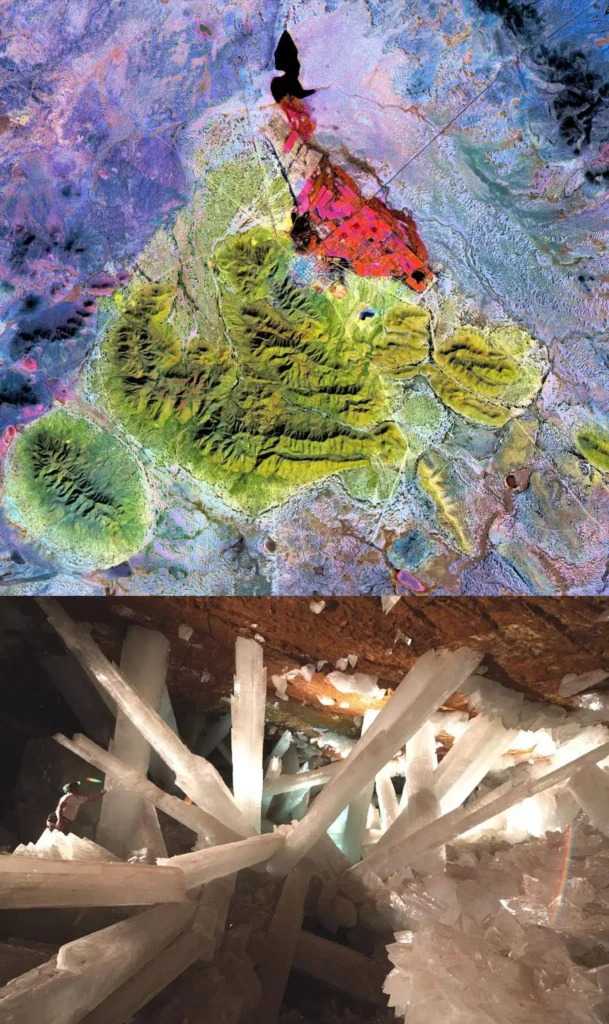
There was always going to be a reckoning, because the cave only existed in visitable form on borrowed time, kept dry by machinery.
For decades, Industrias Peñoles ran enormous pumps to dewater the Naica workings so miners could reach the ore, by Van Driessche’s account, the equivalent of an Olympic swimming pool every 40 minutes, drawn from a mountain that wanted to be full of hot water. Dropping the water table is what exposed the Cave of Crystals to air and to people in the first place. It is also, paradoxically, what put the crystals at risk: out of the buoyant support of water, the largest beams faced the strain of their own weight, and in air the crystals slowly begin to dehydrate and deteriorate, which is why the Naica Project raced to document them.
Then the support was withdrawn. In January 2015 a major flood overwhelmed part of the mine. Peñoles spent more than nine months trying to pump the water back down, at a cost the company put in the hundreds of millions of pesos, and failed. On 13 October 2015, Peñoles announced it was indefinitely suspending operations at Naica. The pumps went quiet. Hot, mineral-rich groundwater began rising back through the workings. Most accounts hold that the Cave of Crystals was submerged once more within months, and that is the usual telling; it is worth noting, though, that some reporting suggests the rising water has not in fact reached the main chamber, so even the simple claim that the cave has reflooded carries more uncertainty than most sources admit.
You will see the date given as 2017 in some accounts, and there is a real distinction worth being precise about. The decision to suspend operations and stop fighting the water dates firmly to October 2015, that is the moment that sealed the cave’s fate, and it is the best-supported date. The full reflooding of the deepest chambers took time after the pumps stopped, and some sources, describing when the cave was completely submerged, point to 2017. Both can be true: 2015 is when the pumping ended; the reflooding played out over the months and couple of years that followed. When in doubt, October 2015 is the anchor.
For the crystals, reflooding is not a tragedy at all, it is a homecoming. Submerged again in roughly 55 °C mineral water, close to the temperature at which they originally grew, the beams are back in conditions that favour gypsum growth. The dehydration in air has stopped. The self-feeding anhydrite-to-gypsum mechanism can, in principle, resume. The crystals are, as far as anyone can tell, growing again, by a hair’s width per century, in the dark. García-Ruiz told reporters years earlier that this was the question the closure would force: should anyone keep pumping water out forever, burning energy and money, just so future generations could admire the crystals in air, or should the cave be left to the water?
The scientific consensus has landed, somewhat reluctantly, on leaving it. The cave is far too hot and dangerous to ever be a real tourist attraction; plans for an air-conditioned visitor experience were floated but never realistically viable. Keeping it dry meant continuous deterioration of the crystals and continuous expense. Letting it flood preserves the crystals and lets them keep growing, at the cost of putting them beyond human reach, probably permanently, unless a mining company someday opens a new entrance for its own reasons. A 2019 report noted that researchers might one day return if that happened, and Peñoles has periodically floated reactivating the site, but as of the most recent reporting the cave remains flooded and inactive.
So we found the most extraordinary crystal chamber on Earth, documented it in a frantic decade and a half, argued about the life inside it, and then gave it back.
What Naica Leaves Us
Stand back from the details and what Naica offers is a lesson in the power of patience and the narrowness of luck.
The crystals are not made of anything rare. Gypsum is everywhere. The cave is not large by the standards of the world’s great caverns. There is no exotic ingredient. What there was, instead, was a set of conditions held steady for an almost impossible span: a magma chamber providing gentle, constant heat; a water chemistry poised within a degree or two of a critical transition; an absence of disturbance; and time measured not in centuries but in the hundreds of thousands of years. Change any one of those, cool a little faster, as the Cave of Swords did, or supersaturate a little more, and you get gravel instead of giants. García-Ruiz told National Geographic that the chance of this set of conditions occurring anywhere else on Earth is remote, and the chemistry explains why. The cave is the product of a balance so fine it almost certainly will not be struck twice in a way we can witness.
It is also a reminder of how much of the planet’s most astonishing work happens where no one can see it, on timescales that dwarf us. The beams grew through the entire span of human existence, indifferent to all of it, recording in their trapped pockets of water and pollen the temperature of a forgotten forest and perhaps the dormant cells of organisms we are only beginning to argue about. For fifteen years a door in a mountain stood open and let us look. Now it is closed, and behind it, in the heat and the dark, the largest crystals on Earth are slowly, silently, getting larger.
We are unlikely to see them again. They were never really ours to keep.